Chic showrooms and sleek bars as we peruse design weeks in Sydney and Singapore.
|
Wednesday 24/9/25
|

|
|
London
Paris
Zürich
Milan
Bangkok
Tokyo
Toronto
|
|
|
|

Building bridges
While design fairs have been in full swing in the northern hemisphere, the industry in Southeast Asia and the Antipodes is kick-starting spring with a bevy of events. We swing past Sydney and Singapore’s respective design weeks, including a visit to an inner-city showroom in the former that puts sustainable design on a pedestal and stopping for a drink in a sleek bar in the latter. Plus: 1970s Australian furniture and recycling and renewal in the Lion City. Up first is Callum McDermott on Sydney’s architectural development.
|
|
OPINION: Callum Mcdermott
Harbouring connection
This year’s iteration of Sydney Design Week wraps up today. The event is, appropriately, curated by Powerhouse – an organisation that’s building and renovating new exhibition and museum spaces in both the city’s central neighbourhoods and its western business-and-culture hub, Parramatta. These developments speak to a filling out of key gaps in the city’s built environment – unifying projects that have been a long-time coming.
Charmingly incohesive, Sydney has long avoided easy design, urbanism and infrastructural categorisation. Its history from the 18th century to today has seen it turn from British penal colony to antipodean metropolis. While other settlements such as Melbourne and Adelaide benefitted from overarching and pragmatic urban-design plans, the Harbour City evolved organically. This created logical lapses in the built environment and a haphazard mashup of visual styles. Art deco apartments abut harbourside Gothic revival mansions. Victorian public buildings built from Sydney sandstone neighbour beaux arts banks. Suburbs feature a patchwork of Federation-era terraces and mid-century bungalows.

The 1973 opening of the Sydney Opera House should have augured the emergence of a modern, visually distinct global city. Instead, Sydney stagnated. After the 2000 Olympic Games came 20 years of visual and infrastructural languishment. Thankfully, a procession of city-shaping projects is remaking the architectural fabric of the city. The new Sydney Modern Project (pictured above), designed by Pritzker Prize-winning practice Sanaa, opened in 2022 and its blockbuster shows are scoring record attendances. In 2019, the city was graced with the opening of the Sydney Metro (pictured below), Australia’s first rapid-transit rail system. A second section came along in 2024, which involved a suite of eye-catching new stations and attractive architectural facelifts for older ones. The aforementioned Powerhouse Parramatta is due to open in 2026. The Metro’s final segment, connecting Sydney’s Western Suburbs, will wrap in 2032.

These interconnected projects give Sydney the sense of continuity that it has chased for years. And though the architectural pentimenti of the past are still on proudly mismatched display, they now have a modern connective tissue that brings each disparate part together. The city has never looked better.
Callum McDermott is a Sydney-based journalist and regular contributor to Monocle. To hear from Sanaa, the Pritzker Prize-winning architecture practice behind the Sydney Modern Project, click here.
|
|
MOBILIER NATIONAL  MONOCLE
|
|
the project: Bar Bon Funk, Singapore
Vinyl frontier
Bar Bon Funk is tucked discreetly within New Bahru, a former high-school-turned-creative-hub. Dishes and drinks by chef-owner Keirin Buck stand out, though the bar’s understated interiors also shine. “Rather than focusing on aesthetics alone, we’ve homed in on how the bar makes you feel,” says Sacha Leong, co-founder of Nice Projects, the London-based studio behind the design.


The venue features three distinct yet interconnected zones. The handsome bar, complete with custom Altec A5 speakers and vintage Lammhults armchairs, is a buzzy after-work watering hole. Taking it down a notch is a cosy, carpeted dining area, where plush swivel armchairs and linen drapes set the scene for intimate date nights. Meanwhile, a private dining room at the back of the space is ideal for group celebrations, featuring a custom Hand HiFi system and patterned encaustic tiles.
Designed with the needs of the community in mind, Bar Bon Funk eschews grand gestures in favour of small touches that enhance the space. The breeze-block-mounted bar, for instance, nods to the building’s original architecture, while sconces covered in playful illustrations add a dash of delight. “With its warm living-room atmosphere, everyone can come as they are,” says Leong. “We hope to have moved the bar genre along.”
bonfunk.com; niceprojects.work
|
|
WORDS WITH... Henry Wilson, Australia
Testing the waters
Sydney Design Week might have wrapped up but there is still an abundance of quality design destinations in the Australian city. Take Henry Wilson’s eponymous gallery-cum-retail outpost in Paddington, which opened in late 2024 beneath the neighbourhood’s old Scout Hall. Here we catch up with the creative, who is known for his polished industrial aesthetic and commitment to fine craftsmanship, as well as collaborations with brands such as Bassamfellows, Ace Hotel and Aēsop.

What designer or movement has shaped you the most?
I’ve always been influenced by Italian postwar design. There was a certain ingenuity in the use of materials and processes. Manufacturing became automated but still retained a handmade influence. The products were both hopeful and playful; they had real personality.
The sky’s the limit: which piece of furniture would you love to own?
I would love to get my hands on one of Carlo Scarpa’s art stands or easels.
What’s a recurring source of inspiration?
Industry, flea markets and architecture, in no particular order. Industry inspires me with its relentless focus on efficiency and innovation. There’s beauty in how things are made and witnessing these processes often unlocks ideas that are overlooked in a broader context. Flea markets offer an anthropological view of what we use, keep, discard and sell. They show me what still has value and what concepts, materials and methods remain relevant. Finally, architecture is a source of inspiration because it provides a home for design. I’m interested in how an object will sit within a home, regardless of the period. For this reason, I’m drawn to all architecture of merit, whether it’s a Haussmann apartment in Paris, an unnamed shack or a Zaha Hadid experiment. I want my work to fit in anywhere.

A favourite project that you’ve worked on?
I enjoy designing hardware; it’s the frustrated architect in me. While I’d never have the patience for the bureaucracy of architecture, I do enjoy being part of the details. Thinking about my work in the context of a broader environment is important.
A dream commission?
I have always had a close connection to the sea. Sailing and being on the water is something that’s relatively accessible in Sydney. To work with a naval architect on a vessel would be the ultimate realisation of craft, engineering and romance.
A priority for you going forward?
I’m spending more and more time working with new suppliers and customers in Japan. I would like to further this exploration into Japanese craft. The layers of experience and knowledge that still exist in the country’s manufacturing sector are a true credit to its obsession with craftsmanship and the thoughtful adoption of new technologies.
What makes Sydney an outstanding design city? Where should we visit to get a sense of this?
Sydney is all about the outdoors and food. The proximity of beaches to the centre is unmatched. I recommend a dip in one of the harbour beaches, such as Camp Cove or Nielsen Park, followed by a stroll around the Paddington shops and dinner at 10 William St.
For more insight from the world’s top designers, tune in to ‘Monocle On Design’ on Monocle Radio.
|
|
Sponsored by mobilier national
|
|
from the archive: Trend Module Lounge Chair, Australia
Back in business
This low-slung lounge chair was the “it” piece for any 1970s Australian homeowner with an open-plan living room. Produced in Adelaide by TH Brown, it was sketched up by the company founder’s son, Peter Brown, who joined the family firm as a designer after the Second World War. The Trend Module Lounge was a case of right style at the right time: with a chrome frame and two triangular cushions that came upholstered in bold patterns, it anticipated the tastes of the decade and became one of Australia’s bestselling couches.

Years after the family business had wound down, Peter’s son, Simon, and his wife, Toni Briggs-Brown, started looking for some old TH Brown pieces – but they found that they weren’t the only ones. “We realised that the lounger was one of the most collected vintage works in Australia,” says Briggs-Brown. “I visited a family that had purchased a five-piece lounger set before even buying their home.” TH Brown has now been relaunched and the Trend Module Lounge is available in indoor and outdoor versions, just in slightly more toned-down colourways.
|
|
in the picture: ‘Refuse’, Singapore
Saving the furniture
Wong Eng Geng’s self-published Refuse: A Dumpster Diving Craft Handbook aims to challenge Singapore’s throwaway culture by reimagining furniture waste as creative material. The young designer – whose work is on show at the National Museum of Singapore as part of the Future Impact 3: Design Nation exhibition – started photographing discarded chairs, tables and settees in the Lion City as part of a university project, before ultimately overseeing its evolution into a handbook now distributed by print collective Bluetaped. “It aims to redefine disposed furniture as an alternate source of crafting materials,” says Wong, explaining that its intention is to show people how unwanted furniture can be pulled apart into component materials that can then be repurposed.

“In Singapore, bulky refuse is shredded to pieces by sledgehammers before being processed as general waste,” says Wong. “These materials never reach any recycling facilities. Their next stop after the housing estate’s void deck is straight to the landfills.” Working with graphic designers Desirée Chew and Darren Loo Shen, and printing at Allegro with Singapore’s RJ Paper, Wong aimed to show that beautiful and high-quality materials were being wasted regularly. “I hope that people will be able to look at discarded furniture beyond just functional and monetary value,” says Wong. “Instead, everyone can start harvesting them for their overlooked material value.”
bluetaped.com; sdw.designsingapore.org
‘Future Impact 3: Design Nation’ debuted in Singapore as part of the city’s recent design week. The exhibition is on show at the National Museum of Singapore until 2 November 2025.
|
|
Monocle Radio: MONOCLE ON DESIGN
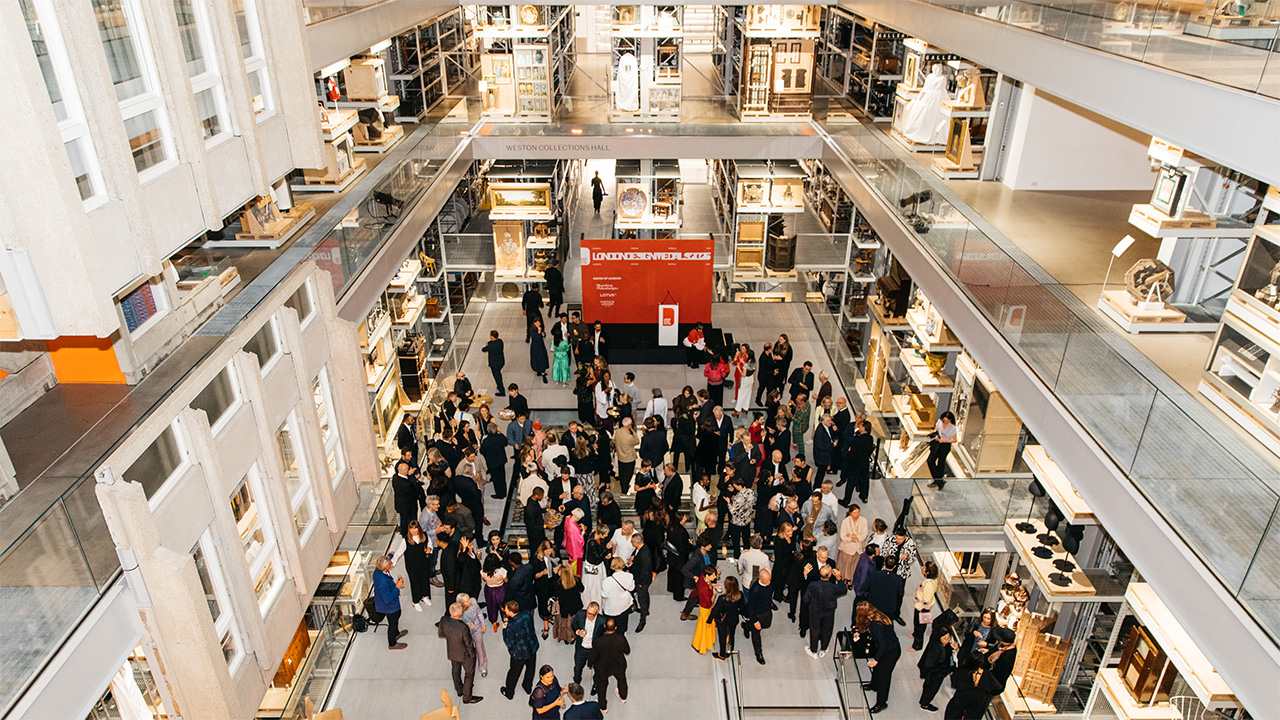
New episode: London Design Festival, Studio Brière and Katie Treggiden
Our highlights from London Design Festival, including everything from material innovation to new furniture and design circularity with journalist Katie Treggiden.
|
|
Image credits:
Dina Grinberg, Brett Boardman, Lisa Cohen, Tony Hay, Iona Wolff, Illustration: Anje Jager
This email is from Monocle whose
registered office is at Midori
House, 1 Dorset Street, London,
W1U 4EG. You have received this
email because you have previously
provided us with your email
address and subscribed to Monocle
bulletins.
© 2025 Monocle
|
|
|