How do we keep the momentum going, and why does telling the full history matter?
It's through the work. The church has been focused this last year on understanding that this is a journey, and that our histories are complex, just like we are. There's nothing wrong with telling the fullness of your institution's or your city's history. If we keep unveiling and telling the truth, we understand the disparities that exist today.
We know the racial wealth gap is here, but there's also a gap in life expectancy between those who live in Roxbury and those who live in Back Bay. The history tells us why those things exist. If we can't tell the full history, we can't address the problems we have right now. Many of Boston's institutions—Harvard, King's Chapel, some of the hospitals—built their wealth on the slave trade, so there's a responsibility for what they should do to address the disparities facing the descendants of the enslaved. Institutions like Embrace and King's Chapel have a moral and spiritual responsibility to tell that truth, even when others are discouraging us from telling it.
By creating this constellation of spaces across Boston, we get a fuller understanding of how different groups of people have contributed to this city.
The anniversary celebration has a new date, November 15. What can people expect?
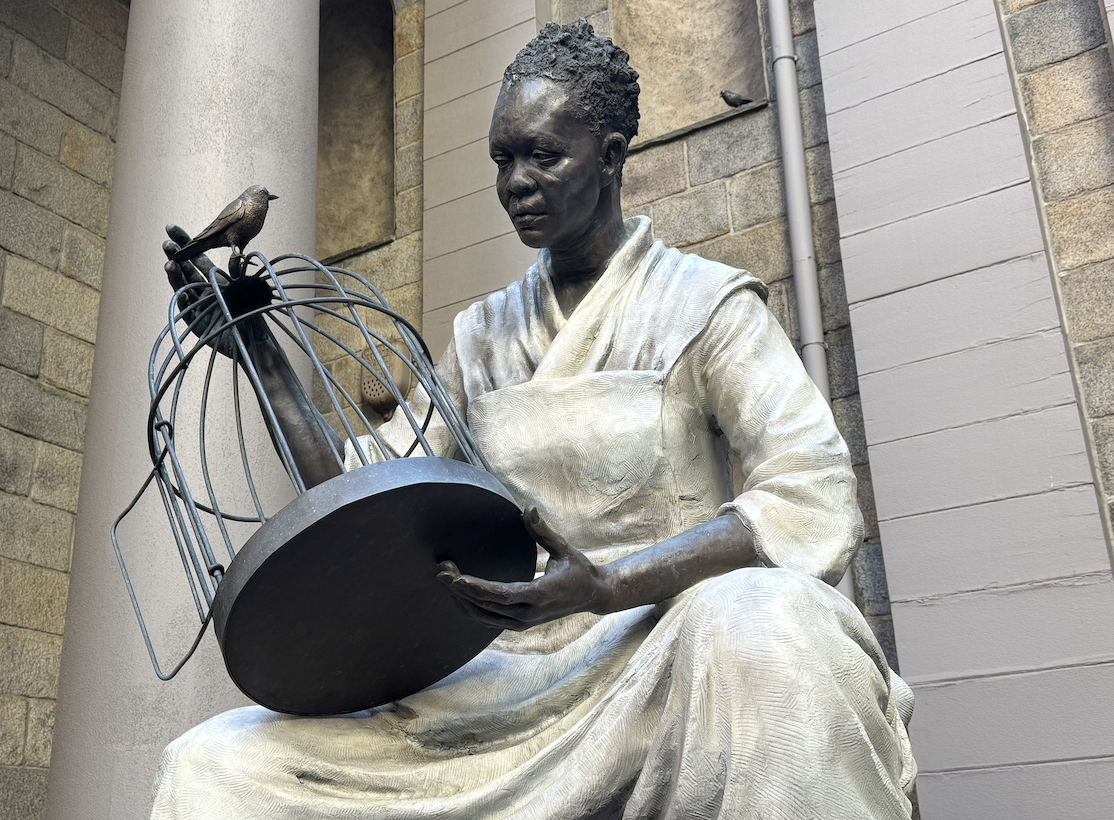
This event is meant to continue the work. We'll hear from acclaimed author—and my personal “She-ro”—Dr. Kellie Carter Jackson. We often think of enslaved people as disenfranchised and powerless, but she'll speak to how Black people showed up and resisted enslavement and oppression. That's the strength I believe Unbound shows. When I look at her, I see nothing but strength, dignity, and respect.
Then we'll hear the Boston Arts Academy Spiritual Ensemble sing the spirituals that were sung during slavery and that gave people hope for their future.
We'll also announce our very first Living in Freedom Youth Poet Laureate, a high school student here in Boston, who will share their poem about what freedom means to them. It's important to uplift youth voices, because this work will be passed on to them. We have to prepare young people to carry it forward.