Learning from the past
By Khari Thompson
History is something we take with us, not something we leave in the past.
Boston attorney José López got the inspiration to turn that figurative lesson into a literal one thanks to a trip down to New Orleans in the aftermath of Hurricane Katrina.
“A few days after the storm, I went down to Gulfport, Mississippi, where I connected with friends from the Gulf Coast who were running recovery and advocacy campaigns for their communities,” López told Embrace. “Part of that effort was the purchase of two FEMA trailers, turned into mobile message boards and a mobile museum, that traveled the country… I saw the power of that mobile-museum experience—especially using the FEMA trailer itself, which had become a symbol of the recovery. People were drawn to it.”
As Legal Director of Compliance and Civil Rights for Boston Public Schools and a Roxbury resident, López has long studied Boston’s struggle against school segregation. While he didn’t have the resources to build a traditional museum, he explained, he had another idea that might be just as powerful:
“I thought: what if we did a mobile version, built around the symbol of Boston's desegregation era—a bus—the way the FEMA trailer became a symbol after Katrina?”
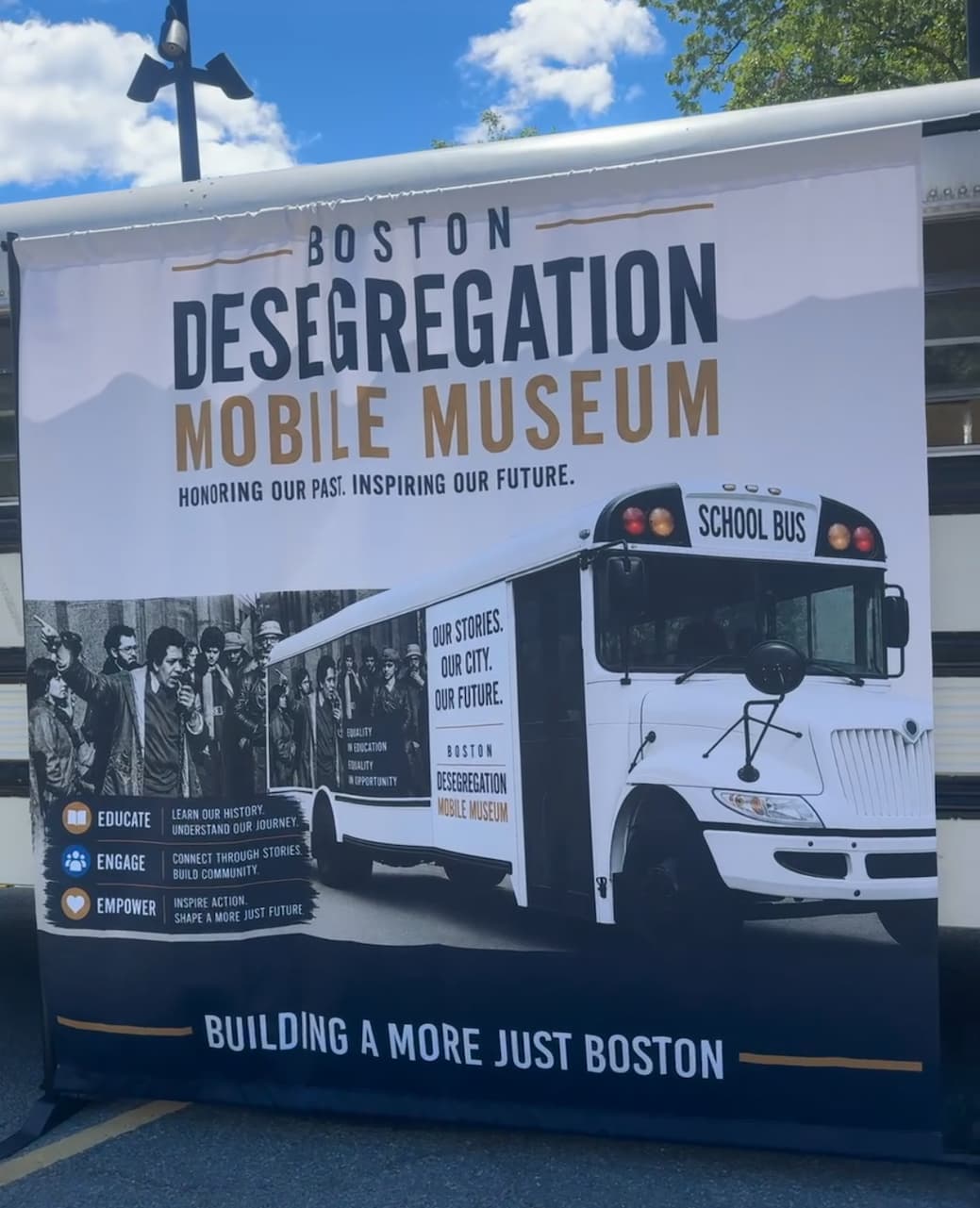
López is one of several volunteers who partnered with the Boston School Desegregation and Busing Initiative (BSDBI) to create the Boston School Desegregation Mobile Bus Museum, which welcomed visitors at this year’s Juneteenth Freedom Day celebration at Boston’s Franklin Park.
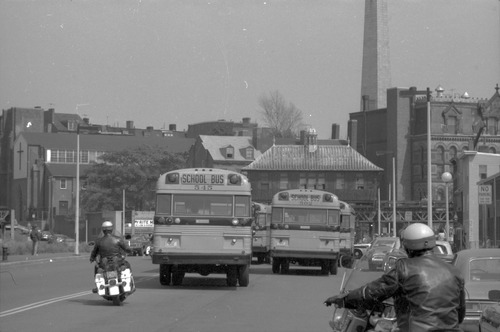
The mobile museum, a 1991 model painted to look like one of the 1970s-era school buses that once transported Boston’s Black students to primarily white schools and withstood the stones of angry mobs, is lined inside with photos and panels illustrating the history of desegregation in Boston. It also introduces some of the movement’s key figures, including Ruth Batson, who took on the Boston School Committee in 1963 over its discriminatory practices: “The 'best possible education,'” she said, “is not possible where segregation exists.”
In highlighting the past, it also draws attention to the complicated legacy of busing in Boston, especially for those who lived through that time in the city’s history.
“Unlike a lot of these museums, this history still has living witnesses—people who experienced it, whose families hold the stories. So part of this project is also a long-term effort to capture that oral history before those voices—grandparents, aunts, uncles—are lost for good,” he said.