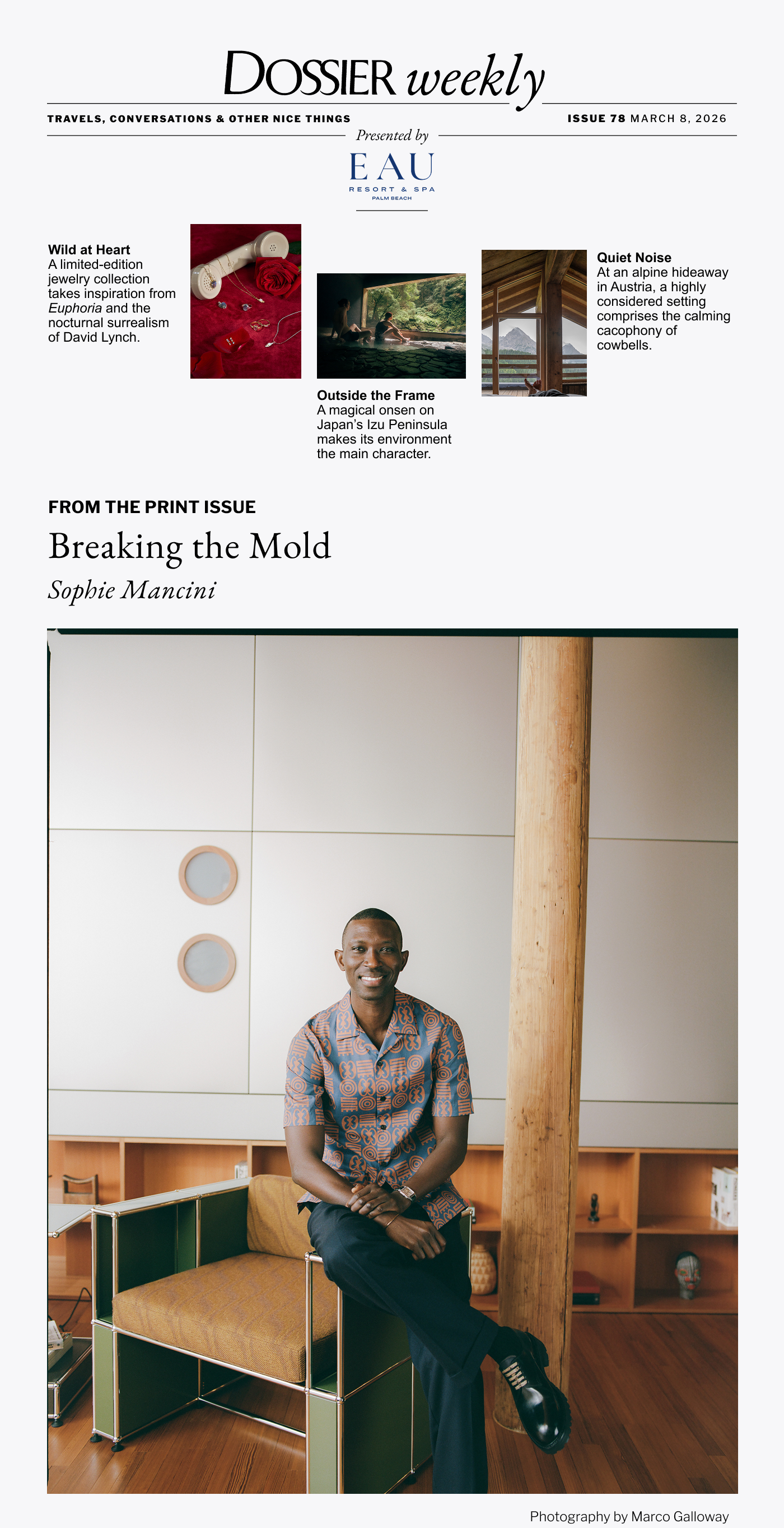
Armando Cabral’s first act in the fashion world was as a model, showing up in campaigns and on runways for brands such as Calvin Klein, Dries Van Noten, Louis Vuitton, Thom Browne, and J. Crew. Today, it’s his work behind the scenes that’s earning him global recognition. Launched in 2008, his eponymous brand is a celebration of African heritage and European craftsmanship brought to life through a broad, meticulous range of fine leather footwear (from supple woven derbies and streamlined sandals to hardy lug boots and ergonomic travel slippers), breezy shirts printed with West African motifs, a home line entitled A Casa, and a custom fragrance. His creations directly reflect his multicultural background: He was born in Guinea-Bissau, raised in Portugal, educated in England, and is now based in New York City. Here, Cabral discusses the magic of Lisbon, craft as cultural connector, and the importance of understanding your roots — while hinting at a third act: a foray into hospitality.
Sophie Yun Mancini: What is your perfect day in Lisbon?
Armando Cabral: A perfect day in Lisbon would start at Pastéis de Belém, where they make all the Portuguese tarts. That area is where the presidential palaces are. There’s a monastery next door. It’s just so beautiful. And they have a beautiful park right in front. Then, I would go for lunch at Clube Naval, overlooking the river and the bridge. What I love about these places is they’re still very much for locals. They allow you to take a walk outside the restaurant and sit right by the bay. Later, I would take a stroll downtown where there are a lot of new art galleries. Then, I’d have a drink on one of the rooftops. I love to go to this mini boutique hotel called Memmo Príncipe Real. Their patio that overlooks the city — it’s incredible. The sunset in Lisbon is magical. I think it’s because of the reflection of the sun on the water and over the terra-cotta roofs. I’d probably end with dinner at Sud Lisboa Terrazza. It’s right by the water, with beautiful food, live music. If I felt like I wanted to dance, I would probably go to Lux Frágil, which is one of the biggest clubs in Europe, with all these famous DJs. You could be there until 6 a.m.
SYM: New York, Lisbon — you understand both of these places so well. You have this kind of global citizenship. What are the cultural qualities that you admire about each?
AC: One of the things I love about Lisbon is the sense of family, sense of friendship, sense of home. In Portugal, people stop time. You go to a grocery store, you go to pay, and if you know the locals, it’ll be, “Armando, you’re back! How are you? How’s everything? Oh, I saw this. Oh, have you heard about this? Congratulations!” Mind you, there’s people waiting in the line. And no one minds. People don’t rush in Portugal. Time adapts to them, not the other way around. So everything is kind of slower, a little more melancholic. I always say that, in the U.S., it’s easy to make friends. In Europe, it takes you longer to make friends, but they are your friends forever.
What I have to say about New York is the optimism of Americans. It doesn’t matter how bad things are. It’s like, “We gotta do this,” and then it ends up happening! That optimism brings about the courage to go after whatever it is you really want. Europeans are a little bit more pessimistic, very superstitious. In New York, if you dream it, you can achieve it. But you have to give much of yourself. To achieve the things that I’ve done wouldn’t be possible in Lisbon.
SYM: Optimism is a poetic way of describing the New York spirit, the American spirit. I, in a far more pejorative way, would have said delusion or intensity. But I love your reframing.
AC: I’m telling you! When you talk to people here in Europe, you’re like, “I’m gonna start a company,” and they’re like, “Wait, have you thought this through? Do you have enough money? It’s gonna cost millions for you to do this. I’m not sure. A friend of mine tried this before. Be careful.” And America’s like, “Totally, dude!” They’re like, “I’m in! I’ll add another X amount and be a partner!”
SYM: What are you working on right now?
AC: I have a very interesting project that really bridges Portugal, America, and design in a concept related to hospitality. It should be launching next year. We have a long way to go, but it’s very exciting — the heritage, the craft, and bringing those two worlds [together] in a way that I think will have everybody talking about Portugal. Besides that, the USM collection [a furniture collection Cabral designed in partnership with the Swiss modular furniture brand USM] we did has a second edition that’s launching next year in Portugal, that we’ll bring into the [MAAT, the Museum of Art, Architecture and Technology in Lisbon].
SYM: How do all of your backgrounds live within you?
AC: Growing up here, I only identified with Portugal. Later on, I came to understand that I cannot be this without that; I cannot be that without this. This is where I started really getting into African history. How beautiful to say this is also part of me? Accepting it added even more value to everything. I think my parents did a great job. Even being in Portugal, we knew our origins. That’s what I’m trying to do with my kids. They’ve been coming to Portugal since they were 3 months old. I travel with them because I know what traveling gave me. We haven’t gone back to Guinea-Bissau yet, but we’re building something there. So once that is done, I want them to start experiencing that to feel like this is part of who you are. Yes, you were born in New York. You’re privileged that you have that. You have a home in New York, you jump on a plane. You have a home in Lisbon, but you also have to look at where you come from.
Read the full feature and more close takes on a wide world in our latest print issue. Order now.
|
|
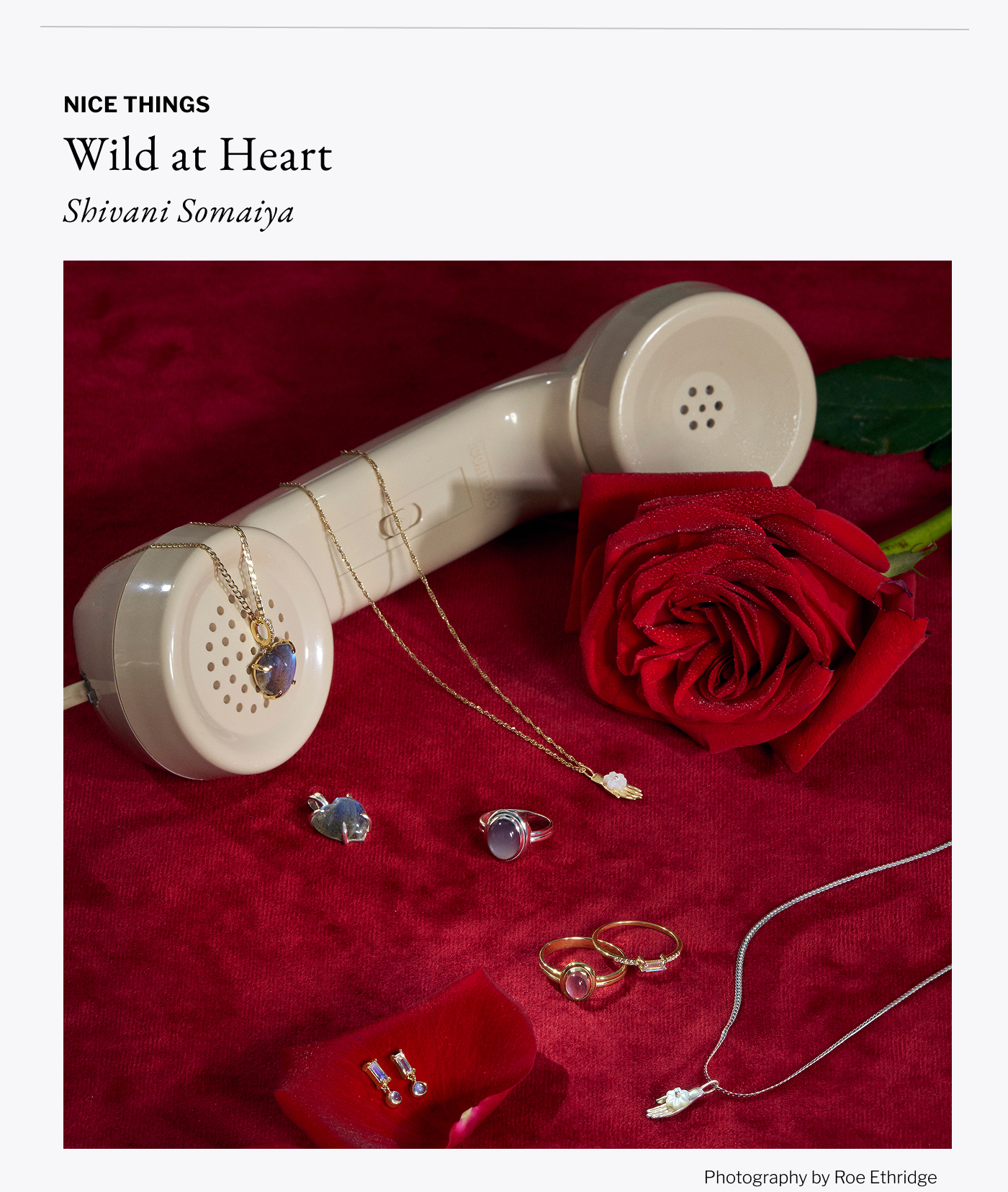
Costumes and jewelry operate on similar logic: Both are intimate, both worn on the body, and both, when well-chosen, divulge something about their wearer. Heidi Bivens is particularly attuned to this truth. The Emmy-nominated costume designer and international stylist spent seasons one and two of Euphoria balancing the fine line between hyperrealism and something more poetic, a space her first jewelry collaboration also delicately occupies. Created in collaboration with Catbird — a Brooklyn brand known for its ethically sourced fine jewelry, with a global cult following — the Catbird x Heidi Bivens collection "Dial J for Jewelry" comprises eight pieces, each pulling from the emotional palette of Bivens' on-screen work. The designs reference Euphoria's electric, washed-out glow and the nocturnal surrealism of David Lynch's films. Fittingly, The Catbird Giving Fund will donate $5,000 to the David Lynch Foundation in conjunction with the collection’s launch. |
|
I grew up in Vienna, Austria, so the Alps were a regular part of my childhood. I would visit them every year on school trips, either to ski or hike. But I’d never been to Ehrwald in the western Austrian state of Tyrol, a region quietly reassuring in its simplicity — its landscape pure, the pace unhurried.
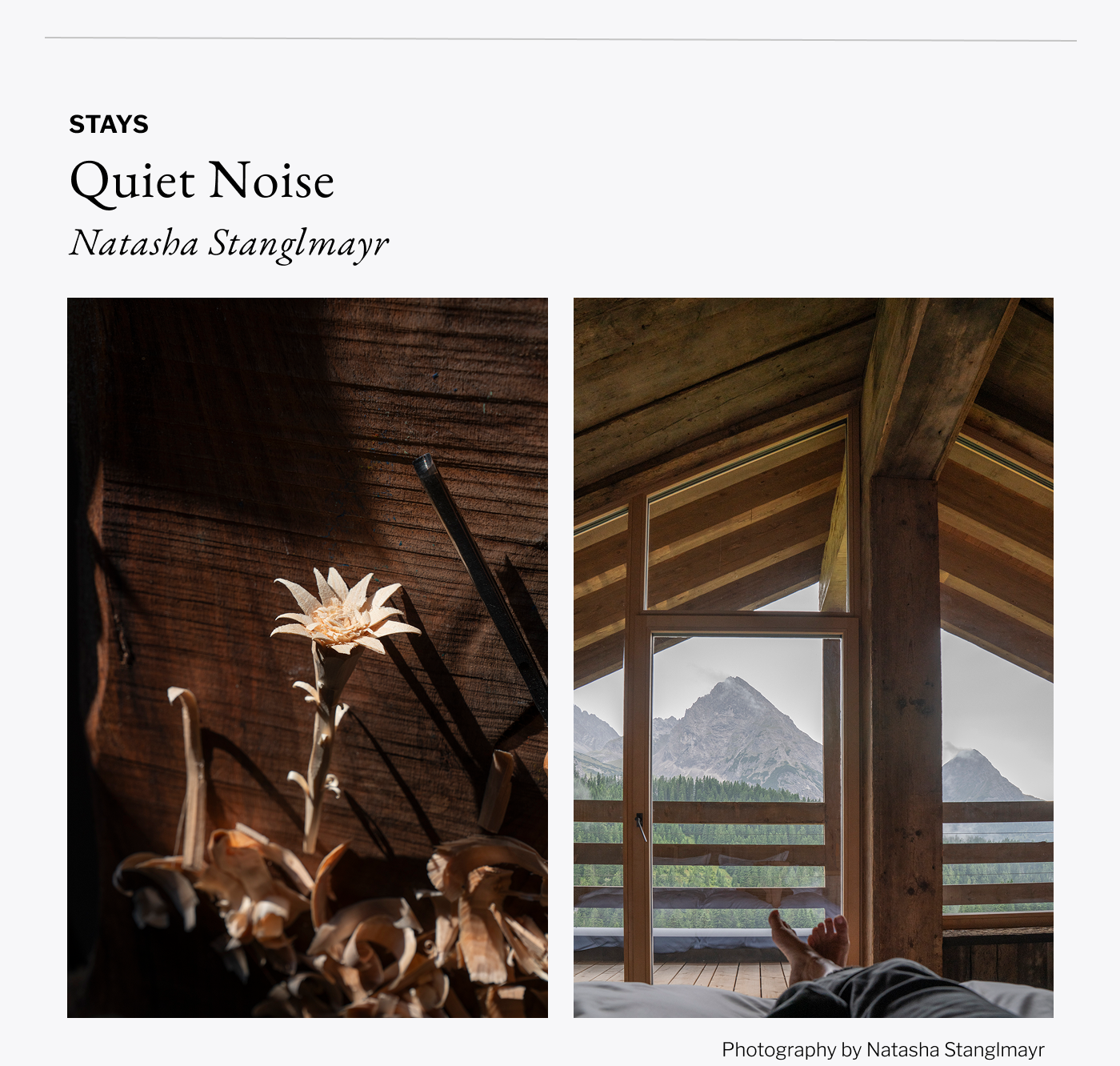
Walking into Eriro, an alpine hideaway situated at 5,000 feet above sea level, echoed this feeling of expansiveness. The hotel’s architecture is inspired by traditional Alpine huts from the region, interpreted in a clean, minimalist way. Its generous common space features large windows that open to the landscape, bringing the mountains and light inside. Handcrafted interiors celebrate heritage techniques and rely almost entirely on local wood, loden, and wool in a soft, natural palette. In many ways, the clean, pared-back aesthetic of the highly considered, nine-suite property reminded me of my own home (or how my own home would feel without the daily clutter). Still, chef Alexander Thoss’s food was the real highlight. Everything was made with locally grown and sourced ingredients, guided by a zero-waste philosophy. Meals were generous and comforting, with a real sense of care behind them. And the hotel team, led by Henning Schaub, is friendly and accommodating, which can be surprisingly rare to find in Austria.
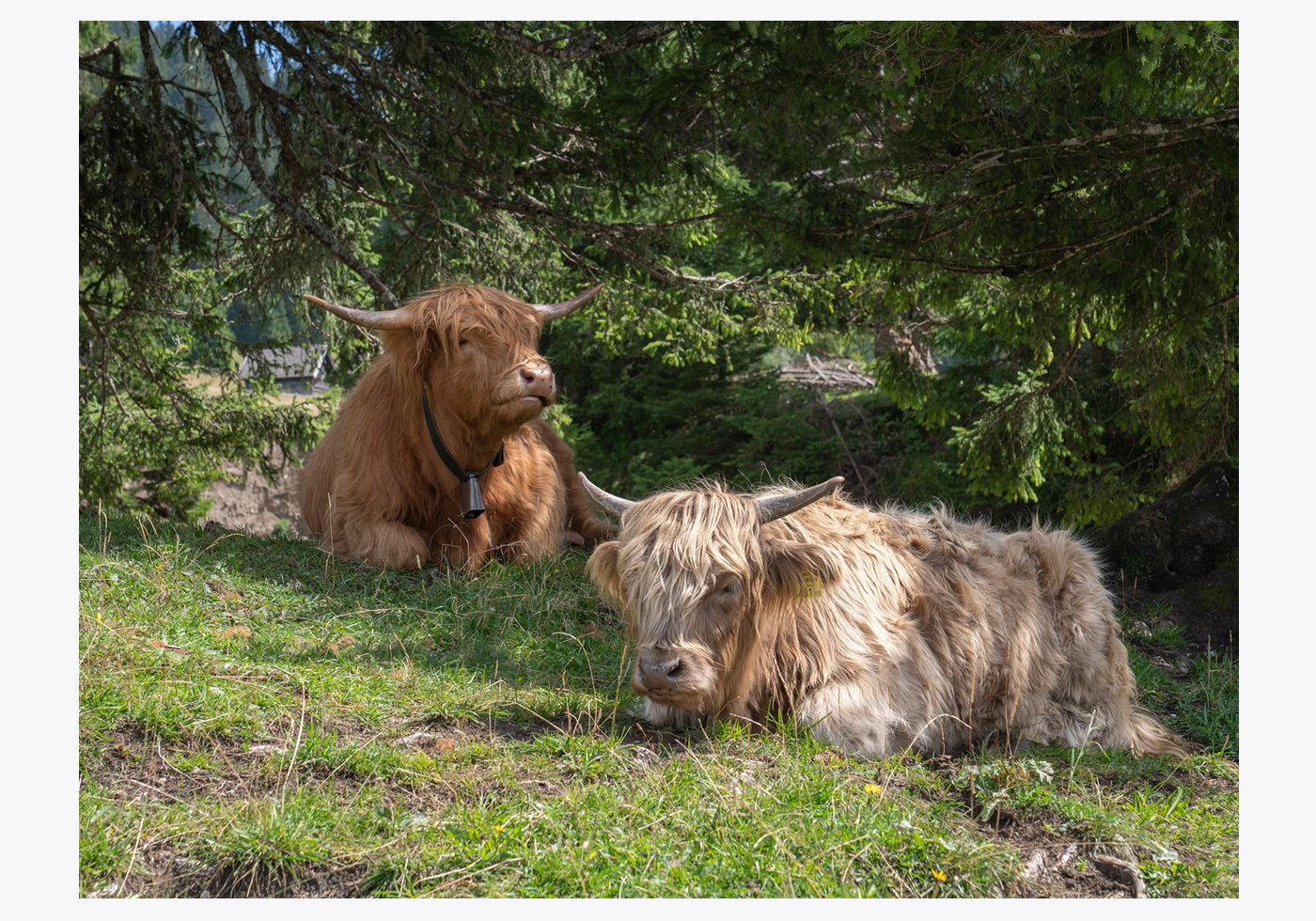
Of note … The moment I arrived at the top of the mountain and stepped out of the gondola, I was met by a constant sound: the cacophony of cowbells echoing across the slopes. In summer, herders bring animals up from the town below to graze. Every cow and sheep — and possibly even the horses — wears a bell. Wherever you look, small animal groups are scattered across the landscape, feeding. From the hotel, you see them slowly moving against the landscape. Whenever they shift or wander, their bells begin to ring, layered and rhythmic, which stirs memories of those childhood trips to the Alps, when summers felt longer and life felt simpler. There’s something deeply reassuring about the sound, something that slows you down. It feels calming and grounding, timeless. It was that constant soundtrack — the bells ringing from before sunrise until sunset — that has stayed with me, turning my stay at Eriro into something I won’t easily forget.
The best view … I woke before sunrise and spent a couple of hours on my balcony’s outdoor bed. Lying there, watching the sun slowly rise while breathing in the fresh mountain air felt deeply satisfying. It was one of those quiet moments when time seems to stretch.
A dish I’d recommend … Breakfast was my favorite. Each morning felt like a small ritual: a cheese plate, a selection of meats, yoghurt with granola, fresh waffles, bread with jam — and eggs, if you somehow hadn’t already had enough. It was the kind of meal that made you want to linger, unhurried, gently setting the tone for the rest of the day.
|
|
On the spa ... The spa is located on the basement level and is partially carved into the hillside, which gives it a wonderfully grounded, almost cave-like feeling. There’s a steam room, a hand-carved Finnish sauna, and several hot relaxation pools. The hotel doesn’t use any cosmetic brands, only local, natural products, which felt very much in line with the rest of the experience. The best part, however, was how empty it was; I had the spa almost entirely to myself.
Something to do … At a wood-carving class led by Christoph, I quickly made friends with fellow guests Boris and Jörg, who were visiting from Hamburg, Germany. Our task was to carve a small mushroom out of soft Zirbenholz — known in English as Swiss or Arolla pine. There was something unexpectedly satisfying about slowly chiseling away at the wood. I was painfully slow, though, so slow that I had to come back the next day to finish my little artwork. Other activities included simply staring out the window. Watching the fog move through the mountains and between the trees was better than television, which the hotel doesn’t have. There was time for reading, for playing board games and cards, and for doing nothing without feeling restless. During an aperitif, I reconnected with Boris and Jörg, who invited me to join them for dinner. We ended up spending the evening talking and laughing, and we’ve kept in touch since. I’m sure it’s the beginning of a long friendship.
A local tip … I spent a lot of time on nature walks; there are two crystal-clear lakes nearby. A short 10-minute walk takes you to Almsee, a beautiful spot overlooking the town. People were picnicking along the shore, and a few brave souls even went swimming in the icy water.
|
|
There’s much to love about the Balkans, but I find Romania to be especially spellbinding — not only because sarmale and meatball soup taste best in the colder months. The country’s gothic and neo-Byzantine backdrop also sets the perfect tone for deep, early midlife self-evaluation. This can be taken further with the help of a professional Romani seer (though you have to know someone who knows someone to visit one) or a simple hike to Omu Peak in the Bucegi Mountains, which locals tell me is a well-regarded spiritual portal. Transylvania’s magnetic field is believed to be strong enough to heal any ails, and I’m in need of a wellness ritual after the redeye flight from New York City. So I check in to the Athénée Palace Bucharest a few hours before my room is ready and do what any underslept, unshowered person does: head to the spa for some hydrotherapy. Revolution Square and the National Museum of Art of Romania overlook the opulent property, which is also not far from the Palace of the Parliament. This imposing structure dates back to Nicolae Ceauşescu’s reign, inspired by his admiration for North Korean brutalist architecture. My favorite collection at the art museum is notably gentler, featuring the works of Constantin Brâncuși, one of the better-known Romanian artists of our time, whose sleepy, modernist sculptures are an exact fit for my mood.
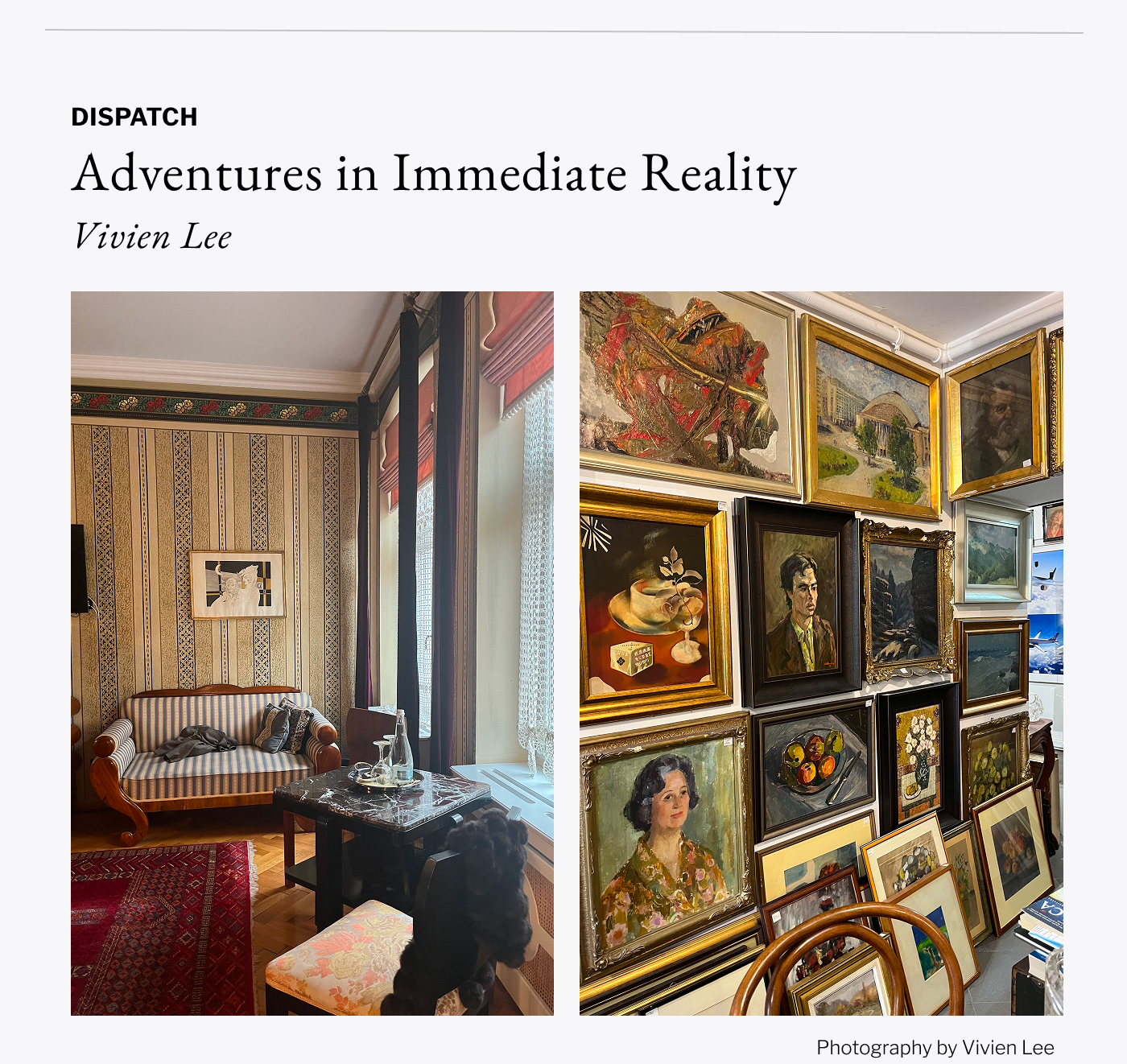
The next morning, I am on a two-hour train ride to Brașov. The Carpathian Mountains have some of the most enchanting landscapes I’ve ever seen, and I have barely touched the edge of them. In the city’s main square, Piața Sfatului, the temperature drastically drops, calling for the procurement of a Cossack hat and pom-pom scarf. A charming man at a nearby antique store, the Anticariat & Antichitati, gestures to me to come inside. Here, there are pieces of other people’s lives: tchotchkes and silverware that weave together stories of this unfamiliar place. There are also a number of mid- to large-scale paintings — of pets, people, rustic properties — that I can take home because he offers international shipping, he assures me.
Near the base of Mount Tâmpa, on the steps of the Black Church (Romania’s largest church), I order coffee before walking to Turnul Alb, a restored stone watchtower, to take in a far-reaching view of the mysterious landscape. Mysterious, because it’s hard to imagine it as the site of some of the last witch burnings and persecutions in Europe. This hauntingly romantic terrain is emphasized by the piercing perceptiveness of everyone I encounter. There is no shouting. No rudeness. No lingering sense of impatience. Traffic runs smoothly. At Vila Katharina, a boutique hotel praised for its pristine menu of mountain breakfasts, I unfortunately sleep too late to enjoy the bounty. The property’s receptionist suggests I walk to La Ceaun, a nearby restaurant, for traditional Romanian fare. And so I do, and dig in. It’s the whole reason I am here: to temporarily forget life’s harsh demands with hot cabbage rolls stewed in simmered beef, served with salted cornmeal and sour cream. |
|
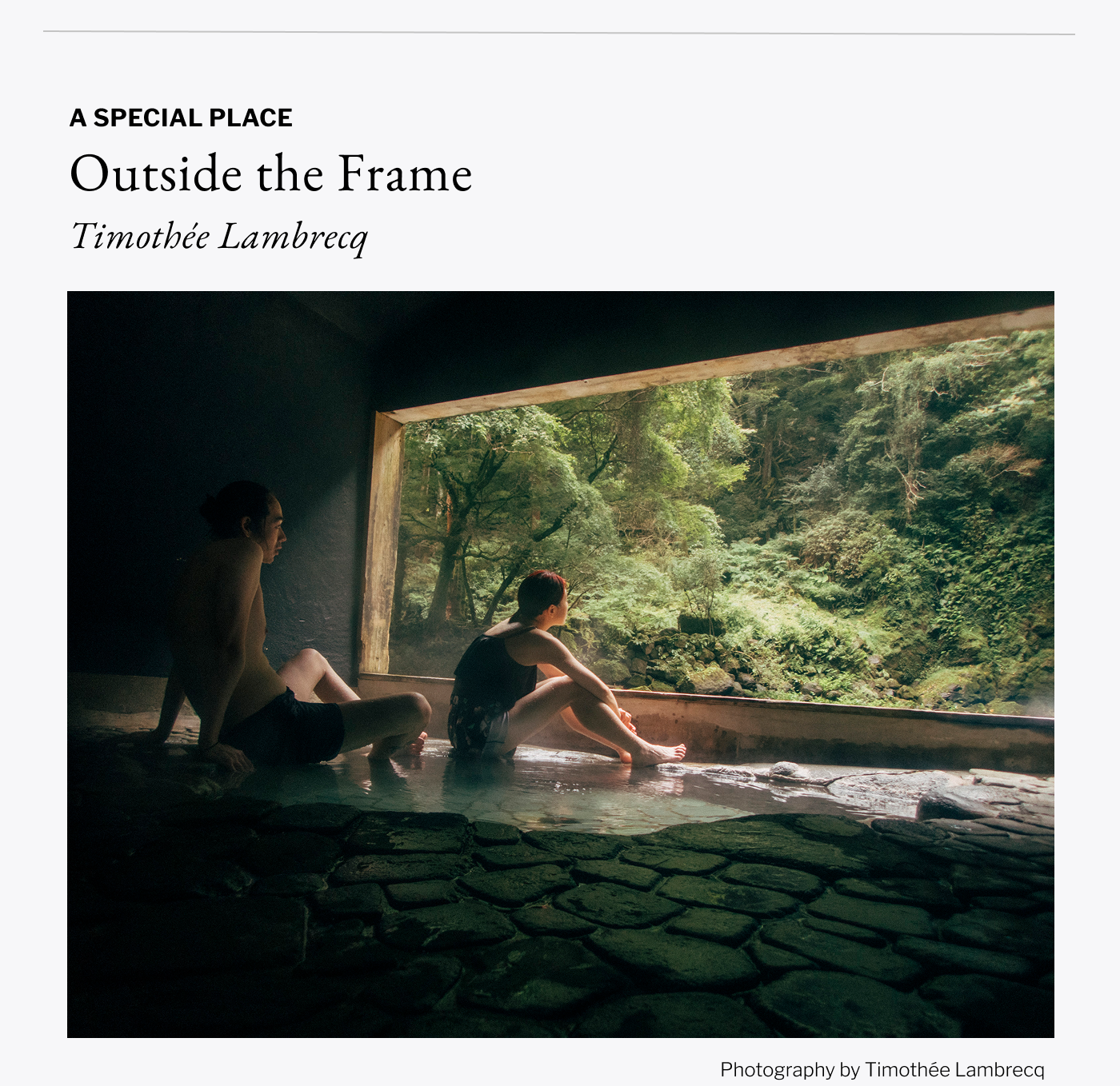
The view from Amagiso’s onsen is better than your 4K screen. Hidden in the middle of Japan’s Izu Peninsula, it is one of my top three onsens — and I have visited many across the country. The journey to the ryokan that houses it is, itself, worth the trip, winding as it does through deep forests, wasabi farms, and a curious spiraling road. Then you reach Amagiso, a magical place where the environment is the main character and where each season gives the landscape a very different look and feel. My favorite thing about this photo is that it doesn’t show the crowning feature of Amagiso: the waterfall, which is right next to the onsen baths. Yet, it still conveys the peaceful energy and feeling of being so close to nature. |
|
Looking Sharp. I’ll be the first to admit that I am not a great cook, but after being gifted a beautiful knife from Messermeister — a women-owned company based in Ojai, California — I’m channeling my inner sous-chef, slicing and dicing everything in the fridge. I have the Oliva Elite Chef’s Knife, which is made from drop-forged stainless steel and features an Olive wood handle. The blade even came engraved with my initials, a thing of beauty. –T. Cole Rachel
That’s a Wrap. Bathrobes are among my favorite things about hotels. Slipping into one nearly always causes me to reconsider leaving my room — or getting ready for the day at all. Thuma’s Turkish Cotton Bath Robe rivals those from my favorite hotels. Plush and cocooning, yet not overly bulky, it’s crafted from 100% long-staple Turkish cotton, created with sustainability in mind at every step, and nearly ankle length, defining it as cozy and considered. –Elysha Beckerman
Pushing Up Daisies. It wasn’t until I heard two great thinkers, novelist Luis Alberto Urrea and journalist Krista Tippett, divulge their mutual love for murder mysteries that I felt less bashful about my own passion for the genre, noting its important distinction from thrillers or horror. It’s the category I turn to (on the page and onscreen) whenever I need an engrossing reprieve from, well, everything. This has made the rise of MHZ Choice — a streaming service dedicated to global mystery series (available via its own app or Prime Video) — a reliable bright spot. Browsing by country is useful. Scandinavian options skew too dark and violent for my tastes, whereas French and Italian selections tend to hit just right. A few top recommendations include Murder In … or Detective Montalbano for more traditional whodunits and Captain Marleau or Bar Lume for lighter-hearted, perfectly lethal fare. –Erin Dixon
|
|
54 Franklin St #2R NY, NY 10013. ©2026 Dossier Projects, LLC.
|
|
|
|
|