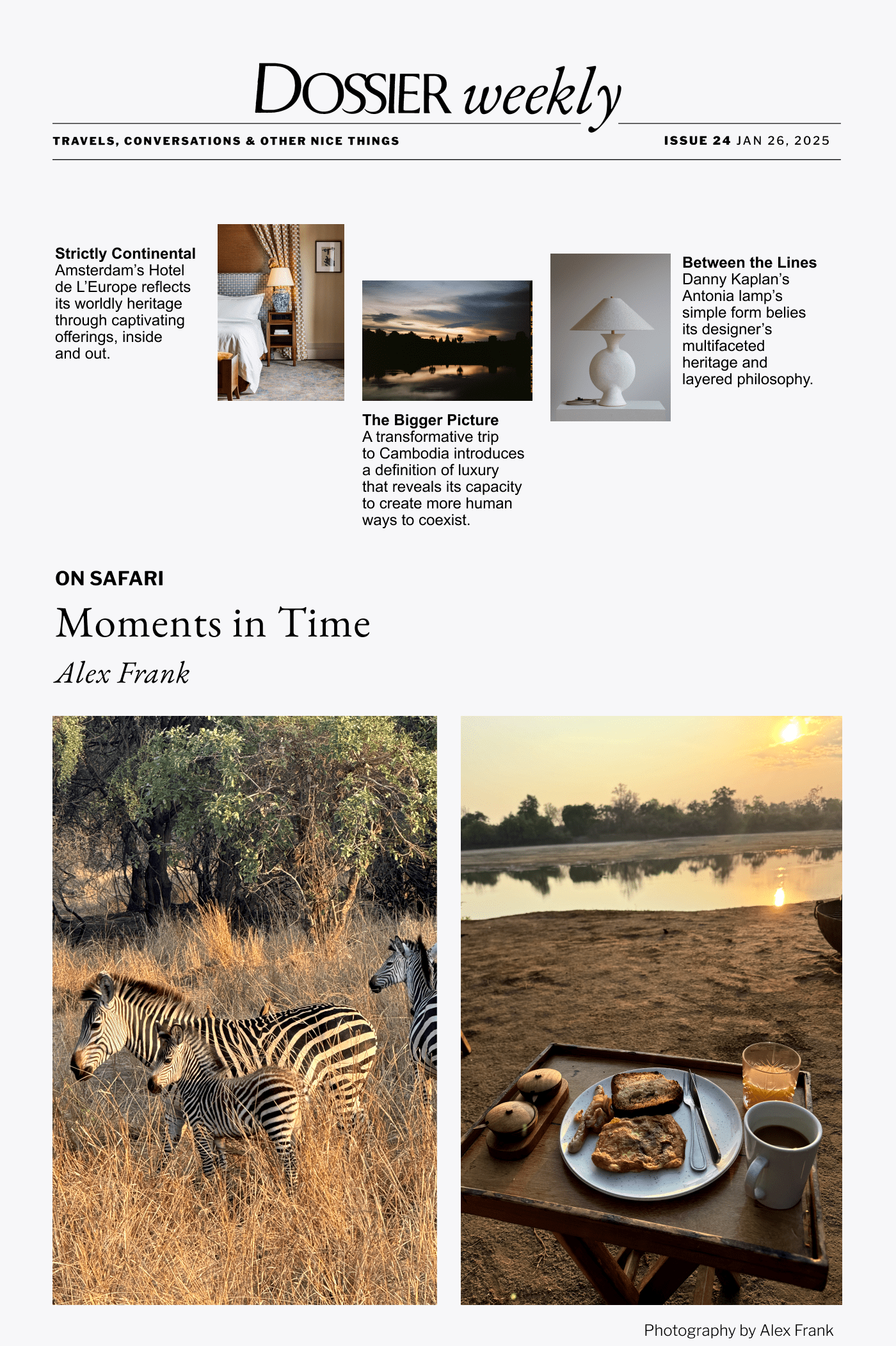
I’ve had nearly every type of travel experience under the sun — from late nights in big cities to star chasing in wide-open places — or at least I thought I had, until I went on safari. Traveling to Zambia with Time + Tide, a luxury safari company with camps throughout the Lower Zambezi and South Luangwa National Parks, was a revelation. It wasn’t just the perfectly appointed, picturesque camps that served up gin and tonics alongside healthy, hearty dinners and big, plush beds. And it wasn’t just the (near-spiritual) experience of watching a newborn zebra take its first steps after shaking off its placenta, its mother comfortingly licking its nape as it stumbled to stand up and, eventually, wobble around on four quaking legs. It wasn’t solely the bountiful wildlife: around every mahogany or ebony tree there were giraffes, elephants, and zebras, seemingly as plentiful as pigeons and ducks in Central Park. Nor was it merely the mating rituals of giraffes, a leopard’s hunt for food, a pack of warthogs feverishly foraging for grubs, or a chain of about 50 elephants crossing at a shallow spot in the river, their toddlers interspersed throughout the group for protection. It was the culmination of these moments, individually and collectively. The safari reminded me of what all of us are chasing in life, particularly when we travel: moments in time — flashes, really — filled with meaning and transcendence. We find them in fits and starts: a perfect meal in a foreign restaurant or a breathtaking sunset behind an ancient building. But in Zambia, in the back seat of a Land Rover, alongside our guide Adam, this existential chase for divine highs was literal — a relentless dash through the bush in search of the next mind-blowing thing. I had never been so excited for 5 a.m., my eyes opening to the soft blue of dawn, my ears to a soundtrack of birds and frogs and hippos, who grunted and moaned from the river below. Morning drives were dreamy blurs of rising red suns punctuated by sharp animal encounters, such as one male and two female lions laying in the shade of a leafy ramble. We pulled up so close I could’ve almost run my fingers through the king’s reddish-orange mane. Returning to base, the thrills continued. Time + Tide’s camps are delightfully fence-free, so the animals can wander in and out; one afternoon I had impalas in my front yard and an elephant in my back. We also took walking safaris, Adam leading us through the bush and the occasional unnerving run-in: An unexpected meeting with an angry elephant ended with a skyward gunshot warning and a quick hustle away from the drama. One night, we camped out on a dry riverbed, accompanied by a barbecue dinner and warmed by fires that also kept the animals (whose home we were temporarily inhabiting) at bay. Above us, through the sheer top of my gauze tent, lay the three, boundless dimensions of the Milky Way.
A Word to the Wise. Choosing a safari is a complex undertaking, with myriad ecological, safety, and cultural issues to consider. That’s why I waited until I could experience one with a company such as Scott Dunn, an incredibly respected travel operator with a strong presence in Africa. After speaking to the team about my ideal safari, they suggested Time + Tide in Zambia, which is a developing and less-trafficked destination than somewhere like Tanzania. “Zambia is still very much in its infancy as a safari destination,” explains Caroline Hunt, a travel specialist and Africa expert at Scott Dunn. “It's a gem for adventurers and explorers.” My guide, Adam, was a man seasoned in the art and expertise of safari but still filled with a sense of adventure. He knew so much about the bush (which he grew up near) that drives were equal parts educational and adrenaline boosting. “You do put your life in the guide's hands. That's why it's so critical that we take measures to make sure you partner with the correct camps — not only for the luxury side but also to make sure you have qualified people,” says Hunt. “For me, that is the most important part.”
|
|
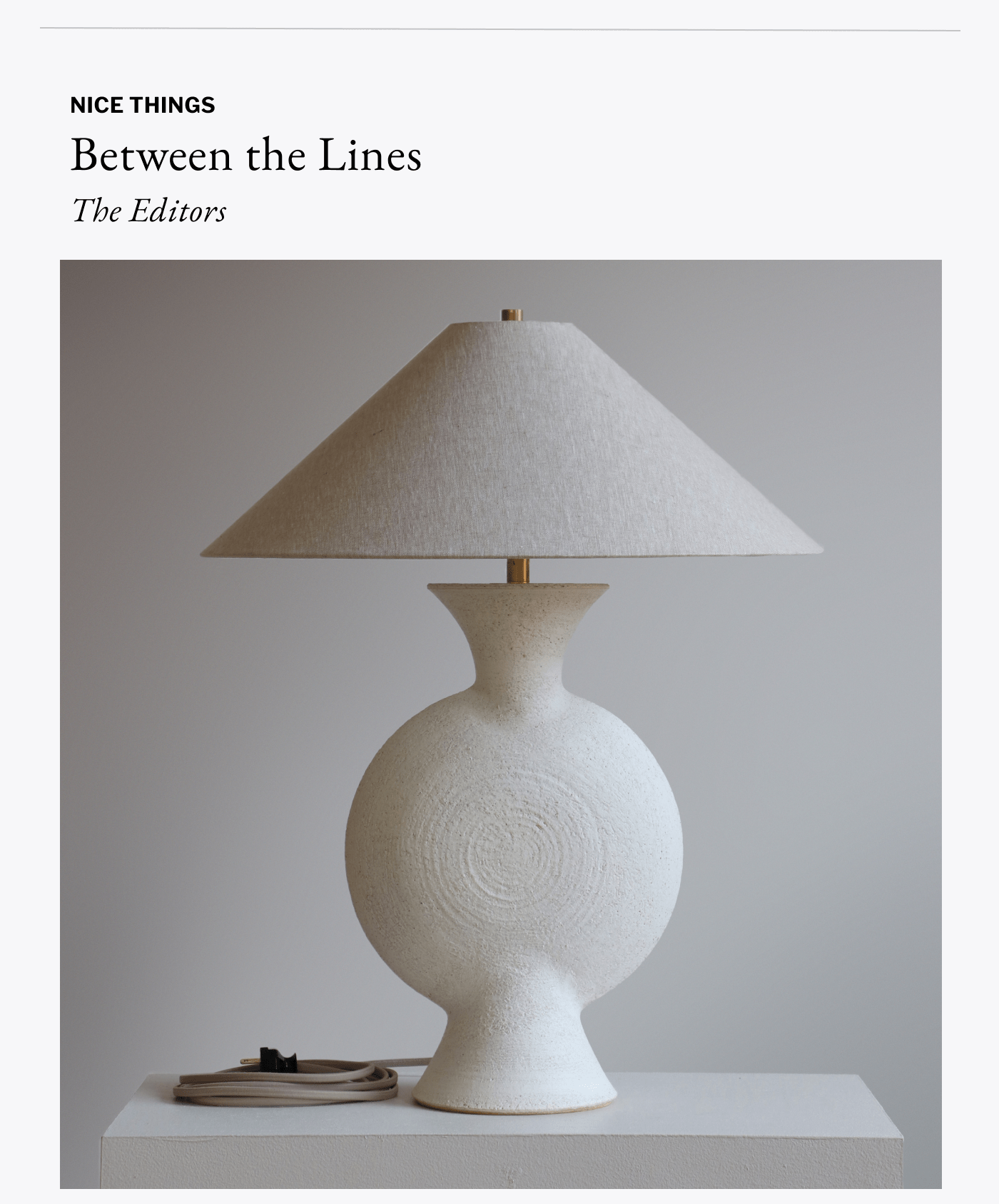
This deceptively simple Antonia lamp is handmade to order by Danny Kaplan, whose intercontinental roots span New York and Aix-en-Provence, France. Sumptuously geometric and subtly expressive, the fixture pairs a tactile linen shade with its buyer’s choice of base material, which ranges from anthracite to stone to bronze. |
|
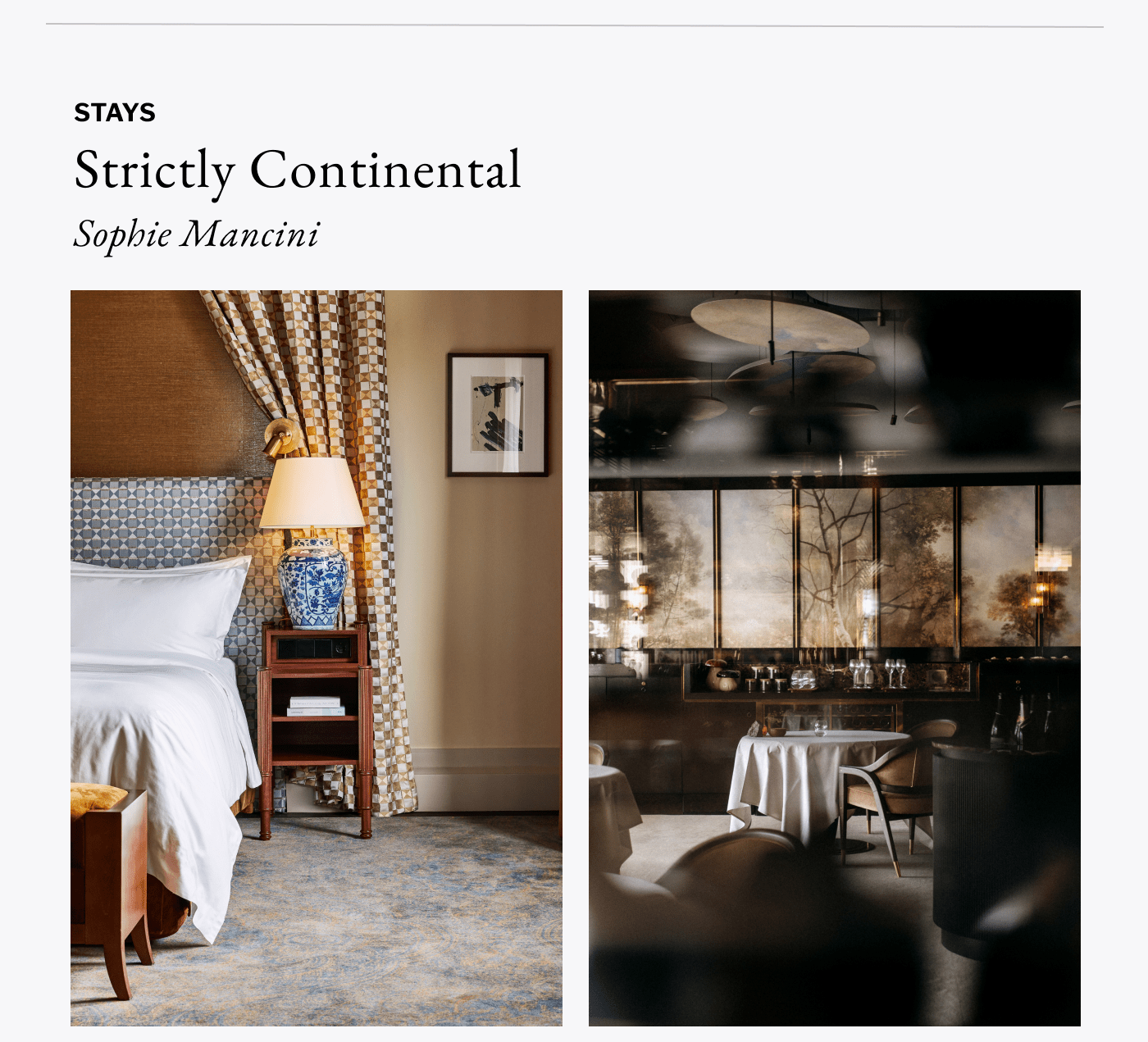
Upon entering Amsterdam’s Hotel de L’Europe, I was struck by umber colorways — ochre, moss, brass, burgundy — shimmering below chandeliers. Everything looked lit from within, underscoring the quiet dignity that runs through the historic hotel, independent since its 1896 founding. Grand dame is one word to describe the property. But stuffy it is not: A new wing of suites entitled t’Huys ("home" in Dutch) imbues it with a modern spirit. Each quarter is completely unique, created by a different Dutch designer, with the overall mix highlighting the brightest Amsterdam brands. (I toured a room created in partnership with jewelry designer Bibi van der Velden, which featured a supersized necklace hanging from the wall like modern art). The hotel is located on the banks of the Amstel, making for excellent canal views and waterside dining at its in-house brasserie, Marie. (Order the steak.) As delightful as dinner à la canal? Door-to-door boat rides. I was picked up by an old, gleaming wooden vessel one rainy morning and shepherded to the Van Gogh Museum for a private tour. (Hotel de L’Europe has connections to all of the city’s best and hardest-to-book cultural attractions.) Other standout moments outside the hotel’s walls included local seafood (razor clams! regular clams! peel-and-eat prawns!) at Barracuda, a lively yet laid-back restaurant in an old warehouse in the city’s industrial Noord district, followed by dancing at Skatecafe, a cavernous multiroom affair for raving until the wee hours. The venue’s biggest room has a car hanging from the ceiling, a mesmerizingly high-production light system, and, per its name, a giant skate ramp. Dim sum at Oriental City, around since 1973, and a visit to Anouk Beerents, an opulent antique mirror shop, like a little Dutch version of Versailles’ Hall of Mirrors, were other highlights. Some mirrors at Anouk’s are so old their glass has mercury within them — per the original heritage of glass making. The materiality reveals itself through a starry night effect: dark sparkles glinting through the surface. |
|
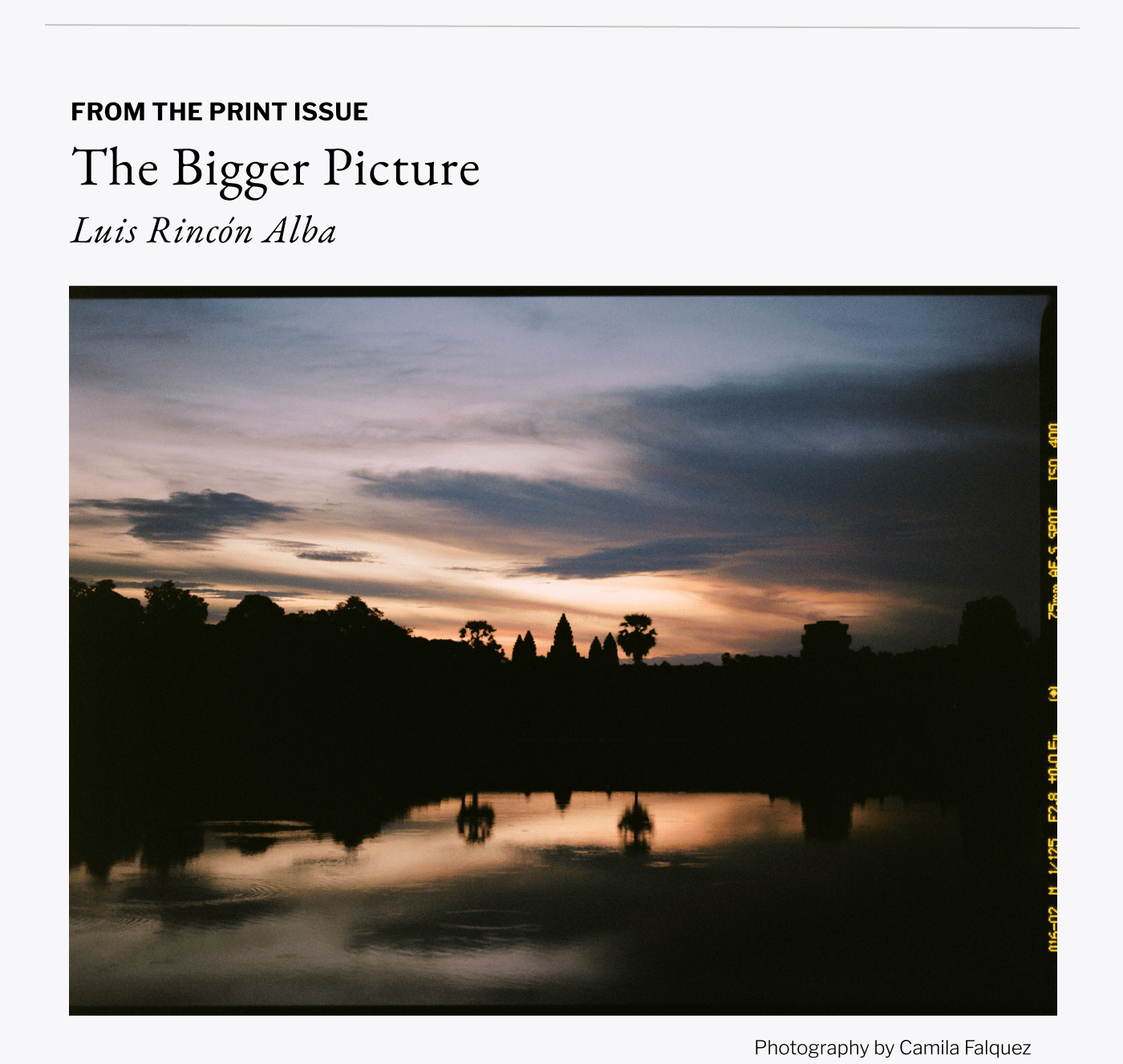
Bill Bensley, the renowned landscape architect, architect, and interior designer, once said that luxury is the opportunity to do good — a bold statement that immediately challenges conventional associations of luxury with excess, indulgence, and detachment. In a world where wealth and privilege are often built on the exploitation of labor, resources, and land, his words ask us to rethink what it truly means to live well. At Shinta Mani Hotels — the community-rooted hotel group founded by Cambodian businessman Sokoun Chanpreda, who was later joined by Bensley — this vision manifests itself in a unique blend of high-end hospitality and deep social commitment, leading us to question whether luxury could serve as a force for ethical transformation, rather than mere consumption. Could we imagine a world in which indulgence is not an escape from reality, but a means to engage with it more responsibly? With this in mind, my partner, photographer Camila Falquez, and I embarked on a nine-day journey to experience firsthand the two Shinta Mani properties in Cambodia that reflect Chanpreda and Bensley’s vision. At the outset, we were skeptical, expecting the familiar gloss of high-end tourism with its token gestures of social responsibility. Yet, as we immersed ourselves in the lush landscapes, the carefully designed spaces, and the deeply human interactions with the people of Shinta Mani, it became clear that this was no ordinary vacation. It was an invitation to reframe the relationship between luxury and goodness, challenging the cynicism that often accompanies such grand declarations. What we found was not just an innovative hospitality model, but a window into how luxury — collectively redefined — might serve as a platform for communal well-being, environmental stewardship, and social equity…
Read the full article alongside more close takes on a wide world in our latest print issue. Order now.
|
|
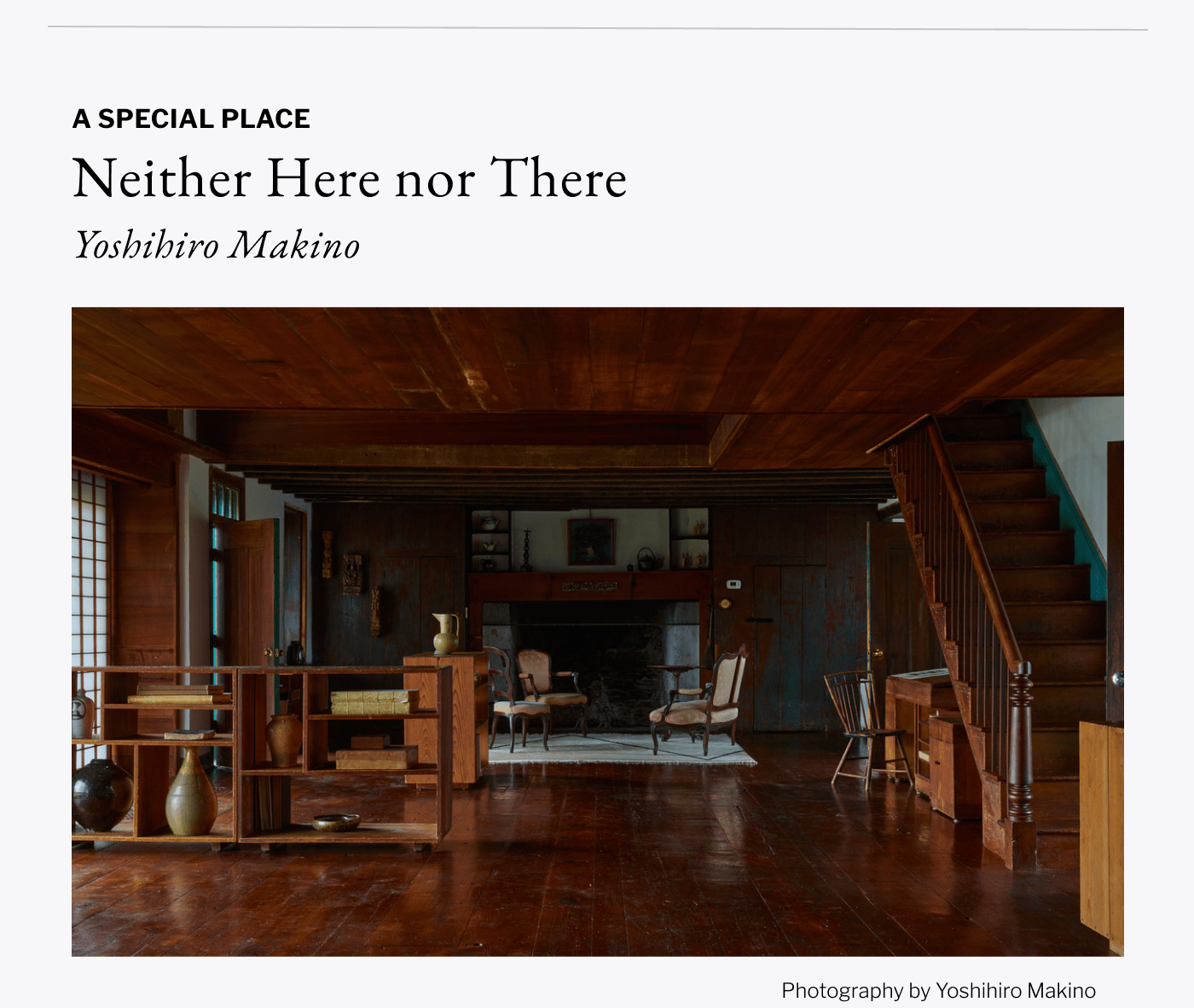
For years, I have been documenting projects created by foreign artists who worked between Japan and their countries, who were inspired by Japanese culture at the same time they inspired Japan with their expertises: Le Corbusier, Frank Lloyd Wright, JB Blunk, Isamu Noguchi, and so on.
Raymond worked for Frank Lloyd Wright on the Imperial Hotel Tokyo. Soon after, he established his own firm in Tokyo, where he was joined by Le Corbusier’s pupil Kunio Maekawa. The two built so many important projects together in early modern design styles, which were very new to the country at that time.
Raymond returned to the U.S. after living in Japan for 15 years, settling at the Raymond Farm in 1938. The Raymond Farm Center, which is still managed by the Raymond family, has operated as an artists residency for over a decade now, hosting guests and students from all over the world, including Japan’s own Junzō Yoshimura.
I particularly appreciate and relate to Yoshimura, as I also left Japan, 20-plus years ago, moving to the U.S. to explore new opportunities. Now I’ve lived half of my life here as a multicultural creator, working as a bridge to my own country.
|
|
Better Safe Than Sorry. Whether I’m traveling for business, pleasure, or heading home, I’m willing to do nearly anything to avoid catching something from the many somebodies surrounding me on a plane. Sometimes, a mask is enough. Other times, it’s not. That’s where JetSet Meds comes in. The doctor-founded company offers personalized, carry-on ready pharmacy kits containing 12 prescription medications, plus additional over-the-counter options, designed to address a combination of common (and urgent) travel ailments — from ear infections and poison ivy to nausea and altitude sickness. Plus, to ensure you’re taking the right thing at the right time, you also get 24/7 phone support from a U.S.-based physician. – Elysha Beckerman
Conversation Starter. Barcelona-based 27 87 is responsible for a whole fleet of fascinating scents, but their latest, Per Se, might be my favorite. A futuristic take on a gender-neutral fragrance, it arrives as a bright floral mixed with clean aldehydes, bamboo, notes of spicy pepper, violet leaf, and sage. The first time I put it on, I thought it smelled — for lack of a better word — deeply weird. But then! As the day wore on, it seemed to evolve to fit my mood, losing some of its initial sweetness and deepening into something more musky and robust. It also elicits responses from strangers, including my dry cleaner, who said he felt bad cleaning my wool jacket because it smelled “wild and delicious.” – T. Cole Rachel
Destination Dining. I love Southeast Asian food. One might say I’m on a mission to sample every single mango sticky rice recipe in New York, which is why I can confirm that Twin Tails, the newest restaurant by Quality Branded, has a top-shelf version. It’s perhaps the best I’ve ever had, and it comes accompanied by a wonderfully moody atmosphere, of-the-place cocktails (think tamarind negronis and sambal margaritas), and a host of equally incredible menu items, such as king crab and uni buns, clam toast, and shaking beef. –Alessandra Berge |
|
54 Franklin St #2R NY, NY 10013. ©2024 Dossier Projects, LLC.
|
|
|
|
|