The first time I visited Scotland, I was 13 years old. My parents, sister, and I traveled from Northern Italy to Southern England, traversing the entire country before arriving in Glasgow, then Edinburgh. Venturing through unfamiliar, untamed places, I encountered rugged beauty and exhilarating culture — the full-tilt grandeur of the Royal Edinburgh Military Tattoo and vibrant free spirit of the Festival Fringe — but, remarkably, we never crossed paths with a ray of sunshine. Both the bounty and the deficit left a lasting impression.
A good few decades later, Scotland’s landscape remains raw and mercurial. The moss green of its rugged, angular interior stands in striking contrast to the chromatic oscillations of its coasts, where emerald bluffs plunge into slate‑grey seas and pewter sands glimmer under fleeting shafts of light — its drama drawing me like a magnet to these chiaroscuro shores as soon as I arrived on the country’s east coast this late spring.
Wherever I am in the world, when I arrive on a coastline, I remove my socks, place my feet in the sand, close my eyes, and inhale the sea’s scent in combination with its surroundings. It summons the unique spirit of the place. The aromas imparted by Scotland and Ireland’s beaches were wild, untamed, and teeming — with life and history, and that was just the beginning.
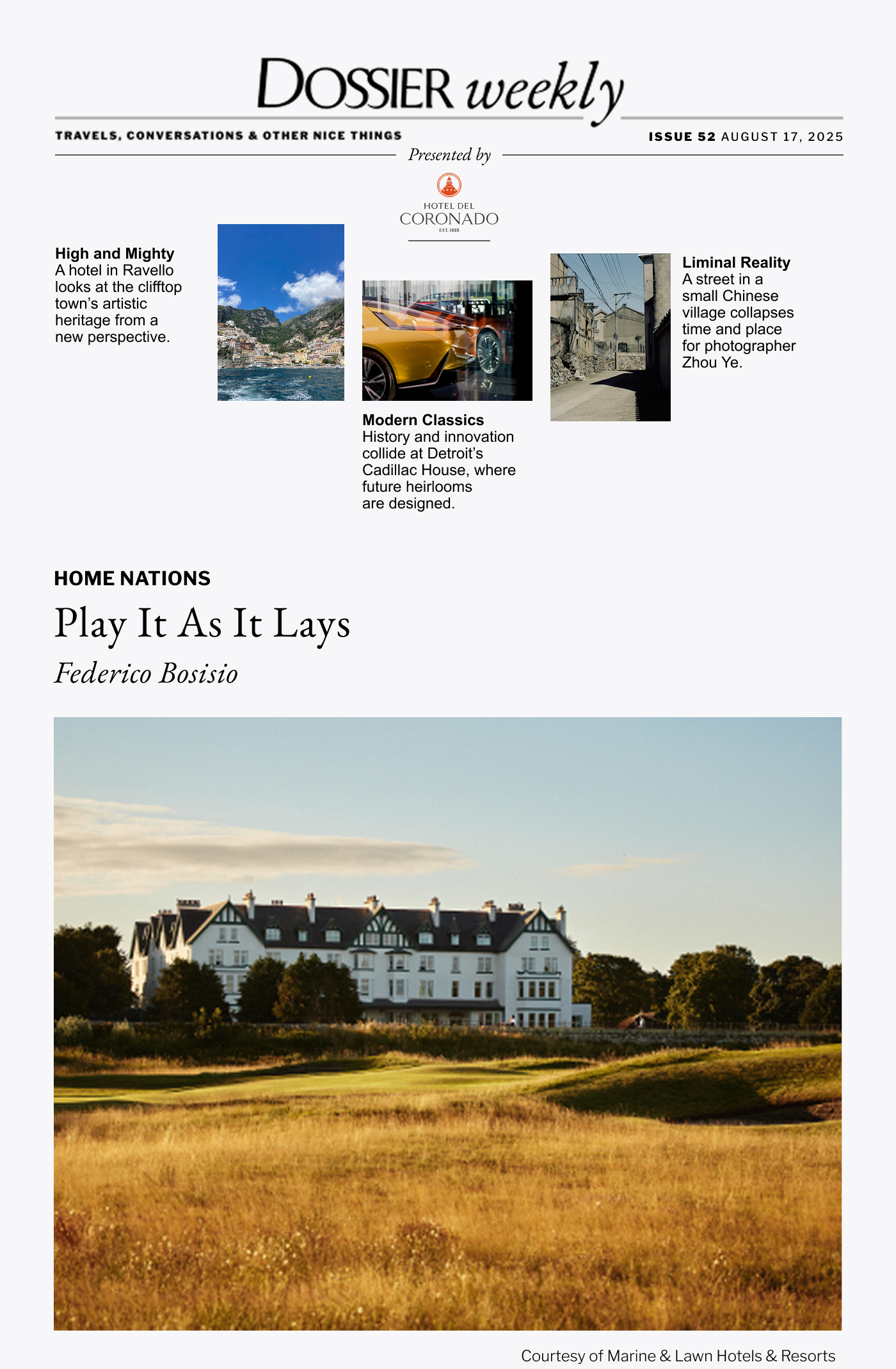
The beach that first captivated me was West Sands on the North Sea, famed for its proximity to St Andrews. A small, coastal, centuries-old town dedicated to Scotland's patron saint, who is buried here, it’s just over an hour's drive from Edinburgh and has (over centuries) gained international renown for its traditional (and well-maintained) architecture, prestigious university (founded in 1431), and golf: It’s the headquarters of the Royal & Ancient Golf Club and home to Rusacks St Andrews. A stately, six-story stone hotel, Rucksacks opened in the latter part of the 19th century and borders the Old Course, widely considered the “home of golf.” It has recently been meticulously restored by Marine & Lawn, a collection of bespoke hotels and resorts situated in what the company deems to be “the world’s most distinguished golf destinations.” Notably, Rucksacks is perched in front of the Old Course’s 18th hole. "Every morning, opening the curtains and seeing those dunes is like witnessing a miracle," a local caddie confided in me while putting away a client's clubs. Walking West Sands once more at sunset, with the lights of Rusacks just beginning to twinkle behind the dunes, I considered Marine & Lawn’s silent revolution. The less than 20-year-old company is not simply building hotels and promoting golf. Despite its young age, it is preserving heritage by educating new generations, demonstrating how modern luxury can be a custodian of history.
Dornoch Station, just a few hour’s drive away, is another example of this mission. Here, a former railway station has been transformed into an 89-room property, with the building’s original elements, such as railroad tracks, incorporated into the structure’s wrought-iron beams and its bar’s design. Next door, the Royal Dornoch Golf Club adds to the hotel’s gravitas. Designed by Tom Morris, who was coined “The Grand Old Man of Golf,” the landmark course almost melts into its spare, undulating landscape — as if it were hidden and protected by it. In the adjacent town of Dornoch, black cobblestone roofs overlook the windswept beaches, giving the area a dramatic character augmented by the sea, which in this corner of Scotland blends with delicate sand.
A short air transfer to Northern Ireland — Ulster, to be specific — rounded out my second grand tour of the region, greatly evolving my understanding of it. In seaside Portrush — world-famous for the Royal Portrush Golf Club, this year’s host of The Open — lies the renovated, historic Portrush Adelphi hotel. Its 34 guest rooms nod to the natural environs and local traditions with classic tartans, gleaming wood, and tufted furnishings framed by moody, dark coastal hues, while elevated dining options venture further afield: the Red Sail Room offers an unexpectedly brilliant Italian-inspired menu with brimy dishes such as seabass crudo and crab linguine. But what lies outside the hotel’s doors and the city’s most famous attraction is equally compelling: Whiterocks Beach serves up sweeping golden sands under bleached limestone cliffs; the Game of Thrones sets, where the popular show was filmed, offer famously breathtaking scenery; and multiple distilleries highlight the interminable importance of whiskey ("whisky" in Scotland) in this neck of the woods. The amber spirit embodies culture, history, and identity — and everyone here, from the taxi driver to the caddy, has their own opinion and preference as to the best maker and way to imbibe (though I discovered gin is also on the rise, with the new Eden Mill distillery poised to define St Andrews as a global leader of its production). Beyond the innate beauty of these destinations, my trip uncovered much about them my first exploration had missed, such as the Northern Irish Causeway Coast with its panoramas of the National Trust of Carrick-a-rede. Here, the passionate guidance of Mark Rodgers of Landmark Luxury Travel, a conservator of this unique corner, introduced me to its stories. Handed down through generations, they illuminated the impossibility of learning all the secrets of these bewitching lands, rich with so many legacies you can’t slice a golf ball without hitting one. |
|
Incense’s arrival in Japan is the stuff of legends. Allegedly, over 1,400 years ago, a large piece of agarwood washed onto Awaji Island. When locals burned it, the wood emanated such a distinct and attractive fragrance they decided to present it as a gift to Empress Suiko. (It was a hit.) Consequently, Awaji artisans spent generations perfecting it, developing inventive blends and, eventually, creating modern stick incense. One of the country’s most renowned incense companies is Shoyeido, which gained popularity in the 18th century for employing techniques once reserved for royalty. Twelve generations later, the brand’s proprietary process shines in artfully formed offerings free from artificial fragrances, synthetic oils, and animal-derived ingredients. With each of its delicate scents, Shoyeido encourages you to “listen” to the incense, to consider how it informs all of your senses. The premium Nankun – Southern Wind bundle, for instance, weaves agarwood with benzoin, clove, and other spices to release a deeply sweet yet woody, spicy aroma that embraces long summer days all year long. |
|
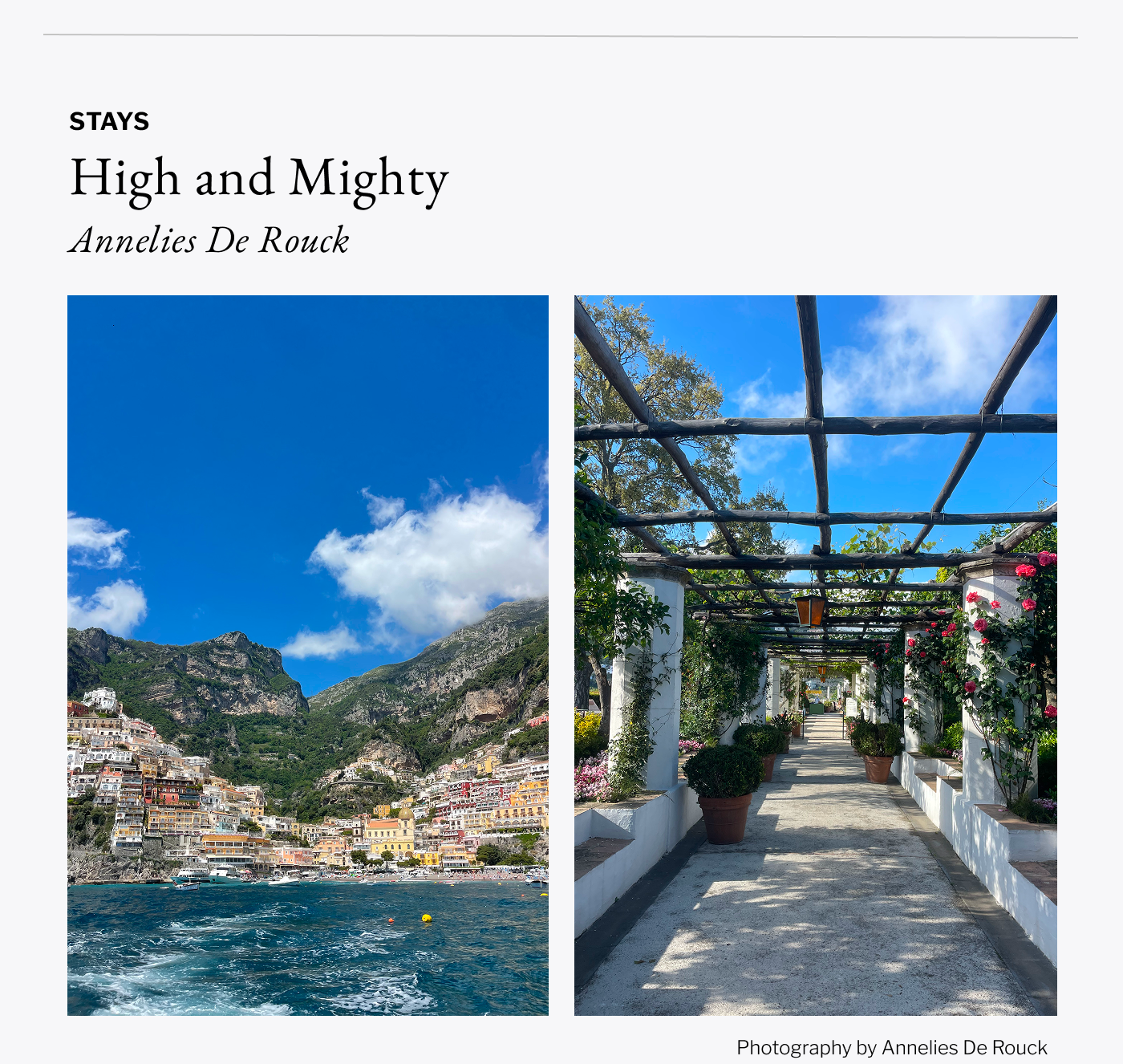
Perched on the cliffs above the Tyrrhenian Sea, Ravello is a less-hyped treasure of the Amalfi Coast. For centuries, its cooler climate and quieter, cinematic atmosphere has drawn writers and artists in search of a peaceful, seaside retreat.
In fact, it is said that Villa Rufolo, a 13th century landmark property with terraced gardens, inspired Richard Wagner as he composed Parsifal, his final work. Today, the villa is home to the prestigious Ravello Festival, an annual outdoor music celebration in its 74th year. Decades later, Virginia Woolf and other members of the Bloomsbury Group famously frequented another historic property in the town, a stunning 11th century building that continues to draw culture-shapers of today. The grand palazzo housing Caruso, a Belmond Hotel, sits majestically 1,000 feet above sea level, offering some of the most spectacular panoramas in Italy alongside all the ingredients of a successful Amalfi Coast stay. From its white-washed facade with sea-green accents and panorama-framing arches to its of-place ceramics and fragrant, just-groomed-enough grounds. Additionally, its 50 rooms and suites each possess their own character, thanks to a nuanced mix of genuine 18th century Neapolitan antiques, original prints, and modern comforts. Many also house private terraces. Suites offer kitchenettes and expansive terraces easy to imagine as inspiring marriage proposals. But it’s at La Piscina, the property’s revamped pool club, the only such club on the Amalfi Coast, that cements Caruso firmly in the present. Here, an infinity pool vanishes into the sea, while the poolside restaurant offers signature takes on leisurely Italian classics: pizza, gelato, and cocktails to be enjoyed on plush loungers.
While I could have easily spent every moment at the property, a ride aboard Caruso’s traditional wooden boat enhanced what I’d already defined as a quintessential stay. This complimentary daily experience comes replete with a picnic and Italian soundtrack. During the warmer months, the captain adds stops in sheltered coves so guests can enjoy a spontaneous swim. After having admired the splendid scenery from up high, I was delighted at the entirely new perspective offered by the sea — as well as by the lovely breeze that blew all thoughts of work and home from my mind. |
|
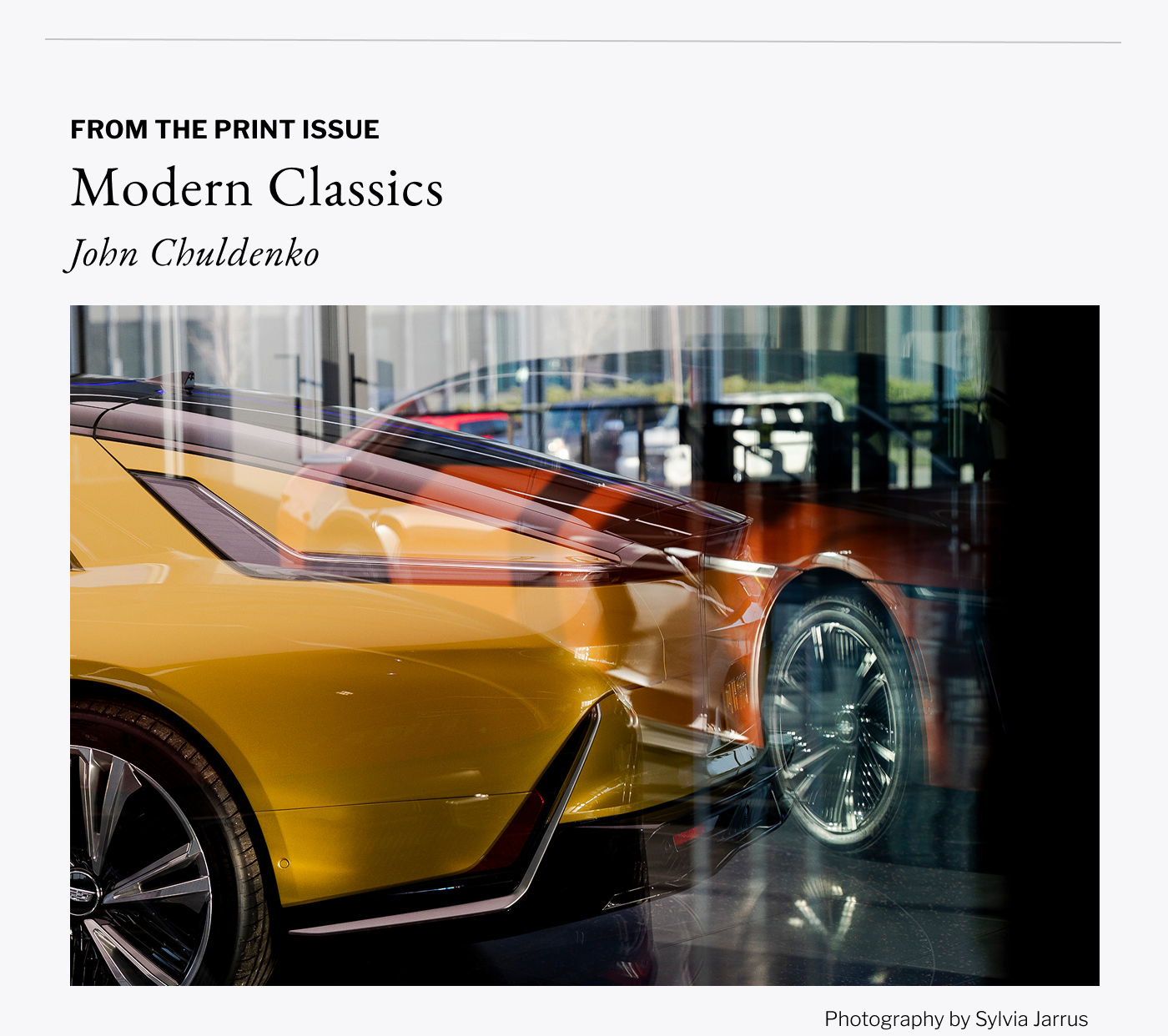
Architect Eero Saarinen’s General Motors Technical Center, located just north of Detroit is, in very simple terms, a midcentury masterpiece. Rolling through its gates, I had an overwhelming desire to get out and walk — just to spend as much time as possible admiring the rectilinear, glass-clad buildings radiating American optimism. I wondered if I could hide somewhere in this modernist marvel, with a skinny tie and a glass of scotch. But the only words I could muster were: How have I never been here before? It’s a shame this campus is closed to the public, its beauty admired only by the designers, engineers, and craftspeople lucky enough to work here. It’s exclusive by design, as indicated by former GM President Harlow H. Curtice, who declared upon its opening, “The campus-like atmosphere was sought deliberately not to impress visitors, but because we believe that such surroundings stimulate creative thinking and are conducive to good work.” Seventy years later, the center’s doors have swung open — for a select few.
I’m here to visit the Cadillac House at Vanderbilt. Named after legendary GM vehicle designer Suzanne E. Vanderbilt, one of the pioneering “Damsels of Design,” a 10-woman team hired by GM in the mid-1950s to help shape the automobiles of the future. The Cadillac House, likewise, serves as a creative workspace for Cadillac’s clients to collaborate with the concierge and design team as they specify one-of-one editions of Cadillac’s new flagship EV, Celestiq, poring over a nearly limitless selection of materials and finishes. I was greeted near the entrance by a habanero-hued Celestiq perched atop a turntable, flanked by the design and engineering teams who brought it to life. Senior Creative Brand Designer & Strategist Alexandra Dymowska sees Celestiq as “less of an object and more of an experience, imbued with personal meaning,” and this light-filled studio is where that experience begins …
Read this full dispatch and more close takes on a wide world in our Spring/Summer 2025 print issue. Order now. |
|
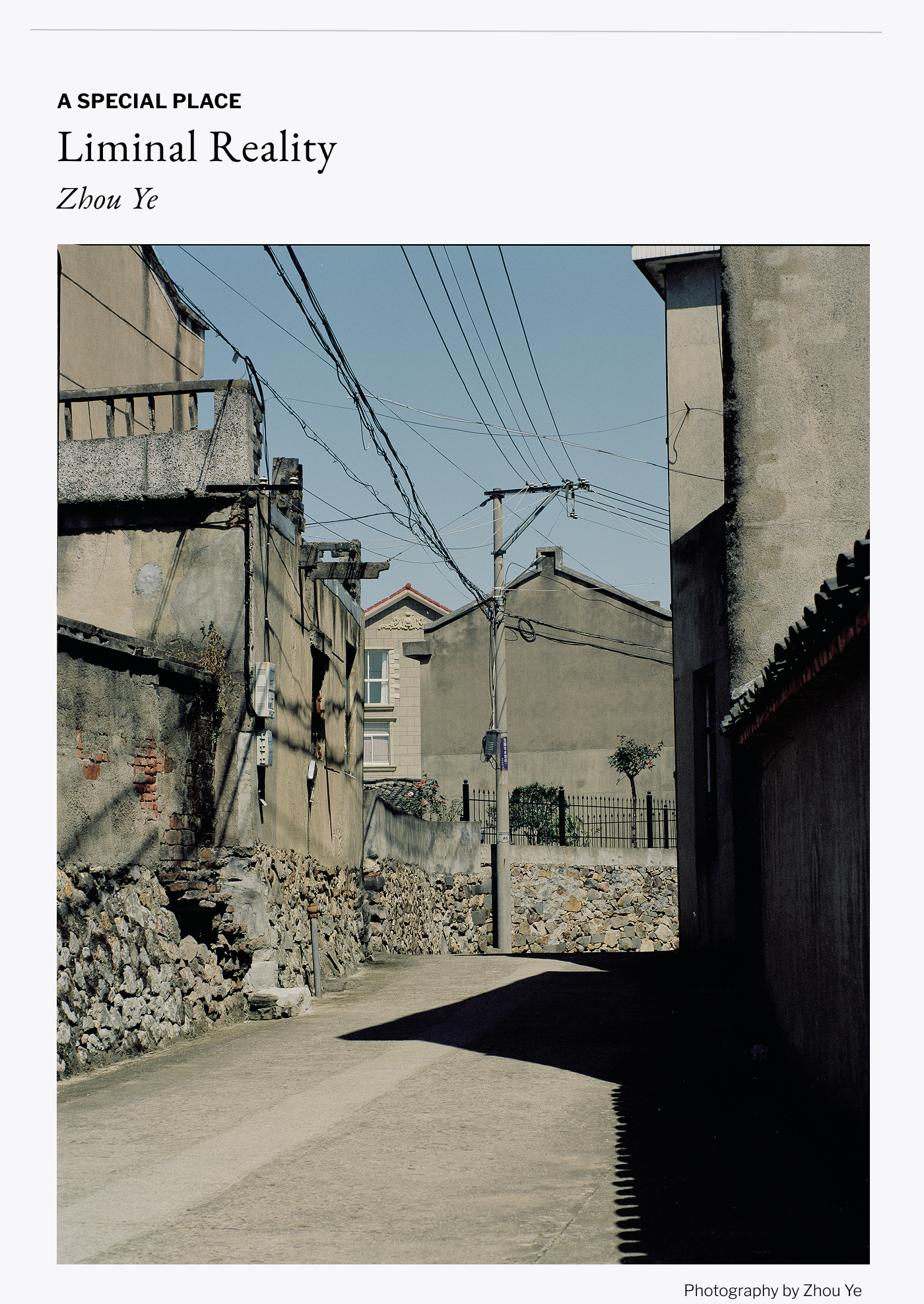
My hometown is Panjiakan, a small village nestled within a Chinese coastal city. Today, it is a quiet place, home to only a few hundred elderly residents. Perhaps it bears the mark of being “forgotten” by the world, but it will forever live on in the childhood memories of its descendants.
This photo was taken on the street outside my grandmother’s house. My earliest memory of this street dates back to my grandfather’s funeral, when I was four years old. While everyone else wept, I stood on this narrow path, clutching a few coins my mother had given me, searching for a small shop that sold sweets.
In countless dreams afterward, I’ve found myself running along this country lane, past fields where thick smoke rises above the wheat, past the roaring ships in the harbor, catching sight of a few elderly people basking in the sun on wooden stools. And when I turn back again, only the empty stools remain, scorching under the blazing summer sun. |
|
Reach for the Moon. There’s something incredibly romantic about a moon phase watch — a timepiece that displays the current lunar stage, mimicking its cycle as seen from Earth. What could be lovelier than a piece of jewelry that reminds you of the night sky and the wondrous natural ebbs and flows that guide our world? Noah, the supercool menswear brand, and Timex have teamed up for a new lowkey but highly dignified version that won't break the bank, but will, at least cosmically, blow your mind. –Alex Frank
Time Warp. I've visited Cleveland, Ohio, exactly twice and both times the highlight of my trip was a concert at Blossom Music Center, the outdoor amphitheater in Cuyahoga Falls and summer home of The Cleveland Orchestra (one of the world's finest). The bucolic venue offers remarkable acoustics, whether sitting in the pavilion or — my preference — picnicking on its expansive lawn. This year, I saw the orchestra accompany Icelandic singer-musician Laufey and her special blend of classical, jazz, and pop. Lying down and looking up at the sky, Laufey's airy voice channeling Ella Fitzgerald and Doris Day, I was transported to a different era. –Jackie Risser
Self Expression. The debut book by Baltimore-based music critic Laurence Burney, No Sense in Wishing, is a refreshing new collection of essays. Known for founding the independent magazine True Laurels, Burney explores how culture shapes our understanding of ourselves and the world, reflecting on the people, places, music, and art that have transformed him from the blocks of his hometown to Johannesburg and Lagos. As Kirkus Reviews describes it: Fluent, sometimes nerdy, and often funny observations about the power of art to add meaning to one’s life. My kind of a good read. –LaTonya Yvette
|
|
54 Franklin St #2R NY, NY 10013. ©2024 Dossier Projects, LLC.
|
|
|
|
|