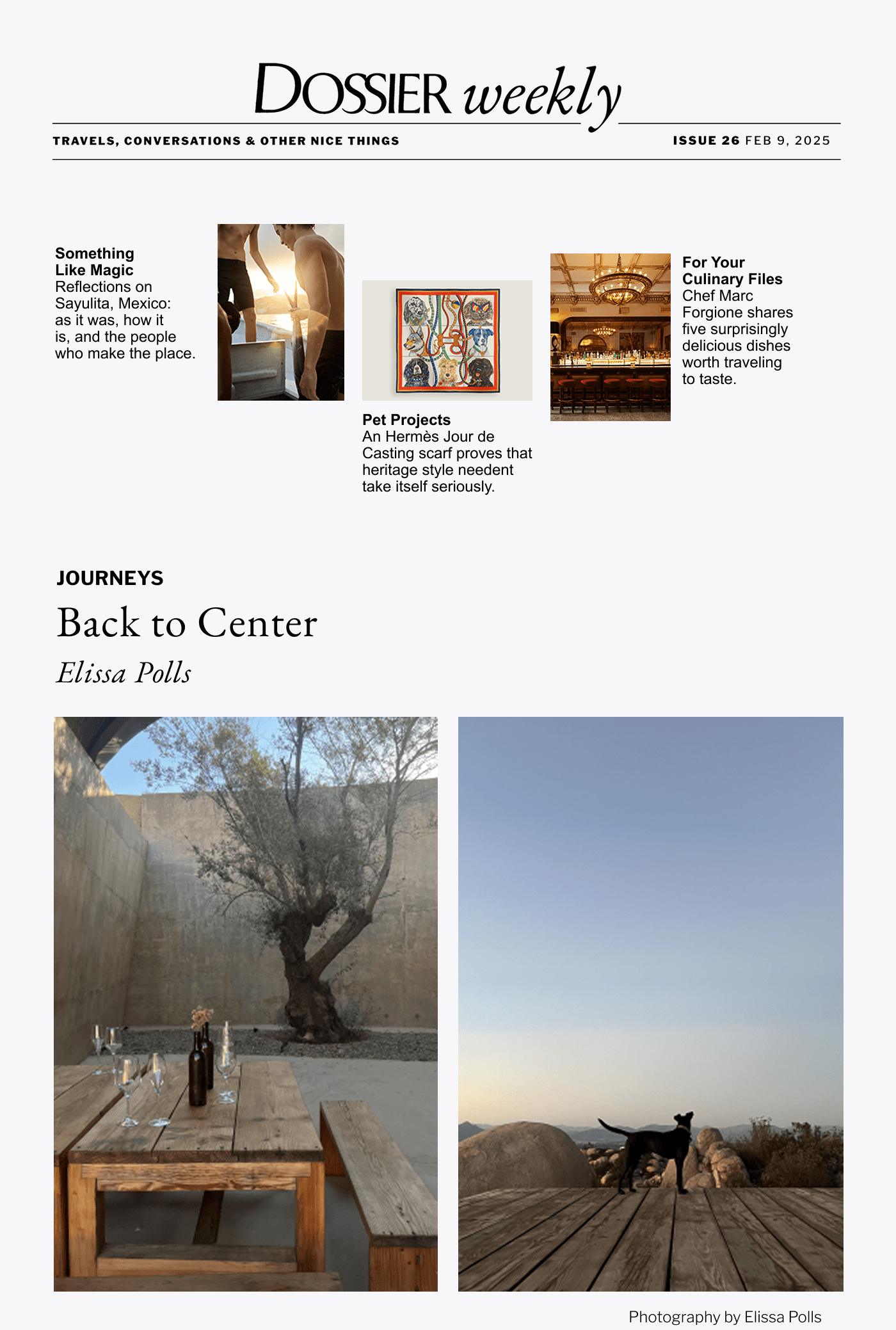
An approximate 90-minute drive south of the U.S. border (via San Diego), through winding roads with spectacular ocean views, sits an enchanting hilltop sanctuary overlooking the Valle de Guadalupe, Mexican wine country. Banyan Tree Veya Valle de Guadalupe resides within 16 alternatively wild and manicured acres, dotted with vineyards (the property’s winery Pictograma produces its own grenache) and majestic rock formations. Around it, Baja California Norte’s over 150 wineries serve up progressive natural vintages as well as traditional blends that reflect the region’s status as among North America’s oldest winemaking territories. Its first vines were supposedly planted back in the 17th century, predating California’s vineyards by nearly a century. Yet, the resort puts a fine point on wellness (it’s part of the Veya brand’s DNA) and, in my opinion, chilaquiles (I’ve never eaten better). They’re just one of many locally sourced and regionally rooted dishes available at the property’s seven dining venues, which include a gourmet food truck. It’s a holistic, custom approach to wellness that begins before you enter the resort’s grounds. A pre-arrival questionnaire mines for your personal ambitions and desires, down to your pillowcase preference. My choice case — satin, thank you — awaited me in one of the property’s 30 villas, which make minimal incredible. Never before have I requested the brand and shade of paint used on a beige wall in order to replicate its serenity in my own home. Veya’s turndown service adds to the tranquility by replacing the typical chocolate on the pillow, waterbottle next to the bed with a private wellness ritual. My favorite was a soothing foot bath: Rosemary leaves and jojoba oil were left in my shower alongside a kettle of hot water and a large bowl with instructions on how to unwind. Following, I retreated to my private outdoor plunge pool overlooking the vineyards — there are two additional resort pools carved into the hillside. Based on my stated wellness goals, I also participated in a sound bath, hilltop yoga session, and a bath salt-making class before entering the spa, where I plunged into a hydrotherapy circuit. Comprising five stations ranging from frigid to steaming, it rejuvenated my body and mind ahead of a massage and body wrap. Still, the most transformative experience of my stay was the temazcal journey. This traditional Mayan healing ceremony has been performed for thousands of years, but Veya is the first to offer its spiritual cleansing practices to both visitors and residents of the valley, building a domed sweat lodge on the property to help bring the community together. A local shaman led me and three other guests through a series of breathing exercises and chants as we challenged our bodies and minds to remain calm through several intense heat series. Walking out of the “house of heat,” I had a newfound sense of being I didn’t know I was capable of feeling. |
|
Chef Marc Forgione’s culinary influences are manifest. As a teenager, he trained under his father, chef Larry Forgione, at the elder Forgione’s restaurant, An American Place. Next came stints with world-renowned chefs ranging from Kazuto Matsusaka to Michel Guérard to Patricia Yeo, and the opening of Restaurant Marc Forgione, which earned him his first Michelin star in 2010 — and the distinction of being the youngest chef-owner in New York to receive the honor. These days, Forgione runs Peasant, Trattoria One Fifth, and — as of May 2024 — the eponymous Forgione. Located in Tribeca, the restaurant is an evolution of his namesake establishment, which held court on Manhattan’s Reade Street for 16 years before moving to its new home. Billed as New American cuisine, Forgione’s cooking is ultimately about transforming premium seasonal, local ingredients into playful, bold takes on familiar dishes, often incorporating inspiration from his travels. “Whenever I travel, I let the local food guide my experience,” the chef confirms. “It’s the unexpected discoveries that make each trip memorable — whether a surprising bite or a hidden gem.” Here are five of his prized finds. |
|
Lookout Tavern in Martha's Vineyard, Massachusetts. When I was a kid, Ipswich fried clams were among my favorite foods. For whatever reason, you don’t see them anymore in New York restaurants, so when I was working as a guest chef for a weekend in Martha’s Vineyard, I knew I wanted to find the best fried clams. The fried clam bellies I discovered at Lookout Tavern were crispy, meaty, tasted like the ocean, and hardly needed sauce.
Trattoria Sostanza in Florence, Italy. When I was revisiting Florence after almost 20 years, Trattoria Sostanza was recommended to me by my friend Andrew Zimmern. The last thing in the world I thought I was going to remember from my trip to the city would be an artichoke omelette. It was incredible. The artichokes were cooked perfectly, the eggs were as light as I’ve ever tasted. The little squeeze of lemon on top was the perfect touch. It was probably my most memorable bite in all of Tuscany, which is saying a lot.
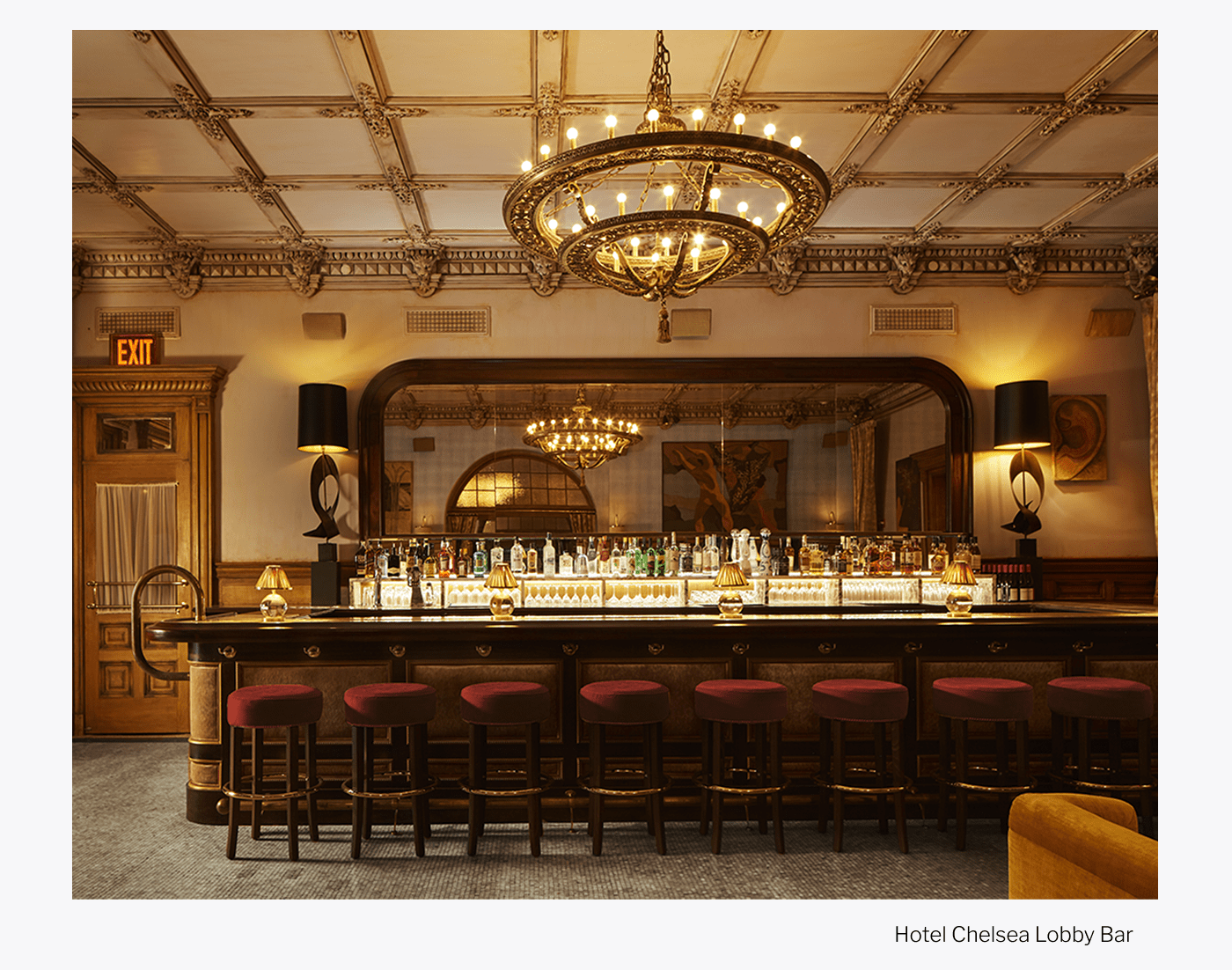
Hotel Chelsea New York, New York. Hands down the best martini that I’ve ever had anywhere on Earth, never mind in New York, is the Duke’s Martini at the Hotel Chelsea Lobby Bar. One night when I was there enjoying one, the manager sent me an order of French fries as a complimentary snack. I honestly don’t believe I’d ever had a martini and french fries at the same time before. It was spectacular and something that I will now be serving at my Tribeca restaurant during happy hour.
Garcia's Seafood Grille & Fish Market in Miami, Florida. Everybody is aware of Joe’s Stone Crab in Miami, which I love. However, I was introduced to Garcia’s about 10 years ago by a friend in the fashion industry during Art Basel Miami Beach. The restaurant is on the way to the airport, coming from South Beach, and visiting it has become a tradition: Every time I go down to Florida for the South Beach Wine and Food Festival, I bring my wife and son and the team that just helped me cook during the festival. We enjoy pounds of stone crabs, tequila, and Modelo. It’s the perfect way to lick your wounds from the weekend.
John's Drive-In in Montauk, New York. On my visit to Montauk last year, I brought my son, Sonny, to John's to get ice cream and play mini-golf next door. I saw one of the employees at the drive-in making fresh waffle cones in the back, so I figured I should try one. I am not a big “sweets” guy, but I ended up finishing the entire thing. I wouldn’t even give another bite to Sonny when he asked. |
|
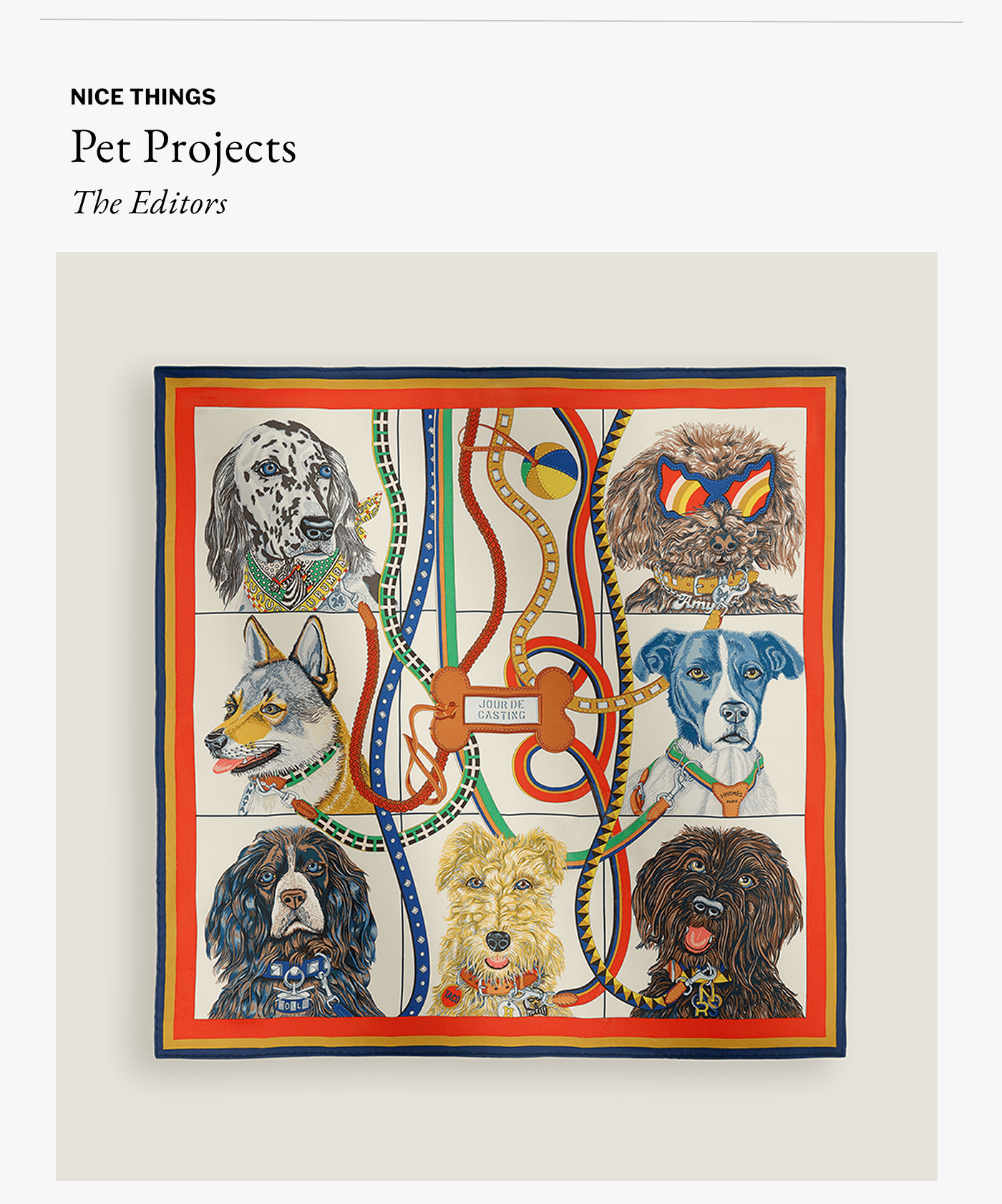
There’s a fine line between a heritage item and a dated one. It’s a line Hermès unerringly walks with aplomb. The legacy French house’s craftsmanship is Old World in terms of expertise and prestige, yet even its most iconic items remain refreshingly modern — as this Hermès Jour de Casting scarf underscores. It’s an equation woven into the accessory's DNA. The first Hermès scarf, which debuted in 1937, caught Parisian eyes due to its colorful woodblock print and unrivaled strength, a result of its superior silk. Original motifs, versatility, and durability still clearly define the company’s creations: The above statement design was Made in France from 100% silk and hand-rolled, but its swanky dogs are unambiguously of this era. |
|
I came to Sayulita for the first time by chance. It was barely planned — yet, if you believe in these things, totally providential: something that could have very easily not happened but which changed everything.
In the long, gray slog of New York winter, I saw the town tagged in a post by a photographer I barely knew. Her pictures were beautiful, evocative enough that within hours I had Googled the place, found that the miles I had sitting in my airline account would get my family there, and impulsively planned a trip.
We arrived a few weeks later. It is always enchanting to step off a plane in the tropics in February, to be enveloped in the warm, soft air when you’ve grown accustomed to being smacked by the oppressive cold. But I have been to plenty of warm places. That wasn’t the only magic. Having been all over the world, I wish I could tell you definitively: This is what makes a place special. But I can’t. It’s really a feeling, one that is intensely personal. For me, it’s an immediate sense I get when I arrive somewhere new, a combination of what I see and smell and feel, but, even more, a certain energy. That energy, that lightning-bolt feeling, has rarely guided me wrong.
In Sayulita that winter, we drove around in a rented golf cart, with the kids eating paletas on the back, the jungle lush and green around us, the wind blowing their hair, still damp and filled with sand from being tossed around by the waves. And we thought: Why can’t life feel more like this? We carried the question back to New York and rolled it around for the next couple years. “Skye, you only live once,” my mother told me, when I tentatively shared this strange dream with her. Ultimately, we decided we did want to try living the life that we had tasted in this small town, so we moved.
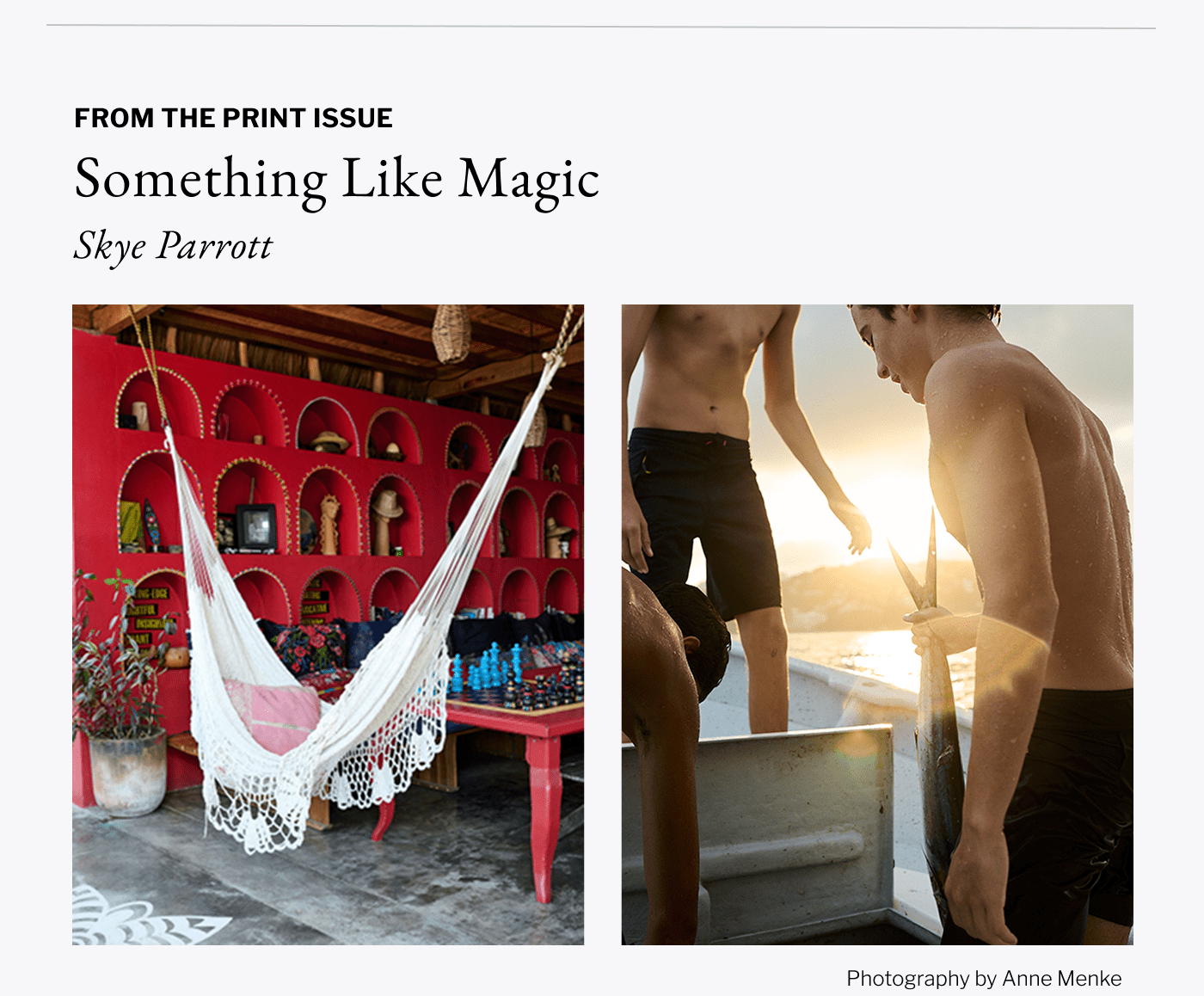
Someone told me once that “the people make the place,” a maxim I often think of when I travel. This portfolio includes a few of the many people who continue to make Sayulita, a place that defies easy definition, so special. Unlike many tourist destinations in Mexico, Sayulita has no separate “tourist zone.” It’s one town, a nuanced, living organism layered with all of the things it has been and what it might one day become: a traditional Mexican fishing village built on the site of an Indigenous Huichol energy center; a bohemian surf town that has grown into a winter escape for tourists looking to bask in its temperate February sun; a home for people from all over, searching for a certain kind of life …
Read the full article alongside more close takes on a wide world in our latest print issue. Order now. |
|
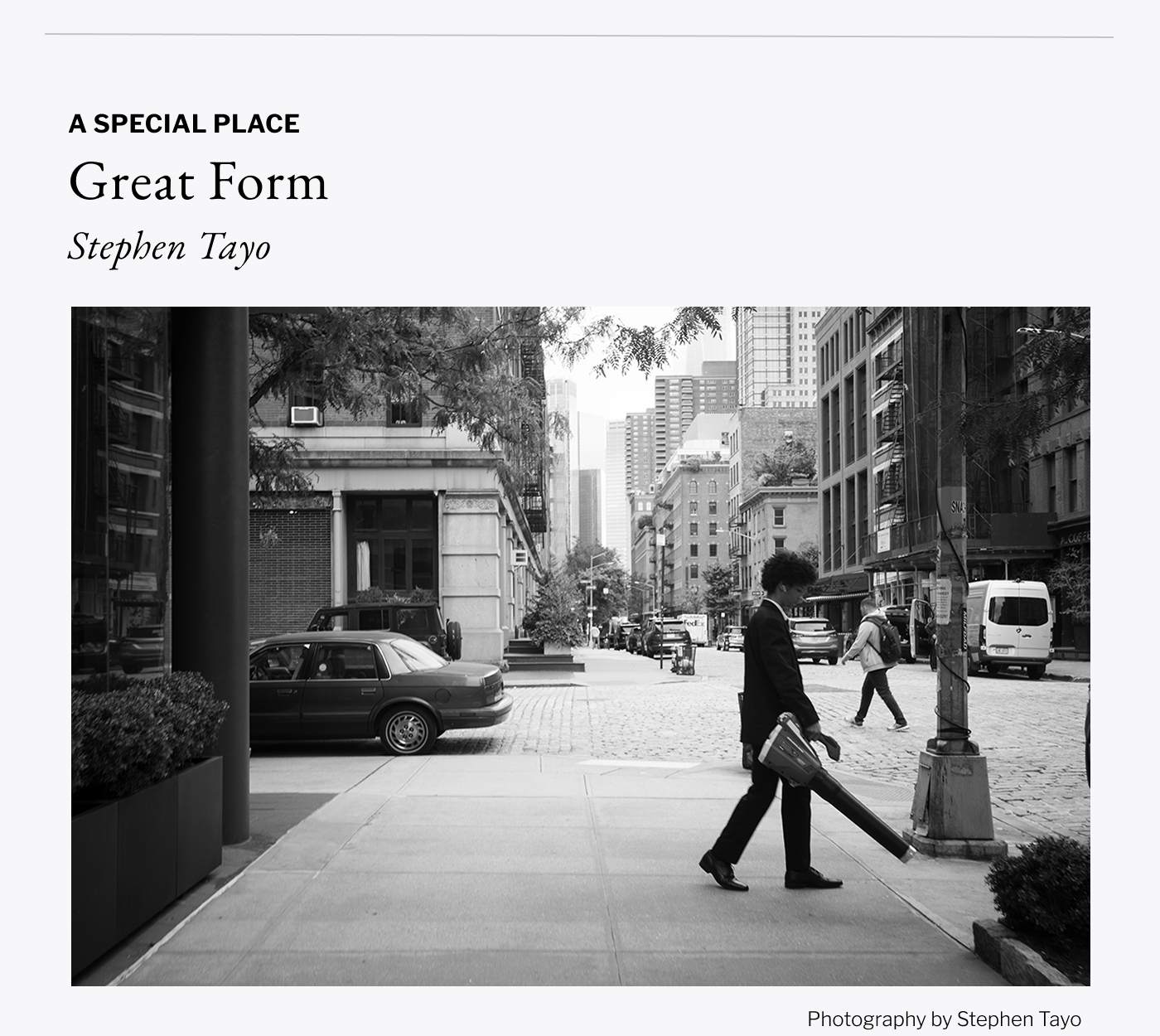
New York has some similarities with my home city, Lagos, Nigeria, and I find the streets truly inspiring to observe. There’s something particularly captivating about this young Black boy who I saw in SoHo. He’s impeccably dressed, focused, at work. His appearance, the attention to detail in his attire, is simply beautiful to witness. |
|
Before and Afterglow. In Hawaiian, alaula references both the “light of dawn” and the “sunset glow.” At Conrad Orlando, where I recently escaped for a restorative dose of winter warmth, it also defines an intimate dining experience at the hotel’s Papaya Club restaurant. This culinary inspiration came full circle during my stay when I cozied up to a firepit at golden hour to sample a menu of contemporary Polynesian snacks (think Ahi tuna and shrimp toasts or gyoza) served alongside sunset-inspired cocktails, such as an Ube daquiri. Before long, a palpable glow emanated from both my contented companions and the fading rays that illuminated the hotel’s private lagoon and white-sand beach just before dipping below the horizon. – Annie Lin
Companion Ticket. I hadn’t even set my carryall down before a friend commented, “I bet that bag has some stories!” They were referring to The Brixton, my lovingly patinaed messenger bag from Ona. Designed for cameras, its generously padded inserts are reconfigurable and cocoon the 13-inch laptop, headphones, sunglasses, and book or two that have called its interior home for years, across continents. The bag’s cognac leather exterior also ages beautifully, and, left open, its brass closures make a comforting clack that resonates through the concourse — an eagerness for an upcoming adventure. – John Chuldenko
Yes, And. When the landscape of life feels either too vast or too treacherous to traverse, I turn to On Being. The once radio show, now podcast features host Krista Tippett in unflinching conversations with luminaries such as the Reverend Desmond Tutu, poet and writer Nikki Giovanni, and two-time U.S. Surgeon General Dr. Vivek Murthy, with each encounter exploring what it means to be human today. Terms such as “generative” and “iterative” resurface often, reminding us that there are two sides to every word. This duality is precisely the point. As Tippett and her guests examine their prompt from all directions — by way of lived experience and empirical research — they repeatedly conclude that both our external and internal worlds are as likely to flourish as they are to fail. Yes, we are in a state of existential personal and global crisis. And there is a universe of potential solutions out there, if we orient in the direction of growth, compassion, and possibility. –Erin Dixon
|
|
54 Franklin St #2R NY, NY 10013. ©2024 Dossier Projects, LLC.
|
|
|
|
|