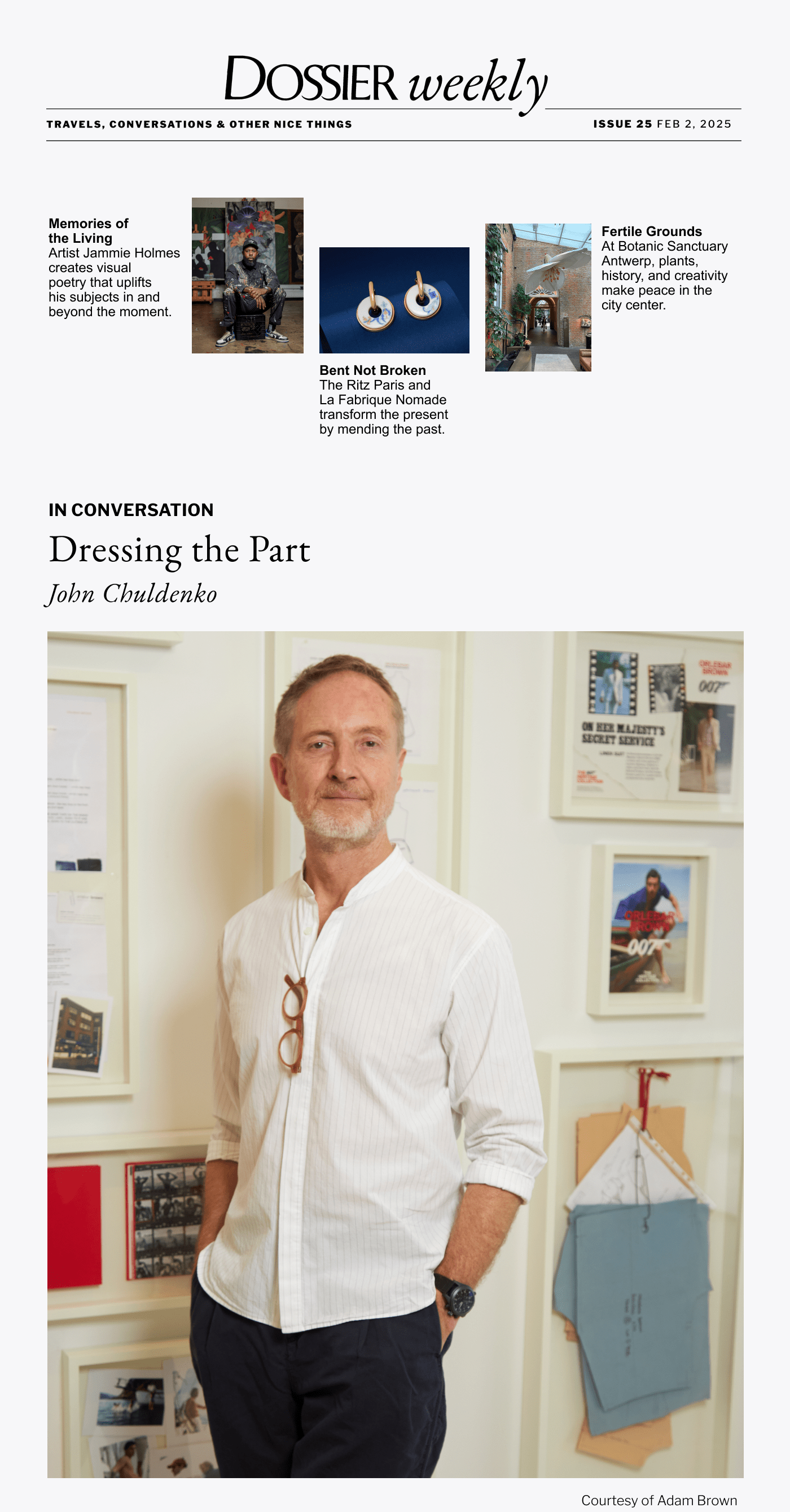
It all started with a single pair of shorts. Heading to lunch while on holiday in India, Adam Brown, founder of Orlebar Brown, was stopped by resort staff and asked to change out of his swimwear. This simple request set Brown on a journey to create versatile, tailored “shorts you can swim in.” Said shorts inspired the DNA of his brand and informed his entire business. “Everything about Orlebar Brown is in that pair of shorts,” Brown says, reflecting on his company, which started in a storage unit and has grown into a global lifestyle brand. Although it now sits under the Chanel umbrella and collaborates with brands ranging from La DoubleJ to Lamborghini, Orlebar Brown remains inspired by travel because, Brown reveals, that’s when he does his best thinking.
Why does leisure time matter?
Leisure time is about learning, dancing to different music, eating different food, meeting different people. In the last few years, I’ve found holidays to be even more important for not feeling isolated or being inward-looking — for actually being part of a wider world.
How do holidays inspire you?
Being on holiday has led to my moments of change, and I invariably have ideas for new seasons. Holidays give me a moment to pull myself together, sit with a laptop or a notepad, put ideas down, and think things through. I come up with conceptual words, then work out how they feed into a collection. Last year, I had a season called “Blossom.” It obviously included a print reference to plants and petals, but holidays are also a time when you can blossom. When you travel, you blossom; when you have time to think, you blossom.
Is there one travel experience that has particularly impacted you?
I did a lot of thinking when I was in Namibia. I had no idea the desert took so many forms. There were so many different colors. I found that quite inspirational.
Do you have a favorite mode of travel?
I like walking. I like being at a speed that allows me to stop and notice things.
Any last words of travel advice?
Be brave.
|
|
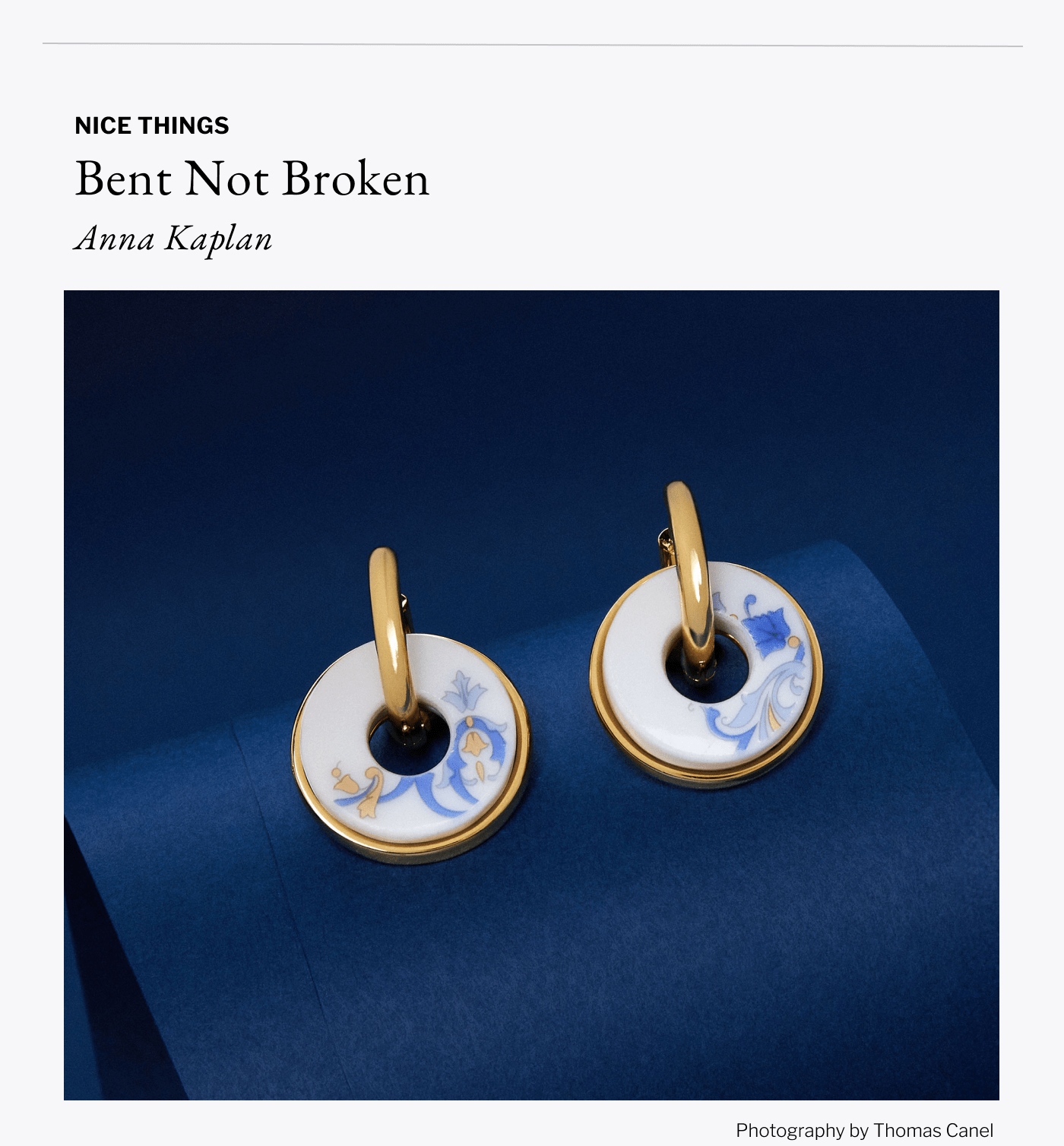
There is an ancient Japanese mending method called kintsugi. It is the art of repairing broken pottery using urushi lacquer dusted with powdered gold to seal its cracks. The practice embraces the shining scar as part of an object’s history, rather than something to disguise. The Ritz Paris’ first upcycled jewelry collection immediately reminded me of kintsugi. Although its designs weren’t crafted using the same technique, a similar philosophy seemed to apply, with the minimalist pieces made from broken fragments of the hotel’s heritage Marthe porcelain dinner service, famously designed by César Ritz. The limited-edition, 40-piece capsule was created by six artisans from La Fabrique Nomade, a non-profit association that promotes social and professional integration for migrant and refugee artisans in France. Each piece — spanning necklaces, bracelets, rings, and earrings — highlights both the artisans’ extraordinary craftsmanship and the Parisian hotel’s efforts to support sustainable fashion, with all profits from the collection returning to La Fabrique. |
|
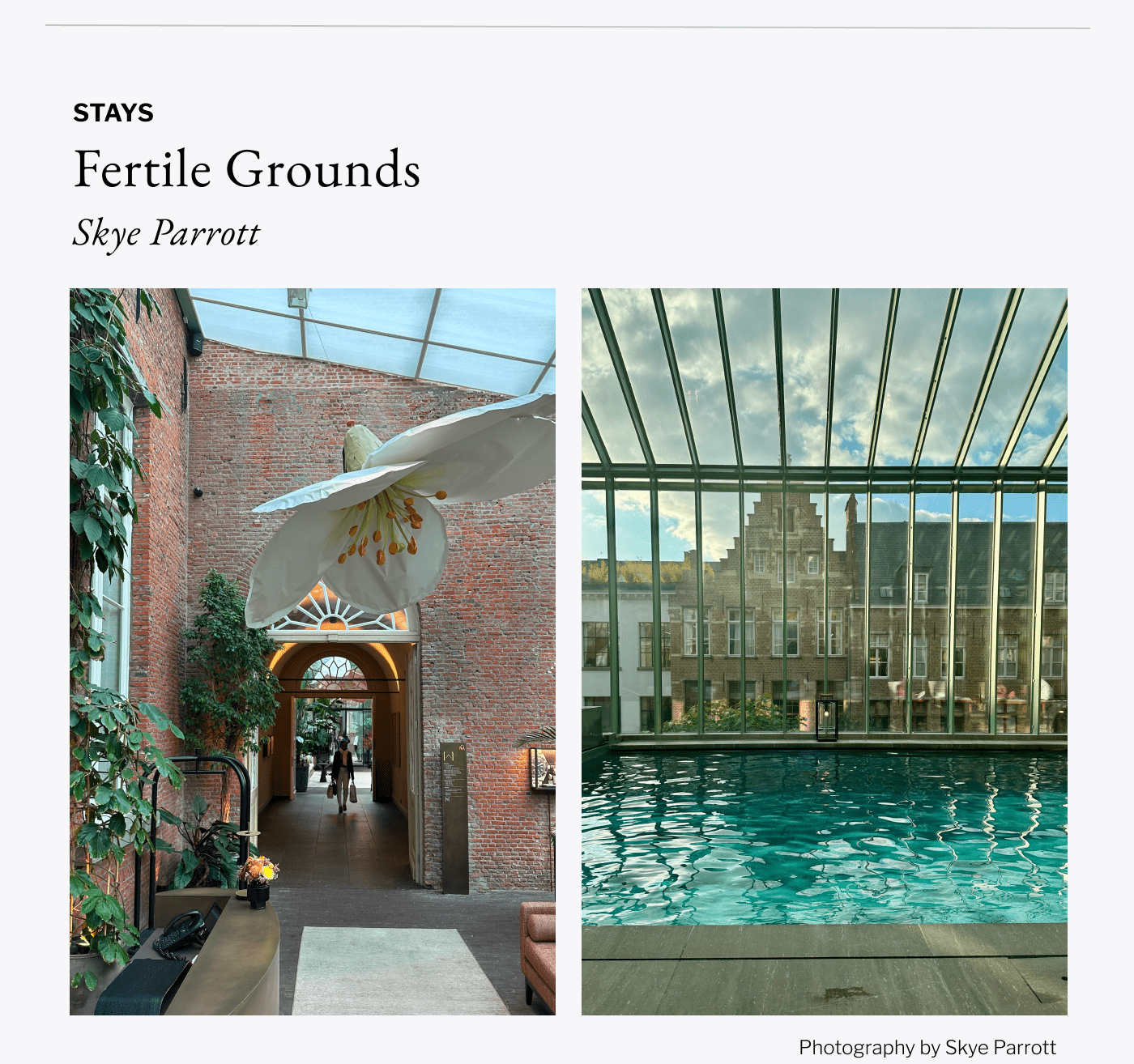
One of my favorite things about Europe is how easy it is to travel between worlds. You can board a train in Paris and two hours later find yourself in another country. On a recent trip, my country of choice was Belgium, specifically the magical city of Antwerp — and my point of entry was Antwerp Central station. The heritage depot, which dates back to 1905, regularly appears on lists celebrating the continent’s most beautiful train stations. It has four layers of tracks stacked on top of one another and a soaring iron-and-glass domed waiting room, which empties into Koningin Astridplein square. That’s where the driver from Botanic Sanctuary Antwerp, the city’s newest and lushest property, met me, holding a sign and standing in front of a sleek Porsche Panamera. “Oasis” is an irrefutably overused word in travel journalism, but it really is the most accurate description of this hotel’s grounds. The property is a maze of restored buildings — a hospital, rectory, monastery, and chapel in their former lives. Along with guest rooms, they house a sprawling, multi-level spa with a glass-topped pool and six restaurants holding a combined total of three Michelin stars. Each displays an incredible, considered commitment to precision. The private dining room of Henry’s Bar & Bistro epitomizes this dedication; its deep, red walls are painted with wine. This anecdote isn’t something the hotel advertises. Rather, it’s a story a guest is lucky enough to hear if they fall into conversation with the right waiter. Such attention to detail, storytelling, and fun popped up everywhere during my stay. As its name suggests, Botanic Sanctuary Antwerp is also surrounded by copious green space, despite its location in the heart of the city. In fact, the hotel’s concierge swore that the courtyard of the former monastery is the quietest spot in central Antwerp. This very well may be true: When I returned after dinner on Saturday night, the property’s grounds were entirely still, giving no indication that a lively weekend night was unfolding just beyond its old brick walls.
A small port city, Antwerp is eminently digestible while still possessing a wonderful jumble of cultural offerings. It has long been the center of the world’s diamond trade and is home to the only museum that is a UNESCO World Heritage site: the Museum Plantin-Moretus, which houses a printing press that has been in operation since the 16th century. But what the city seems to pride itself on the most is its creativity. Peter Paul Rubens lived here, and much of his work still does. In the 1980s and 1990s, the city produced enough consequential fashion designers that a group of them, including Ann Demeulemeester and Dries Van Noten, became renowned globally as the “Antwerp Six” (Martin Margiela, also from the city, came slightly earlier). Small streets lined with independently owned boutiques attest to the endurance of these artistic influences. One of my favorites was Ganterie Boon, a 140-year-old, fourth-generation, family-owned glove maker. I also loved Stad Leest, an incredible paper store; Studio Play, with its charming children’s clothes; and Cajun, which was filled with spices from around the world. |
|
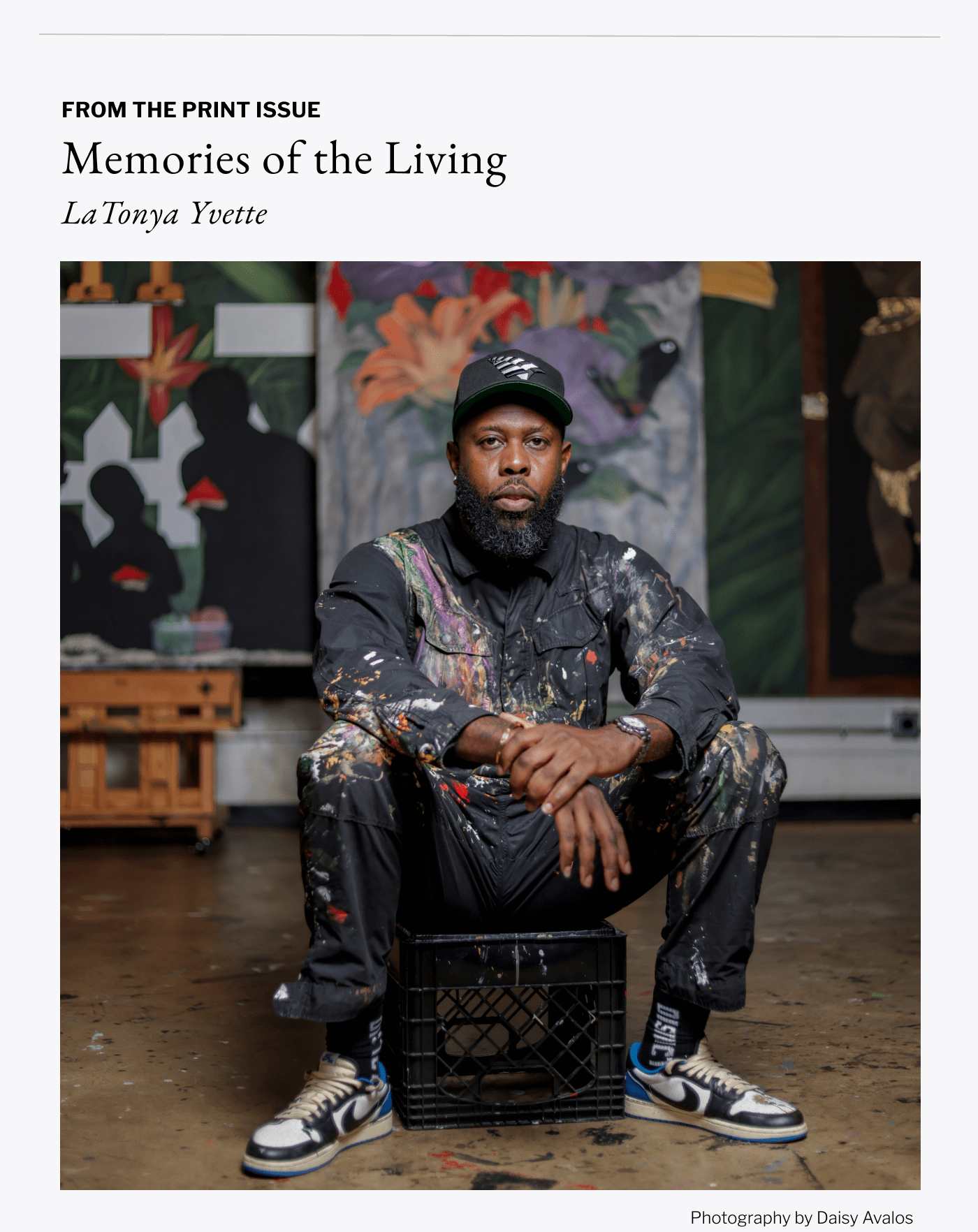
“Before you get to my studio, at the front of the street, there's this light pole. It's full of morning glories. Full. Up to the wires. It's morning time and I’m walking my dog; man, these [flowers] are gorgeous. And when I left the studio that day, they were dead. Success, beauty — all of it is temporary. You have these nice, pretty purple plants, right? But they’re dead by the end of the day. In Louisiana, life and death are a part of the culture. We celebrate that,” artist Jammie Holmes tells me, his eyes soft, passionate.
Morning glories are like trumpets in colorful bloom. For me, they recall my Brooklyn childhood, when I watched musicians gather in front of the church’s altar on special occasions, calling upon the instrument’s rich timbre to broadcast, to celebrate God’s presence, to remind us to take note and listen to the Word. This scene is similarly reconstructed in Holmes’ Church Folks exhibition, which dressed the walls of The Gordon Parks Foundation in Pleasantville, New York, with Black women donning Sunday hats and sometimes gold teeth. This memorialization of bodies and objects just before and after church service is “what felt like home,” Holmes explains. After all, “going home” for Black folks in the American South references not only a place of shelter but also what happens when our bodies leave this Earth.
Seeing those morning glories cycle through life and death within hours propelled Holmes toward the flipside of that exploration: expressions of “being here.” It led him deep into research about the origins of particular flowers, as well as their cyclical phases, and, eventually, to the poetic expressions seen in his most recent show, Morning Thoughts at Marianne Boesky Gallery in New York. In it, Holmes’ venerated human figures bloom from daylilies and morning glories, referencing the foundational ecology of our world. “At first, I was not going to put any figures in [the flowers]; it was more about the spirit of that plant. I needed somebody to see that spirit.” Holmes shares …
Read the full article alongside more close takes on a wide world in our latest print issue. Order now.
|
|
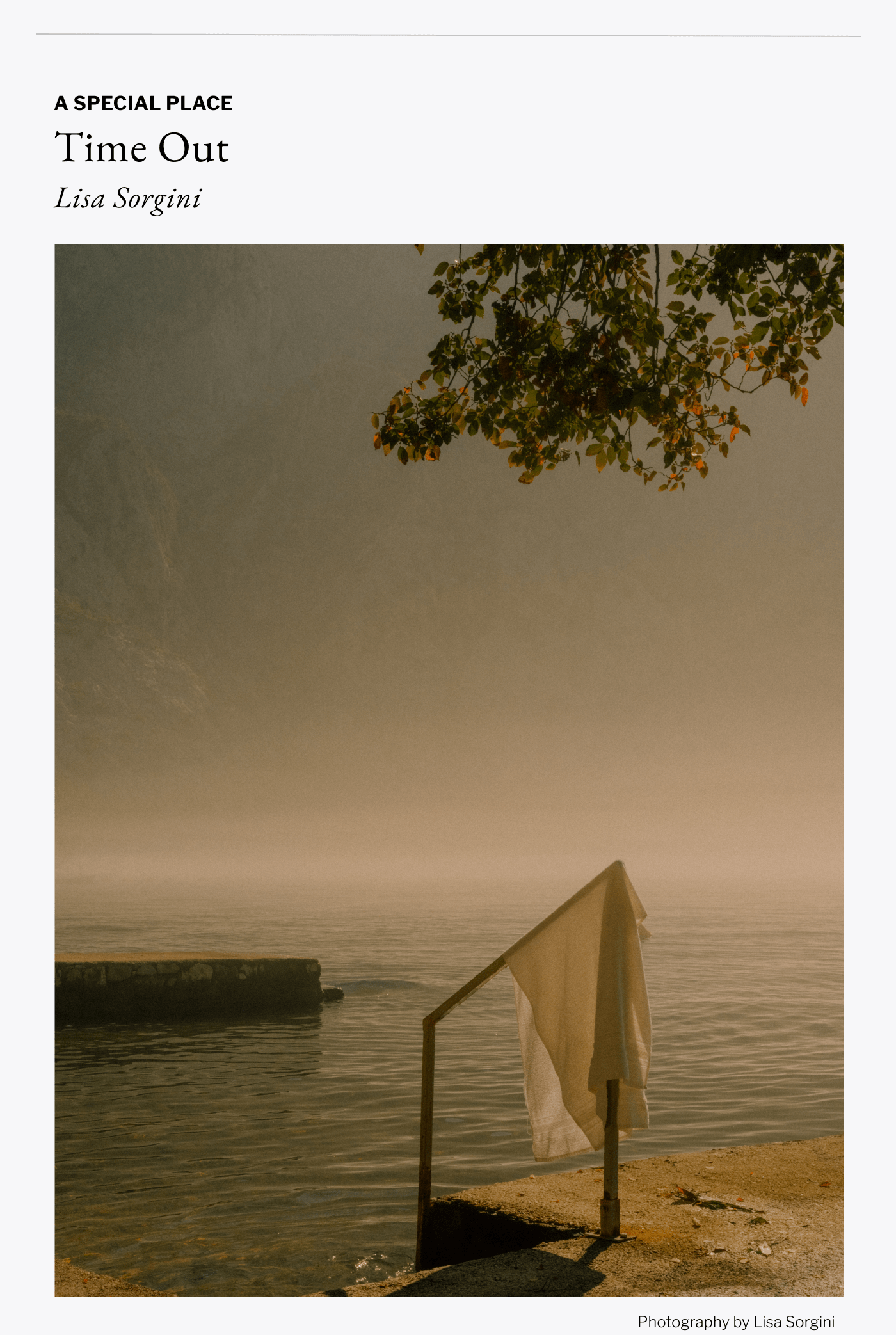
Orahovac is a tiny fishing village on Boka Bay in Montenegro, surrounded by the tallest mountains. I discovered it by chance this summer and ended up spending a month there. It's still a sleepy place, with a rhythm that you can tell has remained the same for a long time. For me, it had an air of mystery and magic — and my daily swims in the silent bay are something I will return to in my mind for many years. |
|
Body Rx. I’m currently obsessed with running, an activity I’ve done for years but never with this much fervor. Now, I’m logging around 20 miles a week, which requires serious post-training body care. Remedy Place SoHo, the latest outpost of the popular wellness club’s empire, has become a key player in this recuperation. I’ve previously visited its Flatiron location, where I tried lymphatic compression and cryotherapy; at the new location, I opted for state-of-the-art A.I. bodywork. Essentially, a super-intelligent computer scanned me, then used robotic arms to massage the body parts most in need of a little TLC. I felt great, loose, and even a little high after just one session. –Alex Frank
Electrified Dining. Off-the-grid excursions often involve some sort of truck, which is part of the reason I recently drove a formidable Hummer EV toward an unusual dinner in the California desert. The event was hosted by Hummer and roving restaurant Outstanding in the Field at a remote date farm, its electricity provided exclusively by our EVs. Treading to the table over soft, fallen palm fronds, I met chef Davin Waite, who introduced each course, along with the locals directly responsible for harvesting the vegetables and catching the swordfish. There, unplugged from a power grid, I felt fully plugged into the moment, the land, and the people who made it possible. –John Chuldenko
A Worthy Tipple. During this incredibly cold season, to aid my internal warming, I’ve been making Gin Hot Toddies with The Botanist Distiller’s Strength Gin, a bold, juniper-forward spirit crafted with 22 hand-foraged botanicals from the Scottish island of Islay. I highly recommend both the gin and the cocktail. Here’s my recipe: 1 ½ oz. The Botanist Distiller’s Strength Gin, ¾ oz. lemon juice, 1 tsp. honey, 4 oz. hot water, a cinnamon stick, and a few cloves. Cheers! –Elysha Beckerman
|
|
54 Franklin St #2R NY, NY 10013. ©2024 Dossier Projects, LLC.
|
|
|
|
|