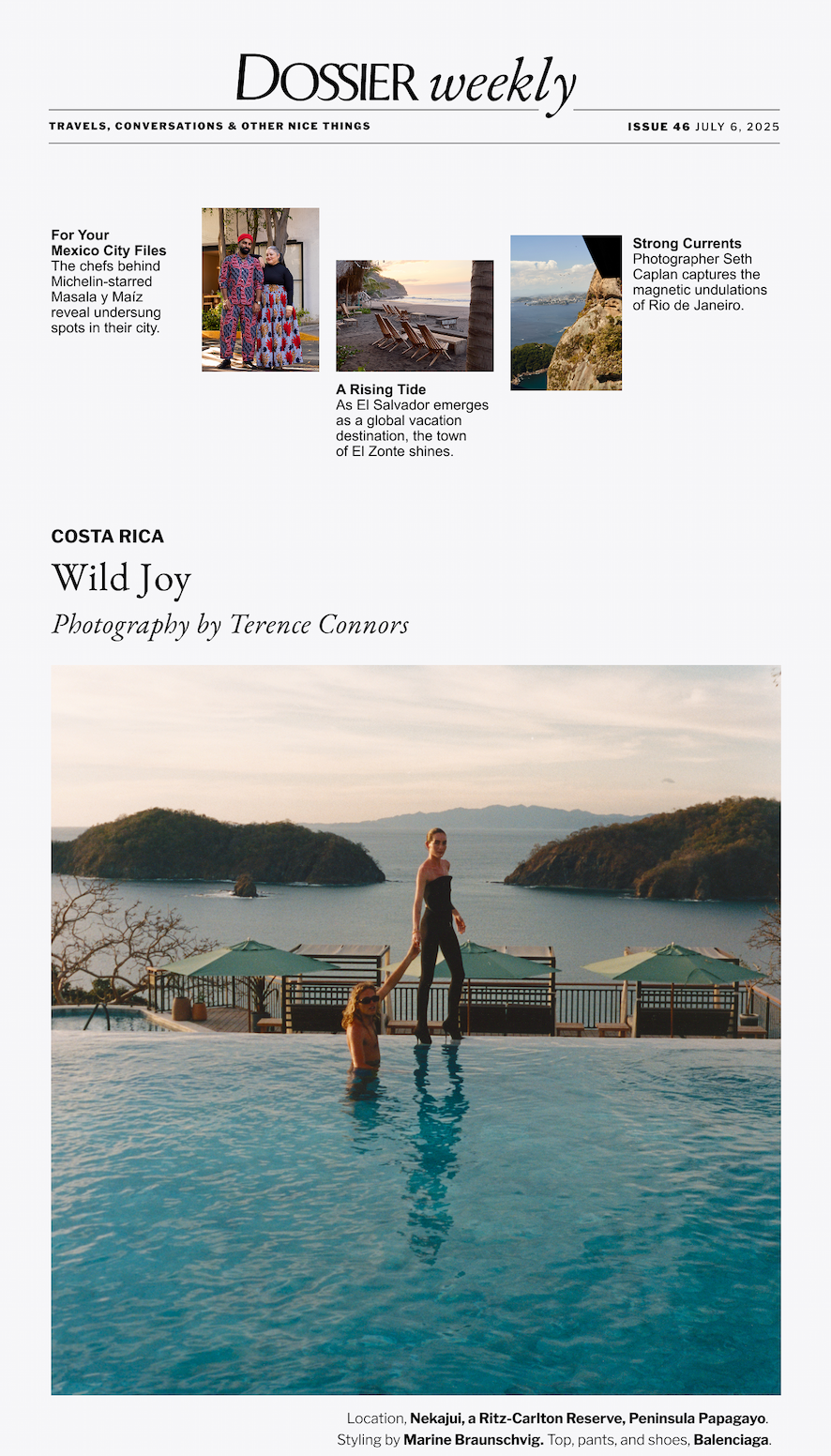
Photographer Terence Connors captures Heather Kemesky exploring Costa Rica's regenerative flora and fauna, surreal landscapes, and absorbing culture, stopping at three of the country’s most enriching hotels along the way.
Nekajui, a Ritz-Carlton Reserve, Peninsula Papagayo. A considered reflection of its majestic setting, Nekajui elegantly blends adventure, tradition, and nature. Guest rooms, suites, luxury tents, and private residences feature Guanacastecan architecture overlooking Bahía Huevos bay and the gleaming Pacific Ocean. The resort’s culinary program pays homage to Costa Rican coffee culture and traditional dishes, highlighting local ingredients, while Nimbu Spa and Wellness draws from the rituals of the Nicoya people. As for nature, the Palmares Outpost in the Palmares Conservation Area — a 250-acre sanctuary that encircles the resort — offers immersive activities. |
|
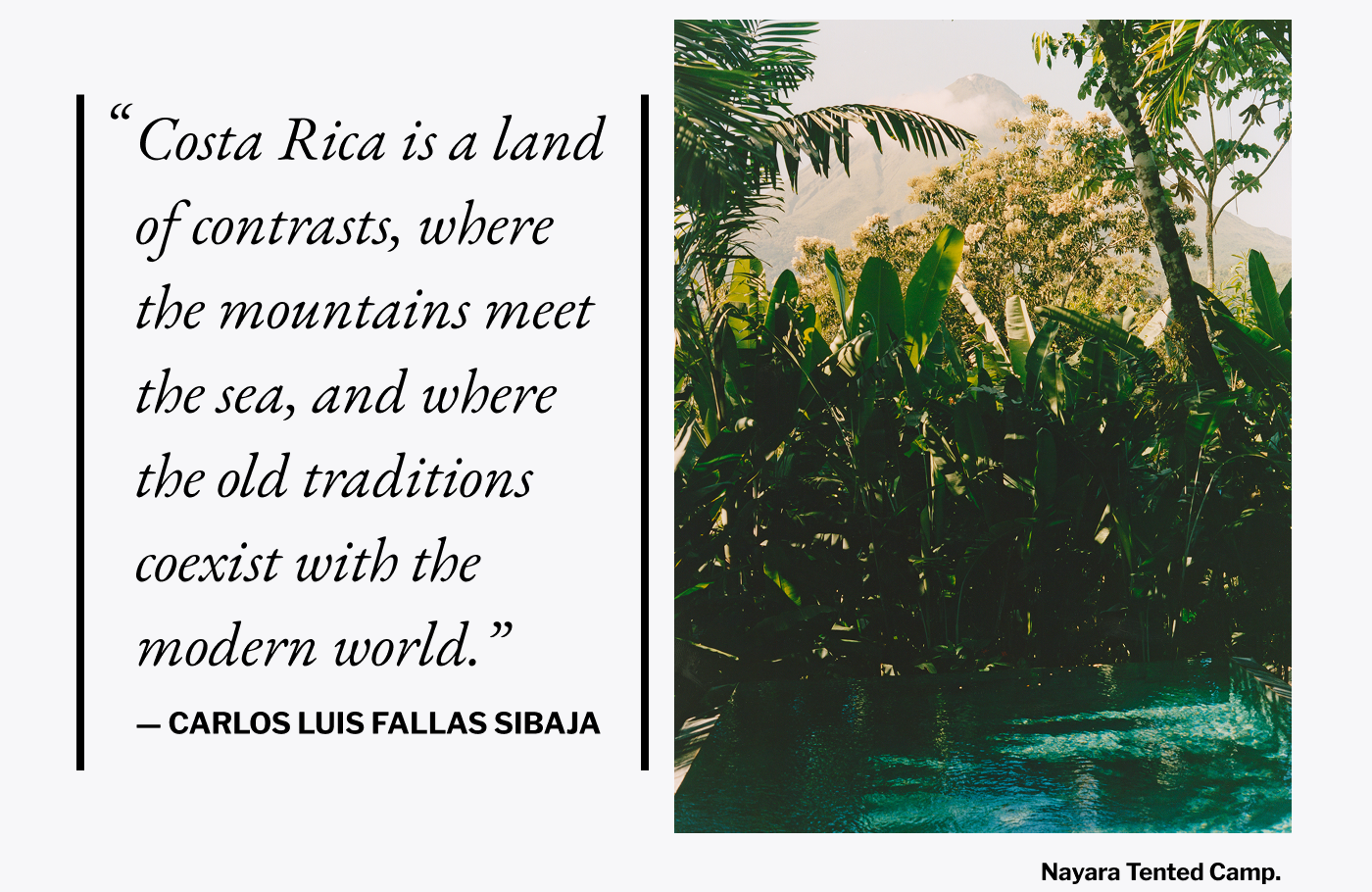
Nayara Tented Camp. Nestled in Arenal National Park, the Residences at Nayara Tented Camp are premier expressions of the country’s renowned “green” ethos. These amenity-rich accommodations are designed to live in harmony with the rainforest, their private plunge pools fed by mineral hot springs. |
|
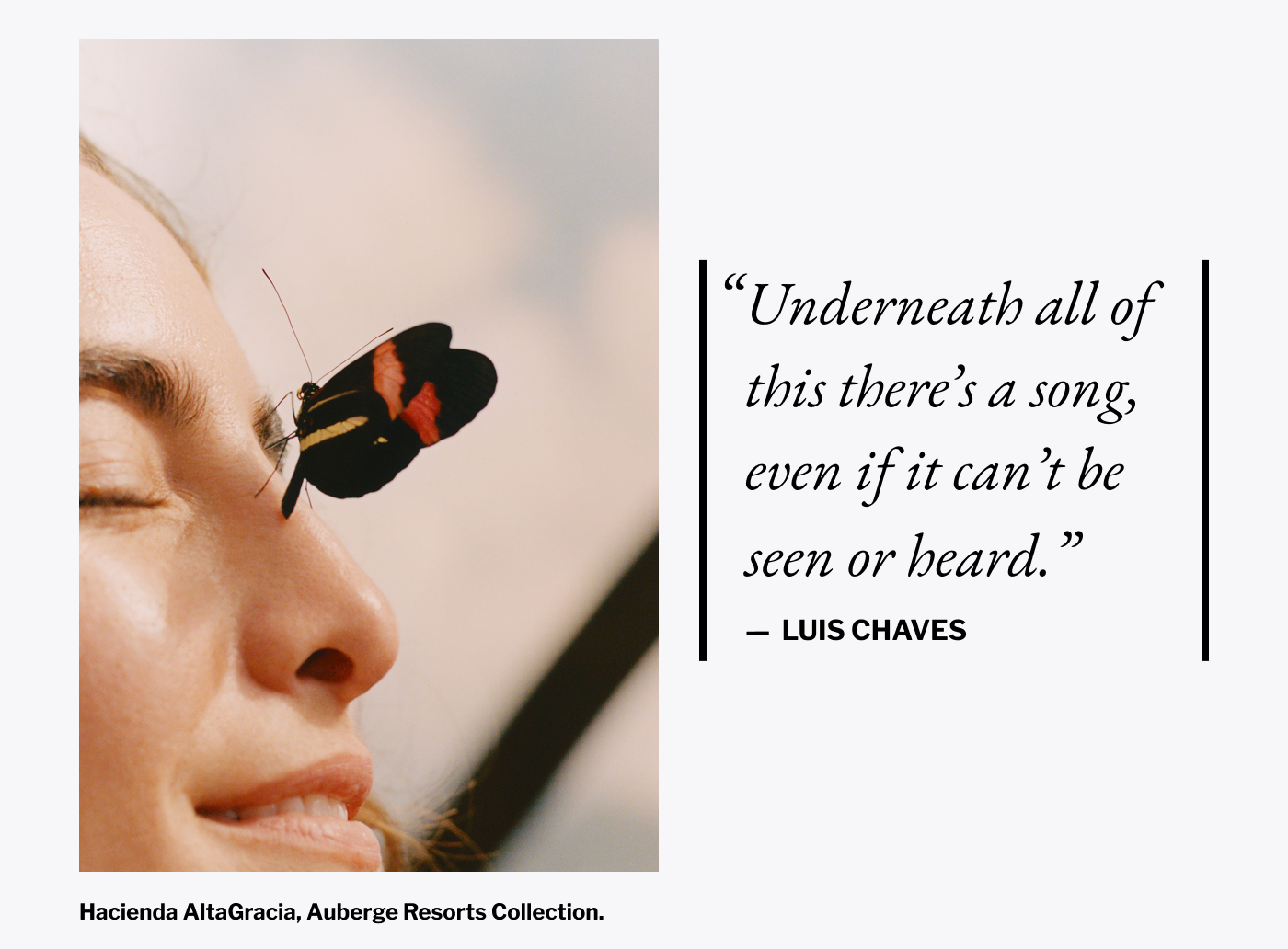
Hacienda AltaGracia, Auberge Resorts Collection. A wellness retreat spanning 180 acres of rainforest, organic gardens, and stables in the Cordillera de Talamanca mountains, Hacienda AltaGracia meaningfully connects guests to the surrounding nature and local culture. Casitas celebrate indoor-outdoor living while cuisine embraces local ingredients. Signature experiences include everything from natural river baths and ziplining in the jungle to Indigenous craft workshops.
View the full feature along with more close takes on a wide world in our print issue. Order now.
|
|
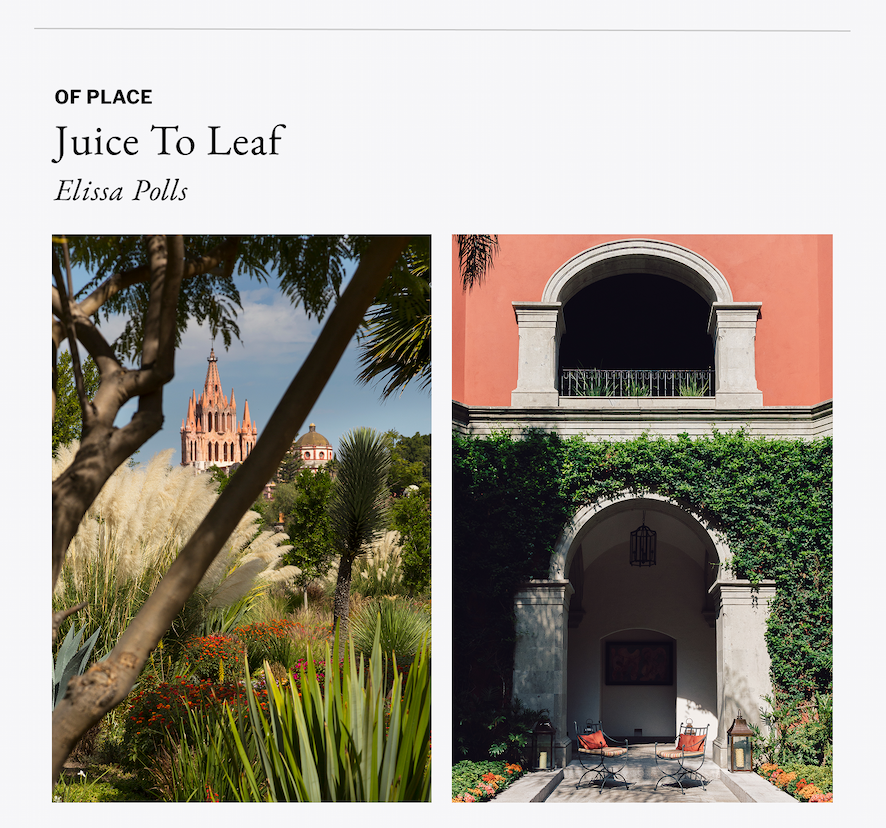
On a cool, sunny Wednesday morning in San Miguel de Allende, Mexico, my car slowly traversed the colonial-era city’s cobblestone streets, winding towards the Sierra Madre mountains. Next to me was Odín Rocha, chef of Pirules Garden Kitchen, Rosewood San Miguel de Allende's newest restaurant. “Every day feels like Sunday here — the pace of life … This is how it is seven days a week,” he confirmed. We were on our way to Casa Orgánica, a sustainable farm located 30 minutes outside of the city, which serves as the main source of the restaurant's ingredients (all of the restaurant’s providers are within 60 miles). Upon arrival, Rochas plucked an orange from a tree, instructing me to admire the leaves. “You obviously use the juice and maybe a little bit of zest, but in the restaurant we receive an orange and use the whole orange (even the leaves) because the orange is seasonal, but the tree is here all year long.” One of Rocha’s signature citrus desserts features orange as a gelée, with a leaf-infused consommé, an oil drawn from the rind, and the remaining fruit crystallized. Ingredients in the chef’s kitchen are utilized to their fullest potential to eliminate as much waste as possible. “That’s our vision, asking the question: What else can we make with this?” he concluded. Back at the hotel, its expansive grounds bursting with flora encircled by bougainvillea, I took a seat at an outdoor bar perched under a pergola, looking out towards the city’s iconic church, Parroquia San Miguel Arcángel. Ana Paula Ulrich, who oversees the property’s cocktail program, prepared me a mezcal martini. Inspired by the Gibson cocktail, it tasted like a garden at peak harvest — the mezcal deftly balanced by punches of ripe tomato and garden lettuce. It’s all an extension of Rocha’s vision. “The restaurant is inspired by the beauty of the flowers and plants that surround the property. It’s full of aromatic herbs, like rosemary and thyme,” he explained. “It’s a place that disconnects you from the chaos of the world to connect with the natural world.” This ethos manifested on my plate as housemade sourdough bread with pickled seasonal fruit and house chorizo; slow-cooked sweet potato with organic honey and macadamia nuts; firewood-grilled endives with matured cheese and charred onion puree; and pork belly with pistachio, farm herbs, and mole verde. But my dinner’s finale couldn’t be beat: meringue adorned with fresh lavender sat atop a wooden box. Inside was an elaborate confection nested in a bed of fresh greens and leaves. Just sweet enough. |
|
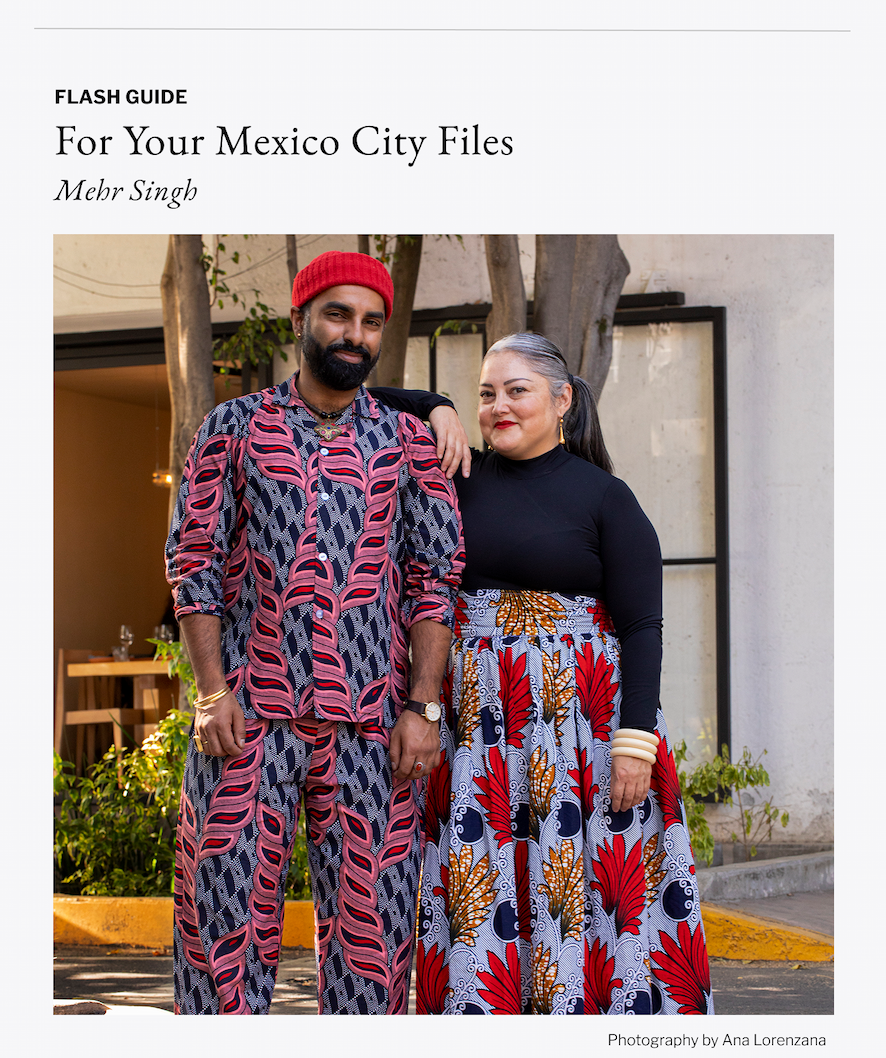
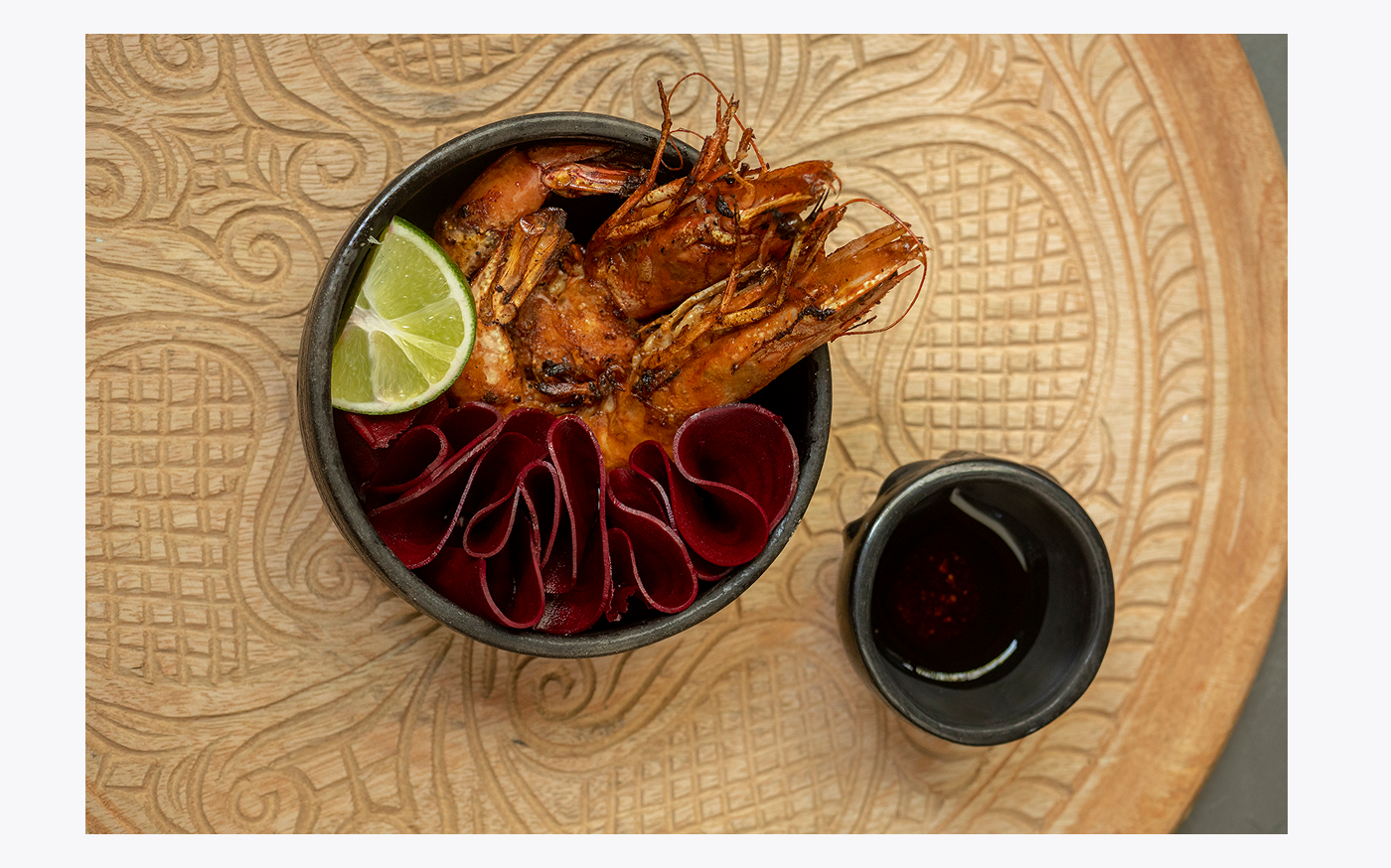
Chefs Norma Listman and Saqib Keval cook as though they’re writing a manifesto. Their acclaimed Mexico City restaurant Masala y Maíz blends Mexican, East African, and Indian flavors; think esquites makai pakka, Veracruz prawns in vanilla-chile ghee, and saudero samosas. These dishes embody what they call mestizaje, food that makes sense in more than one cuisine, resulting from the migration of people, ingredients, culinary techniques, and more. Even before their first bite, diners get a taste of the duo’s mission via the restaurant’s Vino-saurio: a double-fisting dinosaur printed on the menu, which is also stamped with antifascist slogans. This year, the restaurant won its first Michelin star; last year, it earned a Bib Gourmand and was featured on Netflix’s Chef’s Table. Masala y Maíz is renowned not only for its food but also for its ethos. To Listman and Keval, that spirit is inseparable from Mexico City, the city they now call home and describe as “bohemian, anarchist, free-spirited.”
Below they share a few of their favorite discoveries within it …
|
|
Something to eat and drink …
NL: Expendio de Maiz Sin Nombre is a really cool spot. Its chef, Jesús Salas Tornés, runs an anarchist farming project in Guerrero, his home state, and he used to bring amazing produce, fish, cheese, and mezcal to the farmers’ market. We also love Comal Oculto, which does garnachas (street-style fried corn tortillas slathered with refried beans and other toppings). Ticuchi has my favorite margarita program in the city. It offers five different margaritas, including one made with Tequila Ocho, a very subtle and feminine tequila. Bar Nino, from the team behind Hugo wine bar, didn’t have a name for a long time — it did a baptism when it announced the name and invited chef Elena Reygadas, who is a big-deal chef in the city. Now she’s the godmother of the restaurant.
SK: We go to Máximo Bistro for fancy meals, which makes a type of U.S. comfort food with lots of good butter and good technique. Eduardo “Lalo” García, the chef, makes a delicious plantain brioche with crème fraiche and caviar, and caramelized onions cooked in whey, which is almost like French onion soup cooked down but with Mexican cheese. Then there’s a Korean Mexican restaurant called Jowong that is starting to get recognized — great technique and an interesting point of view. Tlecān has one of the best collections of Mexican distillates in the country. Of course, there’s amazing tequila and mezcal, but it also has more obscure and delicious spirits. The company created its own labels so that it could work with smaller farmers. It’s mind-blowing.
Something to see …
NL: I’d recommend the Mathias Goeritz architectural route (“The Friendship Route”), with site-specific architectural sculptures by multiple artists scattered throughout the city. That could take up your whole day; you could make it a food and architecture-themed itinerary. It starts in the north with the Torres de Satélite in Ciudad Satélite (which was created with Luis Barragán) and goes all the way south to the Espacio Escultórico. We also have some of the best art galleries, including Kurimanzutto and Proyectos Monclova, which represents Poni, my favorite Mexican artist.
SK: Diego Rivera’s Museo Anahuacalli. It’s like this massive volcanic stone structure that houses an immense private collection of Mexican crafts. A lot of people who come to Mexico City don’t make it to the south; they just stay in the trendy neighborhoods. But there’s so much to see [in Coyoacán].
Something to take home …
NL: Chocolate immediately comes to mind. Go to La Rifa Chocolatería, which works with farms in different states to bring the tradition of chocolate-making to the city and has some of the most incredible chocolate. When we travel, we always bring something back with us to eat so we can prolong the trip once we’re home.
SK: Near the old location of Masala y Maíz in Colonia Juárez, there are like three blocks of incredible independent Mexican designer shops.
NL: I would start with Tecuan Mask bags from Carla Fernandez, then explore that whole corridor. She’s the queen of Mexican fashion.
Only in Mexico City …
SK: Dulcería de Celaya, this historic sweets shop reminds me a lot of Indian mithai, but its pre- and post-colonial Mexican sweets are all made by hand. I always send people there and say, “You have to see this!” because it’s such a clear connection.
A secret place …
NL: Salón Los Ángeles. Visit on Sundays for day drinking and dancing. It’s a big salon, the music is great, and you see very well-dressed older couples who dance very well. If you like dancing, that is the place to go.
|
|
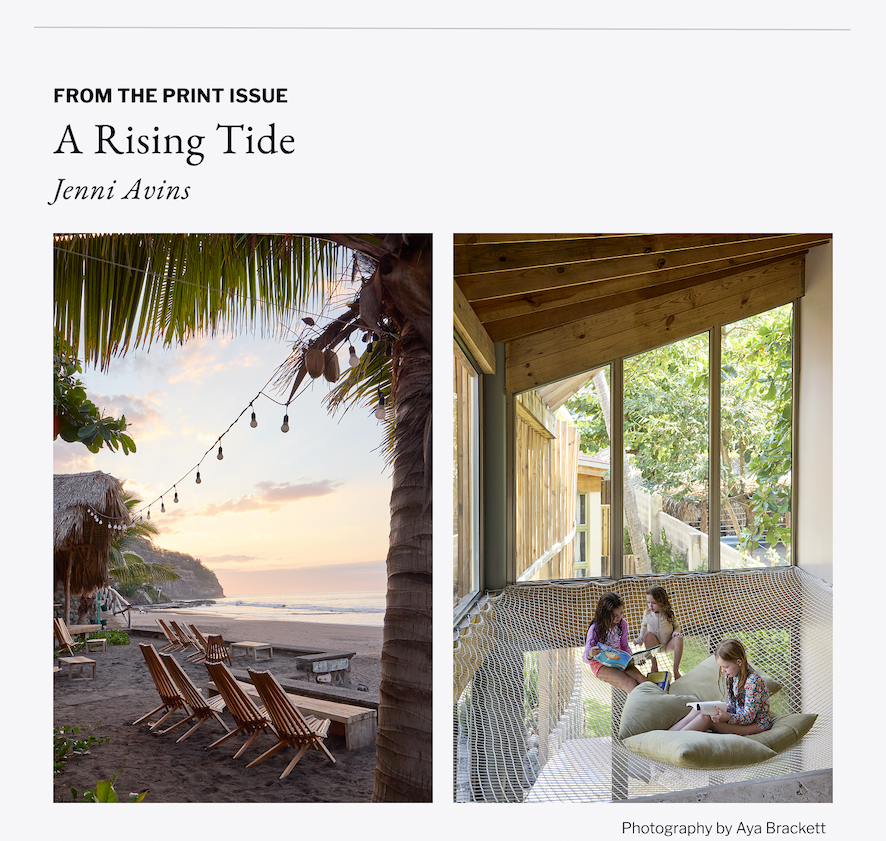
I didn’t need an alarm clock my first morning in El Zonte, a small town on El Salvador’s Pacific coast, because I had my friend Minh. An LA-based surf mom like me, she has preceded me to every wave I’ve visited since having kids. Usually, she beats me by a year or two. But in the case of El Zonte, it was only a week — and we overlapped for a morning. We had both traveled without our families, and she wasn’t wasting a surfable minute. At 5:12 a.m., a single star was still peeking through my room’s clerestory windows, but Minh was texting.
I wasn’t eager to get up, but I could hear the waves beckoning on the beach, just steps from my door. I pulled on my swimsuit, stepped outside, and padded across a little bridge over the pool to select a surfboard from a rack. I stepped through a wooden gate onto the pewter sand beach, hoping to spot my friend. “Oh, hey!” She was mere yards away. It turns out El Zonte is pretty small, especially the expat-favored east side, which sits in a small, sandy cove. Minh’s accommodation was just two doors away from my own: Al Suave House, an earthy, modern five-bedroom oasis that opened last year. Until somewhat recently, El Salvador would have been an eyebrow-raising vacation destination. For most of the last century, Salvadorans have endured horrific violence in a cycle of repression and rebellion, culminating in a 12-year civil war that ended in 1992. Then, the United States began deporting Salvadoran gang members — many of whom had fled the war as children — back to their native country, where they terrorized citizens with extreme and rampant brutality. In 2019, Salvadorans elected Nayib Bukele, a 37-year-old former mayor who ran an anti-corruption campaign, as their president. He arrested tens of thousands of citizens, imprisoning gang members as well as plenty of innocent people. Since 2022, Salvadorans have lived under a zero-tolerance “state of emergency” originally approved for just 30 days — but few, if any, who I spoke with expressed regret about trading civil liberties for personal safety.
President Bukele, who edited the constitution to allow for his landslide 2024 re-election and has called himself “the world’s coolest dictator,” is a complicated character. But the security he has created is irrefutably good for tourism. In a bid for international investment, he declared Bitcoin a national currency alongside the US Dollar. He’s also dubbed an 185-mile stretch of the country’s Pacific coastline “Surf City,” and he’s not wrong: The waves are world-class and the roads are freshly paved. And yes, it feels safe.
El Zonte could be considered Surf City’s crown jewel. It’s been given the unfortunate moniker “Bitcoin Beach,” but do not be deterred. It’s a real town, and its charms are lovably low-fi. For surfers, it boasts a punchy right-hand point break and a wide-open, rocky-bottomed beach break (plus instructors for beginners). For everyone else, it offers clean black sand beaches and a welcoming, caring community maintained by multigenerational families and entrepreneurial surfers.
As tourism opens up and dollars flow in, El Zonte is beginning to quietly boom. A new water treatment facility and pedestrian bridge are complete. Two luxury condominium complexes are underway, and a government-funded Bitcoin Beach Club de Playa is nearly complete. A big wave is coming for El Zonte, and the locals seem ready, welcoming tourists and protecting their community in equal measure.
Here are a few of the businesses paving the way …
Al Suave House. Along with elevated, yet carefree accommodations, Al Suave includes a concierge to help guests organize provisions, activities, and outings. Its pool, lined by rocks and vegetation, meanders like a stream through open-air living spaces. This year will mark its opening of a public wellness center offering yoga, movement, and breathwork classes; a sauna and cold plunge; spa treatments; and an outpost of the popular San Salvador café and health food store, Soya Nutribar.
Esencia Nativa. This beachfront hotel and restaurant overlooks the river mouth and is owned by Alex Novoa, who arrived in El Zonte as a teenager from San Salvador more than 30 years ago, seeking surf waves and refuge from violence. Novoa also runs a surf school focused on reckoning with fear.
Puro Surf. A 14-room surf academy, hotel, and restaurant, this establishment anchors El Zonte’s eastside.
Hope House El Salvador. This 14-year-old nonprofit helps local kids feel entitled to enjoy their hometown beaches and to think entrepreneurially by teaching them English, swimming, surfing, technology, cooking, and more.
Canegüe Café. Plates at this breakfast spot come piled high. Eggs sit atop homemade English muffins surrounded by sauteed peppers and zucchini, fresh arugula, and avocado — all capped with shaved pickles, hollandaise, and an evil genius touch: tiny crumbles of brown-butter solids.
Nan Tal. This zero-waste, sustainable restaurant is famed for its seafood ceviche.
Palma. Operating out of an easy-going shack, Palma serves balanced cuisine and not-to-be-missed tropical smoothies.
Merendero El Teco. Named for the owners’ son “Teco,” said to be the first Zonteño to surf, this is one of El Zonte’s oldest restaurants. Today, Teco’s son, Wilfredo “Wil” Alexander Urias Tobar, runs his own surf school from a beachfront hut.
Read this full story and more close takes on a wide world in our print issue. Order now.
|
|
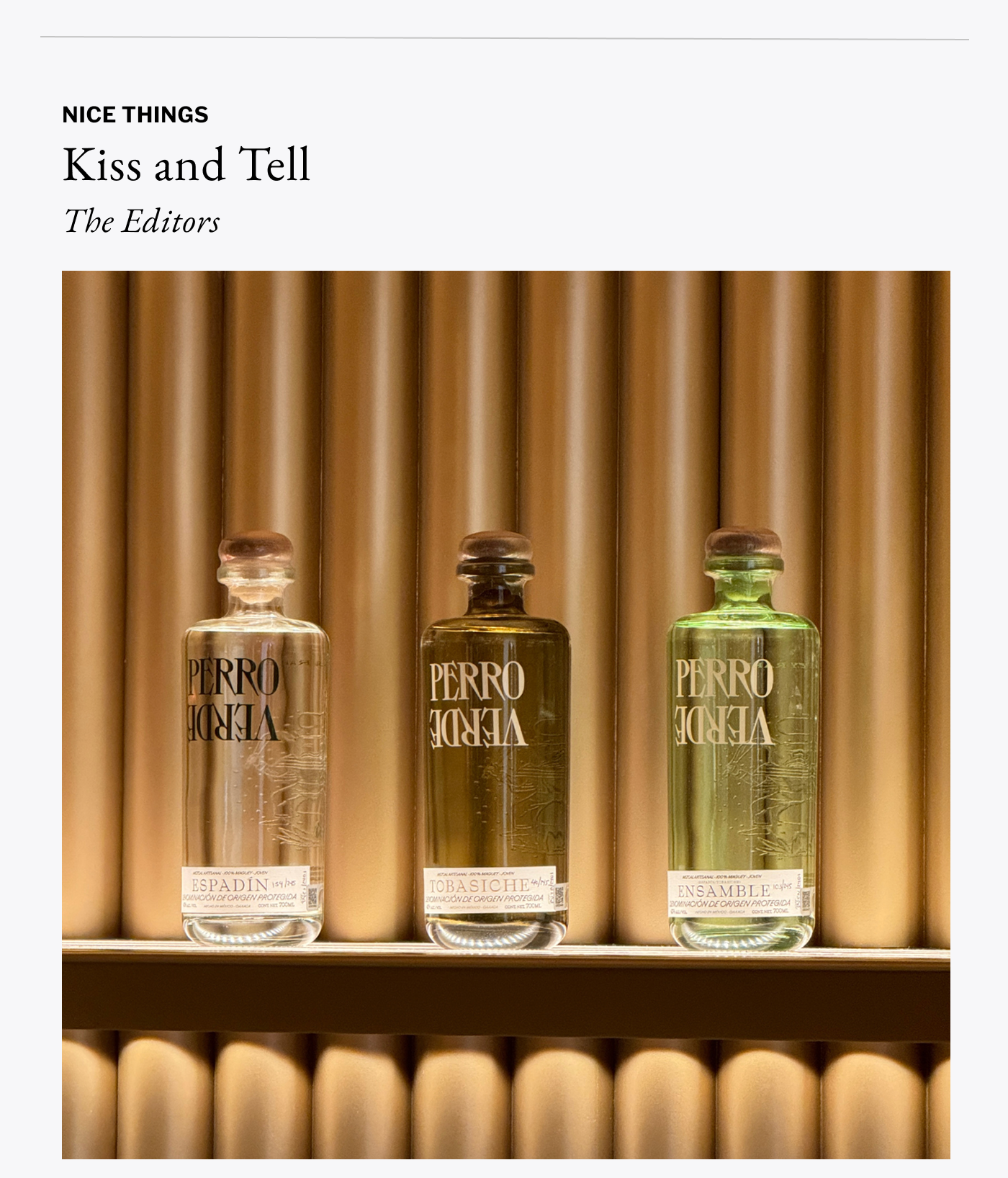
Juan Santiago Rodriguez has a ceremony for tasting mezcal. First, he dabs a drop on his hand, letting it evaporate until only the pure agave scent remains. "You must taste mezcal with three kisses," he says. Meaning: three sips. The first cleanses and awakens the palate; the second is a rush of alcohol; the third is when the liquor’s botanicals and character truly emerge. Rodriguez is the co-founder of Perro Verde mezcal, which brings its 120-year-old family heritage to three noteworthy expressions: Espadin is produced with Espadin agave using artisanal methods and offers subtle fruit notes and a touch of spice. Tobasiche, rich with anis and carambola, yet gentle, is made from Tobasiche agave, which must be foraged in the wild — it was also recently named a best-in-class finalist at the San Francisco World Spirits Competition. Finally, the house’s Espadin/Tobasiche Blend is an alchemic elixir celebrating both types of agave, resulting in a fresh, smooth masterpiece. |
|
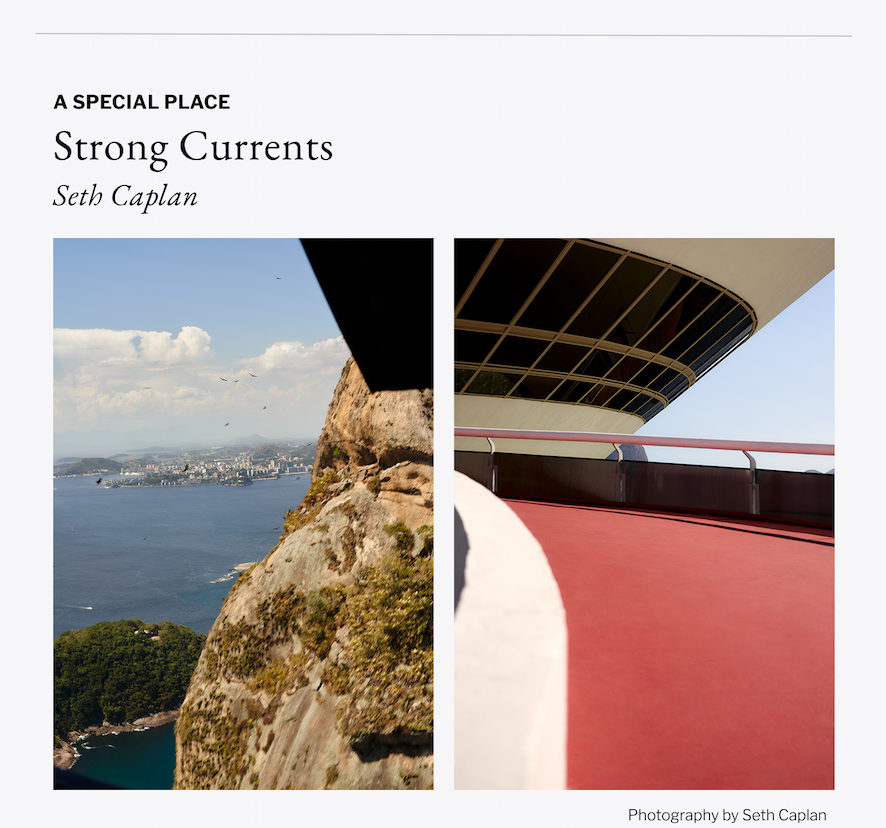
Rio de Janeiro is a city of movement. Its very geography undulates, with dramatic mountains sloping down into ocean waves. Footvolley players dive in the sand and dancers’ hips samba in the clubs. Cariocas call Tijuca National Park the “lungs of the city,” but Rio itself feels like it’s always inhaling and exhaling. I took these two photos on a recent visit to the city with friends during Carnaval, when Rio was at its peak, bursting with energy and flow. Even within quiet moments, movement abounded. We took a cable car to Pão de Açúcar. The mountainside rushed toward us and dramatic views of the harbor emerged while a group of birds circled and salty air streamed in through the windows. I also roped a few friends into taking an architectural excursion to the Museu de Arte Contemporânea by architect Oscar Niemeyer. A twisting, red pathway leads up to the museum’s floating rotunda, which sits upon a column inside a reflecting pool overlooking Guanabara Bay. Pure, round white forms stand starkly against the landscape’s rugged, organic shapes, highlighting Niemeyer’s vision of Brazilian Modernism. We relished all of the sublime views. |
|
Power Tool. A handwritten note is an exercise in slowing down, which is particularly curious, considering the namesake of Montblanc’s latest Great Character Pens Collection offering is Enzo Ferrari. The rollerball pen I test-drove felt smooth, sleek, and substantial, finished in Giallo Modena (one of my favorite Ferrari shades). It’s replete with intricate detailing, symbolism, and specificity: the date of Enzo’s first victory and the name of his father’s workshop grace the cap and barrel. Writing only a few sentences, I felt a strong desire to level up my desk … and my penmanship. –John Chuldenko
Bright Spot. “You’re glowing!” declared a friend over lunch. This happened to be right after a stop at La Prairie Spa, one of just two of the luxury Swiss beauty and skincare company’s spas in the U.S., nestled within The Ritz-Carlton New York, Central Park. Its signature Glass Skin facial combines lymphatic drainage techniques with La Prairie’s famed White Caviar Light Concentrate to brighten, firm, and retexturize skin — elevating the experience further with a personalized playlist. Mine was titled “Meditation with Mozart,” and after 90 minutes I emerged from The Ritz relaxed, refreshed, and, evidently, more radiant. –Elysha Beckerman
The Inside Track. Even on a Monday, every table at Side A was occupied by 6 p.m. The restaurant, nestled in San Francisco’s Mission District, serves as a coffee and donut shop by day (led by the Coffee Movement). In the evening, it transforms into a swanky, modern oasis where DJs set up shop and locals come for biodynamic wine and comfort food. I sampled the garbage salad (little gem lettuce, pork belly, dilly beans, blue cheese, and red wine vinaigrette) followed by a cheeseburger (topped with smoked bone marrow, red onion jam, and local goat cheese on a famous Acme sesame bun) and soft-serve coffee ice cream. Not a single morsel remained. –Elissa Polls
|
|
54 Franklin St #2R NY, NY 10013. ©2024 Dossier Projects, LLC.
|
|
|
|
|