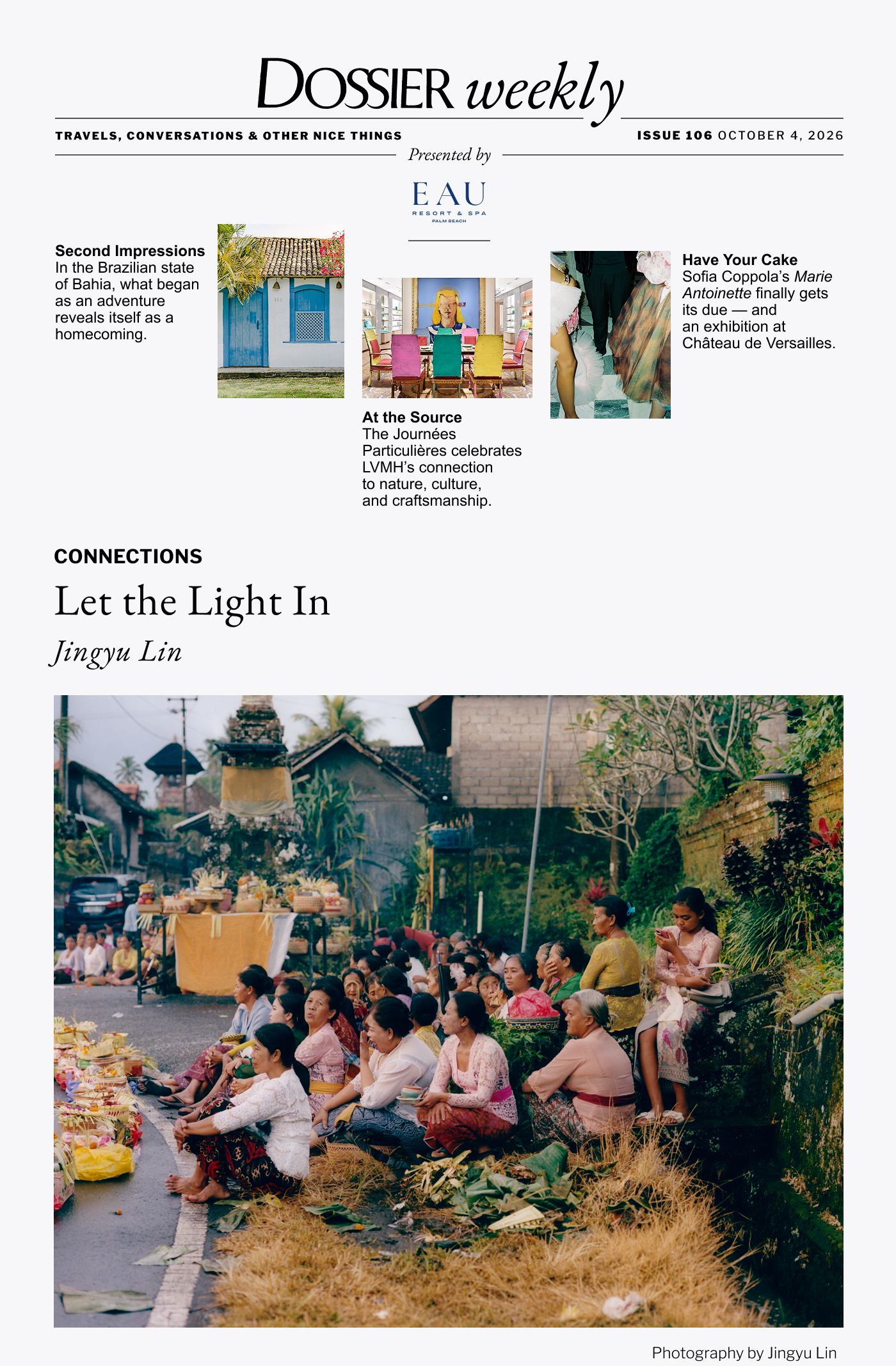
Above: In Balinese villages, the days before the Hindu festival of silence Nyepi are filled with parades and celebrations. On the eve of the occasion, women cleanse offerings while young men and boys make and carry giant sculptures of demonic effigies called ogoh-ogoh. The statues are transported through the streets accompanied by loud noise — gamelan music, cymbals, and firecrackers, shouting and chanting — to drive away evil spirits. At the end of the procession, ogoh-ogoh are traditionally burned, symbolizing the cleansing or banishment of negative forces. Once a year for 24 hours, the Indonesian island of Bali comes to a remarkable standstill: Streets empty, lights switch off, beaches clear, even Ngurah Rai International Airport closes, with tourists required to remain indoors; hotels are permitted to use indoor lights only if their blinds are tightly drawn. All activity is suspended as Balinese Hindus devote the day to silence, meditation, and self-reflection in honor of Nyepi. The annual occasion marks the beginning of the Saka New Year; its purpose is to keep evil spirits away by making them believe that the island is abandoned.
At Buahan, a Banyan Tree Escape, nestled in the lush highlands north of the city of Ubud, this silence and serenity take on a deeper dimension. The intimate resort’s open-air design creates an unusually close connection to the surrounding rainforest, with each bale opening onto the stunning landscape, receiving its natural soundtrack. During Nyepi, when the entire island falls into profound silence, the relationship resonates all the louder. |
|
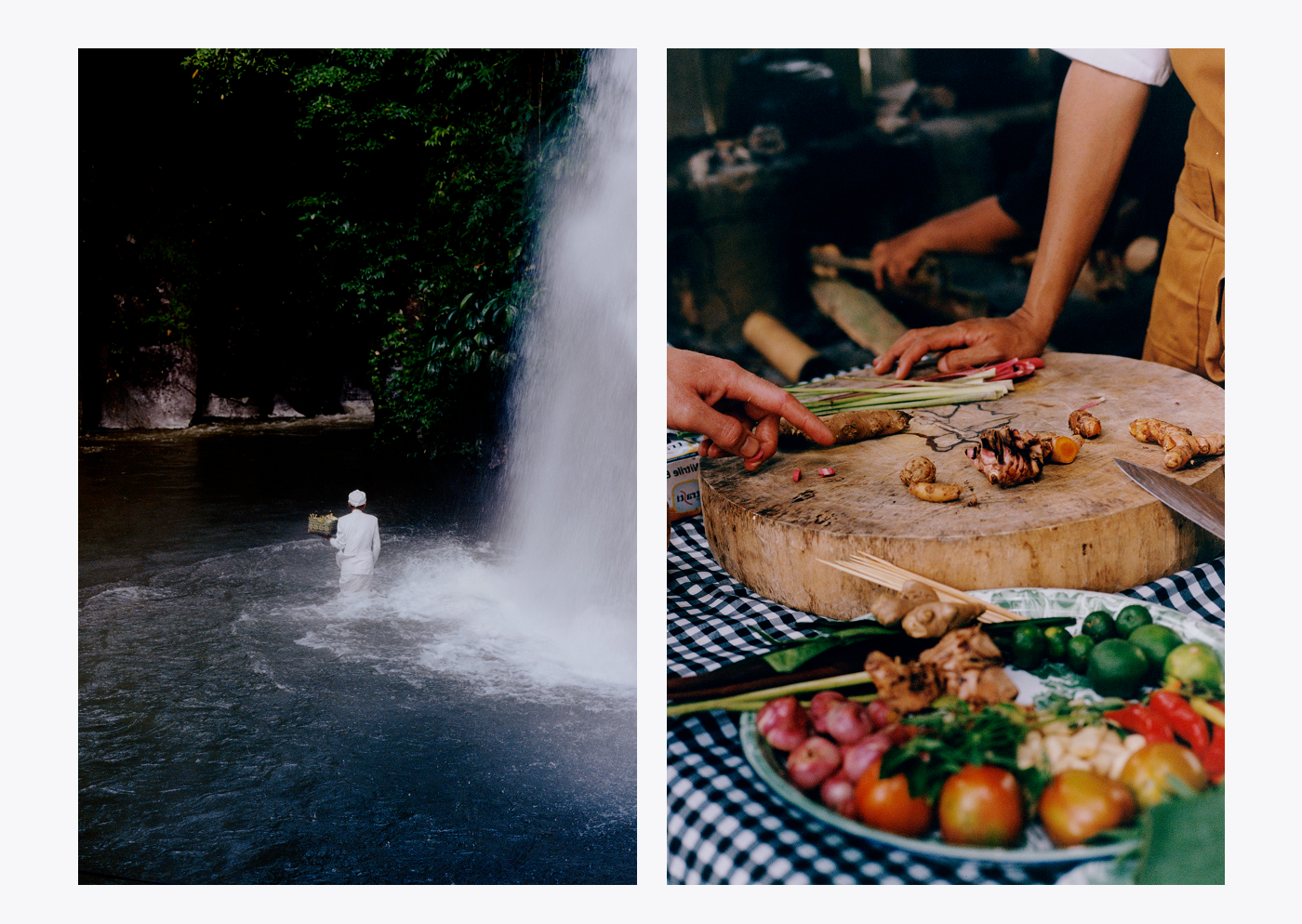
Above left: As part of Melasti, held three to four days before Nyepi, devotees and villagers wear white as a symbol of purity and cleanliness. The purification ceremony is an act of spiritual preparation leading up to the start of the Saka New Year.
Above right: During The Art of Loloh experience at Buahan, a Banyan Tree Escape, a traditional Balinese herbal drink is made with exclusively local ingredients: anything that can be found in the surroundings, such as foraged leaves and herbs or wild bee honey procured from a neighbor. |
|
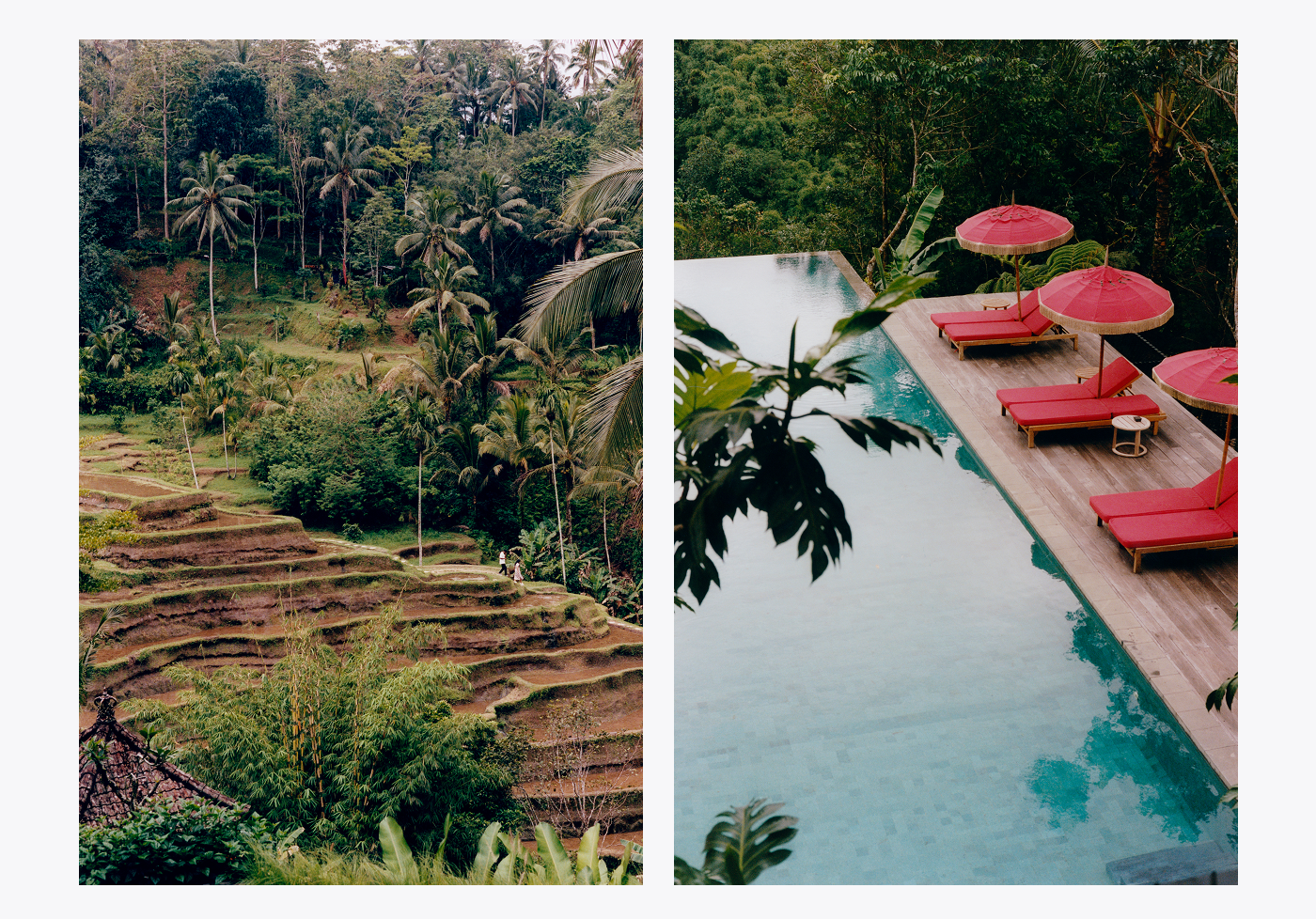
Above left:A UNESCO World Heritage Site, the serene Tegallalang Rice Terrace serves as an ancient example of the subak system. More than just an irrigation method, however, the system is also a physical manifestation of Tri Hita Karana, or the “three sources of happiness,” emphasizing the necessity of living in harmony with divinity, humanity, and nature. Above right: At Buahan, a Banyan Tree Escape, all wellness offerings — from Balinese massage and locally crafted body scrubs to sound healing and chakra balancing — are rooted in nature. Toja Spa is immersed in the surrounding jungle and treatments are accompanied by the sounds of rain and birdsong, creating a tranquil, holistic experience. |
|
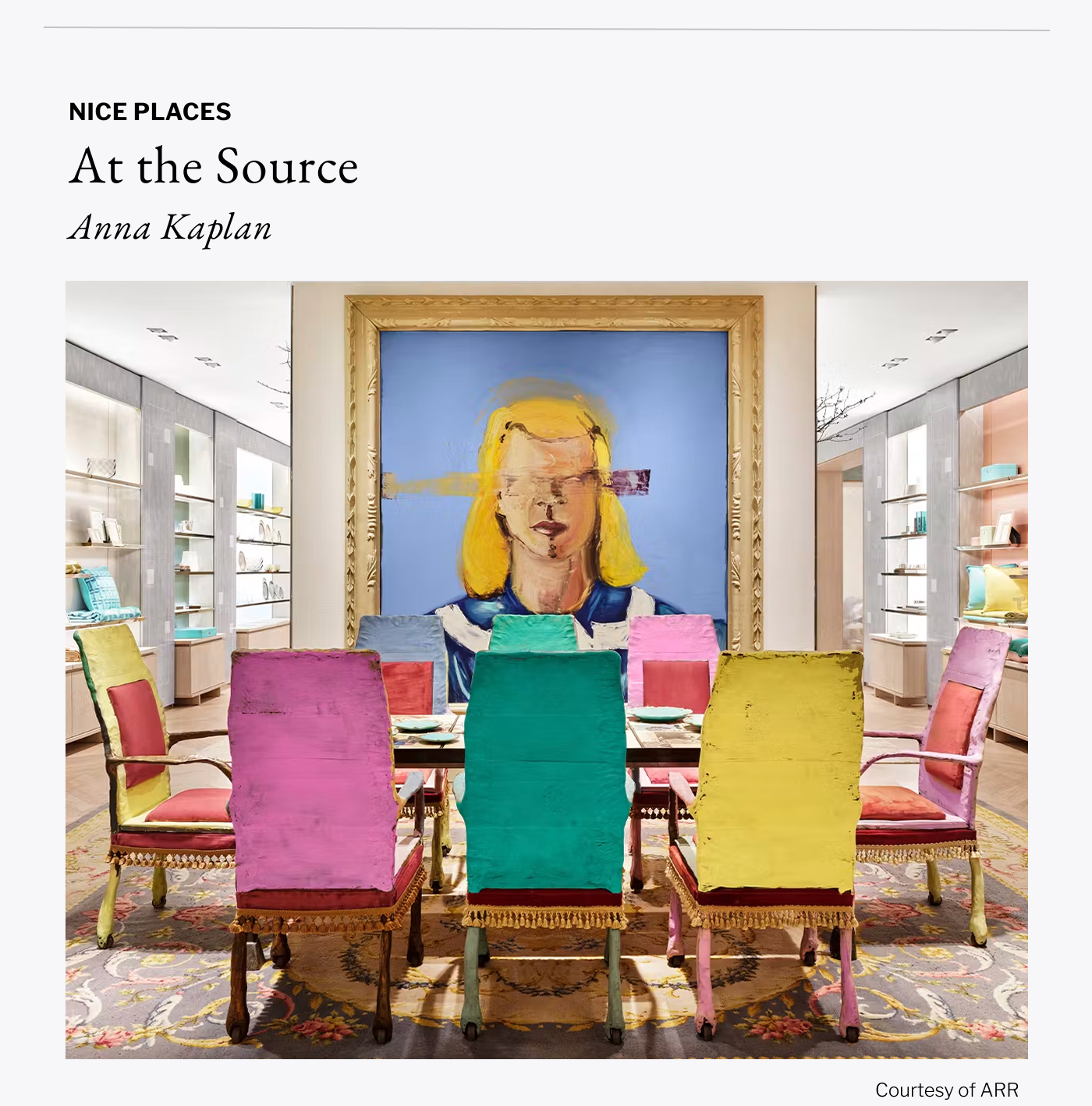
The late, legendary photographer Bill Cunningham explained his obsession with capturing street style by stating, “Fashion is the armor to survive the reality of everyday life.” The sixth edition of The Journées Particulières initiative by LVMH circles the same conviction but puts a visionary spin on the luxury group’s belief in the power of objects to uplift the everyday.
Themed the “Source of Dreams,” the 2026 edition of The Journées Particulières travels to the superlative places — from a field of flowers and pristine spring to the luxury group’s more than 75 maisons, where “dreams take root” thanks to the heritage, craftmanship, and passion of their artisans. In practice, this journey spans 71 LVMH venues across 13 countries, each inviting the public in to meet the makers, artisans, creators, and teams who bring the maisons to life.
In Paris, the Celine ready-to-wear workshops, located in the Hôtel Colbert de Torcy, will open to the public for the very first time. The historic Ateliers Louis Vuitton in Asnières-sur-Seine — where the traditional trunks are still handcrafted — will offer visitors insight into the maison’s unique trunk-making expertise. In New York City, Tiffany & Co.’s workshop will invite them to view the creation process behind a unique piece. Around the world, several Belmond properties will also present exclusive experiences, including Mount Nelson in Cape Town and Copacabana Palace in Rio de Janeiro.
Inarguably distinct, each softens the edges of our complicated reality with its own particular brand of beauty. |
|
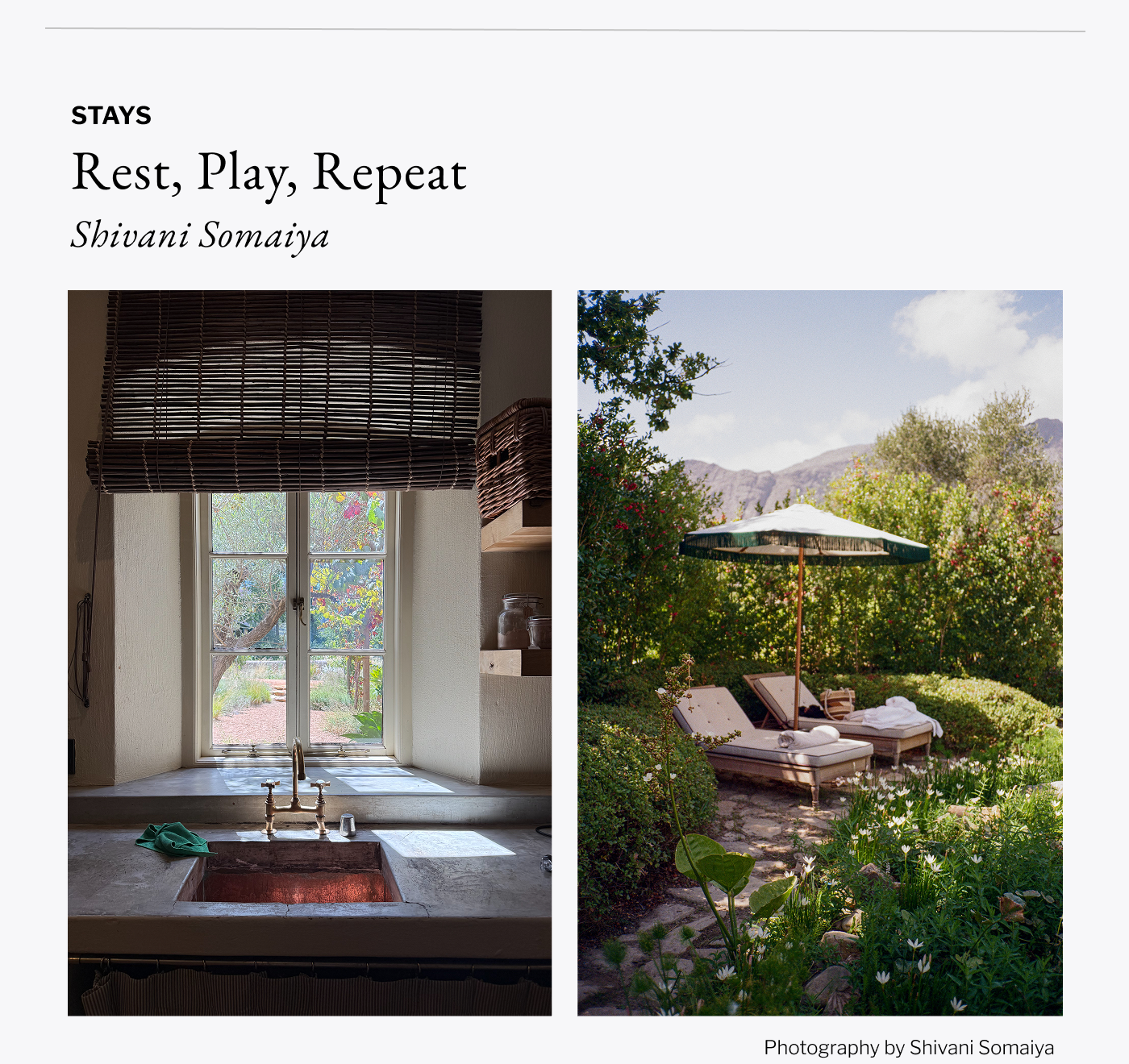
Even though I had been to Cape Town, South Africa, before, this trip marked the first time I traveled alone with my mum since my dad’s passing in 2021. We came to Franschhoek together for a stay at Sterrekopje Healing Farm, a regenerative agricultural property where doing very little is very much the point. The retreat gave us something we hadn’t had in a long time: the opportunity to reconnect because there was nowhere else we needed to be.
There is a lovely tension between order and wildness at Sterrekopje. Cape Dutch buildings with curved gables and thatched roofs sit among olive trees, ponds, and purposefully overgrown grasses; even the pool feels less landscaped than discovered. The atmosphere is intimate and unhurried, with little reason to distinguish between where the hotel ends and the farm begins. Stone paths disappear between unruly foliage and flowers, loungers are tucked into small pockets of gravel and green, and the Franschhoek Mountains rise behind it all. From the chakra garden and willow trees to the art studio, there always seems to be somewhere else to wander — or disappear.
We spent our days at the property slowly. Between the spa treatments, which are included as part of a stay, and long stretches beneath green-fringed parasols, my mum and I spent a lot of time laughing and testing the limits of what the other could be persuaded to do. She got me into a sound-bath ritual; I pulled her into Sterrekopje’s natural pools — once in the spa and another near the library. The best amenity … The claw-foot bathtub tucked inside its own pink-and-white striped tent. Taking a bath felt theatrical, particularly with the doors in front of the tub opening onto our veranda and the gardens beyond. My favorite thing about the room … The enormous four-poster canopy bed draped in loose, white linen. Climbing into it every night felt like its own little adventure — and once I was in, I rarely wanted to climb back out. A drink you’d recommend to a friend … The house-made elderflower cordial. Sterrekopje doesn’t really have a cocktail menu; instead, there is a selection of cordials made on the farm that can be added to whatever you feel like drinking. The most unique thing about the property … How thoroughly it commits to the idea of rest and play. There’s an art studio where you’re encouraged to paint and create, gardens to lose yourself in, pigs to visit, ponds to swim in. And it doesn’t matter whether you are good at any of it. As adults, we spend so much of our lives doing things with an outcome in mind; Sterrekopje gives you permission to do something simply because you feel like it. A discovery … Curry berries. Sterrekopje grows curry leaf trees, and while wandering the garden, the flower keeper and I discovered that one had produced tiny berries — something neither of us had encountered before. We tasted them together: spicy and aromatic, but somehow sweet and savory at the same time. A song that embodies the property … “So Free” by Alex Serra. It has the same unhurried, sun-soaked quality as Sterrekopje. |
|
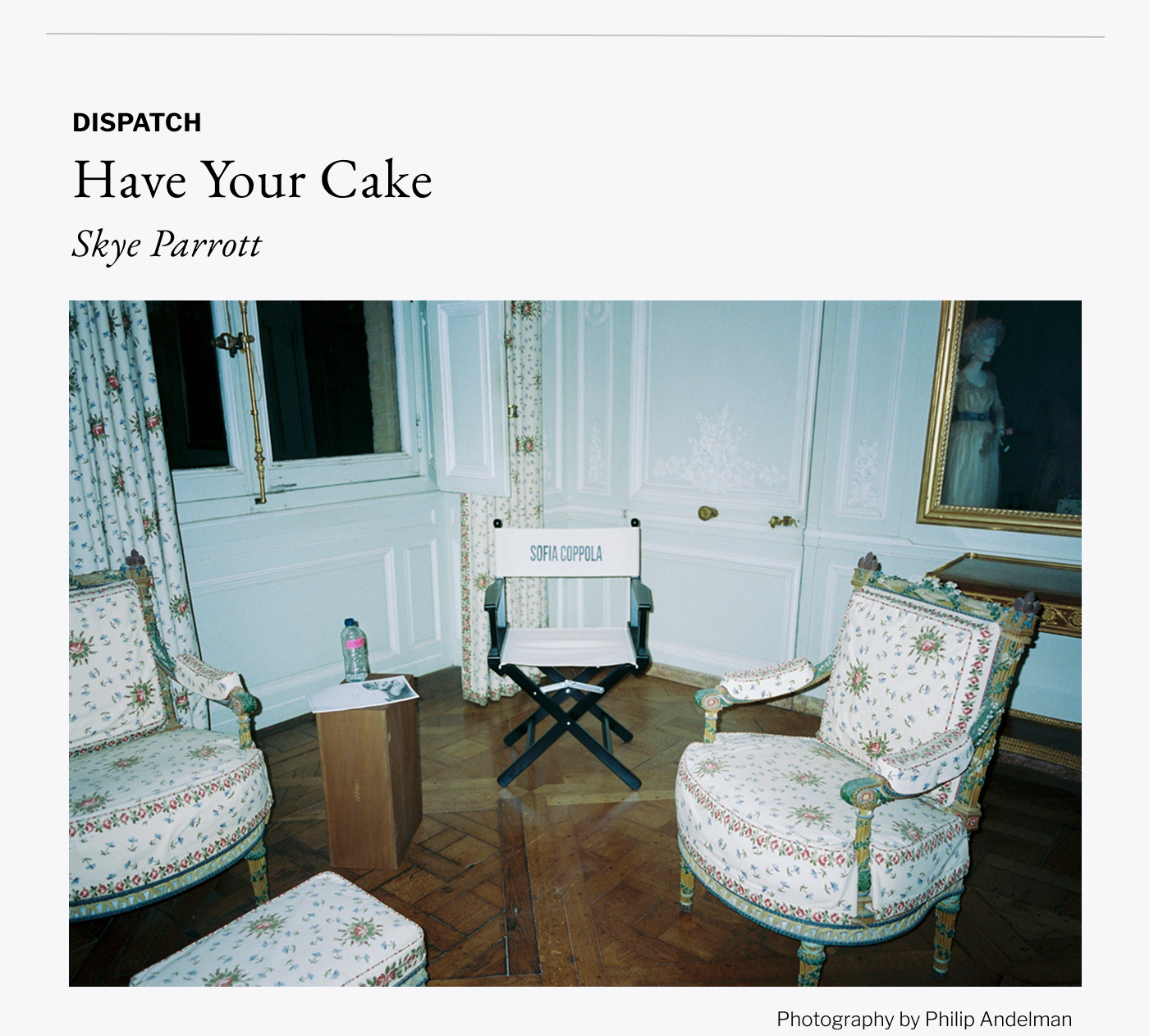
Sofia Coppola is unequivocal in categorizing the reception of her movie Marie Antoinette upon its 2006 debut: “It was a flop,” the director says with a smile, during a screening of the film presented by the Cartier Cinema Club. Critics (mostly older men) panned it, dismissing the director’s exploration of the interior life of an exceptionally privileged young woman as frivolous. But in the ensuing years, Marie Antoinette has found a new audience, with a different view. Coppola mentions that it was her daughter who first clued her in to her film’s second life, showing her clips of it on TikTok, where it is being celebrated by young women, many of whom weren’t even born when the film was made.
On the occasion of its 20th anniversary, Marie Antoinette is receiving a new theatrical release as well as a dedicated exhibition at the Petit Trianon at Château de Versailles, where scenes in the movie were filmed. Shooting took place only on Mondays, when the palace was closed, with the crew loading in late on Sunday nights for 20 weeks in a row.
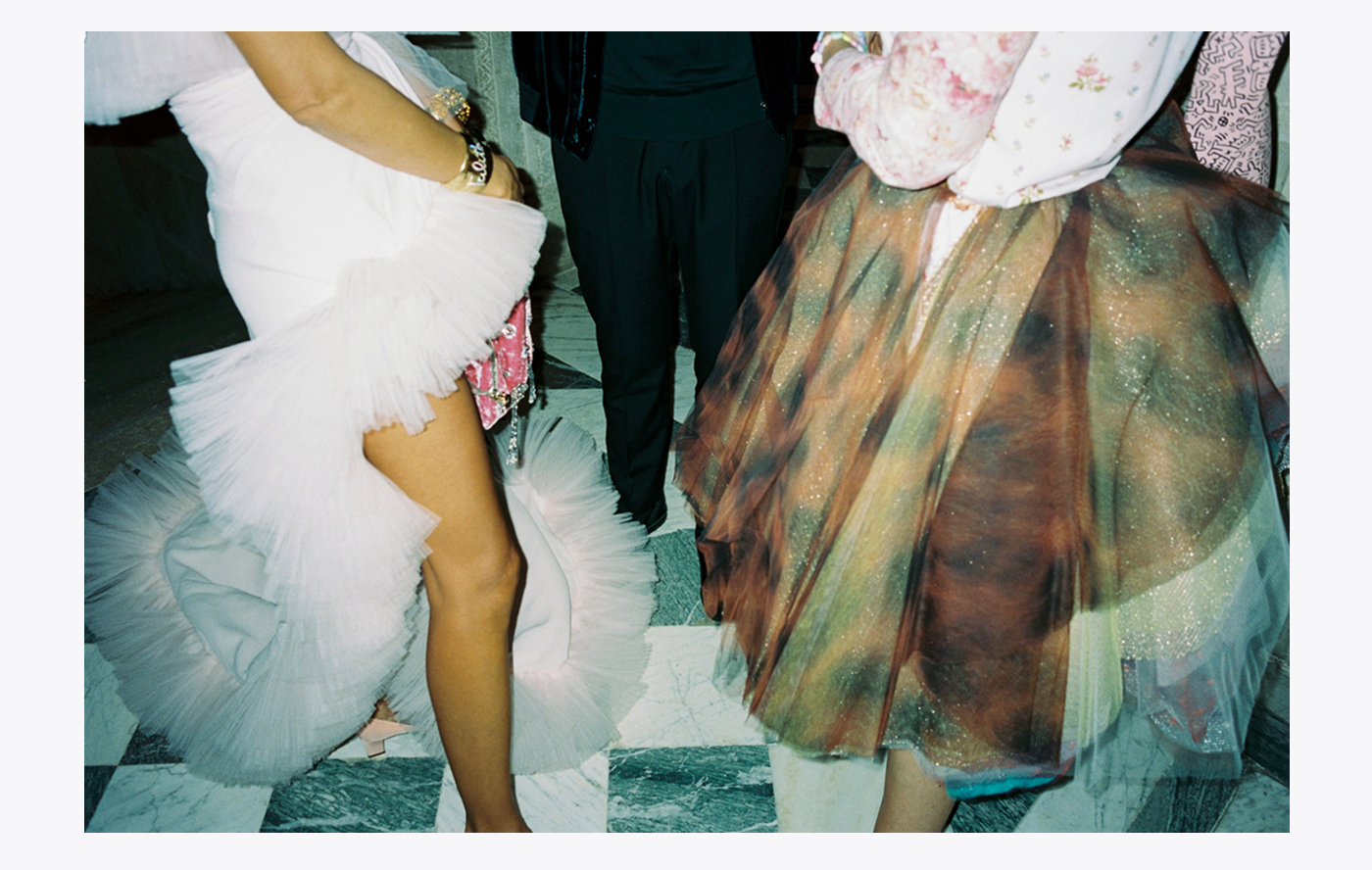
I previewed the exhibition last week, which provides a fascinating look at the layers of collaboration that go into moviemaking. Coppola’s mood boards are on display alongside Manolo Blahnik’s sketches of the film’s shoes and resin sculptures of the incredible food art made by the late chef Marc Meneau. Particularly amazing are the more than 170 costumes by Academy Award-winning designer Milena Canonero, in a candy-colored palette Canonero says was inspired by a box of macarons. A handful of the garments are on display and especially nice to see in situ since Versailles is such a major character in the movie. “It added so much atmosphere,” Coppola says, “to be able to shoot in the real places.”
Walking through the palace’s rooms with the film’s soundtrack, featuring The Cure and Bow Wow Wow, playing in the background certainly creates its own atmosphere, one impossible to find anywhere else. Marie Antoinette by Sofia Coppola is on view now through January 24, 2027, at Petit Trianon, Château de Versailles. |
|
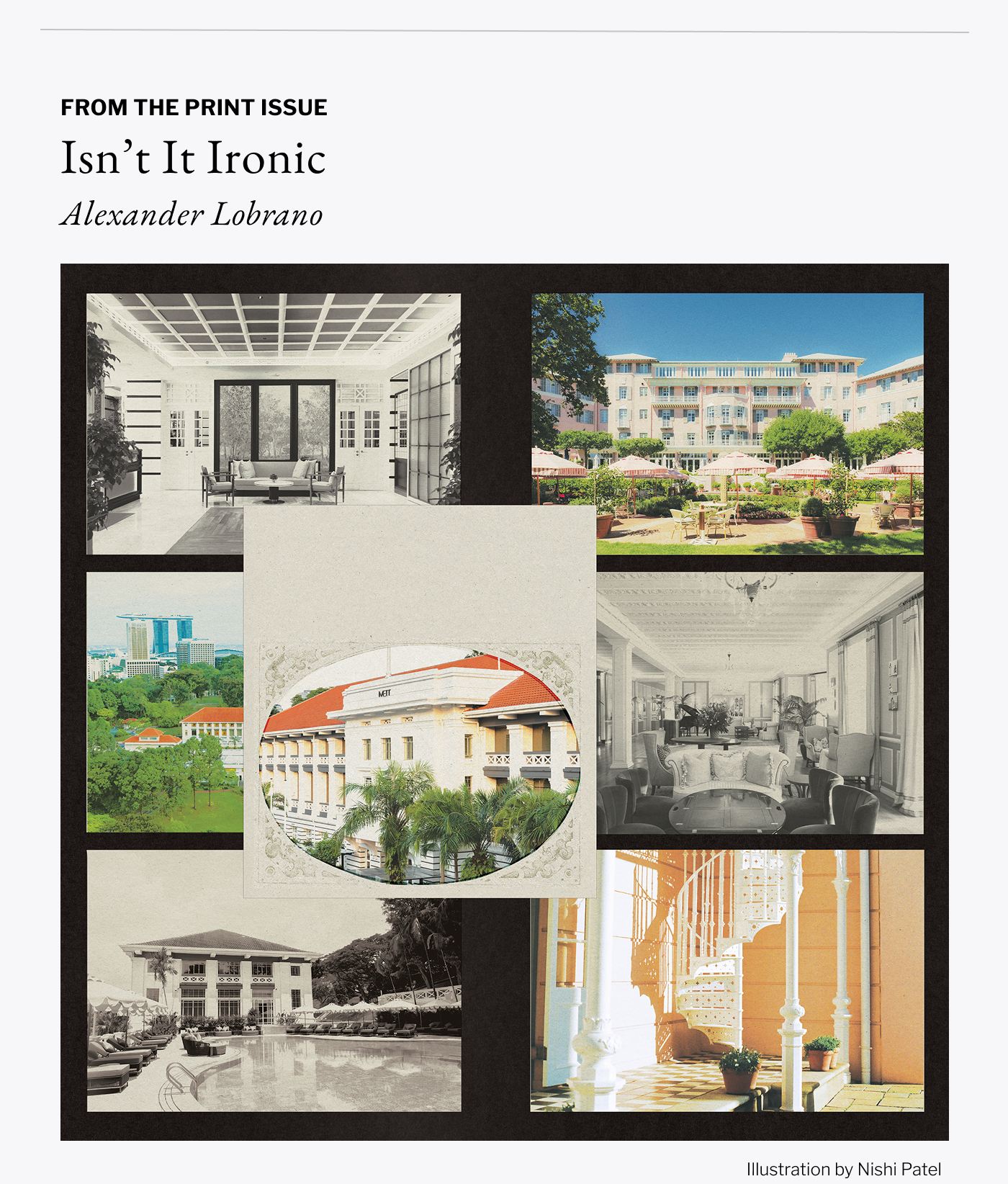
It was the pith helmets that made me queasy. Worn by the porters at the front doors of a hotel in George Town, Malaysia, the hats might have been waved away as a harmless tongue-in-cheek pastiche of the past. But last year on a sweltering August afternoon when all I wanted was a cold shower and a colder drink, the social prompt suggested by the doormen’s uniforms — the hats, but also their white cotton knee socks and impeccably pressed khaki shirts and shorts — embarrassed me. I received it as an invitation to share a subconscious nostalgia for an era in which the only brown and yellow people welcome on these premises would most likely have been there to serve.
Ultimately, I loved this hotel for its history, its moody sense of place, and the fact that it hadn’t been subjected to the dulling uniform modernity of an international hotel chain. But the pith helmets did bother me. Finally I spoke up, politely suggesting to the duty manager at the front desk that the sartorial symbolism of the doormen’s garb was heavy-handed. He smiled.
“A surprisingly large number of people have said the same thing,” he replied. The remark led me to a lot of rumination during recent trips to Cape Town, Singapore, and Ha Long Bay in Vietnam: Can, and should, the trope of the colonial hotel survive in the 21st century?
In the dream-weaving argot of the world’s luxury hotel trade, the word “colonial” has long been bandied about as a synonym for charm. In reality, the emotional and psychological resonances of this word vary enormously from one country and culture to another.
The great modern age of colonization in the Americas began with the discovery and destruction of the native American civilizations by the Spanish, Portuguese, French, and English. It continued over the course of the next five centuries, as the European powers carved up most of the world into colonial empires flying their flags.
Today, in countries where the economy was once based on slave labor, the word colonial often provokes revulsion and rage. In other formerly colonial countries, a deep contempt for the preceding overlords has led to the wanton destruction of European-designed and -constructed buildings that once gave these locations a sense of place, at least through occidental eyes. Cities where the colonial past has been razed include Kinshasa, formerly known as Leopoldville when it was the capital of the Belgian Congo; Saigon, where the booming local economy has made the land under the low-slung, mustard-yellow French government buildings too valuable for them to be preserved or repurposed; and Alexandria, where the mansions of the cotton merchants, who made this Egyptian port a wealthy city, have been knocked down or fallen into disrepair.
In many colonies, hotels were vital as venues for expat social life as much as they were lodgings for transient visitors. This idiom includes many of the world’s greatest hotels, including Raffles in Singapore, Metropole in Hanoi, the Eastern & Oriental in Penang, and Mount Nelson in Cape Town, which I recently revisited after a long absence. Read the full feature and more close takes on a wide world in our Spring/Summer 2026 print issue. Order now. |
|
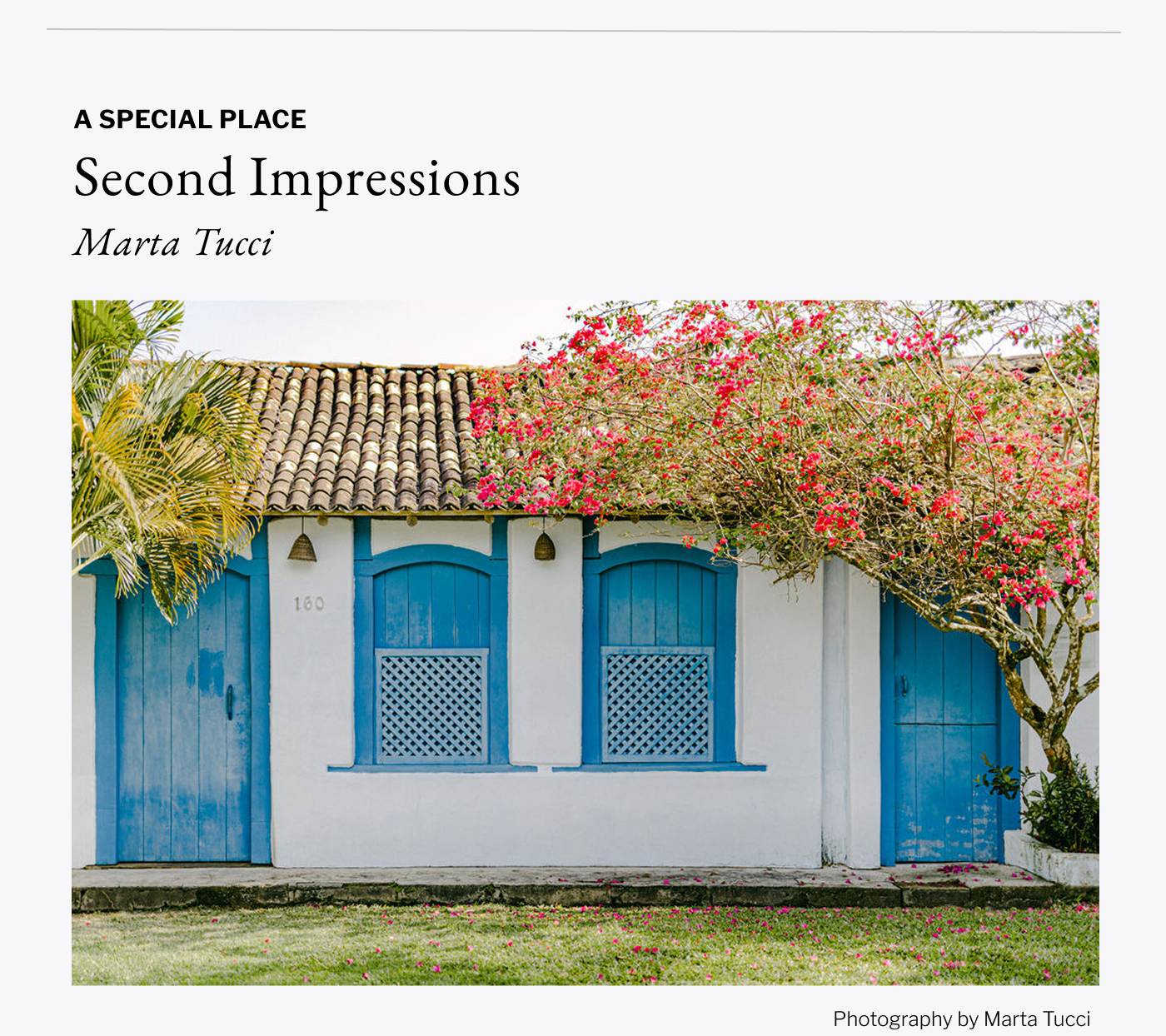
I took this photograph while on assignment in Trancoso in the Brazilian state of Bahia. At the time, I was simply passing through, photographing the places and details that make a destination feel distinct. Little did I know that, six months later, I would return to this same place — to this very house — to make it my own.
Looking back, the image feels like a turning point. For someone who had spent much of her life traveling, the idea of putting down roots felt nearly impossible to understand. I had become accustomed to movement: arriving, observing, falling briefly in love with a place, then leaving it behind. But I began to realize that, perhaps, the act of traveling and the search for home are, in the end, one and the same: Both are a desire to find a place that is meaningful.
This photograph now carries a significance far beyond what I saw through the camera that day. It reminds me that sometimes we travel in search of somewhere unfamiliar only to find a place that feels like it has been waiting for us. |
|
Oh, Snap. In the late 1960s, at the Navy’s request, Leica developed a bespoke camera lens for covert reconnaissance missions that captured images with remarkable detail. Now, the camera and optics brand is offering a modern reinterpretation of that lens. The new Summicron-M 66 millimeter f/2 has a focal length between a standard 50 millimeter and a portrait lens and renders images with Leica’s distinctive contrast, bokeh, and, of course, exquisite resolution. Plus, the Cold War-era engravings add to the charm. I’m not sure why, but the aperture ring rotates in reverse — perhaps that’s classified top-secret. —John Chuldenko Good Natured. The fall of fillers and Botox over the past year has precipitated a general societal swing back toward a natural aesthetic, or “enhancement rather than transformation,” as Los Angeles-based celebrity hairstylist Mara Roszak explains about her long-standing — now on-trend — approach. Roszak packages this philosophy into her signature line of hair-care and styling essentials, Rōz, which my stylist recently described to me as “perfect for your hair type.” They are, but not only. Roszak formulates her products for all hair textures, ensuring all the while that they remain healthy for their users and the Earth. The line is packaged in glass or aluminum and free of polyethylene glycols, harsh sulfates, excessive thickeners, and fillers. Synthetic fragrances are limited to less than 1%, though the line’s signature scent is another one of its appealing qualities: It’s a light, woody vetiver with hints of citrus and jasmine designed to evoke the spirit of an untamed, coastal California garden. —Erin Dixon Day In, Day Out. I’m a creature of habit, so nothing makes me happier than rewatching a show or film. On my last long-haul flight, I indulged in the classic 1995 romance Before Sunrise, starring Ethan Hawke and Julie Delpy. Built almost entirely around dialogue, it follows two strangers who meet on a train and spend a single night wandering through Vienna. Light and unhurried, it’s an ideal plane watch, or rewatch. —Anna Kaplan |
|
54 Franklin St #2R NY, NY 10013. ©2026 Dossier Projects, LLC.
|
|
|
|
|