There is no race like the Monaco Grand Prix. A jewel of the Formula One calendar for more than 75 years, the event boasts a precipitous circuit that twists through Monte-Carlo, with narrow, unforgiving corners and unpredictable tarmac, climbing past the famous Casino de Monte-Carlo and Hôtel de Paris Monte-Carlo. On race weekend, the streets reverberate not only with the sound of the cars but also with history, camaraderie, and, of course, unmistakable glamour. There’s an electricity that spills through the city, a kind of collective enthusiasm that percolates when a city so small hosts an event this grand. It’s an emotional cacophony of color, sound, speed, and Champagne. In short: It’s magic.
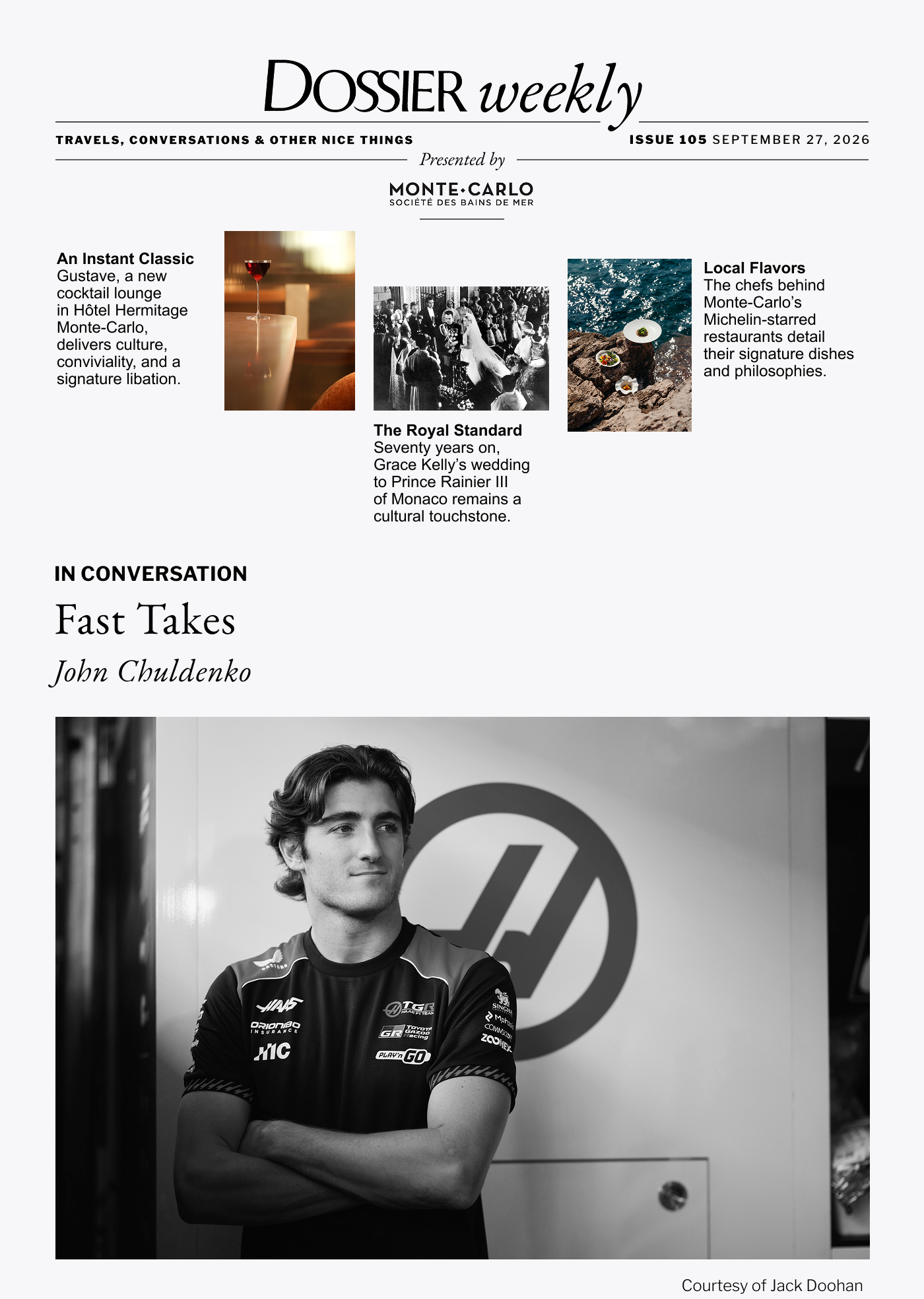
After a stint on the Alpine F1 Team in 2025, Australian-born Jack Doohan joined the TGR Haas F1 Team as a reserve driver for the 2026 season. Determined to get back on the grid, his heart is set on a full-time seat. Like many F1 drivers, Doohan is a resident of Monaco who spends much of his time in Monte-Carlo. He recently took a moment to discuss the destination from his perspective, including sharing a few of his favorite places. John Chuldenko: What elements of this race set it apart from the rest of the F1 calendar? Jack Doohan: Without stating the obvious, it’s a historic street circuit. But it’s also one of the few street circuits we have left that are very old-school, in the sense that it still has the crowning of the road. A lot of street circuits that we now run on are part, let’s say, live road and part nonlive [road], but every inch of this circuit is run on 365 days a year — driven on by street cars, [set upon by] foot traffic, whatever it might be — so it is true to its core. JC: How does Monte-Carlo transform into F1 mode, and when do you start seeing that shift? JD: As early as the end of February, the start of March, as the grandstands and structures obviously take time [to build], but also because the Grand Prix now isn’t the only race that occupies the circuit. Every other year, there’s the Historic Grand Prix of Monaco, and there’s also the [Monaco E-Prix] that leads up to this event. So the city is very occupied from that point onward. As we enter into mid-May, you also have the summer crowd. JC: Where is somewhere I should go to eat or drink? JD: There’s a secret spot that I don’t even think most residents maybe know about, Il Giardino Monte-Carlo. It’s a small Italian restaurant, like a two-minute walk from my apartment. Order the spaghetti al pomodoro with prawns; it’s very authentic. JC: What is something that I should go and see? JD: As a tourist, obviously you have the grandeur of the outside of the Casino de Monte-Carlo, but the casino’s inside is also really pretty. Definitely have a look at the architecture. JC: What’s something you should take home from Monaco? JD: Well, if you’ve been to the casino, some money! JC: Where do you feel most inspired? JD: At the Monaco Grand Prix, truly. It’s an incredible weekend, and everyone should try and visit [for it] at least once in their lives. |
|
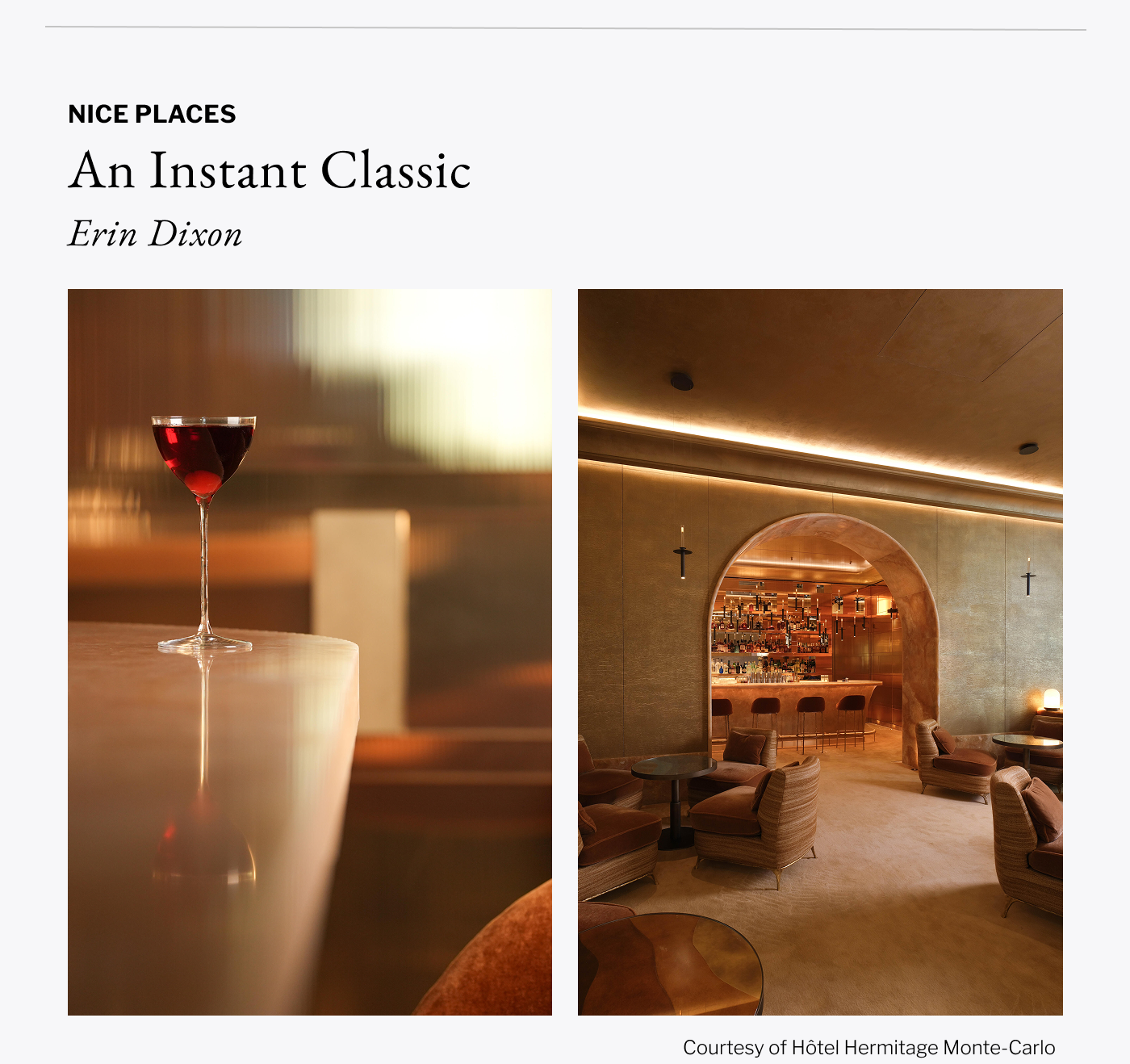
It’s believed that the first formal cultural and social salons originated in Italy in the 16th century, drawing cognoscenti for discussions and discourses about the era’s art, politics, and big ideas. The dynamic format, which spread to France in the 17th and 18th centuries, underpins the fresh spirit of Gustave, a new cocktail lounge in Hôtel Hermitage Monte-Carlo.
Designed as a series of intimate spaces nestled at the heart of the palace, the bar combines inspiration from the belle epoque, Monaco’s heritage, and the worlds of wine and vine. “We aim to bring forgotten or lesser-known French products and know-how back into the spotlight,” explains Gustave’s head bartender, Julien Lecharpentier, “particularly those connected to the vine and French spirits, while presenting them through a modern cocktail approach.”
Lecharpentier — who moved to the principality from Roquebrune-Cap-Martin, a commune just up the coast on the French Riviera — was drawn to Monte-Carlo’s juxtaposition of prestige and Mediterranean ease, a composition also found at Gustave. “[It] is a place where every detail matters,” confirms Lecharpentier, “the service, the glassware, the products, the presentation and, above all, the story we share with the guest. Our goal is to create an experience that feels elegant and refined, while remaining alive, personal, and approachable.” Here, he shares a taste of that original mix by way of the bar’s signature cocktail: the Kir Adonis. The Kir Adonis
Serves 1 This cocktail brings together two important elements of Gustave’s philosophy: French wine heritage and the revival of classic aperitif culture. The idea behind the Kir Adonis is to take inspiration from the sophistication of the traditional kir aperitif and the character of the Adonis cocktail, reinterpreting them through our original lens. Rather than simply reproducing a historical recipe, we use the idea as a starting point to create something more contemporary, precise, and elegant. The result is an aperitif-driven cocktail, combining the freshness and acidity of wine, the complexity of fortified wine, and the fruit character of black currant. ⅓ oz. Raspberry eau-de-vie
½ oz. Byrrh Grand Quinquina
⅔ oz. Black currant leaves wine
1 ⅓ oz. Black currant cream Fill a mixing glass with ice. Add all ingredients. Stir gently for 30 seconds until well-chilled. Strain into a chilled coupe or cocktail glass. Serve immediately. |
|
I first visited Monaco at the start of its sun-drenched June season, when the destination’s international reputation as Europe’s most refined seaside escape shines as brightly as the city’s sundry yet always sleek marble, granite, and glass facades. This desirable status is certainly due to the city’s choice location by the Mediterranean Sea, tucked between Saint-Tropez, France, and Portofino, Italy, but it’s also a product of the Monte-Carlo Beach Club.
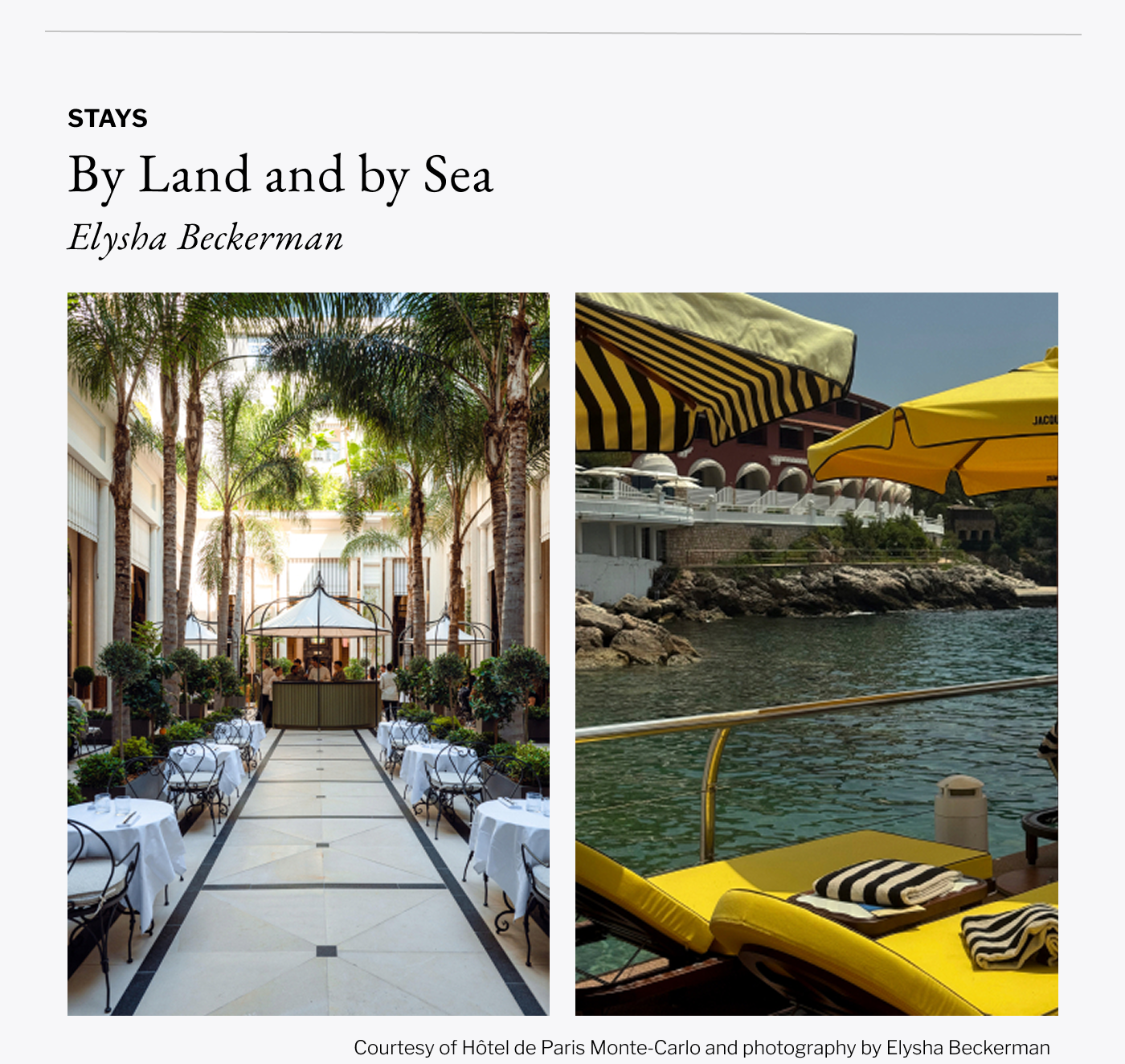
The club has defined a uniquely European brand of seaside escape since its 1929 opening, drawing international stars, royalty, and polished leisure seekers to its sprawling pool deck and striped-umbrella-lined beach. A smattering of these guests lodges in the Beach Club’s 40 guest rooms and suites, while a larger swath retires to the club’s sister property Hôtel de Paris Monte‑Carlo for cultural buzz and a restorative night’s sleep.
The latter property, which just secured 40th place on the 2026 edition of The World’s 50 Best Hotels, sits on the cobblestoned Place du Casino, the city’s social epicenter. Yet, its tastefully ornate and intuitively appointed accommodations promise uncompromising serenity — a heady duality that ensures both the Monte-Carlo Beach Club and Hôtel de Paris Monte-Carlo live up to the hype. The best thing about your room … Sitting on the private balcony of my thoroughly renovated yet still classical suite, sipping an espresso, and looking out past the elegant Hôtel Hermitage Monte-Carlo at Port Hercule, I observed hundreds of freshly inaugurated yachts bobbing, with the Circuit de Monaco’s notorious curves just beyond. The best amenity … Access to the Monte-Carlo Beach Club and its beach, which is exclusively reserved for its members and for guests staying at the Monte-Carlo Beach, Hôtel de Paris Monte-Carlo, Hôtel Hermitage Monte-Carlo, or Villa La Vigie. This meant that I could spring off its iconic art deco-style diving board anytime, without a wait. A dish you’d recommend to a friend … Brittany oysters and a signature Monaco Spritz at the 157-year-old Café de Paris Monte-Carlo, located across the square from the hotel. Or spring for the full seafood platter, and linger on the cafe’s terrace, overlooking the Place du Casino. Best thing about the pool … The Olympic-sized pool at the Monte-Carlo Beach Club is filled with heated seawater and surrounded by sculptural pine and palm trees, except for where it’s bordered by the Mediterranean Sea — a dreamy vista mirrored by the pool’s blue glass tiles. There are also four restaurants within steps: the Mediterranean Le Deck, Greek-influenced Maona Monte-Carlo, Italian La Vigie Zanoni Monte-Carlo, and celebrated Elsa Marcel Ravin, which highlights fresh-from-the-market, line-caught, and local Mediterranean fish, including lesser-known species. Essentially, there’s no reason to leave the club until sundown. Something unexpected … At lunch one afternoon, dining at a storied establishment (name withheld by request), I spotted Prince Albert II at a nearby table, enjoying his meal undisturbed. Instead of taking meetings at or dining in the Prince’s Palace of Monaco, the royal regularly opts to spend time in the community and support local businesses, a choice that invariably feeds into Monte-Carlo’s palpable embrace of the monarchy as a living part of Monaco’s identity and in the respect for tradition that permeates everyday life. A local tip or discovery … Le Dressing, a vintage boutique with a tightly curated selection of well-aged treasures, such as Hermès (Princess Grace) Kelly bags and Prada and Dolce&Gabbana designs. A song that embodies the property … “Porto” by Worakls, who headlined Monte-Carlo’s 2026 new Mona in Wonderland electronic music festival, captures the city’s mix of history, high-octane luxury, and modernity. It also nicely nods to its seaside location. |
|
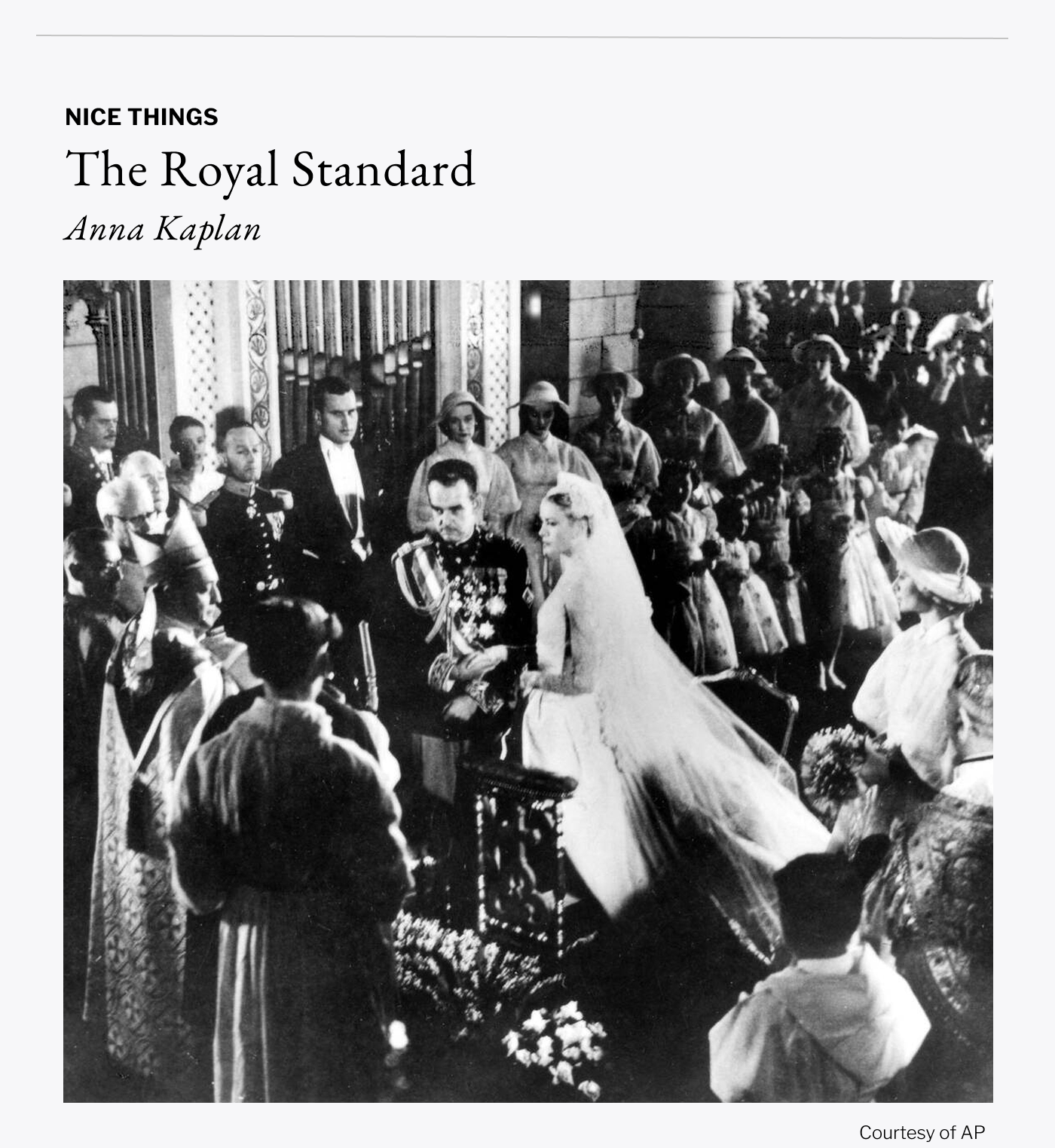
In April 1956, the line between cinema and reality became indecipherable. Film star Grace Kelly married Prince Rainier III of Monaco in a weeklong celebration fit for the silver screen, defined by dramatic ceremonies and a succession of spotlight-ready dresses, with Kelly’s wedding dress taking the crown. Designed by Helen Rose, costume designer at Metro-Goldwyn-Mayer, Kelly’s contractual studio, the gown’s formfitting lace bodice — which extended up the actor’s slim neck and down to her willowy wrists — and extravagant skirt with statement train established an enduring model of regal bridal elegance; Princess of Wales Kate Middleton’s 2011 dress took inspiration from the design.
Seventy years later, The Wedding of the Century, an exhibition at the Prince’s Palace of Monaco, revisited the resonant event, its fashions, and ripple effects, which united European monarchical traditions with American pop culture, placing Monaco and Monte-Carlo at the center of international affairs. Retracing its trail through photographs, jewelry, dresses, gifts, and other archival materials — from Kelly’s arrival aboard the ocean liner SS Constitution to the couple’s honeymoon departure, royal dog and all — it also revealed heretofore little-known behind-the-scenes details of the global occasion. The Wedding of the Century exhibition concluded on September 25, but the new documentary film A Wedding in Monaco, featuring previously unseen moments of the historical event, will be screened at the Grimaldi Forum on October 16. |
|
For six years running, the Festival des Etoilés Monte-Carlo has drawn a selection of the world’s most decorated chefs to the city. This year’s edition paired Michelin-starred chefs from Monte-Carlo Société des Bains de Mer properties with a special guest of their choice to deliver a lunch or dinner in one of the society’s six Michelin-starred restaurants: Blue Bay Marcel Ravin at the Monte-Carlo Bay Hotel & Resort; Le Grill and Le Louis XV – Alain Ducasse at the Hôtel de Paris Monte-Carlo; L’Abysse Monte-Carlo and Pavyllon Monte-Carlo, two restaurants by chef Yannick Alléno at the Hôtel Hermitage Monte-Carlo; and Elsa Marcel Ravin at Monte-Carlo Beach.
The culinary cornucopia kicked off in May and will conclude on November 14 with the Grand Festival Gala, where Ducasse, Alléno, and Ravin will create a commemorative meal, punctuated by an artful dessert from pastry master Cedric Grolet. But diners in the principality can enjoy extraordinary cuisine year-round at SBM’s destination restaurants, each helmed by distinctive chefs, who detail below their signature dishes — or, in one case, why he has no signature dish. |
|
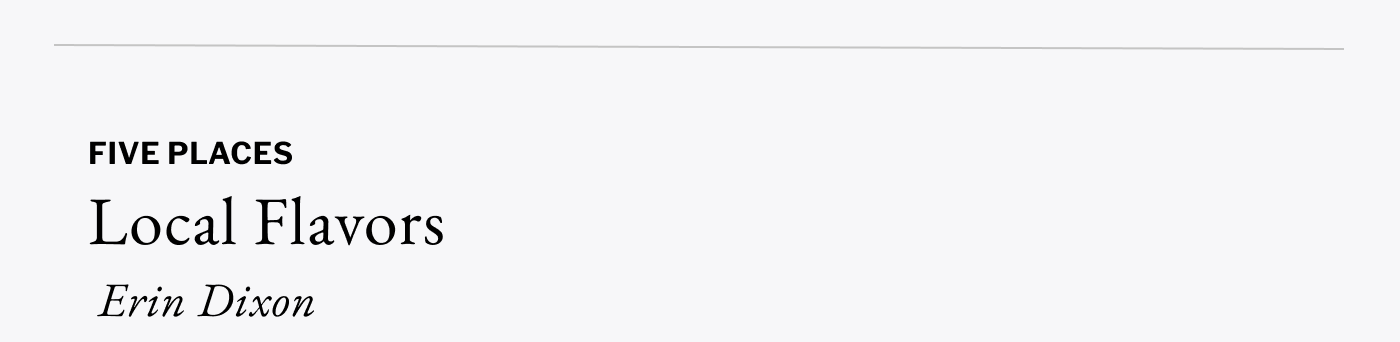
Hendry Angwe-Mezah, Chef of Pavyllon Monte-Carlo — Hôtel Hermitage Monte-Carlo Steamed Cheese Soufflé, Milanese Style. A signature dish across all three Pavyllon locations, each with its own interpretation of the sauce and extraction, the soufflé features refined parmesan extraction, whipped with cream for a light, airy texture. Whipped butter is infused with saffron and brightened with a touch of lemon. Trombolino zucchini is cut into small cubes and seasoned with olive oil and mignonette pepper. The parmesan mousse is plated and coated with saffron butter, finished with the crisp zucchini cubes. |
|
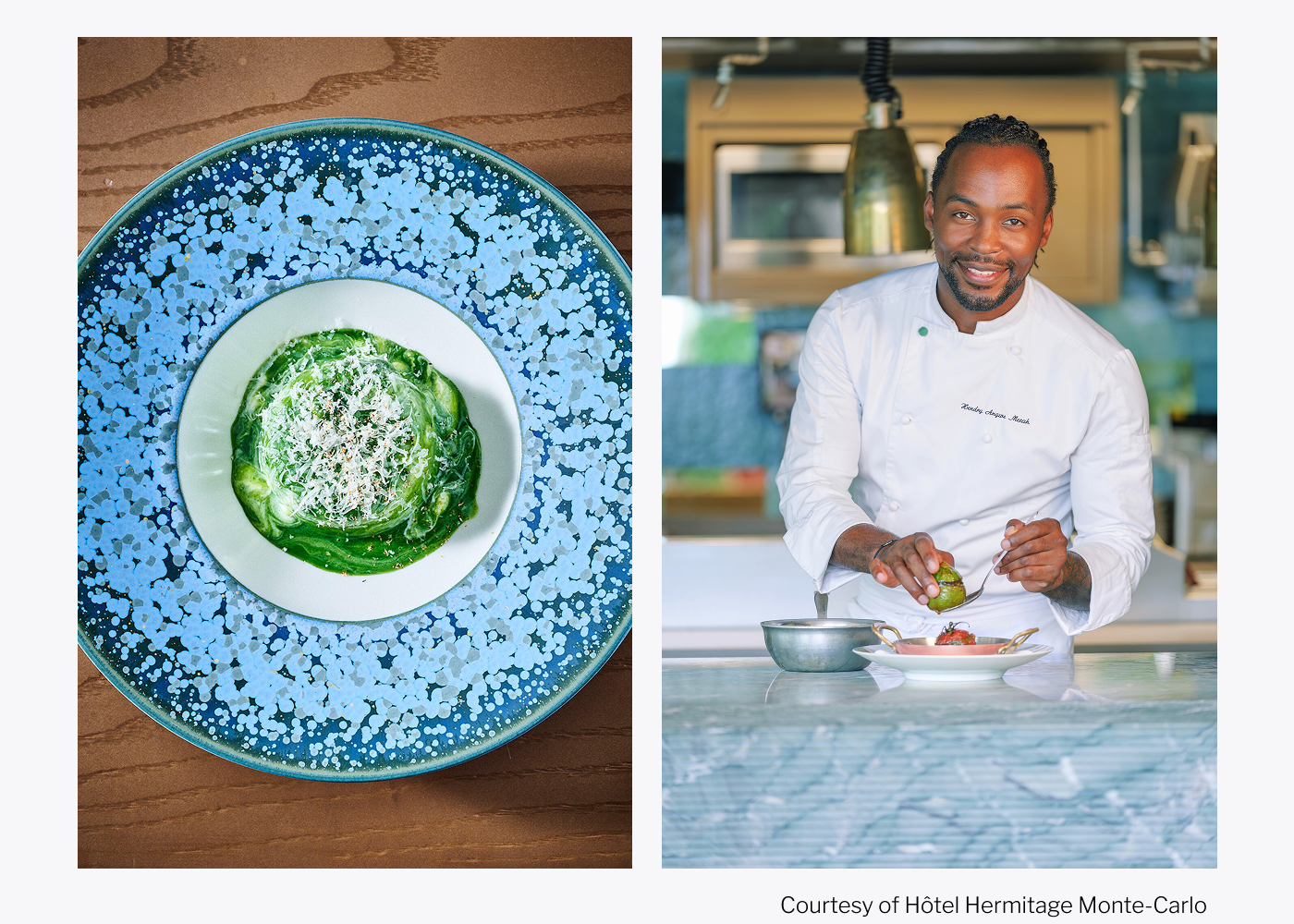
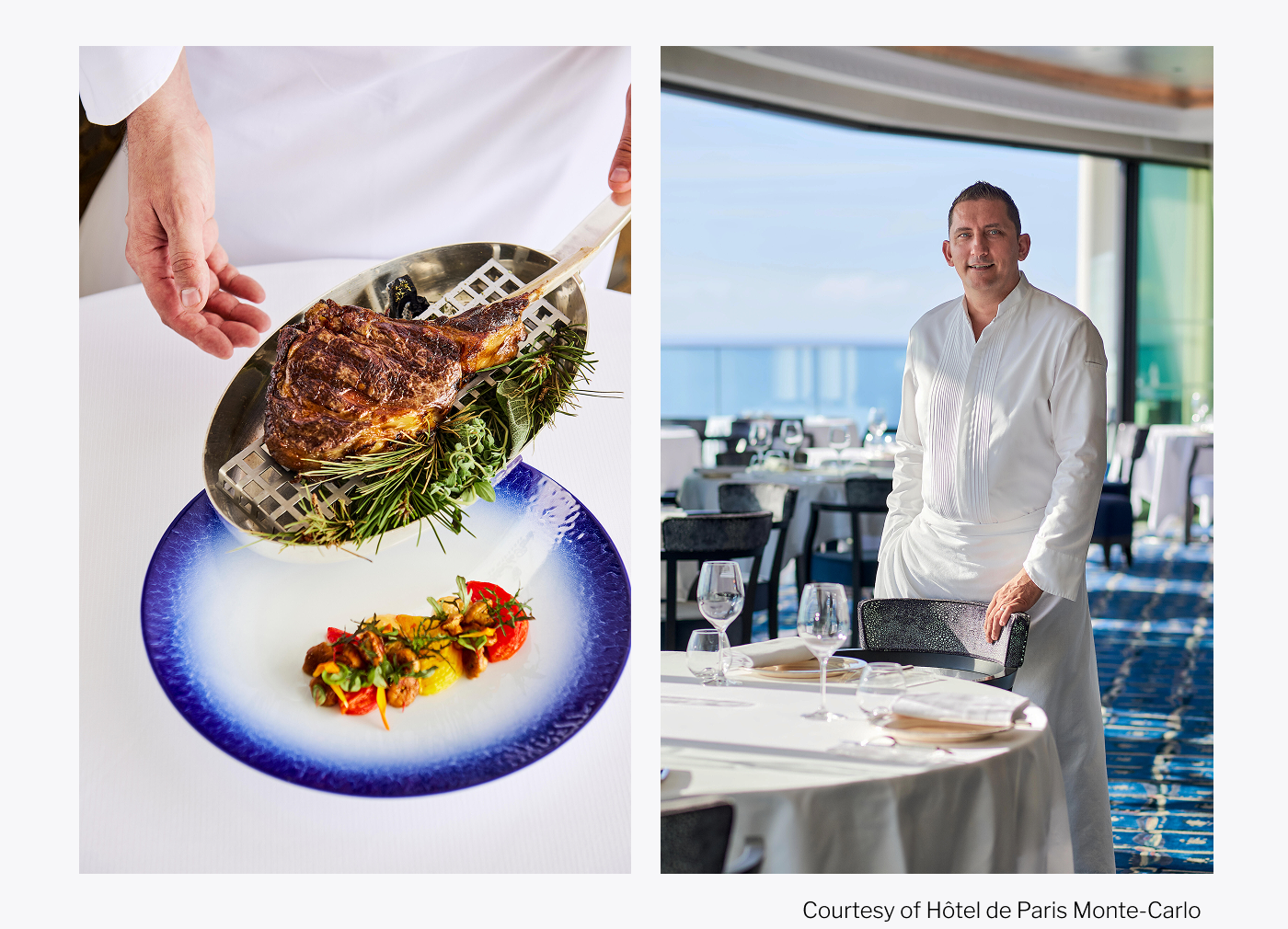
Emmanuel Pilon, Chef of Le Louis XV – Alain Ducasse — Hôtel de Paris Monte-Carlo Experience as Identity. I don’t really have a signature dish — or a favorite one. In fact, I’m not particularly fond of the term “signature dish” because it implies associating a chef with a single plate. To me, a chef should, instead, be associated with a culinary identity — a way of thinking and of conveying a vision. In the end, every dish we create could, in a sense, be called a “signature.” It’s, above all, the succession of dishes served throughout the menu and how they’re presented and accompanied by words, service, and wine that creates a true experience. And it’s that experience as a whole that, to me, becomes the real signature of a restaurant. |
|
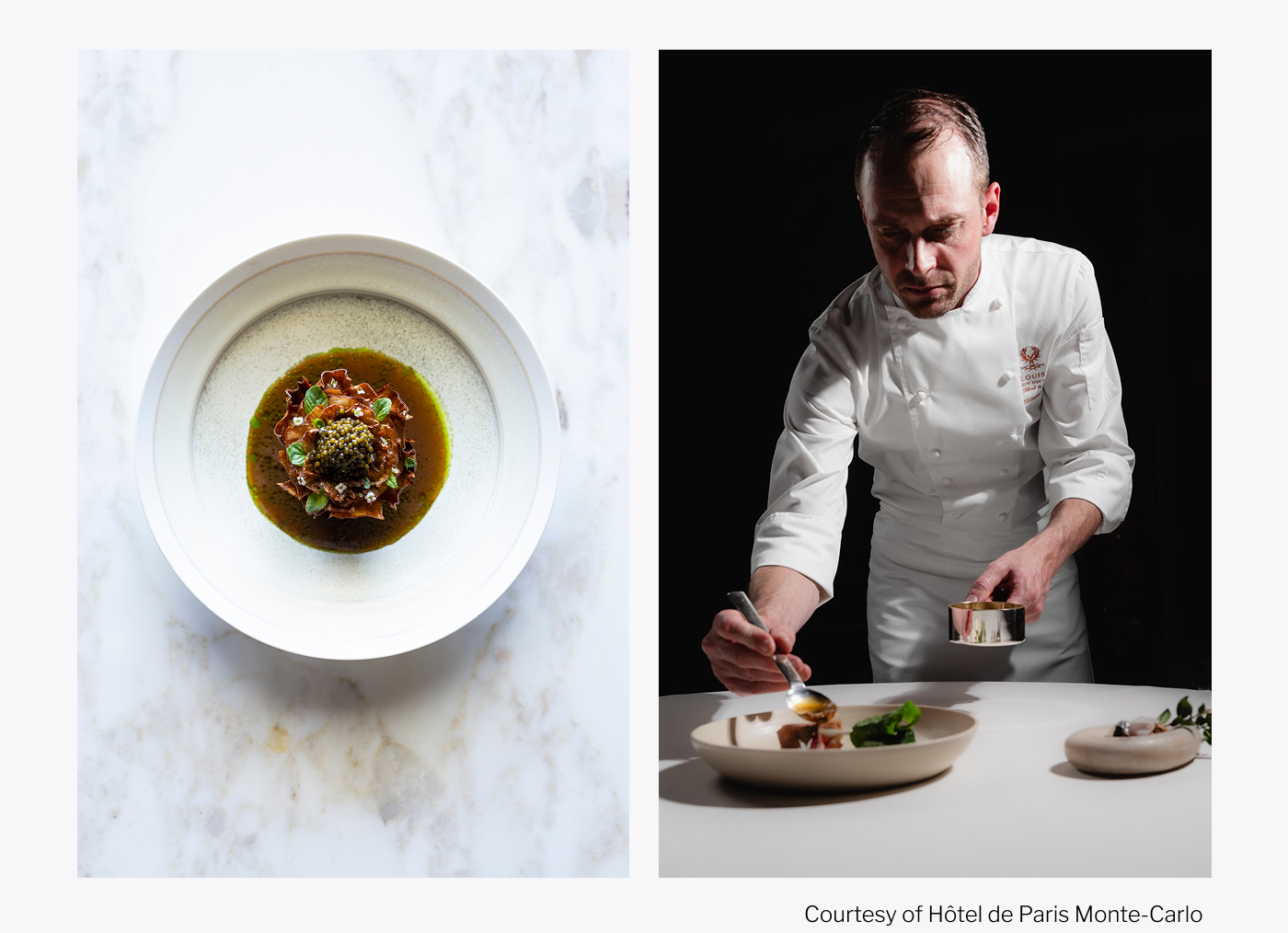
Marcel Ravin, Chef of Blue Bay Marcel Ravin — Monte-Carlo Bay Hotel & Resort L’Œuf Monte-Carlo. At Blue Bay Marcel Ravin, there is no single signature dish — they all are, in a way. But if I had to name one, it would be L’Œuf Monte-Carlo, cassava, truffle, passion fruit. I don’t create with a visual idea in mind. My approach starts from taste, memory, and emotion. I build my dishes like stories, layering flavors drawn from my own culinary memories. That’s how L’Œuf Monte-Carlo was born — from an intimate, personal exploration of taste. But it was our guests who gave it its iconic status. It became a signature dish because people kept asking for it, because guests traveled from all over the world just to taste it again. That kind of response is the greatest recognition there is. |
|
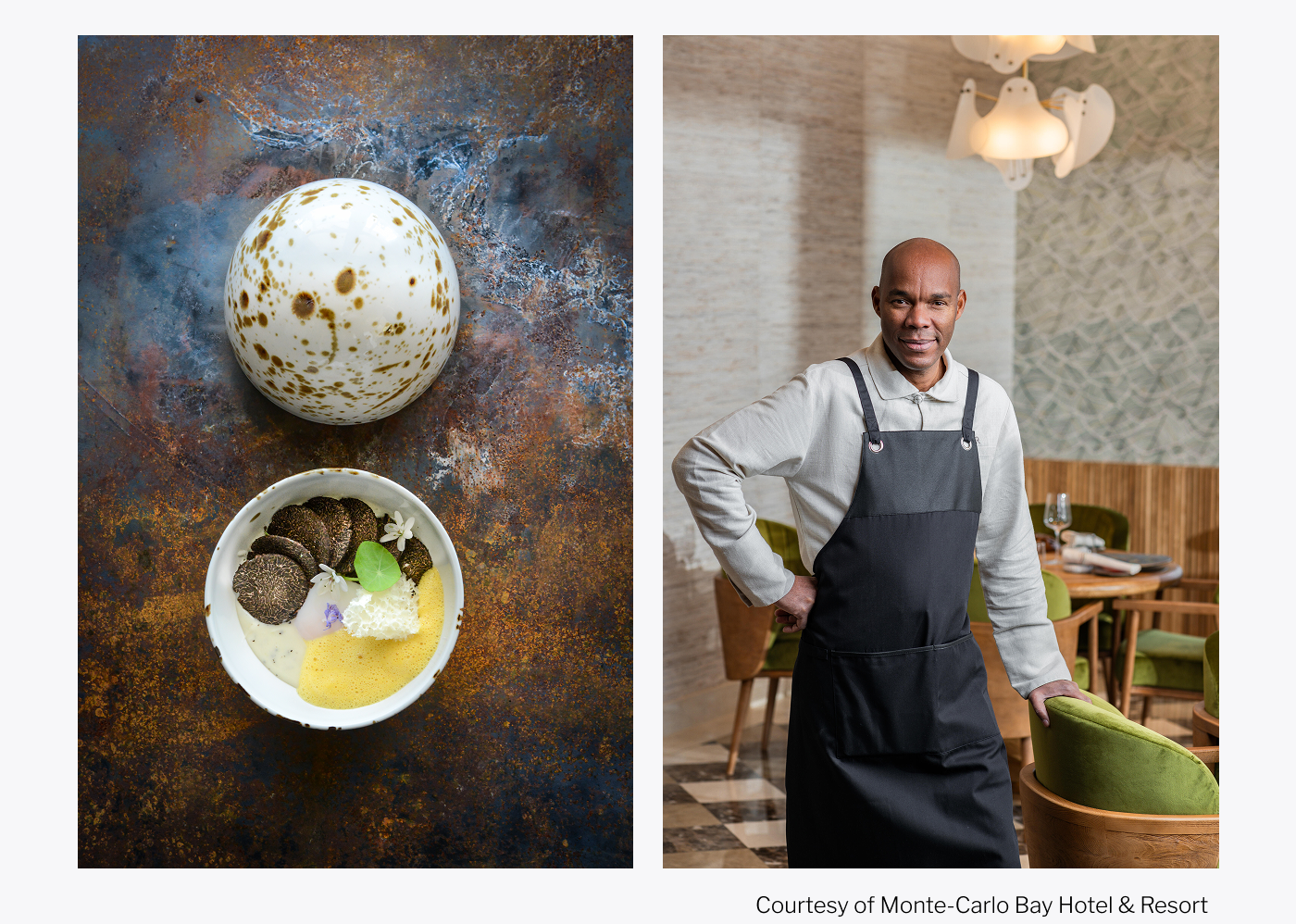
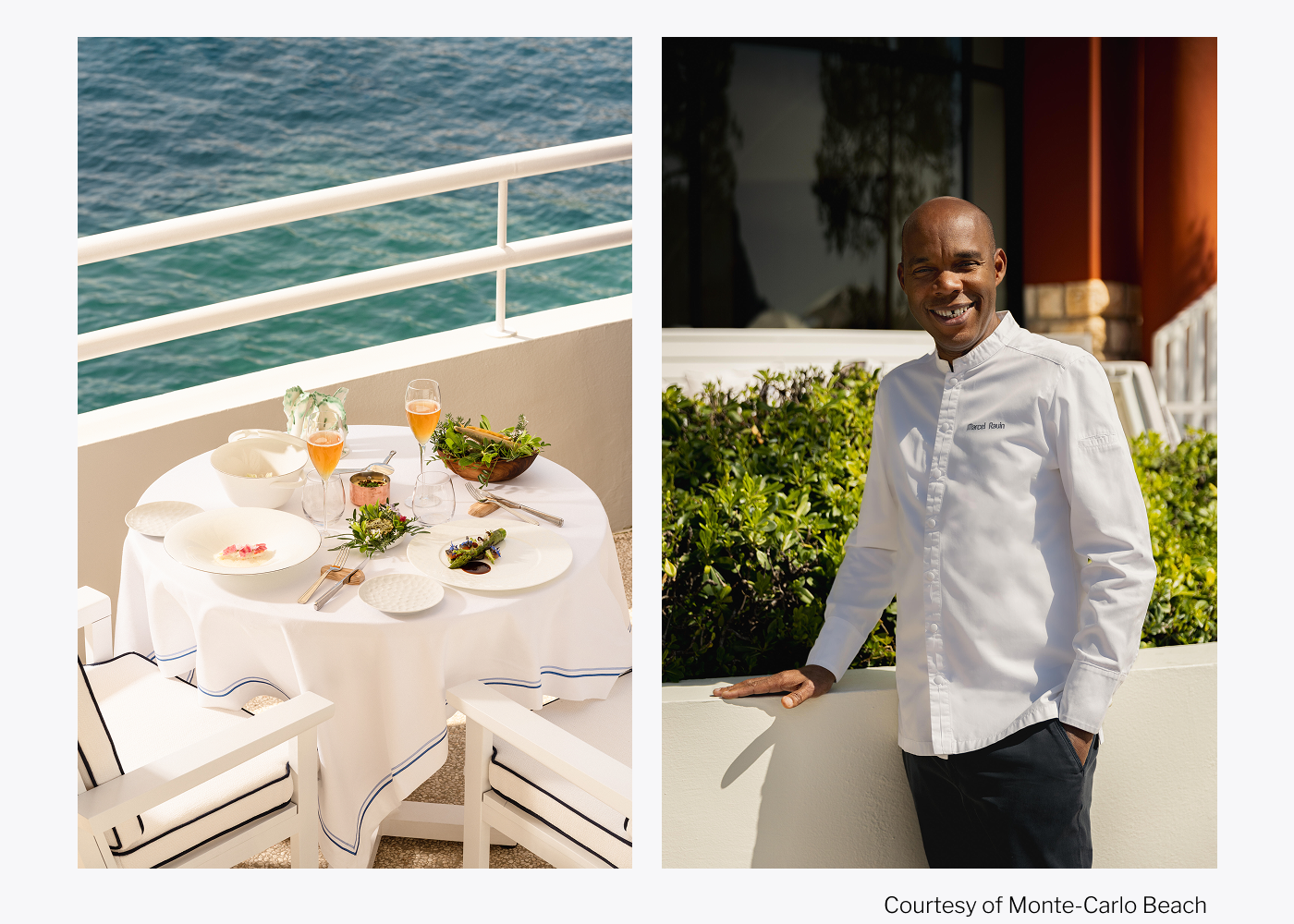
Marcel Ravin, Chef of Elsa Marcel Ravin — Monte-Carlo Beach Scallop, Osetra Caviar, and Breadfruit Migan. While my cooking evolves with the produce, the seasons, and my inspirations, this dish I created for the Festival des Étoiles reflects my world. Around the scallop and osetra caviar, I wanted to bring together the marine world of Elsa restaurant and its Jardin Marin with the Caribbean identity of Blue Bay Marcel Ravin. The breadfruit migan adds a dimension deeply tied to my roots and my culinary memory. This dish is, thus, a meeting point between the Mediterranean and the Caribbean, sea and land, refinement and generosity. Above all, it reflects my desire to bring these two territories and these two stories together in a single creation. |
|
Dominique Lory, Chef of Le Grill — Hôtel de Paris Monte-Carlo Wood-Fired Farm Chicken, Deviled Condiment. This dish is emblematic of Le Grill, greatly appreciated by the restaurant’s regular guests, and has always been a fixture on the menu, evolving throughout the year with different sauces, condiments, and garnishes. |
|
I arrive, aptly by helicopter, with an elevated perception of Monaco, the city-state on the southeastern coast of the French Riviera. The destination has, after all, spent more than a century perfecting a specific kind of pleasure: not pleasure as performance but as an organizing principle. In 1863, just two years after Monaco became a sovereign state, Prince Charles III issued a decree creating the Société des Bains de Mer, or “Sea Bathing Society,” designed to draw travelers to the then-novel delights of swimming, gambling, and lounging at majestic hotels. More than 160 years later, the Société still presides over some of Monte-Carlo’s grandest stages, offering “dreams, enjoyment, and beauty,” as its founder intended.
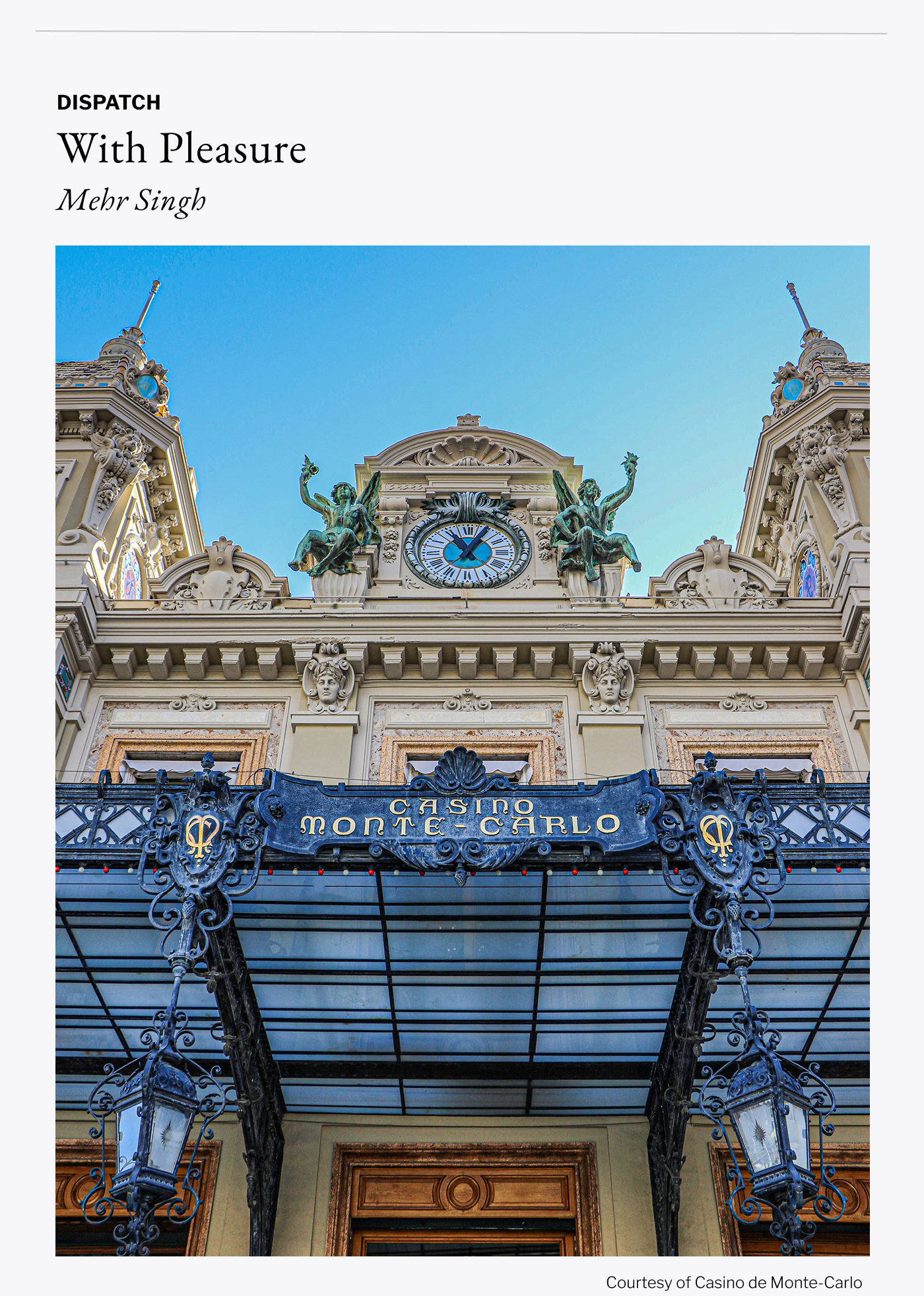
Outside the Casino de Monte-Carlo, the connection between this original mission and today’s reality comes into view. The edifice’s ornate belle epoque facade remains, now accessorized by the latest McLarens, which idle alongside vintage Alfa Romeos with custom interiors, all awaiting their passengers, who linger inside into the wee hours. Across the Place du Casino, one of the world’s most recognizable squares, the Hôtel de Paris Monte-Carlo, established in 1864 for casinogoers, still stands. Its guestbook reads like a roll call of famous names, historical and contemporary: Napoleon III, Alexandre Dumas, and Salvador Dalí; Michael Jordan, Julia Roberts, and Lady Gaga.
Inside the hotel, the pursuit of pleasure is immediately palpable. At 3-Michelin-starred restaurant Le Louis XV – Alain Ducasse, I encounter it in the form of an incandescent baba au rhum; at the nearby Café de Paris Monte-Carlo, I order crêpes suzette, a flaming dessert reportedly invented at the café and enjoyed by Princess Grace Kelly. Watching the casino’s gilded columns catch the afternoon sun, I understand why the city has become synonymous with luxury. And yet, it also boasts many less-obvious treasures.
At first glance, the recently reopened Exotic Garden on Monaco appears as a cliffside fortress of succulents, home to some 7,000 species from the world over. But nearly 330 feet below ground, it reveals a kind of existential (still exclusive) enjoyment: a natural cave with limestone stalagmites that have formed over more than 250,000 years, growing less than half an inch each century.
In the city’s markets, such as Marché de la Condamine, simple joys reign: fresh leeks and gleaming cherries, hulking côte de bœuf. A butcher claims to sell the world’s best steak, created by feeding cows a little chocolate. Other vendors serve barbagiuan: fried ravioli, Monaco’s national dish. Even the sea feels luxurious here, as I sip a Negroni on a yacht, and a fleet of megayachts passes us off the coast of Cap d’Ail, the coast unfurling with cliffside mansions. |
|
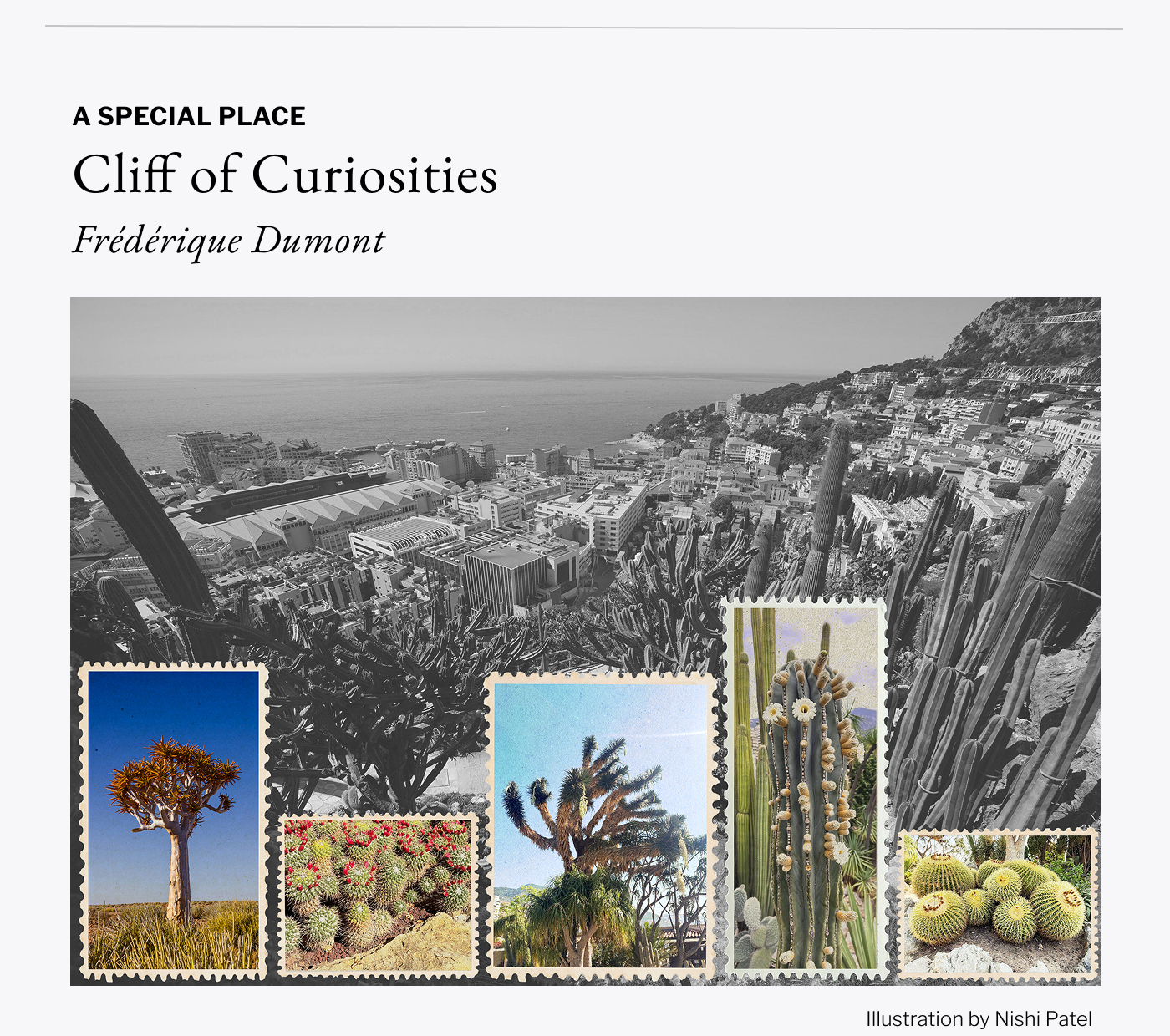
Suspended above Monaco, cacti from the United States, Mexico, and Central America cling to the cliff alongside succulents from southern Africa, the Arabian Peninsula, and beyond. The far-flung collection forms the Exotic Garden of Monaco, which originally debuted in 1933 and reopened in the spring of 2026, following six years of work to restore the garden’s grounds while retaining its character. Frédérique Dumont, the garden’s assistant director, details five particularly spectacular plants that speckle its grounds. Yucca filifera. Native to the Chihuahuan Desert in Mexico, this remarkable treelike plant can reach 32 to 40 feet in height. Its rigid, filament-edged foliage and towering clusters of creamy white flowers give it a sculptural, desert-born presence. Mammillaria compressa. This Mexican cactus, more than 60 years old at the Jardin Exotique, forms dense, cushionlike colonies that thrive outdoors on the Mediterranean rock. Ours now spans more than 10 square feet and crowns each year with a generous ring of pink blooms. Pachycereus pringlei. Known as the giant cardon, this columnar cactus from Baja California and Sonora is the largest cactus species in the world, capable of reaching nearly 65 feet in the wild. At the Jardin Exotique, striking specimens flourish in the Mediterranean climate. Echinocactus grusonii. Also known as “mother-in-law’s cushion,” this iconic, golden-spined spherical cactus is a signature presence in Mediterranean rock gardens. The garden’s specimen is more than a century old — a rare feat of longevity for the species grown outdoors. Aloidendron dichotomum. Sometimes called the “quiver tree,” or kokerboom, and native to the arid regions of Namibia and South Africa, this succulent tree owes its name to its dichotomous branching, where each limb splits evenly in two. A massive specimen of this rare species is cultivated and protected in the garden’s Centre Botanique greenhouse. |
|
So Far, So Close. In 2027, all eyes will be on Monte-Carlo One – Courchevel, the debut project of Monte-Carlo Société des Bains de Mer’s new international brand, Monte-Carlo One – Hotels & Residences. Set in the heart of Courchevel 1850’s prestigious Jardin Alpin, the property is designed by Basel, Switzerland-based architecture firm Herzog & de Meuron and will bring the Monte-Carlo art de vivre to the peaks of the French Alps, blending heritage, ultra luxury, and sustainability. Slated to open for the 2027-2028 winter season, it marks a milestone in the group’s international growth strategy: its first venture outside the principality in a resort that shares the same standards of excellence and is likewise gearing up for the 2030 Winter Olympics. Making Waves. Monte-Carlo’s cultural legacy runs deep, but its future holds equally profound possibilities, as the exhibition Méditerranée 2050 underscores. On view at the Oceanographic Museum of Monaco, the more than 10,000-square-foot, four-part installation invites guests to imagine what the Mediterranean Sea could look like in the exhibition's namesake year, if we all did our part to preserve its splendor. The installation traces the sea’s evolution starting 35 million years ago to the present day before introducing cetaceans, fully aquatic marine mammals, of the future and prompting reflection on our individual actions and roles in manifesting this fertile vision. Of the Impression. Aesthetic similarities between artist Claude Monet and fashion designer Karl Lagerfeld are few, but there is one tangible tie that binds: Villa La Vigie. Located just above the Monte-Carlo Beach Club, the location of this now-private residence served as the worksite for two 1883 paintings by Monet, both titled “Monte-Carlo seen from Roquebrune.” Around a century later, Lagerfeld channeled the villa’s creative alchemy, financing its renovation in exchange for the opportunity to reside in it, which he did for nearly a decade. Today, the six-bedroom villa nestled in a tree-filled park, with a private swimming pool, is available for inspiration seekers of any genre interested in renting it for a special event or superlative sojourn. |
|
54 Franklin St #2R NY, NY 10013. ©2026 Dossier Projects, LLC.
|
|
|
|
|