Doorways dressed in purple ribbons, echoing jacaranda trees just coming into bloom, watch over the streets of Antigua, Guatemala. It’s almost the Holy Week of Semana Santa, and the city leans fully into its pious inheritance, though an Indigenous sensibility still seeps through nearly everything Antigua offers. The colors verge on excessive, saturated flowers set against distant volcanoes and a low, lingering fog.
The country is not, at first, what you think of when you think of rum. If anything, Guatemala feels too grounded, too textural. And yet, it is one of the world’s great rum countries.
“Guatemala is a multicultural, multilingual country,” says Lorena Vásquez, master blender at Ron Zacapa. “We have 23 different ethnic groups, and each one has its own gastronomy.” Zacapa itself is a Nahuatl word meaning “on the river of grass.” Launched on the 100th anniversary of the town of Zacapa, giving the rum its full name, Ron Zacapa Centenario, the brand marks half a century in 2026.
For Vásquez, Zacapa rum is a reflection of Guatemalan DNA. Its sugarcane is grown in volcanic, clay-rich soils called vertisols along the Pacific Coast. “Only about 2% of the planet has this type of soil,” she says. “But our cane develops a higher concentration of sugars.”
The climate becomes part of the process. “The sugarcane is also Latino. It needs sun but also rain at the right time,” she explains. “And even the wind matters because it can bend the plant and change how it grows.” Zacapa rum is aged at altitude, far from the heat typically associated with rum. “At higher elevations, there is lower temperature, less oxygen, and lower atmospheric pressure,” she says. “That allows the aging process to happen more slowly.”
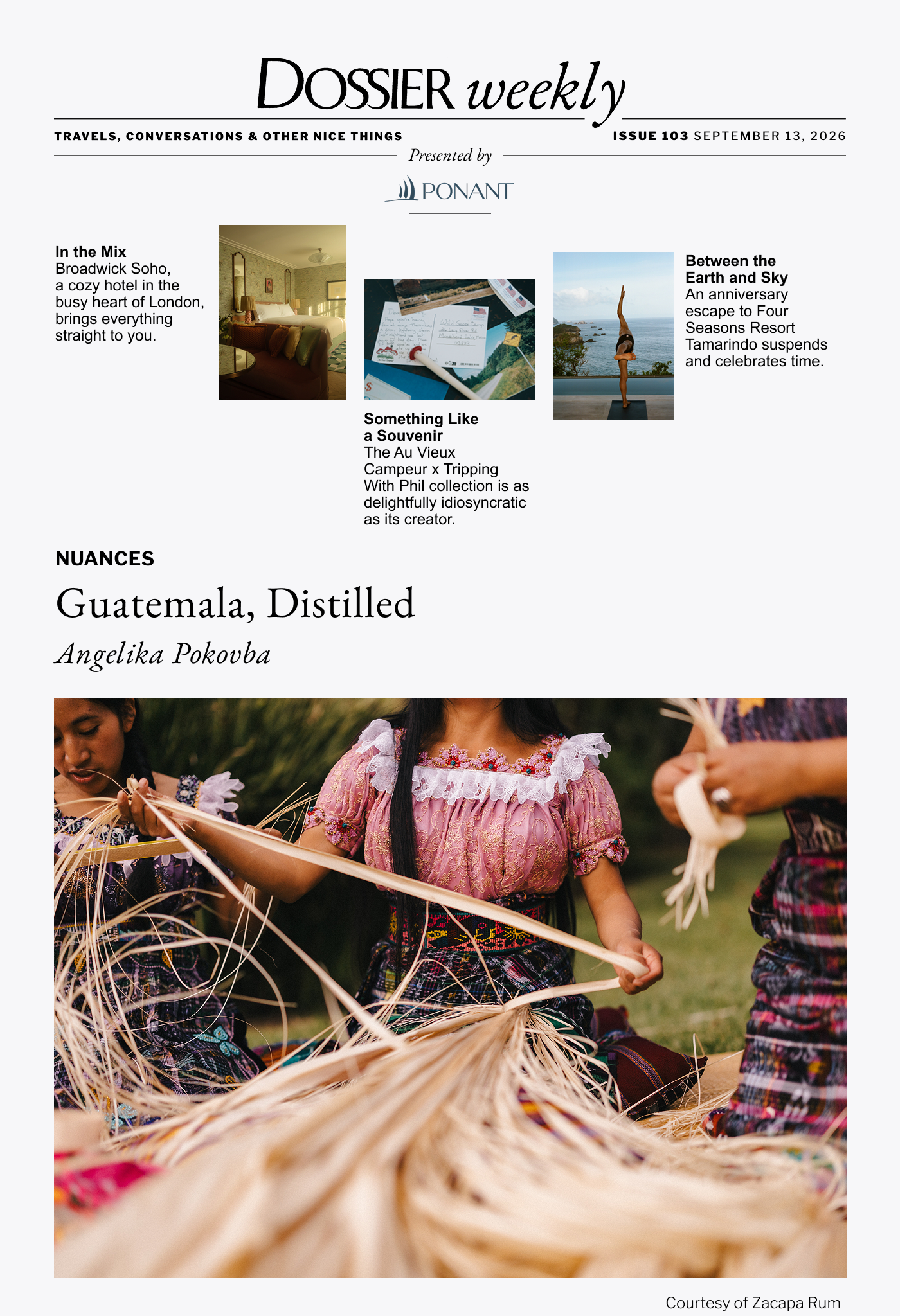
The rum builds in layers: toasted sugar that leans dry, cacao that reads almost bitter, something faintly smoky, something closer to wood than sweetness. Meanwhile, a community of women petate mat weavers from the Guatemalan Highlands fashions the palm-leaf bands that wrap each bottle, a constant since the brand’s beginnings.
Vásquez, who has been with Ron Zacapa for more than 40 years and has helped shape its female-led production, moves easily between science and instinct. When talking about pairings, she imagines a bowl of pepián stew, thick, dark, almost elemental. “It’s one of our most traditional sauces,” she explains, “usually served at important celebrations,” made with toasted pumpkin seeds, tomatoes, and spices such as cinnamon and allspice.
Guatemalan cuisine reads familiar to me at first, but lands differently. Corn anchors everything, pressed into tortillas, shaped into pupusas, folded into tamale-like chuchitos and fried-tortilla dobladas de queso, alongside beans, avocado, and fillings that move from beetroot to eggs to plenty of queso and crema.
Even something as simple as an enchilada, Vásquez explains, shifting between acid and fat, finds its balance with Zacapa rum. “We always wanted Zacapa to be a rum you can enjoy on its own,” she says, “but if you accompany it, it should elevate everything.”
One of the brand’s signature cocktails, the Zacapín, is a simple, slightly spiced drink built around Zacapa No. 23, citrusy and aromatic: rum, fresh lime juice, simple syrup, orange bitters, club soda, and orange peel. It’s often finished with a small handmade worry doll called a quitapena clipped on top, a nod to Guatemalan tradition, something to carry or dissolve whatever lingers.
Vásquez recommends finishing a grilled meat churrasco with a touch of Zacapa Edición Negra. The rum hits the heat and lifts immediately, aroma before flavor. “Edición Negra has more umami, more smoky and toasted notes,” Vásquez explains, adding, almost as an aside, “One shot for the meat, and one for the grill master.”
Cheese, unexpectedly, becomes one of the most convincing pairings. Aged Parmesan, brittle and crystalline, with a touch of honey. Comté, softer, nutty. Even blue cheese, sharp on its own, settles after a sip — especially with Zacapa XO.
And then, of course, coffee. Guatemalan coffee, known for its caramel and chocolate notes, is often taken with a splash of rum and called café con ron. Something small and sweet on the side, champurrada cookies or confections from Doña María Gordillo, an iconic traditional Guatemalan sweetshop.
“Guatemala is very complex,” Vásquez says. “And I think we reflect that in the rum, in the aromas, in the flavors.” |
|
London is perhaps the city I’ve visited the most in the world, yet its sprawling nature, its endless little alleyways and mews, its ever-changing list of cultural must-dos, has always made me feel like I was missing out on something. The best gallery show wasn’t the one I’d driven a half-hour to visit. The best bite wasn’t that new bakery that just opened in Notting Hill, where I’d trudged for a croissant despite living in the City of Croissant. There were always 538 things I felt I had missed each time I got back on the Eurostar.
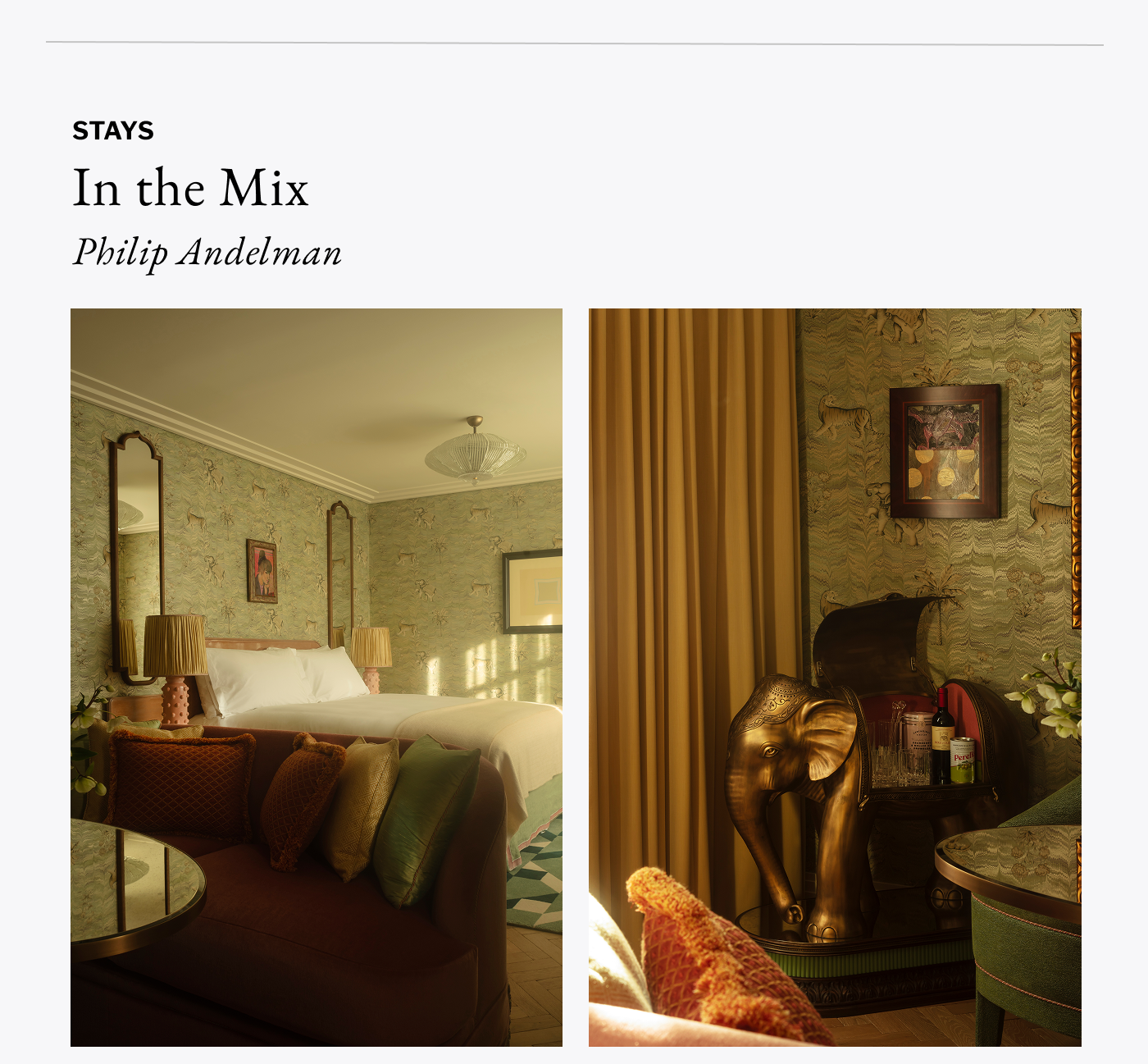
Enter Broadwick Soho, a cozy hotel in the busy heart of the capital that brings everything straight to you. You’re instantly greeted by the property’s signature scent, which feels exotic and layered, echoing the visual punch of very British decor: patterned wallpapers covered in a museum’s worth of art, with lights dialed down to a warm glow echoing candlelight.
A comprehensive catalog overseen by in-house curator Jonathan Brook guides you through the property’s impressive art collection, from the entrance’s Andy Warhol and Francis Bacon pieces to the works of younger artists, such as Faye Wei Wei and Chica Seal, meaning you won’t mind if you skip a trip to the Tate Modern while you’re staying here. And if sunny skies arrive, and everyone is stressed trying to find the latest and greatest terrace for a pint, you just have to press the “up” button on the elevator to find yourself at a rooftop bar with views of the entire city.
The bar also presents cultural programming: A multimonth, cross-continent collaboration earlier this year featured the iconic Marrakesh hotel El Fenn. And if you do dare slip out past the establishment’s front doors, you are truly in the center of town, a five-minute bike ride to Banksy’s latest sculpture, 15 minutes to the Serpentine Pavilion (open until the end of October), and two brisk minutes to Japanese-quality coffee at Omotesando.
Your favorite thing about your room … The dimmers in the room had an elegance to them that I hadn’t seen before. Once pressed, there was a split-second delay followed by a gradual fade-out, as if to say: Let the show begin.
The best amenity … A truly stocked bar. This wasn’t your perfunctory split of second-rate Champagne and business-class red wine. I had olives and exceptional vermouth at my fingertips should I want a martini but also bottles of Don Julio 1942 for a neat pour of tequila, which is what I leaned into.
The best view from the hotel … For three months a year, a rooftop bar in London is perhaps the most precious commodity there is, and I was fortunate enough to land right at the start of the season. Six o’clock p.m. here allowed for a mix of soft, gentle sunlight stretching out across Soho’s skyline while a breeze made the heat tolerable. The most important thing to pack for your stay here … Had I been writing these notes before arriving, I would have presumably said earplugs due to the location and, in fact, I did pack these (Mack’s, for the record, are the best), but they never came out of their case. The hotel did an outstanding job of keeping Soho’s noise outside and the calm inside.
A song that embodies the property … Not a song but a book! If you’re staying here, you should really pack a copy of Ben Aaronovitch’s Rivers of London, a fun detective yarn that skews somewhere between a wizard’s tale and an Edgar Wright zombie movie, all set in this hotel’s neighborhood. When you step outside each morning and turn the corner, you feel like you’ll bump right into Constable Grant! |
|
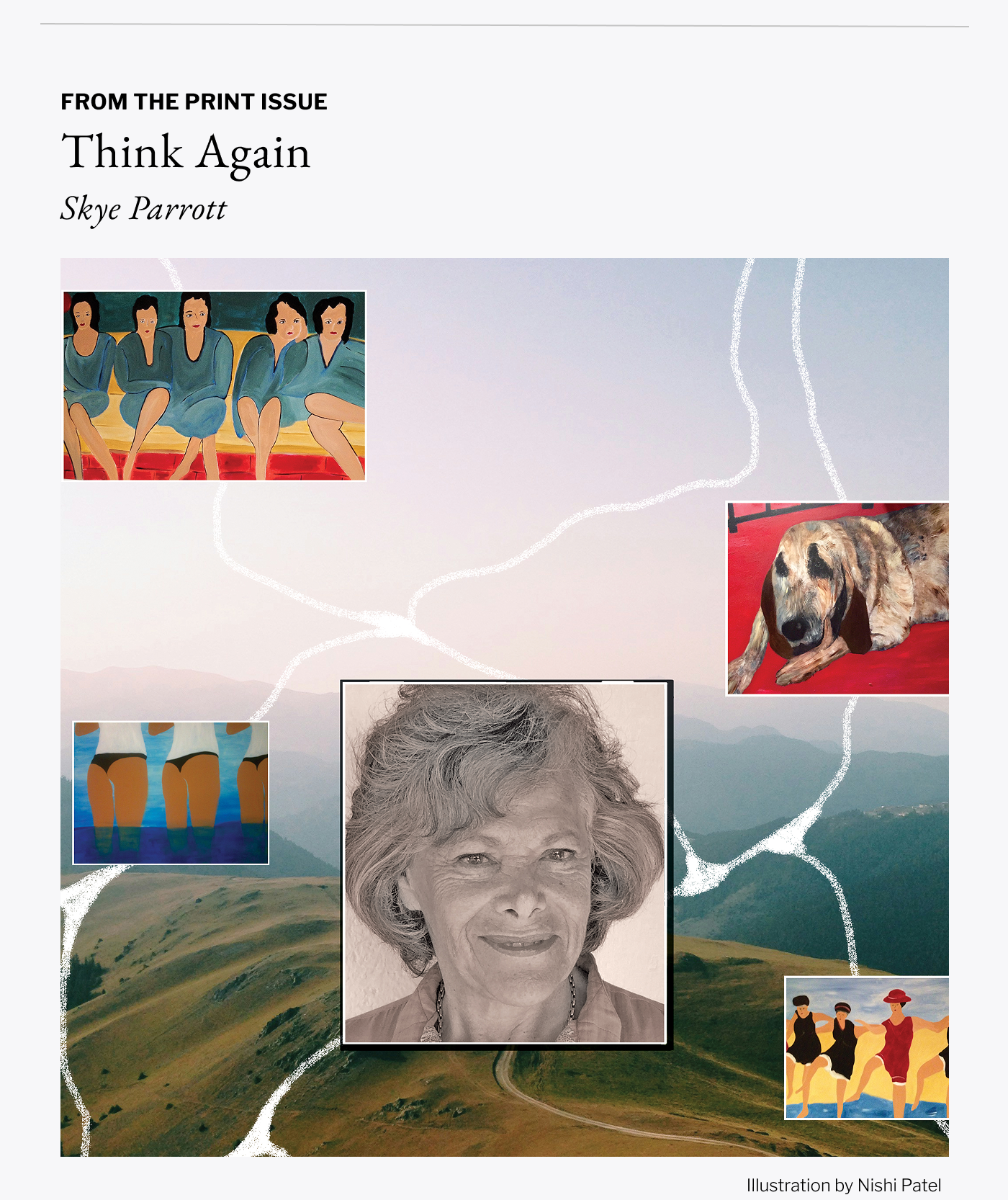
Often referred to as the “mother of positive psychology,” Dr. Ellen Langer was the first woman tenured in the psychology department at Harvard, back in 1981. Her pioneering research into the impact of mindfulness comes from an ability and willingness to think wildly, far outside the box — so much so that she often ends up questioning why the box is there.
To get a sense of Langer’s creativity, one only has to look to the design of her groundbreaking “Counterclockwise” study from 1979, devised to test how personal perceptions impact aging. To do so, she retrofitted a retreat space with period furnishings, music, and media, creating an environment that reflected the world of 20 years earlier. A study group of elderly men spent a week in the space, with instructions to behave, talk, and live as though it were 1959. At the end of the week, Langer found that the experience had all kinds of positive impacts on the participants’ minds and bodies. They showed measurable improvements in diverse markers of aging, from flexibility, gait, and posture to cognitive tests. This experiment has been replicated, with similar results, and followed by a lifetime of equally mind-bending work into the consequences of perception.
The message at the core of Langer’s work is simple: Our mind and our body are not separate, but rather “a single entity.” What we perceive impacts what we experience. As such, approaching life mindfully can produce myriad benefits related to health, stress, longevity, and happiness. It’s a strong conclusion backed by convincing research, but ultimately what I find so appealing about it is its universality. While health and longevity can often seem like luxury propositions requiring biohacking, peptides, or IVs, Langer presents a powerful, accessible path to improved health, achievable by adjusting our mental landscape.
On the Mind/Body Connection Ellen Langer: Everybody has had experiences of knowing that their thoughts affect their bodies, even if they didn’t know how to talk about it. As I say in The Mindful Body, there are two that were very instructive for me. One, I was married when I was obscenely young. I was 19, and I went to Paris on my honeymoon and was in a restaurant and ordered a mixed grill. And on the mixed grill was pancreas. I asked my then-husband, which of these things was the pancreas? He pointed to it. I ate everything else. Now the moment of truth: Can I eat the pancreas? I go to eat it, and I literally get sick. He starts to laugh. “Why are you laughing?” Because I had eaten the pancreas a lot earlier. What made me sick was chicken.
Years later, my mother had breast cancer that had metastasized, which is supposed to be the endgame, and then magically, it was gone, spontaneously remitted.
And so here I had made myself sick; she had made herself well. What was going on? Because the medical world couldn’t explain either one.
The medical world believed that our thoughts were irrelevant. I’m sure medical people wanted us to be happy, but their belief was the only way to get sick was the introduction of an antigen. And now I’m pleased to say that a lot of that has changed.
We have a notion of mind and body as separate, and then I realized that these are just words: mind, body. Let’s put them back together as one unit. We did many, many studies testing this idea of mind/body unity. This began in 1979, and I know I’ve had a positive influence, but still, people talk about “mind/body connection,” which is wrong. It’s one thing.
I can tell you about one of the several other studies that we did to test this mind/body unity. We inflict a wound, a minor wound, but a wound nonetheless. People are in front of a clock. Unbeknownst to them, the clock has been rigged, so for a third of the people, it’s going twice as fast as real time. For a third of the people, it’s going half as fast. For a third of the people, it’s real time. Now, most people are going to assume that that wound heals when the wound heals, but no, that wound heals based on clock time, based on your beliefs about how much time has passed. Study after study, we find the same thing.
In a study with type 2 diabetics, we had people sit in front of a computer playing games. We have a clock next to them, and, to ensure they look at the clock, they’re told to change the game they’re playing every 15 minutes. What we find is blood-sugar levels follow, again, perceived time, not real time. We have so many studies showing this, with so many different measures. Read the full feature and more close takes on a wide world in our Spring/Summer 2026 print issue. Order now. |
|
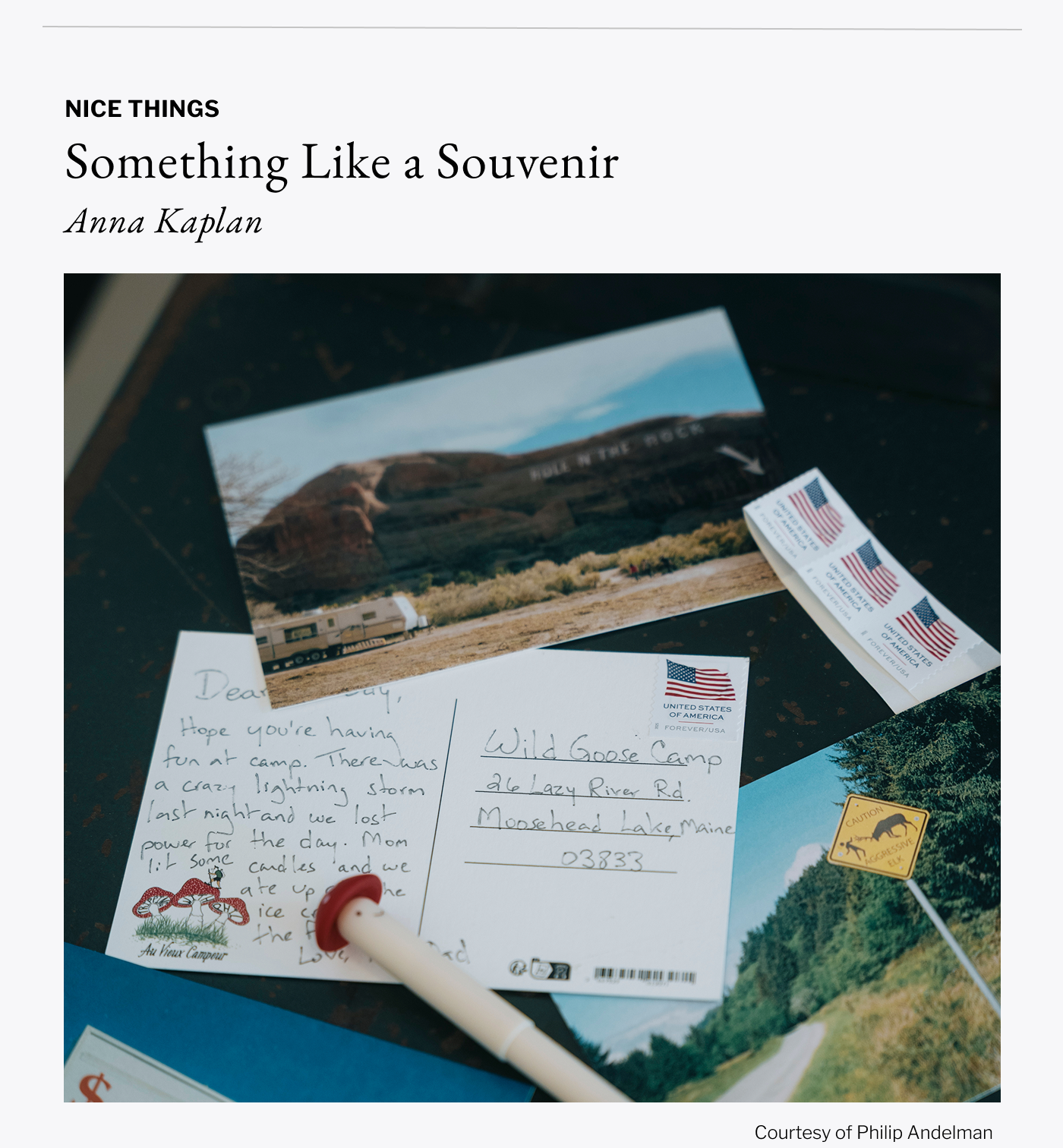
For the past 20 years, director, photographer, and Dossier contributing editor Philip Andelman has roamed the planet, collecting addresses, photographs, and stories along the way. A particularly extraordinary adventure grounds the just-released third volume of his printed travel diary: Tripping With Phil, Vol 3: Along the Baltoro Glacier.
The mountain-green, clothbound book documents a trek to the second-highest peak on Earth, K2, in 1998, unexpectedly interrupted by Osama bin Laden. The book’s contents bring together photographs from the trail with written chronicles of the journey. The project has inspired a collaborative collection with legendary outdoor retailer Au Vieux Campeur’s lifestyle brand, featuring T-shirts emblazoned with scenes captured during the expedition and other related objects.
The Au Vieux Campeur x Tripping With Phil collection is currently available online and at a pop-up shop at Merci, on Boulevard Beaumarchais in Paris, where it resides alongside an edit of Andelman’s favorite things: the perfect Lamy pen designed by Jasper Morrison; mugs from his favorite pancake spot, Palace Diner in Biddeford, Maine; as well as framed photographs from his travels, each accompanied by a handwritten (with said Lamy pen) excerpt from his travel diary.
I explored the collection over a breakfast of Andelman’s homemade granola, now available in the pop-up, and almond milk (yes, he makes both himself), which exemplified the personal care and wonderfully idiosyncratic viewpoint behind the far-flung assortment. |
|
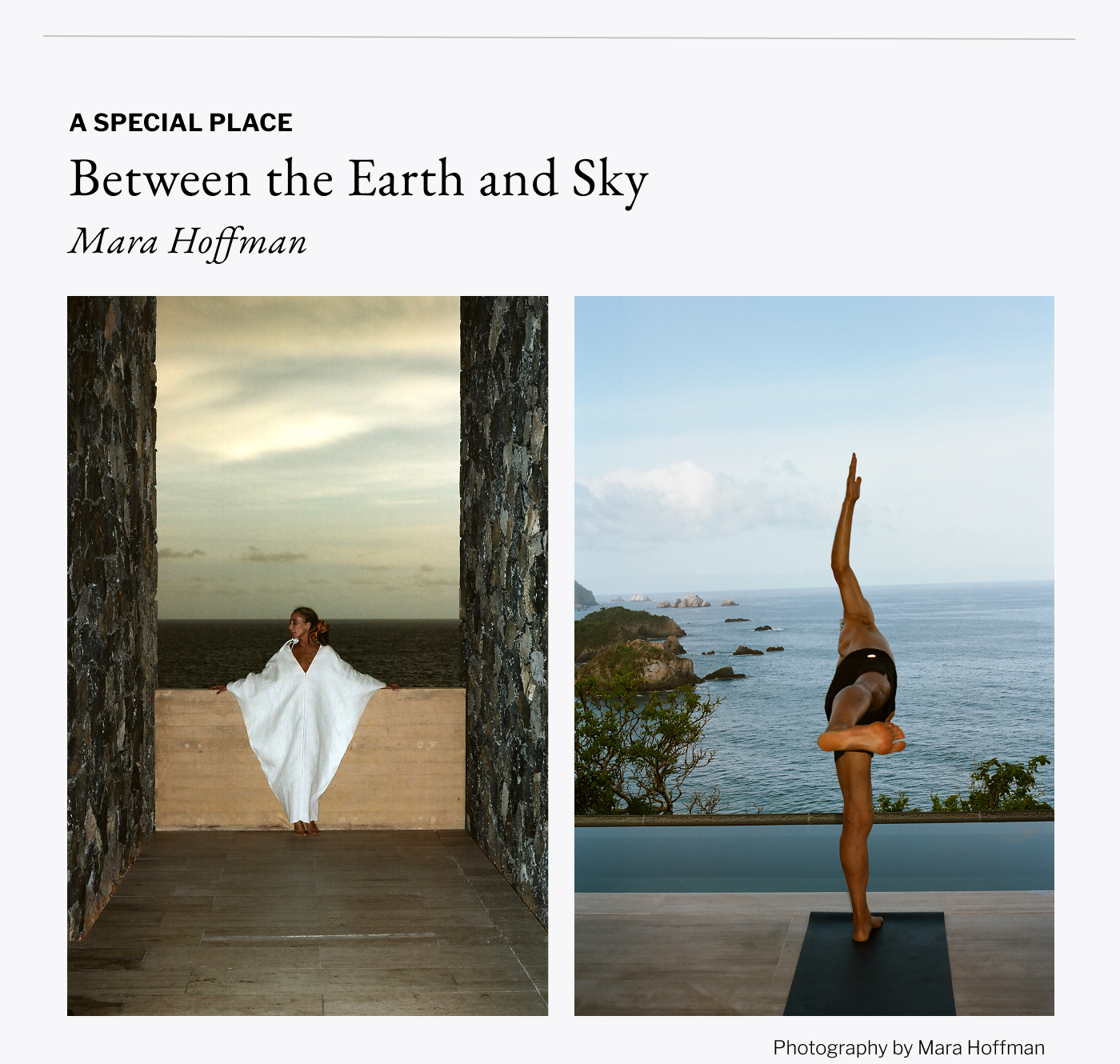
We came to Four Seasons Resort Tamarindo to celebrate our 20th wedding anniversary and were moved by all of it — the architecture, the astounding landscape, and the 3,000-acre nature reserve. Every detail felt perfectly luxurious while maintaining a quiet elegance. The food was dynamic and delicious, with so much variety. We especially loved visiting the farm and taking a nature walk to learn about the incredibly diverse species of plants and trees throughout the reserve. Our room was modern and graceful, offering one of the most beautiful views I have ever seen. |
|
Dippin’ In. This year’s US Open has drawn record crowds to the Billie Jean King National Tennis Center in Queens, New York — and record-breaking lines to match. Everyone queues up for the Grey Goose Honey Deuce, Coqodaq nuggets, and La Roche-Posay sunscreen samples. But those in the know line up outside of the tiniest stall in Food Village: Salt Hank’s. Its one dish, the French dip sandwich, packs juicy dry-aged prime rib smothered in melted provolone, caramelized onions, and horseradish aioli into a toasted baguette, served with au jus for dipping (even sipping) and matchstick fries. It’s the best bite I’ve ever had at the tournament, hands down. Brave the line (it’s fast), or head down to Bleecker Street in Manhattan post-tournament, when the Salt Hank’s shop will reopen. —Jackie Risser Coast to Coast. About three and a half hours from California’s Bay Area in Point Arena, Izakaya Gama transports you straight to Japan with its handmade ceramics and ikebana floral arrangements, Japanese potato salad (an izakaya staple), and ikura don (rice and salmon roe) topped with uni. Those were my standouts, but whatever you order, you can’t go wrong. —Elissa Polls Behind the Scenes. It’s hard not to feel at least rock star-adjacent when you enter the Hollywood Palladium through the Vinyl Room’s private entrance. The large, exclusive lounge is inspired by the hi-fi kissas of Tokyo, and a DJ spins beneath shelves of vinyl records that stretch toward the ceiling. I ordered a highball and snacked on “sushi tots” from the venue’s Japanese-inspired menu while chatting with its attentive staff before the show. The space feels like a backstage area for concertgoers, and guests are free to bounce between the Vinyl Room and the main performance area — should you need a respite during an exceptionally long guitar solo. —John Chuldenko |
|
54 Franklin St #2R NY, NY 10013. ©2026 Dossier Projects, LLC.
|
|
|
|
|