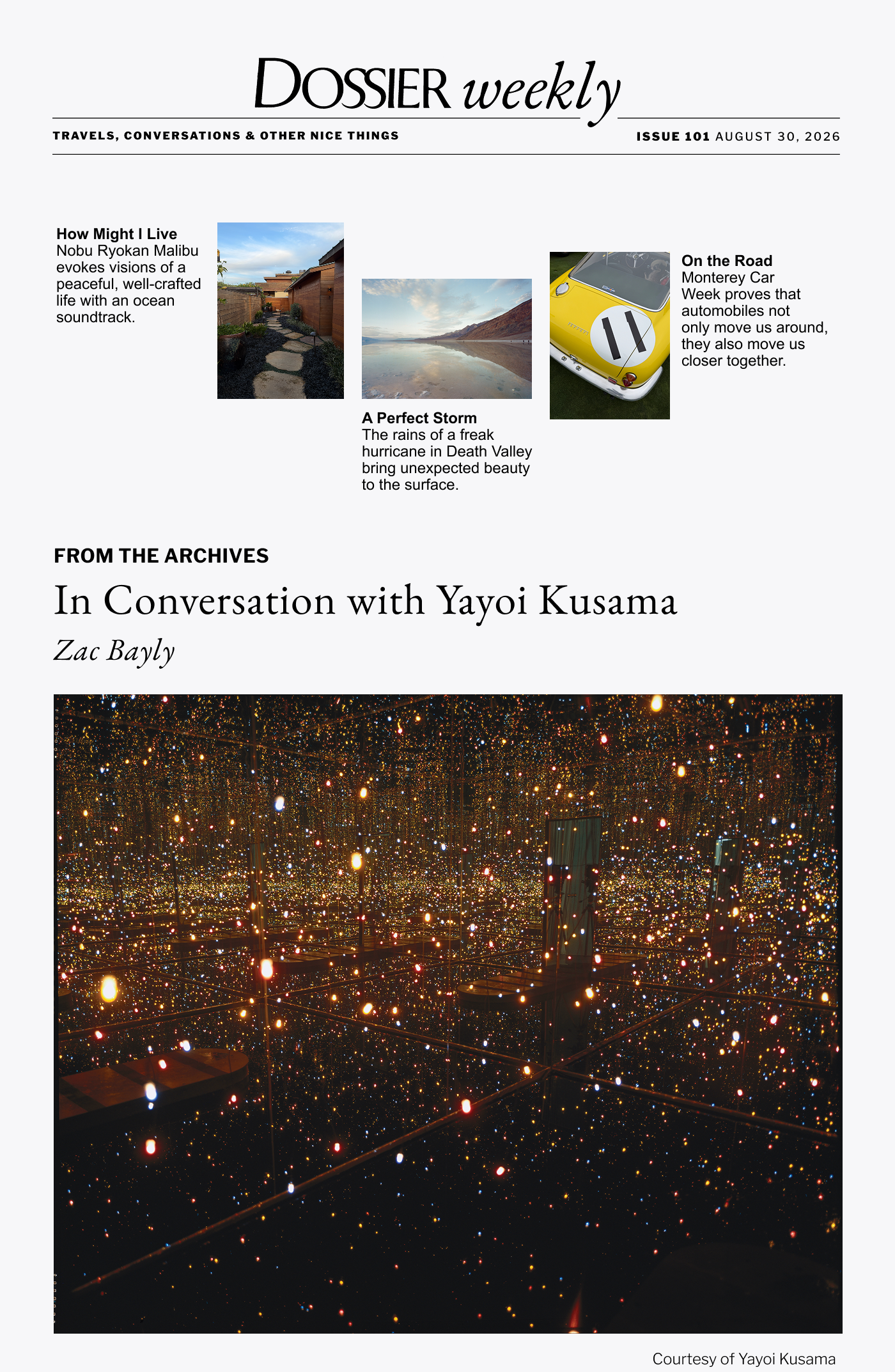
From the Archives revisits relevant cultural conversations from Dossier’s first life. This one, an unfiltered exchange with the luminary Japanese artist Yayoi Kusama, comes on the heels of Kusama’s passing this week, at the age of 97 — and on the eve of a landmark retrospective of her work at Stedelijk Museum Amsterdam, opening on September 11. Both the interview and the exhibition reflect Kusama’s impenitent dedication to challenging the confines of reality, moving always toward infinity. Originally published in Dossier Journal No. 10, 2012. There’s something innately paradoxical about the life and work of polka dot-obsessed Japanese artist Yayoi Kusama: She explores the infinite through the intimate. On one hand, she claims that her artworks — repetitious polka dot-covered sculptures, paintings, and installations; and constellation-inspired mirrored rooms that give the impression of endlessness — represent something very personal (the hallucinations that plague her) and that the process of creating them acts as a sort of therapy. On the other hand, her patterned pieces seem factory-produced, and the reality is that almost anybody could reproduce a Kusama piece with little technical difficulty. Yet, despite the simplicity and commonality of her motif, Kusama is inextricably present in her artwork.
She is considered a protagonist of the New York City avant-garde movement of the 1960s, having organized the city’s iconic Body Festivals and exhibited alongside artists such as Andy Warhol and Claes Oldenburg, but her work is universal. Her boldly colored polka dots have been plastered across everything from trees to naked bodies to beach balls to Louis Vuitton’s latest accessory line. Naturally, appropriating the polka dot, making it synonymous with her name — she’s widely known as the “princess of polka dots” — has taken considerable persistence, which has led critics and a number of her contemporaries to conclude that she’s extremely savvy, a public relations mastermind rather than a tortured soul.
This paradox extends into her recognized persona. Kusama is a reclusive enigma, who has voluntarily resided at the Seiwa Hospital for the Mentally Ill since 1977. However, much of her earlier life is detailed explicitly in her autobiography, Infinity Net: The Autobiography of Yayoi Kusama. In interviews she remains poker-faced, divulging little about her personal life. At the same time, the concepts she’ll happily discuss — her mental health and its influence on her art, and the overwhelming sense of the infinite that she feels threatens to obliterate her — could hardly be more personal.
Take for example Kusama’s 1954 painting “Flower (D.S.P.S),” about which she stated, “One day I was looking at the red flower patterns of the tablecloth on a table, and when I looked up I saw the same pattern covering the ceiling, the windows, and the walls, and finally all over the room, my body, and the universe. I felt as if I had begun to self-obliterate, to revolve in the infinity of endless time and the absoluteness of space and be reduced to nothingness. As I realized it was actually happening, and not just in my imagination, I was frightened. I knew I had to run away, lest I should be deprived of my life by the spell of the red flowers. I ran desperately up the stairs. The steps below me began to fall apart, and I fell down the stairs, straining my ankle."
So, has Kusama finally achieved a level of internal peace through solitude and the therapeutic repetition of painting spots? And, also, how could she hope to? As Albert Einstein once quipped, “Insanity is doing the same thing over and over again and expecting different results.” To quote schizophrenic sci-fi novelist Philip K. Dick, whose work also explored identity and perception, “The problem with introspection is that it has no end.”
There is no end in sight for Kusama, who — despite being 83 years old — is perhaps more famous, relevant, and indeed prolific than ever before. She has had solo exhibitions at major galleries around the world this year, notably including Tate Modern and the Whitney Museum of American Art. Zac Bayly: What is life like at your residence? Could you tell us about a typical day, or a specific day — like the day that you answer these questions? Yayoi Kusama: I had a meeting about the new building for my foundation, and after that I painted new paintings for hours. ZB: I hope this is not too personal a question, but could you describe a recent hallucination and explain how it influenced you whilst creating a particular piece of art? YK: Since my childhood, I’ve been suffering from hallucinations. However, after I met a good psychiatrist, my condition got better. But I’ve made many works based on my hallucinations. I just kept sketching whenever I saw hallucinations. ZB: Where does the border of reality and fantasy reside, and do you feel bound by the confines of reality? YK: No, I don’t feel bound by the confines of reality. ZB: Over the years, you have described your work as "art medicine." Can you explain how creating new works is therapeutic? Read More |
|
PAGE TURNERS Back to the BooksThe Editors A short list of the books we’ll be reading and recommending this fall … Like a lot of people my age, I went through a brief but intense period of reading Carlos Castaneda during my teen years. It was a relatively short-lived fascination, and one I hadn’t thought about in years until devouring Ru Marshall’s amazing new biography, American Trickster: The Hidden Lives of Carlos Castaneda. Castaneda — writer, fabulist, con man, self-proclaimed wizard, and author of The Teachings of Don Juan — might be a cultural footnote at this point, but he remains a wildly fascinating one. —T. Cole Rachel Fall’s slide into spookiness makes it ripe for a murder mystery, but cozy capers tend a bit syrupy for my taste while thrillers disrupt my dreams. Camilla Trinchieri’s forthcoming Murder Returns to Gravigna splits the difference. The novel is the sixth in the author's Tuscan mystery series featuring Nico Doyle, a former NYPD homicide detective who retires to the region, alongside an idiosyncratic cast of distinctly Italian small-town characters, such as a benevolent misfit who speaks in Dantean aphorisms and a busybody florist who trades in iris and rumor. Trinchieri’s crisp prose and rich descriptions of elaborate meals with sanguine wines also lessen the bludgeon of shorter days. —Erin Dixon I’m completely enamored of Ian Bogost’s latest newsletter via The Atlantic, so I recently picked up a copy of his latest book, The Small Stuff. As its title suggests, it’s a celebration of life’s simple pleasures, a nudge to be blissfully present, to delight in the smallest everyday experiences: ticket stubs, the whine of a milk frother, marshmallows. My copy is, of course, in print — yet another tactile experience to be heralded. —John Chuldenko I’ve been recommending The God of the Woods by Liz Moore to anyone who will listen. The novel imagines the tale of a wealthy, young boy who disappeared into the Adirondack woods in 1964, never to be found. Fourteen years later, his younger sister goes missing in the same forest. Taking place over two timelines and being told from multiple perspectives, the mystery of what happened to the two children is slowly revealed. I ended up blowing through the story in two days and have heard that Netflix is, thankfully, developing it into a series. —Alessandra Berge After reading Eddie Huang’s first short story in our Spring/Summer issue, I was excited to find out if he could thread its magic into long-form, via his new novel — like when you hear a new single and rush to check out the full album, hungry for more. The book, Come Undone, is an auto-fiction about a traveling food show’s host’s quest to secure his own happiness after working to please everyone around him. Featuring cutting, raw, heartfelt prose with quick comedic jabs in his signature, and sometimes salacious, brand of storytelling, this debut novel packs some serious heat. —Lisa Lok |
|
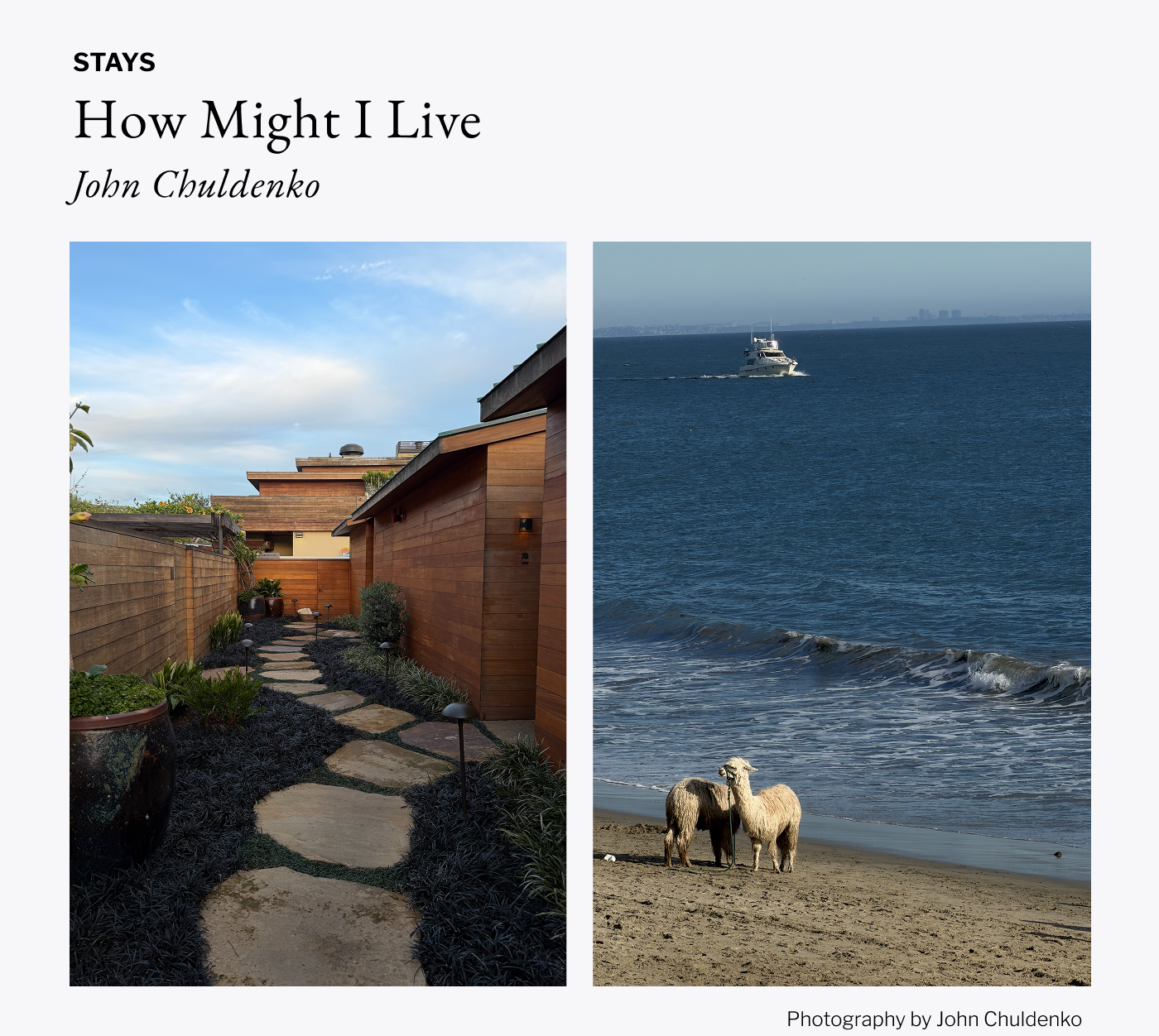
The massive wooden gate that slides open to reveal Nobu Ryokan Malibu should have its own soundtrack. It’s all drama, serving as a theatrical curtain for this plot of paradise wedged between the Pacific Coast Highway and the ocean. The property, considered and peaceful despite the bustle of Malibu around it, feels like a secret.
I spent my stay poring over the boutique hotel’s exquisite Japanese craftsmanship. Its fastener-free teak (imported from Japan) is softened by silk wall coverings. There are no large seams in the floorboards, no visible grout in the bathroom stone. Every element is expertly fitted. It’s the kind of attention to detail that elicits a deep calm — as did gazing at the Pacific Ocean from my room and breathing as deeply as possible, which is how I spent most of my time at the property, pausing only for dinner at Nobu Malibu. Your favorite thing about your room … The box-shaped bathtub was beautifully crafted from five slabs of oiled teak imported from Japan. It’s catnip for design and workmanship enthusiasts. The best amenity … Above the platform bed hung a 300-year-old silk painting of Mount Fuji — the kind of artwork that transcends the decorative and inspires meaningful reflection. A dish (or cocktail) you’d recommend to a friend … The king crab tempura amazu at Nobu Malibu. It tastes like a travelogue of chef Nobuyuki “Nobu” Matsuhisa’s time in Japan, Peru, and Alaska. Stir the ingredients together to taste all the destination-specific flavors in your first bite. Nobu is a scene, so balance the liveliness that envelops the space with a simple, clean drink: a highball made with a blended Japanese whisky. Something unexpected … For a true Malibu experience, you must encounter, and embrace, its eccentricity. Moments after my arrival, I walked onto my balcony and saw a local walking his alpaca along the beach, which spurred a flurry of activity with beachgoers clamoring for selfies. What to bring … Bring or borrow an automobile (ideally one with character). The Pacific Coast Highway is an iconic drive lined with turnouts from which to enjoy the view. More adventurous drivers should head north to the Malibu canyons, some of the greatest driving roads in the world. Something not to miss … The high tide rolling in. The waves crashed just a few feet below my balcony and stayed there until I drifted off to sleep. A song that embodies the property … Real Estate’s album Atlas has a dreamy, jangly vibe that perfectly complements Malibu. |
|
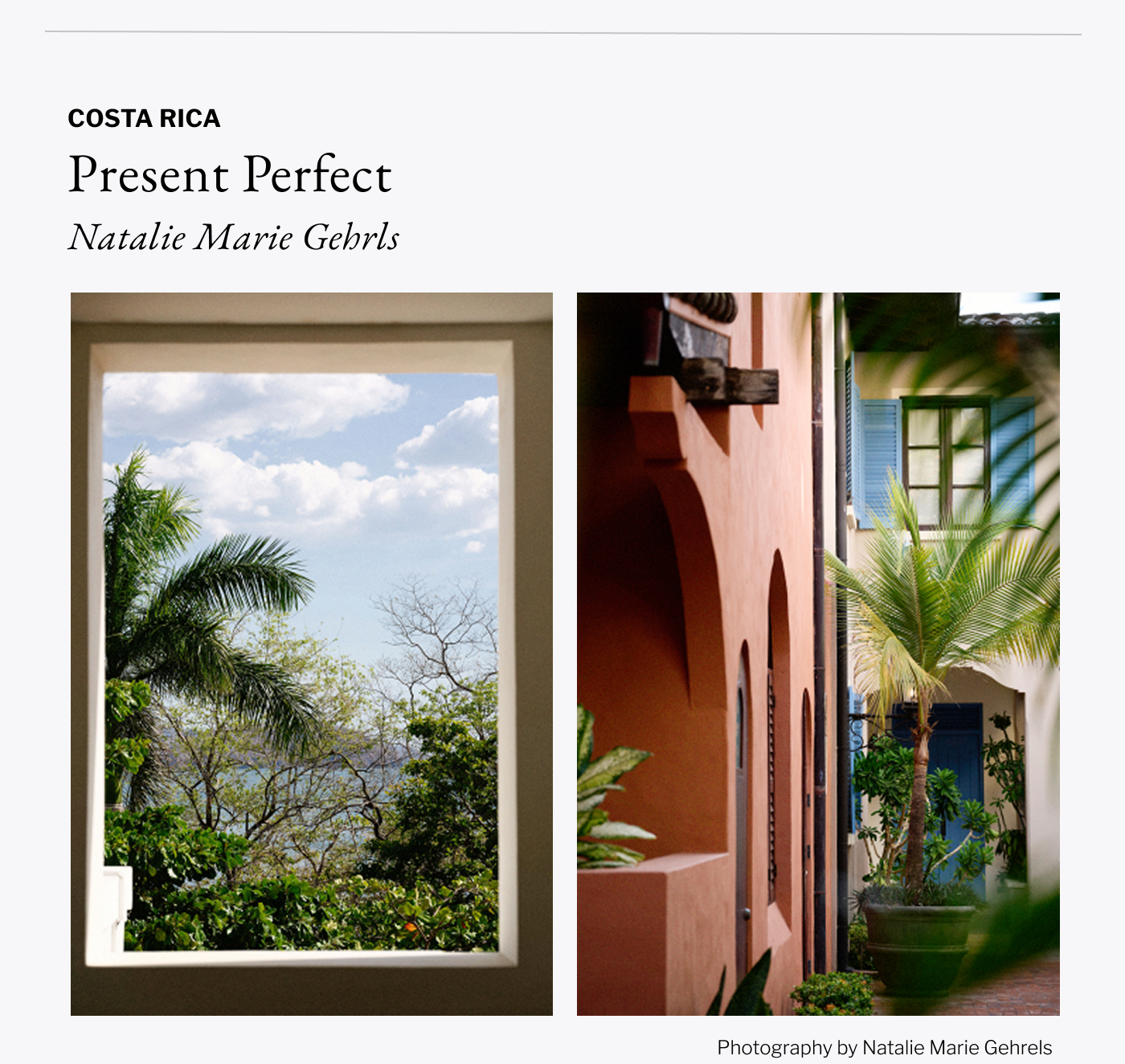
I was skeptical. A walkable New Urbanism development on the coast of Costa Rica sounded more like a utopia than a reality. But the moment we crested the hill and spotted Las Catalinas, something in me shifted. I sensed that this place had become something else: a saving grace for people looking to do a hard reset on their lives.
Set along the Pacific Ocean in the country’s Guanacaste Province, the Mediterranean-inspired, car-free village bifurcated by cobblestone streets is designed for connection, for ease, for being outside. You perceive its dedication to community immediately.
Many of the Americans who have moved here were disillusioned with life back home, they told me. Las Catalinas offered a potential path back to themselves, creating more space for time, for connection, for their families. The region runs on Central Time, which makes remote work for a U.S. company possible.
Lots at Las Catalinas offer its converts the opportunity to build a home, while the 45-room Santarena Hotel welcomes tourists or those investigating the fantasy, which also includes the Center of Joy. Located just across the street from the hotel, this holistic wellness spa houses cross-disciplinary practitioners — sound, somatic, energy-based practices — and biohacking treatments. Many residents spoke to me of an acupuncturist with preternatural abilities. But most of all, it is nature here that soothes. |
|
This close to the equator, life operates at a different cadence, organizing itself around sunrise and sunset. Las Catalinas' more than 1,000 acres — upwards of 80% of it preserved, reforested, and threaded with trails — serves a lively community of hikers and mountain biking enthusiasts, who meet up for daily rides and treks of varying intensities. From atop the hotel, I watched a pageant of night cyclists, their string of headlights tracing the hills in slow, deliberate succession. A short drive away, the beach town of Tamarindo offers diverse breaks, drawing surfers in pursuit of the perfect wave.
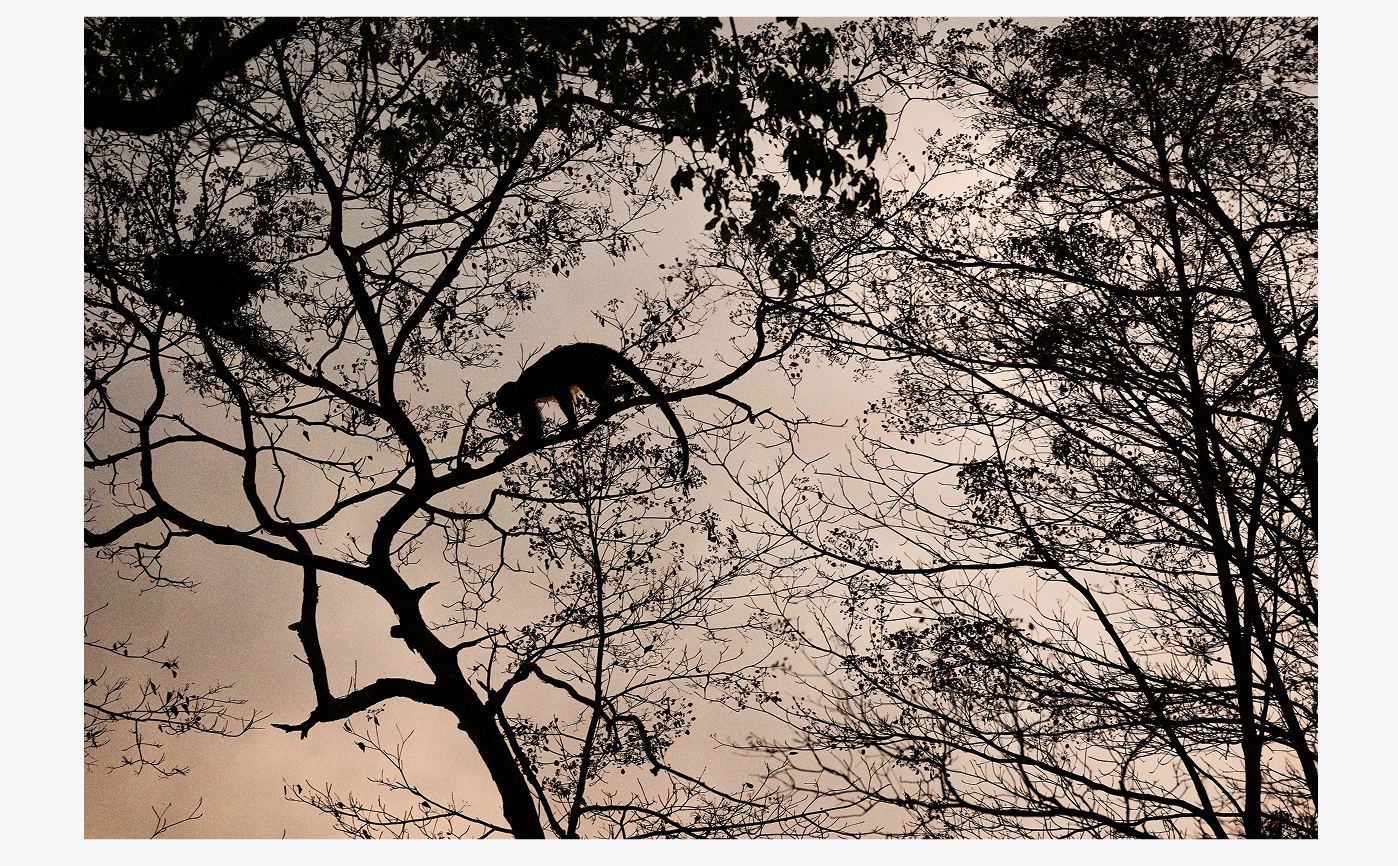
Everywhere, the layered greens of the dry-yet-tropical jungle, the ocean, and the constant presence of fauna — plunging birds, blinking iguanas, and specterlike monkeys who fill the trees after torrential storm clouds clear — pull you out of yourself and into the moment. |
|
I was strolling down a miniaturized Route 66 teeming with charm, whimsy, and midcentury-era optimism when it dawned on me: This might be as close as we get to a Champagne-soaked, automotive Disneyland.
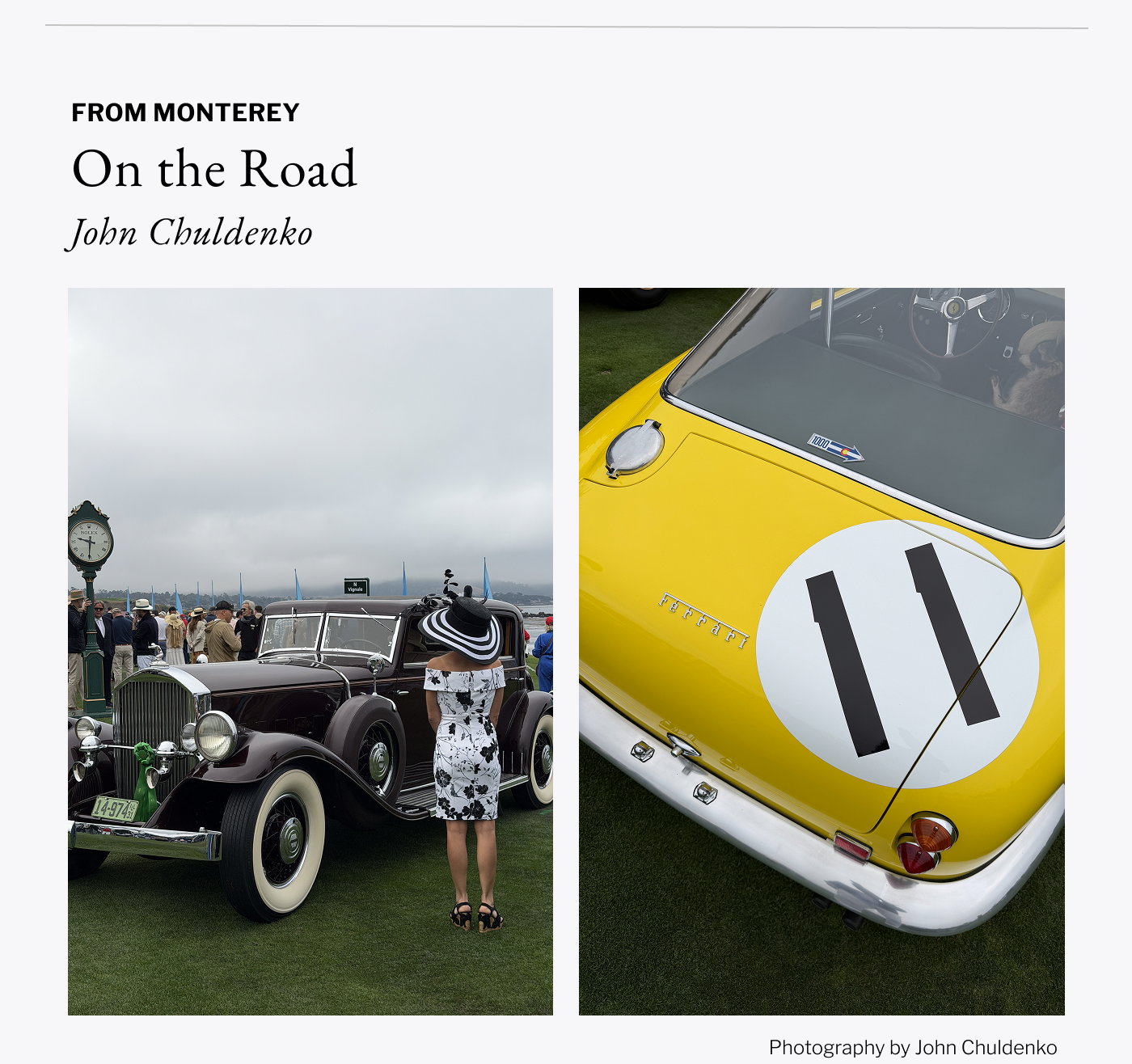
This year’s annual Monterey Car Week fired up on a Thursday evening with The Peninsula Hotel’s inaugural An Eve on the Green gala. A centennial celebration of Route 66, it scaled the road’s Chicago to L.A. leg to walkable proportions, peppering it with quirky signage and clever roadside attractions. (Imagine a “filling station” serving libations.) Famished by my pretend road trip, I quickly devoured an outstanding tenderloin prepared by David Bizet, executive chef of the two-Michelin-starred L’Oiseau Blanc at The Peninsula Paris, just before my French tablemate raised an eyebrow and suggested we sneak a second helping from a passing server.
Friday’s The Quail by the Peninsula, a Motorsports Gathering, has long been one of the week’s most anticipated social stops. And recently, the world’s top auto manufacturers have chosen The Quail to exhibit their latest and greatest “halo vehicles.” This year, Audi presented its Nuvolari, a Bauhaus-inspired coupe that looks as if it’s carved from a single block of metal. Aston Martin pulled a Union Jack off their most powerful front-engined model, and Cadillac assembled a curiously attractive pit crew to literally unbox its concept race car, which may eventually be sold to clients.
After fawning over a green chore coat from Bentley’s limited 1919 clothing collection, I ran into Mitja Borkert, Lamborghini’s head of design. He’d just unveiled his latest evolution of the Revuelto. “It’s always exciting. I’m always feeling the right amount of tension,” Borkert admitted with a sigh of relief (at least three people interrupted our conversation to compliment him on the car). “I think this car gives the most goosebumps as well.”
What wasn’t under wraps was exuberance, as guests clamored for photos with Bugatti’s Destrier, a voluptuous, astoundingly low, hand-built creation adorned with hand-hammered metal. "The automobiles are remarkable, of course, but it is the people who make the gathering what it is — from the friendships formed over the years to the knowledge passed between generations and the young enthusiast who discovers a passion that will stay with them for life,” the Honorable Sir Michael Kadoorie shared. He’s chairman of The Hongkong and Shanghai Hotels, Limited (HSH), which owns and operates The Peninsula Hotels, and he was easy to spot, enthusiastically pinballing from car to car, greeting friends and attendees. In the afternoon, just as the Veuve Clicquot kicked in, five acrobatic fighter jets streaked through the sky and a DJ dropped Kenny Loggins’ “Danger Zone.” The combination has become an equally bizarre and thrilling tradition.
Putting The Peninsula Hotel’s new “Peninsula Time” concept (which allows you to check-in and checkout at your choice hour) to the test, I stayed through Sunday afternoon for the Pebble Beach Concours d’Elegance. Here, thousands mingled under the mist cloaking the jagged coastline to survey the most magnificent examples of the rarest autos on Earth, accompanied by string music and soothing NPR-style announcements.
A Bertone-styled 1954 Alfa Romeo with a dramatically curved, manta ray-like tail captivated photographers, while a charming English couple fielded dozens of questions about their yellow 1904 Rolls-Royce —the oldest surviving Rolls-Royce in the world. As my step count surpassed 12,000, I admired Clark Gable’s Duesenberg Speedster (which would later win Best of Show) and winced as a couple craned inside a preserved Mercedes-Benz 300SL gullwing coupe while balancing both an iPhone and a latte.
Every year, I marvel at the fervor around Car Week: the camera-toting teenagers perched in folding chairs alongside the highway, the industry and influencers, the thousands who converge to confirm that cars don’t just move us around; they move us closer together. |
|
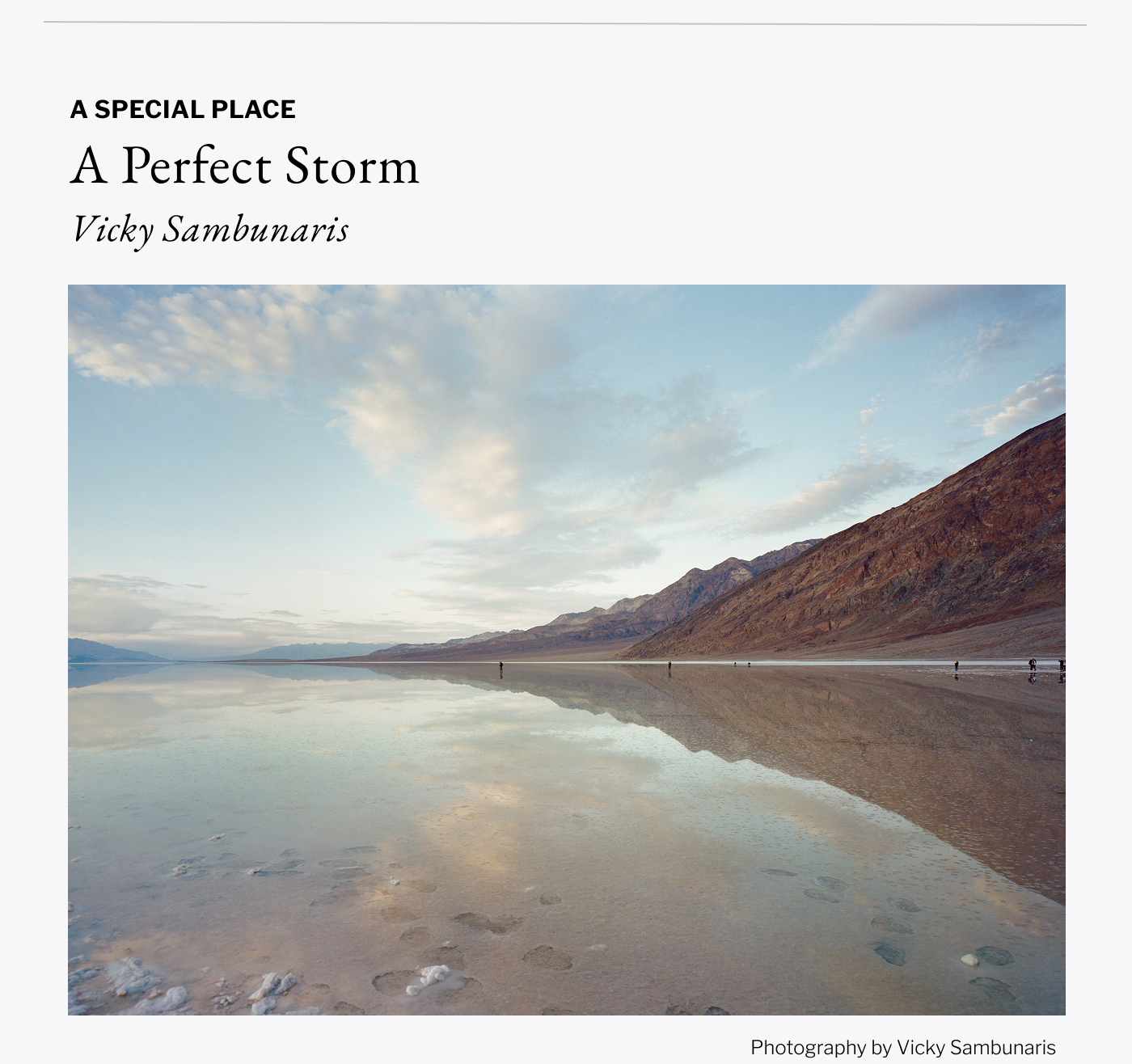
For the past 25 years, I’ve been traveling the length and breadth of the United States to document its changing landscapes. I spend long days observing the light, the land, and the relationship between the two. I was in Southeast Utah, following the Colorado River, when it was reported that the National Hurricane Center had issued its first-ever tropical storm watch in Southern California. Hurricane Hilary hit Death Valley on August 20, 2023, permeating Badwater Basin, a vast salt flat 282 feet below sea level — one of the hottest places in North America. The hurricane’s rare, heavy rainfall brought to life an anomalous, ancient, ephemeral lake. I jumped in my vehicle and drove hundreds of miles straight to Death Valley to witness this rare phenomenon. |
|
Hot Take. “Dude, I’m not screwing around,” chef Eric Greenspan said as steel trays loaded with latkes and beet and pistachio tabouleh landed on the table. The vibe at Mish, Greenspan’s buzzing, newly opened L.A. deli, is as enthusiastic as its owner, and its classics are untethered to tradition. A chopped pastrami reuben (served on rye rubbed with chicken fat) has a compelling smokiness and a kiss of fennel kraut. The brisket sandwich is topped with the chef’s new-school American cheese. As I waited for a second order of brisket to-go, a server spun Fleetwood Mac’s “Go Your Own Way” from the upstairs loft — a fitting selection. –John Chuldenko Flights of Fancy. True to its Scandinavian roots, Copenhagen brand Ferm Living combines simplicity with austere whimsy, particularly in its kids’ collection. The Horse Bookcase turns a beige staple into a characterful corner, while Wooden Bird Hooks blend form and fantasy. I recently purchased both for my baby’s room. –Elissa Polls Heebie-Jeebie TV. I can’t stop raving about Widow’s Bay, which received an impressive 19 Emmy nominations for its first season. The show strikes a high-wire balance between spooky and ridiculous, meaning it’s the rare shared watch for horror and non-horror fans alike. –Alessandra Berge |
|
54 Franklin St #2R NY, NY 10013. ©2026 Dossier Projects, LLC.
|
|
|
|
|