My dad never expected to make it out of Vietnam. Drafted in 1968 from his Pennsylvania steel town, he led a five-man ambush team through intense combat in the jungles just north of Saigon. Dad rarely spoke about his experience, but when he did, his stories came in vivid, visceral bursts of violence and ferocity. The name “Vietnam” held tremendous emotional gravity in our house, a one-word explanation for why Dad would jump at the slightest of noises. Like much of America, we associated Vietnam with profound trauma. Research suggests that trauma can be epigenetically passed through DNA. This might explain why my heart was pounding when I recently touched down in Hanoi.
Dad died earlier this year, his illness a latent effect of his exposure to Agent Orange during the war. Soon after his passing, I received an email from Abercrombie & Kent asking if I’d like to experience their Vietnam: Cultural and Culinary Adventure. I stared at the message, taken by the timing and shaken by the personal significance of the trip. Dad was a gourmand. He taught me about demi-glace and the critical importance of good bread. He packed swordfish in my school lunch.
I was curious if I could shake the personal stigma this country carried and experience Vietnam in a way Dad couldn’t. I wondered if the food I would encounter could not only nourish but also heal. I accepted the invitation and packed the most valuable object I own: the stainless steel Zippo lighter my dad carried during the war.
I arrived just days after the 50th anniversary of Vietnam’s independence; the city was still draped in scarlet flags emblazoned with the communist hammer and sickle. Hanoi retains remnants of the countries that invaded it over the years. Chinese and French influences are everywhere; the scars of the American War (as it’s known here) remain. My guides, Chinh and Thang, shuttled me to Hanoi’s Ba Dinh district and down a rainy alleyway to the Michelin-starred Tam Vi. The ornate restaurant’s dark wood, hand-carved antique furnishings, and tight quarters make it feel like a family home, a sensation amplified by our family-style meal. “This is how we’d eat if the mother were a very good cook,” Chinh explained, passing me a clay pot of thit kho tau: braised, caramelized pork with egg, a celebration of depth and richness. Fried hemibagrus catfish with turmeric and dill followed, served with a pungent shrimp paste that, initially jarring, quickly became addictive.
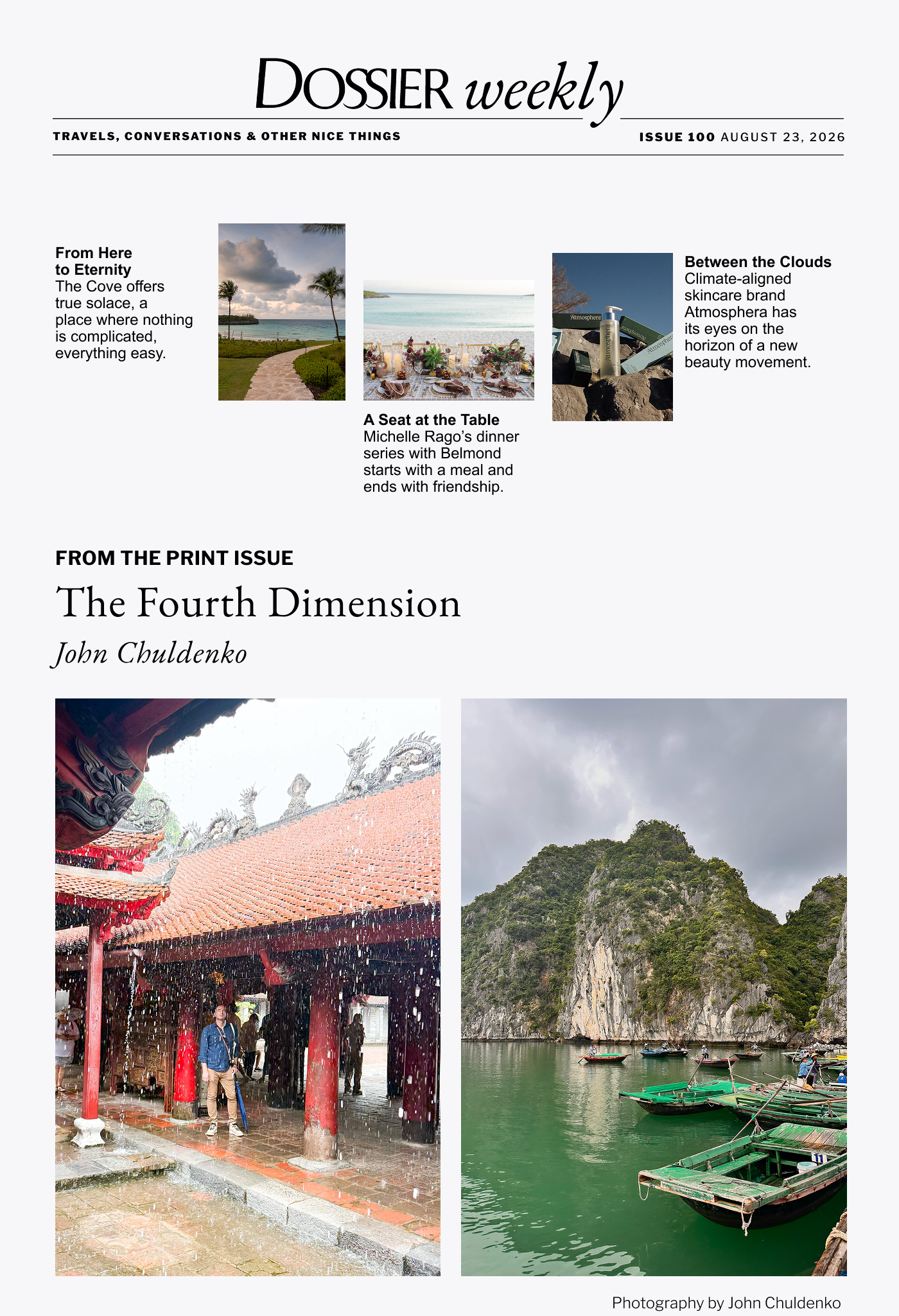
That afternoon, as the rain intensified, Thang and I found shelter in Hanoi’s Temple of Literature. He told me how his father had fought for the Viet Cong at the same time that my dad was here, how the experience had also shaped his childhood. Later that night, we arrived at Hanoi’s Chapter restaurant to sample its 12-course tasting menu. The experience flows with a vibrant, organic narrative inspired by the Northern Vietnamese harvest season. A first burst of oyster and caviar segued to delicate pickled myoga, paired with an iridescent local fish. We waited with anxious curiosity for the scallop with fragrant water bug, only to discover joyfully that it’s just the male bug’s essential oil that is drizzled on the dish. A self-constructed duck banh mi, paired with a beer and accompanied by a fermented chili sauce, delivered endearing midmeal simplicity. Each dish arrived thoughtfully plated and meticulously composed. Dad would have wholeheartedly approved. Read the full feature and more close takes on a wide world in our Spring/Summer 2026 print issue. Order now. |
|
“In the end, it all happens over the table,” explains Michelle Rago. While this age-old wisdom has been applied to everything from family memories to business deals, it’s Rago’s actual lifeblood. A world-renowned event specialist whose feats include everything from building a glass tent amid a snowstorm in the mountains of Park City, Utah, to producing Brooklyn Beckham and Nicola Peltz’s elaborate Palm Beach wedding, Rago believes that a perfectly laid table is the key to both personal success and a life well-lived.
Her most recent creation, A Curated Table, expands Rago’s idiosyncratic vision into an international dinner series. Created in collaboration with Belmond — a luxury hospitality group trading in hotels, trains, river cruises, and safaris, with a fine point on what it deems “a new pace of travel” — the series is its own kind of astute curation. It combines Rago’s magpie curiosity with her cavernous Rolodex and Belmond’s global portfolio of 43 picturesque, one-of-a-kind properties spread across 24 countries and territories. “I’m always noodling on who I want to get together,” Rago confesses. “With A Curated Table, I open my eyes globally. I think about who would get along famously and who I think would like to be in one another’s lives. The idea is that [dinner guests] stay in touch.”
I witnessed the fruits of this vision firsthand at the second A Curated Table, which took place at Cap Juluca, a Belmond Hotel in Anguilla. (The first was held at Maroma, a Belmond Hotel in Riviera Maya, Mexico.) Located on crescent-shaped Maundays Bay, Cap Juluca’s row of white Moorish villas line one of the world’s best beaches, alabaster and carpet soft. Gentle, warm, salty breezes rustle palm tree leaves, reflecting the property’s unhurried pace, while cicadas, native birds, and continual crashing ocean waves form an unmistakably pelagic soundtrack.
Upon arrival, I dropped my bearings and unwound with a Flor Verde cocktail at Uchu, the property’s Peruvian-inspired, open-air lounge. As afternoon tumbled into the golden hour of sunset, I made my way to that famous beach, where A Curated Table guests began to arrive barefoot, greeted by a live band and rum-punch cocktails that tasted of the tropics: zesty guava, orange, and pineapple juice. A casually stately Rago stood at the beach entrance dressed in a flowy ocher linen dress embellished with beaded jewels, a flute of sparkling wine in hand.
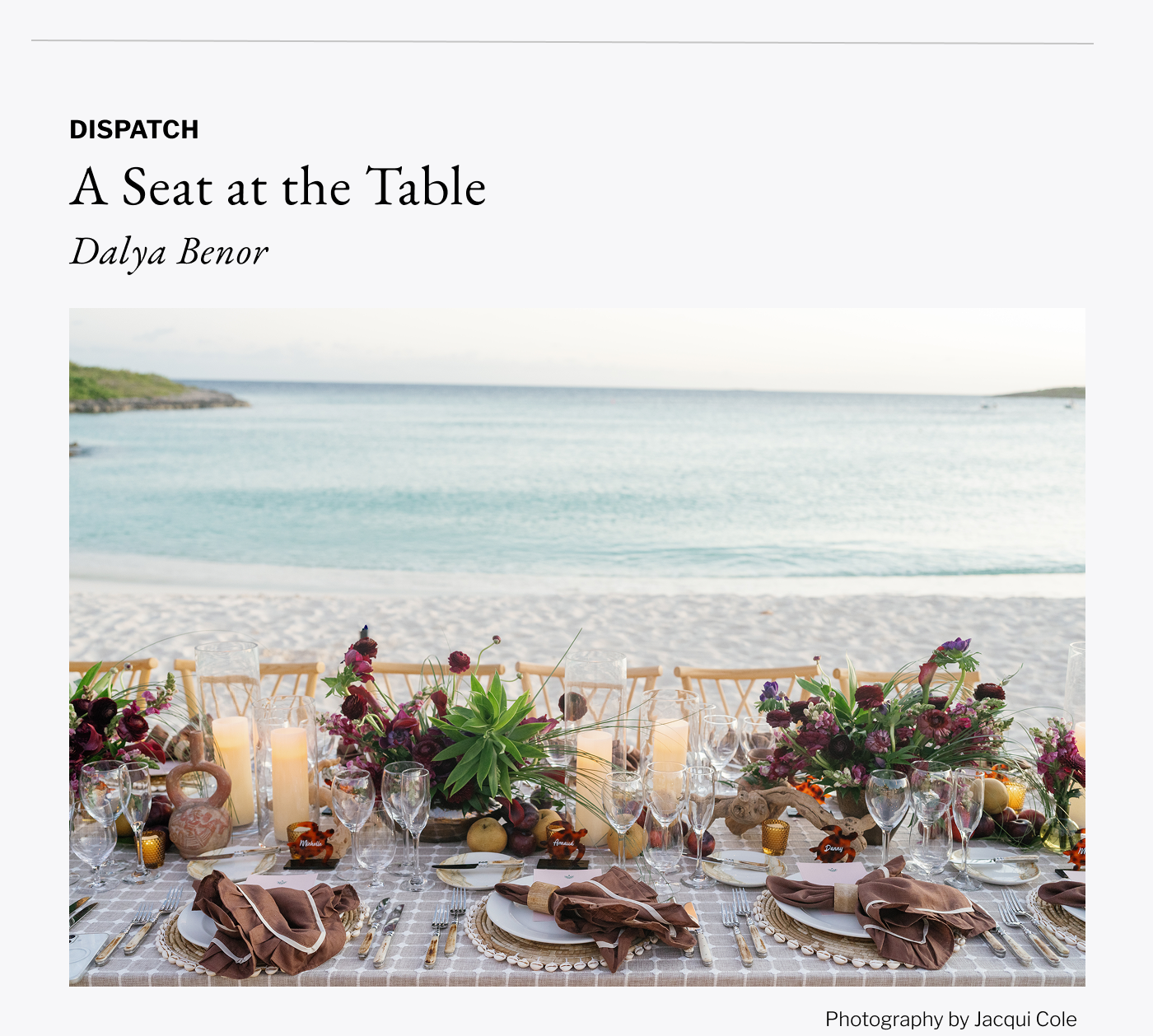
True to the event’s name, Rago’s table was meticulously considered, presented as an oceanic diorama spread with rattan-covered candles, glassware color-coordinated with the turquoise waters, oversized indigenous queen conch shells, and a centerpiece of interlocking driftwood, calling back to the island’s natural habitat. Signature dishes from the hotel’s beachfront restaurant, The Cap Shack, complemented the scene. They were classic yet elevated interpretations of the country’s cuisine, including pigeon peas with rice (the country’s national dish), johnnycakes, and barbecued wahoo mackerel and Island Harbour crayfish.
After drinks, Rago delivered a heartfelt speech on the importance of human connection, then everyone joined her on the sand couch she’d built into the shoreline that would be swept away at dawn. As the 15 guests drained the last sips of their Julucan rum-punch digestif, some headed to bed, others to dip their toes in the Caribbean Sea. Laughter, hugs, contact details were exchanged, future plans were made — just as Rago had intended. |
|
In our increasingly AI-driven universe, a “divine download” could easily land in that ever-expanding ether of ambiguity, neither fiction nor reality. But for Christi Hucks, who employed the term to explain how Atmosphera — a Canadian-founded, climate-aligned skincare brand — came to launch in the United States, the download in question was the impetus for distinctly analog action.
Hucks, a former Beautycounter leader, was on a flight, staring out at the sky (aka the atmosphere), while pondering what clean skincare that addresses the effects of changing climates might look like. When she did a Google search for “atmosphere” and “skincare,” a boutique brand named Atmosphera appeared, founded by Katelyn Rousselle, who had created her products after 12 years as an aesthetician dealing with varying client skincare needs in diverse climates — such as the high, dry mountains of Colorado and the temperate marine weather of Vancouver, British Columbia.
Struck by the synchronicity, Hucks called her business partner, Katya Johnson, also a founding member of Beautycounter. Johnson and Hucks had joined forces after their positive experience at the pioneering clean beauty brand and subsequent years spent consulting with DTC brands outside the industry inspired them to return to beauty to build something bigger than themselves that ultimately left the world “a little bit better.”
The pair reached out to Rousselle and soon the group embarked on a mission to expand Atmosphera’s reach, adding Mia Davis to their foundational team in the role of chief impact officer. Collectively, they refined the company’s mission to “help people and the planet flourish” and rebranded it as: female-founded, climate-curated skincare that is committed to empowering a new standard of responsible beauty. "It’s like clean beauty was when Beautycounter launched; climate beauty is new now,” clarifies Johnson.
The elevator pitch the group delivers on an aptly cloud-based Zoom call aligns. “Now that you are addressing the climate, you don’t need more products. You need less,” Hucks explains. “It doesn’t have to be overly complicated. The products are simple yet effective. We’re just bringing the climate into the skincare realm.”
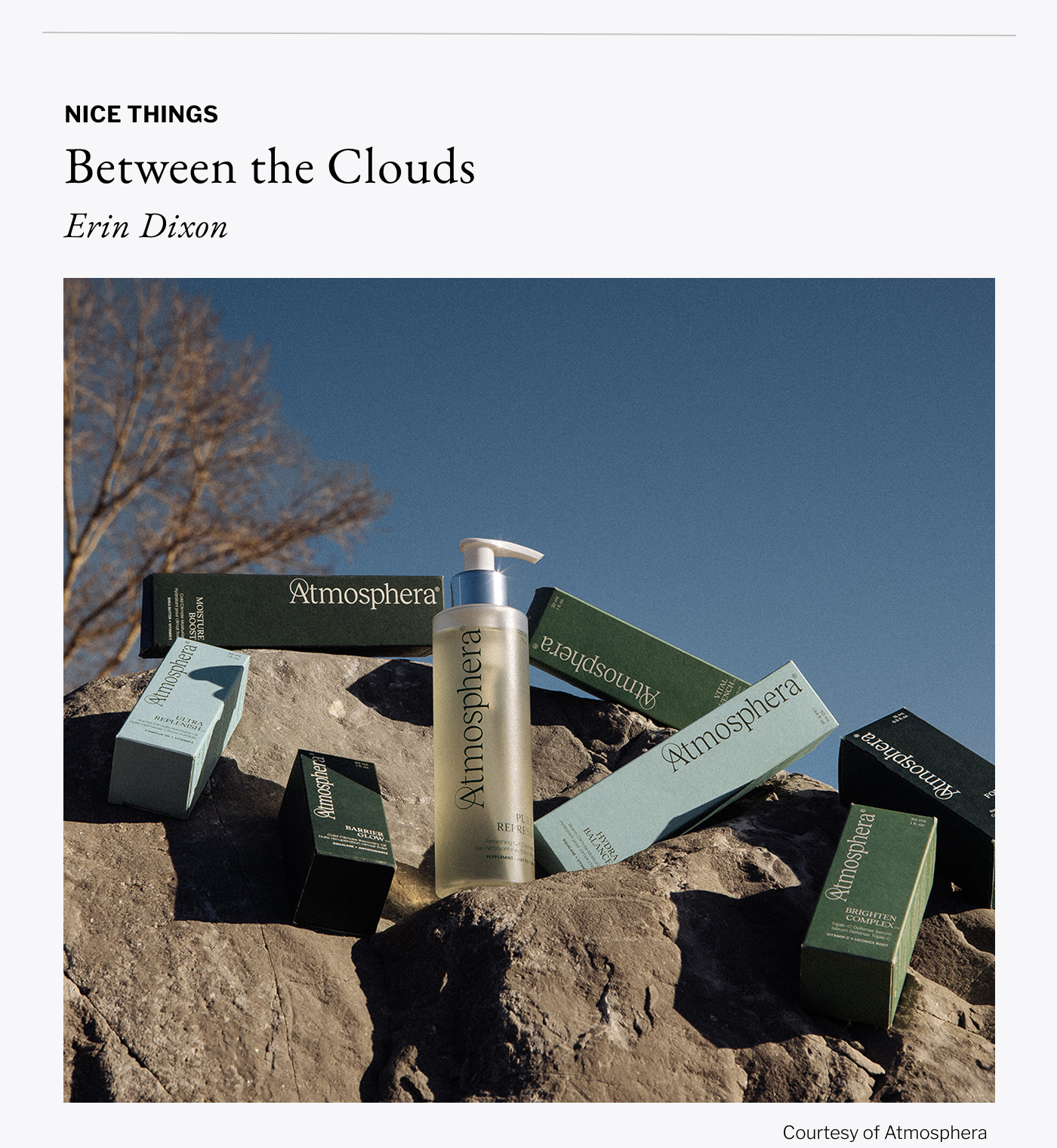
Of the products I try, there are a few standouts: Pure Refresh™ Gel Facial Cleanser employs naturally cooling peppermint to bring the satisfaction of brushing your teeth to your face, yet it’s soap-free, gentle, and hydrating (thanks to oat protein). Brighten Complex™ Triple-C Defense Serum, which targets dullness, uneven tone, and visible discoloration, is the founder’s favorite product and unusually lightweight and nonsticky for a vitamin C serum. Barrier Glow™ Cold Climate Recovery Oil, featuring intensely hydrating squalene alongside calming, smoothing rose hip and chia oils, serves as an antioxidant-rich addition to my nightly gua-sha regimen.
In total, the Atmosphera collection is limited to eight products. Each is defined by its adaptability to humid/coastal, dry/alpine, or temperate/seasonal climates, with formulas combining natural ingredients with proven science. One example: kelp, which the brand has chosen for its photoactive nutrients and has sourced via partners who are growing the seaweed regeneratively and who are paid a living wage. The marine plant is safe, sustainable, and great for skin, particularly in cold climate conditions — notably where it grows, recalling the trusted food-wine pairing wisdom: What grows together goes together.
While their ingredient origins and climate applications may differ, all Atmosphera products are, in fact, formulated to live in harmony with Earth’s atmosphere: They’re already in line with the Credo Standard, a strict set of safety, transparency, and sustainability rules that Davis helped create in her former role; Atmosphera aims to use 50% organic sustainable ingredients by 2028. “We’re doing a lot, but we will do better over time,” Davis confirms. “Sustainability and impact are both a vision and a continued exercise.” In other words, the journey that started somewhere in the atmosphere continues. |
|
Lately, I’ve been thinking about what it means to get away. It feels like an increasingly urgent idea to unpack, particularly these days, when it’s easy never to feel away at all. We are trapped by our phones, of course, but many of the physical places that once offered us peace have also been algorithmed into a kind of infamy: the small neighborhood restaurant that’s become a hit on TikTok, the favorite little town in Italy that’s been Instagrammed to insipidity. When we do find somewhere quiet, we often fill the void with our own unnecessary psychic noise, drawn to our personal online feeds like moths to the flame. It feels increasingly hard to find spaces of solace, and yet it also feels like it’s never mattered more: We are people in desperate need of a break.
From the moment I drove down to The Cove, a small hotel in the Bahamas on the island of Eleuthera, I knew I’d found what I was looking for. Set back from a narrow two-lane highway, about 25 minutes from the tiny airport on the northern tip of the island, The Cove, lined in thatch palm and limestone, feels less like a “hospitality property” than a secret you’ve stumbled upon, with a collection of villas and beachfront suites that are as close to the ocean as you could ever hope to be, allowing you to roll out of bed and almost right onto the sand. There was barely a moment I spent at The Cove that I could not see a vast scape of ocean, even at night, when the moon lit it up like black onyx.
The entire region is somewhere special. Eleuthera — from the Greek eleutheros, meaning “free” — is a small island with a population of about 10,000 people. Over the years, I’ve absorbed pop culture’s depiction of the Bahamas as one of all-inclusive resorts and cruise-ship allure, but Eleuthera couldn’t have been more different, a pocket of small towns and vast forests. It is so narrow that, in many places, you can see, on both sides, the turquoise ocean — so characteristic of Caribbean water — in which the island rests. The weather while I was there was perfect, with bright sun from morning until night, and then a cool, refreshing breeze by 8 or 9 p.m.
One day, The Cove’s activities director, Marlane Johnson, a born and raised Bahamian, took me around the island and showed me how much natural splendor Eleuthera has to offer: caves, rocky pools you can jump into, wide salt flats, and cliffs of petrified coral that lead out to bluffs with crashing waves. At one point, she drove me down a dirt road embroidered with agave and asparagus plants and found us a small grove of local trees, which, after being shook, unleashed a barrelful of ripe dilly fruit, more formally called sapodilla, which I had never heard of before coming to Eleuthera and which now, with their pearish sweetness, I haven’t stopped thinking about since. We ate them right off of the tree, skin and all, so perfectly ripe they melted in the mouth.
My test of a good vacation is fairly simple: Do I depart feeling as if I desperately need more time, or is my battery so recharged that I almost feel excited to come home and face the reality of life? Leaving The Cove, I felt the satisfaction you only can when things have gone exactly right, and I had a thought: Here, severed from the madness of the modern world, was a place I could always come back to, an oasis awaiting year after year, when the stress and the social media and the crowds elsewhere got to be too much. A quick flight, a small airport, a short drive through roads of green jungle, ending at an eden of white sand and blue ocean. Nothing complicated, everything easy: These are the kinds of places to cultivate in 2026 — places that are truly, authentically, almost overwhelmingly away. |
|
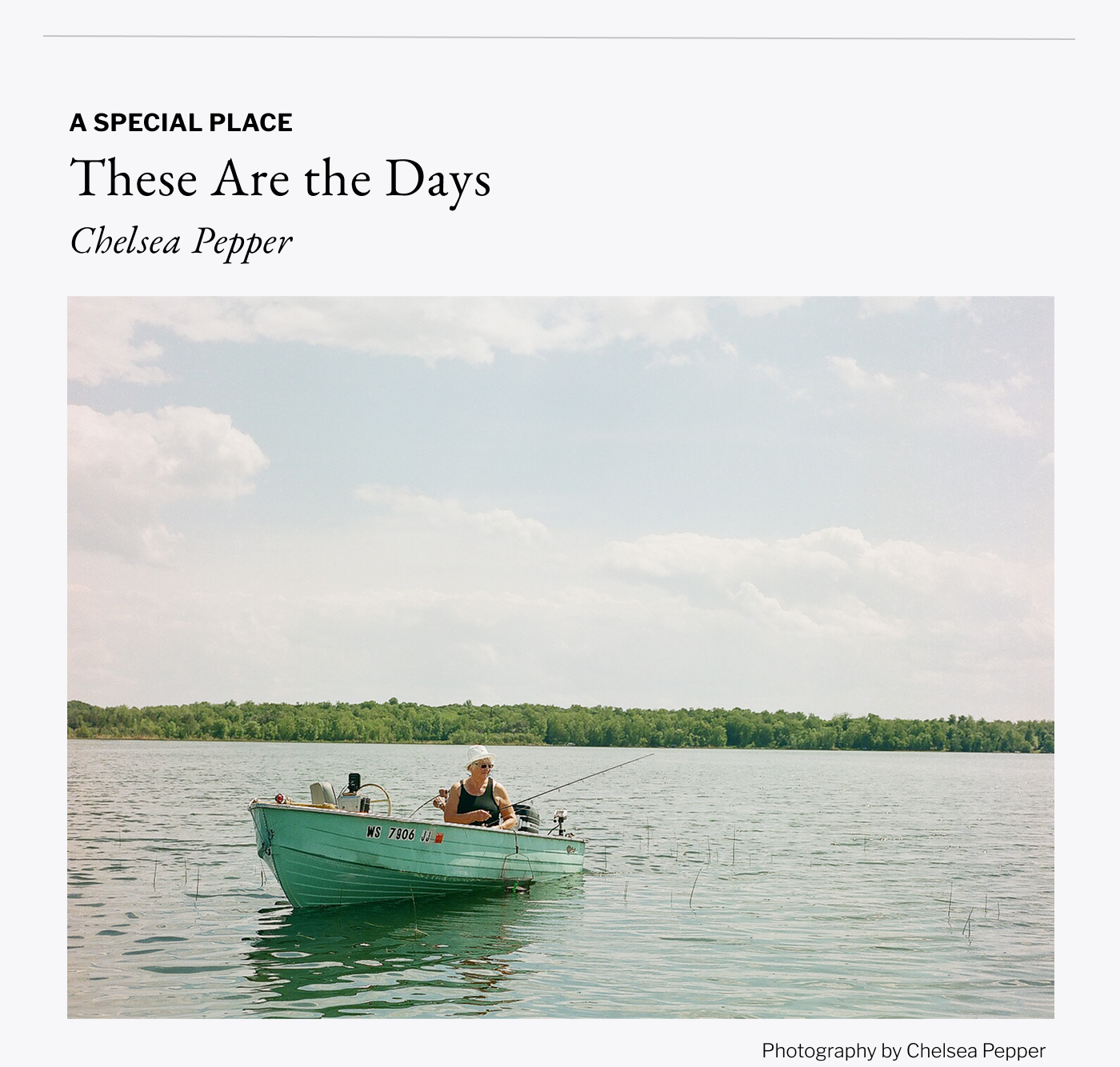
My family has taken an annual trip to Leech Lake, Minnesota, for almost 50 years. Whenever I pull up to the cabin, I feel as if I’m seeing an old relative who has somehow remained exactly the same. I see the water and remember being a kid, marveling at the way it perfectly reflected the sky. I take in the stars and remember my shock at how brightly they could shine. It’s where I’m brought back to a time with no stress, no fears, and just complete happiness. Every sunset holds a special place in my heart, and each trip provides a new memory to cherish. |
|
The Plot Thickens. I was about 10 when my dad took me to see Peter Weir’s iconic Picnic at Hanging Rock at our local Long Island cinematheque. The theater was a converted middle school where they screened Buster Keaton double features onto a hanging bedsheet on Saturday afternoons and sold homemade carob brownies with chamomile iced tea. That is to say, it was a fantastic place. Picnic at Hanging Rock opens with a title card: “On Saturday 14th February 1900 a party of schoolgirls from Appleyard College picnicked at Hanging Rock near Mt. Macedon in the state of Victoria. During the afternoon several members of the party disappeared without trace … [all sic].” The film is a gothic masterpiece and manages to describe a rural Australian landscape that is both sensual and profoundly menacing. The story speaks of sexual repression and longing and forces beyond human comprehension. Ten-year-old me was gobsmacked. What the hell happened to these girls? Weir refuses to tell us. I have since seen this movie too many times to count, and each time I am transported back to the moment when I discovered that some of life’s mysteries remain unsolved. —Alexandra Brodsky Blinded by the Light. Jungle’s fifth studio album, Sunshine, drops mid-August, and I’ve already had several of the early releases on repeat. “Carry On” is a standout favorite. The British band, comprising producers Josh Lloyd-Watson and Tom McFarland and singer Lydia Kitto, blends soul and funk with a modern edge, making their music a crowd pleaser no matter the crowd. If you get the chance to see them live, I highly recommend it. It’s the kind of show where it’s completely acceptable to sway from your seat, which is my type of vibe. —Elissa Polls Like a Dream. Los Angeles can often feel like an interstitial space between make-believe and real life. It certainly did the other week when the sun set and the sky twinkled over the Hotel Bel-Air for its Movies Under the Stars screening of La La Land. I was tucked into the garden around a firepit, sharing Red Vines before sampling a menu of Champagne, smash burgers, and the most perfectly buttered popcorn I’d tasted in years. The film’s dreamy soundtrack was softly accompanied by the faint shaking of cocktails from the outdoor bar. It was whimsical; it was magical; it was a reminder of how imperative it is to lose oneself, even in your own city. —John Chuldenko |
|
54 Franklin St #2R NY, NY 10013. ©2026 Dossier Projects, LLC.
|
|
|
|
|