Confession: I had never been on a cruise before. Or really, not counting ferries, a ship with more than three decks. I was, thus, a bit hesitant to enter the whirlpool of one of the fastest growing sectors of vacation travel. Explora Journeys’ Explora III, fresh from the revered Fincantieri shipyard in Genoa, Italy, seemed the ideal starting point.
For those who aren’t up on cruise-line heritage (I wasn’t), Explora Journeys is a line of ultra-luxury ships founded in 2021. It’s a subsidiary of the MSC Group, which runs the Mediterranean Shipping Company, the most successful worldwide container freight service. The MSC Group is owned by an Italian family who has been navigating the seas in one way or another for more than 350 years.
After the launches of Explora I and II, the third iteration would now take a voyage across the Mediterranean Sea, casting off from Rome and docking in Barcelona for its official naming ceremony. Explora Journeys’ new global ambassador, tennis star Jannik Sinner, had disembarked just a few days before I embarked (he was officially the first guest on board). Still, I would be among the first group of travelers venturing seaward on the ship with all systems running — all systems being 14 decks of ship rigged out with a casino, a full-service spa, a padel and pickleball court, a conservatory with a pool, seven gourmet restaurants that included some of the best sushi I’ve ever eaten, and one of the most extensive wine cellars ever to float on water.
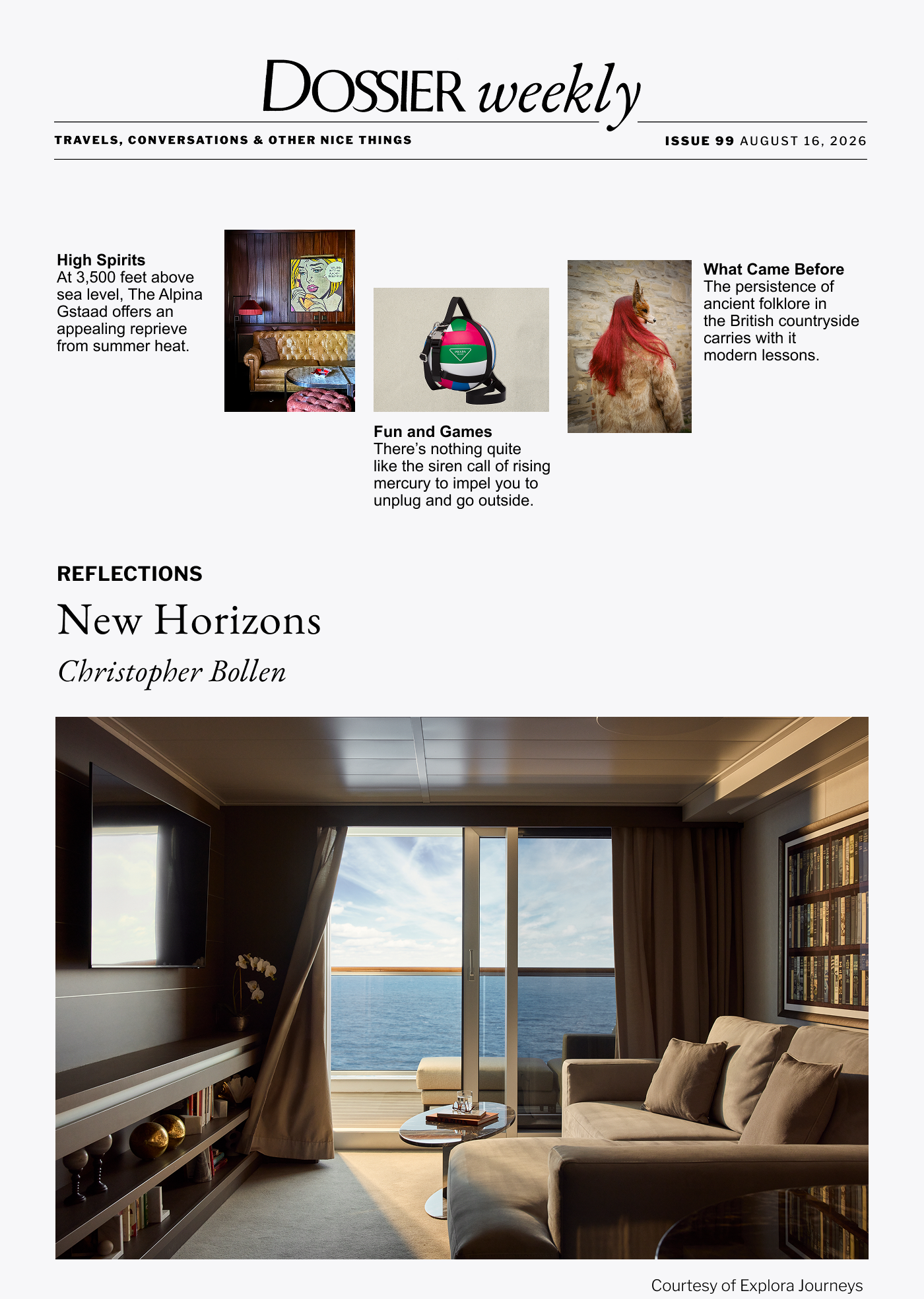
It took some getting used to. The size of the ship is boggling, but Explora III somehow managed to make the public and private areas feel intimate, as if I’d been invited on the yacht of a very rich friend whose parents studied interiors in Milan. All beige and gray carpeting, Italian glass chandeliers, and gleaming brass accents. On the first day, I noticed a woman standing at the sushi bar; the back of her shirt read, “Lost Count of the Laps, Found the Ocean State of Mind.” I didn’t understand the reference, but my state of mind was still on the laps, the world of dry land, with its work and errands and responsibilities, even as that world was fading from sight beyond the churning water of the stern. I still had my land legs — I actually never lost them; Explora III purred across the water with such smoothness, it was as if the sea were gliding past me and not the reverse.
Explora III weighs in at 461 suites, all sea-facing with private terraces. It’s 63 feet larger than its sister ships, but what really distinguishes it from I and II is that it’s the first Explora vessel to run on liquified natural gas — part of the MSC Group’s mission to reduce emissions to net-zero by 2050.
“MSC could stand for mangroves, seagrass, and coral,” one executive said. But this marine-life commitment isn’t mere lip service. Beyond the overt beauty of the boat, its hull painted a royal-navy blue that makes the ubiquitous white competitor ships we occasionally passed in port appear like water-soaked pillows, there is a sense of Explora reframing the wasteful cliche of cruise travel. In fact, the brand is trying to push the whole narrative in the opposite direction. On board, there’s a constant emphasis on exercise, on movement, on surprise, on health, and on the value of the endangered flora and fauna hidden underneath the waves.
Explora III isn’t a migrant bird, traveling back and forth to the same safe havens every season. It will venture on in the coming months to the Caribbean, Alaska, Asia, Northern Europe, Canada, and more. It’s all part of a larger plan to add additional trips and three more Explora ships by the end of the decade. Most of the visitors on this voyage worked in the travel industry, and they were there to hear about the future. I have to admit, I was there to get away from the present. And finally, sitting on my own starboard terrace, watching the setting sun rinse one last time over the sea while I took in the expanse of this planet and the whole miracle of being alive to witness it, I suddenly understood the T-shirt. I was experiencing it: the lightness, the peacefulness. That’s what the shirt predicted. The ocean state of mind was upon me. |
|
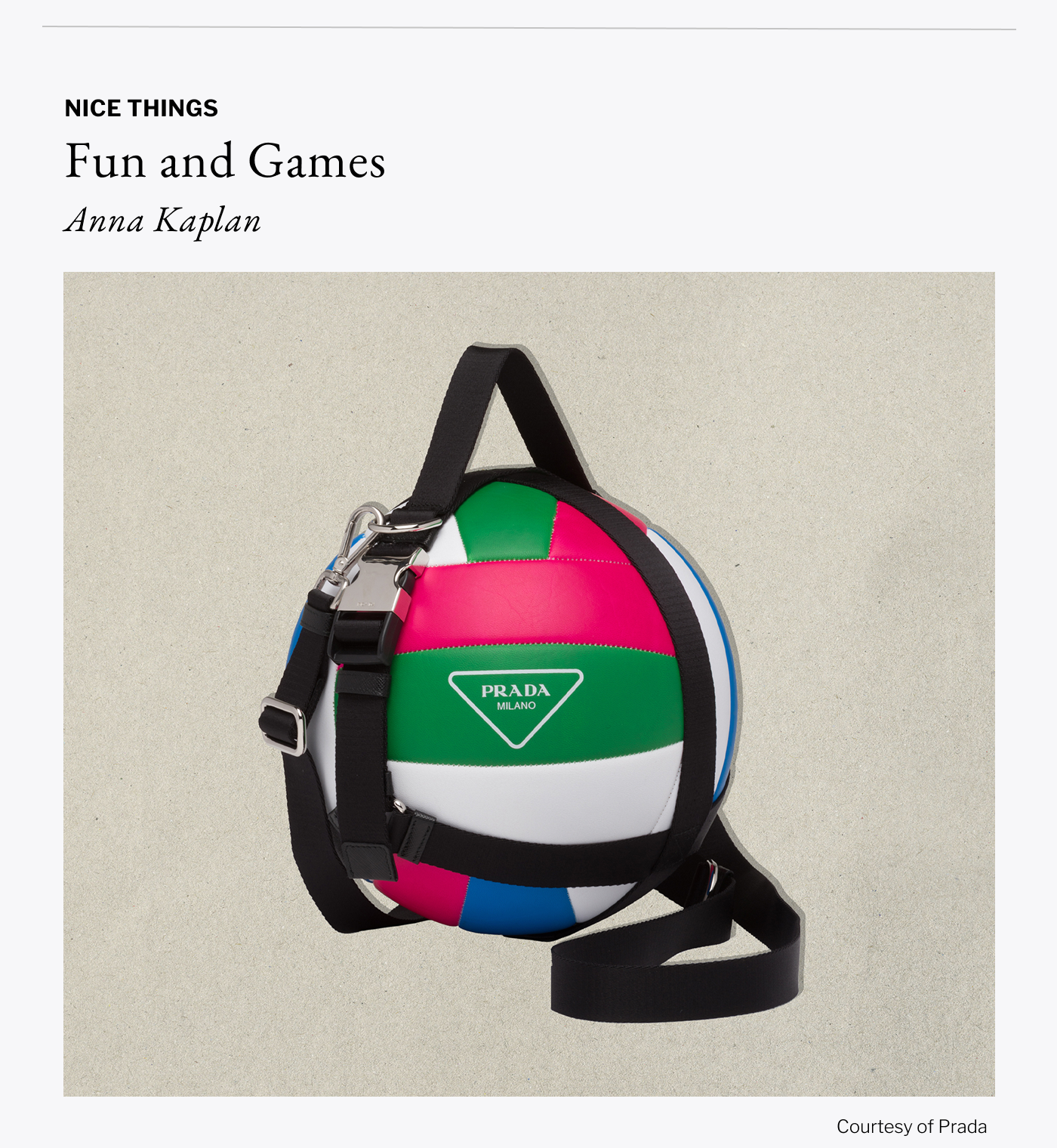
There’s nothing quite like the siren call of perpetually rising mercury and blue skies to impel you to unplug and go outside. Along with sharpening your mind and boosting your creativity, the analog time paired with fresh air carries with it a welcome dose of bygone simplicity and childlike joy. For those inclined to make a game of it, we’ve rounded up a few covetable takes on summer classics. Prada Volleyball, complete with a nylon tape carry case that makes it easy to tote around the globe — from the beaches of Santa Barbara, California, to Bibione, Italy, to Camps Bay, South Africa, and beyond. Louis Vuitton Soft Pétanque Set, a revival from the French maison’s archives that features a red jack and two sets of three pétanque balls (with differentiating team markings), packaged in a go-anywhere Monogram canvas bag. Hermès Succulent Sultan Beach Rackets, inspired by a 19th-century ice-cream mold from the Emile Hermès Collection and reimagined by Daiske Nomura in beechwood and cork. Dolce & Gabbana Printed Pool Float, a vibrant ode to the colorful carts and folklore of Sicily that have long-inspired the Italian house. |
|
During the worst heat wave this summer, the temperature in Paris was 100 degrees Fahrenheit at midnight. It stayed that way for almost two weeks. With no air-conditioning in our apartment, it was impossible to sleep, so eventually my husband, my daughter, and I fled the city, renting a car to drive eight hours to Gstaad, Switzerland.
As we crossed France, the thermometer read 105 degrees. It held steady even as we looped around Lake Geneva. But as we climbed into the Alps, we watched it drop with each switchback, until it settled at a very human 85. My daughter rolled down the window and sighed, letting the air pour over her as we weaved through the valleys, right until we pulled into the long, covered stone driveway of The Alpina Gstaad.
In the summertime, Gstaad looks like a fairy tale. The town’s green grass, covered with tiny wildflowers, rolls up to the tree line. Above Norway spruces and silver firs, the white limestone Swiss Alps rise for thousands of feet, their tops still capped in snow. The guest rooms at The Alpina are air-conditioned, but as the town sits at 3,500 feet above sea level, its average summer nighttime temperature is in the high 40s, allowing for crisp sleeping with the windows open. Even during the heat wave — 85 degrees is unseasonably warm here — I didn’t need the AC.
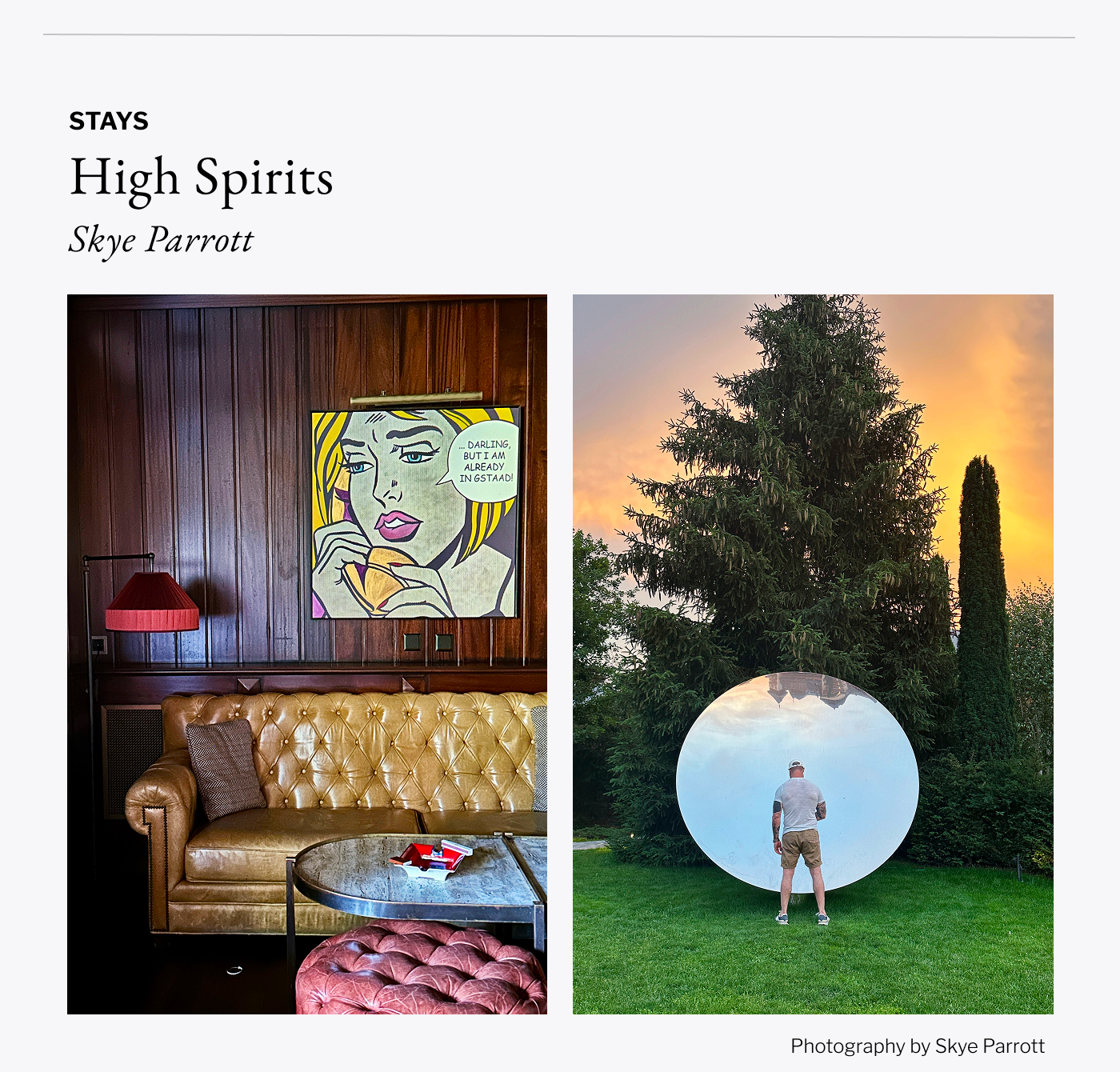
The Alpina opened in 2012, becoming the first new luxury hotel in the Saanenland region in 100 years. Renovated in 2023, the hotel’s interiors now are a lush mash-up of old and new, with salvaged 18th-century woodwork installed above a very modern double staircase in the entryway that is outfitted with a fresh floral arrangement every week. When I was there, the layout included heaps of purple hydrangeas. The walls and grounds of the property are covered in museum-quality art: a Roy Lichtenstein in the smoking room, an Henri Matisse to enjoy with breakfast, an Anish Kapoor that my daughter stumbled upon in the garden.
Despite the luxe surroundings, the space feels very easy. Guests return in muddy boots after hiking the neighboring peaks; dogs are welcome; the pool has plenty of open loungers. My daughter enjoyed the kids club, which offers daily programming and drop-in play for children over 3. At the Michelin-recommended Megu restaurant, she was far from the only child eating sushi by head chef and sushi master Tsutomu Kugota, but those who didn’t want it were brought the children’s menu from the neighboring Alpina Terrace, which offered pizza or sliders and fries. The property’s subterranean Six Senses Spa takes up the entire lowest floor of the property, with numerous saunas, salt rooms, treatment spaces, a gym, and, at its center, an enormous skylit pool that spills into grottos. But even the spa wasn’t fussy. Off to one side, it has a small slide, which children younger than mine were using happily while older women dipped in the water, keeping their hairstyles dry. |
|
“Do you want to go wassailing?” my friend Kate asked me out of the gray, on a wet, scrunchy January walk a few years ago. When I admitted I had no idea what she was talking about, she launched into a deep dive of the British midwinter orchard tradition: a gathering on Twelfth Night to sing to bare apple trees, blessing them for a good harvest and driving away bad spirits. It was around then that I first came across the Apple Tree Man — a quiet figure said to watch over orchards, rewarding care and punishing neglect, more a presence than something ever clearly seen. A story that carries its own moral — about hard work, restraint, and what happens when either is forgotten — settles somewhere in the background.
The Apple Tree Man appears in the work of Katharine Mary Briggs, the 20th-century folklorist who spent decades collecting Britain’s supernatural beliefs, seasonal customs, and rural superstitions. Her A Dictionary of Fairies, first published in 1976, has a newly illustrated edition released in 2025, threaded with drawings by English artist Fee Greening. Greening’s illustrations are steeped in medieval magic — faces gathered in curls of bark, creatures hovering in hedgerows, dragons breathing flame through the page. For Greening, a self-proclaimed West Country witch, folklore is part of the everyday. “You can really feel the past here,” she says of her Dorset home. “I’ve discovered various enchantments and protections within the house. […] I’m not dancing around a fire naked on the full moon or making corn dolls, but I do think it’s common sense to have rosemary by the front door and stick hag stones and snail shells in the corners of my house.” |
|
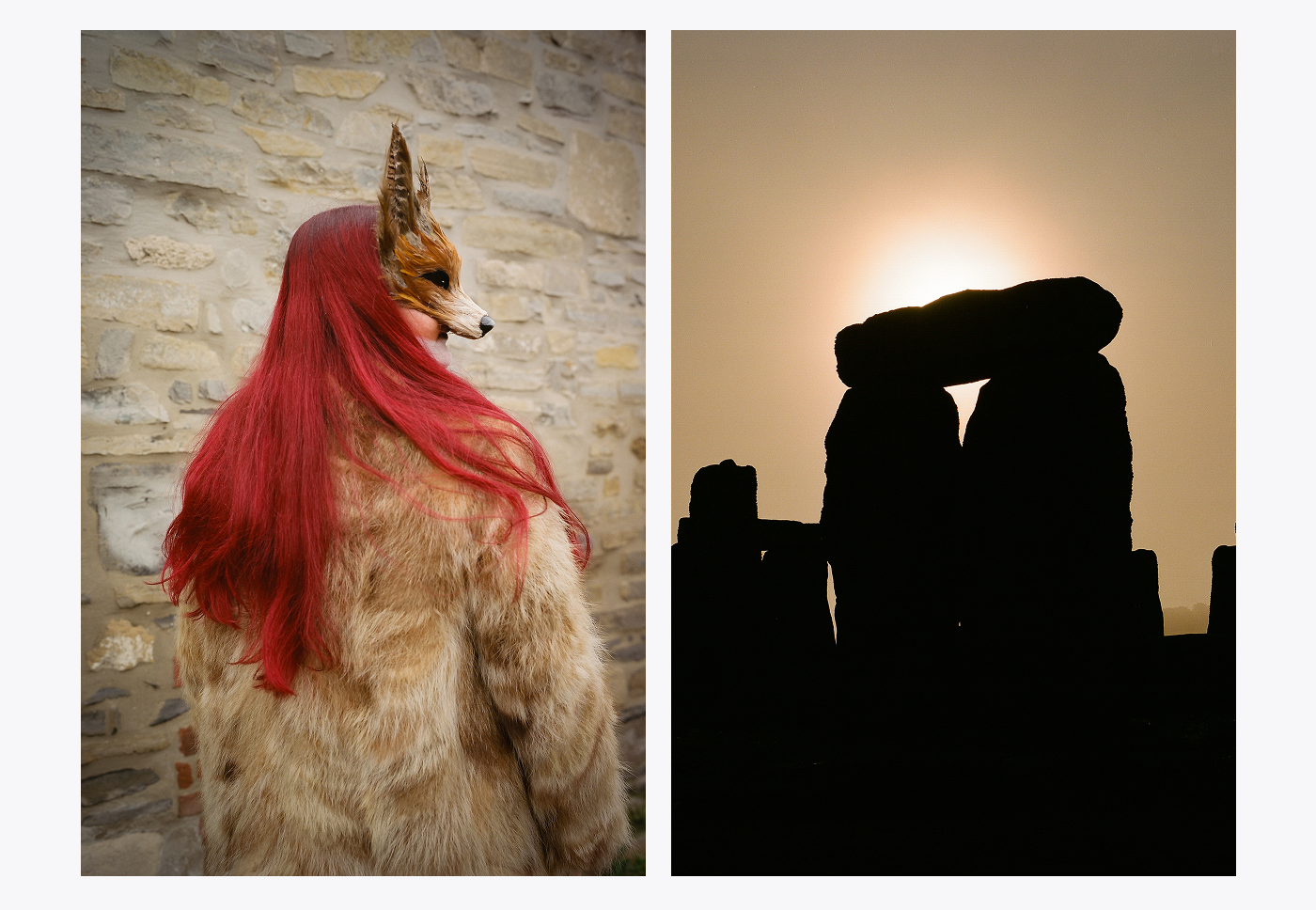
I live in rural Oxfordshire, in a part of England currently renowned for its celebrity residents, but the region is deeply tied to its land through seasonal traditions that still shape life. I moved here after leaving London in the messy aftermath of the pandemic. In those early days, I got lost on muddy footpaths, drifting past honeyed stone churches and crop fields, tuning in to decidedly far-from-London details. I’d bump into neighbors on village walks who mentioned annual rituals or spot pub newsletters announcing folk nights. Shows on BBC iPlayer shifted from crime dramas to myths of the United Kingdom. Slowly, subconsciously, this world and its legends became part of my own rhythms.
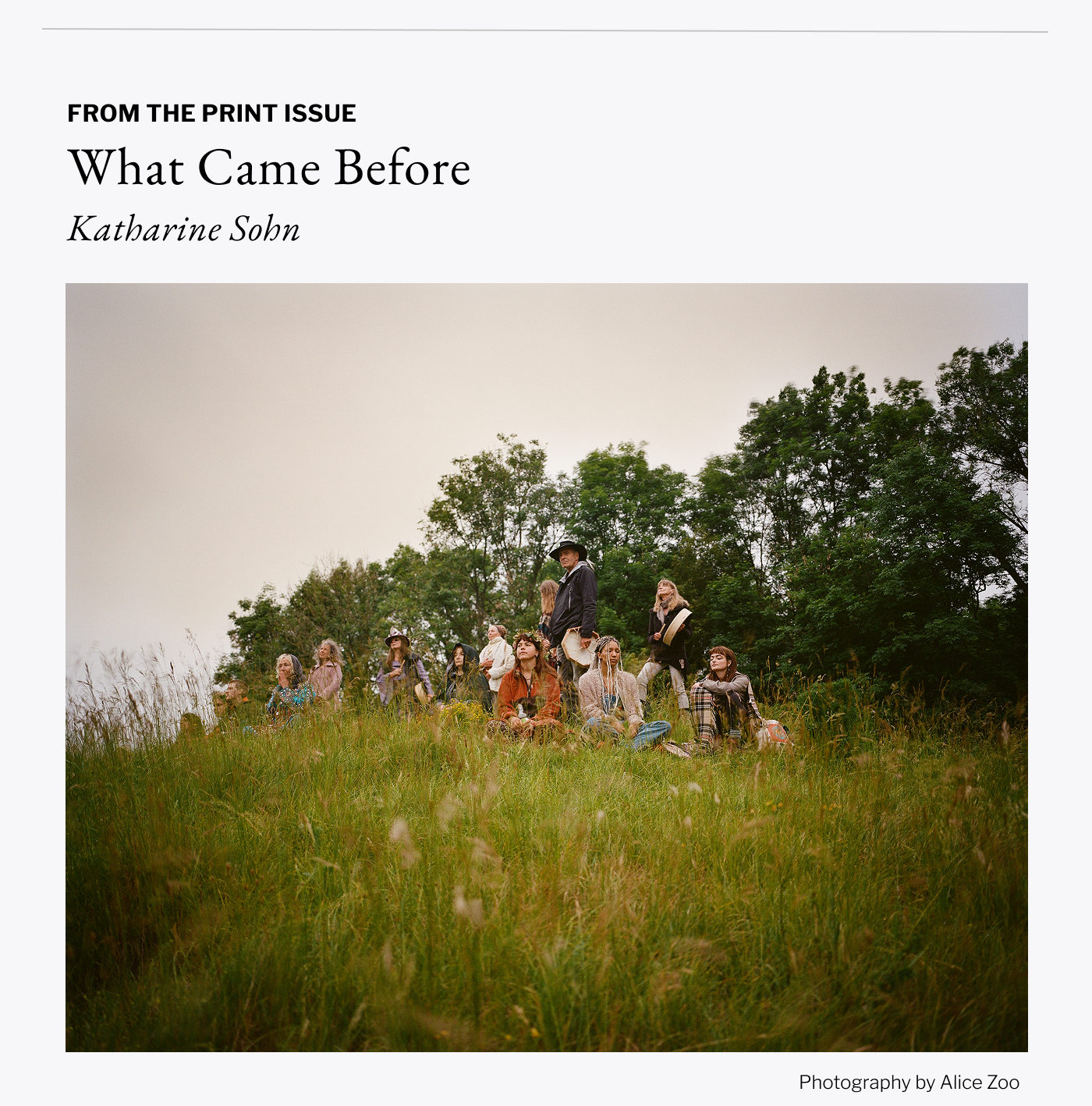
Country living has rearranged my life in ways I didn’t notice at first. Evenings once spent in underground bars are replaced by midsummer gatherings at the Rollright Stones — a cluster of Neolithic and Bronze Age megalithic monuments where we might pass homemade mulberry wine and walk around the circle three times in the hope a wish will come true on a blood moon. A quick Saturday pastry run in Bradford-on-Avon once dissolved into a day at the Green Man Festival, dedicated to an ancient figure of rebirth, the emblem of which still peers from medieval church carvings across Britain, layering pagan and Christian symbolism. Two nights before my wedding last September, I paid an Etsy witch to cast a good-weather spell. It rained everywhere except our village.
The relationship between myth and everyday life is visible across the South West. On the Ridgeway, the Uffington White Horse — a 3,000-year-old chalk figure spanning 360 feet — is carved into the hillside. Dartmoor in Devon holds Iron Age settlements, stone rows, and abandoned villages, including Hound Tor, ancient field systems that still score the moor. Ley lines around Stroud in Gloucestershire — long believed to connect sites of spiritual energy — continue to shape how people think about and move through the landscape. Read the full feature and more close takes on a wide world in our Spring/Summer 2026 print issue. Order now. |
|
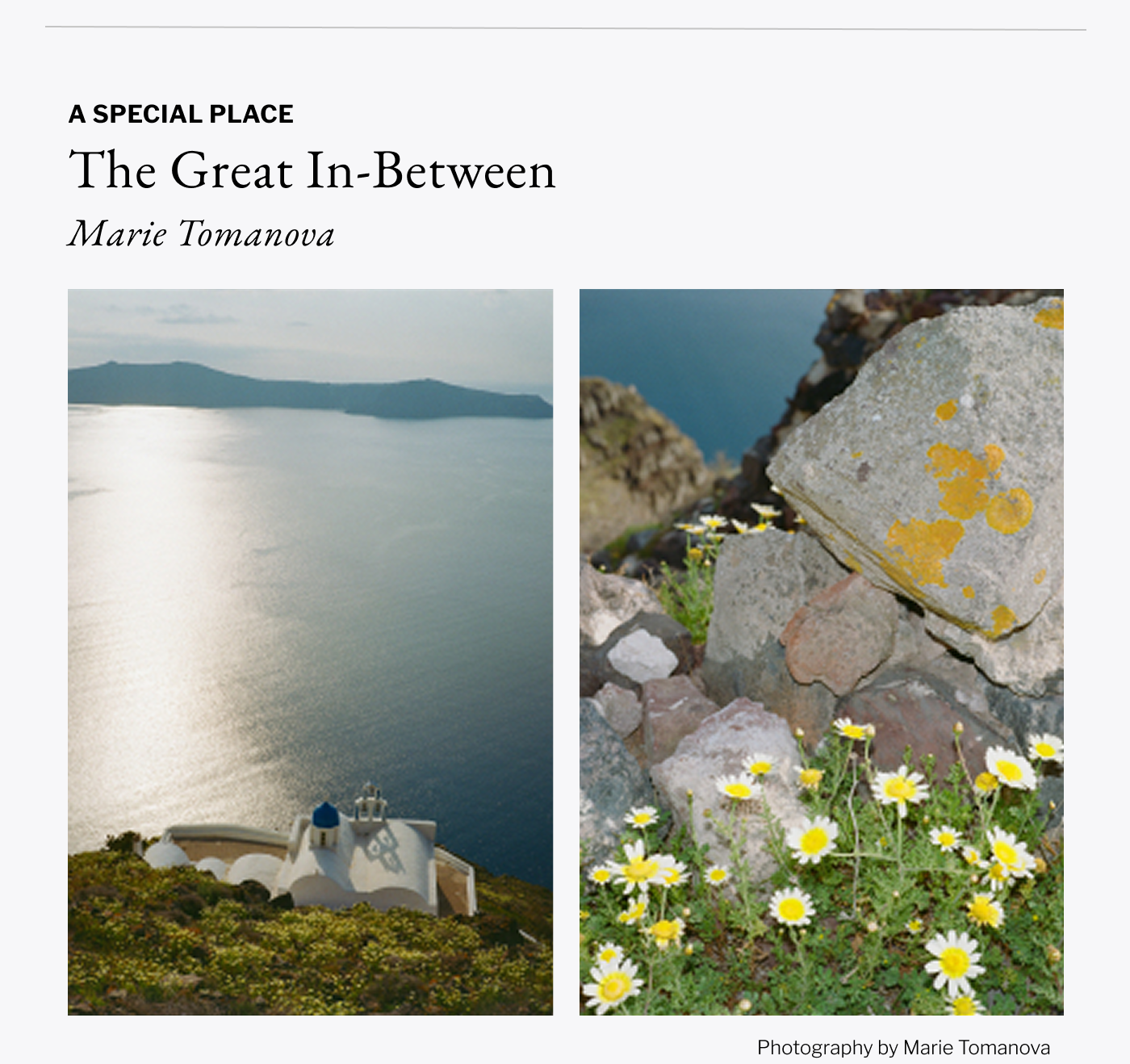
“Meet me in Santorini,” my dear friend Isa said. When I arrived, I was mesmerized. The view. The views. The glaring, white, rounded buildings. I have seen photos of Santorini, Greece, in the 1920s, 30s, 40s, 50s, when it was empty and not quite as whitewashed as it is today. The island had a beautiful and slightly ruinous feeling, which is fitting, given that its towns perch on the rim of a volcanic caldera, rugged and steep — the outlooks Homeric. There is one spot that touched me deeply, hidden from sight behind massive, mesa-like Skaros Rock, accessed by a steep and winding path to what feels like the end of the world: the Church of Panagia Theoskepasti. Beyond an ancient settlement’s worn stones and soothing fields of wild chamomile, this is a place to feel the past and look into the future over the vastness of the sea. |
|
On the Up and Up. The team behind the former Peruvian restaurant Llama Inn has rebirthed the space into something new: Cafe Bar J.F. The spot itself always had great bones: soaring ceilings and enormous windows on a corner in the Williamsburg neighborhood of Brooklyn. The once plant-filled and colorful interior has now given way to a more traditional, Old World design — in a sense, growing up with its diners. There are chairs of honey-hued wood, diaphanous window curtains as delicate as petticoats, and most notably, white tablecloths. “I am an old man now,” said Juan Correa, managing partner of the larger Llama Restaurants group, smirking. “I want tablecloths.” The concept was inspired by the taverns of South America, with Spanish and Italian inflection (the 20th-century immigrant communities of South American cities). And the food? Oh, the food. I’ve loved the food of this restaurant group for some time now (RIP its Nikkei concept Llama San in the West Village neighborhood of Manhattan). Cafe Bar J.F. is no different. The littleneck clams, chopped with fluke and mixed with a piquant mixture of habanero and cilantro, served in shells over ice, was as bright, tangy, and smiling as a citrus popsicle on the beach. The mussels in a leche de tigre built on the seafood (both raw and cooked) sauces the group is famed for. Black lentils and squid with kabocha squash puree was a savory and totally goth experience. Seeing the inky blackness seep from the corners of my dining partner’s mouth was both terrifying and entrancing. The humbly titled “celery salad”... a masterpiece. Crunchy, cool, refreshing curls topped with soft shaves of avocado and pine nuts, evoking some tropical version of pesto. The restaurant’s take on a pisco sour was divine, but I was most delighted by the “oxidative” category on the drinks list, outlining an elegant little selection of sherries. To finish it all off, the tarta de queso, rich and salty as a regular entree, was one of the best desserts I’ve had in some time. —Sophie Yun Mancini Poetic Sketches. After four years in Asia and Europe, Kinfolk Notes has made its debut in the United States. The perfume collection strives to create ritual, with fresh, long-lasting scents that bring meaning to the everyday. Speaking from personal experience, Lin Blanc, a nostalgic scent modeled after clean morning air, is perfect for a hot summer day, while the musky floral, Blue Velvet, is the choice for a transition to night. —Alessandra Berge Secret Garden. When in Rome, I always seem to find myself in the Le Jardin courtyard of Hotel de Russie for an aperitivo. Hidden behind the hotel’s walls are tiered, terraced gardens framed in marble, full of beautiful Italians and beautiful cocktails. After a few signature libations — often a Negroni or Last Word — the hotel’s history, tied to artists, writers, and other creatives, seems to come to life, leaving me more inspired than when I arrived. —Elysha Beckerman |
|
54 Franklin St #2R NY, NY 10013. ©2026 Dossier Projects, LLC.
|
|
|
|
|