The first time I visited Japan, I thought I knew what I would encounter. I’d spent years consuming the country’s culture and food and traveling with Japanese clients. I had numerous Japanese friends and colleagues. As it turns out, I was not prepared at all. I can’t think of anywhere that has more subverted my expectations than Japan.
Landing in Tokyo on a Saturday evening, I was whisked through the capital in a taxi as the sun had just set and billboards lit the streets with the riotous glow of neon. My first reaction to the city was to wonder: How could a place be simultaneously so bustling and so quiet? Since that first visit, I have returned to Japan several times. Each time, I am more enamored. It is now one of my favorite countries to visit, a place I want to return to again and again. I continue to find myself fascinated by its many contradictions, especially the dichotomic trick of maintaining a deep reverence for tradition while also wholeheartedly embracing the future.
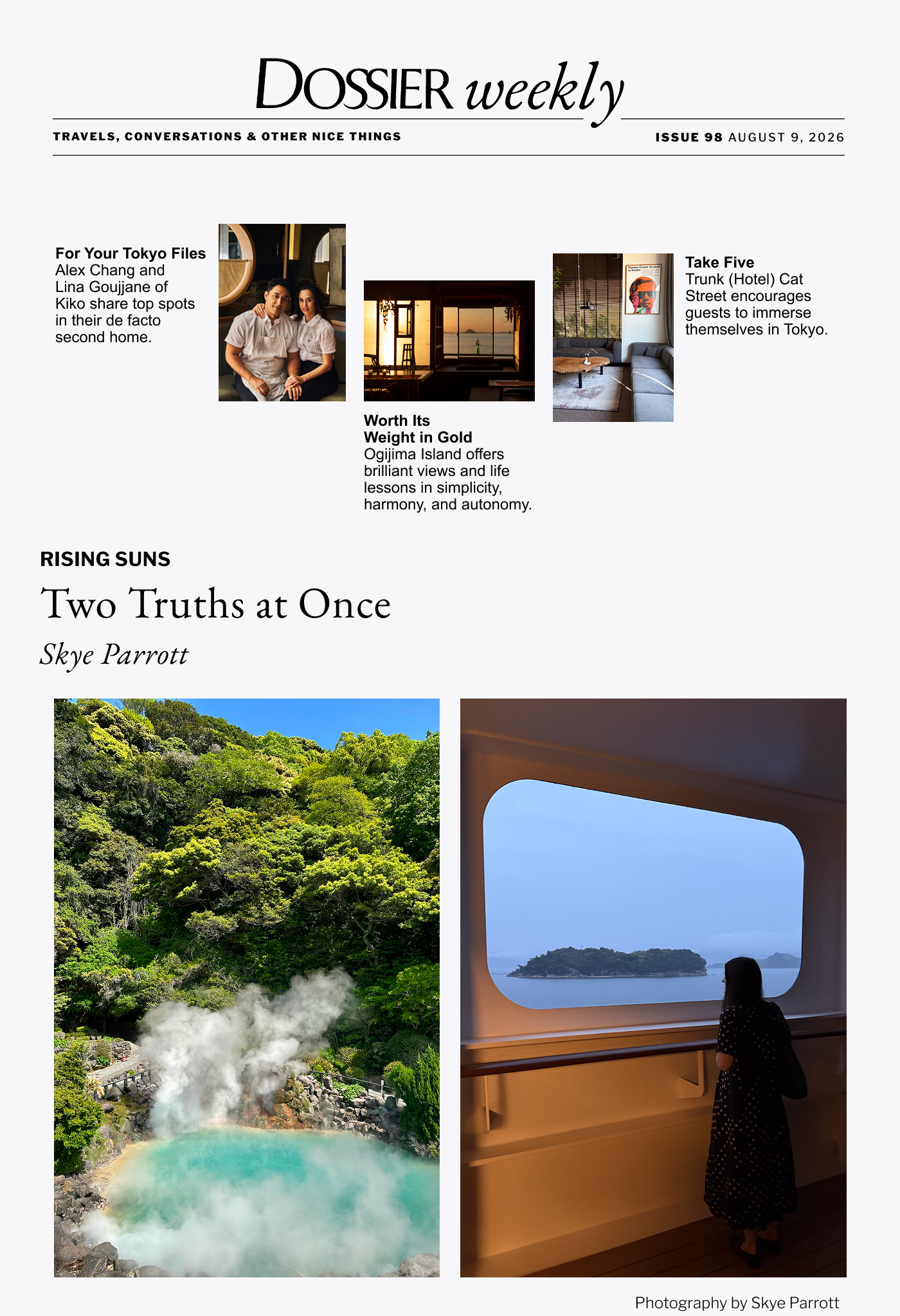
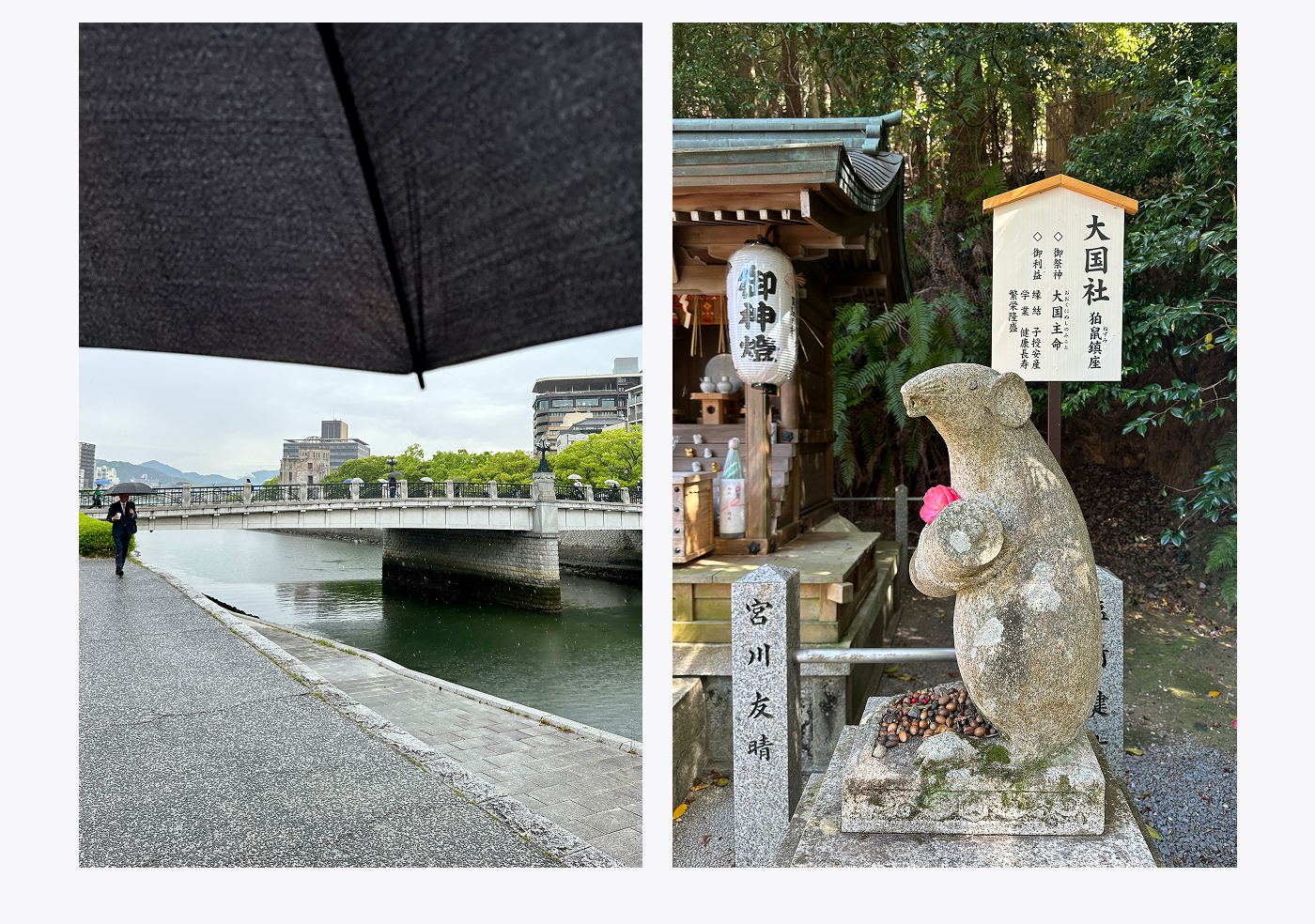
On my most recent trip, I didn’t visit Tokyo. Instead, on a journey with The Ritz-Carlton Yacht Collection, I spent time in a number of cities: Osaka, Kyoto, Nara, Hiroshima, and Beppu, Japan’s largest hot spring city. Of these places, it was Hiroshima that I most fell in love with — which was a complete surprise. I felt a heaviness as I imagined visiting what I thought would be a museum; stepping off the ship, the weight of history sat in my stomach. |
|
My first stop was the Hiroshima Peace Memorial Museum, which was just as devastating as it ought to be. But the broader message of the museum, and of the city, was not what I expected. The inhabitants of the first place on Earth obliterated by a nuclear bomb have decided that their city should be thought of not for its connection to war but, rather, for its connection to peace. Their commitment to teach people about the importance of peace so that such a tragedy may never happen again was a message of hope I found profoundly moving. Stepping outside of the grounds of Hiroshima Peace Memorial Park, I also discovered that the city was far from a museum. It’s a vibrant place, filled with warm people, excellent vintage shopping, and great food. Okonomi-mura, where I had lunch, was probably my favorite stop of the whole trip. In operation as a two-story mall since the 1960s, the current five-story high-rise was constructed in 1992 and houses more than 25 independently owned stalls, all serving variations of the local specialty okonomiyaki, a savory pancake made with layers of noodles, cabbage, meat, or seafood.
The ability not only to hold but also to welcome contradiction is a vital skill that I continue to hone. Each time I return to Japan, I am reminded of this importance, along with the value of embracing the everyday. For me, one of the deepest, soul-level appeals of Japanese culture lies in the intention it assigns to daily activities, from the action of handing over a credit card to pouring a cup of tea to being served a single, perfect strawberry for dessert.
We travel to get away from the everyday, but we also do so to return home — so we can experience the quotidian with fresh eyes. Witnessing simple tasks executed with such care allows me to see them for the truly profound acts that they are: the small moments that, put together, make up life. |
|
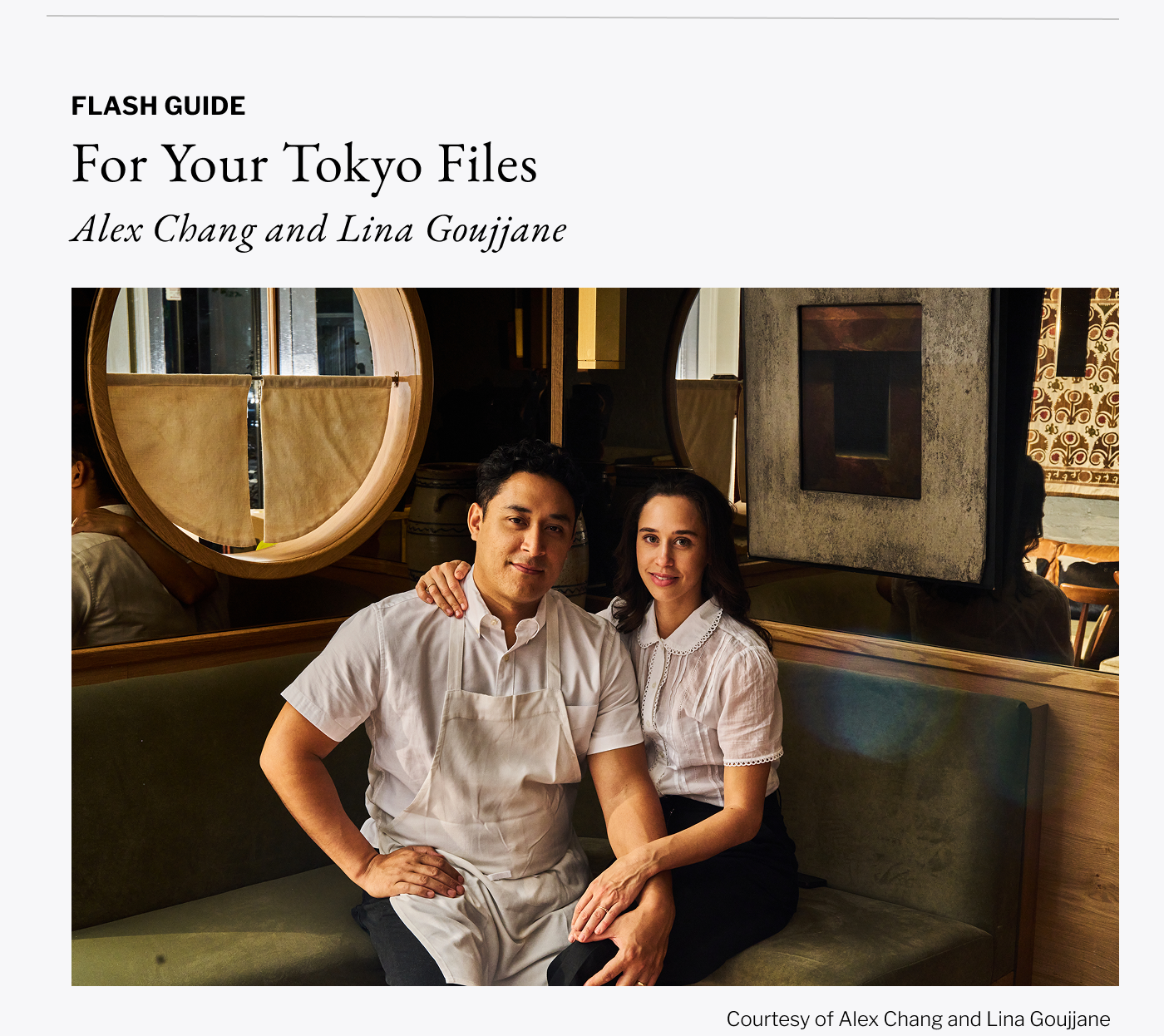
For chef Alex Chang and sommelier Lina Goujjane — the husband-and-wife team behind New York City restaurants Kiko (an Asian American concept in Hudson Square) and the freshly opened Noury (a Japanese izakaya and wine and sake bar in the SoHo neighborhood) — Tokyo is like a second home. Chang has ties to the city, and the couple returns at least once a year to see family and take in Tokyo’s famous fashion, innovation, and detailed attention to craft. Below are a few of Chang and Goujjane's standout finds from across the Japanese capital and beyond. Something to eat or drink … Ham-and-blue-cheese katsu paired with nigori sake at Eureka!. Its owner, Marie Chiba, is a sake master. We love how she incorporates personal touches to make her sake bar feel very personal to her travels and knowledge. Something to see … The natural onsens in Niigata (reachable in under two hours from Tokyo by bullet train). A secret … The city’s subgenre cuisines and bar concepts. We love Folklore, a bar that specializes in Japanese sake and Japanese shochu cocktails. We love Ash coffee and bar, a place that nails imaginative coffee beverages from a mixologist perspective. We also had a very unique meal at Alter Ego recently, a restaurant that specializes in Italian Piedmontese cuisine using Japanese ingredients. Only in Tokyo … Chuka ryori, a distinct local style of Japanese Chinese food. Being Chinese Mexican myself and spending much of my childhood in Japan, this style of cuisine really resonates with me. The Japanese Chinese food in Japan is extremely high-level, and one of our favorite spots to enjoy it is a mapo tofu place in Kamakura. Something to take home … Bento boxes for the plane ride back! |
|
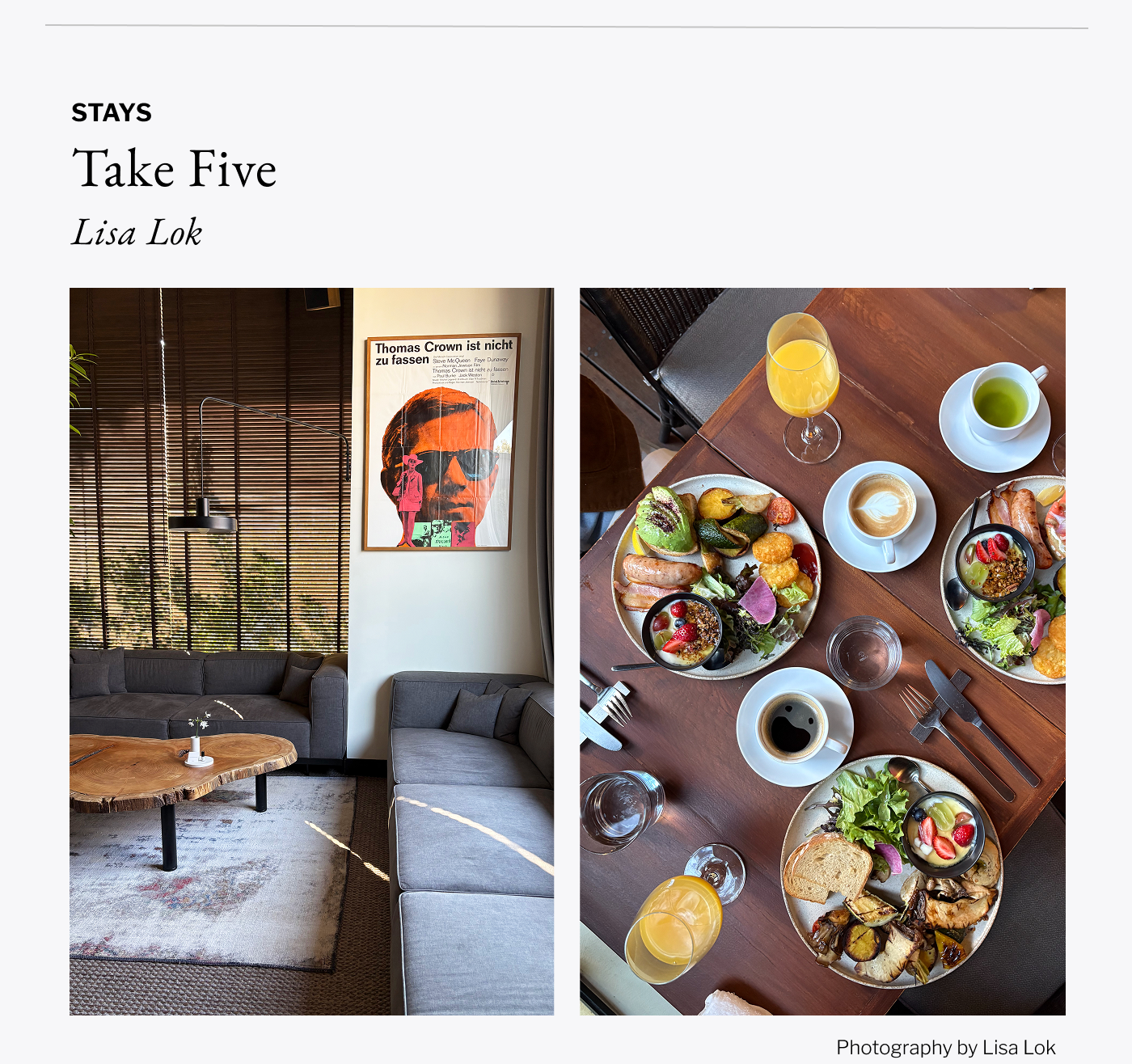
Trunk (Hotel) Cat Street felt instantly familiar, despite its location in Tokyo’s Jingumae district, between the buzzing Shibuya and Harajuku neighborhoods. The boutique hotel’s cool staff and sense of community — the lounge was brimming with laptops and the lobby hosts rotating exhibitions that spotlight local artists — reminded me of my hometown, Brooklyn. When I visited Trunk, the artist duo Straft’s Piece to Form was on view, employing rice straw to shape large-scale objects that, together, create one single work. The property is likewise minimalist; its sleek lines blend into its surroundings, blanketed as they are in zelkova trees — a physical manifestation of its five-element “socializing” philosophy, which focuses on environment, local first, diversity, health, and culture. Your room’s best amenity … Our Living Suite room had a loft accessed via a ladder. We dragged our jet-lagged bodies up it, turned on the suite’s TV projector, tuned in to a Japanese game show, and curled up on a makeshift cushion couch. It felt like our very own movie theater. The best view from the hotel … People-watching during breakfast from the Trunk (Kitchen) outdoor patio. There were kids in the country's iconic school uniforms, besuited businessmen, and what I assume were fashion students. A relaxing moment … Enjoying the Urban Hinoki relaxing oil and a cup of tea in my suite, accompanied by light city-pop music by Tatsuro Yamashita on the record player. The best thing you tasted … The local snacks in my suite (you can also purchase them at the Trunk convenience store). There were dried fruits, a carbonated lemonade called Trunk Ra-mu-ne, and organic apple and peach juice from Nakahira Farm. But Iyoshi Cola might top all of that. The local cola is made with spices, fresh citrus, and natural cola nuts. The taste is a bit more spicy and herbal than your traditional cola, and there’s a vending machine nearby on Cat Street that offers an endless supply. Something unexpected … The skateboards on display next to reception. They read as artworks, but they’re actually available to rent. My husband made his selection while chatting with locals about the best routes. For nonskaters, the hotel also offers vintage upcycled bikes. Trunk rescues the vehicles from abandoned-bike graveyards and gives them a new life. |
|
The first time I landed in Japan, I was young, on a job with a famous photographer. A car with a glass roof picked us up at the Tokyo airport, the sky above like a slow-moving aquarium. The two men who greeted us handed over a bottle of tequila with mysterious brown things at the bottom. They sipped, smiled, and nodded, and so did we. Moments later, we were laughing uncontrollably, drifting through the city as the “brown things” — mushrooms, apparently — did their work.
Ten days in Tokyo evaporated in a blink. What stayed were the fragments: neon nights, cosplayers on Harajuku sidewalks, the silence of temples at dusk, the dignity of a bow, the kindness of strangers, the unspoken rules that form a civilization. Shoes off. Hands clean. Respect first. I returned many times for work and, along the way, made many friends. Then careers happened, as they do, and the lines between us stretched thinner.
Years later, someone asked my 16-year-old son what his favorite food was. “Omakase,” he answered without hesitation. That was the moment it became clear: It was time to return to Japan, this time with family. My wife had wished to visit forever, and I wanted to show her the Japan I knew only in slivers — the one I had seen through a work lens but not, yet, a human one.
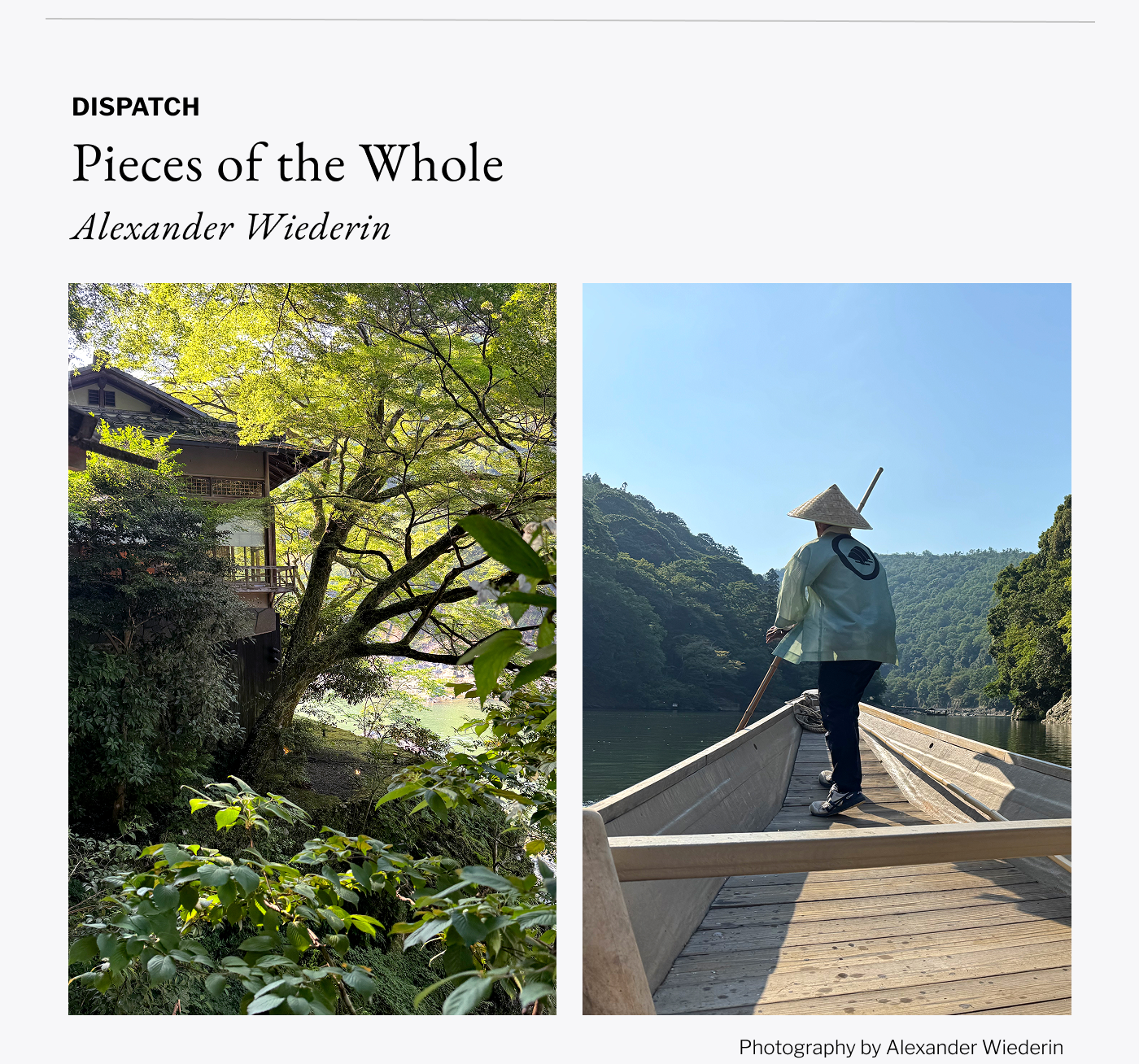
Upon landing in Osaka, two impossibly kind drivers welcomed us and spirited us off into the night. At an intersection, they stopped, smiled, and said, “This is it.” We looked around: just a quiet street, no hotel in sight. Then a soft, cheerful voice behind us said, “Welcome to Hoshinoya. Please follow me.” We walked into what looked like a small garage, then took an elevator up to a calm waiting room where we were offered tea. Ten minutes later, the same gentle voice asked, “Are you ready for the boat?”
The boat? We stepped onto a custom wooden watercraft, the river glowing black under the moon, and a man pushed us silently upstream with a long pole, the sound of water folding against the boat. That was the moment we truly entered Japan. After 15 minutes, we arrived at a village of ancient-looking houses covered in moss, breathing with the surrounding forest. Inside Hoshinoya Kyoto, the rooms were more than rooms; they were small worlds of precision, warmth, and quiet detail.
That night, we had an early dinner and fell into bed. At midnight my phone rang. It was my older son. “Dad, I’m awake. Jet lag. Can we do something?” So, we dressed, walked through the woods back to the intersection, called a car, and drove into Kyoto’s old streets. It felt as if we were the only people in the city, wandering through silence, talking, discovering, sharing a dream while everyone else slept.
Over the next four days, we did it all: made knives an hour outside Kyoto, visited temples and forests full of monkeys and shrines steeped in centuries, dyed fabric in indigo, wandered museums, and ate everything from udon to wagyu beef. We disembarked the train in Tokyo late, tired, and convinced nothing could top Kyoto. We were wrong, but the experience unfolded differently.
Tokyo was social, layered, alive. It felt like a city of reunions, conversations, wandering, and discovery, starting with Hoshinoya Tokyo, which is not a hotel. It is an embrace made of architecture, a structure with arms. You enter and place your shoes on a single, long shelf, as if stepping into a private home. The lobby greets you with towering floral installations that feel like living sculptures. Each floor has a shared living space where you can sit, read, drink tea, or simply be still. From the tea ritual to the onsen, a natural hot spring with water drawn from nearly 5,000 feet underground, everything is designed to slow you down and heighten your awareness.
Throughout our six days in the city, we walked endlessly and drove often. We visited museums, parks, flea markets, pottery districts, and the Ginza Six luxury shopping complex. Tokyo became a city of bookstores — Genkido Shoten for art books, a concept bookstore in Shibuya, Bunkitsu Tokyo bookstore and cafe — and long hours of browsing while the kids disappeared into manga shops. One night, we went to an outstanding Japanese pizzeria. That experience summed up Japan for me: If they decide to make pizza, they do not imitate. They master it. Another afternoon, I met a remarkable man named Kaito who makes jewelry and rings under the brand Calmi Cuori Appassionati. His work carries a leopard motif, subtle and thoughtful, and some of the proceeds support wildlife conservation. I still think about this encounter, and how Tokyo allows for these kinds of crossings.
There were many small things during our visit that mattered deeply — a cultural approach embodied by Hoshinoya Tokyo. The pajamas were impeccable. The meals were unforgettable. The matcha ritual was not staged; it was taught. There was generosity in every gesture. The organization was a quiet miracle.
A friend of mine who grew up in Tokyo, a serious foodie, joined us one night for dinner at the hotel. Even he was astonished. Not by luxury, but by the meal’s precision, the honesty, the beauty of restraint. “That,” he said, “is real Japan.” |
|
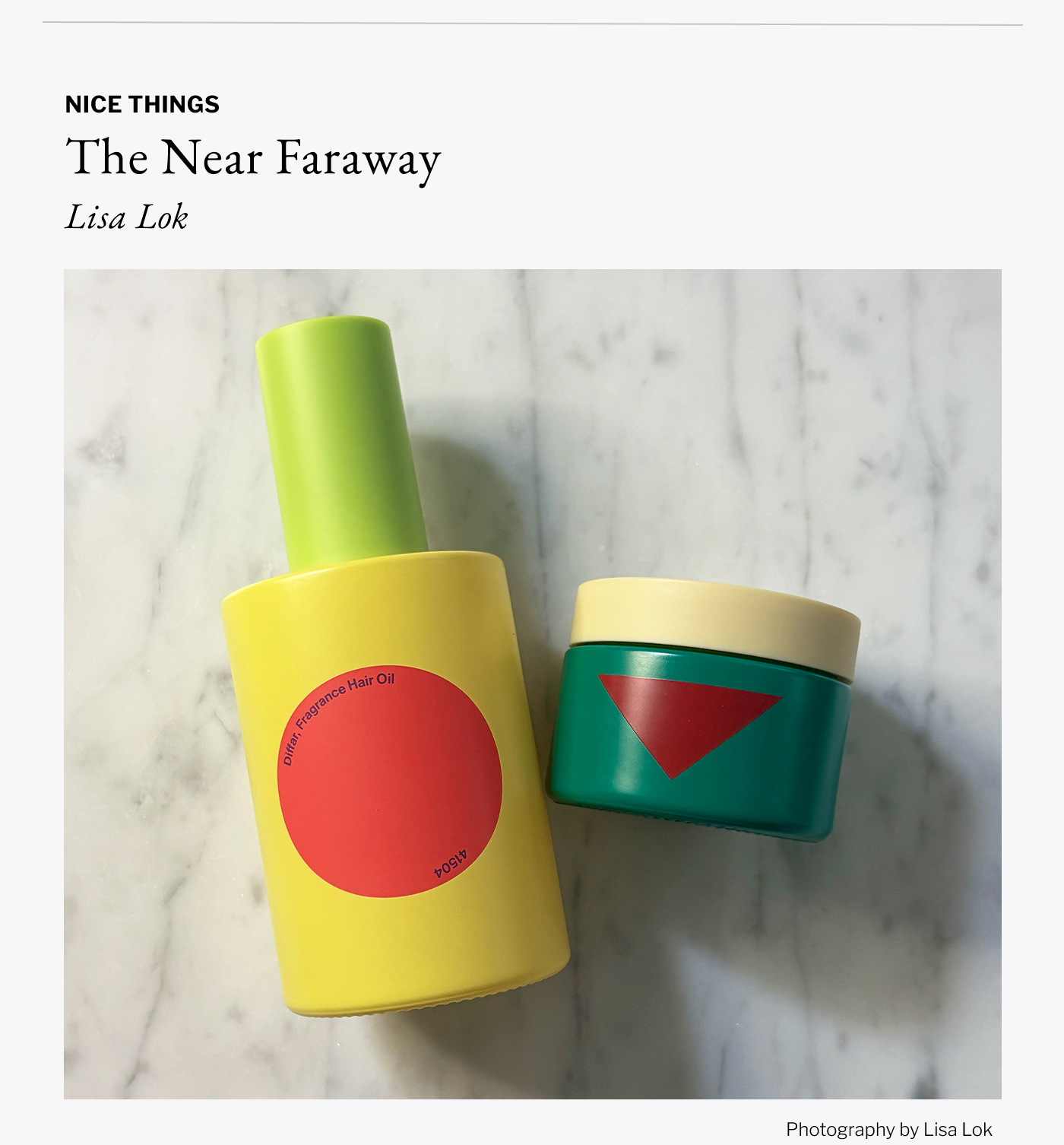
The rain in Tokyo bathes residents and the city’s streets in a marble of neon lights. The citrus of Kochi on Shikoku embodies the island’s contradictory seasons: wild and gentle, challenging and nurturing, destructive and fertile. In Japan’s sacred forest, deities breathe. These different experiences take you far, so says Diffar, a Japanese natural fragrance brand creating plant-based fragrance hair oils, perfumes, and multi-balms “built from the scents, sounds, air, plants, and cultural memories of distant lands.”
Specifically, the company’s products are created in a laboratory at the foot of Mount Fuji, using a signature blend of essential oils and plant extracts — including argan oil, jojoba oil, camellia oil, evening primrose oil, and shea butter — formulated in collaboration with Tokyo-based hair salon Scent, methodologically developed thanks to founder Makoto Arii’s background in scientific research.
The company’s Fragrance Hair Oil, for example, incorporates rice oil, said to protect hair from UV damage, and elcalactone from rapeseed, known to repair cuticles damaged by UV rays and hair dryers — along with evocative scents. I’m partial to those found in the 41504 Japanese Citrus scent. Showcasing bright, vibrant notes of Shimanto yuzu (Arii traveled to the island to source it), the scent brings to mind sunny, summer markets in the early morning and keeps humidity from wreaking havoc on my locks. Diffar’s newest product, 24511 Rooted Bloom, combines notes of osmanthus, mimosa, fennel, and vetiver to evoke green shoots on cobblestone streets. At the same time, its light texture refines hair, notably taming my baby flyaways.
These sensorial experiences serve as immersive foils to the products’ modernist aesthetic, reflecting the complexity of the brand and its home country. Geometric shapes and pop tones — a raspberry bottle with aubergine and sage accents, a saffron vessel with cobalt top and white label — belie a deep dedication to perfection: The last three digits of each product’s number indicate how many versions of the formula have been created before Arii arrived at its final notes. |
|
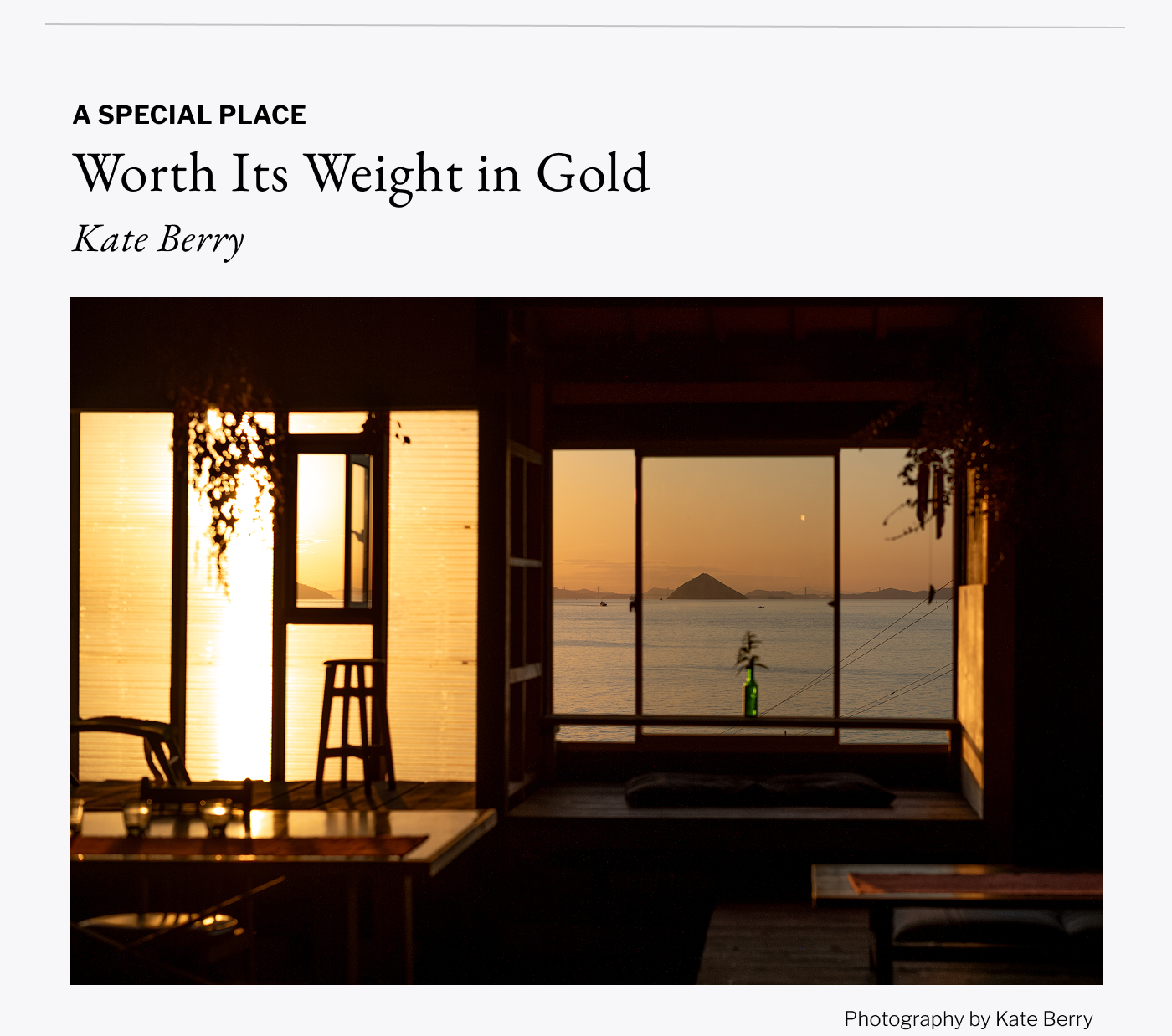
I was fascinated by the view of Ōzuchi-jima, an island in the Seto Inland Sea, the first time I visited the art islands of Naoshima and Teshima. When the sun hits the sea, the water shimmers, calm, lucid, and turquoise. Last year I visited Ogijima Island (or “Ogi,” to locals) twice: once alone and once with a friend for the Setouchi Triennale. I chose this small, car-free island as a birthday gift to myself, having stumbled across a little hotel there and being always inclined to go where others are not. I was greeted at Lemon Tree Hotel by Kentaro-san, who wore a bucket hat and a big smile. The property’s guest house was simple, raw, rustic, and still evolving, he informed me, but its framed view of Ōzuchi was enough for me.
I walked the entire island before sunset, following the path north to the lighthouse, then farther south to the “Walking Ark” sculpture, encountering the island’s famed population of stray cats along the way. At dinner, Kentaro-san presented me with a beer, brewed by his friends on the mainland and adorned with a label that featured his child’s art. He cooked a meal using ingredients entirely from his garden and the surrounding sea, then lit a sauna where I sat in the intense heat before retreating to my small bed. I departed inspired by Kentaro-san’s devotion to the island despite its diminishing population and by his ability to work so closely with the elements and to remain self-sufficient. Perhaps that is why I will always return: to be reminded of how little is often needed and how little is often enough. |
|
Sky High. Finding the perfect summer spot — preferably with a bird’s-eye view — is something akin to a blood sport in New York City. My current favorite locale is the rooftop bar at The Kimberly Hotel. Not only is the venerable 40-year-old Midtown property a great place to stay, offering spacious rooms with private balconies, but its rooftop bar (appropriately named Upstairs) also boasts sprawling views of Manhattan and the Chrysler Building. Equally aptly, there’s a top-tier wine list and cocktail menu, as well as great food. It’s the perfect spot to watch the sun go down or, depending on how late it is, see it come up. —T. Cole Rachel Rio Calling. Since its reopening in 2021, I’ve found myself wandering into La Samaritaine almost every time I pass by. The Paris department store’s magnificent art nouveau architecture draws you in, while its thoughtful mix of fashion, design, and jewelry makes it surprisingly difficult to leave. Until August 25, the historic department store has transformed into Bold Summer Brazil, a joyful celebration of Brazil’s contemporary creative scene spanning fashion, design, beauty, and gastronomy. Beyond the talks, cocktails, and events scheduled throughout the summer, the pop-up feels like a little slice of Brazil in the middle of Paris. Visual artist Maritza Caneca’s pool-tiled floor sets a playful tone, while ceramicist Lilian Malta’s sculptural bone china pieces showcase the beauty of craftsmanship and material experimentation. It’s also an excellent introduction to Brazilian designers, from the vibrant prints of Farm Rio and the understated tailoring of Missinclof to Lapima’s handmade sunglasses. Round it all off with an ice cream from Dengo’s charming truck parked inside the space. —Anna Kaplan Summer School. The second weekend of the Ainu Summer Festival, hosted by the Japan Society, is happening in New York City from August 12 to 13. The festival showcases the art, history, customs, and language of the Indigenous Ainu people of Northern Japan. During the first weekend of the festival, I took a traditional wood-carving workshop taught by members of the Nibutani Craft Cooperative Association. It will be offered again this weekend, along with traditional dance and language workshops. Other compelling programming includes food, culture, and art presentations, as well as a screening of the documentary Ainu: Indigenous People of Japan.
—Alessandra Berge |
|
54 Franklin St #2R NY, NY 10013. ©2026 Dossier Projects, LLC.
|
|
|
|
|