At the start of July, the photography industry is in Arles, France. During the opening weekend of the Les Rencontres de la photographie d'Arles festival, the tiny city in Provence fills with photography, photographers, photo editors, and all sorts of other professionals and appreciators of the medium.
Until this year, I had somehow never attended the festival, now in its 57th season. Its opening took place during a brutal heat wave, with daytime temperatures reaching 105 degrees Fahrenheit. Even so, the event’s energy was infectious, with Arles’ narrow streets quite literally bursting with photography and people who love it. Exhibitions popped up everywhere: in churches, in parks, in the city’s Roman amphitheater and other historic monuments, in the Monoprix grocery store. Young photographers hoping to get noticed set up mini-exhibitions on curbs, their prints laid out around them; others wheatpasted their photos to walls. On an early morning walk, I stumbled upon a show in a copy shop, featuring works by Collier Schorr, Peter Sutherland, and Christopher Anderson. Miles Aldridge turned an empty storefront into a studio, where Polaroid portrait sessions could be booked via a QR code.
Before it became a photography hub, Arles was known as the home of Vincent Van Gogh, and it now houses the Fondation Vincent Van Gogh Arles. My first afternoon in the city, I took a break from photography to dip into the museum’s air-conditioned galleries. Its current exhibition, Suspects — Van Gogh, Tricksters & Co., was a wild and wonderful surprise. The show is an ecstatic celebration of 20th-century art centered around jokers, clowns, freaks, and weirdos; like Van Gogh himself, its artists and their subjects are outsiders who have “chosen dissidence over conformity.”
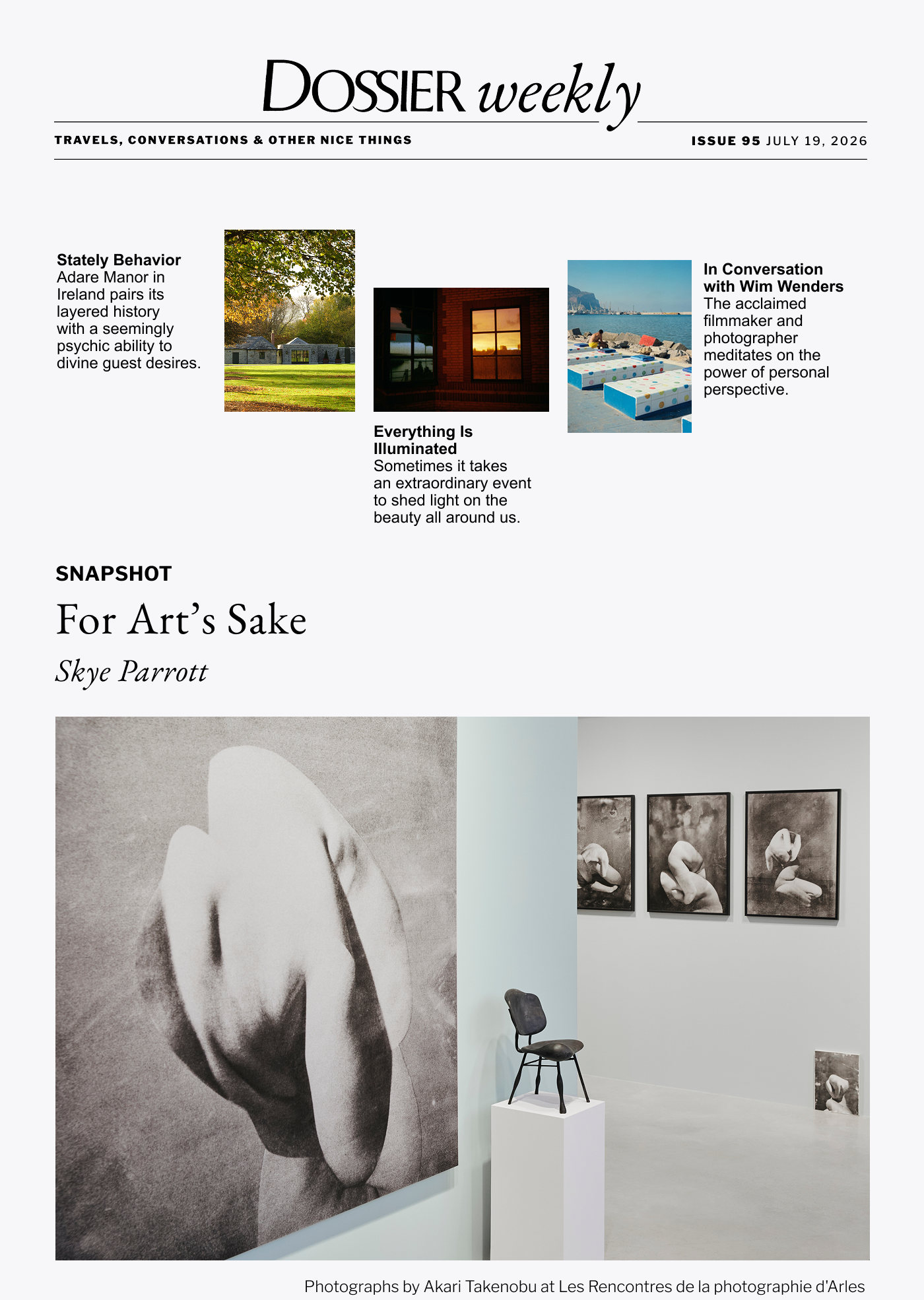
On my second night in Arles, I attended the ceremony for the Dior Photography and Visual Arts Award for Young Talents. The annual competition — launched in 2018 by Christian Dior Parfums, in partnership with LUMA Arles and the École Nationale Supérieure de la Photographie — awards a grant and solo show to a student artist, while also displaying all 10 finalists' works at LUMA’s La Lampisterie for the duration of the festival. This year’s winner, Akari Takenobu, who attends Tokyo University of the Arts, was selected by a jury chaired by David Sims and Peter Philips, creative and image director of Christian Dior makeup. Takenobu’s work, beautifully aesthetic black and white prints featuring layers of collaged images, is inspired by the paranormal. “I just wanted to try to approach the unknown,” she explained. “I am not trying to define what is existing, what is not existing. I just want to get closer to the invisible world.”
Afterward, as the sun finally dipped down and the mistral began to blow, everyone settled in outdoor cafes to share long, languid dinners — the perfect coda to a day spent seeing and living art. The festival’s opening weekend has passed, but the majority of its over 40 exhibitions run through October. Below are a few of my favorites … |
|
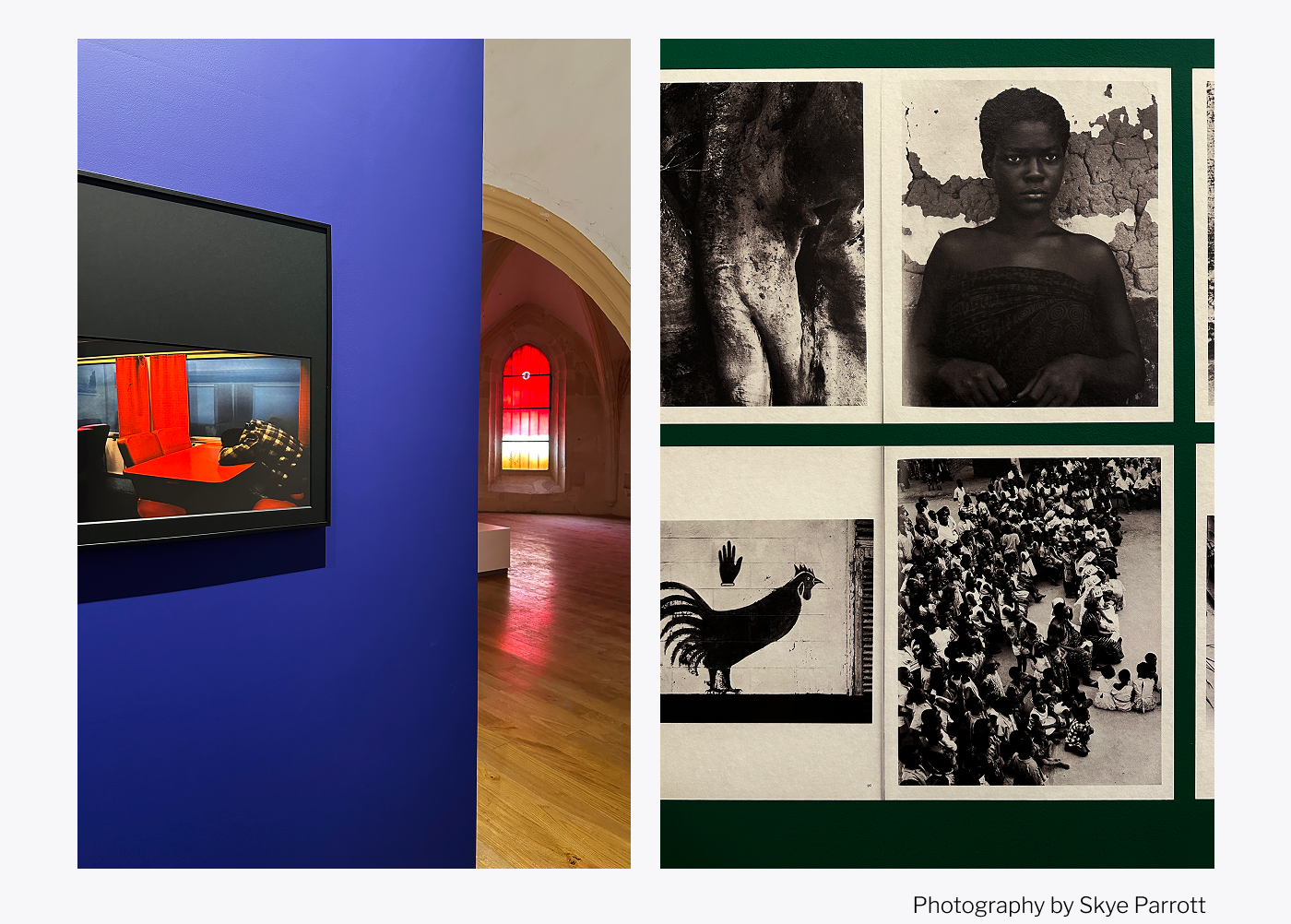
GHANA! Dreaming Independence 1957–1976. Curated by Damarice Amao, this exhibition explores how, in the decades following Ghanaian independence, photography and other imagery were used to tell the new nation’s story. It places ephemera — such as banknotes, brochures, postcards, and stamps — alongside photography from books, including Ghana: An African Portrait (1976) by Paul Strand and The Roadmakers (1961) by American photographer Willis E. Bell and Ghanaian playwright Efua Sutherland. I particularly loved the contemporary photographs by Carlos Idun-Tawiah, which recreate the feeling of period images through the idealized lens of memory. Harry Gruyaert — A Sense of Place. Gruyaert’s work has grown on me in recent years, and this show was at the top of my viewing list. It features images taken in cities all around the world, shot in the photographer’s customary vivid colors, all showcasing his incredible eye for layering. And its venue, a chapel along the Rhône, was a particularly beautiful setting, with light streaming through its stained glass, nearly matching the intensity of the prints. Ming Smith — Wandering Light. Smith was the first Black woman photographer to have her work acquired by MoMA. Mostly in black and white, it truly defies categorization. Some of it looks like reportage, some like travel diaries — I particularly loved a double exposure shot in Cairo, Egypt, and a (sort of) portrait captured in Ivory Coast. But turn a corner and, suddenly, you’re looking at a Pietà composed like a Renaissance painting, with the head of a tiny Black girl with pigtails peeping up from beneath Jesus’ knees. (I loved the title: God, Mary, and Jesus.) LUMA Arles. This interdisciplinary creative campus, set on a 7-hectare former industrial site, completely blew me away. At its center is a tower designed by Frank Gehry; upon entering its lobby, you’re greeted by a giant slide designed to transport visitors from the upper galleries to the main floor. (Rest assured, stairs and elevators are available for the less adventurous.) The museum’s copious exhibition spaces allow for simultaneous major shows. Those currently on view include Gerhard Richter’s Overpainted Photographs, blending photography with the artist’s signature oil painting; In the Veins, a devastating and beautiful film by Camille Henrot that presents a portrait of our climate disaster through the lens of parenthood; and In Search of… Incredible, a multimedia exhibition by Julienknxx. Born in Sierra Leone, and raised between The Gambia and London, the artist uses sound, imagery, sculpture, and found objects to create an emotional map that explores the architecture of memory, history, and home. A few shows that I didn’t have time to visit but plan to when I’m in the area again next month include: Martine Barrat’s Soul of the City, a document of Harlem by a Corsican photographer who has called the neighborhood home since 1970; Paul Kodjo's Photoromance, the first major solo exhibition in France of the Ivorian photographer’s work from the 1970s; and Animal Model, a curation of 200 years of photography of animals. What’s not to like? |
|
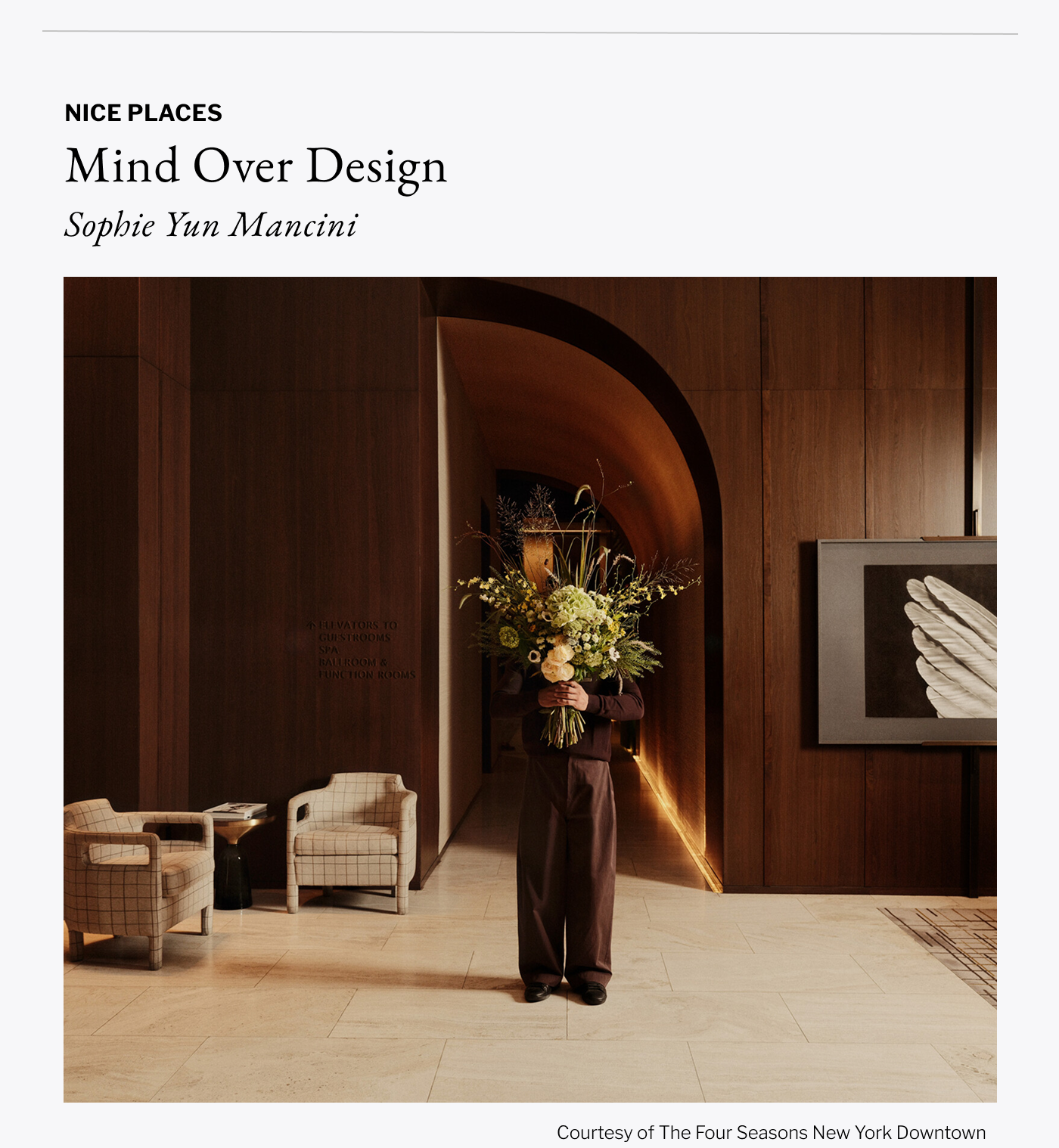
I got hypnotized recently. I was having some mental blocks, feelings of stagnation, and fogginess. Since my session, I’ve felt a seismic difference. The session took place in the Spa at Four Seasons Hotel New York Downtown, which offers something called The Collective: a group of practitioners specializing in different wellness modalities.
I met with Nicole Hernandez, a New York City-based, board-certified hypnotherapist and visibility coach, who incorporates Human Design into her practice (more on that later). She led me through what felt like a mix of talk therapy and guided visualization. For anyone scared of feeling out of control or wary of falling under a spell, let me assuage your fears: The entire session felt more logical than mystical.
It was like Hernandez was holding up a mirror, guiding my hand to Windex where the glass was cloudy. Did I feel radically transformed walking out? No. It was in the days and weeks that followed that I noticed my mindset, sense of self, and confidence had completely changed.
Following the session, Hernandez also sent me my Human Design chart. Human Design is a self-knowledge system combining ancient modalities (astrology, I Ching, Kabbalah, chakra systems) and modern science (quantum mechanics, genetics) to create an energetic blueprint. Discovering mine (aided by Hernandez’s elegant interpretation and analysis of it) has been revelatory, helping me to understand why certain things drain me and to recognize areas of innate power. |
|
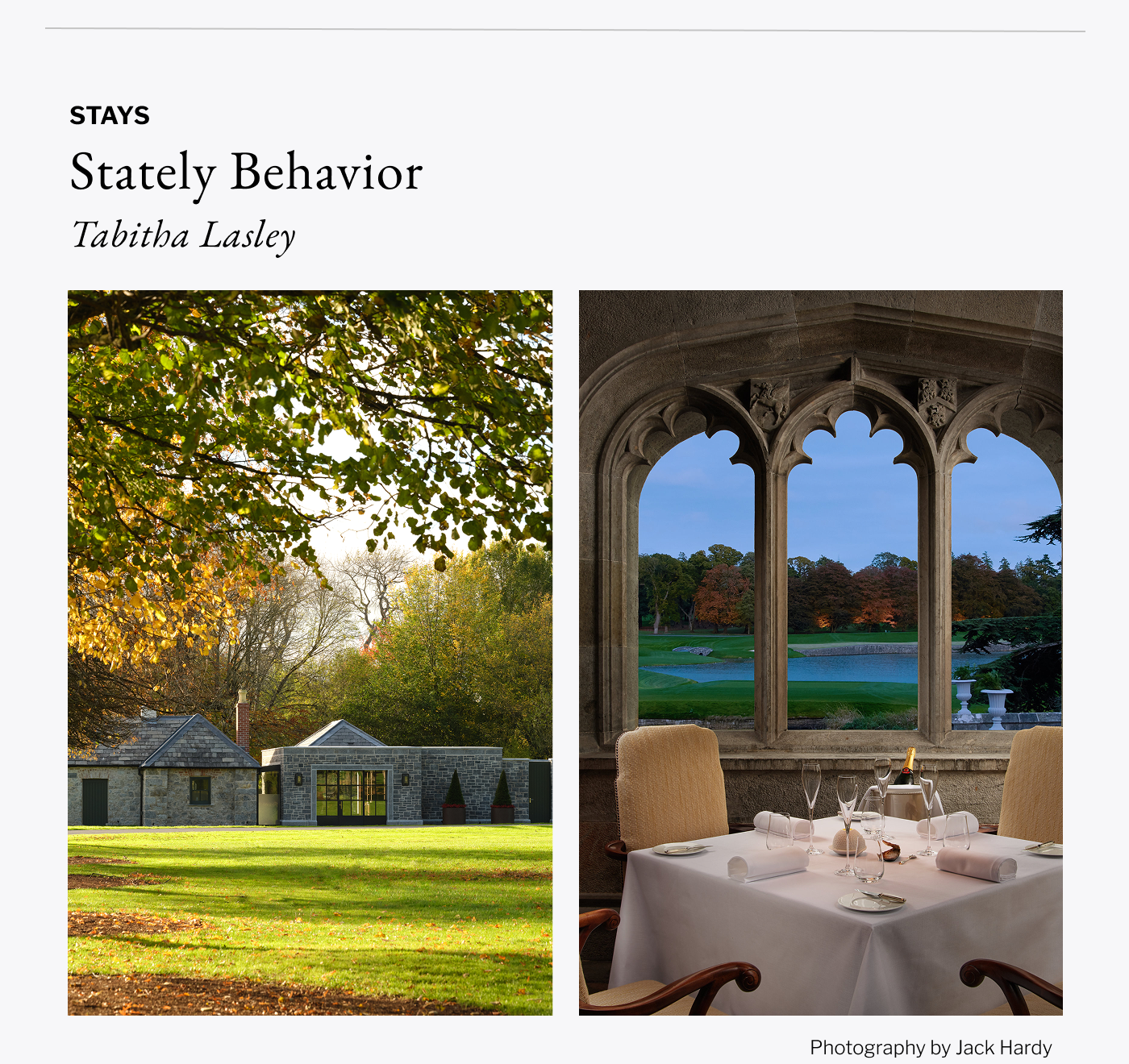
Adare Manor in Southwest Ireland both does and doesn’t feel like a hotel. The presence of staff opening doors, discreetly divesting guests of their luggage, and ushering them into the drawing room suggests this is a place where people pay to stay, yet the look of the property makes it feel like a privately owned country pile.
The 19th-century manor was someone’s home, once upon a time, and it retains that atmosphere, despite the milling travelers in the hall, the racks of luggage being wheeled along the landings. The interior shows the stamp of each successive era, the mark of every custodian. An enameled fireplace, which looks faintly art deco and might have been sacrificed to a chain hotel's gut renovations, is made the focal point of the drawing room. Stained-glass windows bear the Victorian crests of the property’s original owners. Incandescent bulbs in the bedrooms cast everything in a warm, vaguely ’90s glow. Features are chosen for their quality over their provenance, and this approach is employed throughout the hotel.
When I remarked to the general manager that the staff seemed happy — actually happy, rather than painting on smiles for the guests — he said the management hired people not because they had a background in hospitality (for many, this is their first job in the sector) but because they were full of enthusiasm, paid attention to detail, and took evident pride in their work. The term he used was grá, a Gaelic word that roughly translates as “love,” with the added intimation of skill properly deployed.
For two days, I drifted around in a lovely, soft cloud of contentment, my every need anticipated. It was as if the hotel knew all my bugbears and somehow managed to mitigate them before I arrived. To that end, I always avoid hotel shops, assuming they’ll stock nothing I want, but I wanted everything in the manor’s boutique: the Memo perfumes that smelled of leather and tobacco, the jewel-colored tweed coats and felt fedoras from Jack Murphy, the Harry Lowes chocolates that gleamed in their boxes like little objets d’art. I had to exercise considerable restraint not to buy everything, so used up all my discipline before dinner.
I ate in The Oak Room, a darkly paneled dining room, where guests observe an almost studious hush. This is attention-worthy food, a procession of delicately flavored dishes made with mostly Irish produce: caviar-studded smoked trout, turbot and razor clams, confit duck with pears. I ate so much onion bread — which sounds like the sort of meager meal you’d be served in a workhouse, but is, in fact, a pillow-soft roll soaked in scallion butter and probably the best bread I’ve ever eaten — I had to wave away the cheese. Having to skip the final course provided me with the only low point of the weekend.
But then I got up to my room and found the hotel had once again marshalled its psychic capabilities and nixed my disappointment before it had time to take root. They’d sent up a bottle of Champagne, my favourite digestif. |
|
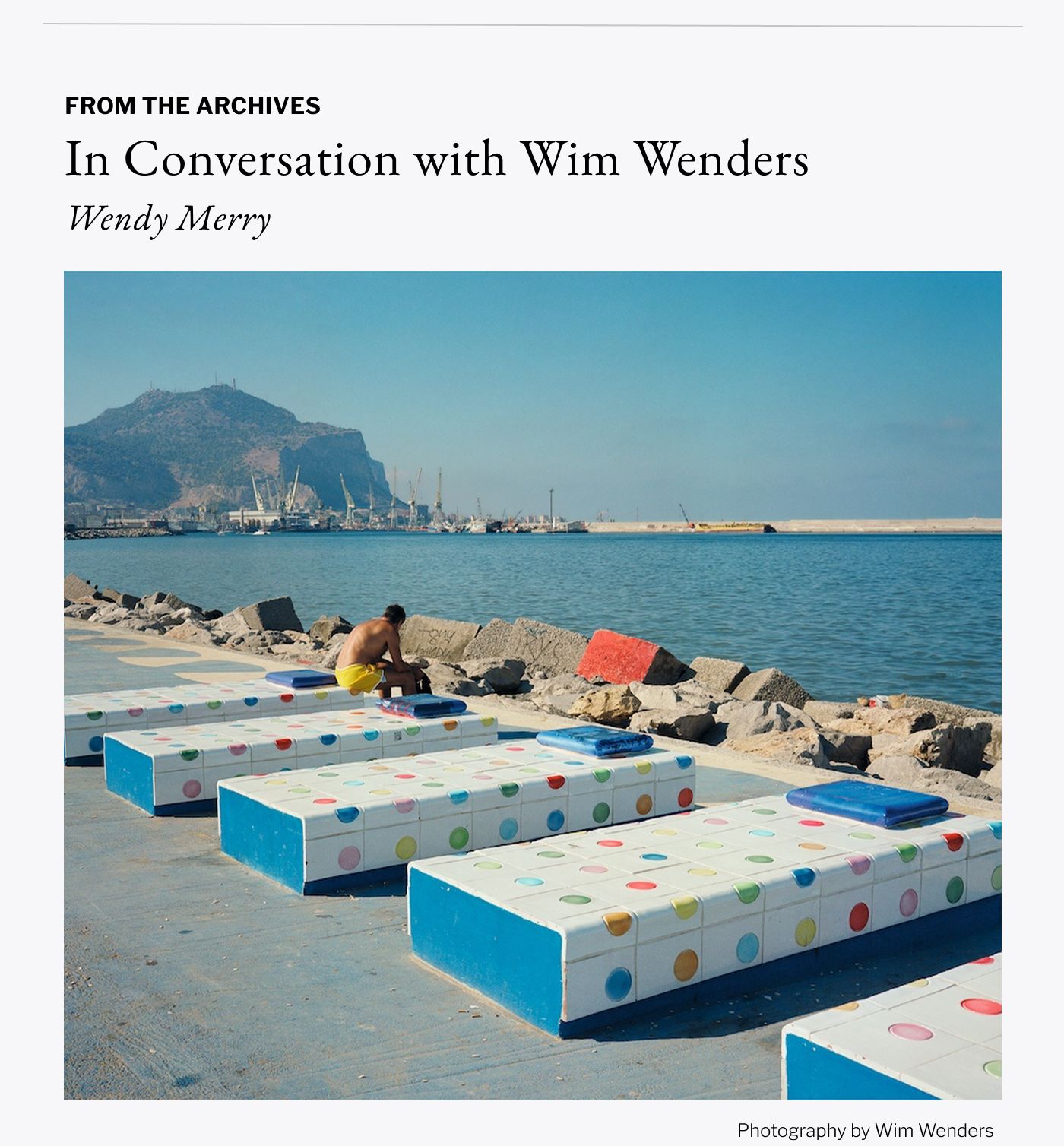
From the Archives revisits relevant cultural conversations from Dossier’s first life. In this one, acclaimed filmmaker Wim Wenders, who is less celebrated for but equally accomplished at photography, discusses the differences between the mediums and reflects on how two people can capture entirely different pictures of the same place. Collectively, his words begin to contextualize the wildly diverse photographic styles and subjects currently on display at Les Rencontres de la photographie d'Arles — how it’s possible that their artists frame the world we all share so differently. They also bring to mind the psychological “Tiger in the Jungle” study often cited by cultural expert and advocate Sir Ken Robinson. When asked to look at an image of a tiger in a jungle and state what they saw, Westerns specified the tiger; Easterners named the jungle, a discrepancy that further illustrates the paramount power of personal perspective. –Erin Dixon Originally published in Dossier Journal No. 9, 2012. Ernst Wilhelm “Wim” Wenders is a throwback protagonist of a John Ford Western. He’s most comfortable as a sojourner: part renegade, part detective — always a lensed weapon at his chest. It’s not important to trace a line around Wenders’ creative trajectory; he hopes not to. As a director, he has derived cultish followings for the likes of Paris, Texas and Wings of Desire. He has conceived videos for U2, Stay (Faraway, So Close!), and Talking Heads. His vivid documentaries include Buena Vista Social Club and last year’s resplendent Pina, both of which the Academy of Motion Picture Arts and Sciences rewarded with nominations, the latter which he shot entirely in 3D.
Wenders is a visual prodigy born of international and generational influences. An adolescent in Allied-occupied Germany, he was among the new consciousness rejecting dense expressionism and the Godardian auteur. The result was bold, open, and personal, often steeped in anglophilic and American loner iconography: neo-noir, Monument Valley, and Dennis Hopper’s ghost suburbs. His first visit to the United States was notoriously to Butte, Montana, the bosom of Dashiell Hammett’s detective novels. He has collaborated with Francis Ford Coppola and Sam Shepard. His first film, part of the Road Movie Trilogy, was dedicated to The Kinks.
Cinematography, however, was Wenders’ second medium. He began taking photos at 7 years old and by 12 had his own darkroom. Today, he shoots alone, with a Fuji Panoramic camera. He is a filmmaker known for devastating tracking shots, whose courtship with cameras blossomed during pilgrimages to cinematic locations. The results are often haunting: alien memorials possessing the palpable stillness of film sets before or after life has moved through them. His 2012 exhibition, Places, Strange and Quiet, is a caravan of ephemeral scenes spanning 30 years of travel between the United States, Japan, and Sicily.
It is pointed that landscape photography currently consumes him, that the relinquishment of authorship has led to the complete removal of self in the spirit of a more interesting truth. “With photography,” Wenders explains, “I am not the one telling the story; I am only listening.” He also reveals that each photo captures its own “merciless” narrative, the “ingredient that each photograph will survive both the [photographer] and the object of the picture.” Though he insists he is not nostalgic, Wenders’ works often convey the bittersweet ambivalence of an expatriate, wherever they take place. He allows gentle intention to emerge from spaces; speaking to the complexities of open roads, broken towns, and abandoned posts. Wendy Merry: What is the greatest difference between creating static photography and cinema? Do you experience photographs as cinematic? Wim Wenders: Yes, sometimes, insofar as any single image can become the starting point of an avalanche. It can release a story that might just tear you away. Not every — or any — photograph or painting does that, but some do if you let them, which totally contradicts the notion of a “static image,” of course. Photographs are only static if you, as the viewer, remain in a static mode. If you’re a bit more adventurously inclined, you manage to decipher the story that might have led to that moment — and the next one that could happen in a second. You can start to picture the eye that took the photograph and what attracted that person to stop and release the shutter and, thereby, be responsible for your watching and listening adventure.
To come to the beginning of your question: In cinema, you show up with a story. You arrive at the place and make it become the “background” for what you are importing there. In which case, the places actually “freeze” and do become static. Their own stories don’t matter any more. They are now in the service of the filmmaker’s story. A strange and sometimes funny reversal happens here: Places are definitely less static in photography than in movies. WM: Your films draw from many mediums — why do you believe cinema is still an important form? Read More |
|
By now, you’ve likely seen the World Cup trophy logo a few times this summer. The FIFA tournament’s symbolic prize is a fluid sculpture designed by Italian artist Silvio Gazzaniga in 1974, cast in an 18-karat gold, with an almost liquid, molten effect depicting two human figures lifting the globe, two layers of malachite stone at the base.
This is the second iteration of the competition’s trophy: the first debuted in 1930, made by French sculptor Abel Lafleur, depicting the Greek goddess of victory, Nike, holding a chalice. It was stolen, then recovered during the 1966 World Cup in England. In 1983, the original Gazzaniga-designed trophy was also stolen (and never recovered) from the Brazilian Football Confederation in Rio de Janeiro.
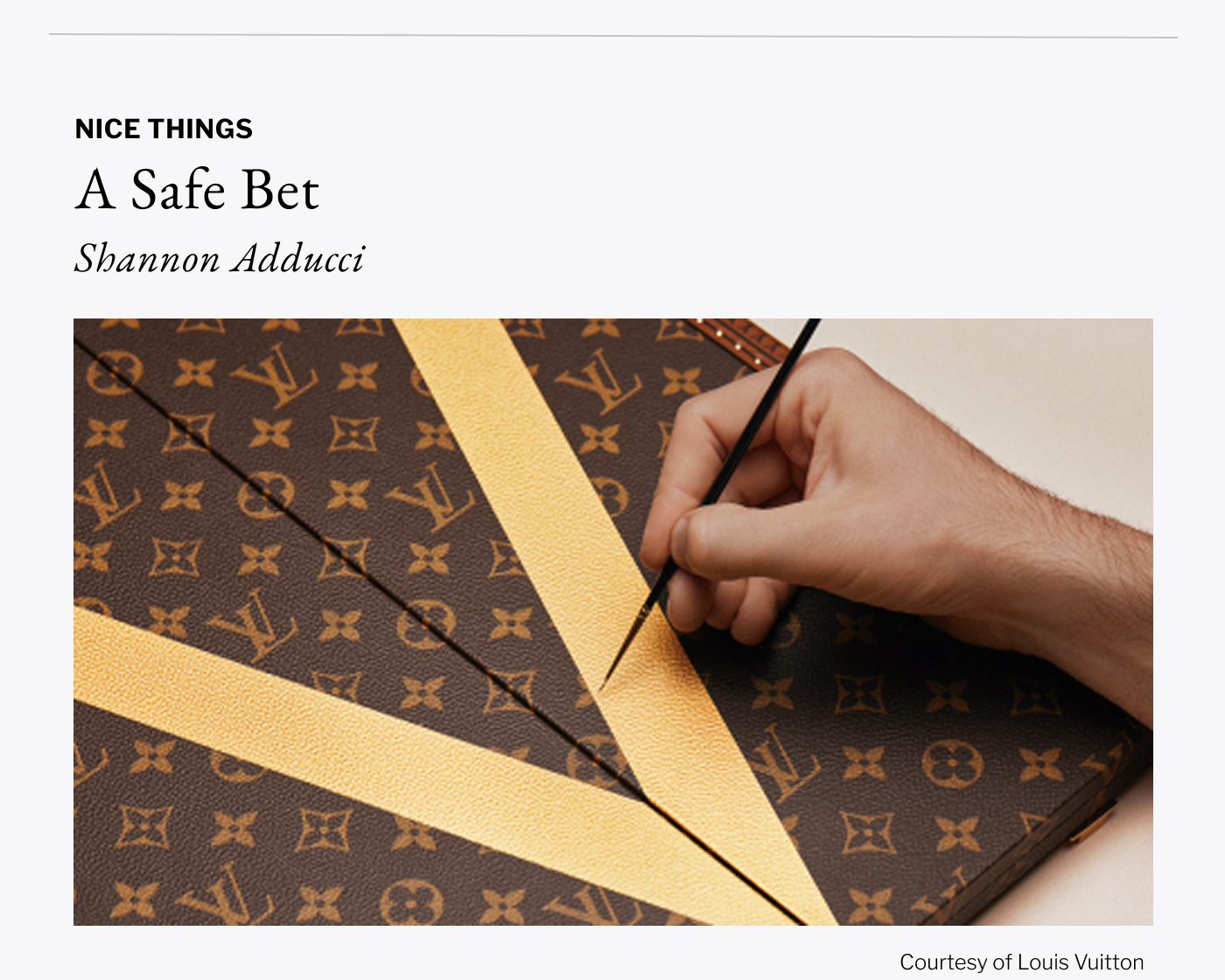
Given that checkered history, it’s apt that Louis Vuitton stepped in to offer its expertise in luggage for a more secure transport. Since 2010, the heritage French luxury brand has made custom trophy trunks for the prize, and when the 2026 World Cup final match concludes later today, both trophy and trunk will be guided onto the field.
Crafted by Vuitton’s artisans at the maison’s historic workshops in Asnières-sur-Seine, France, the trunk was made to perfectly encapsulate the 14.49-inch sculpture. It’s covered in the iconic LV monogram, with two front panels featuring a hand-painted, golden “V,” for victory and Vuitton. There are also gold-plated brass corner protectors, a FIFA-incorporated logo in the lid, and (notably) a lock.
To further celebrate the moment, Vuitton is releasing three limited-edition World Cup-inspired trunks, which are likewise hand-painted: a Coffret 8 Montres and Cotteville 16 Montres, both for watches; and a full-sized Malle Courrier Lozine 110. |
|
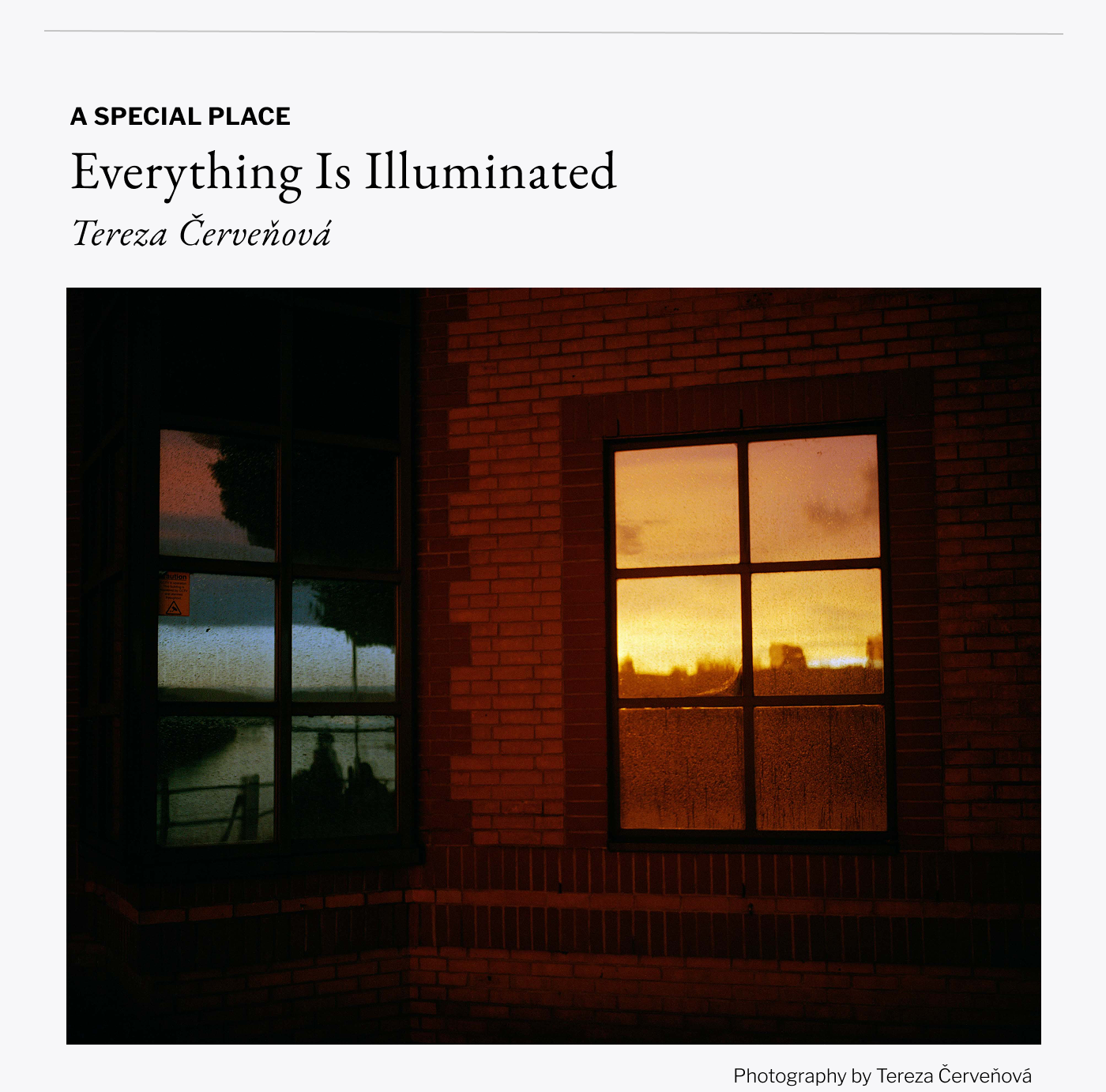
I walked past this abandoned building in the Hammersmith district, on the banks of the River Thames countless times during the decade I lived in West London, but I never paid much attention to it.
On this particular day in October 2022, a heavy storm rolled through, stopping just as the sun began to set. The dark skies started to tear apart, revealing one of the most incredible skyscapes I’d ever seen. I lived about a 7-minute walk from the river, so when I saw the theatre of light unfolding in the sky, I grabbed my camera and a roll of film and ran there. The glow was electric, and the heavens seemed to extend all around me, reflected in puddles and rain-slicked windows, shimmering on the leaves of the autumn trees.
When I arrived on the riverbank, the landscape was flooded with pinks, oranges, and reds. Yet this image came from doing that unassuming, often forgettable thing that every photographer should remember: Look behind you. Limited-edition prints are available upon request. |
|
London Rising. This weekend, one of the British capital’s premier dining rooms arrives in the Swiss Alps. For two weeks only (July 18 to 31), the renowned Mayfair members’ club Harry's Bar takes up residence at The Alpina Gstaad, serving its signature cocktails and simply incredible Italian classics — rucola e finocchio salad, trofie alla Genovese pasta, tiramisu — in the crisp mountain air, wrapped in the hotel’s soaring views of patchwork green valleys and appetite-inducing peaks. It’s Europe's summer best elevated to a new place. –Anna Kaplan Saving Face. After I passed the age of 50, my skincare regimen suddenly felt a lot more urgent. As a child of the ’80s, for whom sunscreen was always an afterthought, I am now in a constant state of damage control. And while I’ve tried nearly every remedy available, my first line of offense remains La Prairie’s Skin Caviar Essence-in-Lotion. Described as a “pre-serum essence,” the product not only smells incredible but also sets the stage for your dermis to better absorb whatever follows. It is the one product I never go without. –T. Cole Rachel Uniform Pride. I’m not a rabid sports enthusiast, but the thrilling ups and downs of this World Cup have awakened the internal fan in me that I, heretofore, never knew existed — and with it, the desire for a keepsake to recall my conversion and the tournament’s wild ride. The Rosewood Jersey fits the bill well, given that I shamelessly switch teams depending upon the day or match. Created in collaboration with artist and designer Christian Jeffery, it pairs British racing-green stripes with a hand-painted floral crest featuring details inspired by global Rosewood destinations — a perfect emblem of global connection. –Lisa Lok |
|
54 Franklin St #2R NY, NY 10013. ©2026 Dossier Projects, LLC.
|
|
|
|
|