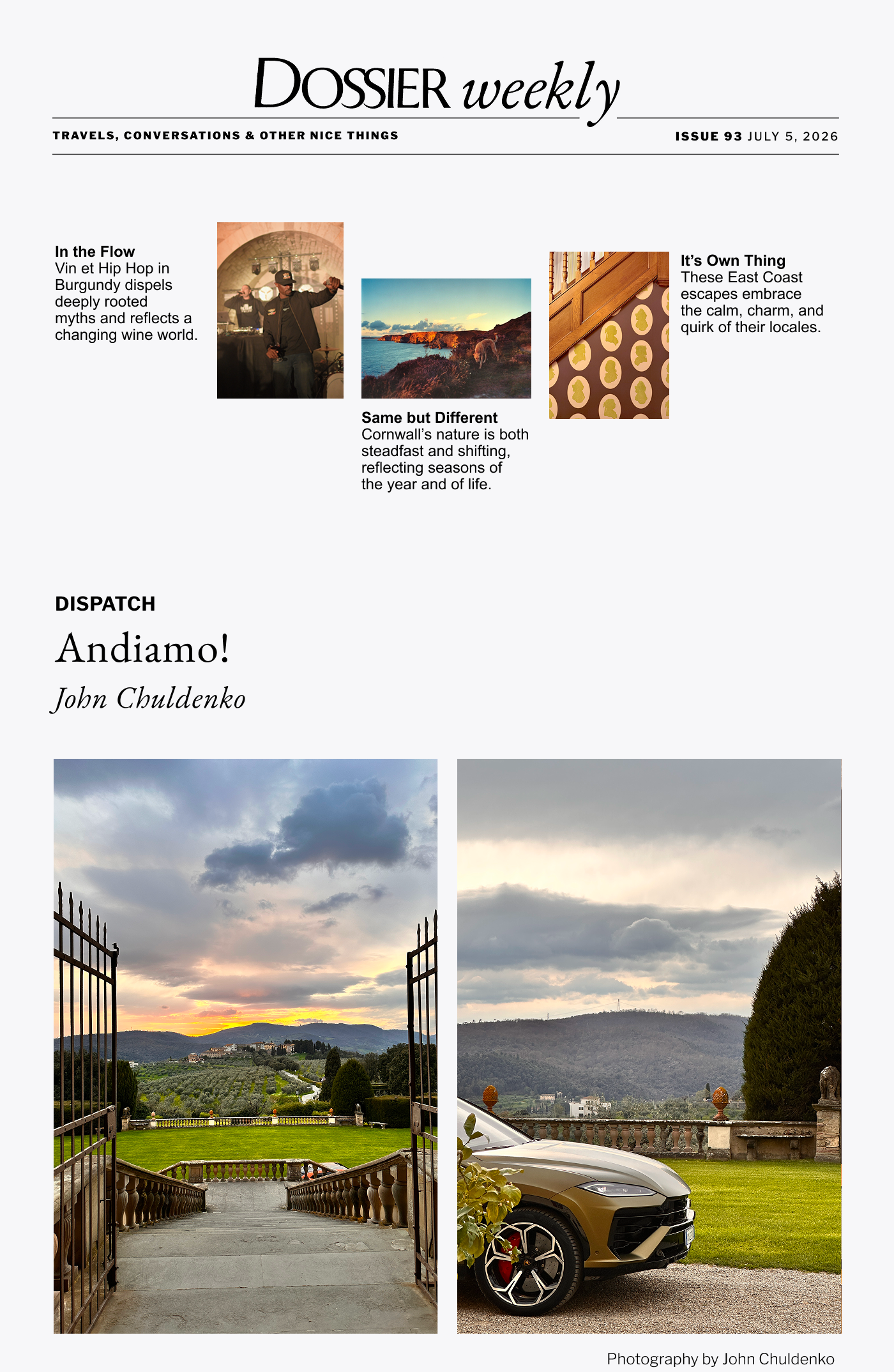
I was 12 years old, skateboarding home on a summer night, when I saw my first Lamborghini. The LM002, Lamborghini’s ’80s SUV, was an anomaly: angular, architectural, and imposing, a rolling embodiment of Italian brutalism — not to mention exceedingly rare, with only 301 examples produced. I remember that moment with vivid clarity. So, when Lamborghini asked me to join them in Bologna to trial the Urus SE, the Italian manufacturer’s super-SUV and first plug-in hybrid electric vehicle version, I was curious. When they said I’d also have an opportunity to drive an LM002, my inner 12-year-old replied with an exuberant burst of childhood wish fulfillment.
Bologna's Grand Hotel Majestic già Baglioni feels like the pride of the city. Draped in rich Italian fabrics and dripping with gilded details, its lounge, Café Marinetti, buzzes with bartenders joyfully serving Negroni Spagliatos under frescoes, alongside photos of the luminaries who have graced the space. Just below lies a secret: the remnants of the Flaminia Trail, an ancient Roman road built in 187 B.C. Thankfully, the roads I am set to drive are in better shape.
I pick up my bright orange Urus SE just outside the city and aim it south toward Florence, chasing both a Lamborghini test driver and the remaining days of colder weather. The wind whips through trees still dormant from winter and past the gorgeous views around Lago di Bilancino. The Urus SE is an assertive blend of Italian sharpness and V-8 power with the added oomph of an electric motor and rear-wheel steering that allows for just enough slide to feel exhilarating.
But an Italian drive, no matter how exciting, isn't complete without an espresso break. Since 1890, Ristorante Passo Della Futa has served travelers near the peak of the Futa Pass, including handsome Italian cyclists and race-car drivers whose vintage photos line the walls of the small, characterful restaurant. At its bar, I befriend a man named Claudio Poletti, whose family has owned the outpost for six generations. His eyes light up as he recounts childhood memories of test drivers stopping in for an espresso. (Legendary test driver and engineer Bob Wallace visited often while developing Lamborghini's legendary Countach.)
Poletti pulls me into the kitchen to show me his chef cooking over wood logs in the restaurant’s original iron hearth. Next, he ushers me into the dining room to share old family photos. We both get emotional as he points out his great-grandmother holding him as a baby, near a statue of the Virgin Mary that still rests in the same location, on the fireplace. I could stay for another hour, but the Urus is waiting outside, with Florence plugged into its navigation.
At my final destination — the impressive Tenuta di Artimino, a Medici residence known as “the Villa of a Hundred Chimneys”— the LM002 idles in the courtyard. Painted an intimidating black, it rumbles with intensity and smells of exhaust and fuel. Vincenzo, chief mechanic for Lamborghini’s heritage vehicles, greets me in the car’s cramped cockpit, pointing to two unmarked levers beside my seat, then at the leather-trimmed dogleg shifter mounted high on the console. He waves his hands to mimic clutch and throttle pedals, then mutters, “OK. Andiamo!” The LM002’s heavy, mechanical clutch has the resistance of gym equipment, and my left calf starts to quiver before sending the V-8 screaming through the landscape. Upon our return, Vincenzo turns to me and remarks, “Super.” It is all the validation I require to justify a second glass of post-dinner limoncello.
As evidenced by the hidden Flaminia Trail and Poletti's family restaurant, sometimes objects contain remnants of their pasts. The only physical similarities between the Urus SE and the LM002 is that they both have wheels and back seats. But, for me, there’s also an emotional link, reawakening the excitement of that 12-year-old boy and tying me to Lamborghini’s own legacy of connecting people via these storied roads and via (new and old) memories. |
|
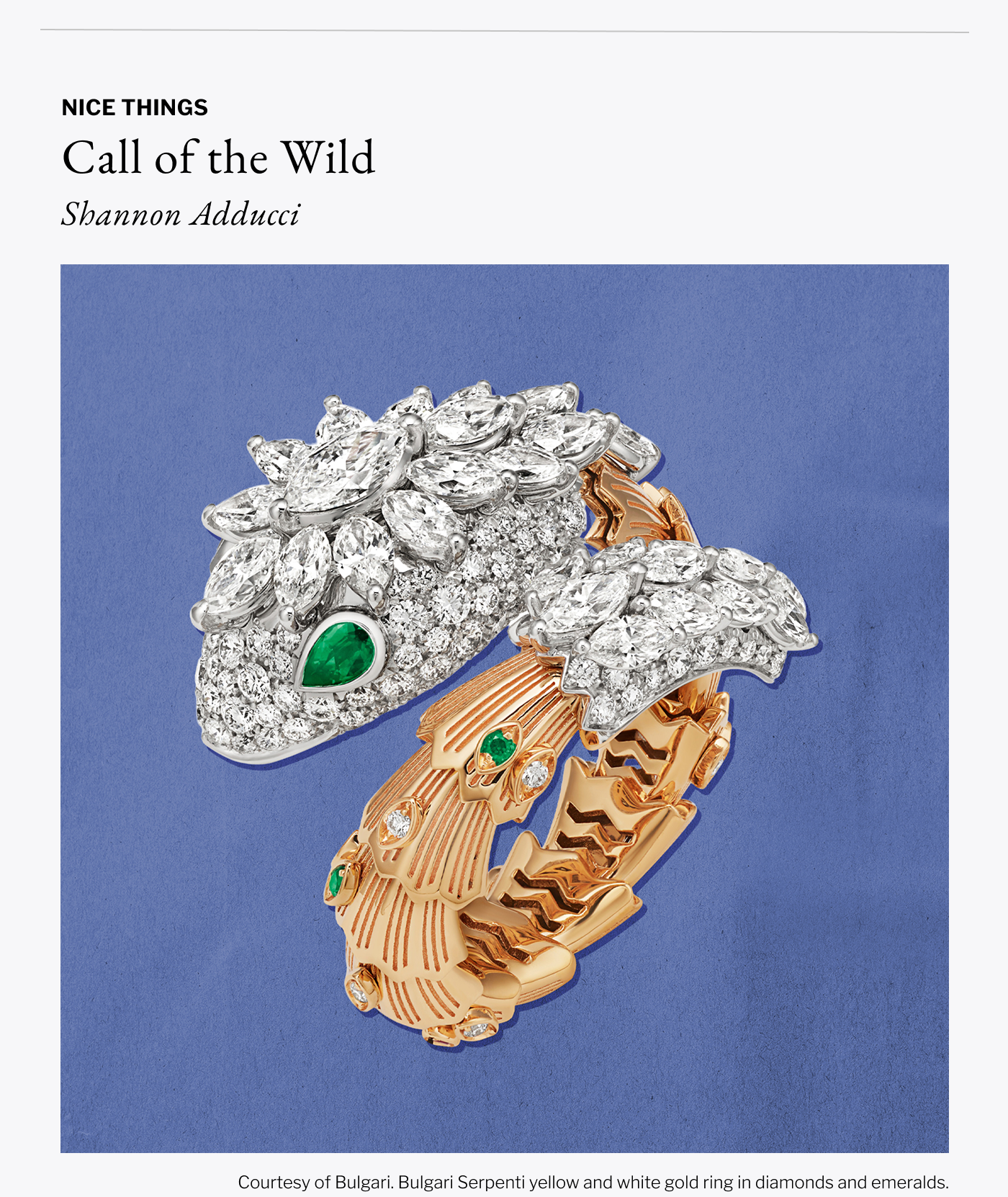
When Oscar Wilde proclaimed “Life imitates art far more than art imitates life,” he failed to take into account the great tradition of animal-inspired jewelry. Whimsical, cartoonish, refined, or all-out fantastical, the distinct personalities of untamed creations put a fine point on artistry. Take, for example, Bulgari’s famous Serpenti. When the jeweler created its prototype of the motif in 1948, it looked back on the Bulgari family’s Greek and Roman heritage, where the snake held ancient symbolism as a totem of healing and protection. It was an earnest interpretation that fit the moment in history, but the brand’s mythical serpent has evolved in its many iterations over the years. This version, as a yellow and white gold ring, is compact and powerful, its placement of differently sized and shaped diamonds adding glamour to the snake’s enigmatic, emerald-set eyes. |
|
Leaving the skylines of New York City and Boston behind, these of-their-place escapes replace city bustle with the calm, charm, and quirk of their decidedly non-urban locales. |
|
It’s possible that I’ve driven by the Inn at Hastings Park in Lexington, Massachusetts, a hundred times without noticing it — that’s how seamlessly it blends into the historic town’s landscape. As a child growing up in neighboring Lincoln, I viewed Lexington’s restaurants, shops, and mini movie theater as escapes from my rural surroundings (notably, the town also housed the first Starbucks in the area).
Returning to stay at the Inn at Hastings Park turned this initial attraction on its head: I was coming from New York City and, thereby, conversely captivated by the community’s small-town character, pristine scenery, preserved architecture, and tranquility. The property is composed of three historic buildings, and entering the Main House, built in 1888, feels like walking into a home, with check-in nestled in a sitting room.
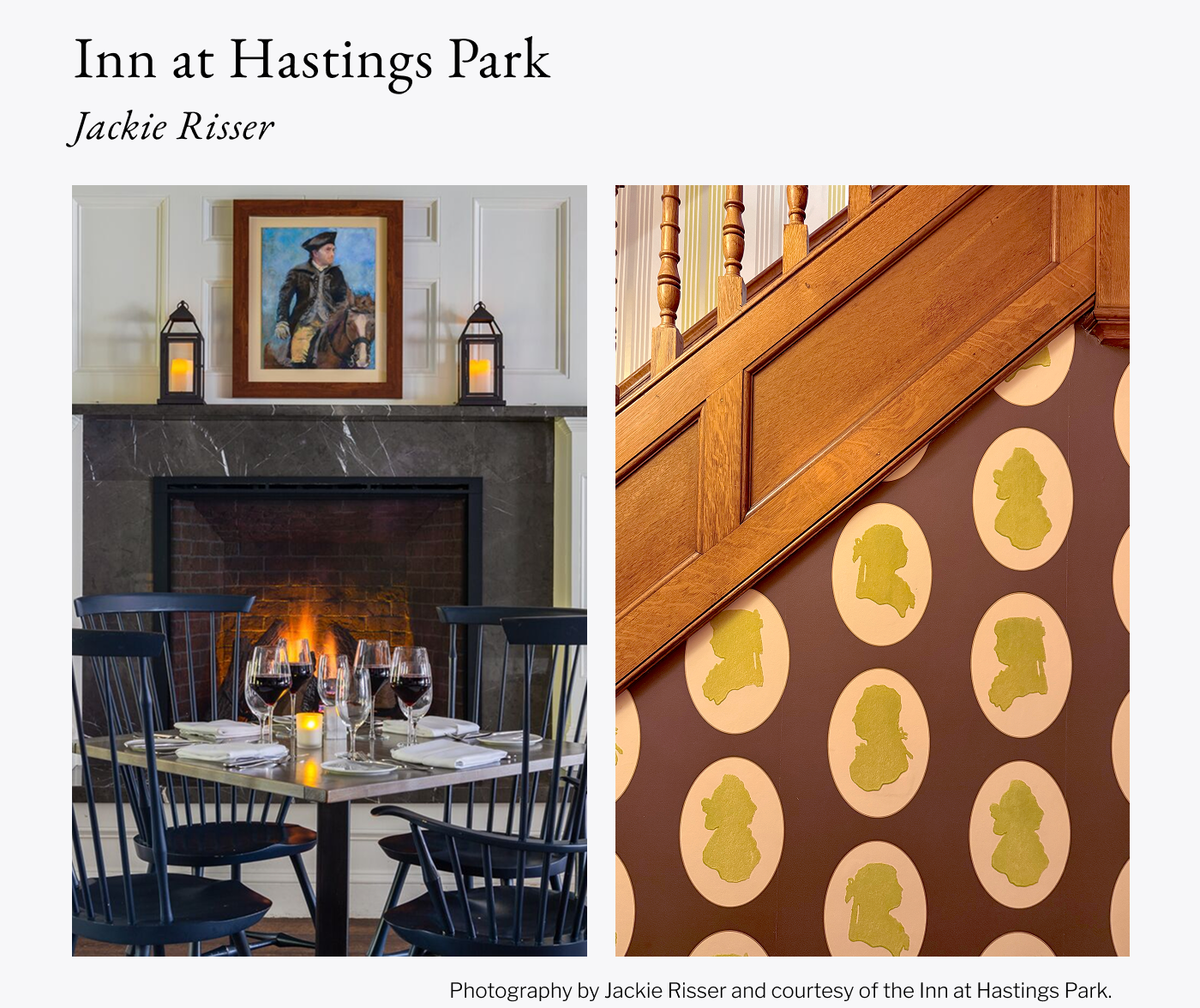
The hotel’s colonial architecture, outfitted with a dramatic wraparound porch, gives way to designer Robin Gannon’s clever, whimsical interiors, which weave colorful modern details together with New England elements that nod to the property’s roots. Think bold botanical wallpaper that frames a heritage portrait hanging above an oversized, tufted bedframe. Nothing matches, yet everything works together, much like a family home shaped over time. The best view from the hotel … I stayed in a corner room of the Main House, which served up 270-degree views of tree-lined Massachusetts Avenue and Hastings Park. New England’s landscape is breathtaking year-round, from the verdant trees in spring and summer to the vibrant autumnal leaves in fall to snow-covered branches in winter. The hotel’s best amenity … The Inn’s owner, Trisha Pérez Kennealy, is a graduate of Le Cordon Bleu London and leads a range of cooking classes. Its restaurant, Town Meeting Bistro, offers an excellent seasonal menu and sources ingredients from local farms, including Codman Community Farms in my hometown. Oysters and seafood are also sourced from nearby institutions, such as Captain Marden’s Seafood and Wulf’s Fish. My risotto was sinfully creamy and topped with scallops. The bouillabaisse was also divine, featuring scallops, clams, mussels, and squid, with crostini to soak up its rich, earthy broth. Aside from the cuisine, a selection of the Inn’s rooms house fully functioning fireplaces. A cocktail you’d recommend to a friend … The Umami Gold Rush cocktail is an elegant, complex twist on a classic Old-Fashioned, featuring Suntory whisky mixed with sake, Dubonnet, Lillet Blanc, lemon, walnut bitters, honey, and a splash of soda water. Something not to miss … Lexington sits in Revolutionary War territory and is considered the “Birthplace of American Liberty.” The first shots of the American Revolution were shot in the Battle Green, just a short walk from the Inn. Paul Revere also galloped through town (specifically past the Inn’s future grounds) on his famous Midnight Ride. A local tip or discovery … Every year on the third Monday of April, Massachusetts celebrates Patriot’s Day to commemorate the Battles of Lexington and Concord, the first conflicts of the Revolutionary War. Lexington is home to one of the state’s major parades, featuring fife and drum corps, marching bands, floats, and more. It’s a major moment in American history filtered through the lens of small-town New England charm and quirk. A song that embodies the property … Because this stay felt straight out of a Gilmore Girls episode, Carole King’s “Where You Lead” was echoing in my head, as was “Grandfather’s Clock,” my favorite piece to play with the Lincoln Minute Men. |
|
The Hamptons have always felt like a proposition best enjoyed at the edges of the season — I'd visited before at peak summer and found it beautiful but relentless. This year, I came deliberately early, before the full frenzy of New Yorkers descended, and the difference was significant. Not only could I find parking and snag a nice restaurant reservation (rarities during high season), the town felt sleepy in the best possible way. That said, The Roundtree Amagansett’s covert location ensures a sanctuary-like environment any time of year, August included.
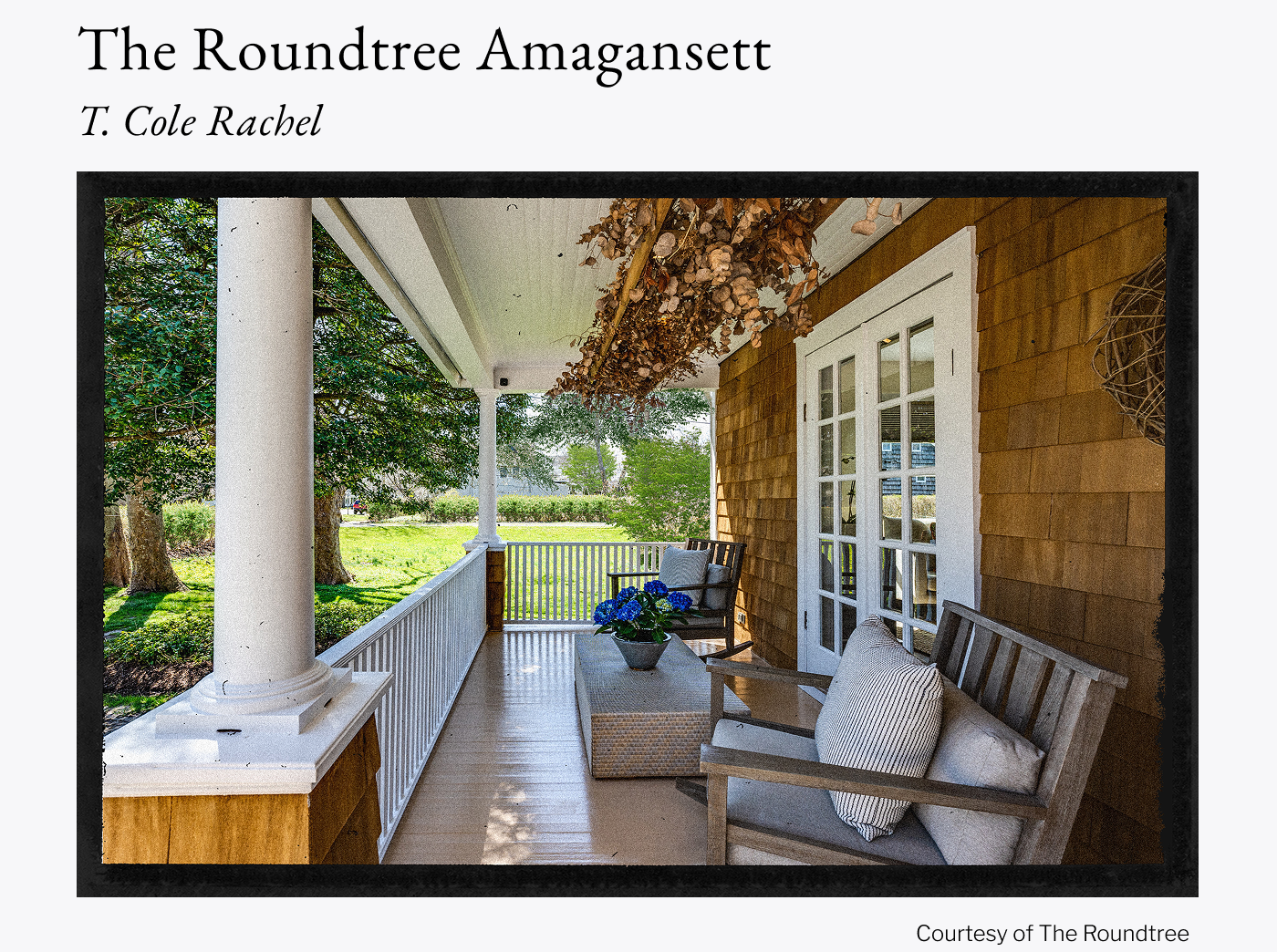
Tucked just off Main Street, the property is unassuming to the point of being almost secretive; it feels less like a hotel and more like stumbling into a very chic, private enclave of renovated cottages clustered around a wide, generous lawn and a 100-year-old restored barn. The effect is quaint and quirky, with the feeling of being safely sequestered in a tiny village — even though a very short stroll could bring you to a luxury home goods store or to cross paths with an Olsen twin. The best view from the hotel … The Great Lawn, which stretches out behind the cottages, is best in the early morning before the day gets going, when the property feels briefly, entirely yours. A dish you'd recommend to a friend … The flame-grilled jumbo prawns at Nourish by The Roundtree — served with chickpea carrot purée, Balsam Farm sweet corn, and toasted almonds — is the kind of dish that announces the restaurant’s philosophy: East End ingredients refracted through chef Dewa Wijaya's culinary background. Born in Bali and trained in classical French technique, Wijaya has built a menu that feels specific to this place and this moment, and The Roundtree guests get priority reservations. The most unique thing about the property … The Beach House, a three-bedroom cottage located about five minutes from the main hotel, built in the 1960s by East Hampton architect Alfred Scheffer for playwright Neil Simon. Flooded with light and quietly stunning, it's a piece of mid-century design hiding in plain sight among the dunes, available to book via the hotel. Something not to miss … On our last night at the hotel, we dined at the Hamptons outpost of Il Buco al Mare, which also provides room service dining to guests at The Roundtree. (It’s located about 20 feet away from the hotel.) After having my mind blown by a perfect plate of lemony cacio e pepe and incredible vanilla panna cotta, we stumbled back to our room and promptly passed out. The next day, we stopped by the Il Buco Vita home goods shop to pick up a piece of the beautiful Puglian ceramic tableware we’d dined off the night before. A local tip … Stop by Amber Waves, just steps from the hotel. Part working farm, part market and café, it’s the kind of find that makes a destination feel local rather than resort-ified, reframing what a Hamptons morning can look like. I picked up a bag of the farm's signature granola to take home. Also be sure to drive out to Montauk before you leave. Even at the start of high season, its beach has a spaciousness and quiet to it that the more trafficked parts of the Hamptons rarely offer — plus the drive is gorgeous. Feeling like characters from Woody Allen’s Interiors (a film in which Diane Keaton hangs out at a beachfront home in Long Island, wears spectacular turtlenecks, and stares pensively at the ocean), we strolled the mostly empty beaches and took a moment to watch the waves roll in. The most important thing to pack for your stay ... Comfortable walking shoes and a loose itinerary. The whole appeal of Amagansett is being able to move through it slowly, and the best discoveries tend to happen when you're not in a hurry. A song that embodies the property ... "Wonder Years" by Real Estate — unhurried, a little wistful, and the perfect amount of mellow jingle-jangle to soundtrack a day spent beaching or just walking around in the sunshine. |
|
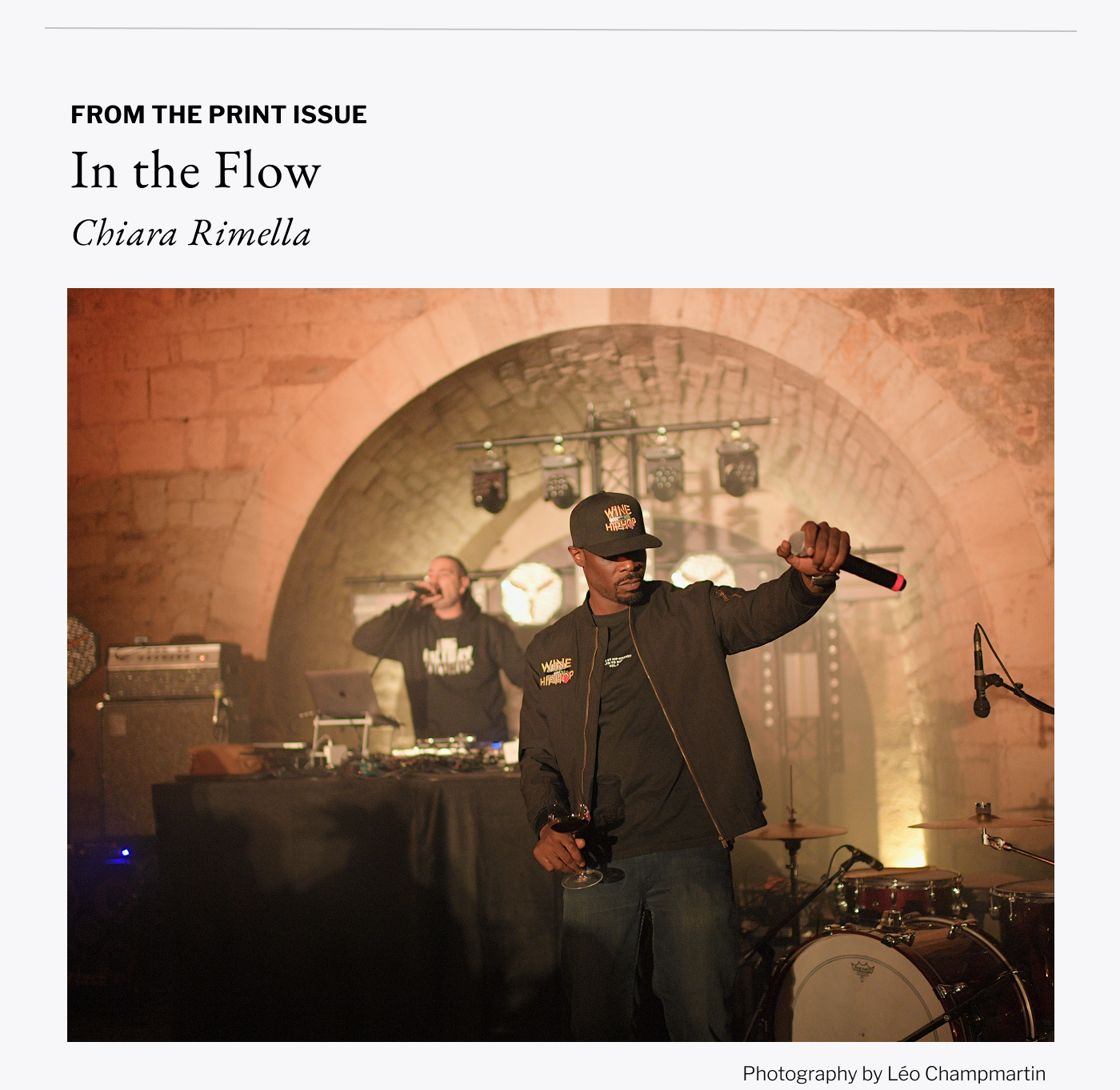
The sunset’s rosy halo envelops neat rows of vines around the Clos de Vougeot as we make our way into a sand-colored chateau. This 16th-century castle — standing on a vineyard originally built by 12th-century monks — sits in the heart of Burgundy, surrounded by plots producing some of France’s most hallowed reds. Tonight, though, the beats emerging from the amps in the stately courtyard sound more mixtape than Gregorian chant, and the stream of people filing through the entrance sports hood-ies and baseball hats. The moment they step through the door, they’re handed dainty stemware.
“Hello, Burgundy. What’s up?” says Jermaine Stone in his all-black outfit, bouncing around the small stage, a platform sitting underneath the building’s steep, fairy tale-like roof. “Let’s hear it for the winemakers in the building. Are y’all drinking some terroir-driven shit tonight?” Stone — a wine consultant and entrepreneur known as the “Wolf of Wine” in his native New York City — has traveled to this rural region to be the MC of tonight’s Vin et Hip Hop event, aptly named for combining wine tasting with hip-hop performances. It’s a disciplinary intersection Stone has long been exploring on his podcast Wine and Hip Hop, and he is proudly wearing his show’s merch tonight.
In principle, tonight’s festivities aren’t so different from any other occasion bringing together music and drink, and yet everyone who is here knows that there’s a deeper layer of meaning to this pairing. According to popular song lyrics of the hip-hop lexicon, a rapper’s drink of choice might be Hennessy — occasionally gin and juice. Alizé, Moët, Dom Pérignon, and Cristal also got some airtime. The sublime pinot noirs made in the domaines around Chambolle-Musigny, Morey-Saint-Denis, and Vosne-Romanée weren’t name-checked until DJ Khaled’s “Top Off,” in which Jay-Z recites “Dujac by the mag — that’s how we do wine.”
Jeremy Seysses knows the lyric well. “I think it’s at around minute 1.27?” he posits, when we meet earlier in the afternoon at the winery he leads, the Domaine Dujac, which produces said magnums. While this historical maker’s bottles were already well-respected in the industry, the mention made them even more sought after. It also planted the seed for a new idea: Why not organize an event combining these two worlds? Read the full feature and more close takes on a wide world in our Spring/Summer 2026 print issue. Order now. |
|
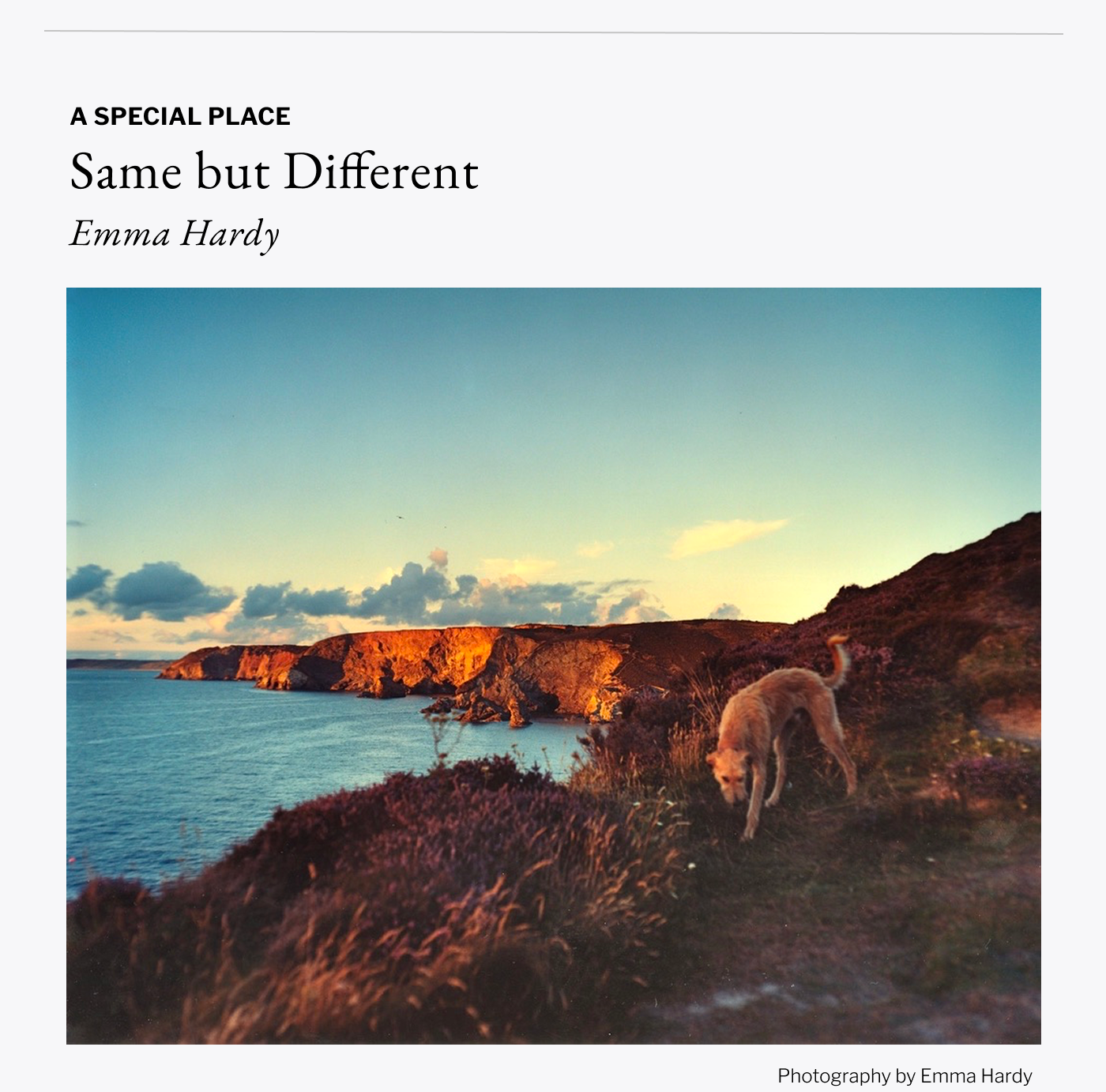
Cornwall is the wild outstretched foot of Britain. Its pointed toes stir the Celtic Sea. It’s a land of myth and legend and strong magic, with tremendous cliffs and brawny moors, sparkling coves and sweeping beaches.
I love it here. I love wind-raked walks along the cliffs, looking down into whipping waters or the sleek, lazy sea. Some days it’s a troubled steel grey, others a vivifying turquoise. Sometimes an ethereal mist stretches to a blurred horizon, a sailboat gliding across it like a spectre. The water is clean and sharp and makes me gasp. The cold salt rinses away tension and soothes grief. The wind blows my breath back down, and I feel thrillingly alive here — perhaps more than anywhere.
Cornwall’s dark and roiling winter beauty gives way to flower-filled springs and summers, steep green hills dotted with sheep and lambs. Rivers and creeks serpentine through the woods. Foxgloves line narrow, steep-banked, high-hedged lanes. Trees are bent by the wind into strange arches. And those glittering bays …They lure me down onto sand, onto pebbles, into creeks flanked by rocks dotted with bright-gold lichen.
Find a boat. Go fishing for mackerel, cook them on a beach, and eat them salty — off flat stones, with potatoes boiled in seawater.
I first came here as a child, beachcombing for sea glass and tiny cowrie shells year on year, doing headstands, spotting seals, devouring fresh crab sandwiches. Then I returned year after year with my own children. Their joyous memories are meshed with mine. I will always come here. I adore this land and its seas. They're in my bones, and my bones are glad. |
|
Eye of the Storm. I’ve been plagued by lower-back pain (it’s the QL muscle, I’ve just learned) for more or less a decade. A few weeks ago, this area — along with that spot between the neck and shoulders — felt genuinely on fire. Respite came in the holy form of Natasha, a practitioner at the Aman Spa New York. She not only provided pain relief but also educated me, with patience and grace, on techniques to practice at home. Namely ways to stretch my solid as iron, TMJ-riddled, grinding jaw. Moreover, the spa’s facilities have private rooms for contrast therapies: saunas, cold plunges, and red-light panels. And its wellness quarters are akin to a hermetically sealed bonsai garden, smelling of earthy, botanical, palo santo-adjacent scents, which makes exiting the midtown hotel post-treatment, onto Fifth Avenue, feel downright traumatic. It took every ounce of my restraint not to run back inside. –Sophie Mancini Work Hard, Play Hard. A brand dedicated to American-made essentials with a minimalist bent, Save Khaki United has become my go-to for clothes that feel as good as they look. I have several of its pieces in rotation, but the Poplin Easy Supply Pant has become my summer savior since I’m generally averse to exposing my pallid legs in shorts. These lightweight utility pants are sartorially compatible with almost anything and, more importantly, literally cool — even in the stifling New York City heat. –T. Cole Rachel Call It What You Want. Electropop-duo Sylvan Esso’s recent five-night, sold-out residency at Sid the Cat on the outskirts of Los Angeles ensured I became even more smitten with them. Billed as a live rehearsal of new material, the performance I saw was kinetic and captivating — an endearingly flirtatious bath of bassy thumps, bleeps, and glitches imbued with analog soul, rendered beautifully human thanks to soaring, anthemic melodies and overwhelming positivity. Was it a show? A rehearsal? A preview? Whatever it was, it was phenomenal. –John Chuldenko |
|
54 Franklin St #2R NY, NY 10013. ©2026 Dossier Projects, LLC.
|
|
|
|
|