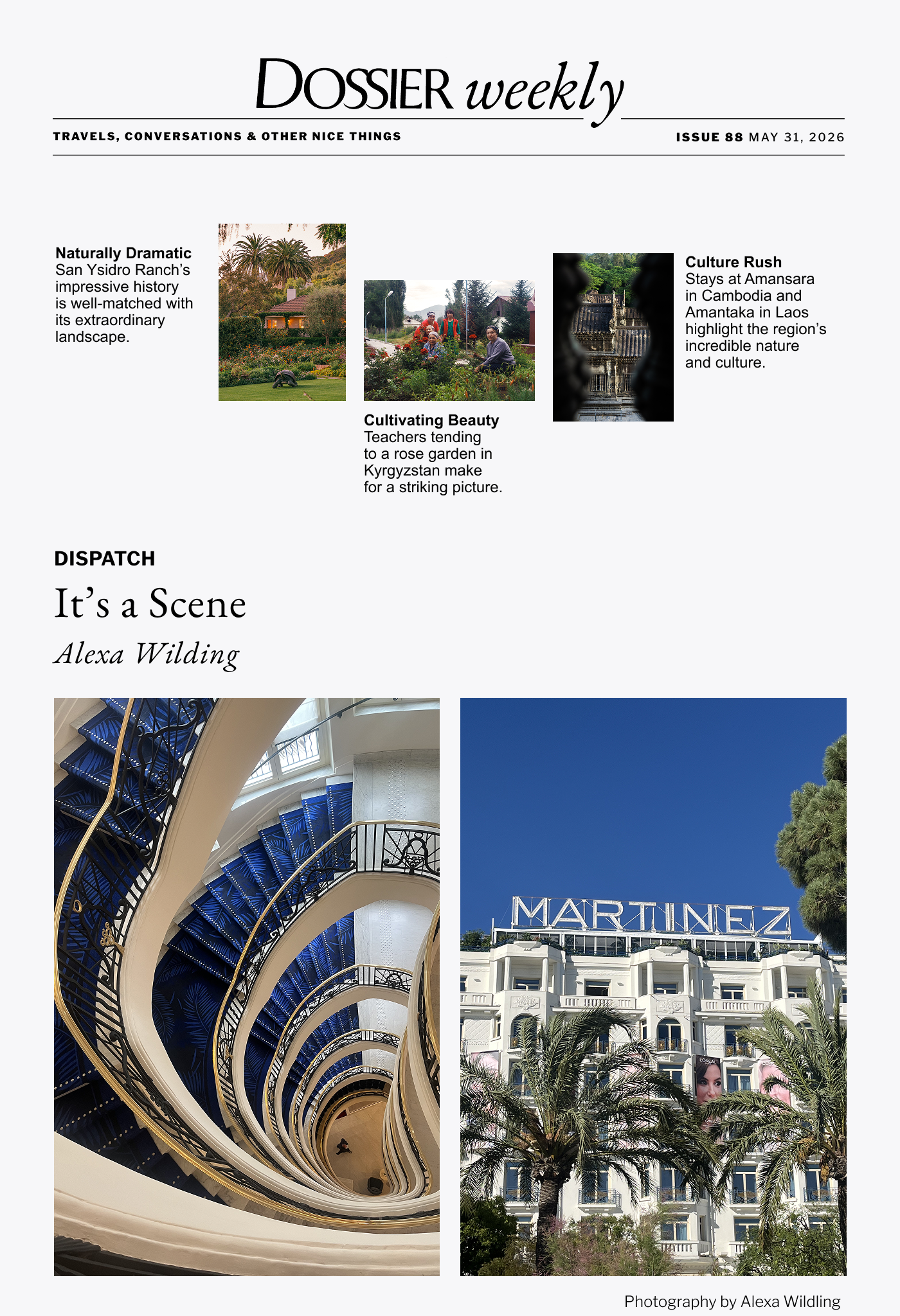
When I was a kid, my fabulous grandmother Violet loved going to the Cannes Film Festival in France every spring with her bon vivant boyfriend, Sydney. I’d help her pack sequined gowns while she and Sydney argued over whether Cannes was pronounced “can” or “con.” The one thing they agreed on was that Cannes was the most glamorous place in the world.
I thought about Violet (who I miss terribly) nonstop during my whirlwind 48-hour stay at the iconic Hôtel Martinez, which was buzzing ahead of last week’s festival. I quickly confirmed that simply arriving at the hotel via its porte cochere, walking through its marble-wrapped lobby — or, even better, down its famous art deco staircase — makes one feel like an Old Hollywood movie star. And I verified that Cannes is, indeed, pronounced “can.”
I also understood why the hotel will be one of the main locations in Season 4 of The White Lotus. Opened in 1929 by Italian hotelier Emmanuel Martinez, whose portrait keeps watch over the reception area, the property exudes main-character energy, with plenty of quirks, such as hilariously tiny elevators. With its elegant, white façade and neon rooftop sign, the Martinez looms above the palm tree-lined La Croisette, with the hotel’s private beach club just across the boulevard, opening onto the glistening Côte d’Azur.
That first day, I lunched at La Plage du Martinez, steps from the beach club’s terracotta-striped sunbeds, which are shaded by umbrellas that pop open like Champagne corks. Seating options at the restaurant include director’s chairs embellished with the names of cinema greats, such as Grace Kelly and Jean Cocteau. It reminded me of a game I used to play with Violet: We’d envision who we’d invite to our imaginary dinner party. From Audrey Hepburn’s chair (the actress was at the top of our list), I nibbled on bright-orange, fried zucchini flowers; octopus carpaccio; and smoked burrata served with artichoke.
Afterwards, I passed the hotel’s award-winning gardens and gold-rimmed pool, en route to a facial at L'Oasis spa du Martinez, the only Carita spa outside of Paris. I relaxed in the azure-tiled hammam and sensory shower, floating back through the hotel’s blue halls, admiring black-and-white photographs from festivals past: Sharon Stone flashing her megawatt smile; Tippi Hedren and Alfred Hitchcock mid-conversation; a sultry and bejeweled Jeanne Moreau.
While Cannes is deeply enmeshed with its rich cinematic history, La Croisette continues to be reimagined. I stayed out way too late at the Palm Beach nightclub, a longtime fixture of the French Riviera, easily identified by its Hispano-Moorish crown. Having once housed Europe’s first summer casino (now Casino Royal Palm), the regal complex currently includes the La Petite Maison Cannes from chef Yiannis Kioroglou and the semi-open-air club Medusa, which made me wish I had worn sequins since my night there ended with a naughty cabaret show.
The next day, I took in a different side of the city, with a boat ride across the crystalline bay to Île Sainte-Marguerite, where King Louis XIV imprisoned the Man with the Iron Mask. Back at the hotel, I was excited to sneak a peek at the Rémi Tessier-designed Martinez Bar — a plush, golden-hued speakeasy with a rare vinyl collection — as well as the Michelin-starred La Palme d'Or, where the jury would soon gather beneath vintage film posters (Taxi Driver, Apocalypse Now) to discuss the festival’s 2026 Sélection Officielle.
On my way down to Le Sud, the hotel’s Roaring ’20s-inspired lobby restaurant, I quickly ducked behind a palm leaf (the symbol of Cannes) as said jury — Demi Moore! Chloé Zhao! — walked by. Later, at dinner, I ordered a dish fittingly called My Grandma's Gratinated Sea Bream, longing to tell Violet everything. Word to the Wise … I spend most overnight flights wide awake, wondering how everyone around me has managed to nod off. A silk eye mask? Extra magnesium? But on my La Compagnie flight from Newark’s Terminal B to Nice, I slept through the night so soundly that I had to be gently roused from my cloudlike cocoon by a chic flight attendant, who delivered a warm croissant shortly thereafter. Flying between Newark, Paris, Nice, and Milan, with private airport lounges, La Compagnie is an exclusively business-class boutique airline. Its planes feature 76 seats (which all lay flat), meals designed by Michelin-starred chefs (my pistachio-crusted beef was incredible), Caudalie products (no need to stop at Duty Free for French pharmacy staples), and ample space for my accouterments (no eye mask necessary). |
|
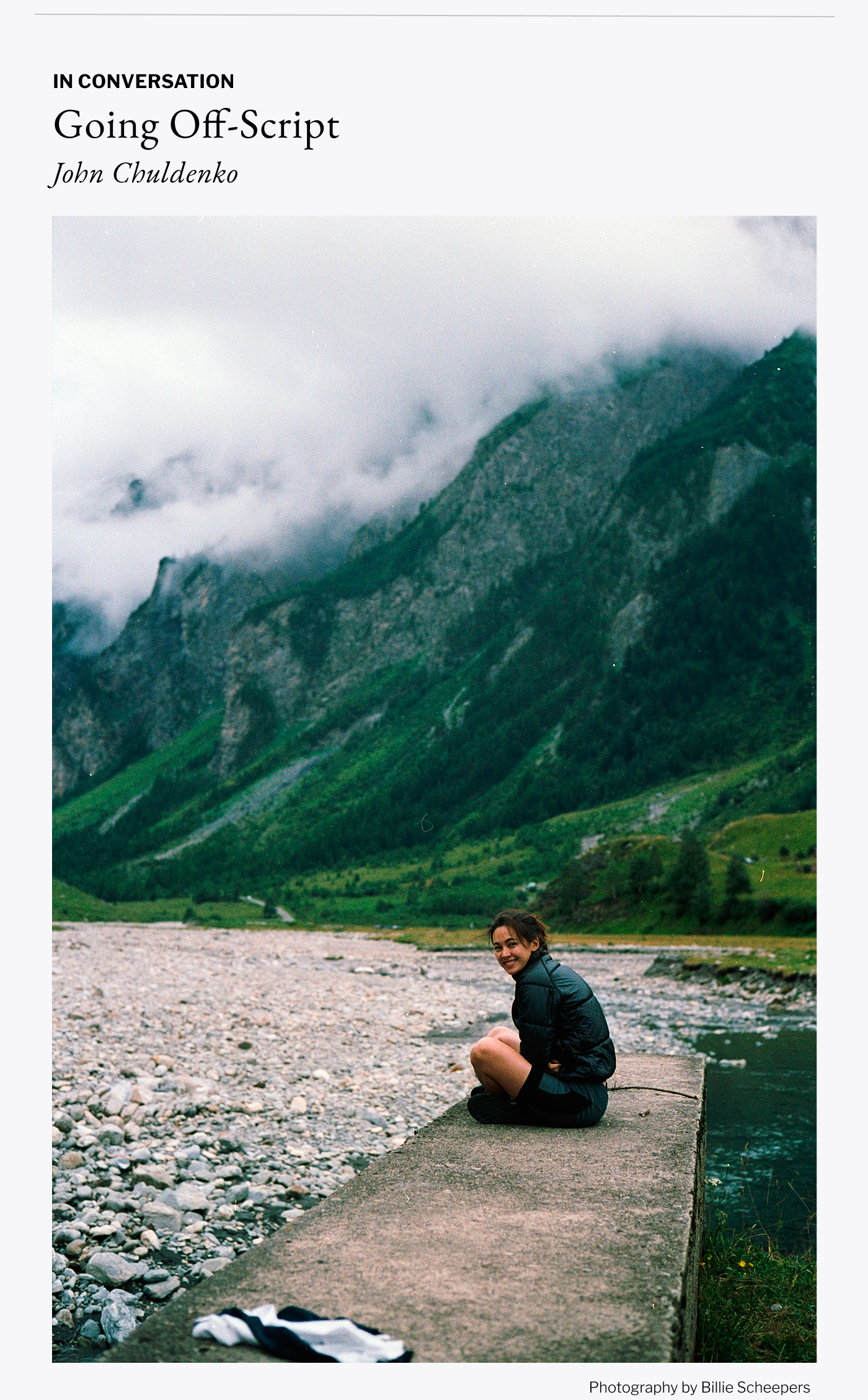
Actor Jessica Henwick has a lot on her plate: a full slate of film and television projects that, thus far this year, include the debut of How to Make a Killing (in which she co-stars alongside Glen Powell) and the forthcoming release of Silo Season 3, which premiers this summer on Apple TV+. But she’s not all work. Life and some good advice have taught Henwick the importance of taking time to recharge — whether that means walking 600 miles (yes, actually), seeking comfort food, or simply taking a breath. John Chuldenko: How would you describe your current emotional state? Jessica Henwick: A little tired, a little overstimulated but still hopeful and excited for this Year of the Horse. I'm hoping it brings some good energy. JC: You star in How to Make a Killing, but you've also got experience behind the camera. How does having directed inform the choices you make as an actor? JH: I’ve felt a huge shift in how I operate on a set. Before, I was all about my character and very loyal to it. Having directed, I now know that only the director knows what's happening in a film. So I see myself less as a protector of a character and more as a vessel for the director's vision. When I started work on How to Make a Killing, I went to John [Patton Ford, the film's director], and I asked: What do you want to say [with] this character? And then I worked from there, asking what my character represents within the story. It's incredible how much my directing experience has rewired my whole approach to the craft. JC: What keeps you inspired, creatively? JH: What inspires me, honestly, is my real life — things that I'm going through and feeling, things that are happening to my friends, to the people around me. When I'm writing and certainly when I'm performing, I'm largely drawing on day-to-day things I've seen or experienced. JC: That sounds like what you've got to tap into as an actor — the authentic emotions. JH: Actually, I was working with Daniel Craig, and he said to me: "When you're acting, you're like a rubber band; you're stretching. If you just go from job to job and keep stretching, you're going to snap. You have to let it go back to its normal shape." I realized I was working too much and I needed to take a break. JC: Have any of your breaks been particularly meaningful to you? JH: I had been working pretty nonstop and said, "I'm going to buy a one-way ticket to France." I didn't know when I'd be back. It was the first time in my life that I had done something just for me. It wasn't to serve a purpose in my career; I just needed to be alone. It was exactly what I needed to reshape my entire life. I ended up on the Camino de Santiago. It was the most formative experience. I finished the hike, but I wasn't satisfied. I just kept going and had one of those life-changing moments. I went as far as I could, until I reached the water. There was nowhere else to hike, and I dropped to my knees. I had done 600 miles totally disconnected — no news, no headphones, nothing. It was one of those moments when I thought: There is nowhere else on Earth I'm meant to be. JC: I rewatched Bus Girl, the short film you directed, and the opening sequence is shot with such purpose. I know you wrote the film, but how much of it is connected to you, personally? JH: There's a lot of connection, which I didn't realize at the time. Food is the love language of my family. My mom is Asian, and it's quite difficult to say “I'm sorry” or “I love you” in Chinese culture. A way that would often be expressed was through food. If my mom and I argued, we would disappear into separate rooms. Then she might reappear an hour later with a plate of fruit that she'd cut up. We wouldn't say anything, but I would know she was saying, "I'm sorry," and by accepting it I was saying, "I forgive you." JC: Are there dishes that transport you no matter where you are? JH: There's a Malaysian noodle dish called char kway teow. I grew up spending a lot of time in Singapore and Malaysia, with my mom feeling very homesick for the food. She spent a lot of my childhood trying to perfect her kway teow recipe, so I've got a very sharp taste for it. If I go to a restaurant and see it's on the menu, I have to get it and compare it to hers as the gold standard. JC: Who makes the best? JH: The spot I have been frequenting since I was 16 — which I'm loath to blow up, but I will share — is called Lychee Bay, and it's in West London. It's Malaysian food. If you want kway teow in London, it slaps. JC: With the entertainment industry in a state of flux, have you redefined your idea of success? JH: My idea of success now is creative fulfillment, happiness, and health. That's what it comes down to. JC: How do you say goodbye? JH: I normally smoke bomb. Did you read that statistic that was going around on Instagram? I don't know if it's real, but it was saying people who smoke bomb or French exit or Irish exit, whatever you want to say, save two years of their life [versus] those who say goodbye to every single person. JC: That makes a lot of sense. JH: It's all about saving the time we have; time is the only thing of value. In addition to catching Henwick in How to Make a Killing, you can also see her in the upcoming season of Silo, premiering this summer on Apple TV+. |
|
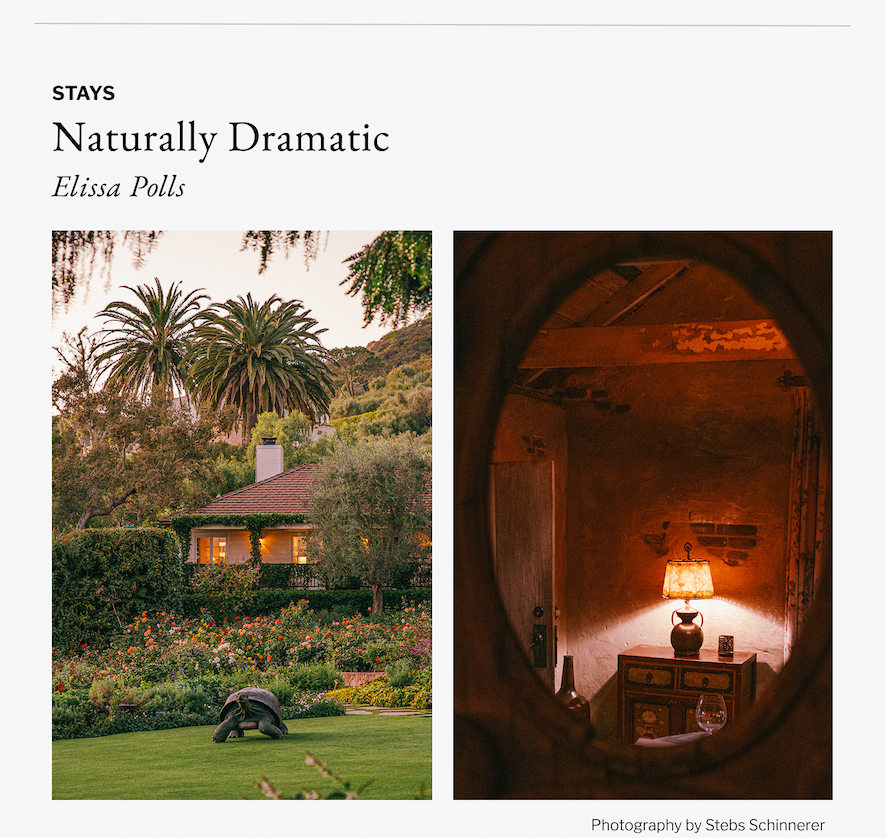
The history and mystique of San Ysidro Ranch have long been reason enough to visit the 500-acre property nestled in the Montecito foothills, near Santa Barbara, California. Its picturesque Mediterranean-style grounds have hosted myriad famous guests, who pop up the coast from Los Angeles and beyond — notably John F. Kennedy and Jacqueline Kennedy Onassis honeymooned there in 1953. Its setting also inspired John Huston, who finished scribing The African Queen while in residence. But as anyone who has actually visited the property can attest, the most compelling reason to come remains the landscape, with its naturalistic gardens, 17 miles of walking trails, and occasional ambling tortoise. As I pulled through the ranch’s gates, I was met by roses of endless varieties, citrus trees bursting with lemons and oranges, century-old olive trees, and bougainvillea climbing trellises, punctuating the scene with dramatic bursts of color. Your favorite thing about your room … The interior of Citrus Cottage — one of the ranch’s 38 standalone cottages, each named after a flower, plant, or former guest — felt plucked from an English storybook, with a wood-burning fireplace, antique rugs, a canopy bed, and a bathroom anchored by a clawfoot tub positioned beneath a period chandelier. Wallpaper patterned with roses and vines, complementary upholstery, and thoughtfully placed antiques created a pleasing cohesion, rather than theme. The best amenity … An outdoor shower and a soaking tub tucked discreetly into the greenery of my cottage’s private patio. I sank into its warm water upon arrival and, for the first time in months, read a magazine cover to cover. A dish you’d recommend to a friend … Macaroni and cheese featuring Prosciutto di Parma and four cheeses at Stonehouse, the ranch’s signature restaurant, which is housed in a 19th-century citrus-packing house. My duck à l’orange, which was flambéed tableside, was also delicious — and theatrical. The best view … Nighttime ocean views from the higher vantage points of the property’s winding paths. As the sun sets, the ranch transforms, with twinkling lights casting its grounds in a soft, cinematic glow. The best thing about the pool … Miniature golf (near the heated outdoor pool) — the course is much harder than it looks. A local tip … Before I departed, I tucked fresh lemons from my cottage’s trees into my bag, a fragrant reminder that the real luxury at San Ysidro Ranch isn’t the pristine setting or perfect service, but the rare permission to slow down and savor it all. |
|
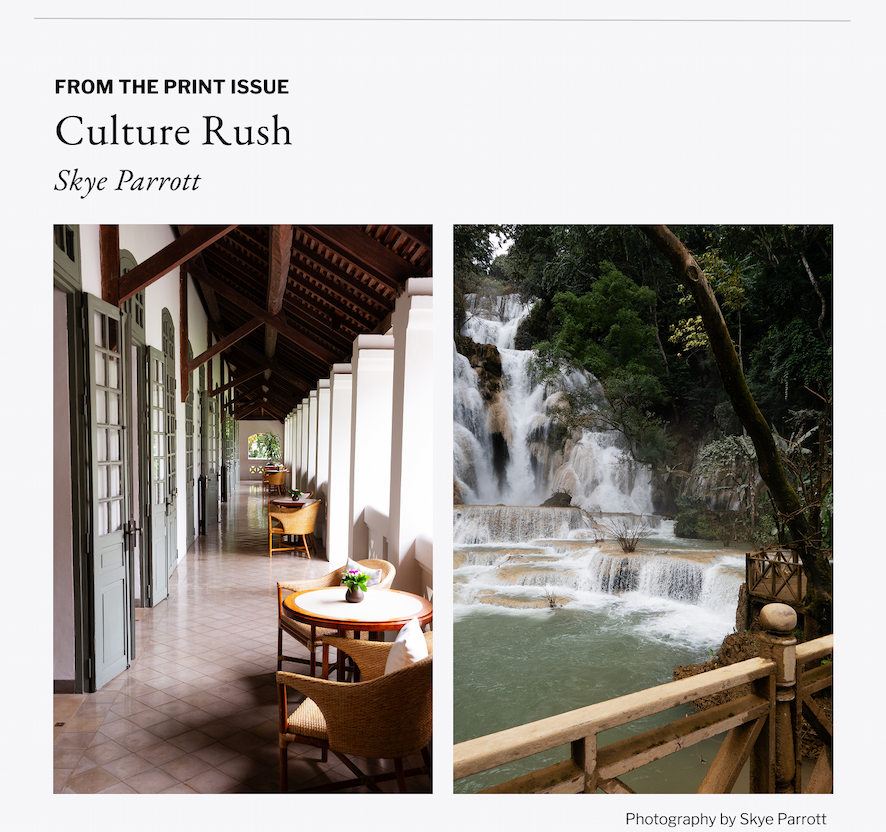
In Siem Reap, Cambodia, a stay at Amansara reveals the nuanced layers and complex tides of the city’s traditions and waters. Meanwhile, the colonial city of Luang Prabang, Laos, offers a lush medley of natural and man-made wonders — from landmark architecture to a jungle-wrapped waterfall. The combination and contrast underscore the incredible depth of the region’s culture and nature. Laos. Luang Prabang is a UNESCO World Heritage Site, protected due to its mix of traditional wood-framed Lao homes dating from the 19th century and early 20th century European colonial architecture. Situated on a peninsula, the town is ringed with waterfronts, where brick colonial-era buildings with wooden porches overlook the Mekong and Nam Khan rivers. Built in 1923, Luang Prabang’s provincial hospital was in medical use until 2005, when Aman took over and renovated the property, reopening it in 2009. The rooms’ proportions and simplicity have been preserved, maintaining a formality that recalls the property’s previous institutional incarnation. The grounds of Amantaka (upper left), 30 acres in the center of the city, feature wide lawns and gardens landscaped with orchids, plumeria, and magnolia trees. City sounds drift faintly through them, a tiny reminder that you are still right in the middle of everything. Kuang Si waterfall (upper right) is located in a park an hour outside of Luang Prabang, with paved paths offering easy exploration under the jungle canopy and designated swimming areas for cooling off. The park also houses a center that rescues and rehabilitates Asiatic black bears, which can be seen playing in their enclosures, an improvement from their days living on bear bile farms. |
|
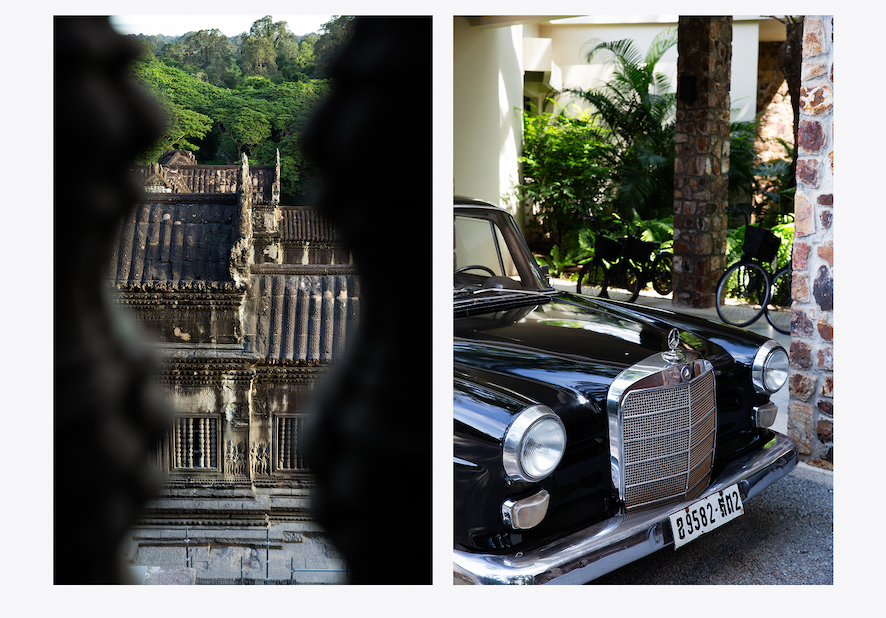
Cambodia. Siem Reap is built around tourism. Its streets are lined with pubs; souvenir shops (best avoided); and massage parlors offering affordable, excellent Thai massages (not to be missed). Originally built in 1962 by French architect Laurent Mondet, Amansara (upper right) was restored in 2002, staying true to its bones. The hotel now stands as one of the few remaining examples of midcentury New Khmer Architecture, which blended modernism with Angkorian influence. King Norodom Sihanouk, who guided his country out of French colonial rule, commissioned Villa Princière as a personal retreat, where he hosted heads of state and notable guests, from Charles de Gaulle to Jacqueline Kennedy Onassis to Peter O’Toole. Sihanouk’s 1965 Mercedes limousine is still parked at Amansara’s entrance and can be reserved for city tours. Angkor Archaeological Park (upper left), located in the jungle outside Siem Reap, houses 72 major temples. Its main event is Angkor Wat, which dates from the 12th century and covers 400 acres, making it the largest known religious complex in the world. To stay ahead of the park’s 5,000 daily visitors, arrive before dawn, when you’ll also discover a haunting view of the temples as the sun begins to rise. Word to the Wise … Abercrombie & Kent offers private excursions in and around both destinations. In Siem Reap, a half-day experience begins with a holy water blessing at a Buddhist temple, followed by a private boat tour of the floating villages of Tonlé Sap lake. In Luang Prabang, a walking tour of the city with a local guide can be arranged, with stops at the Royal Palace & National Museum and its temples, Wat Xieng Thong and Wat Khili. Or you can opt for a visit to Living Land Lao, an organic farm, to witness the rice harvest. Read the full feature and more close takes on a wide world in our Spring/Summer 2026 print issue. Order now. |
|
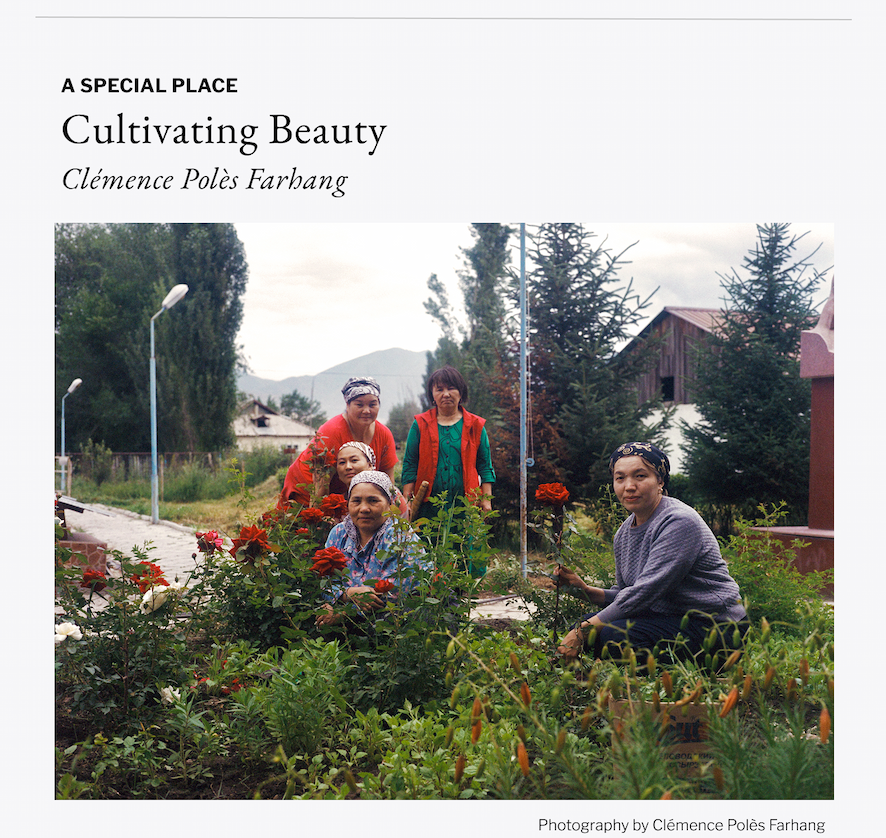
I came across these women on a Sunday morning outside a school in Shabdan, a village in the Chüy Region of Kyrgyzstan, named after a 19th-century Kyrgyz military leader who fought against the Khanate of Kokand. The village sits at 1,520 meters above sea level, on the right bank of the Chong-Kemin river, with the iconic Tian Shan mountains behind.
The women were gardening: kneeling in the soil, pulling weeds, putting things back in order. I asked what they did. They were teachers, they said. This was their day off, and they often came to tend to the school grounds. No one else would. I could sense their exhaustion, but they were proud of the roses they'd cultivated and open to posing in front of them for me. We exchanged Instagram accounts. I told them I'd send the photo as soon as I got it back from the lab. |
|
Color Me In. In my ongoing effort to put down my phone and quiet my ruminating brain, I recently returned to one of my first loves: sketchbooks. An avid doodler, I have found that filling up the pages of a sketchbook lowers my stress level and helps me think through creative knots I'm trying to untangle. And while the practice is more about unwinding than producing anything polished, I'm often pleasantly surprised by the results. A recent joy has been the addition of Karst Woodless Watercolor Pencils to my nightly scribbling. Like luxurious crayons that melt into pools of color with just the slightest addition of water, these pencils make me feel like a true artist — even when I'm just drawing rudimentary sketches of cats wearing wigs. –T. Cole Rachel Fit for a Prince. If you're ever in Paris without a reservation, wanting to experience something quintessentially Parisian — characterized by good lighting, ornate wallpaper, and lush, damask-upholstered seating — head to Les Salons du Prince at Shangri-La Paris. Of course you should expect the food to be good (you're in Paris), but the linguine with caviar is actually unforgettable. Dinner was accompanied by live music, thanks to a player piano in the next room. After completing my meal, I sat back in the oversized Louis XVI armchair, listening to the ghost playing something appropriate: uptempo and sad. I took a deep breath and closed my eyes, feeling enveloped in the experience. -Jeremy Malman Art Imitates Life. My relationship to Federico Fellini’s work is a bit of a chicken-egg scenario. I watched my first Fellini film around the same time I began bartending at a disco in the director’s hometown, Rimini. Situated on Italy’s Adriatic coast, the city is renowned in equal measure for its famous filmmaker and its lurid nightlife. Fellini’s creations capture its glamorous-seedy beachside vibe so well I can no longer untangle which came first: the movie or my arrival in Rimini. What I do clearly recall is that initial film: La Città delle Donne. Originally released in 1980, it’s a truly insane trip, even by the eccentric director’s standards. (La Dolce Vita, which preceded it by 20 years, seems wildly commercial in contrast.) But it’s actually La Città delle Donne’s extraordinary wardrobe — the film won a Nastro d’Argento award for Best Costumes — that brought it to mind amongst all this recent cinema talk. Cue it up (on Prime Video or Apple TV) for some madcap fun. –Erin Dixon |
|
54 Franklin St #2R NY, NY 10013. ©2026 Dossier Projects, LLC.
|
|
|
|
|