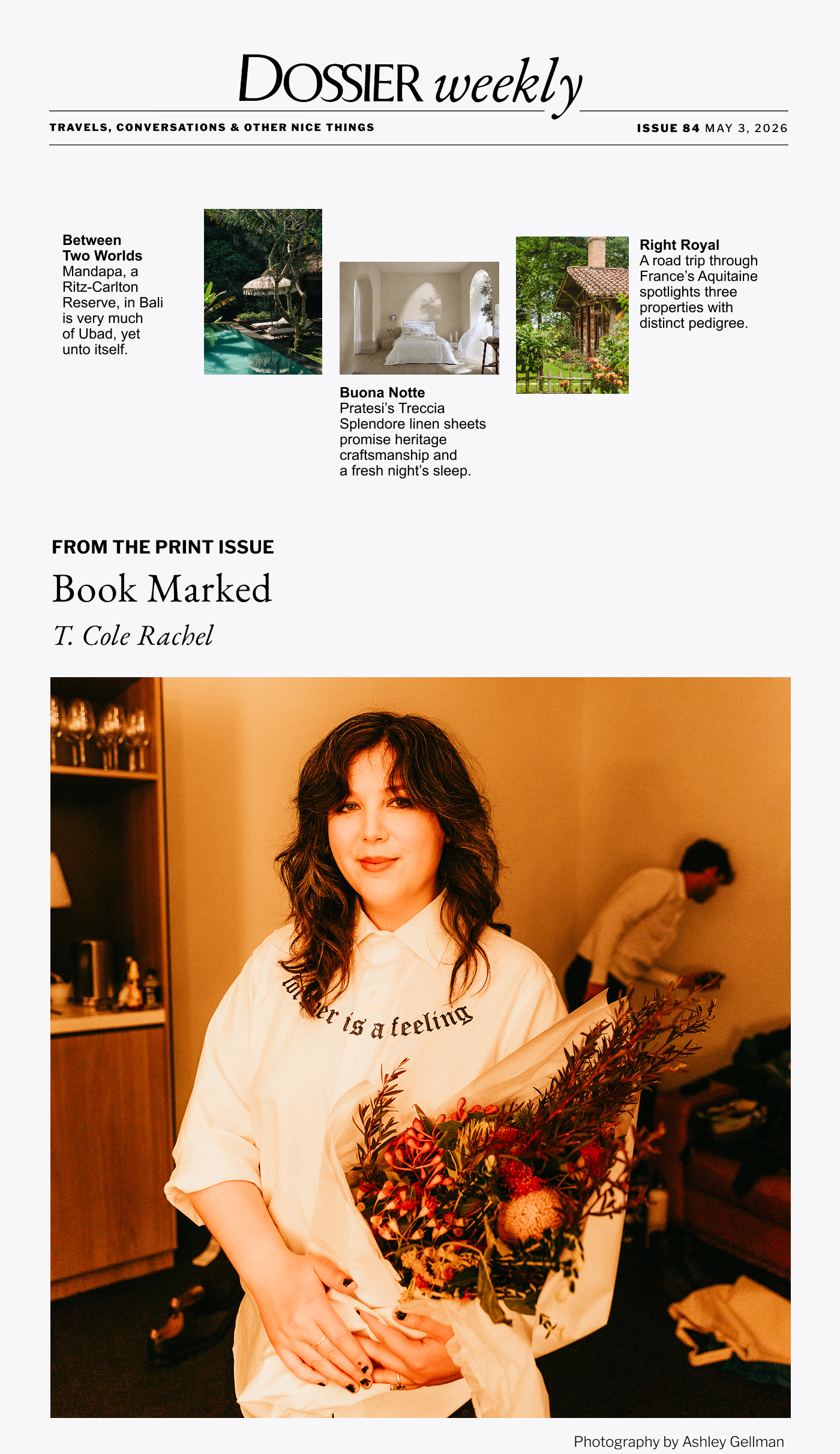
On her remarkable 2025 album, Forever Is a Feeling, musician Lucy Dacus examines the complexities of falling in love, balancing the giddy rush with the tempered view of someone who knows all too well that even our biggest feelings are often only temporary. “Nothing lasts forever, but let’s see how far we get / So when it comes my turn to lose you, I’ll have made the most of it,” she sings, showcasing the emotional astuteness that is a hallmark of her songwriting. Over the course of four solo albums — and one blockbuster album as a part of alt-rock supergroup Boygenius — Dacus has emerged as one of her generation’s most thoughtful artists, exploring the complexities of human connectivity and emotional longing. It makes sense, then, that the artist, who recently popped up in New York City to perform “Bread and Roses” at the inauguration of mayor Zohran Mamdani, would welcome the chance to talk about some of the books that have not only helped shape her worldview but have also helped her better understand the connection between the personal and the political.
The Fire Next Time by James Baldwin. I felt like Baldwin was speaking to me personally, and I imagined that anyone who read it would feel that way. He really communicates pain in such a beautiful and poetic way.
War and Peace by Leo Tolstoy. It’s just the best book I’ve ever read. And I know that’s annoying to hear, because it seems like such a colossal project to recommend to anyone. It’s like, “Oh, go read War and Peace,” like, “Go run a marathon.” It’s a lot. But a book that long, with a writer that skilled … I just felt like the characters were more real than the people in my actual life.
Braiding Sweetgrass by Robin Wall Kimmerer. This was another Covid read for me. I would wake up and read one essay per day, and it would be kind of like anxiety medication. It helped me love the world and not hate myself. There’s a lot of rhetoric that humans are only a detriment to the planet. This book helped me see and appreciate all life a little more animatedly.
Gilead by Marilynne Robinson. I read Gilead when I still called myself a Christian, and I was thinking a lot about what that really meant. I related so much to the narrator and his confusions and hopes and real desire to keep God in his life and be a good person.
Wittgenstein’s Mistress by David Markson. It was probably the first truly “experimental” book I had ever read. I have a dissociative streak and, in reflection, I think part of what captivated me so much is the way that this woman feels as if she, the last woman on Earth, is trying to tend to her memory because once she forgets things, then they’re gone from the universe forever. It married my fear of losing my memory and my experience of feeling completely alone.
Get Lucy’s full list and more close takes on a wide world in our latest print issue. Order now.
|
|
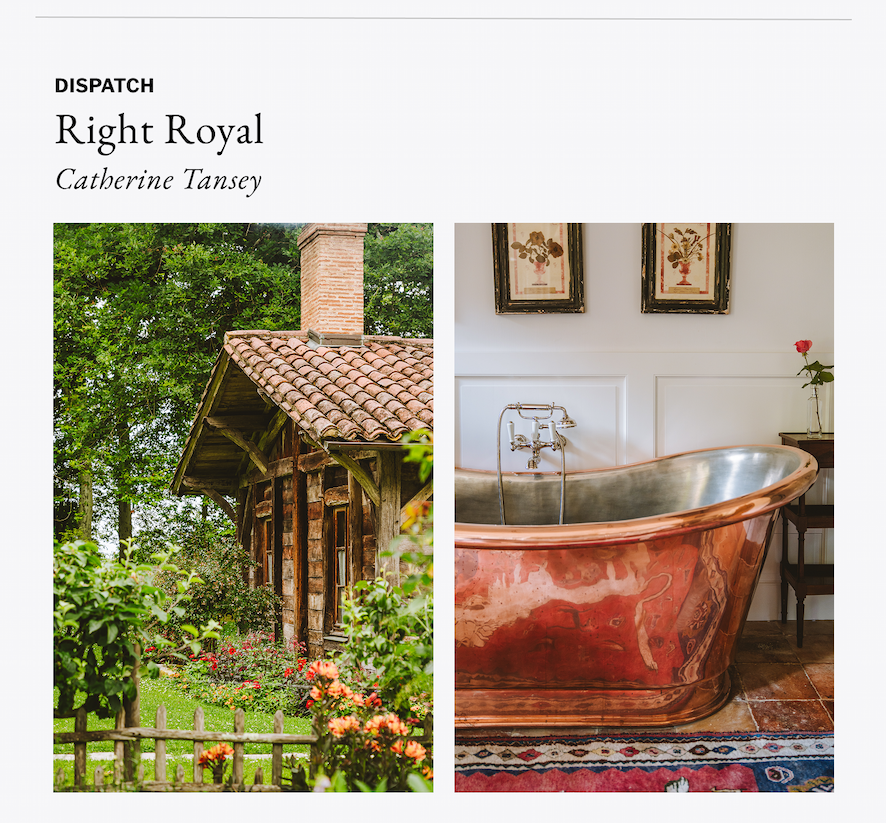
I cycle past row upon row of pruned grape vines, their woody canes bare after harvest. Hotelier Alice Tourbier is a few paces ahead of me, beckoning me down a gravel path, through the vineyard as we make our way back to her hotel. I think of what her mother, Florence Cathiard, co-owner of Château Smith Haut Lafitte told me earlier that day: “The whole point is to highlight the genius of the place, which is to say: the terroir.” I’m in Bordeaux on a road trip through the Aquitaine, visiting three properties across southwest France, the region quickly tucking itself into my list of favorite destinations. The properties on my itinerary are among France’s most prestigious, each having earned the coveted Palace designation , a category that sits above five stars and indicates the country’s most exquisite hospitality projects. My trip begins at Les Sources de Caudalie, so named for its location in the middle of a Cru Classé de Graves vineyard, where the renowned French skincare brand Caudalie originally sourced grape skins for its antioxidant-rich products. By repurposing 18th-century lumber from nearby châteaux, the hotel gives the impression of having existed for centuries, but it was actually constructed in 1999. After purchasing the winery, Tourbier’s family moved from the Alps to a home on the Château Smith Haut Lafitte property next door, when Tourbier was a child. Much like her parents, who make exceptional wines at the adjacent winery, Tourbier sought to capture the essence of the place, teasing out the easy pastoral elegance of Pessac-Léognan. Rooms are spacious and bright, some with plush rugs and muted colors, others with toile wallpaper, white clapboard, and jute rugs. I spend the afternoon cycling through the vineyards before dining at the property’s 2 Michelin-starred restaurant, La Grand’Vigne, where a whimsical scallop and mushroom plate, arranged as a forest of fungi with tender scallops serving as stalks, stands out. My next stop is Les Prés d'Eugénie, a countryside bolt-hole and favorite getaway of Empress Eugénie de Montijo, wife of Napoleon III, who took to the town in the Landes region for its medicinal thermal waters. A rural estate flanked by emblematic palm trees, the hotel came to be in 1969, after Christine Guérard, the daughter of the then-owner, renovated and reopened the property. It took on its current name in 1974, at the same time Michel Guérard, Christine’s husband and one of the fathers of nouvelle cuisine, opened his namesake, now 3 Michelin-starred restaurant in the hotel. I arrive at the expansive lobby, a fire crackling and warming me as I enjoy an herbal tisane on the silk choinoise-upholstered couch. Les Prés d’Eugénie is unmistakably aristocratic — its stair landings lined with hand-knotted Persian rugs, its corridors hung with Baroque-framed oil paintings of nobility and livestock — but it never tips into stiffness. Instead, it feels like the country estate of a particularly posh aunt, one where homemade fruit preserves are offered as a souvenir. Furnished with period pieces from the Guérard family’s private collection, the property houses an extensive trove of Second Empire paintings, along with worldly details, such as the 17th-century tigerwood writing desk anchoring my sprawling room.
At the spa, celebrated for its treatments utilizing mineral water from the property’s thermal springs, I opt for a hydromassage, thermal bath, and kobido facial. The rhythmic motions of the therapist’s hands lull me into that sublime liminal space between sleep and wake. Yet, any stay at Les Prés d’Eugénie inevitably centers on a meal at Michel Guérard, the restaurant, as famous for its decades of tremendous food and service as for its chef-owner, a man beloved for his warmth, generosity, and hospitality. My tasting menu traces a map through some of the region’s most celebrated ingredients: tender scallops, roasted venison loin, and a flurry of black truffles. My road trip comes to an end in seaside Biarritz, at the former summer residence of Empress Eugénie. Hôtel du Palais Biarritz is a sprawling néo-Louis XIII-style estate perched above the Bay of Biscay. Moments after arriving at my room, I pad across the high-pile, navy carpet and step out to the balcony to take in the view across the Atlantic Ocean, gauzy purple clouds creeping across the early evening sky. To my left, wetsuit-clad surfers catch the last waves of the day while, back inside, the Imperial Bee — Napoleon’s Second Empire symbol — graces textiles, hardware, and Guerlain toiletries. Rumor has it that, come summertime, sandy feet and flip-flops are a common occurrence across the property. It’s, in part, this contrast between the laid-back beach town and staggering opulence that makes the property so interesting. At the spa, I ask my therapist to open the windows for the marine breeze — I’m desperate to take in as much of the ocean as possible. Breakfast the next day makes that easy. As the concierge delivers a Financial Times to my table, I enjoy a perfectly rolled French omelette from the hotel’s semi-circle-shaped dining room, which frames 180-degree views of the mighty swells. By the time I leave Biarritz, the throughline of this journey is clear. Each property, in its own way, distills its surroundings and heritage with remarkable fidelity, whether drawn from vineyard soil, thermal springs, or centuries of cultural patrimony. |
|
I pride myself in having built a thoroughly comfortable bedtime setup. I researched and tested my way to a soft-yet-sturdy frame and cloud-like, cooling mattress paired with a collection of pillows (ranging in puffiness) and crisp, breathable sheets.
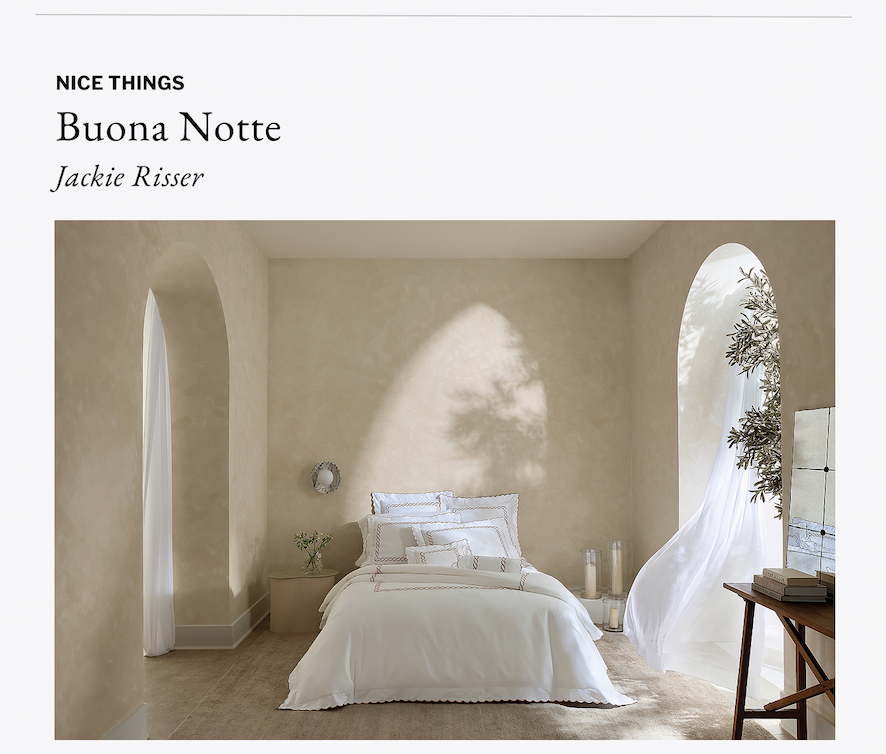
To wit: Since 1906, Pratesi has woven a storied legacy four generations deep, defined by exceptional quality and a passion for Italian hand-craftsmanship. Its creations have attracted the likes of Coco Chanel, Elizabeth Taylor, Yves Saint Laurent, Ernest Hemingway, myriad hotels, and a number of our editors.
The company’s Treccia Splendore linens are a particular treat. Its extra-long staple cotton sateen sheets are created by master artisans in Italy and feature a signature scalloped edge inspired by Florentine architecture. |
|
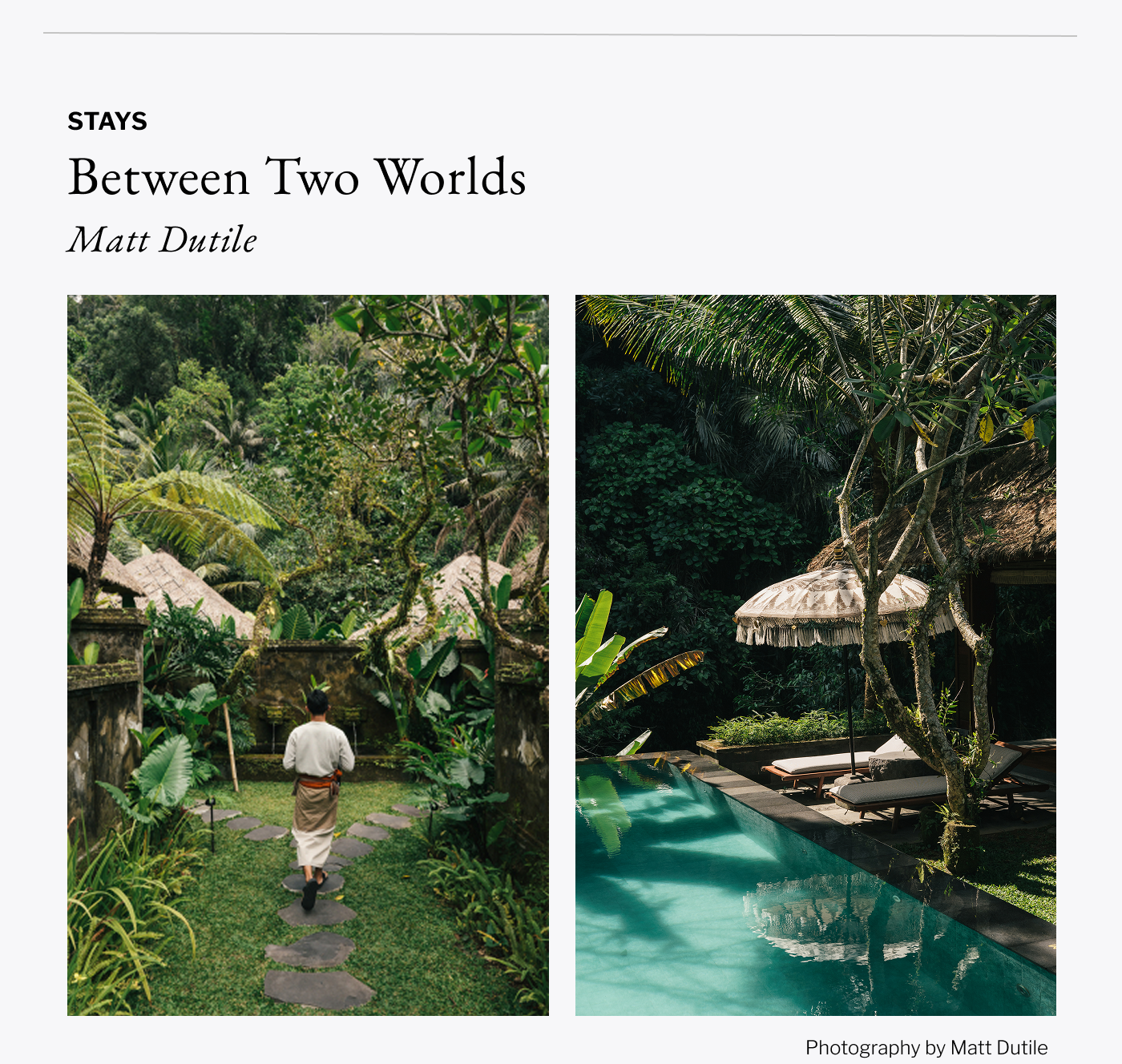
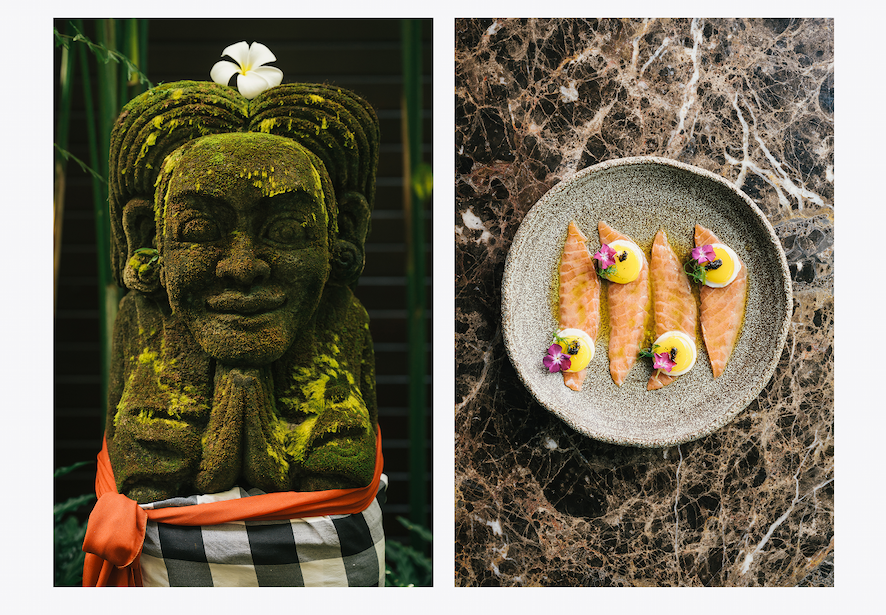
Tucked within its own terraced gorge, everything about Mandapa, a Ritz-Carlton Reserve, feels removed from the frantic pace of Ubud, Bali. The property is built into the surrounding slopes, making it easy to shut out everything, yet the resort is also unmistakably Balinese. Its villas wrap around the river, backed by rice terraces and fronted by private pools, while teak walls and tropical murals frame panoramic windows looking out onto the lush courtyard. The curved, bamboo structures of Kubu restaurant and Mandapa Camp, a wantilan-styled pavilion housing a children's club, blend modern and traditional. I passed hours at the spa, first with a sauna, steam, and ice reset, then vibrational sound therapy. Sunset one evening was spent at Ambar, while another included a gastronomic tour of Bali at Kubu, where I was truly impressed by chef Eka Sunarya’s depth of flavors and inventive gastronomy, as well as the atmospheric riverside setting. By sourcing ingredients exclusively from the surrounding 100 kilometers, Sunarya shines a light on Balinese produce and cooking. My time at Mandapa was the perfect refresh after weeks of adventurous travel.
A relaxing moment … There was a moment during a 60-minute vibrational sound therapy when I felt like I was floating in a formless void. The shifting frequencies of the Tibetan bowls detached me from all sense of space and time, allowing my mind to find pure relaxation and stillness. For this frantic-paced city dweller, it was a transcendental moment of calm.
The best amenity … Each villa comes with a 24-hour butler (above left), who can arrange everything from laundry to spa appointments, make restaurant reservations, and book excursions outside the property. Though perhaps the best amenity is the opportunity to soak in the peace and quiet of this tranquil slice of Ubud.
A picture of water … This (above right) was the view I woke up to every morning: the line of my one-bedroom pool villa meeting the river at its terminus. The pull of a quiet swim was too great to resist. |
|
The best view … It’s hard to beat the panoramic views and golden sunsets of Mandapa’s little slice of Ubud from Ambar. Combined with Japanese-infusion bites, like salmon usu-zukuri (above right) or sulawesi toro tartare, and perhaps a refreshment or two — such as the the house Ambar Vermouth or Wild Field cocktail featuring Karusotju infused with pandan leaves — it provides a glorious end to the day.
A dish I’d recommend … Two dishes at Kubu compete for the title of my favorite bite in all of Bali: the red and yellow shavings of beetroot and jicama in Bedugul Roots and the salty bits of crab paired with the puckering acidity of raspberries in the Serangan Crab. Both are inventions of Sunarya, whose work is influenced by the Balinese farm where he grew up.
Something to do … From my breakfast perch at Sawah Terrace each morning, I watched white-water rafters paddling the river snaking through the property. There is also ziplining, vintage Volkswagen convertible tours around town, and visits to Ubud’s many temples (above left).
A secret corner … The outdoor shower within the private courtyard of guest villas was wonderful for rinsing off after a pool swim or for simply refreshing in the natural setting. |
|
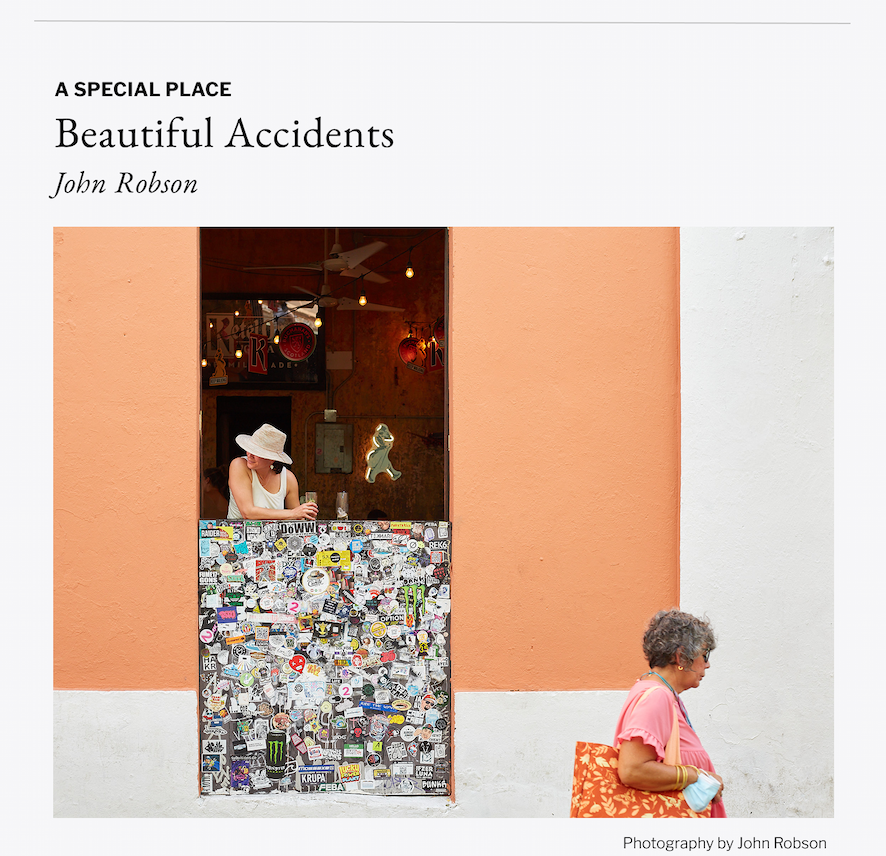
All I need is a good view, a great drink, and the right woman across from me. We people-watch. Talk about the future. Let the afternoon stretch out the way good afternoons should. La Factoría doesn't announce itself. Tucked into the heart of Old San Juan, Puerto Rico, it's a gritty, unhurried barroom — the kind of place that earns its reputation without trying. World-class cocktails. Zero pretense. My kind of place. You sit down and, somehow, time slows. We lingered. We held hands. And at some point, I found myself back on the street, looking up at her in the window. The geometry of the building, a passerby cutting through the frame, an organized chaotic assembly of stickers: The whole beautiful scene came together. |
|
Send Me an Angel. I have a deep and abiding love for Judee Sill, the 1970s singer-songwriter responsible for creating some of the most defining songs of that decade. The beauty of her music was matched only by the relative chaos of her life, which included drug addiction, armed robbery, a stint in prison, and a tragic early death. For the unfamiliar, the 2024 documentary Lost Angel: The Genius of Judee Sill is a great place to start. Now available on most streaming services, the film is a fascinating look at a singular, deeply influential artist who is, thankfully, no longer lost to time. –T. Cole Rachel
Straight From the Horse’s Mouth. If you follow the Paris food scene, you’ve likely come across Cheval d’Or more than once. I’m usually cautious with places that gain traction on social media, but, here, the praise is entirely justified. This epicurean yet relaxed restaurant combines the charm of the 19th arrondissement with the elegance of a Parisian institution. Its cuisine brings together the best of French classics and Chinese gastronomy with remarkable finesse and creativity — from playful dishes like a mapo tofu ricotta tortellini to more traditional standouts, such as pork and cabbage dim sum. I opted for the multi-course menu, a three-hour succession of surprises and delights, culminating in one of my favorite dishes: a marvelous Peking duck. –Anna Kaplan
Feelin’ Breezy. Linen, the spritz of textiles, never fails to shift me into summer mode. In giddy anticipation of an upcoming trip along Italy’s west coast, I’ve been wearing Orlebar Brown’s Giles Lino tailored-fit shirt in Riviera blue paired with the brand’s Alex Linen drawstring trousers from its Spring/Summer collection. The label is rooted in leisure, so the relaxed pants are casual but never slouchy. And the shirt, while light and breezy, is fitted enough to feel at home at a poolside L.A. work meeting. –John Chuldenko |
|
54 Franklin St #2R NY, NY 10013. ©2026 Dossier Projects, LLC.
|
|
|
|
|