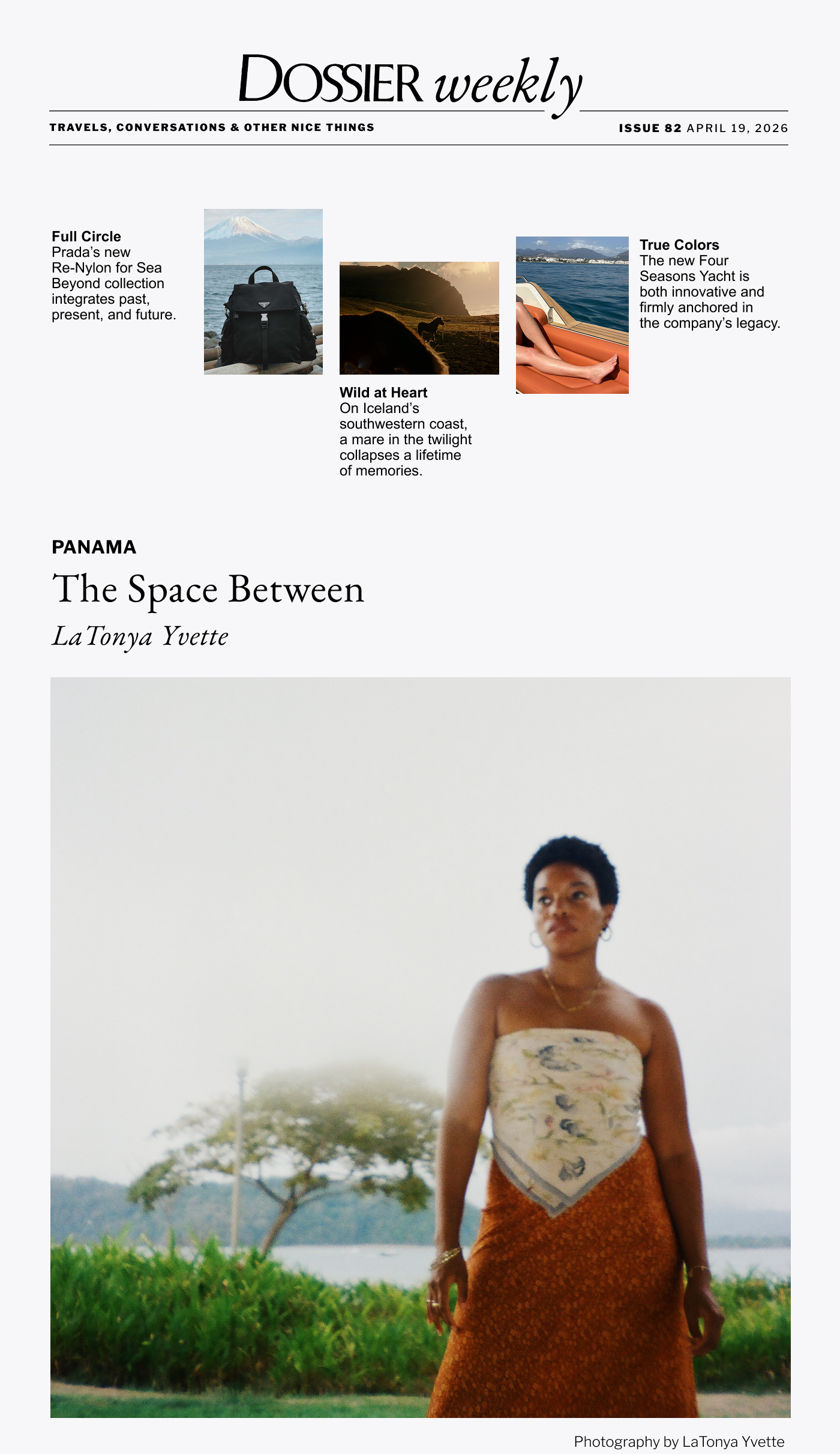
When I was visiting Panama last spring, an elderly man asked me where I was from — not just where I currently lived; he wanted to know my origins. The shape of my face, the curve of my cheekbones, the fullness of my lips, maybe even the tint of my pink shirt, which matched his, gave it away. “My father was born and mostly raised here.” I answered. “Tell me your name!” he quipped back.
Nine months have passed since that visit, and for each of those months, I've thought not only about that moment but also about Panama. It was a place I'd long dreamt about, and I feel unequivocally closer to it now than before, in a way I cannot adequately capture with words. These months have been about making peace with that inability, and the feelings.
For instance: Flying there on Copa Airlines — a hop, skip, and jump from New York City — quelled a tale I long believed: that where my dad was from was too far from where I lived. Landing at the Copa Airlines Hub of the Americas® in Panama City, a critical connecting point between the U.S. and Latin America, demystified the distance. Within five hours of takeoff, I was oscillating between swells of familiar reggaeton pitches and sticky air, relieved only by the ocean breeze. Panama, itself, is also an enigma. It is the only place on Earth where the sun rises over the Pacific Ocean and sets into the Atlantic Ocean. The country’s biodiversity is also outstanding, and, naturally, one thinks about our ecosystem and existence when the land’s breath and pulse are palpable in its rainforests, irrigation, and abundance.
During my visit, I rested my head at Sofitel Legend Casco Viejo, Panama City. Located in the heart of the city’s historic district, a UNESCO World Heritage Site, the hotel was my personal connector, allowing me to move from one discovery to the next on foot. Some mornings, I just stood outside, on the property’s pool deck, looking out to where the pool’s infinity edge flowed toward the horizon. Others, I explored a church of astounding architectural magnitude, such as the Metropolitan Cathedral, or ate plátanos and drank Panamanian beer: Cerveza Panamá, Balboa, Atlas. In the evenings, I soaked in my suite’s large tub after dinner, absorbing the day and the city’s vibrations outside. Sometimes, I scoured the streets for beaded bracelets made by Indigenous women. Like the canal, Panama City holds a layered legacy. I now understand why that elderly man recognized me — or may have thought he did: My bridge to Panama is inevitable, my connection now tangible. |
|
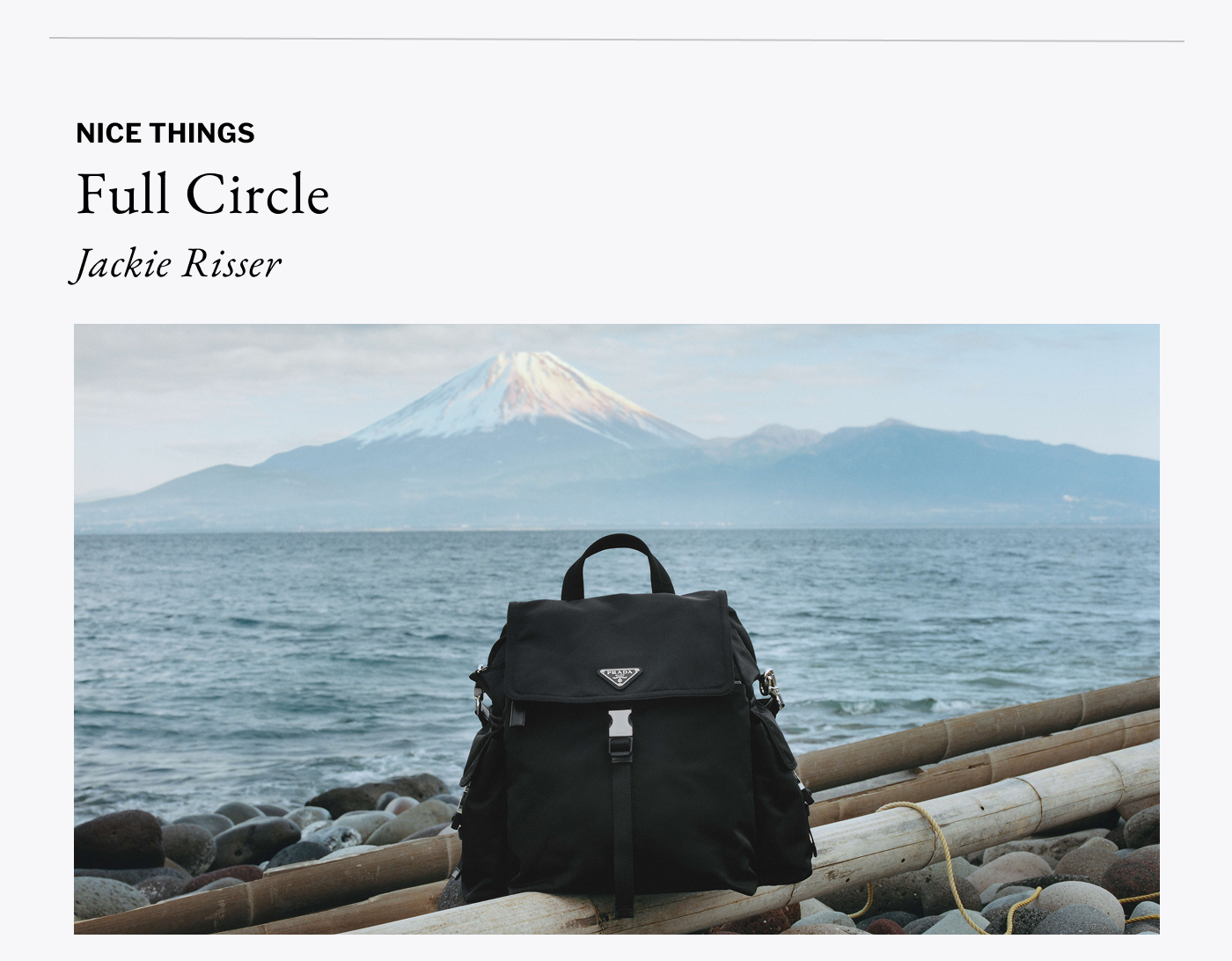
When Miuccia Prada joined her family’s eponymous company in the late ’70s, she brought with her an unexpected perspective: a background in mime (seriously), a Ph.D. in political science, and ties to the Italian communist party. It didn’t take long for this original viewpoint to manifest in disruptive creations, including the Vela, a military-grade nylon backpack with a drawstring and flat top, released in 1984. Crafted with the same meticulous precision as Prada's renowned leather designs, it was a revolutionary response to the opulence dominating the era’s runways.
Decades later, the Vela — and Miuccia's progressive vision — endure. In 2019, the company debuted the Re-Nylon Collection made from Econyl® yarn, a regenerated material that recycles and purifies plastic waste from oceans, fishing nets, landfills, and textile scraps. This year, the Prada Re-Nylon for Sea Beyond Collection introduces a new five-piece capsule collection comprising a collapsible backpack, pouch, drawstring backpack, hooded jacket, and hat, with select pieces designed to be foldable, with integrated pouches for storage. All come in the company’s signature Prada Re-Nylon black, Baltic blue, and white, as well as vibrant shades of emerald, celeste blue, orange, and yellow. And each item can be recycled (once again) at the end of its life, reborn as Econyl® yarn, creating a vivacious dialogue between past, present, and future. |
|
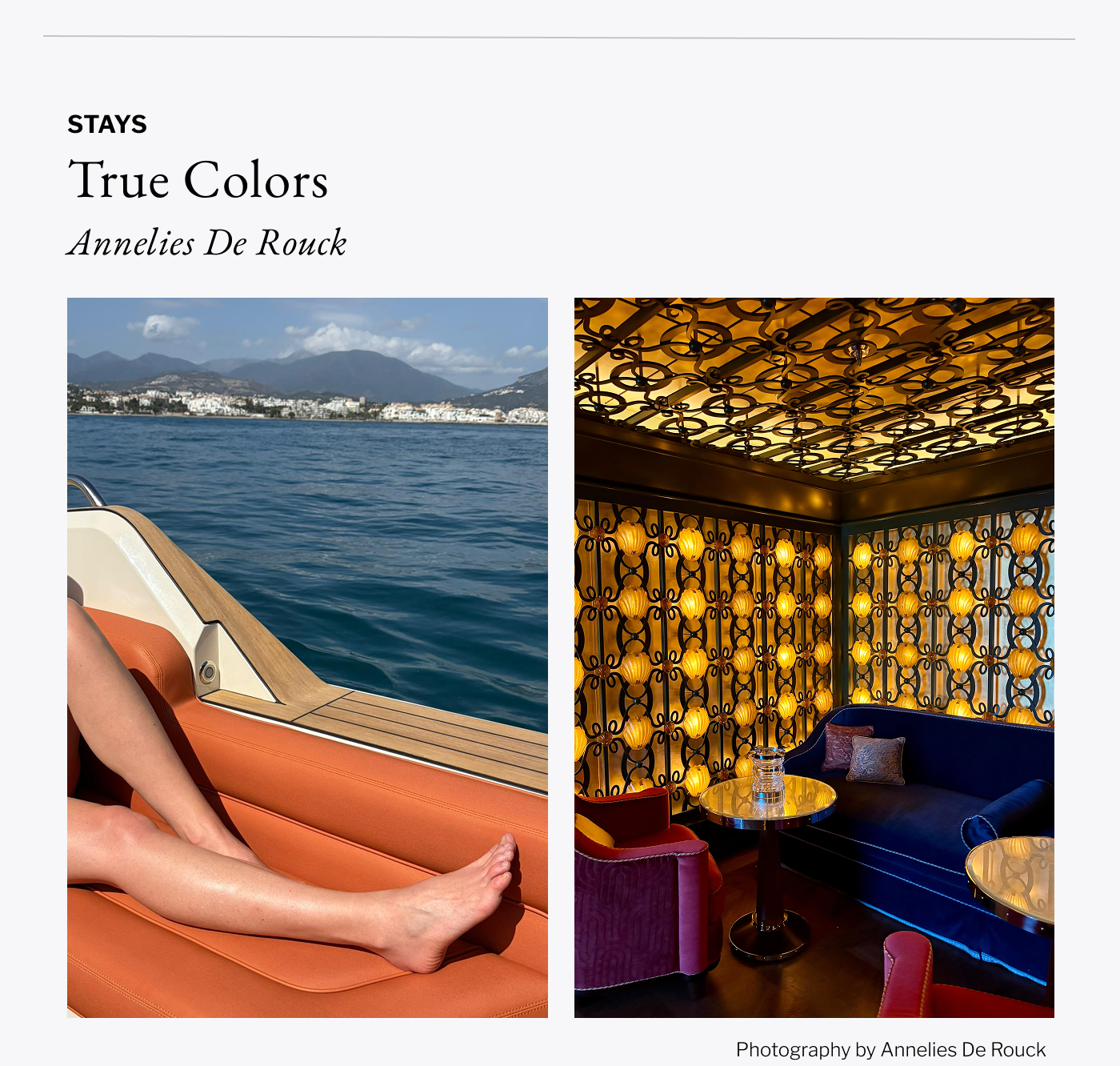
On their faces, the very first Four Seasons hotel — a 125-room motor hotel in Toronto, Canada, opened in 1961 — appears to have little in common with the company’s inaugural yacht, the Four Seasons I, which debuted this spring. But as I recently learned aboard the yacht, the company’s founding philosophy of treating every customer as a special guest traverses not only 65 years but also land and sea. Specifically for my sail, it was the Mediterranean Sea, where the yacht will spend its first season, pairing popular ports (such as Saint-Tropez, France, and Bodrum, Turkey) with lesser-known coastal stops (like Porto Ecole, Italy; Hydra, Greece; and Tivat, Montenegro) before decamping to the Caribbean and Bahamas for the winter. I’d been on a luxury cruise before, and it quite wasn’t my cup of tea, so I embarked on my journey with a touch of trepidation. Fortunately, the attention to detail and craftsmanship present in every nook and cranny of my suite (and throughout the entire yacht) instantly distracted me from my apprehension. The staff further quelled my anxiety before a massage at the intricately mosaiced L’Oceana Spa dissipated away any lingering disquiet.
Your favorite thing about the yacht … What struck me right away was while most ships feel distinctly masculine, this one doesn't. Its materials and color palette are soothing, but not in a minimalist, beige way. Instead — thanks to soft lambskin handrails and delicately embroidered upholstery — it recalled an Hermès store.
A dish (or cocktail) you’d recommend … My itinerary made me giggle because half of the day’s activities had the word “cocktail” in their descriptions. But the yacht’s culinary offerings are no joke. Its Chef-in-Residence series brings chefs from Michelin-starred Four Seasons restaurants (including Guillaume Galliot of Caprice in Hong Kong and Paolo Lavezzini of Il Palagio in Florence) aboard to create tasting menus centered around distinct destinations and cultures. And at all times, there are 11 distinct culinary concepts on offer, ranging from Pistachio, a bijou patisserie and ice cream parlor (the pistachio croissant is as good as you might imagine), to Miuna, a private omakase experience.
The best amenity … The yacht’s gym and thermal circuit (complete with a sauna, aromatic steam, and cold therapies) were a necessary complement to the culinary delights.
Something not to miss … The exhilaration of speeding around the yacht on one of its speed boats. For me, feeling careless and alive are signs of a great getaway, but fear not if you’re more of the leisurely type. I was told that the yacht curates custom Shore and Sea Experiences for each guest in the place of pre-planned group experiences.
|
|
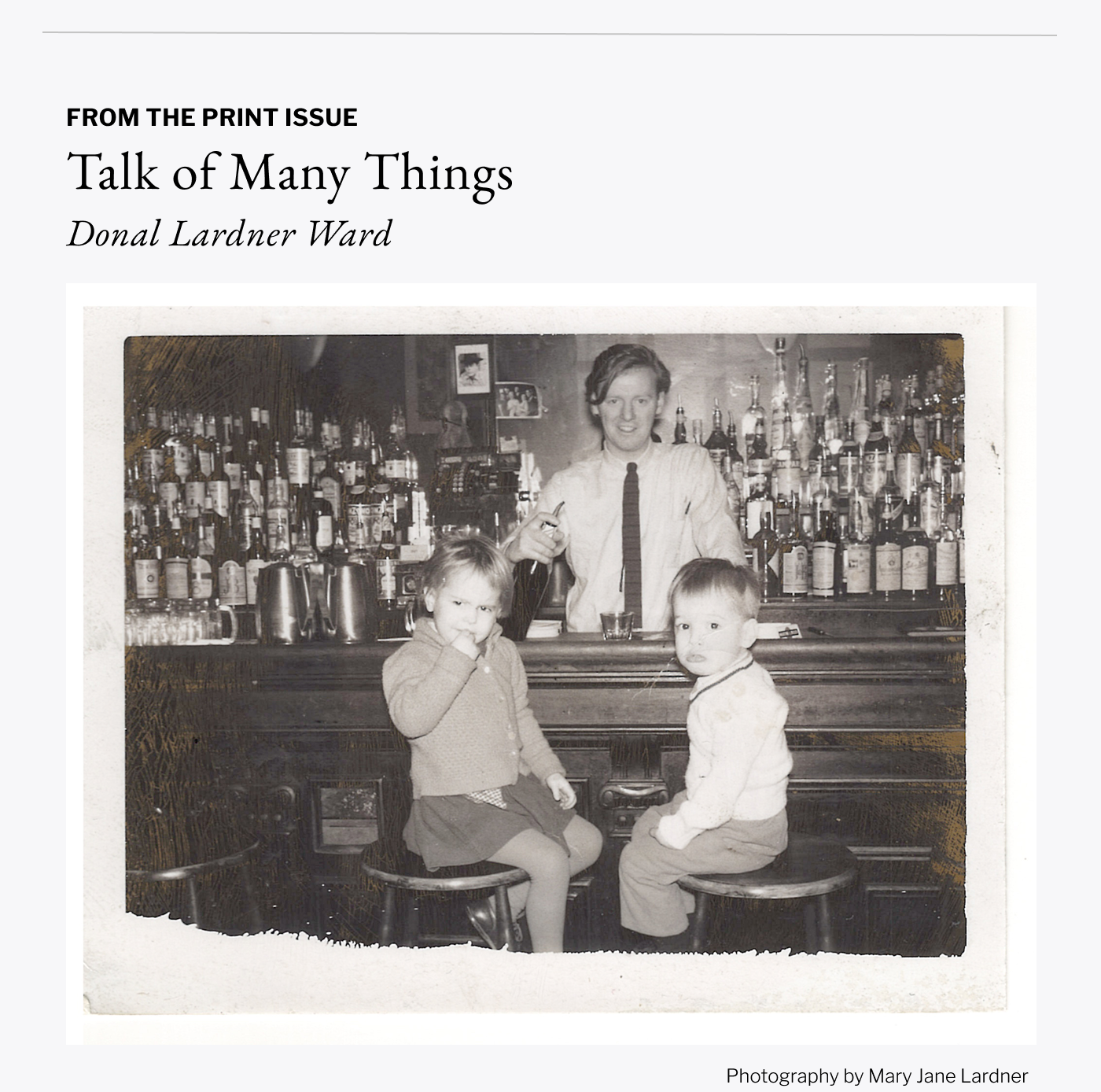
My earliest memories of Elaine’s are of the cellar, its heavy, clanging, black, diamond-plate doors split wide, the worn cement steps down to the mingling smells of stale puddle water, fresh linens tied together in stacks, onions piled in mesh bags, freshly ripped cardboard. And, of course, the walk-in: the frigid wonderland of plenty. I vividly recall my handsome, young father squatting in his crisp suit and shiny loafers, demonstrating for my sister and me, in deadly serious tones, how to escape from those frigid confines should we be accidentally shut in. We took turns pushing on the cold, dull metal plunger that released the latch on the outside, the scent of the damp wood walls, kegged beer, a hanging veal leg, and fresh strawberries tickling our noses. If for any reason the latch became stuck, we were instructed to shut the levered valves above the scarred and dented aluminum kegs feeding the beer taps upstairs, drawing a bartender down to investigate. My sister and I were probably 4 and 3 years old, respectively. Our father was teaching us how to save ourselves, a lesson he never quite learned for himself. By this time, my parents were already divorced, with Elaine’s (and Tinker’s, the first bar my father opened at 74th Street and Second Avenue, with two of his brothers in 1961) contributing to many of the irreconcilable differences. My sister Karin and I spent most weekends with Dad, which generally began with him picking us up in a cab at the Work & Play Preschool across from Mom’s new apartment on West 82nd Street and, in later years, at P.S. 87 on the way to “the store,” where we’d wander about entertaining ourselves while he and Elaine led the set-up for the night. I can easily summon visions of Elaine lumbering about, a floral print flowing around her like a slackened sail, faux pearls spilling down into the abyss of her bosom as she placed “reserved” signs beside bright yellow, Ricard-embossed ashtrays on the first few tables. I can still smell the heavy scent of powder when she scooped me up into her squishy lap after settling at a front table to recount the register bank, while my father sprung around behind the bar restocking liquor and small wooden crates of tiny soda bottles.
A restaurant prepping to open has its own sense of time and rhythm, tasks performed at a smooth, steady clip in an atmosphere of anticipatory quiet, adrenaline slowly rising as it gets closer to proverbial curtain time. It is a form of theater, a nightly performance accentuated with lighting and music, each evening following the same script, but never duplicating events exactly. My father and Elaine were the show’s impresarios and lead characters. My sister and I were supporting players, but Dad always made sure we felt like an integral part of the scene. When a best-selling author, Broadway playwright, or Park Avenue princess made the usual polite inquiries upon being introduced to me, “How old is your son?” “Where does he go to school?” Dad would promptly reply, “Ask him yourself; he’s standing right in front of you.”
Other times, witnessing my discomfort at being mistaken for a little girl due to my smooth, soft face and long, blond hair, he’d advise, “Just pull down your pants and show them your joint!”
Even if my face was warm with embarrassment advancing to mortification, my child brain somehow intuited that he was trying to instill his own defiant boldness in me, and I wished his effort had been more successful. It would take me decades to understand how much of his persona was protective or the vulnerabilities it strove to defend. Read the full feature and more close takes on a wide world in our print issue. Order now. |
|
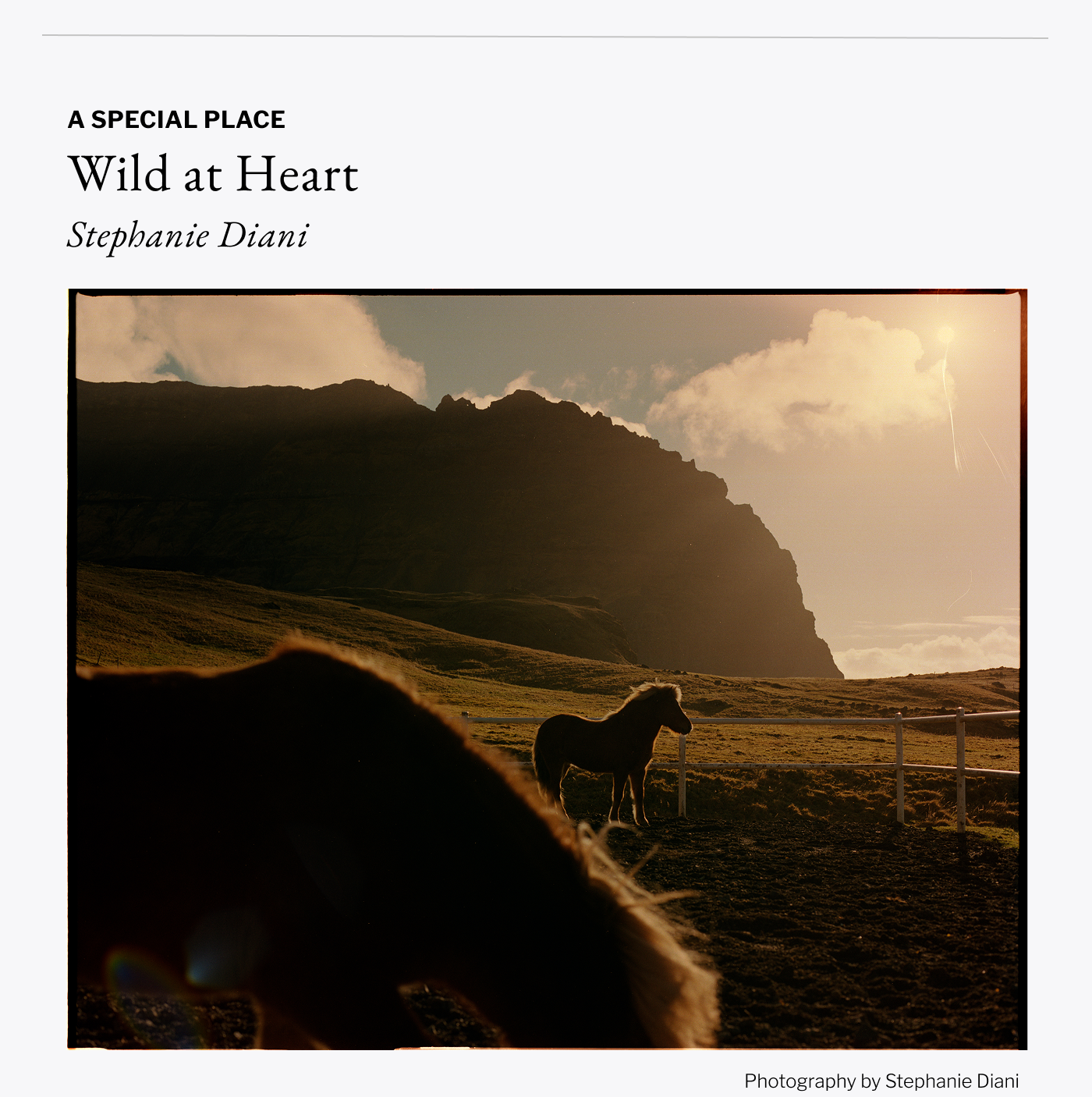
I grew up with conservative parents in the suburb of Goleta, California, where I joined 4-H at age 9. It was there that I first encountered Icelandic ponies. A lovely woman from Santa Barbara had volunteered the animals and her time to the club, teaching us how to groom, tack, and ride. Buster was my favorite of the ponies, a bay with a thick, black mane and tail. I fantasized about bringing him home to our tract house’s tiny backyard. In the fall of 2018, after a particularly rough year of problem-solving for my rapidly aging parents, my husband and I went to Iceland — to see horses and wild, rugged nature. We spent several nights at Skálakot Manor Hotel on the country’s southwestern coast. The manor’s location made it possible to visit Víkurfjara beach and the Seljalandsfoss waterfall in one day. The property also had horses, and sometimes, at sunset, we would walk down to the corrals to visit them. This photo encapsulates all of these memories for me: growing up with strict parents, 4-H, my beloved Buster, learning photography by watching my brother take pictures, and, finally, watching my parents fall apart. The light on the day I captured the image was the light of heartbreak, the scenery turbulent like the weather. I responded as I often do to beauty and heartbreak: I took a photo.
|
|
Prepare for Takeoff. I begin every long-haul flight by playing Brian Eno’s 1978 Ambient 1: Music For Airports through Sony’s WX-1000XM6 headphones, an act that’s admittedly on the nose. It’s more ritual than music — the work is a “sonic landscape” in Eno’s words, like an audible room fragrance that colors the cabin’s din. The sparse melody of the opening track gives me 17 minutes and 28 seconds to center myself and prepare for the journey ahead. –John Chuldenko
Step by Step. Since I’ve purchased my walking pad, I’ve been able to trot like a lunatic whilst writing, editing, emailing, and watching TV at night. It allows me to walk 20,000 steps a day, every day, even when I’m chained to my office, or it’s too gross to go outside. –Sophie Mancini
Feeling Breezy. April, it seems, is the new August — at least in New York City, with shockingly humid days sending me on a hunt for an aluminum-free deodorant. Saltair Serum Deodorant, which rolls on lightly and remains in place all day, was my reward. Along with a poetic range of unisex scents — Golden Hour, Driftwood, and, my personal pick, Seascape — the company offers a fragrance-free version, ensuring there’s protection for everyone. –Alessandra Berge
|
|
54 Franklin St #2R NY, NY 10013. ©2026 Dossier Projects, LLC.
|
|
|
|
|