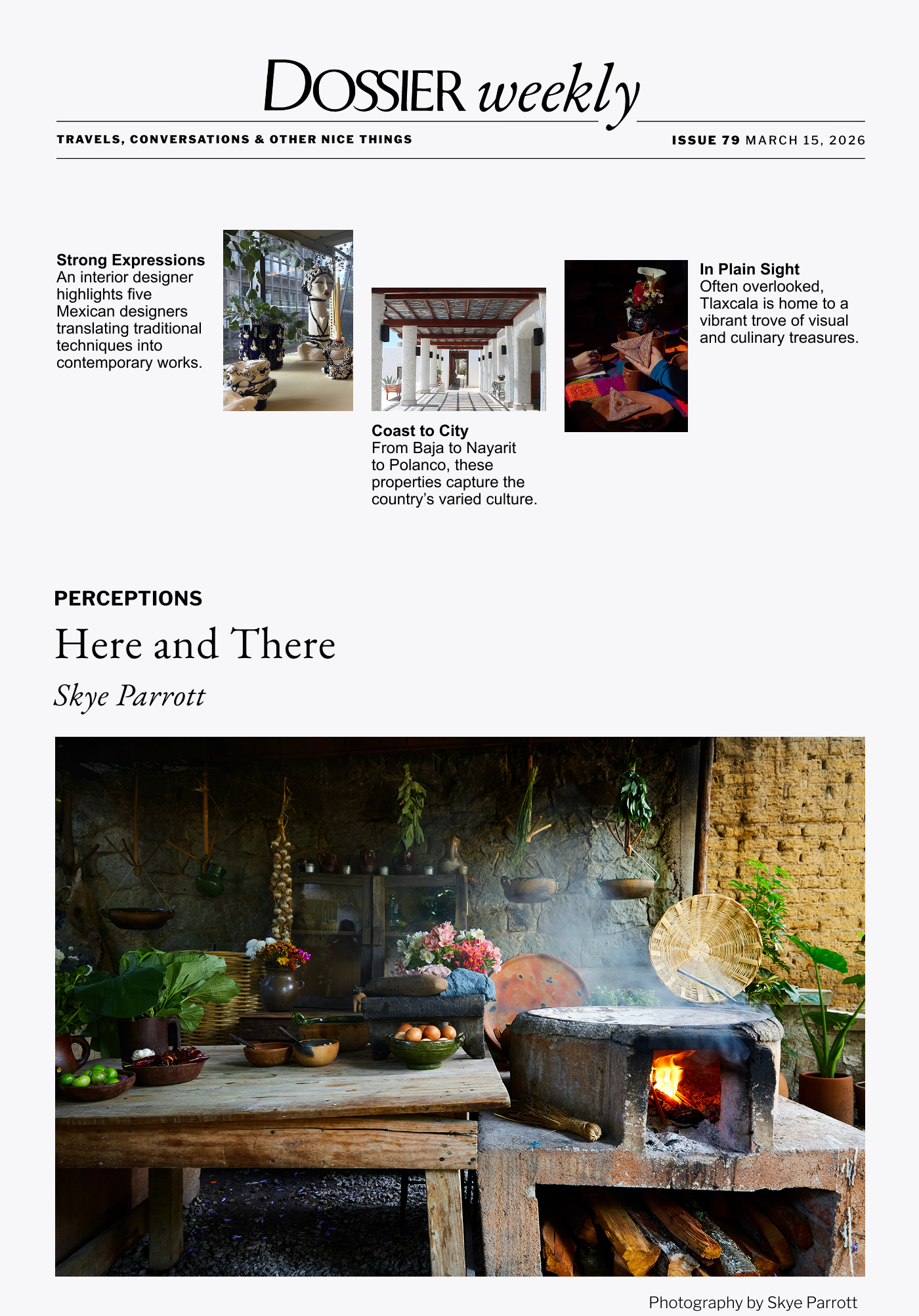
When we told my mother-in-law we were moving to Mexico, she was nervous. She worried about her grandchildren, asking a question I would hear over and over during my years living there: Is Mexico safe?
This was close to a decade ago, before the entire world felt quite as tenuous, before the fairytale of American exceptionalism had been so utterly exposed. We’d been living in Brooklyn, where a landmark mansion on our block listed for $6 million. And although I regularly received alerts on a local app about nearby shootings, no one ever asked me if I felt safe living in New York City. I reassured my mother-in-law that statistics showed the area we were moving to — now branded as Riviera Nayarit — had one of the lowest crime rates in Mexico. And I pointed out: My children’s new school didn’t have to conduct lockdown drills, unlike their schools in the United States.
While no place is free from the realities of corruption and politics, our small Mexican town afforded my kids way more freedom than they’d had in New York. My 11-year-old and his friends would show up on each others’ doorsteps unannounced, assembling into small, loose bands that moved through town, their sandy feet clad in flip-flops. They'd gather in the plaza, toting surfboards and eating paletas because all around them — on the street, in the stores, driving the motorcycles and golf carts passing by — were people who knew them. They got to have a childhood that reminded me of my own in the ’80s, with a lot of autonomy and a bit of wildness because they were a part of a true community.
I came to respect and love so many aspects of Mexican culture during my time there, particularly this profound sense of community, which comes from a deeply rooted value placed on human decency. In order to experience it, you only need to have your car break down at a traffic light. Before you have a foot out the door, you’ll find your car being pushed through the intersection by a group of men, strangers working together. They disperse as quickly as they assembled, asking nothing in return except your reciprocity when you see a neighbor in a similar predicament.
Perception is very important, and it’s often shaped by the stories we’re told.
Taking a small detour: I was living in Paris in 2023 when Emmanuel Macron pushed through an extraordinarily unpopular pension reform. The French, of course, protested. I could see police and protesters teeing up for these marches from my desk, which overlooks a large boulevard. The protests were notable for their duration and frequency, but they were certainly not unordinary. Protesting is a part of life in France, a national pastime. During that period, I read about retirees who form social clubs to attend protests in groups.
But when I logged onto calls with colleagues in the United States, I would see looks of deep concern on their faces. Was I okay? Was Paris safe? The videos they had seen showed rioting, fires, cafes being vandalized. Were these incidents occurring? Yes. Was the attention they were receiving, as they looped endlessly on social media and TV news, disproportionate? Also, yes.
That vast gap between what America was seeing and what I was experiencing was an important lesson, one that has instilled in me a healthy skepticism about how much I can know about places where I’m not. Even so, when I began seeing videos of burning buses and airports in Mexico a few weeks ago, I reached out to friends there to make sure they were okay. They were fine, they all said. Following one day of lockdown, life was back to normal. They reflected the same disconnect I had experienced: a gulf between reporting and reality. Some of the videos being shared weren't even in Mexico, a friend incredulously pointed out. One was actually taken at an airport in Asia.
Mostly what I heard was concern from my friends about how this media storm would impact their neighbors. Tourism is a huge industry for the country, tied to the livelihoods of many millions of people. When people are too scared to visit Mexico, those who already live close to the economic edge suffer. The guy who offers fishing boat tours has no trips, the taxi driver has no rides, and the cleaning lady has no tips.
One of the greatest gifts global travel has afforded me is some understanding of the many complexities of the world — and the ability to question the narrative that places the United States at its center. Just like its northern neighbor, Mexico is a big, complicated, diverse place, with wildly different realities from city to town, state to state. It’s also one of my very favorite countries (only Italy comes close), a place I return to every chance I get. In the past weeks, people have been asking me if they should still visit Mexico. My answer is always: Yes. |
|
My relationship to Mexico is long-term and lived. Twenty years ago, I came here with curiosity and a sense of adventure, not knowing this would become my permanent home. Over time, the country stopped feeling like a destination. It became the foundation of my life. My children were born and grew up here. My friendships, routines, and work are rooted here. Mexico has shaped how I see beauty, how I design, and how I understand community. The country’s creative language feels deeply connected to land and history. There is a strong relationship to material: stone, clay, wood, woven fibers, folklore, and handcrafts. What makes this language distinctive is its confidence. The ancient and the contemporary do not compete. Color is used naturally. Craft is taken seriously. Imperfection is valued. Beauty is never separated from daily life.
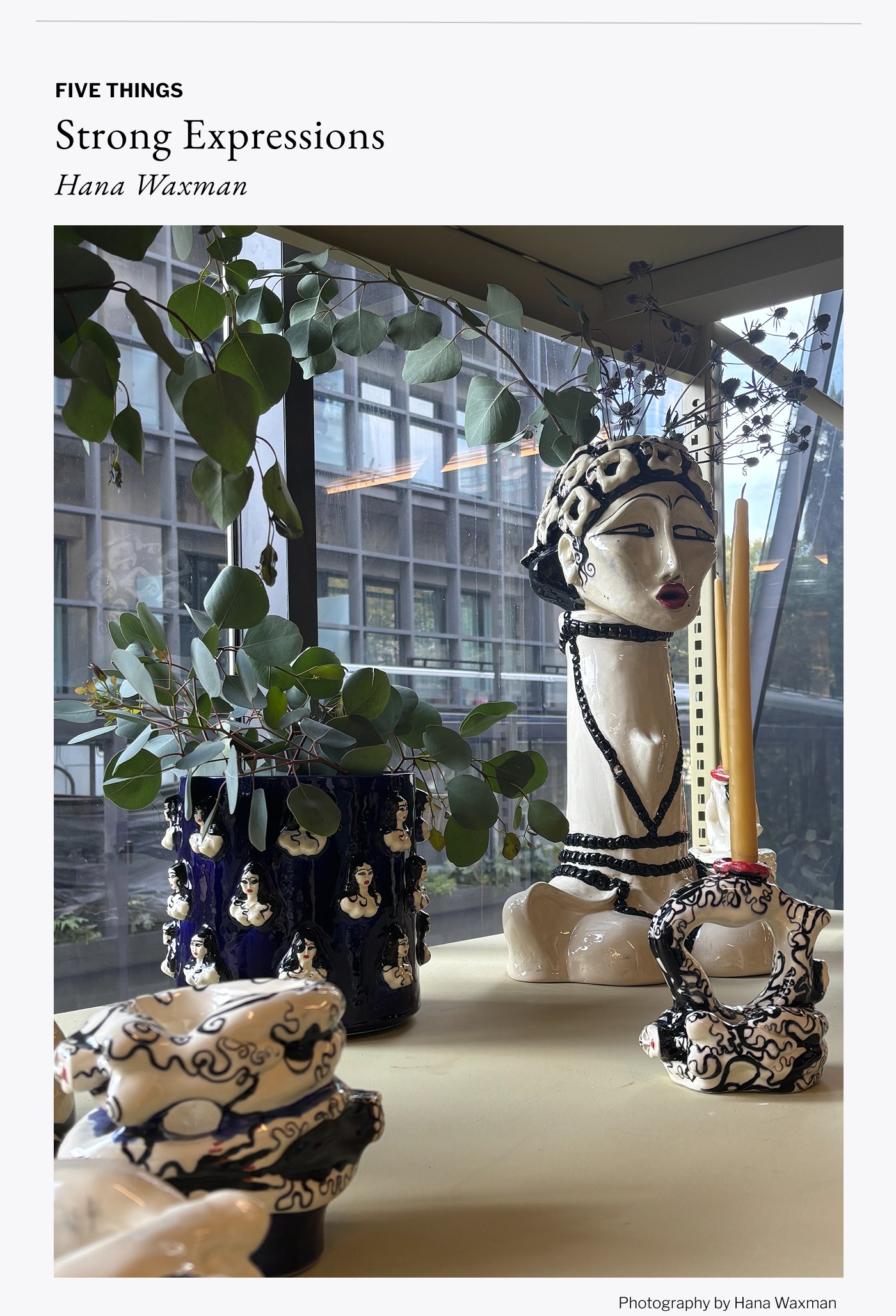
Every year, I attend the Zona Maco art fair in Mexico City to see how these values are explored by designers and galleries, both well-established and up-and-coming. Below are a few of my top finds. All respect process and material, working with local artisans to translate traditional techniques into something more contemporary. Ago Projects. A gallery for collectible design and art, Ago Projects is a strong introduction to the country’s current creative voice. It represents contemporary Mexican designers who are working closely with heritage craft and material, with an emphasis on the handmade.
Masa Galería. Sitting somewhere between art and design, this gallery caught my attention with its bold, thoughtful sculptural work, each piece carrying its own story.
Estudio Difane. I often order from this beautifully curated showroom. Its founders, Fernanda Salamanca and Andrea Gadsden, champion both emerging and established talent in Mexican contemporary design, often cultivating community through beautiful collaborations. Angela Damman. Mexican textiles carry memory through generations. Nowhere is this more true than at Angela Damman, a sustainable luxury brand that works with native plant fibers and artisans in Yucatán to preserve ancient weaving traditions.
Azotea Studio. This is the ideal destination for seeing how younger designers are driving Mexican aesthetics forward, experimenting with form and material, particularly through upcycling, resulting in pieces that are rooted in heritage yet feel entirely new.
|
|
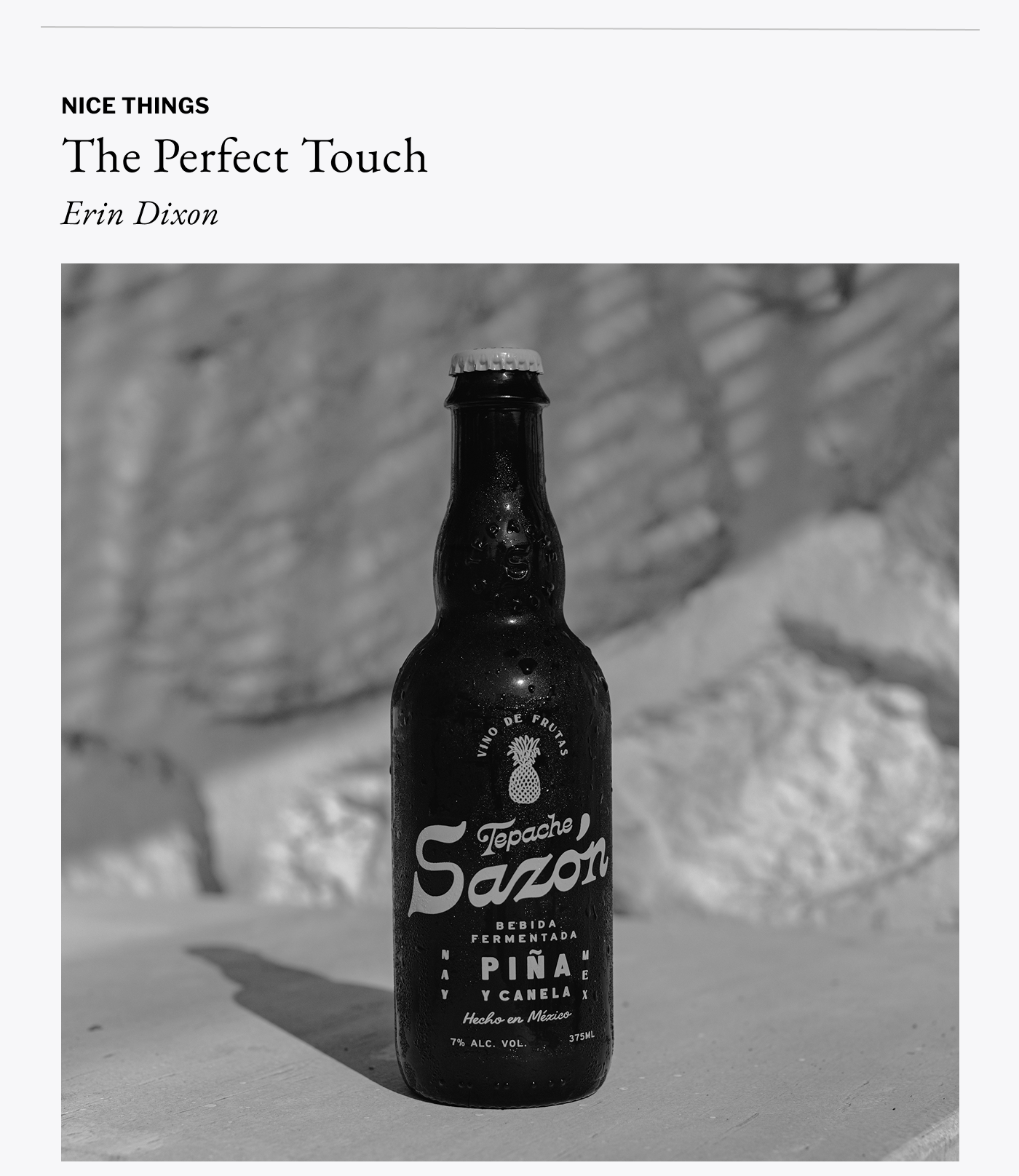
Down a bumpy dirt road on the outskirts of the popular beach town of San Pancho on the Riviera Nayarit, the air is lightly perfumed with the scent of pineapple. The only hint at its origins are crates of beer-like bottles featuring flamingo pink print that reads Tepache Sazón, lying outside a bright turquoise warehouse. “It’s the start of pineapple season,” Tepache Sazón’s head of operations Sebastian Medina clarifies. “So right now we don't have any fruit production, but we are doing all the bottling.” He invites me into the building where the company’s chemistry engineers, biotech engineers, and biochemistry engineers — recruited from across Mexico — turn local pineapple and guava into tepache, a traditional Mexican drink most often brewed in plastic bags, he says.
By contrast, Tepache Sazón uses a highly controlled fermentation method akin to champagne making to create a crisp, refined alcoholic beverage that it bottles for an ever-growing fan base across Mexico and the United States (notably producing an exclusive seaweed version for Rubra, chef Daniela Soto-Innes’ acclaimed, and exceptional, restaurant at W Punta de Mita, just down the coast). But tepache’s origins and attributes are best explained by Medina himself.
“Tepache has been in our culture since forever, since pre-Hispanic times. You can find it anywhere in the streets. You can find it at the market. The great thing about tepache is that there's no right way to do it; it's really open to different variations, different interpretations. It's a truly democratized drink.
I'm from Mexico City so, for me, tepache is more about the street — like, when you go for tacos, right next to [the stand] is tepache because the pineapple cuts the grease. It's awesome. My grandmother also used to make tepache, but in a more medicinal way because there are a lot of probiotics in it, bacteria that are good for the stomach. The most common tepache you’ll find is in a plastic bag, where the actual fermentation is happening.
Tepache Sazón is a new interpretation of the same drink. Our recipe is a celebration recipe. It's meant to be shared. We started with pineapple, and we just launched guava, which is drier and has a lot of hibiscus flavor. People love it. The guavas we source are from Calvillo, in Aguascalientes, and we grow our own pineapples here with a third-generation grower — Nayarit is known for having the best pineapples in the world. We're experimenting with mango, which is also big here in Nayarit.
We do a first fermentation of the juice to turn it into wine. So we have a pineapple wine that is the base of the product. Then we put that wine in those tanks and do a second fermentation. We add more juice and we have the secret ingredient: natural brown sugar (it’s a traditional Mexican sugar). Then the yeast starts eating those sugars again. It’s just like champagne.
Sazón is a common expression used to describe the touch that makes things special, like the meatballs my grandma used to make are unique, that’s her ‘sazón’ — or you might hear a Mexican say, ‘That restaurant has a great sazón.’ But the cool thing about the word is that when the pineapples are ready to be cut, we say, ‘Las piñas estan sazón,’ which means ‘The pineapples are ripe.’ So it means both the ‘perfect touch’ and the ‘perfect timing.’”
|
|
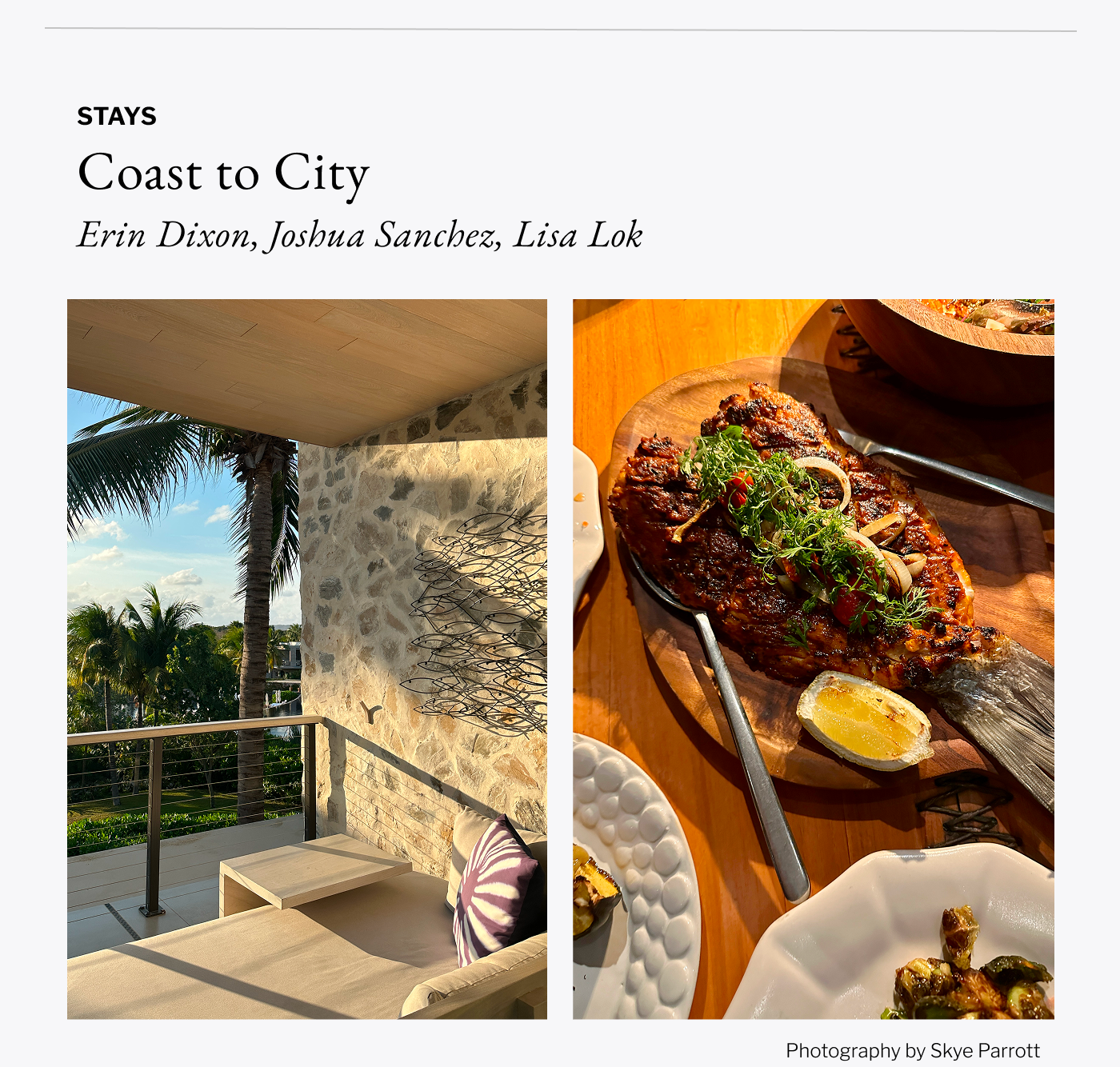
Susurros del Corazón, Auberge Collection, Punta De Mita. Along the Riviera Nayarit, once you pass the Walmart, Home Depot, and general commerce of Puerto Vallarta, the jungle takes hold. Its tangled, formidable barrier and dark caverns are broken only by concrete walls that obscure more manicured worlds, displacing the native landscape, thick with perching iguanas and chachalaca squawks — one of more than 530 bird species that inhabit the coast. Within these groomed enclaves, the wildness is often tamed, relegated to corridors split by golf cart paths. But Susurros del Corazón is different.
At the airport, a resort representative greets you with an Ojo de Dios, a traditional craft originating from the Indigenous Huichol people, that represents the power of seeing and understanding beyond the physical realm. Upon arrival at the resort, you receive a glass of fresh tepache (spiked with tequila if you like) before being led to your room, which is framed by a wall of windows leading to a massive, ocean-facing terrace. The room's interior is populated with locally made handcrafts and amenities, such as palo santo-infused Nuevo Higos Everything Mist and body lotion that smells of the steamy tropical flora outside.
Cinnamon-laced coffee is delivered each morning in a woven basket, inviting you to sip it while watching the waves crash — or mama and baby humpback whales frolic and breach, as I witnessed one breakfast while I enjoyed papaya spiked with lime at Casamilpa, one of the resort’s three restaurants.
The property’s attention to distinctive details extends from its intuitive, generous team to its spa, Onda, to the gifting of a beadwork heart, placed bedside. The design is rooted in the spiritual practices of the Indigenous Huichol, or Wixárika, people from the Western Sierra Madre mountains. It is also a nod to the resort’s name, which means “whispers of the heart,” an apt summation of its philosophy. Susurros del Corazón’s intention is not to dominate its environment nor impose itself on this enchanted landscape but, rather, to honor it as unobtrusively as possible — to create an environment in which guests, too, fall in love with its wild magic. –Erin Dixon |
|
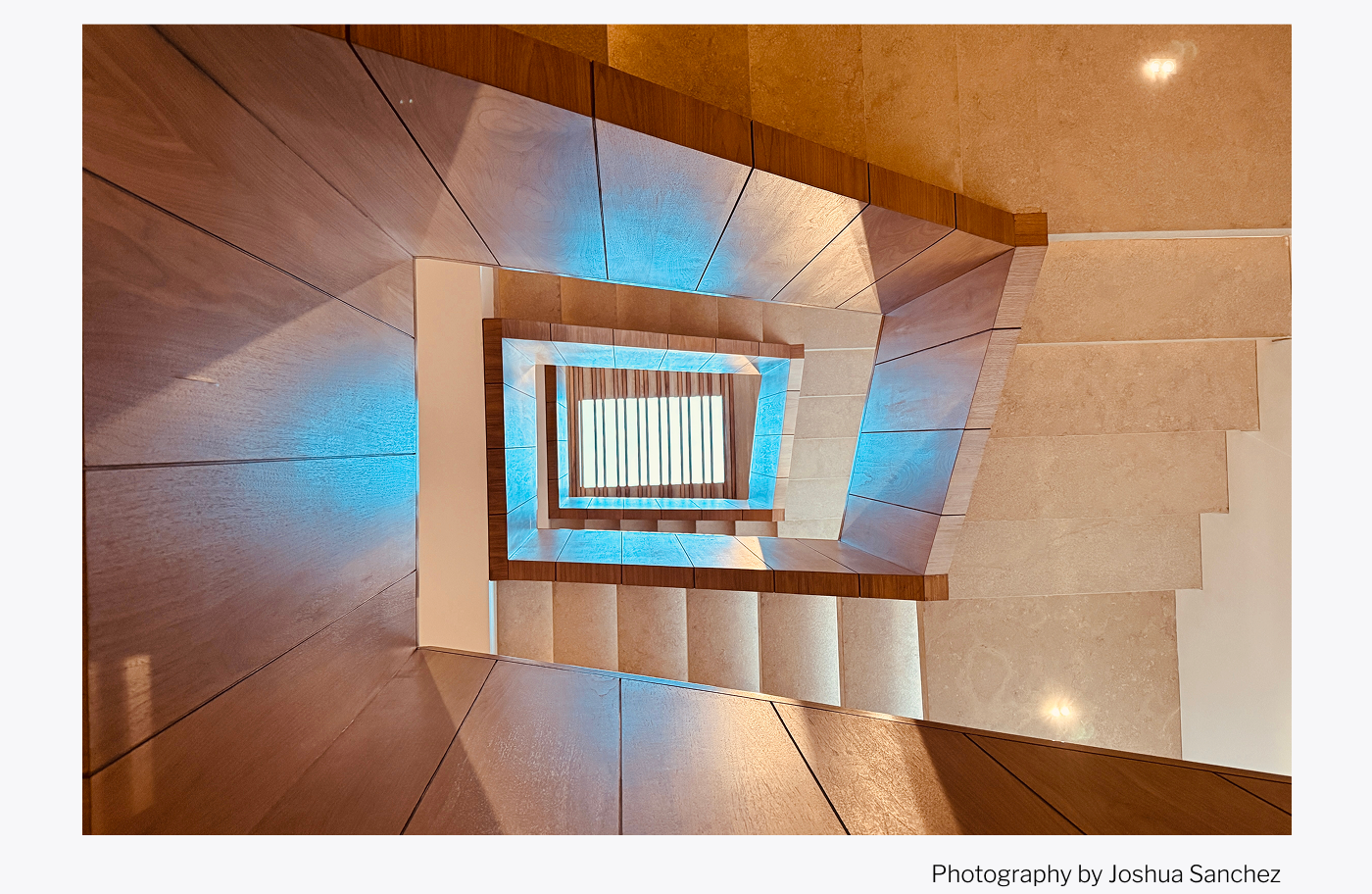
Casa Polanco, Mexico City. If you’re traveling from the United States to a destination in Mexico outside of one of the country’s major cities, you’ll almost always need to change flights in Mexico City. Faced with this conundrum on a recent trip to the Oaxacan Coast, my friend and I opted to spend a leisurely night in the capital’s swanky Polanco neighborhood.
A boutique hotel located across the street from Lincoln Park, Casa Palanco is near some of the city’s best restaurants — notably, Enrique Olvera's Pujol — and within walking distance of the famous Bosque de Chapultepec park. A friendly hotel staff member welcomed us with chilled rosé before showing us around the meticulously restored (and updated) 1940s Spanish-style mansion, with 19 rooms and suites featuring handmade textiles, custom furniture, and one of the softest, most comfortable beds I’ve ever slept in. We spent our entire evening on the balcony, sipping whiskey and taking in the fragrant evening, enhanced by the surrounding gardens. The next morning we enjoyed a modern take on classic chilaquiles in the hotel’s sunny garden atrium. We could have stayed at Casa Polanco for several more days, but the beaches near Mazunte were calling. –Joshua Sanchez |
|
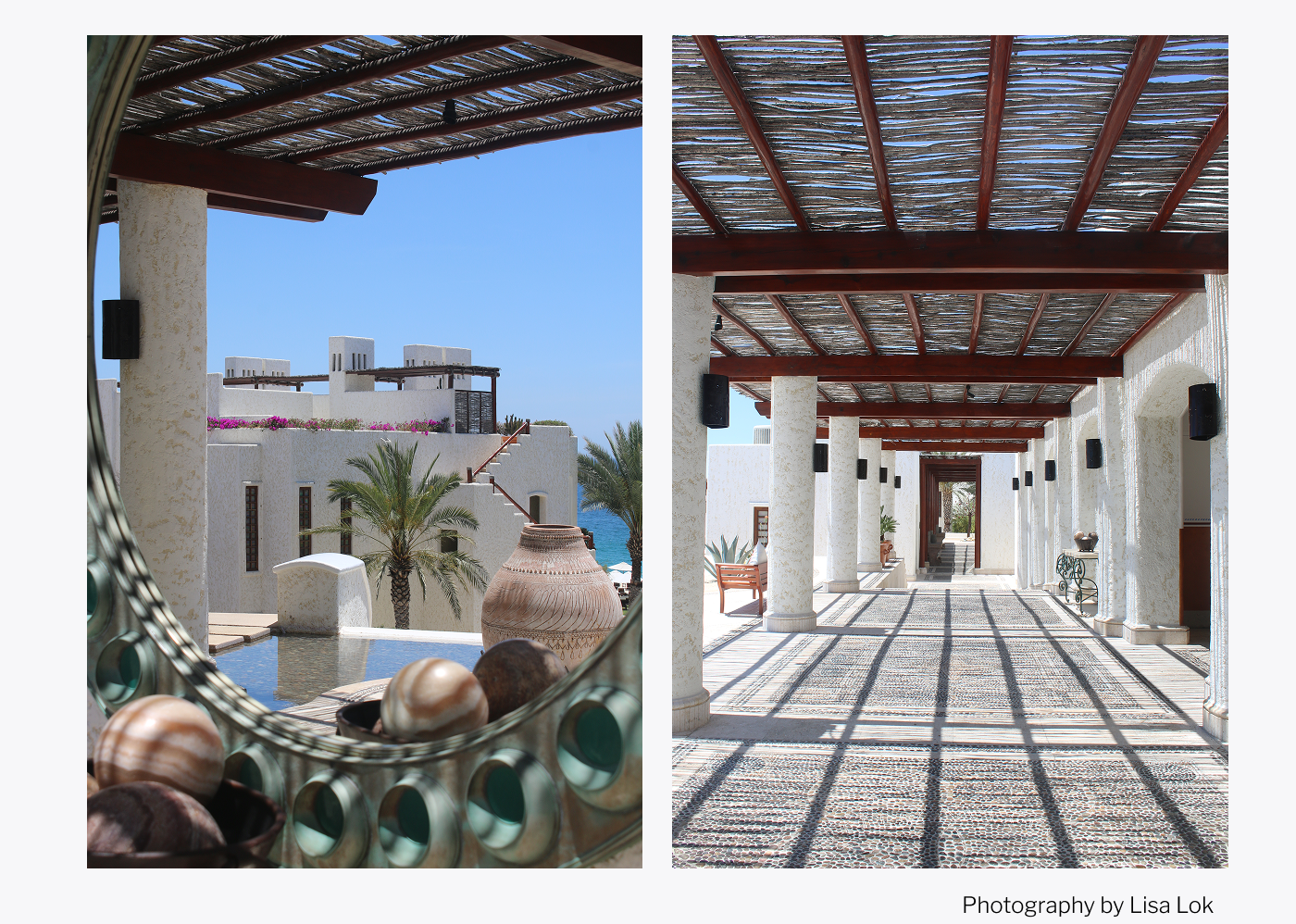
Las Ventanas al Paraíso, a Rosewood Resort, Los Cabos. Throughout my stay at Las Ventanas al Paraíso, the resort’s name, which translates to “windows to paradise,” often came to mind. The property’s architecture, rooted in white hacienda-style stucco, perfectly frames the landscape and blindingly blue ocean, creating an entrancing interplay of light and shadows, and setting a thoroughly serene scene.
The best view … Overlooking the beach and Sea of Cortez from my outdoor terrace. Watching the sunrise’s orange hues swirl into pink and blue while you can still view the moon is not a bad way to beat jet lag.
A relaxing moment … Throughout the property, lizards blend into their surroundings, soaking in the sun on rocks or scurrying across pathways. I found myself taking their lead, finding stillness while reading a book and letting the waves serve as my soundtrack.
A dish I’d recommend … Fresh, made-to-order tortillas filled with mushrooms and zucchini blossoms from Alebrije restaurant.
A secret corner … Tucked in an unassuming corner near the spa, La Botica, a speakeasy, transports you back in time to an old apothecary with craft cocktails (a questionnaire helps the bartender tailor one to your liking), dim lights, and live music.
The best amenity … The Twilight Ceremony performed at dusk in The Spa’s solarium, where I experienced a purifying and cleansing “limpia” ritual, said to be adopted from the ancient shamans of Baja California. The ceremony transcends your senses (with sage smoke, crystal sound bowls, harmonic animal tones, prayers, and a large eagle feather), driving negative energy from your body. –Lisa Lok
|
|
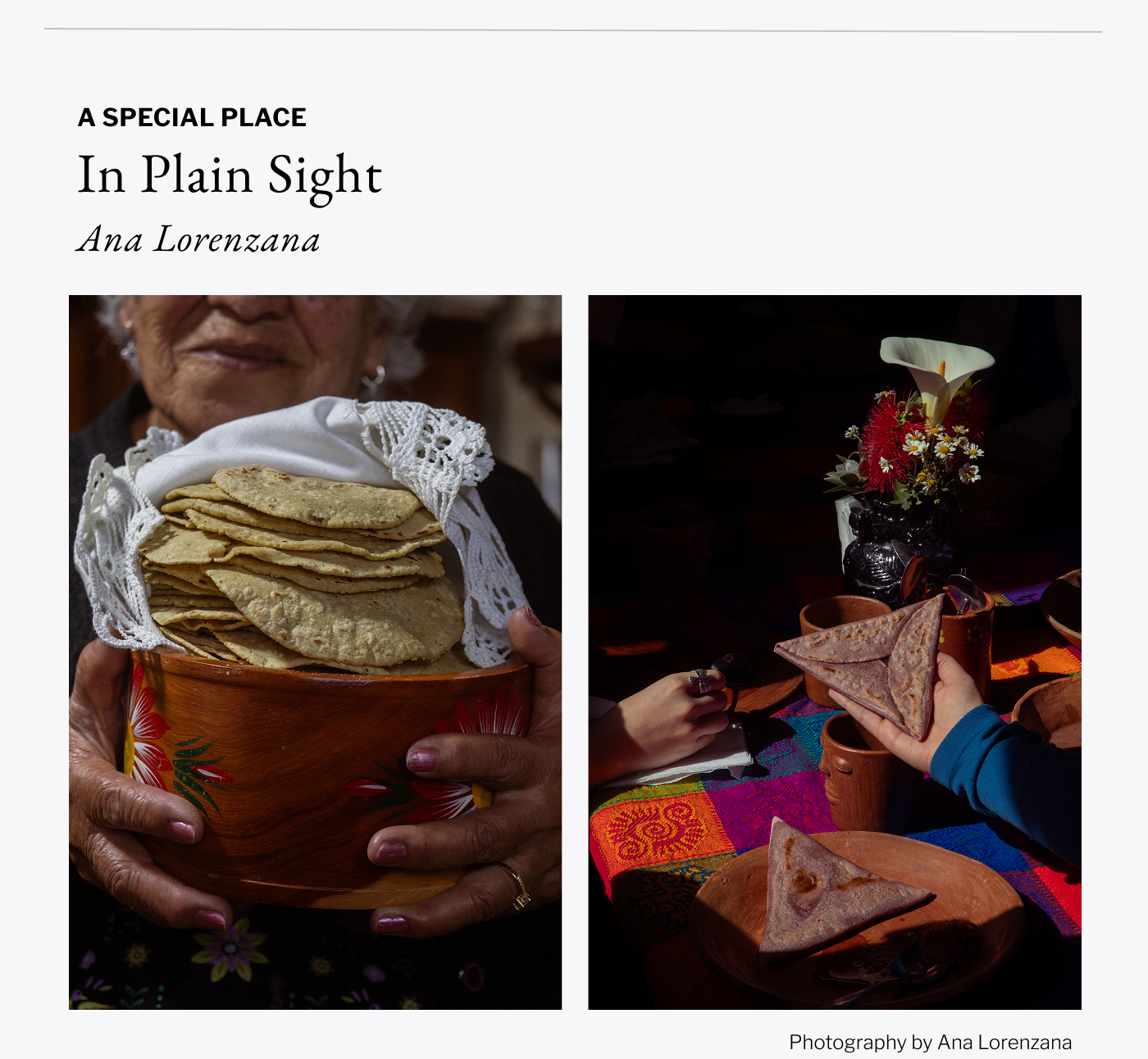
These photographs were taken in Tlaxcala. I keep going back there. My friends make fun of me for it. In Mexico, there’s even a joke that says, “Tlaxcala doesn’t exist.” I’ve become slightly obsessed with proving that it does.
What interests me photographically is the native corn in so many beautiful colors, and the pulque. Every time I visit Tlaxcala, I go to the milpas, to the agave fields, and to the families who grow and cook with corn. I’ve eaten some of the best tortillas and tetelas there — and had the best purple atole. Pulque is my favorite traditional Mexican drink, and here pulque culture is still very much alive. People understand it, take care of it, and make it incredibly well.
These images are important to me because they document a region of the country that doesn’t always receive much attention. Photographing Tlaxcala makes me happy and proud. It’s a place I care about deeply. |
|
The Big Chill. Browsing Peacock after the Olympics, I discovered Ponies. The spy thriller stars Haley Lu Richardson, Emilia Clarke, and Budapest, Hungary, which doubles for 1970s Cold War-era Moscow. The series’ interiors, wardrobe, and architecture sent me down an aesthetic rabbit hole, which may end up in my purchase of a colorful Lada automobile, or, at the very least, in another glass of Stoli. –John Chuldenko
Making Projections. I recently bought a Nebula Capsule 3 Laser. It's a relatively compact, portable projector, perfect for watching a movie while in bed or anywhere else. But before I even tested its portability from my room to the backyard, I took it on a trip across the world, to India, which made for incredible quality time with my sister. We watched our favorite shows, with the crispest sound and image. A bonus: It runs for up to two and a half hours without needing to be plugged in, characterizing it as truly convenient. –Nishi Patel
Royal Treatment. Cleopatra is alive and well in my home, via Noén. Inspired by the rituals of the alluring ancient queen of Egypt, the skincare brand sells a silky botanical oil called Nile Oil, which possesses a lovely, almost vegetal scent. “Earthy” doesn’t quite do it — the note is higher, more clean and watery. My hands get horribly dry in the winter, aggravated by my compulsive handwashing problem (anyone got a magic oil to cure germaphobe neuroses?). This oil soothes skin flakes and cracks. It also adds a nice luster to my arms when I go out at night in a shoulder-baring number. And the bottle is a little, sculptural glass thing, with an elegant font that looks pretty in my medicine cabinet. –Sophie Mancini
|
|
54 Franklin St #2R NY, NY 10013. ©2026 Dossier Projects, LLC.
|
|
|
|
|