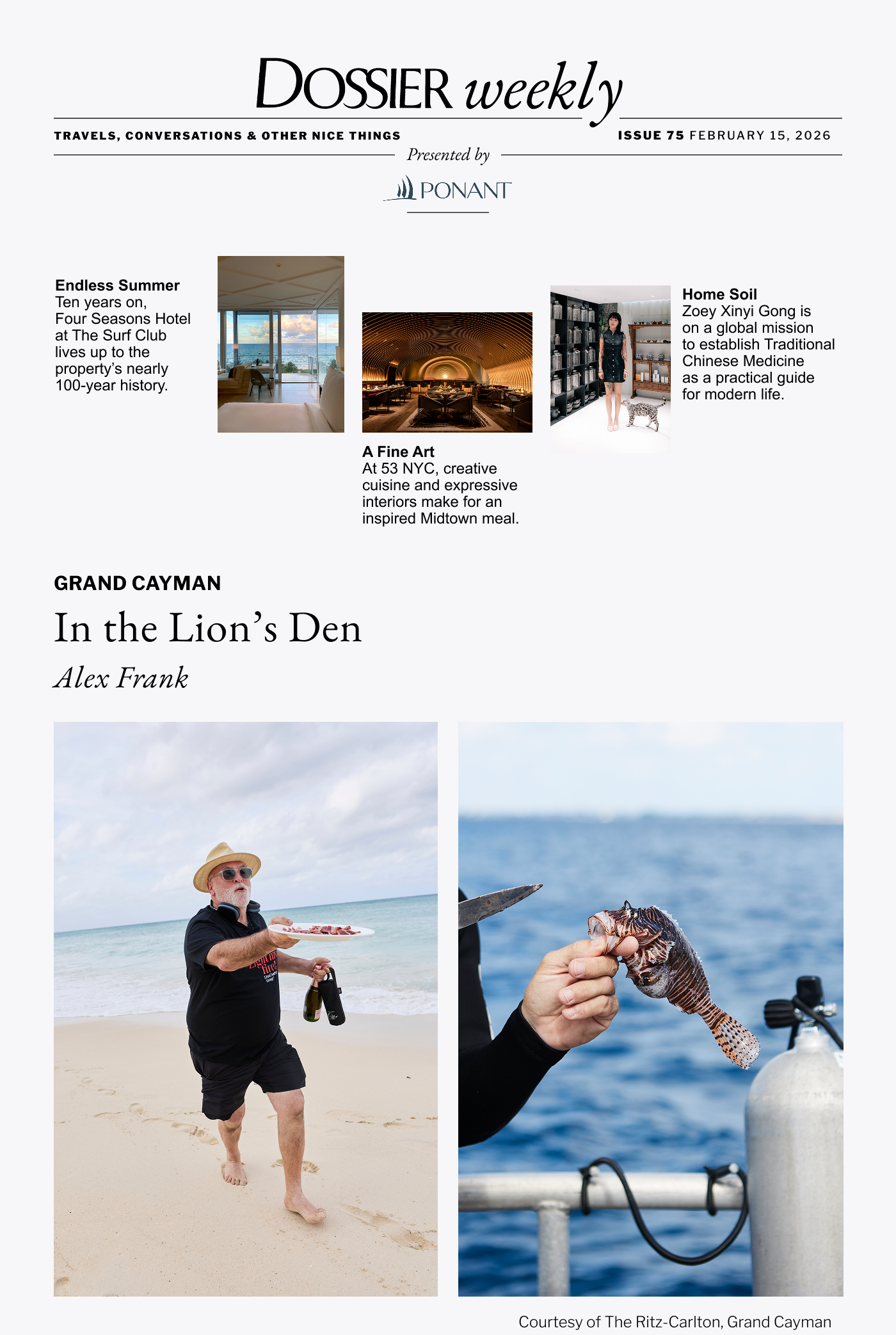
It’s 9 a.m. and the shallow part of the Caribbean is the color of cyan. “It’s time to start drinking, yes?” asks José Andrés, half-joking as he steps aboard the wide, open-plan boat that will serve as his headquarters for the day.
At this beach dock in Grand Cayman, he’s gathered a small, familial crew: his wife Patricia and daughter Inés, along with his old friend Aldo Sohm, the legendary Le Bernardin sommelier. This morning, Sohm is charged with filling the boat’s cooler with white and rosé wines. The group has assembled for one of Andrés’ favorite rituals: scuba diving and, more thrilling still, spearfishing, followed by the immediate pleasure of cooking whatever the sea yields.
After casting off into the ocean, Andrés — the James Beard Award-winning chef widely credited with exposing American diners to the best of Spanish cuisine — explains that we’re here to hunt lionfish, a wildly invasive species whose voracious appetite is devastating local marine life. Native to the Indo-Pacific, lionfish — beautiful, venomous, ruinous — first started appearing off Florida’s coast between the late 1980s and early ’90s, possibly the result of people purchasing them as pets and, when tired of them, releasing them into sewers. They’ve been multiplying ever since.
With no natural predators, a single fish can release tens of thousands of eggs every few days, then set about vacuuming up everything smaller than itself, hollowing out the reef from the inside. “It’s kinda like cutting grass. You go fishing every day and do what you can,” says Jason Washington, a local diver who pioneered this environmental spearfishing practice. “We protect what we love.” Andrés first heard about Washington’s efforts years ago when he was on the island for the Cayman Cookout, a longstanding culinary festival started by his friend, the iconic French chef Eric Ripert. Held at The Ritz-Carlton, Grand Cayman, with title sponsorship from private aviation company Wheels Up, the event has become an annual pilgrimage for foodies, with chefs like Ripert, Andrés, and Gregory Gourdet hosting cooking demos, multicourse dinners, and moderated conversations about the world of restaurants and wine. In many ways, the cookout’s mission is a consummate Andrés pursuit — part food, part philanthropy. The Spanish American chef and restaurateur is as famous for his gourmet cuisine as he is for his work as the founder of the World Central Kitchen, a non-profit that provides food relief for people living in the wake of disaster: the 2010 earthquake in Haiti, the wars in Gaza and Ukraine, hurricanes and tsunamis all over the world. Today, Andrés, Washington, and friends are going on two dives. We stop the boat on a wide expanse of Prussian blue water. The first dive comes up short, so Washington drives the boat a bit farther out. Andrés grabs his spear and swims down; within 30 minutes, he’s captured a whole barrelful of lionfish, which he brings to the surface with glee. On the boat, the fish flap against the barrel’s clear plastic insides. Washington euthanizes the catch in ice, then carefully de-spines each animal to extract its venom. Alongside chef Thomas Tennant, Andrés chops up the filets to make a beautiful ceviche, and — on a pair of portable burners he’s brought — a rich, auburn stew. “It’s fish and love,” Andrés says of the primary ingredients. Sohm pours glasses of rosé — Westmount, from Oregon — passing them around the deck as Creedence Clearwater Revival hums from a speaker, its rhythm weaving through the metallic clatter of Le Creuset pots. Andrés is fully in his element. He says he used to come to the Cayman Cookout purely for the food; now, he’s just as drawn by the chance to help save the reef, one lionfish at a time. “This is everything I care about at once,” he says, gazing out at the unending water. “It’s … exciting.” |
|
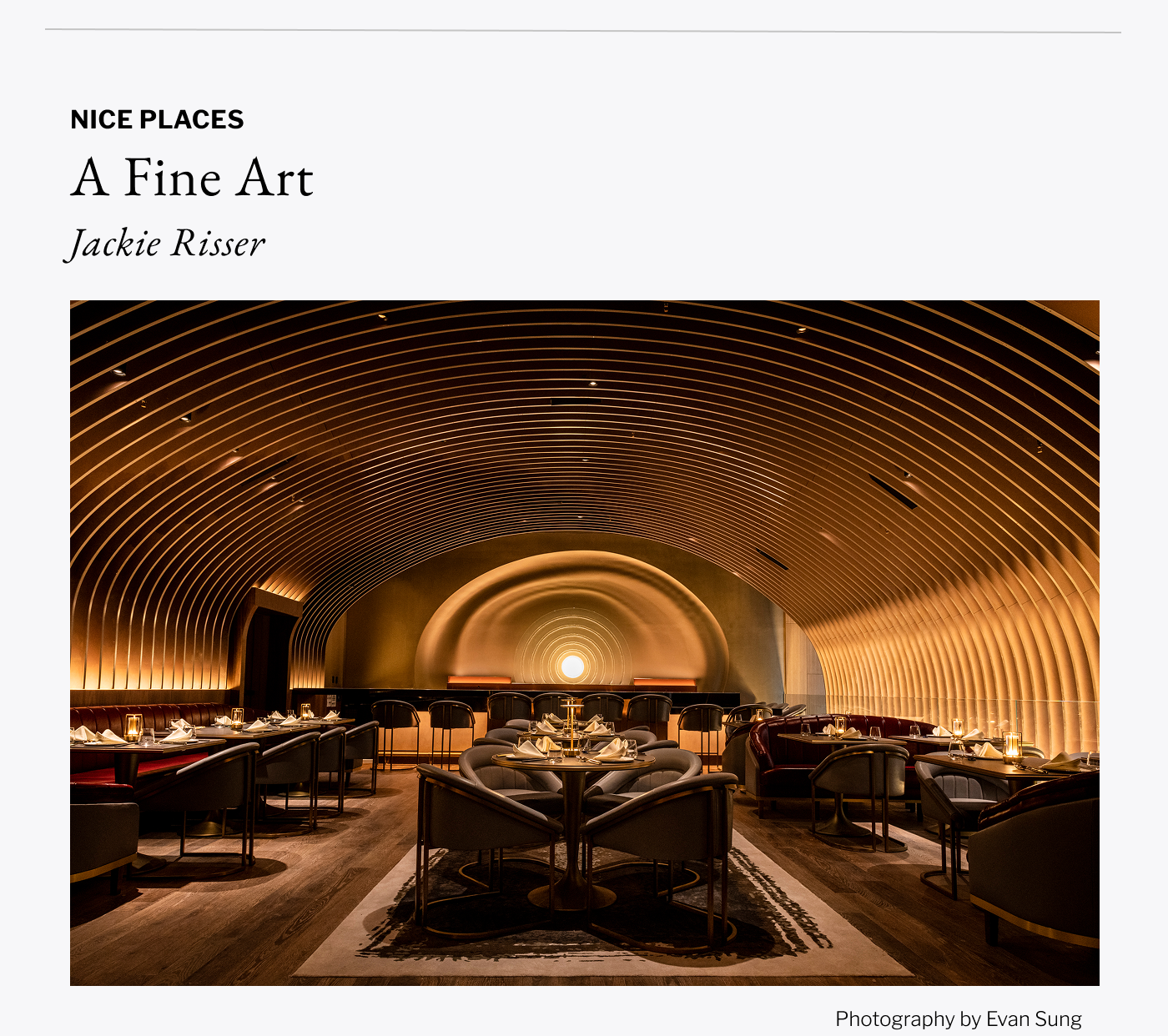
If you find yourself on 53rd Street in New York City between 5th and 6th Avenues, there's a strong chance you'll run into a Dossier editor. The block is home to a host of notable locales: the Museum of Modern Art (MoMA), of course, as well as The Modern restaurant, Baccarat Hotel New York, and our latest discovery: 53 NYC. Set at the foot of a Jean Nouvel-designed tower, beneath MoMA's new extended wing, 53 is a contemporary Asian restaurant and cocktail lounge led by renowned executive chef Mark Yu (formerly of Pastis). Here, Yu weaves together Asian and Asian American culinary traditions into elegant shared plates that span a truly addictive cucumber salad, artfully crafted shumai with lobster and black kaluga caviar, and a reimagined Singaporean pie tee with duck confit and smoked chili aioli, wrapped in a tiny, crispy shell. Head bartender Aaron Kim's cocktail program includes a dangerously crisp saketini as well as bright twists on a margarita (mezcal with calamansi, guava, sichuan pepper, and himalayan salt) and old fashioned (iwai japanese whiskey, woodford reserve bourbon, okinawa kokuto sugar, mandorla grappa, and bitters).
Despite boasting 11,000 square feet and multiple levels, the space feels intimate thanks to soundproof booths, suede-lined walls, and rotating art installations curated in partnership with Petzel Gallery. Consider it a soft embrace after a day spent wandering MoMA's halls. |
|
Four Seasons Hotel at The Surf Club is one of those bucket-list places. It had been on mine since 2014, when Richard Meier & Partners was hired to transform The Surf Club from a legendary but crumbling 1930s seaside boïte with an infamous guestlist into a Four Seasons property comprising both hotel and residences, all located in Surfside, the (relatively) sleepy beach town on the northern end of Collins Avenue that has long been an oasis from the bustle of Miami Beach. It was designed that way, with early members of The Surf Club incorporating the town in 1935.
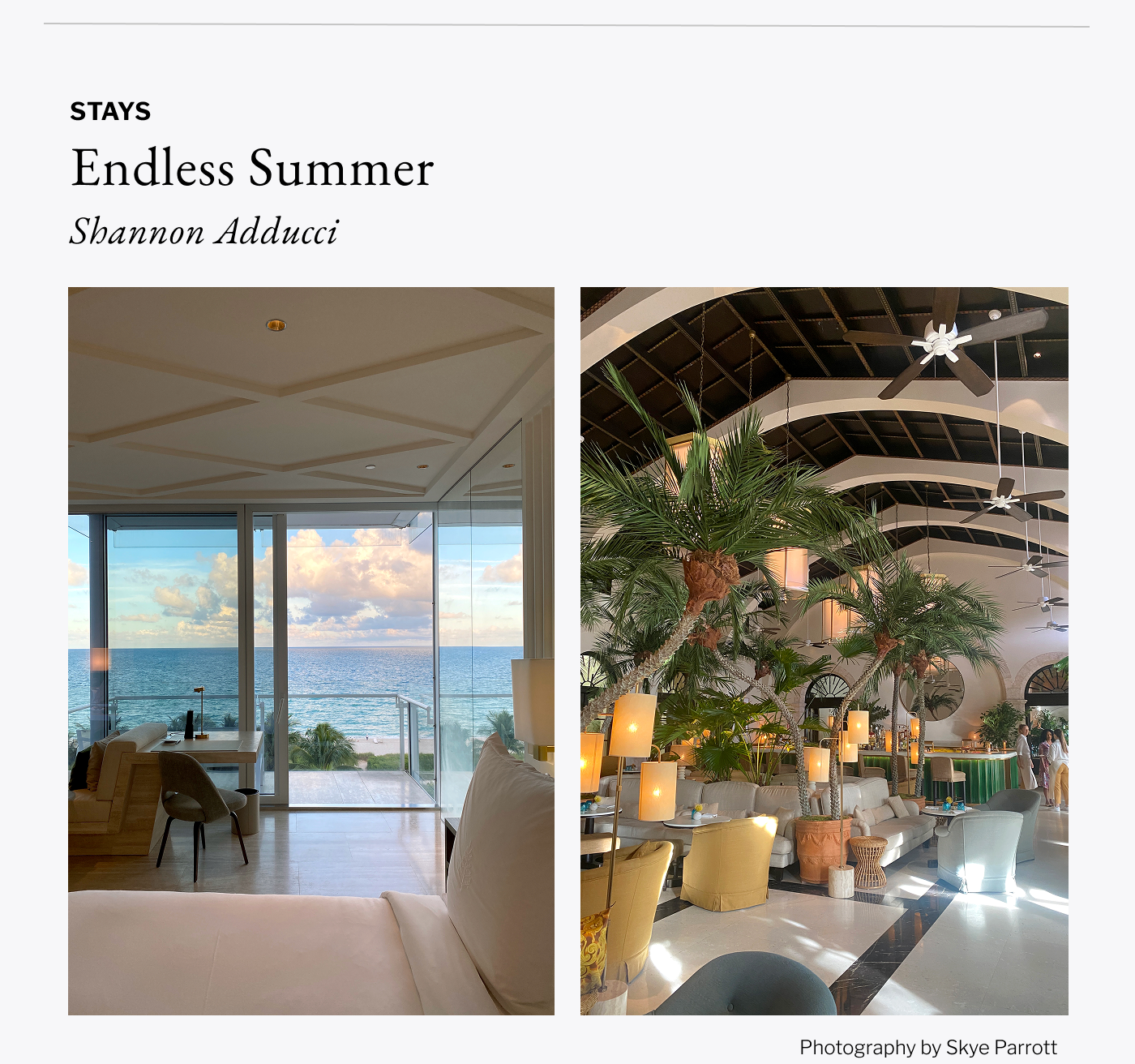
The revamped property opened in 2017 to much fanfare; it’s been a staple on “best hotels” lists since. I finally visited this past fall, just as the property was nearing its 10-year mark. That’s not always good news for Miami hotels, which tend to age like bananas in all that sweaty, salty air. But any trepidation I had dispersed as soon as I walked into The Surf Club’s lobby and felt the cool, weighty presence of its original coral stone (Miami Oolite, to be precise) walls and columns. They were strong as ever, holding the hotel’s historical energy without any mustiness.
Upstairs, my room still felt brand-new, sleek and fresh in all the best ways, with an intuitive design and finishings that didn’t distract from the main attraction: the view. Starting each morning with coffee on my glass balcony, expansive sunrise views of the Atlantic Ocean on the horizon, I understood why the property’s residences have a waitlist. The limoncello almonds in the minibar helped, too.
I leafed through a copy of Assouline’s book on The Surf Club before stopping at Lido for a late brunch on the terrace, then wandering down the ivy-stenciled archways of Peacock Alley, where the mosaic fountain of the Hemingway Tower still bubbles behind restored wrought-iron gates. (You can get a private tour if you ask.)
But the spot that stopped me in my tracks was the lawn in front of the hotel’s bungalows. This is where The Surf Club’s founding members took their cocktails during Prohibition. The five bungalows have been fully restored and are available as nightly accommodations. Nearby cabanas, meanwhile, are open to day use and created in the spirit of the club’s foundational years, when the sand came right up to their wooden decks so that tipplers could frolic on the beach with discretion. Now manicured grass frames the space, but the original spirit stands. |
|
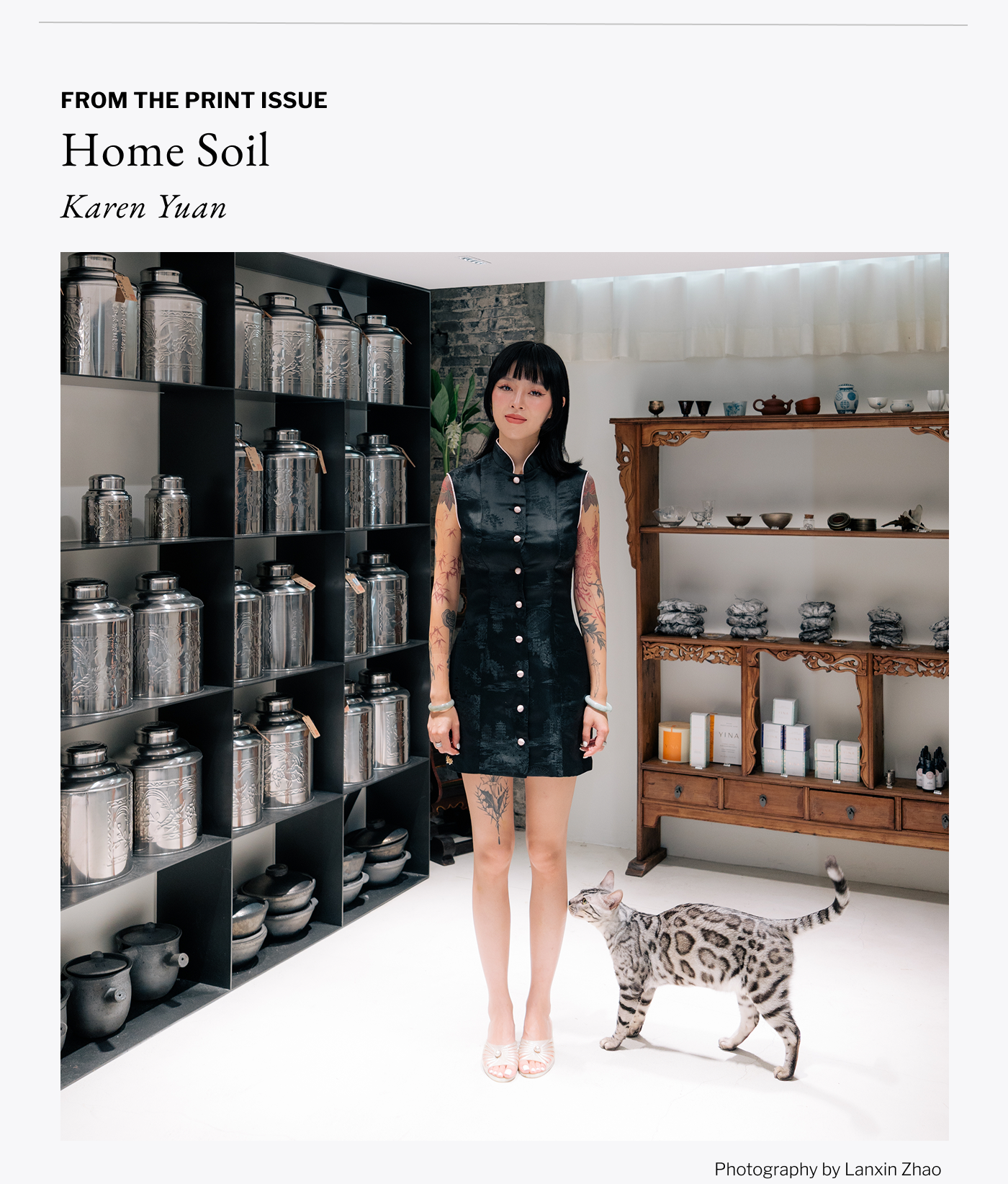
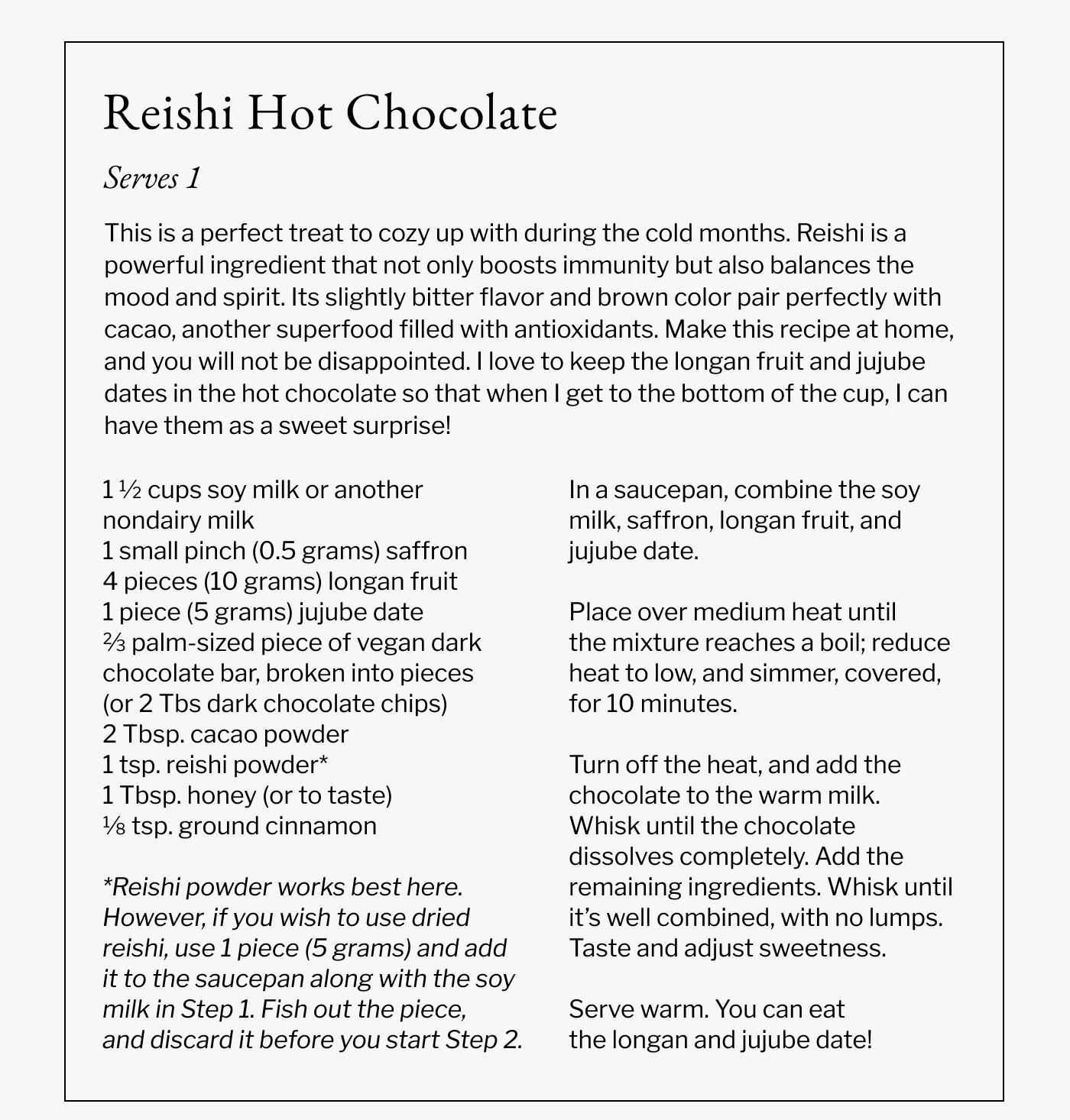
Adaptogenic tonics are having an American moment, packing beverage aisles from New York City to Los Angeles. Their labels list mushrooms such as reishi, lion’s mane, and cordyceps — all promising stress relief or a mood boost. For Zoey Xinyi Gong, these fungi are neither novel nor exotic. “These trends are usually taken from a tradition somewhere,” she says wryly. A globally reputed chef and practitioner of Traditional Chinese Medicine, Gong treats these ingredients as part of a discipline she studies, practices, and cooks with, one that predates modern wellness fads by millennia. She’s determined to show that the practice is for everyone. “People often misunderstand Chinese medicine, thinking you have to do this or that, or do acupuncture,” she explains. “But the core of it is guiding us to live as close to nature as possible.”
After living nearly a decade in New York, Gong returned to her hometown of Shanghai to continue pursuing her goal. Last summer, she opened Silver Root Apothecary, a sun-drenched studio in the city’s historic French Concession that advocates for TCM as a storied yet living practice. It’s the culmination of a long-delayed homecoming. During her time in New York, Gong was busy becoming a registered dietician, interning in hospitals, publishing The Five Elements Cookbook: A Guide to Traditional Chinese Medicine with Recipes for Everyday Healing, and co-founding Red Pavilion, a TCM-inflected nightclub in Brooklyn. (At one point, it served partygoers bone broth.) But, eventually, the city, once electric for her, began to dim. “New York stopped inspiring me,” she states plainly. “I was like: I’m not learning much anymore.” Due to pandemic restrictions, she also hadn’t visited her parents in China since 2019, and she missed them. The decision to return to Shanghai coalesced after she was finally able to return in early 2024. “It just felt right,” she confirms. “Everything was so comfortable.” There’s more at play than nostalgia. Traditional Chinese Medicine’s profile is rising in the United States: Jade rollers, gua sha facial massage, and mushroom lattes circulate TikTok and Instagram; celebrities from Gwyneth Paltrow to Tom Brady have sung praises for cupping and acupuncture. But the trends are often divorced from their origins. In China, too, Gong says, TCM is ubiquitous but still misunderstood. While clinics and hospitals specializing in Chinese medicine are common, the younger generation often views the practice as archaic — until they encounter its repackaging overseas. “People who’ve been abroad see how their own culture is being practiced by a non-Chinese person,” Gong muses. “And then this kind of younger person starts to be more proud of their own culture.” Silver Root encourages this revival. In a time when culture is so often flattened for export or diluted into trend, Gong hopes to show that TCM is neither decorative nor arcane. TCM is, she explains, about taking cues from nature on how to live. “All these treatments you’re doing are to bring your body back to harmony, to balance,” she says. “Nature is really good at balance.” Read the full feature and more close takes on a wide world in our latest print issue. Order now. |
|
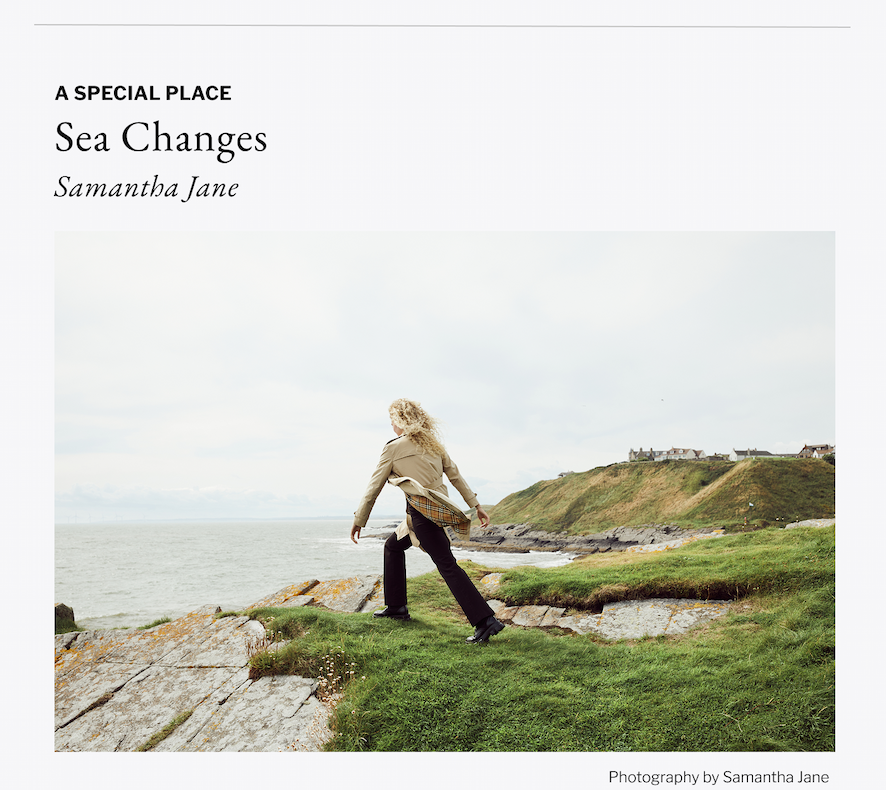
After living in Texas for 20-plus years, I consider it a joy to shoot photography in Scotland, my home country. Collieston, located on the country’s northeast coast is very close to where I grew up and feels like a perfect snapshot of the region: It’s a small, coastal village with rugged clifftops and the North Sea stretching out from its shore. It wasn’t until I moved to North Texas that I realized how much this coastline means to me.
Returning to photograph here feels like getting something back, so I always try to coordinate personal shoots when I’m home — but I primarily shoot fashion and models are a little tricky to locate in the northeast. One lucky trip, I was connected to Anya from Colours Agency in Glasgow, who is also from Aberdeenshire, and we wandered the cliffs together. I loved her wild, blonde curls and how windy it was. The weather was mild and we captured some beautiful pictures, including this one: my favorite.
Word to the Wise … I encourage anyone with the time in Scotland to explore the northeast coast of Aberdeenshire, home to whiskey trails, coastal towns, and historic castles. Slains Castle, rumored to have inspired Bram Stoker’s Dracula, is dramatically perched atop a cliff. Haddo House & Country Park is a beautiful, stately house open to the public, surrounded by terraced gardens and parklands with a lake. I loved exploring there as a kid and, now, always make a point of meeting friends at its cafe for a cup of tea. Finally, Newburgh Beach delivers dunes, birdlife, and a thriving seal colony. The whole region has a wild, truly magical atmosphere.
|
|
Gone With the Wind. Every time I’m in Rome, I return to Gonne al Vento, a vintage shop in the heart of the city, tucked into Via del Pellegrino. Run by a mother–daughter duo, it reliably sources rare garments from both “nonna’s” closet and Italy’s best fashion houses, with styles ranging from the 1920s through the ’90s. I always leave with something. On my last visit, it was a tailored, black Italian trench coat from the ’70s, which barely won out over a sequined Christian Dior bralette from the ’80s. I should have bought both. –Elysha Beckerman
A Purebred Ride. Los Angeles is known for its pampered pooches, perhaps none so coiffed as those attending a recent event hosted by Bentley to showcase the company’s latest Pet Accessory Range for the Bentayga SUV. Handcrafted for the furriest of enthusiasts, the collection includes a bespoke dog guard and quilted seat covers, expertly tailored to protect handmade interiors from muddy paws. As shepherds, huskies, and corgis bounded in and out of the Bentleys, posing for professional photographs, the vehicles remained unscathed. No, the Bentayga doesn’t feature a cuteness gauge on the dashboard, but, if it did, it would surely have been tipped to the max. –John Chuldenko
Cuppa Warmth. While New York City has been gripped by Arctic winds, I've been keeping warm with endless cups of hot tea, specifically Forgrave's Curated Blends Discovery Gift Set. The kit comes with five handcrafted blends and a tea cigar: a borosilicate glass infuser with oak cork closure that makes preparation easy. Of the selection, 004 Avant Garden has been my choice brew. A white tea blend, it encourages focus with soft floral notes of Chinese jasmine and peach blossom, French lavender, and Indian rose. –Shivani Somaiya
|
|
54 Franklin St #2R NY, NY 10013. ©2026 Dossier Projects, LLC.
|
|
|
|
|