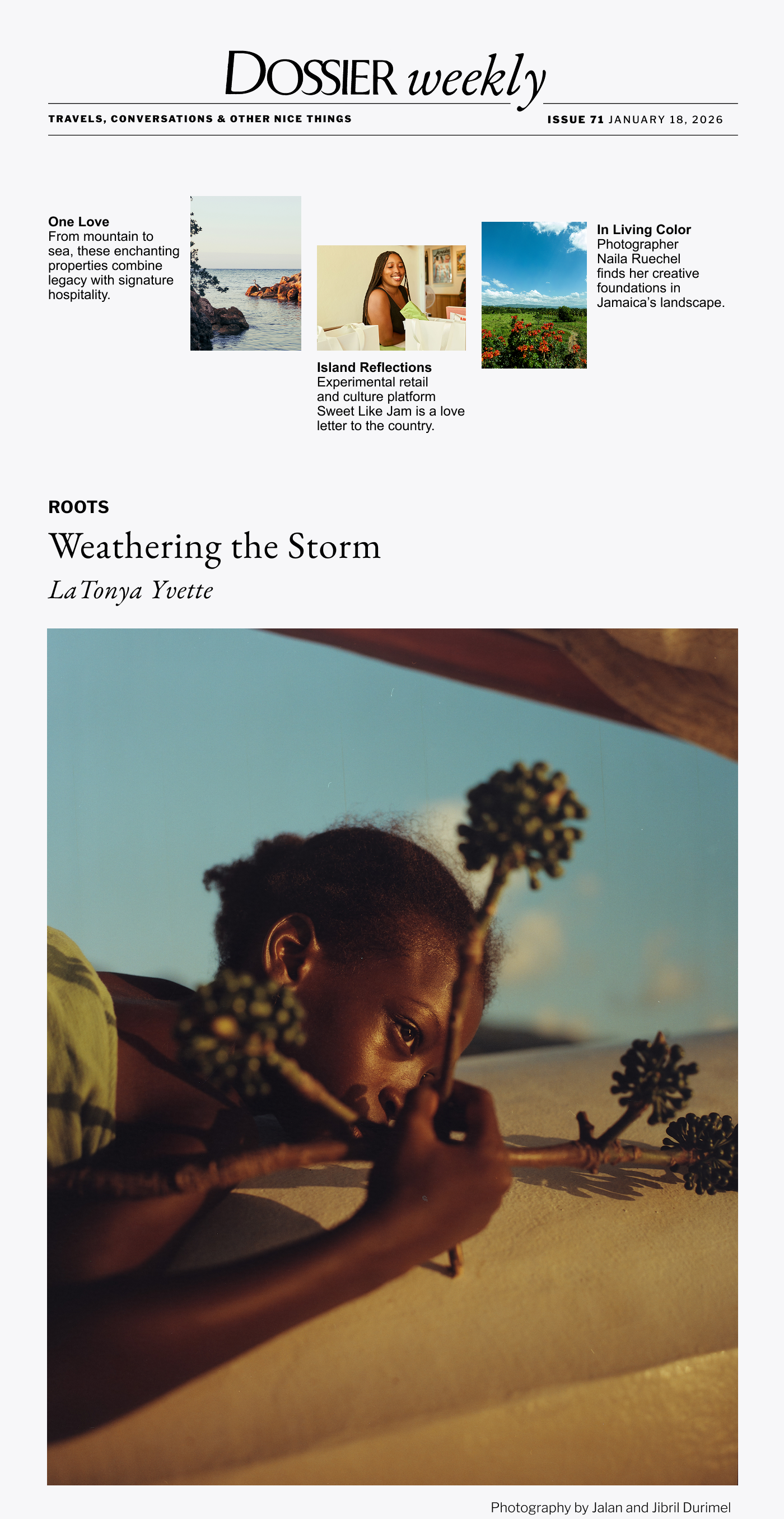
I have only visited Jamaica in my dreams. It is a place with a name so familiar that visiting it seems almost inconceivable. But I travel the world in search of places that remind me of the place I have never been, visiting vegan Jamaican spots in Brooklyn’s Bedford-Stuyvesant neighborhood or Jah Jah By Le Tricycle, a restaurant in Paris. And in the wee hours of the morning, I move my body to the songs of The Wailers and Sister Nancy in some Brooklyn club. “You do not know Jamaica until you’ve been,” I’ve heard. But I feel it as if I’ve always felt it.
In the summer of 2023, a DNA test traced my origins to West Africa and, surprisingly, Jamaica. Growing up with a father who migrated to the U.S. from Panama, I held fragments of his story, as writers often do, especially in the wake of his death, when memory blends with lore — that was until a trip to Panama this past spring, where, amid the blaring sounds of reggaeton and frying plátanos, I was invited to better understand the threads of the Afro-Caribbean Diaspora: |
|
In the last decades of the 19th century, tens of thousands of migrants from British Caribbean islands, like Jamaica and Barbados, poured into Panama to work on the American-controlled canal project. In the aftermath of British emancipation in the Caribbean, the adult children of the formerly enslaved often faced low wages and scarce farmland. Drawn to job opportunities around the Caribbean and Central America, they departed their island homes in waves. Many hopped from one country to another. By the time the Americans took control of the canal project in 1904, Afro-Caribbean migrants made up the bulk of the workforce. |
|
As I get older, this story unfurls layer by layer, generations from where it started. The DNA test suggests that my great-grandfather (or great-great grandfather), who was likely formerly enslaved, moved to Jamaica then settled in Panama to work on the canal. My grandfather likely worked on the canal, too, and my father traveled to the U.S. as a teen, carrying these generations within him — as I do now within me.
As I was imagining the final touches of the sketch of my own lineage, Jamaica was hit by one of the deadliest hurricanes in history. Hurricane Melissa made landfall on October 28, 2025, with 185-mile-per-hour winds, destroying homes and livelihoods. Friends who had recently made Jamaica home created a new body of work titled Land We Love. Others visited the places continuing to operate through the season, demonstrating that, here, the act of dreaming — tourism, artistry, life — is what keeps the island moving forward. My favorite poet Claude McKay’s composition about a type of legumes, bannabees, tells a story not only of the land and its cyclical offerings but also of the joy in watching something grow and return once more. It is a poem of pride, imparting a sense of timelessness to a place that can be both named and understood. Me Bannabees reminds me that joy is found in the watching, the waiting, and the return — in the care taken and the pride felt in what grows from the soil. In tracing my own lineage, I see that the island has always been with me, a thread woven through generations, preserved in song, in food, in memory, in the body itself. To imagine its coastlines, its rhythms is to enter a story that began long before me and will continue long after, a living testament to resilience, delight, and the spirit of a place both weathered and gorgeous, everlasting.
… Me watch de vine dem grow,
S’er t’row dung a de root:
Crop time look fe me slow,
De bud tek long fe shoot.
But so de day did come,
I ’crub de bu’n-pan bright,
An’ tu’n down ’pon it from
De marnin’ till de night.
An’ Lard! me belly swell,
No ’cause de peas no good,
But me be’n tek a ’pell
Mo’ dan a giant would.
Yet eben after dat
Me nyam it wid a will,
’Causen it mek me fat;
So I wi’ lub it still.
Caan’ talk about gungu,
Fe me it is no peas;
Cockstone might do fe you,
Me want me bannabees.
–Claude McKay |
|
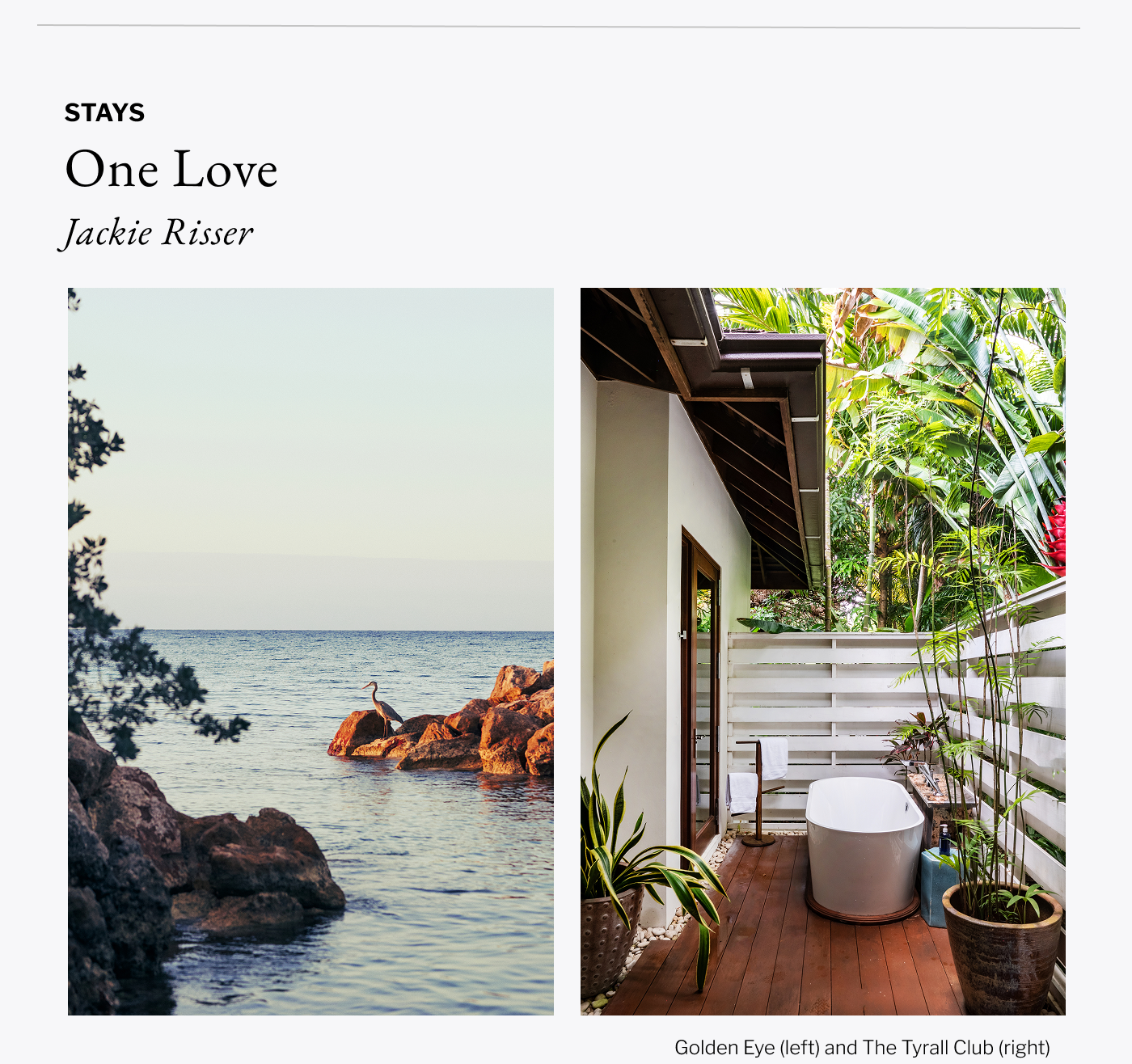
From its beach properties and villas tucked into the mountains to its modern city accommodations, Jamaica is filled with enchanting hotels, inns, and resorts, which collectively employ hundreds of thousands of island residents. After Hurricane Melissa devastated the country this past fall, the local community worked tirelessly to restore and resume the island’s services with remarkable success. All three international airports have reestablished commercial flights, major roads and attractions are accessible, and many hotels are once again welcoming guests. Here are a few notable properties, all accepting reservations.
Jamaica Inn, Ochos Rios. This iconic, private retreat has been run by the Morrow family since the 1950s, attracting the likes of Marilyn Monroe and Arthur Miller for their honeymoon and even Sir Winston Churchill. Now under the leadership of the original owners’ great granddaughters, Eloise and Olivia, the inn continues to delight guests across its 52 individually styled rooms and cottages, complete with signature heartfelt service and Old Hollywood charm.
GoldenEye, Oracabessa. Initially the villa where Sir Ian Lancaster Fleming penned his James Bond novels, today GoldenEye is a collection of pristine beach villas, lagoon cottages, and beach huts owned by Island Records founder Chris Blackwell. Spread across 52 idyllic acres, the property serves up traditional Jamaican fare at its three dining establishments while its spa crafts plant-based remedies onsite.
Half Moon, Montego Bay. Set across 400 acres, including two miles of private beachfront, this storied resort invites guests to experience the best of the island, from its crystal-blue waters and lush rainforest to its local seafood and extraordinary creatures. Should you visit at the right time, you’ll be able to watch conservationists shepherd baby sea turtles to the waves.
The Tryall Club, Montego Bay. In addition to its 74 fully staffed villas, The Tryall Club houses one of the Caribbean’s most renowned golf courses, exceptional tennis and pickleball courts, a beach club complete with picturesque infinity pool, three dining experiences, and the Livity Spa by Tryall Club.
Round Hill Hotel and Villas, Montego Bay. Ideal for those seeking seclusion, this historic property stretches across 110 acres of former pineapple groves, offering 27 bespoke villas and 36 oceanview guestrooms in its Ralph Lauren-designed Pineapple House. This year, the retreat will further encourage its guests to slow down, complementing an extensive wellness menu with a curated lineup of practitioners trained by the globally renowned wellness practitioner Erika Bloom.
The Caves Hotel, Negril. Perched atop a cliff, this former natural preserve delivers both serenity and adventure — along with personal hospitality. Its 12 individually designed, private cottages feature jaw-dropping ocean views, the spa offers a signature Jamaican brown-sugar body scrub, and the hotel's setting encourages cliff diving and snorkeling through natural caves.
Strawberry Hill Hotel, St. Andrew. Set high in Jamaica’s Blue Mountains, this hotel has long drawn artists and visionaries (such as Bob Marley) with its exclusive location, extraordinary panoramas, and cooler climate. Along with inviting rooms and villas, it serves up comforting contemporary Jamaican fare and a restorative spa, both of which incorporate local botanicals and ingredients.
Bluefields Bay Villas & Suites, Bluefields. Heritage and hospitality meet at this family-owned estate tucked into a serene corner on the island’s Southern coast. Its collection of oceanfront villas features interiors that celebrate local craft and antiques, as well as in-villa spa treatments and a dedicated personal chef, who serves meals on vintage china, silver, and crystal personally sourced by co-owner Braxton Moncure.
Jakes Hotel, Treasure Beach. Community lies at the heart of Jakes, the colorful bohemian oasis owned by Sally Henzell, whose late husband directed The Harder They Come. Henzell has forged a symbiotic relationship with the hotel’s lively village, decorating rooms with reclaimed materials, forging partnerships with local farmers and fisherman, and hosting initiatives such as community-led landscaping. Fun fact: Alex Haley wrote Roots in one of the hotel’s cottages.
|
|
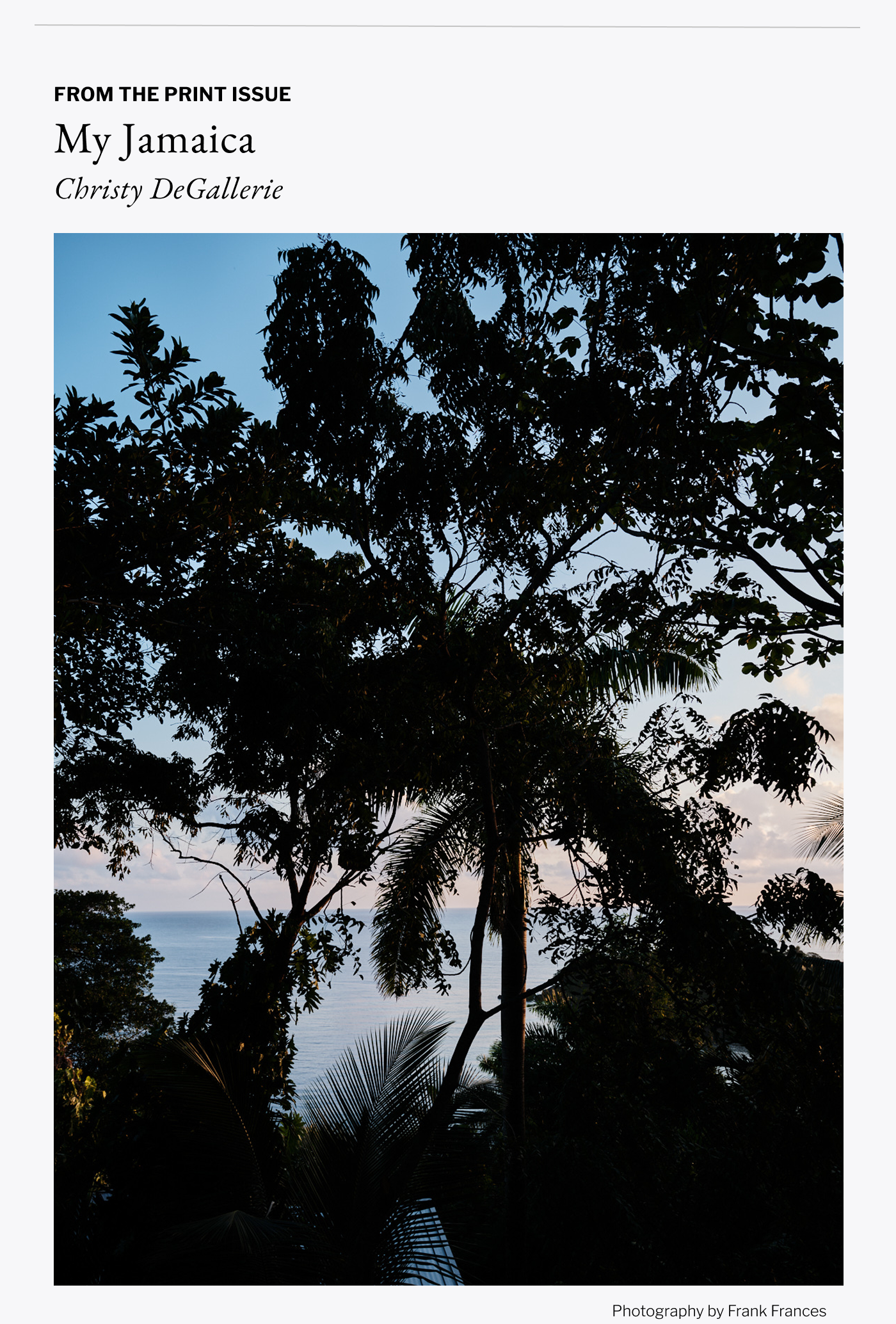
My portrait of Jamaica is a landscape of home that isn’t often shown in travel brochures. When my feet touch the land, I stand for a moment listening to the sounds I’ve inherited: The rainfall chorus sings of good memories; the ackee tree whispers “I’m almost ripe,” hours from the beaches where tourists lay on loungers or walk on soft sand, its cool grain sinking with each step.
My bare feet stumble over tiny rocks and high slopes to reach my mother’s gate. There, you will have trouble finding bodies of water. Instead, a mighty brushstroke of luscious, rural vegetation plays in the shadows of damp hills. There are modest shacks and bars, painted with colors that match the environment, shades of black, yellow, and green. The trees tourists admire from their windows have names, like kapok — also known as the silk-cotton tree, which carries a cultural and sacred significance that reminds us of hope.
The food I eat at home isn't prepared by chefs, but by my own hands. I harvest coconuts by climbing trees or using sharp-edged poles to chop them down, before shaking the fruit to see if there's water inside. I stroll down the mountainside to check on the animals. They are all disciplined, all working together. Like me, they know we all have a role at home. I grab eggs from the chicken coop for my mother, so she can begin to prepare breakfast. The herbs and spices are near our feet, sketched into refined lines in the tall grass. The ackee tree that whispered to me is quiet now, the black eyes of its fruit wide-open, ready to be picked. The breadfruit tree carries heavy, light green, oblong shapes. I'll eat it every day of my stay. It’s filling, a Jamaican culinary identity going back 400 years. There is no menu; recipes aren’t written down. They’re stored in our muscles, and come to life with every stir.
My New York accent switches off to match my mother’s native tongue, Patois. I follow the vowel harmony of elderly neighbors, keeping up with warm conversations. The crisp air gives my lungs more strength to harvest another snack, maybe this time a banana, the kind of banana you fry over an open fire.
There are parts to Jamaica that many don’t get to see: the clotheslines stretched from each home; the mixing of music, from folk to gospel; the culinary enchantment; and the hard work of the natives who preserve the island's culture.
This is what invites people from all over the globe to visit the island and return. The Jamaica I know is forthcoming and energetic. It is also fatigued. Thank goodness for the hills that shelter many and provide future rest. My mother is already anticipating when I will be back. Jamaica isn't an escape from home, but a return to one. I say farewell in our language: Mi soon come. |
|
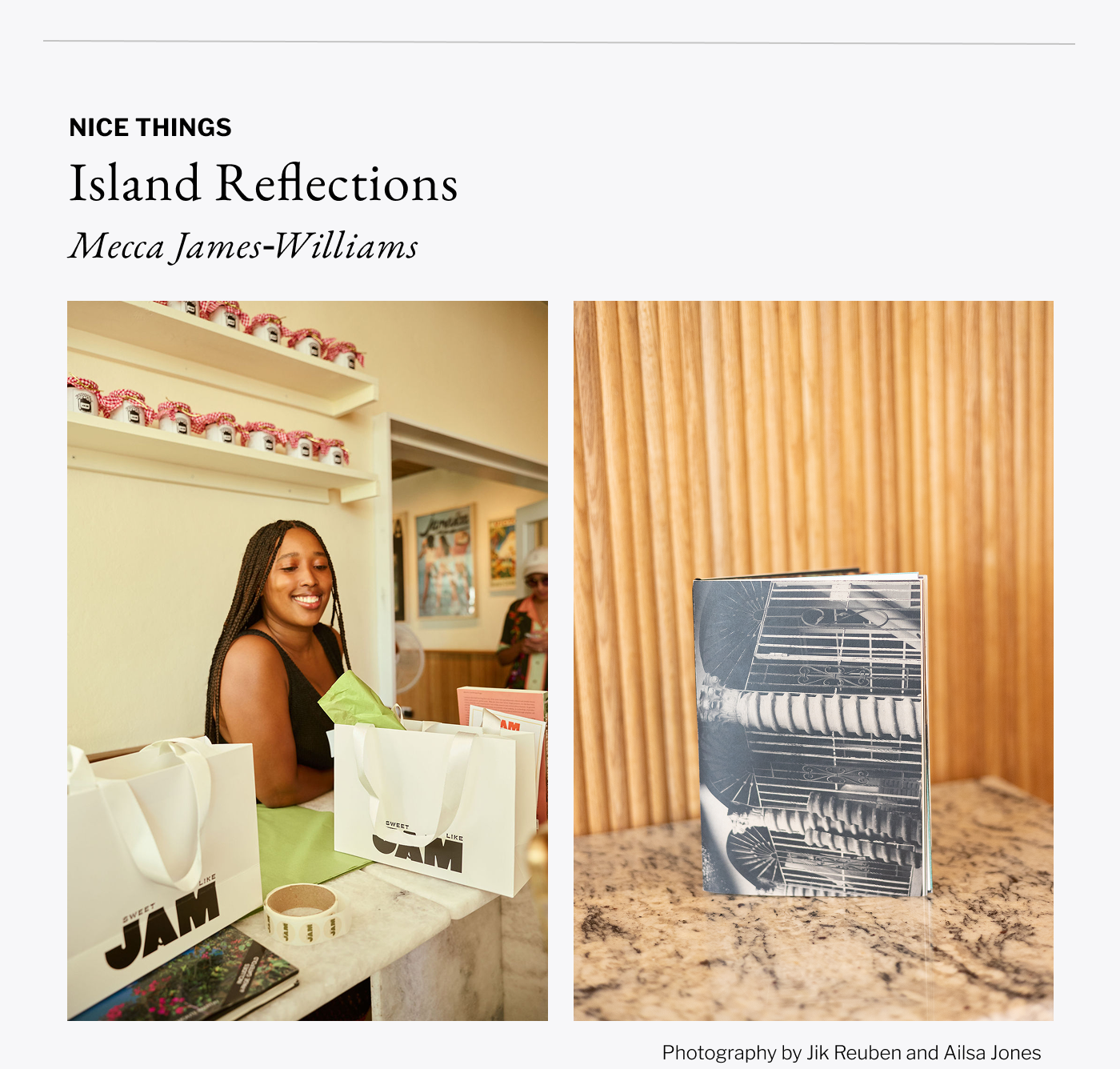
Stylist Mecca James-Williams first set foot in Jamaica in 2015, inspired to visit by her late grandmother’s quest to migrate to the country in the 1990s. “I immediately felt her spirit, heard her voice, and started my own quest to move here to fulfill both of our dreams,” she remembers. In 2021, those dreams were realized and, in 2024, James-Williams launched Sweet Like Jam, a love letter to the country and the African Diaspora in the form of an experimental retail and culture platform. “We answer the confusing questions of identity and culture with rich stories of connection, exploration, and discovery through archival celebration and future building,” she says. In the fall of 2025, Jam opened its first pop-up at Skylark Negril Beach Resort with the help of recording artists Zuri Marley and Naomi Cowan, as well as designers Bianca Saunders, Edvin Thompson of Theophilio, and Troy Oraine of Tribe Nine Studios. The pop-up’s collection, available online, brought together 35 local and global brands with Jamaican roots in a celebration of the country’s bold design. “Jamaica is the land of wood, water, and color, and the country’s vibrant design approach is directly inspired by its landscape, giving it a true place of its own,” James-Williams explains. Here, she shares five brands to have on your radar.
Wales Bonner. Recently named the new creative director for Hermès menswear, Grace Wales Bonner creates pieces perfect for my day-to-day in Kingston. Her warm, culturally poignant collections really touch on Diaspora craft, and her fabrics and design are my wardrobe favorites. You can’t go wrong with a tracksuit (like this jacket and pants) — it’s nostalgic Jamaica.
Nicholas Daley. Nicholas Daley is a British Jamaican designer with a love for reggae, roots culture, and the subcultures created through communities in London. He has had such a beautiful creative journey over the last few years, including collaborations with Carhartt and Clarks, as well as dressing Leon Bridges for the last Met Gala. I’m honored to have had him as part of our pop-up.
Irie Glow. Founded by Brittany Johnson, Irie Glow is a Jamaican-formulated beauty brand that infuses natural ingredients from the island into its products. Its Mango Butter and Rose Glow & Grow Oil are divine. I love wearing them on the beach.
Jam + Rico. Designer Lisette Scott weaves her Jamaican and Puerto Rican heritage into every one of her pieces. Her gold-plated Chime Hoops are one of a kind, inspired by the chime-like sounds of the Caribbean Sea. They make just enough of a statement, even in their mini size.
MILG. Krystal Cross — a first-generation Jamaican from New York City, now living in Florida — is a cultural objects curator who founded MILG (Make It Look Good) during the pandemic. For our pop-up, she curated an assortment of archival Jamaican artifacts, including this Beautiful Jamaica book, which features former Jamaican MP and Miss World 1993 Lisa Hanna along with an array of breathtaking issues and facts about the country.
|
|
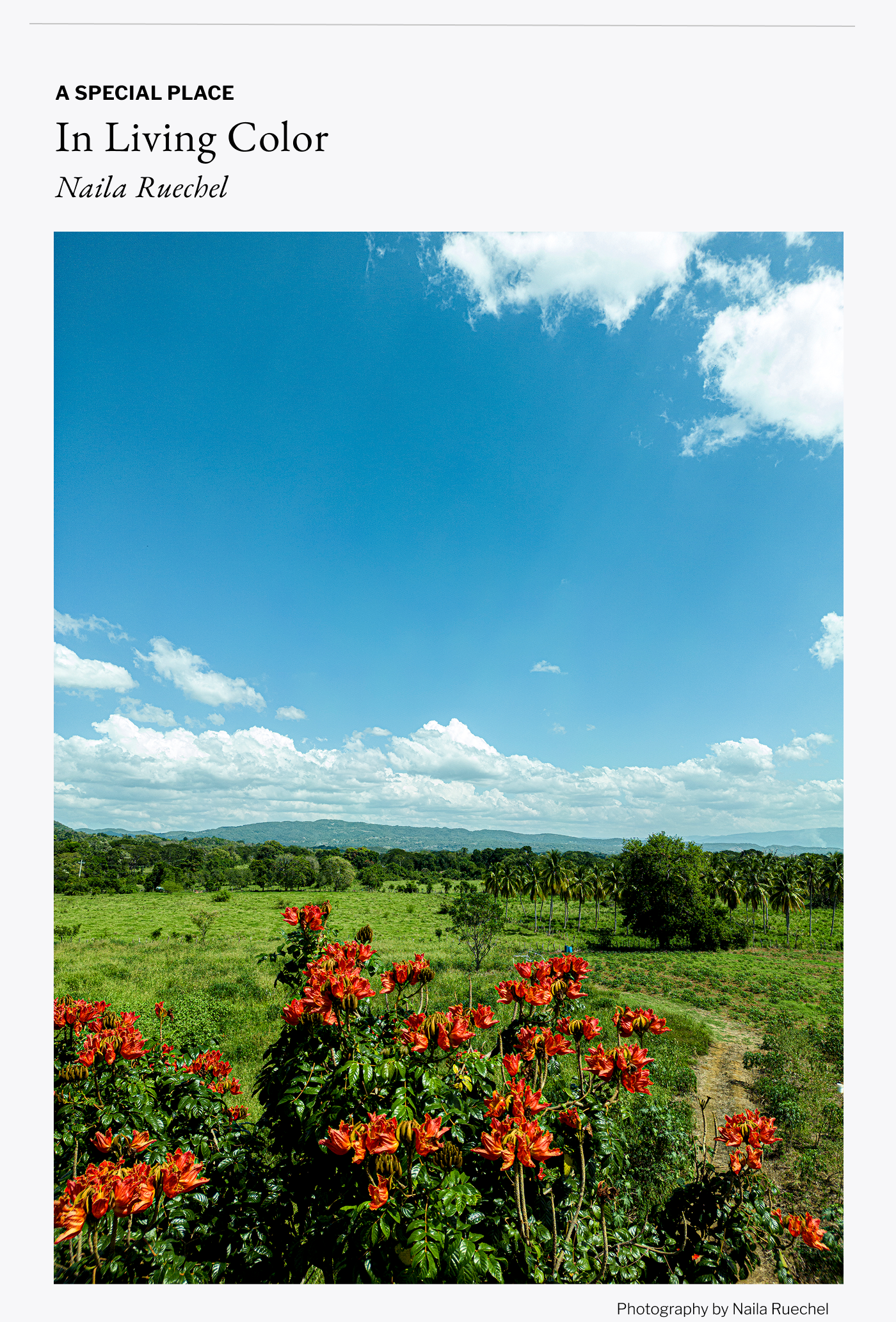
I took this photograph while on assignment covering Jamaican religion and churches; I wanted to capture some “texture” to illustrate parts of the island unfamiliar to outsiders. I ventured onto a cassava farm, saw this burst of color, and was immediately entranced. The jewel tones — brilliant emeralds, ruby and topaz reds, and aquamarine sky — play a significant role in the images I create. And it is during these visits home that I gain a deeper understanding of the foundations of my creativity.
Saint Elizabeth Parish, colloquially referred to as “St. Bess,” is the agricultural center of the island, where farmers produce the bulk of Jamaica’s vegetables and fruit. Here, you can stay at an eco-lodge or small villa, directly supporting the local economy — a core tenet of sustainable ecotourism. I live in New York City now, but Jamaica will always hold a special place in my heart. |
|
Long Tails. While many businesses across the island are reopening and several hotels have launched recovery efforts to support their workers and local communities, there are still regions within Jamaica that continue to feel the effects of the hurricane. Critical initiatives include Waves for Water, which is working with local partners to restore safe drinking water, and American Friends of Jamaica, which is transitioning from urgent relief work to long-term recovery for schools, clinics, shelters, and farms. Visit their websites to learn more. –Jackie Risser
Great Reads. There is no shortage of Jamaican writers and poets bringing the land and its lesser-known history to life on the page. Two notable reads include A Brief History of Seven Killings by Marlon James — winner of the Booker Prize, which explores the attempted assassination of Bob Marley in the late 1970s — and Ishion Hutchinson’s remarkable poem School of Instructions: A Poem. The work brings to light the forgotten experience of West Indian soldiers during World War I, intertwining their story with that of a modern Jamaican schoolboy. –LaTonya Yvette
|
|
54 Franklin St #2R NY, NY 10013. ©2026 Dossier Projects, LLC.
|
|
|
|
|