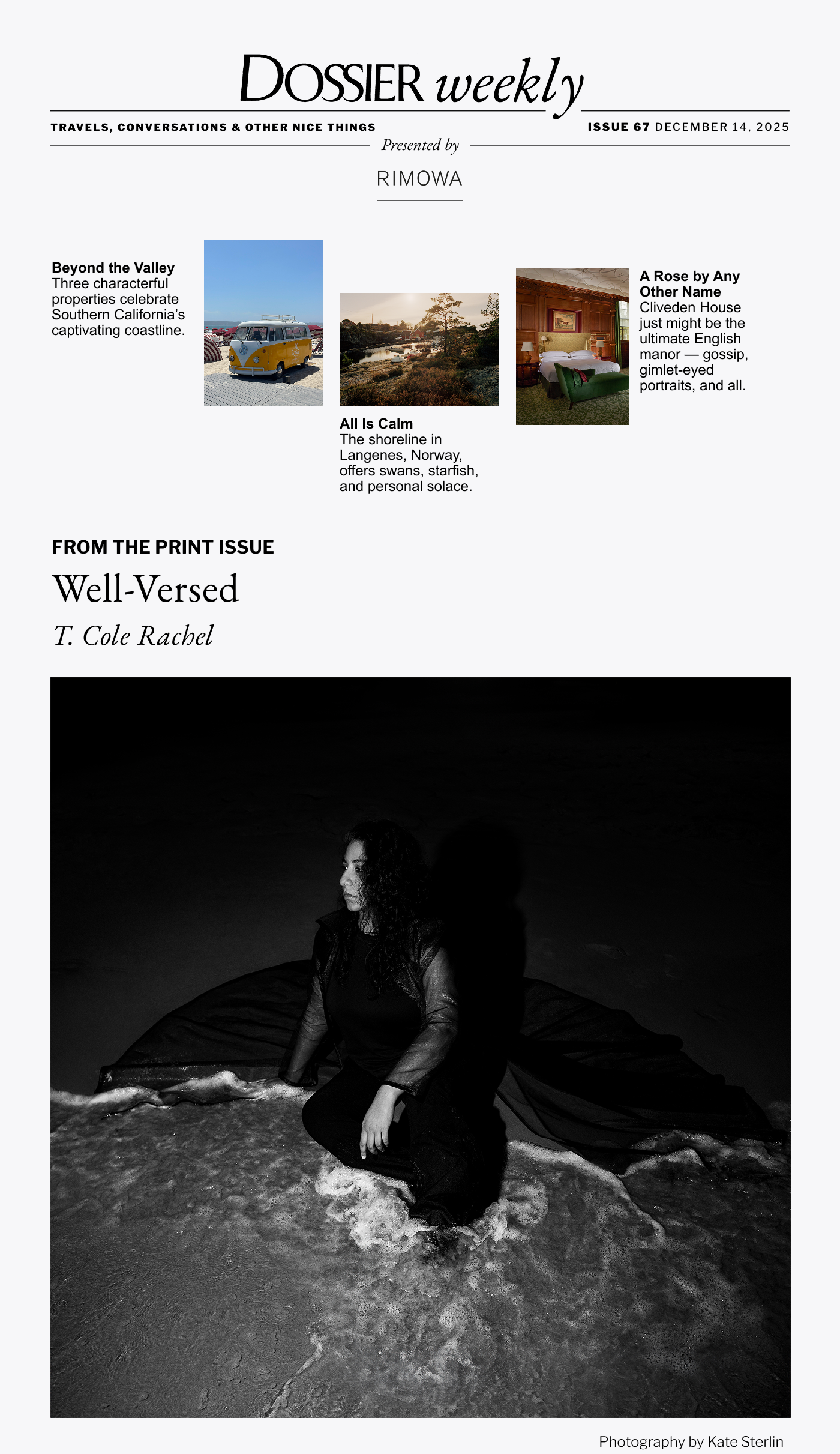
Trying to describe Arooj Aftab’s music to someone who has never heard it is sort of like trying to explain a beautiful dream in the moments just after waking. Her songs are at once minimal and distinct but also ephemeral and sonically vaporous. And while the Pakistani American singer and composer is frequently described as a jazz musician, the songs on her most recent album — 2024’s Night Reign — pull at the seams of traditional jazz conventions, drawing on classical references, interpolating verses by Rumi and the work of 18th-century poet Mah Laqa Bai Chanda (the first woman to publish a collection in Urdu), and the reimagining of Joseph Kosma’s 1945 classic song “ Autumn Leaves.” Given the meditative, expansive nature of her work (work that, in 2022, made her the first Pakistani artist to win a Grammy), it’s not surprising that Aftab’s taste in books would be equally sprawling. Here, the artist does a deep dive into the books that have informed both her life and her music.
Dragonlance Chronicles by Margaret Weis and Tracy Hickman. When I was around 12 years old, I got very into reading the Dragonlance Chronicles. My older brother would finish one, and he would pass it to me. By the end, we had an entire bookshelf full. The world within the books was so vast. It gave me permission to imagine and explore. The stories also weren’t always so war-oriented or hypermasculine, which was unusual. Reading these books at such a formative time really fueled my creativity, while also helping me learn how to write prose informed by this poetic sensibility. Plus, they gave me a sense of the diversity of the world and all the ways in which different kinds of friendships can exist.
An Equal Music by Vikram Seth. It’s a shockingly accurate depiction of what it feels like to be a musician, which is refreshing to read. I read it when I was just about to leave for Berklee [College of Music]. Musicians often have this tumultuous relationship with their music and their writing and their personal lives and their love interests and their desire to travel in order to explore more kinds of music — all of which frequently makes them have to sacrifice things and leave people behind. Often the only thing that keeps you stable and sane is music, which becomes the nucleus of your life and the only constant. Also, the person who wrote this book is not actually a musician, so I always wonder: How did he do that?
Babyji by Abha Dawesar. There are these common tropes of being South Asian as a queer teenager and being in India or in Pakistan. Maybe you have a crush on your friend and then there’s some older woman who’s either unhappy in her marriage or divorced who is hitting on you inappropriately, or you meet someone in the service industry who is also queer. There are these three tiers of queer women, and they’re all hidden and they’re all in your periphery, but it’s all very veiled. In this book, that’s just the whole story. My mind was blown. I was so sheltered. I thought I was all alone in the world, so it was nice to read that.
Sula by Toni Morrison. It’s essentially the story of the friendship between these two women — one goes out into the world and does her own thing, never gets married, achieves all of the goals she has worked for. The other, who stays put, conforms to societal standards, gets married — all of the expected things. This felt so much like my life in so many ways. I was watching all of my friends get married or sort of let go of their dreams, while I was the one who was made to feel crazy for doing this thing that had no future and made no sense and was risky. When you are the one going against expectations, often you have no support. You can only depend on this insane belief in yourself.
Wild Seed by Octavia E Butler. As someone who read The Lord of the Rings and A Game of Thrones and those kinds of books, mostly by all white writers, I found reading sci-fi work by Octavia Butler so mind-blowing. She changed the whole genre. She elevated it. Her work also offers an important message. She’s giving a warning to people that if you have power, if you have a gift, if you have magical properties, people will come for them. They will be taken away or something will happen and they will get corrupted.
Finding Me by Viola Davis. Listening to her talk about the entertainment industry has been really comforting, and enraging, and affirming. It feels similar to the way my life has changed in the last few years and how I’m navigating the industry, facing so many of these atrocities of being a woman and being a woman of color. There aren’t enough safe, uplifting spaces in our industries. One day you’re just this unsuccessful Indian musician making your tunes and living your life, and it’s simple. When you break past that, you’re like, “Oh, shit, it’s evil out here, and I’m in the middle of it.” So this book felt very healing.
Give My Regards to Eighth Street by Morton Feldman. It really touched me to learn about the history of Brooklyn and the relationships between these (now iconic) artists back when they were busted and crashing illegally in loft spaces and warehouses in Williamsburg [a neighborhood of Brooklyn]. Feldman’s friendships with Philip Glass and [Mark] Rothko are fascinating — also, the way he describes his approach toward composition.
Easily Slip Into Another World: A Life in Music by Henry Threadgill & Brent Hayes Edwards. It’s a reminder that, in an artistic community, everybody’s fueling each other. Artists are not ever moving in a singular way; they are all affecting each other and informing each other’s work. I don’t really know if that’s happening right now.
Quantum Listening by Pauline Oliveros. It made me think about when I first told my dad I wanted to study music. He was like, “Listen, you’re confusing yourself, a lover and listener of music, with the people who make music.” I was like, “No, I’m actually not doing that. I am both of those things and also more. I am a musician.” That was the first time that this idea, this critical investigation into the two sides of musicianship and loving music, came up for me. This book is so important. It is a highly irresponsible thing when music writers and music listeners and music makers — anyone who cares about music — has not read this book. This book is our guide.
Read the full article and more close takes on a wide world in our new Fall/Winter print issue. Order now. |
|
Los Angeles gets the bulk of Southern California’s glory for good reason, but head due south and you’re reminded that the state’s coastline is filled with absorbing views and lush alcoves — each abundant in natural beauty, some housing properties that provide a characterful base for exploring, or simply enjoying, these golden lands.
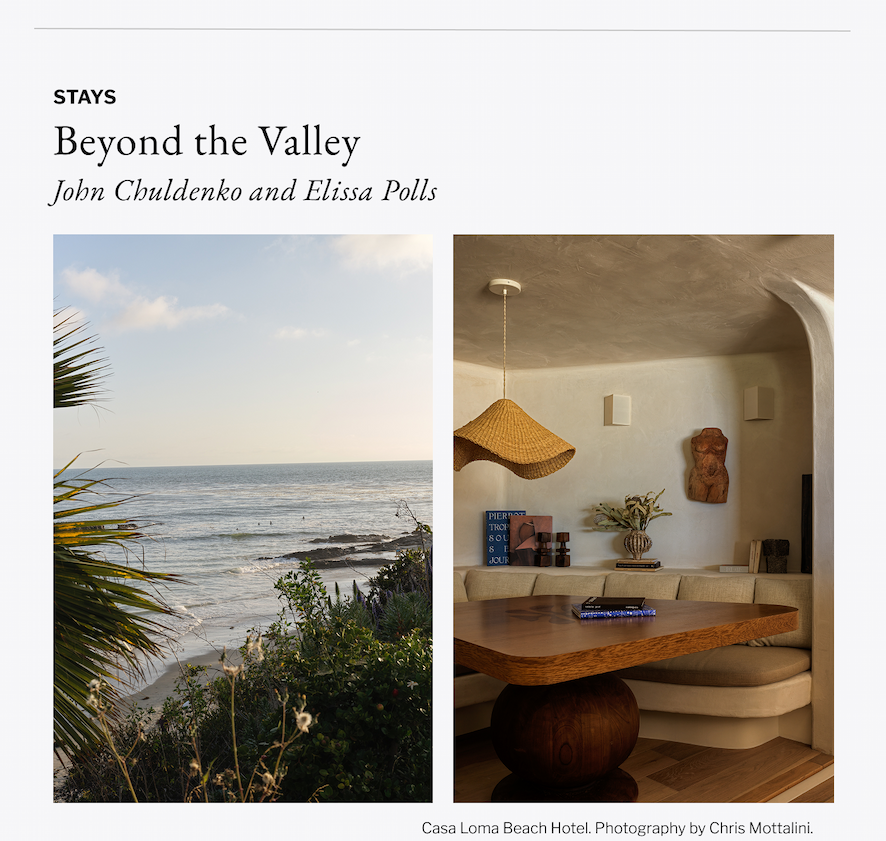
Casa Loma Beach Hotel in Laguna Beach sits directly on the Pacific, but what struck me about the hotel wasn't its (incredible) view. It was the vibe. Casa Loma is a thoughtful collection of ideas, inspiration, and design compiled with simplicity and grace.
Wheeling my luggage to the front desk, I clocked the reel-to-reel tape deck over the bar and the vintage loudspeakers hanging like idols in the lobby, providing the warm, textured score flowing throughout the hotel.
Entering my room, I was greeted by a mixtape playing over the hotel's closed-circuit FM radio station through a wooden Tivoli desk radio. On the table, I found a flask of Madre mezcal, Opinel bottle opener, and Billykirk leather tray. In the bathroom, were Luna Zorro robes from Guatemala. It's the kind of room that makes you want to sneak everything into your luggage (note to management: I did not). But I had to meet the kindred spirit who curated all of this.
My conversation with Casa Loma's owner, John Grossman, could have lasted 10 minutes. Instead, we spent an hour poring over the hotel’s details and nerding out on records, design, and typography. "If [someone] doesn't care about this shit, fine,” Grossman explained. “But for the people who roll in and are curious, everything should be a little breadcrumb to something you can discover."
Casa Loma is awash in aesthetic detail: chunky woods, textured fabrics, and hand-plastered walls. From my seat at breakfast, I stared at the ocean through a cracked door and felt the breeze blowing across my table as coffee arrived in three Whiskey & Clay handmade ceramic vessels, a diminutive companion to the room's folkloric relief sculpture. "We actually pulled it down twice and redid it. It had to be perfect," Grossman divulged. –John Chuldenko |
|
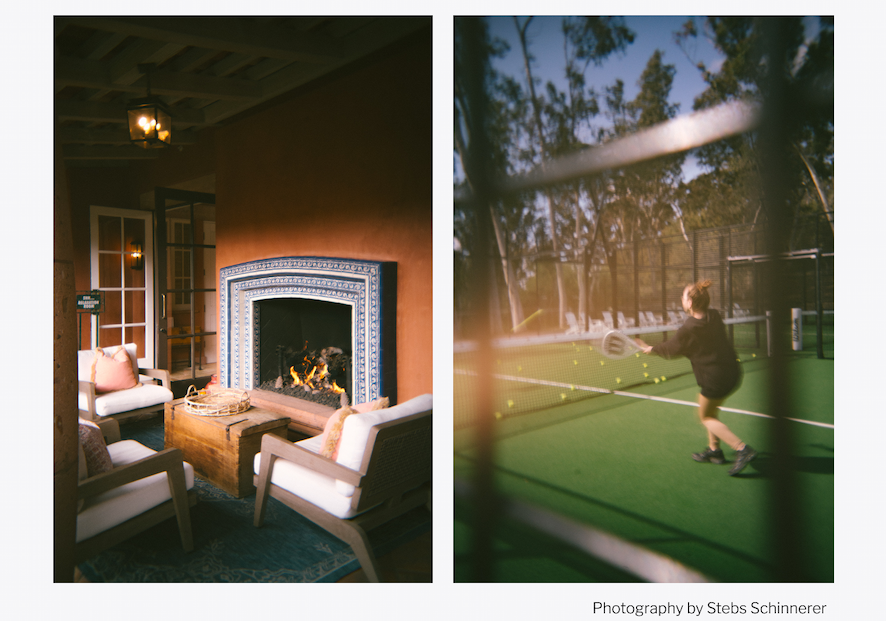
Rancho Valencia Hotel and Spa. Just north of San Diego, Rancho Valencia is tucked into residential Rancho Santa Fe, which makes driving through the resort’s gates akin to arriving at a friend’s home that’s populated with an abundance of native plants, olive and citrus trees, and 49 guest casitas — each with an indoor fireplace and private garden patio, some with plunge pools and fire pits. A culinary garden and chicken coop add to the domestic atmosphere, as do walking trails, which my dog and I explored on our daily rounds and which led us to hidden waterfalls. Creature comforts aside, my visit to Rancho Valencia delivered a raft of “firsts.” There was my first padel lesson (tennis and pickleball are also on offer), my first lobster served atop fries (which I paired with an Almost Healthy cocktail featuring cilantro-infused mezcal and celery-serrano syrup). The dinner also marked the first time my dog was offered a tableside bed and pet menu (featuring rin tin tin tartare and shepherd’s pie).
Lastly, I tried my first chair pilates class. Fellow students included locals (the resort offers spa and fitness club memberships), who I later ran into in the spa’s hydrotherapy circuit, where I was preparing for my massage. One of the women I spoke with, who frequently visits the property, aptly defined Rancho Valencia as “the type of place where if you know, you know.” –Elissa Polls |
|
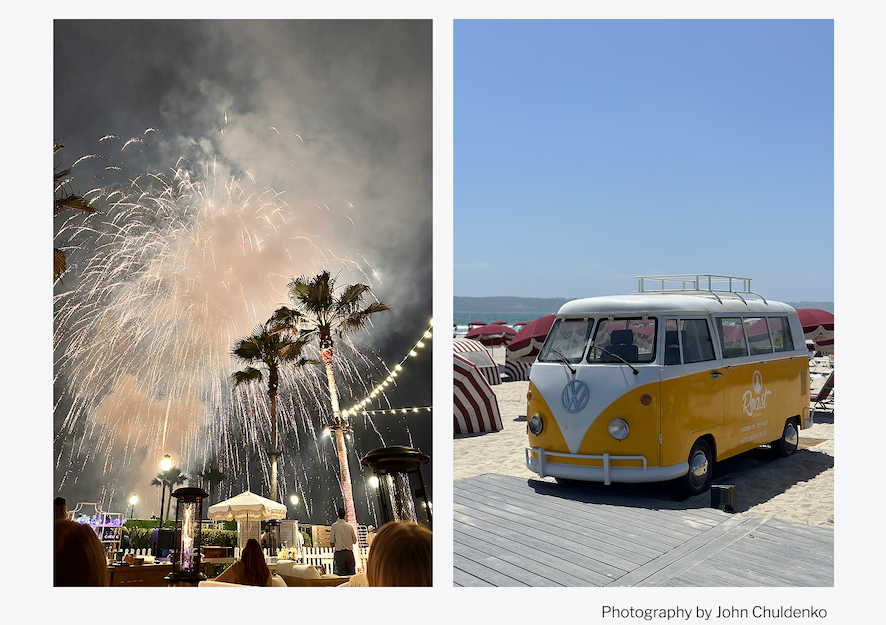
Hotel Del Coronado. In 1888, when Hotel Del Coronado was constructed, people believed the sea was restorative. Swinging open the balcony doors of my Ocean View Cottage at The Del in 2025, I know there's truth in that. But beyond the landmark hotel’s location, there's a soul here, an unusual bond shared between the guests, the staff, and The Del itself. You can feel it everywhere, and it's enough to make you a little dreamy — until an F-14 roars through the sky. I visited The Del for a historic celebration marking the completion of a holistic reawakening. But despite the hotel’s extensive renovations, the property remains beautifully timeless. After the sun dipped into the Pacific, I settled into a beach chair with a monogrammed blanket for a Movie on the Beach screening of Top Gun — an appropriate selection given that The Del neighbors the Naval Air Station North Island. S'mores sourced from a yellow VW microbus beached in the sand further confirmed that The Del delights in the details. The following morning, I met my docent for one of the hotel’s Legendary Tours, a tapestry of history, architecture, and ghost stories. We wandered through the service tunnel, where young lovers would meet at the turn of the last century, and explored the power plant that captivated curious guests back when electricity was a novelty. As the grand celebration got underway, I noticed the staff beaming with pride as I enthusiastically plucked another piece of yellowtail nigiri from The Del's Nobu restaurant. Before departing, I spied a prescient inscription quoting Elisha Babcock, Jr. (The Del's co-builder). "We must build a house that people would come to long after we're gone." That quote came to life moments later while I was enjoying breakfast at the Ocean Club, when a young girl dining with her family leapt up from the table to hug her server. "I remember you from last year!" she exclaimed. –John Chuldenko |
|
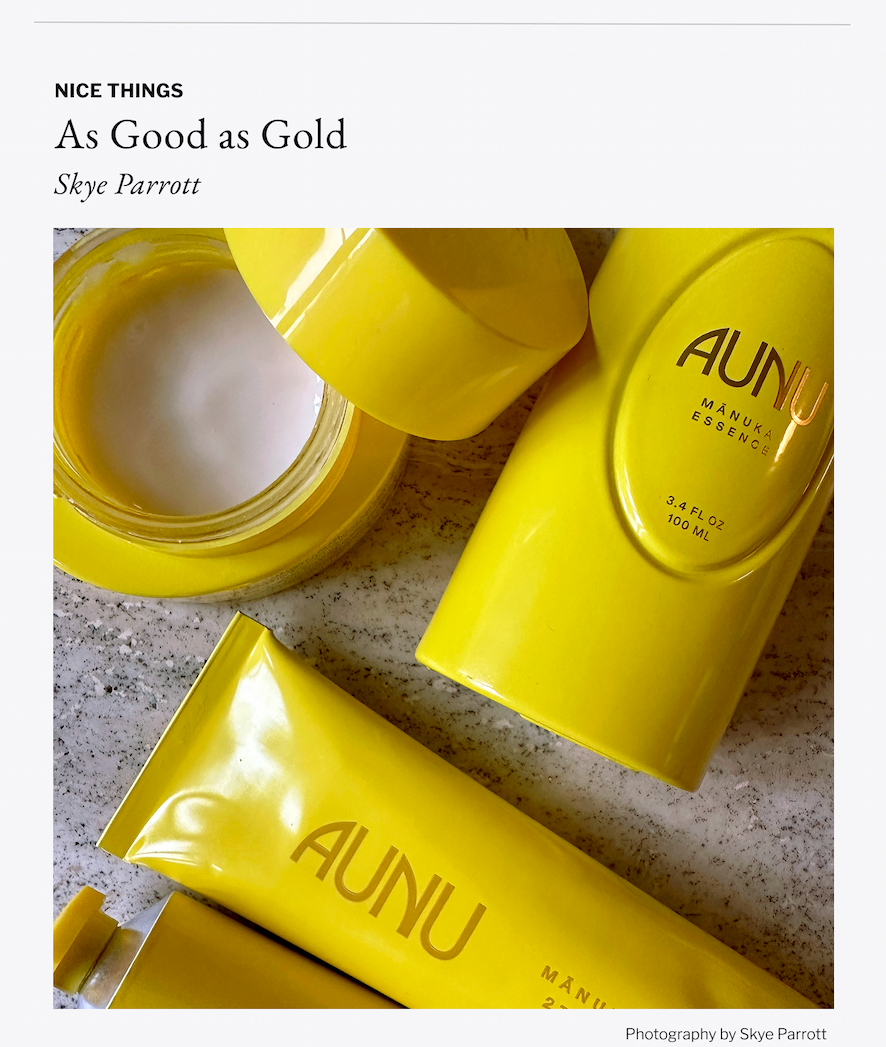
Anyone who has peeked into my overstuffed medicine cabinet can confirm that I do not need any more skincare products, but it looks the way it does because I always want to try new ones. So I was thrilled when a friend recently sent me an assortment from Aunu Beauty, a new natural skincare line. My friend is in PR — though he’s not the brand’s PR. It’s not every day that a PR sends me products from someone they don’t rep, so my interest was definitely piqued. Aunu is made in America, but its active ingredient is New Zealand-sourced, medical-grade Mānuka honey, which is used in hospitals for wound care. The honey’s anti-inflammatory properties are meant to make it particularly good at reducing redness and improving the texture of sensitive skin, like mine. Since receiving a box of Aunu’s chic, bright-yellow products (the packaging alone is truly a selling point), I have been using the Mānuka Cleanser and Mānuka Cream daily. Both are smooth and emollient and feel great. Much to my husband’s chagrin, they are also now jammed into my medicine cabinet alongside all my other favorite products — except the Mānuka Salve, which I have packed up for the next time I fly. |
|
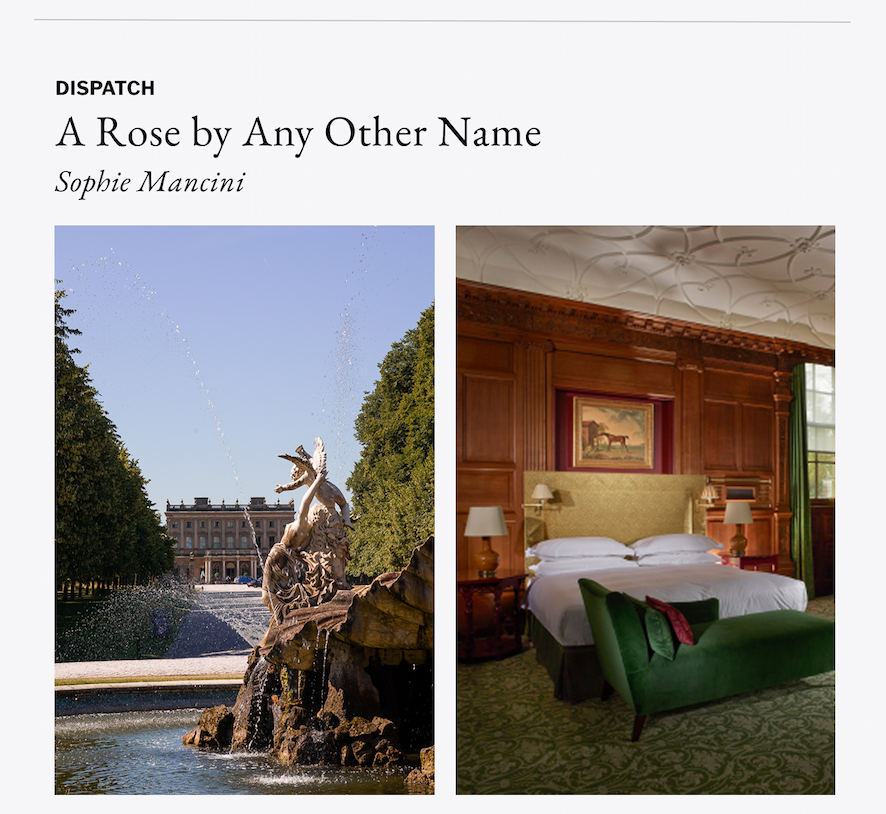
"Of all the great things that the English have invented and made part of the credit of the national character,” wrote 19th century American novelist Henry James, “the most perfect, the most characteristic ... is the well-appointed, well-administered, well-filled country house. "Not to disregard the historic villas of Italy or the châteaux of France, but few structures have mythologized themselves as strongly as the British country home, enshrined in so much fiction and film as to become as foundational as brick. I visited a few of these homes recently, with one a wild standout: Cliveden House. In 1666, the 2nd Duke of Buckingham built this house for his mistress, the infamous Countess of Shrewsbury, after killing her husband in a duel. The lovers’ powdered portraits hang side by side in the house’s grand room, a soaring hall as sultry and ornate as a Venetian mask. The property’s 19th and 20th centuries were marked by the American Astor family, who transformed Cliveden into a salon for the political elite with Nancy Astor as its bold leading lady. She allegedly told Winston Churchill, “If I were married to you, I’d poison your coffee.” To which he replied, “If I were married to you, I’d drink it.” Her swan-necked, gimlet-eyed portrait by John Singer Sargent hangs in the grand room. The property’s ghosts are almost as evocative as its grounds; its famous gardens feel like slices of Elysium, drawing tours from around the world while its parterre (a ground level, formal garden) is one of the largest in England. Clivenden’s 47 guest rooms are equally impressive, but my heart remains in the Mountbatten Suite. Named after the British statesman and naval officer (also Prince Philip’s uncle), the room was formerly the billiards hall. Its scoreboard remains fixed above an enormous, sumptuous bed set amongst green velvet furniture and ornate wood-paneled walls. And while, devastatingly, I could not stay in every room, I spotted a detail across each door that perfectly summed up the Cliveden world: its current guest’s last name, printed with a flourish, and set in brass. To be yourself written into the wild Cliveden history, even if just for a night or two — who could resist? |
|
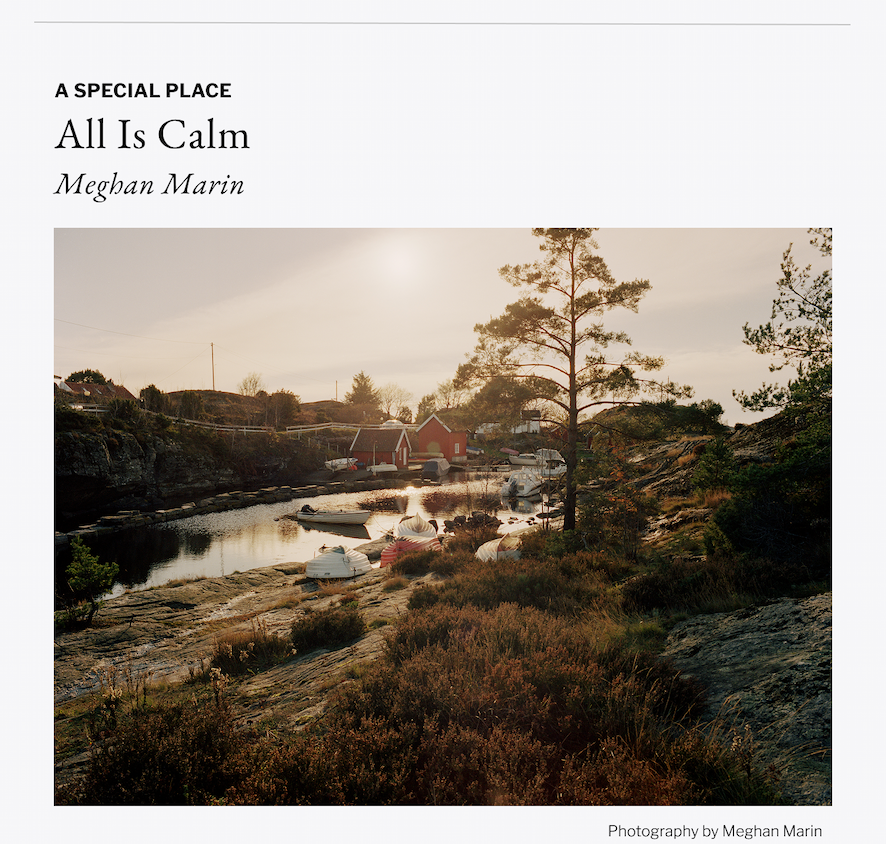
This road on the coast of Langenes, outside my maternal family’s hometown of Kristiansand, Norway, is among Southern Norway’s most special routes. I used to stop along it as a child to dip my hand into the North Sea’s icy water, wedging it between the seaweed to pick up starfish. I now make a point to come this way every time I visit, snaking past endless exposed bedrock and heather, finding eternal solace in the ocean and swans swimming along the coves.
Word to the Wise … Visit Fiskebrygga to dine on fresh fish, but save room for dessert: Hennig-Olsen ice-cream at Brygga Isbar. Also, be sure to walk around Odderøya to peek into open artist studios and, if you come in early summer, catch Dragefestivalen Kristiansand, the annual kite festival in Kristiansand. |
|
A Fish Story. Perfect for last-minute gifting, Siesta Co. just released two seaweed-based, vegan tins: Spaghetti Seaweed with Green Garlic in Olive Oil and Seaweed Salad in Vinaigrette — both sourced from the waters of Galicia, Spain. I recently used the Spaghetti Seaweed and the company’s White Clams in Brine to make a spaghetti alle vongole–inspired dinner. While the spaghetti is cooking, heat olive oil in a large skillet, then sauté sliced garlic with chili for a few minutes. Add the clams alongside a bit of the brine and white wine (pour yourself a glass, too), then simmer for a few more minutes. Stir in the seaweed and pasta, tossing in reserved pasta water to create a sauce. Remove from heat, top with parsley, lemon zest, salt, and pepper. –Elysha Beckerman
Raindrops on Roses. The Hardy Holiday Village at Nemacolin in Farmington, Pennsylvania, is a maximalist Holiday fever dream on ecstasy, an immersive world of holiday experiences, performances, and shopping exclusive to overnight guests. It looks as though Willy Wonka built a luxury alpine chalet out of magic macarons, dusted it in sugar snow, and released a wild troop of elves dressed in Wiederhoeft couture. Human-sized marshmallows flank the hot-chocolate stand. Peppermint-swirl playgrounds lead to lanes of gingerbread and glowing ornaments. In one corner, there's an elf-led gingerbread workshop; in another, a candy-striped boutique selling cashmere scarves and mittens. Every turn feels like a sensory portal — it's not nostalgia so much as a joyful hallucination in which the holidays are allowed to be exuberant, mind-altering, and indulgent. Wandering through this pink-toned vortex, I found myself giggling with a kind of awe I thought I’d aged out of. –Maggie Morris
Making Waves. On a misty London evening, I stumbled upon The Sea, The Sea, an intimate, elegant seafood bar in the middle of Chelsea that offers an ever-changing menu of small cold and hot dishes alongside wine and sake. The tasteful cuisine showcases ingredients directly sourced from fishing boats to maintain full sea-to-plate control. I enjoyed a particularly fresh salmon sashimi, incredibly flavorful smoked eel, and John Dory with maitake mushrooms. The absolutely flawless design of the oyster bar made me want to try oysters but, sadly, I still can’t bring myself to eat them. –Anna Kaplan |
|
54 Franklin St #2R NY, NY 10013. ©2025 Dossier Projects, LLC.
|
|
|
|
|