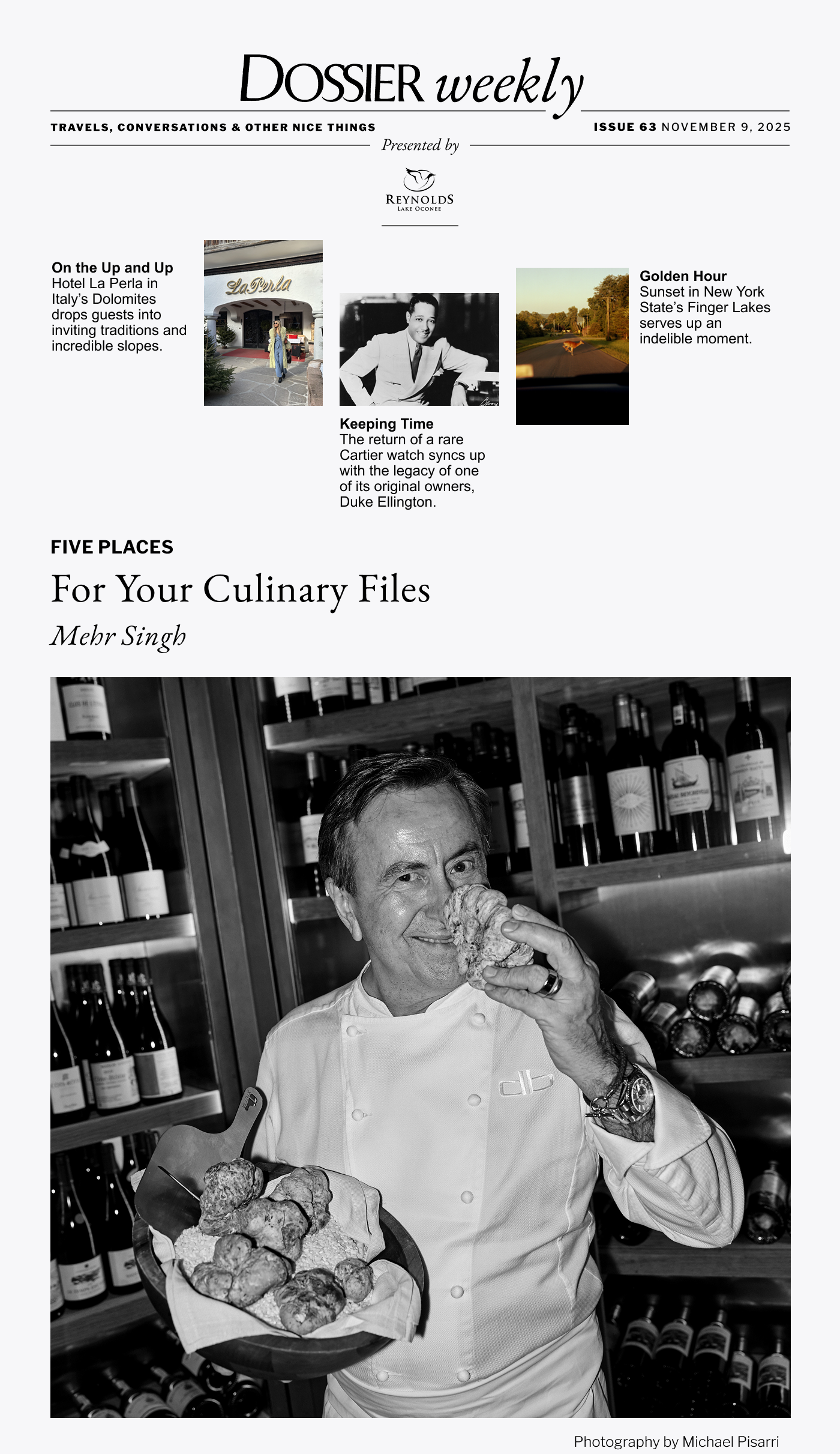
It’s hard to overstate Daniel Boulud’s impact on French dining in America. The Lyon native arrived in New York in 1982, at age 26, and quickly galvanized diners with his mischievously precise, sauce-driven cooking at Le Cirque, which went on to earn a four-star New York Times review. Since then, Boulud has opened some of the city’s most storied restaurants, including Le Pavillon, Daniel, and his newest, La Tête d’Or, a Frenchman’s take on the American steakhouse. With nine cookbooks and a shelf of James Beard Awards, Boulud now owns more than a dozen restaurants, cafés, and épiceries worldwide. Among them is Café Boulud The Bahamas at Rosewood Baha Mar in Nassau, where I sit with him under palm trees as he prepares to host his annual truffle dinner. Here, he prefers to keep things “a little more gentle.” “In the Bahamas,” he clarifies, “you don’t bring your New York attitude or your New York energy.” Still, the ever-restless chef remains in motion, which is why I asked him to share five culinary destinations worth traveling for — and what to order when you get there.
Troisgros in Ouches, France. I’ve been coming here since I was 16, maybe. It’s a fourth-generation restaurant on the outskirts of Lyon, just a few minutes from Domaine des Ouches. Troisgrois has had three [Michelin] stars for almost 60 years, yet it's still soulful and creative. It’s current with our times, yet totally connected with the past. And I think, well, that’s what I love about food. In the 1960s, [the current owner] César’s grandfather created a revolutionary dish: salmon seared on one side without any fat and served with a simple sorrel sauce. It was both quintessentially French and strikingly modern. When I did Lyon with Tony [Anthony] Bourdain [on Anthony Bourdain: Parts Unknown], we ordered l’escalope de saumon à l’oseille. It’s sad not to have Tony anymore, but when you watch the show he stays with us.
Steirereck in Vienna, Austria. I had such a wonderful experience there. We’re more Latin [in France], and they’re more Germanic in Vienna. It’s a good contrast to have in Europe. Chef Heinz Reitbauer has had this dish for a long time: He puts room-temperature [Arctic] char in a little square tray and pours hot beeswax over it to cook the fish. He removes the wax after it sets and serves you the fish. It’s a delicate, fantastic dish.
Odette in Singapore. The 3-Michelin-star French restaurant at the National Gallery Singapore … I’ve known Chef Julien Royer for 15 years. Just like Claude Troisgros went to Brazil and I made my name in America, Julien — after great stints at some of the top restaurants in France — went to Singapore and created Odette, which is one of the best restaurants in Asia. A signature dish is the Kampot Pepper Pigeon, where the breast is pan-fried rare, the leg is confited, and the heart and liver are puréed to fill dumplings. There’s also the pho-inspired Jeju Abalone with Foie Gras.
Enigma in Barcelona, Spain. I would go see Albert Adrià and his brother Ferran at Enigma in Barcelona. It’s high on my list because I’ve been to El Bulli [on Cala Montjoi bay] and Tickets, their tapas spot [now closed], but not their latest place, which is a whole other adventure — think minimalist cuisine like bites of koji marshmallow with caviar.
|
|
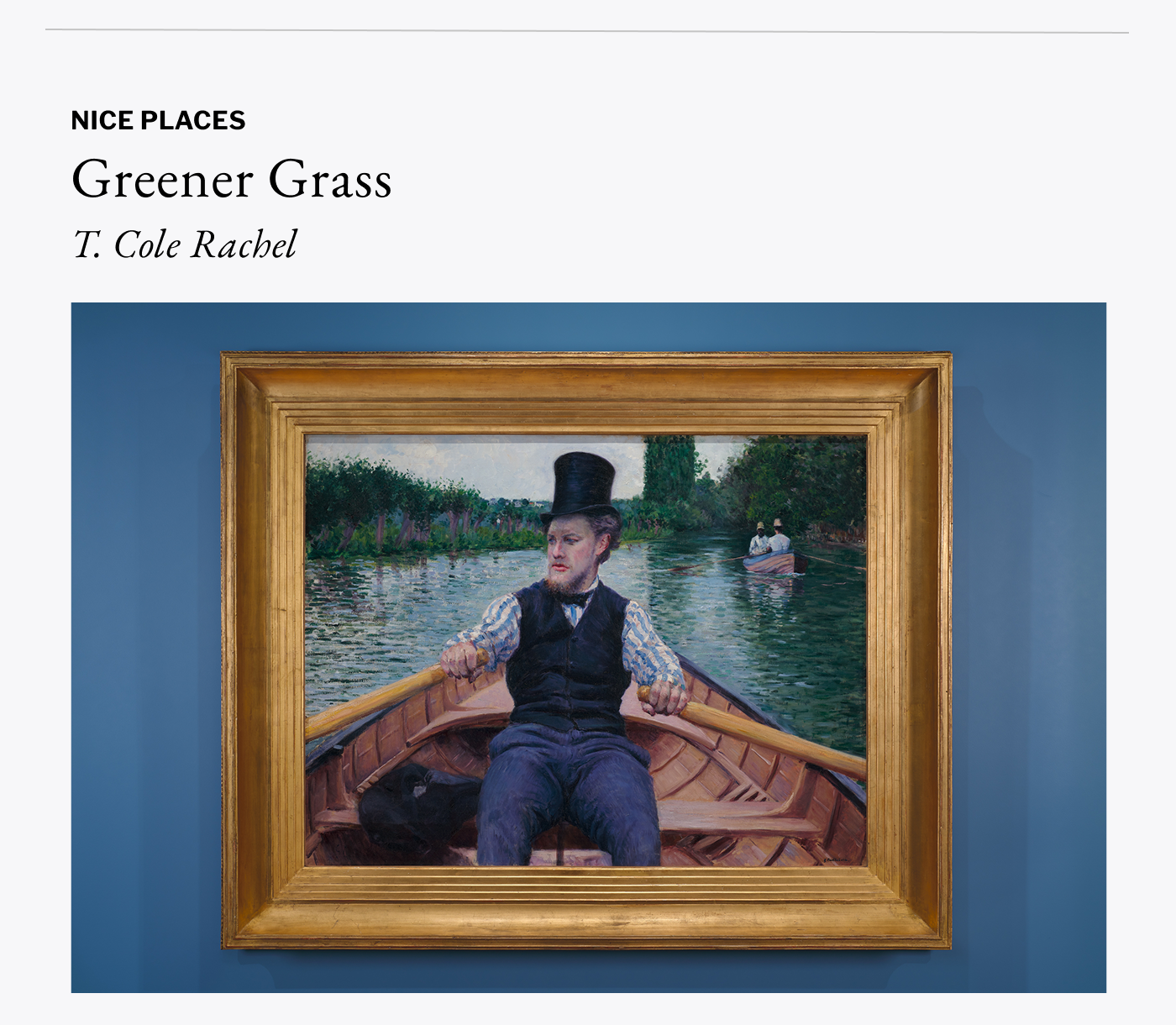
Among the many delights to be seen and experienced at Louis Vuitton’s New York City flagship store on 57th Street are two rarely seen artworks by French impressionist painter Gustave Caillebotte — on loan thanks to a partnership between Musée d’Orsay in Paris and the J. Paul Getty Museum in Los Angeles. These remarkable paintings are tucked away on the store’s fifth floor, in the temporary Espace Louis Vuitton gallery, a serene place complete with a hushed sitting area and museum-appropriate lighting. Seeing these two contemplative paintings so perfectly displayed almost makes one forget where they are for a moment, no small feat in this particularly frenetic stretch of Manhattan. In fact, the two views captured within these works — late 1800s depictions of urban life and repose — feel strangely suited to this cultural moment, in which everyone seems hungry for a simple moment’s pause. This one is available to enjoy through mid-November. |
|
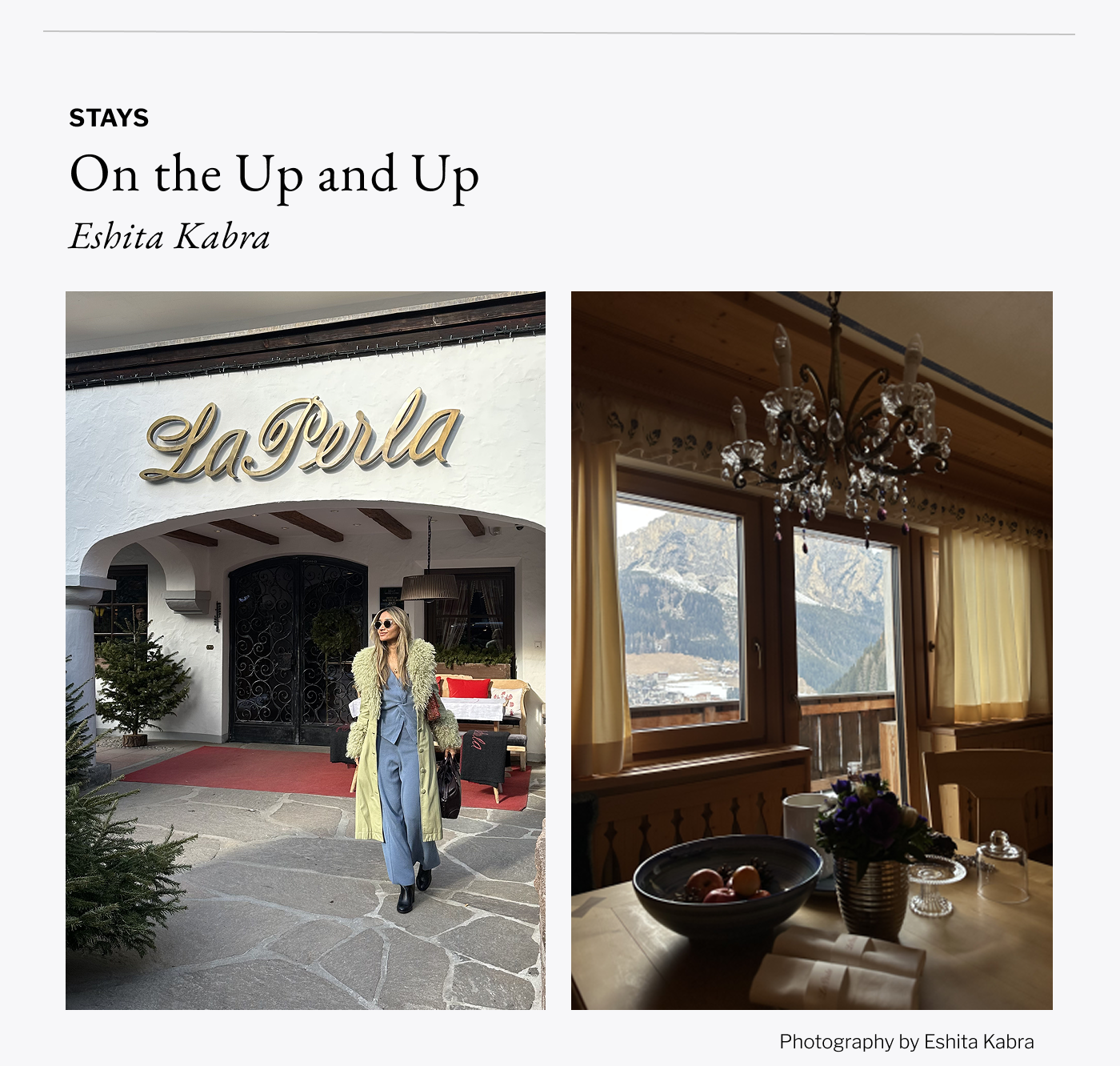
I found a pearl in Italy’s Dolomites — one that finely balances intergenerational traditions with understated luxury; one that will mesmerize philocalists, epicureans, and skiers alike; one that shines precisely because it’s not shiny.
Hotel La Perla is a family-run property in Corvara, Badia, a two-hour drive from Venice. The Costa family — who opened the hotel in 1956 and who continues to contribute to the individual character and design of its 48 rooms — takes pride in all of the things the property is not. Notably, it’s free of generic luxury (Carrera marble) and kitsch (Venetian masks). In their place is an intimate South Tyrolean mountain home with a stube ( stüa in the local Ladin language) — a wood-lined room heated by a large stove — and a locally rooted approach that’s articulated in the family’s Economy for the Common Good promise. This public commitment goes beyond commercial profit to consider the company’s impact on its communities. It pledges to respect the Dolomites by protecting the region’s UNESCO Natural Heritage status and promoting sustainability through local sourcing.
These practices manifest in a cozy property with well-executed, of-place amenities. La Perla’s lively bar features plush, red vintage furnishings and a memorable negroni martini (two of my favorite drinks at once). Its recently refurbished spa showcases an astrology-themed ceiling mural and mountain views alongside a Finnish sauna, Turkish bath, and alpine-infused treatments. Culinary offerings span continental breakfast, which comes with the local La Plata newspaper; dinner at Les Stuës, which spans multiple rooms, each with its own color scheme and flowers; and artful dishes at La Stüa de Michil, the property’s Michelin-starred restaurant.
My Romantik Dolomites room featured a stunning view of the Sassongher mountain from its balcony, drawing me to the Alta Badia region’s 132 kilometers (82 miles) of ski slopes. If you’re adventurous, the wider Dolomiti Superski carousel has 1,200 kilometers (745 miles) of slopes and 450 lifts, including the thrilling Gran Risa, an Alpine Ski World Cup giant slalom course. I must have gone down it at least 10 times, restoring myself in between runs at Jimmi Hütte, a ski-in mountain hut with refined lunches accompanied by live music and terrific people watching. For après-ski, however, L’Murin at La Perla is the place. Despite a tightly packed schedule of conquering as many slopes as possible, eating, drinking, and relaxing, I managed to make a new friend: Gaudi, the Costa family’s charming golden labrador, whom I visited every morning near reception. To my utter delight, I found a hand-painted ceramic clip of her and a vial of negroni martini waiting for me on my bedside table the night before my departure. The gesture not only characterized the best turndown service I’ve ever received, it also perfectly encapsulated the understated elegance of this special property and the Costa family’s conscious approach to hospitality.
|
|
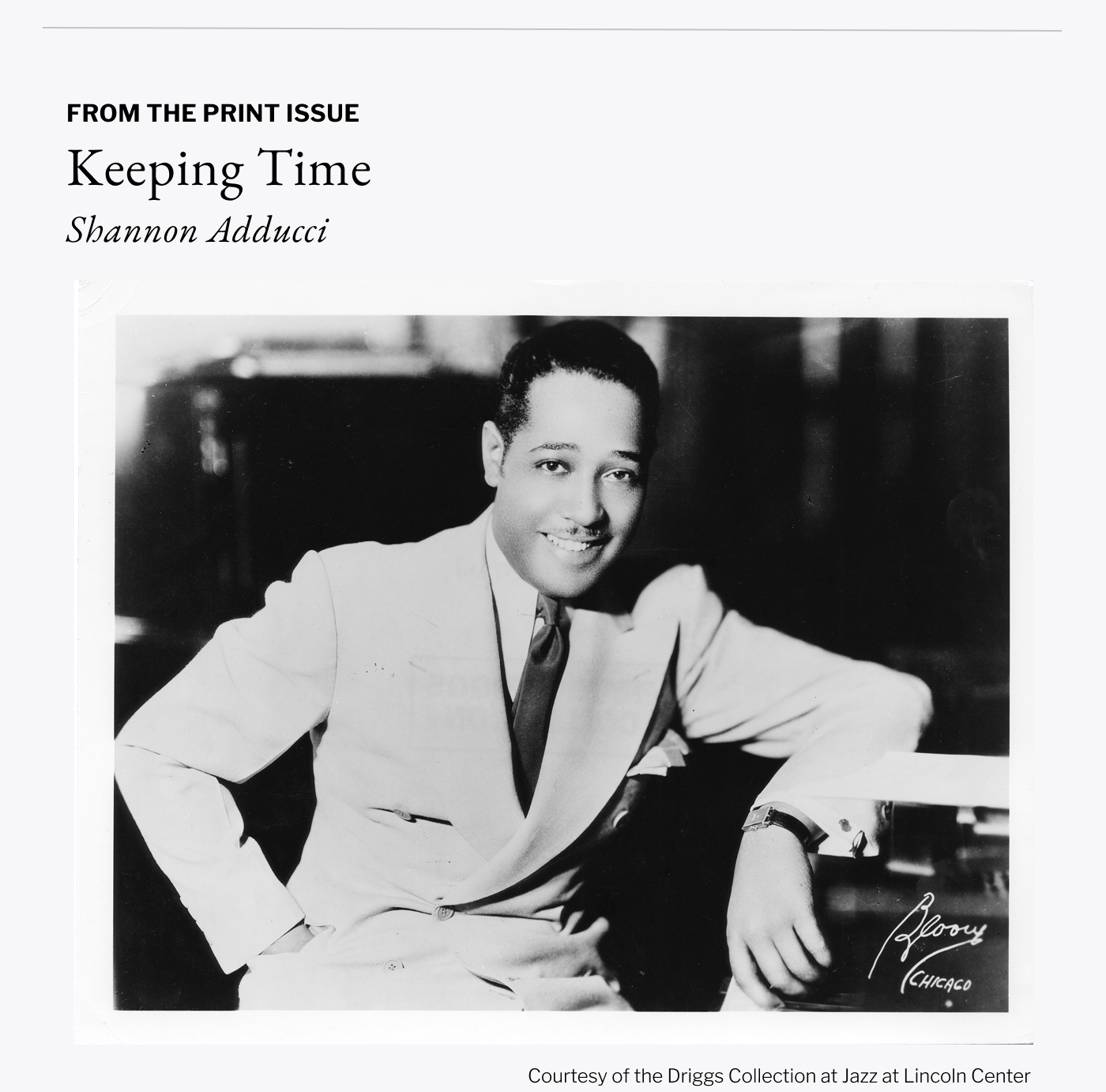
Picture this: New York City, 1928. The Roaring ’20s are reaching their crescendo; the Harlem Renaissance is in full swing. Uptown, at 142nd Street and Lenox Avenue, Duke Ellington is a year into his tenure at the Cotton Club, his famed orchestra acting as the house band for the legendary nightspot. Photographs of the jazz pianist and composer from this era, in the prime of his music career and cultural ascendency, offer a bounty of lush details. First, there is the Cotton Club, with its marquee lighting, dancers, and revelry. There is the physical arrangement of Ellington’s band, members symmetrically lined up onstage, behind a cascade of staircases, or fanned out around the bandleader sitting at a baby grand piano, leaning in. Then there is Ellington himself: arms draped; long, elegant fingers perched on the keys; wearing a double-breasted suit or tuxedo cut so perfectly that not a single patch of fabric is taut or wrinkled — every inch sits just right (perhaps the true genesis of the term “drip”).
But it’s a minute detail on Ellington’s soigné wrist that requires a swipe of the fingers to zoom in for closer inspection: a wristwatch from Paris, by Cartier. It is a brand new watch from the French jeweler, and only a handful were made. The first went to the Maharaja of Patiala, Sir Bhupinder Singh, in British India, whose storied extravagance includes placing the largest single order that Cartier has received to date (the Patiala necklace, with 2,930 diamonds including a center stone weighing nearly 235 carats, all worth the equivalent of $2.5 billion in 2023 — a piece that was also ordered in 1928). After the maharaja, Ellington became one of the inaugural owners of the Cartier Tank à Guichets, in 1929 or 1930. At a glance, the wristwatch is visually undistinguished, its dial obscured by a thick plate of brushed metal, time visible only through two small apertures sitting top and bottom. But behind this outer shell — and beyond its famous owners — sits a timepiece with inner and outer peculiarities that have made it a sought-after collectors’ piece for nearly a century.
Discover the legacy behind Ellington’s Cartier watch and more close takes on a wide world in our new fall/winter print issue. Order now.
|
|
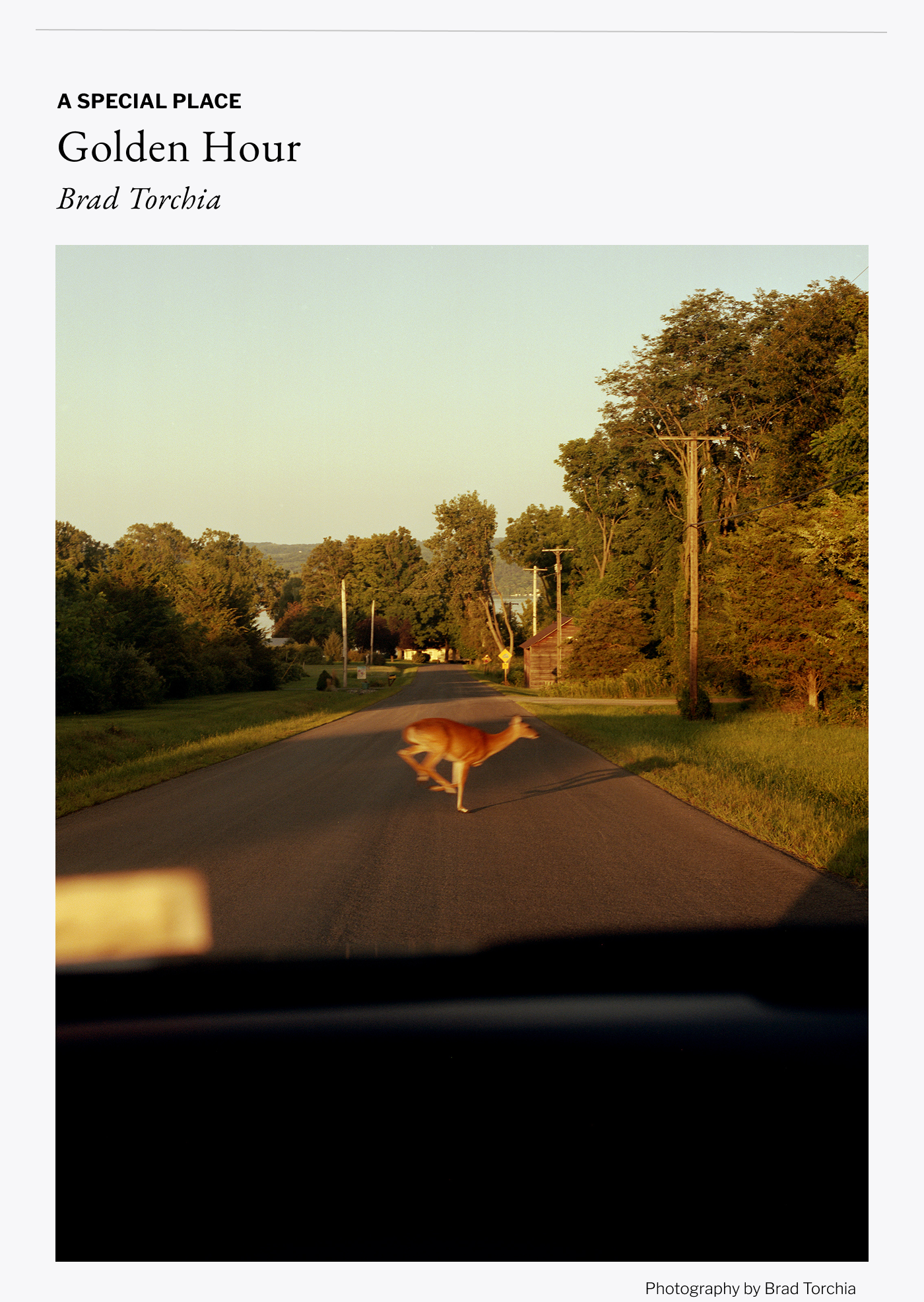
When I was growing up in upstate New York, my family had a small cottage on Seneca Lake in the Finger Lakes region, where we would spend most weekends. My parents worked for Kodak so they would bring me disposable cameras. I ran around with the cameras, taking photos — an instrumental step in my path to becoming a photographer.
I feel a powerful mix of memories when I'm there, and I've made an effort to return each summer for a few days — to spend time with my family and make a few photos. This one came as I was driving down the road to our cottage one evening at sunset. Out of the corner of my eye, I saw a deer. I grabbed the Mamiya RZ67 in my passenger seat, quickly focused it, and shot one frame before I even came to a stop. It felt perfect, like I was exactly where I was meant to be, exactly when I was meant to be there. |
|
Bearing Fruit. If you’ve ever driven through the sun-drenched town of Ojai, California, you’ve likely seen its endless rows of fragrant citrus orchards. Now, thanks to Marmalade Grove, you can enjoy the destination’s bounty wherever you are. This local maker ships boxes of handpicked juicy tangerines, vibrant oranges, and other fruits, as well as marmalades made from them, straight to your doorstep. The jarred delicacies offer bursts of brightness in every spoonful, like inviting California sunshine into your kitchen. My favorite flavor pairings include ruby Valencia orange and apricot, Meyer lemon and honey, and the unexpected Cara Cara orange and hibiscus. –Elissa Polls
Inner Sanctum. They say the nose knows — mine led me to New York City’s SoHo neighborhood, where the fragrance brand Vyrao is hosting its first physical installation. Designed in partnership with the architectural studio Amo, the interactive space is driven by Vyrao’s ethos: Energy is everything. Floor-to-ceiling video projections set the mood. Next, a series of totems presents Vyrao scents with matching mantras. Servers offer oat-milk cacao in custom Lake Bell Clay mugs and a seating area in the back invites you to browse esoteric vintage literature, such as The Mystical Magical Marvelous World of Dreams, from Climax Books. It’s a sensorial escape from the city rush — thanks, in part, to the brand’s new seductive scents: Ludeaux and Ludatrix. The installation is open through November 28. –Lisa Lok
Opposites Attract. On a trip to Glasgow, I found myself craving Thai food and by sheer luck stumbled past Ka Pao. Located down the street from the Glasgow Botanic Gardens, Ka Pao is a Bib Gourmand-rated, Southeast Asian-fusion restaurant serving shared plates. As such, I had the sharing menu, which included 12 dishes spanning spiced lamb sausage, beef tartare with chili jam, perfectly spicy curries, and corn ribs with salted coconut that I’m still dreaming about (along with the fried chicken in fish sauce caramel). Who knew one of my favorite Asian restaurants would be in Scotland? –Alessandra Berge
|
|
54 Franklin St #2R NY, NY 10013. ©2025 Dossier Projects, LLC.
|
|
|
|
|