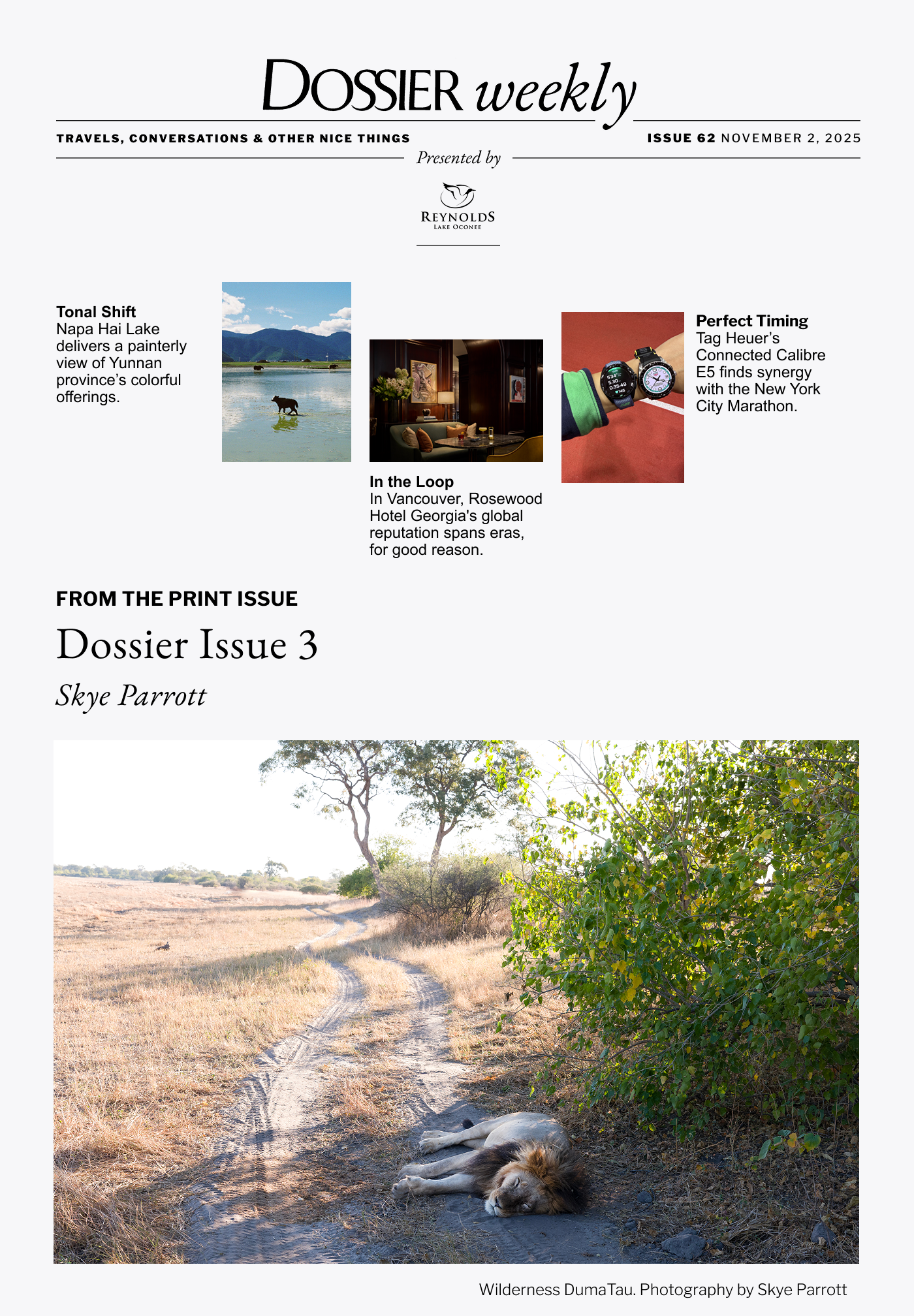
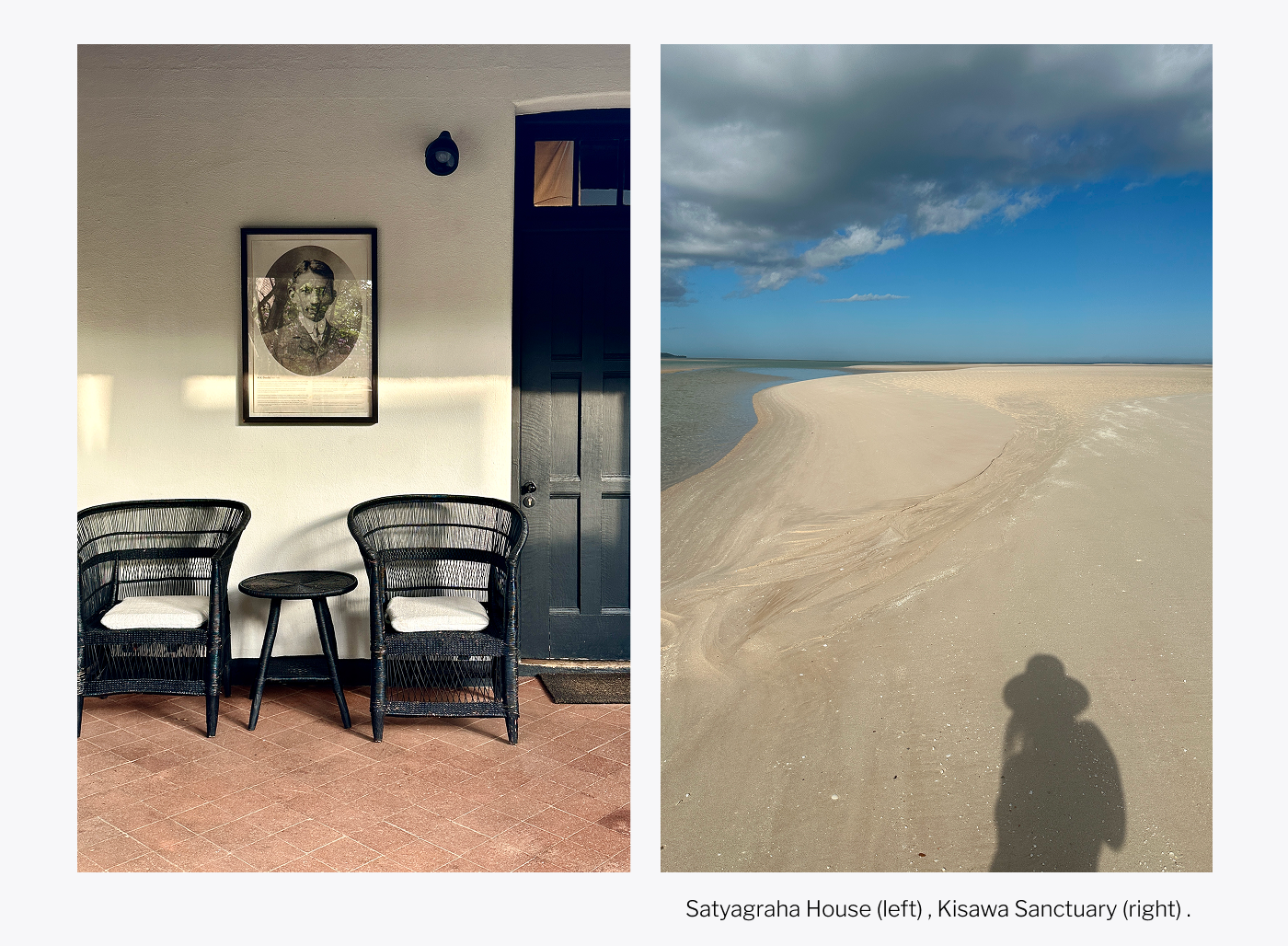
This summer, my daughters both headed off to camp in France while my stepson packed up for Maine, where he spent two months working as a camp counselor. Consequently, my husband and I found ourselves — for the first time in 15 years — with two entire weeks without children. When this incredible space appeared in my schedule (or, more accurately, rolled out in front of me like a red carpet), I knew immediately where I hoped to spend it: Africa. Africa is somewhere I always find myself looking to return to and explore (beyond the eight countries I have already visited). I have been particularly eager to get to Botswana to see the incredible sustainable impact work Wilderness is doing in the Okavango Delta, so that topped my list. I also arranged a visit to Kisawa Sanctuary, in a wildlife preserve on an island off the coast of Mozambique, and, in between, a quick stop in Johannesburg, South Africa, with a stay at Satyagraha House, a small museum with guest rooms in Mahatma Gandhi’s former home. The trio of stays unintentionally underscored the variety of culture, ecology, and hospitality experiences available on our planet’s second-largest continent. While the incredible diversity of Africa is real, one of its major draws for me, as for many, is its phenomenal swaths of great wilderness. A native of the urban jungle, I am at home in cities, the bigger and messier the better. But, equally, I find myself when I visit places that are far-flung, remote, deeply and profoundly wild. |
|
“True solitude,” author Wendell Berry wrote, “is found in the wild places, where one is without human obligation.” While that feels precise to me on a personal level — those places allow me to feel still, and profoundly humbled — the opposite holds true when I consider human beings on a greater scale. Visiting wild places intensely underlines the enormity of the impacts people can have collectively, for good and bad, and the obligation that carries. This issue’s cover story was shot in Scotland, on the grounds of several properties operated by Wildland, a rewilding project with a lofty 200-year vision of landscape conservation of the Highlands. That includes projects as diverse as collaborating on reintroducing beavers to the Cairngorms, producing the first wild-born kits in Scotland in 400 years; and restoring The Dores Inn, a beloved local pub in Loch Ness. About 5,700 miles away in the small village of Eretsha, Botswana, I visited a local nonprofit called Life With Elephants, which works with farmers to reduce conflicts with herds, protecting the animals, the people, and precious crops. Standing outside the organization’s modest headquarters with its corrugated steel roof, set along a road of ocher dirt, I stared at a sign that listed one of the sponsors of the organization as USAID — now a former sponsor, as the agency shuttered in July. It was a reminder of how meaningful our choices can be and how easily the balance of their impacts can be shifted. There is no corner of this planet so remote that we are not connected to one another. That is always true, but it’s a particularly inescapable reality when you stand in the wild places.
|
|
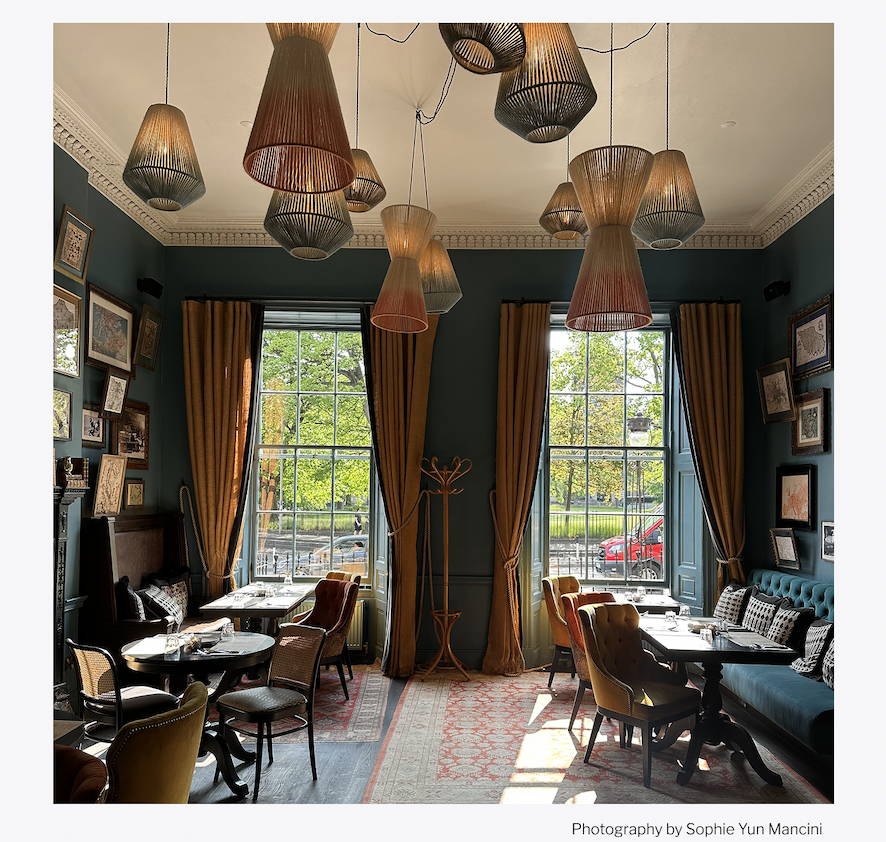
Word to the Wise … On my way to the Scottish Highlands for our cover story, I booked a stay in Edinburgh’s Kimpton Charlotte Square Hotel, a property with perhaps the most serene location in the entire city. (Most hotels at this level are located on the main thoroughfare of Princes Street, which, during high season, can feel a bit like walking through a tsunami of selfie sticks.) The quietude of Charlotte Square, with its dignified Georgian architecture and ancient humming trees, is just the embrace one needs after getting off a red-eye. The hotel’s suites contain clean lines and cool tones — think sleek leather headboards and soothing swaths of dove grey — punctuated by period accents, including marble fireplaces and towering ceilings with crown molding. The jewel of the property is a central room on the ground floor, painted a rich, deep cyan, where guests gather for tea, drinks, or dinner. As the light beams through tall windows, the space’s umber drapes and armchairs glow an intoxicating gold. The hotel’s restaurant, Baba, is a buzzing world unto itself, offering bright, blazing dishes of Levantine-inspired cuisine, such as smokey, juicy lamb and velvety mezzes. Of particular note is a playful partnership with Strathberry. The brand’s leather goods are designed in Edinburgh and handcrafted in Spain, and revered for their minimalist designs and architectural metal bar closures. The royals are known to be fans and guests are free to borrow bags from the hotel’s library throughout their stay — like grabbing a complimentary umbrella only far, far lovelier. –Sophie Yun Mancini |
|
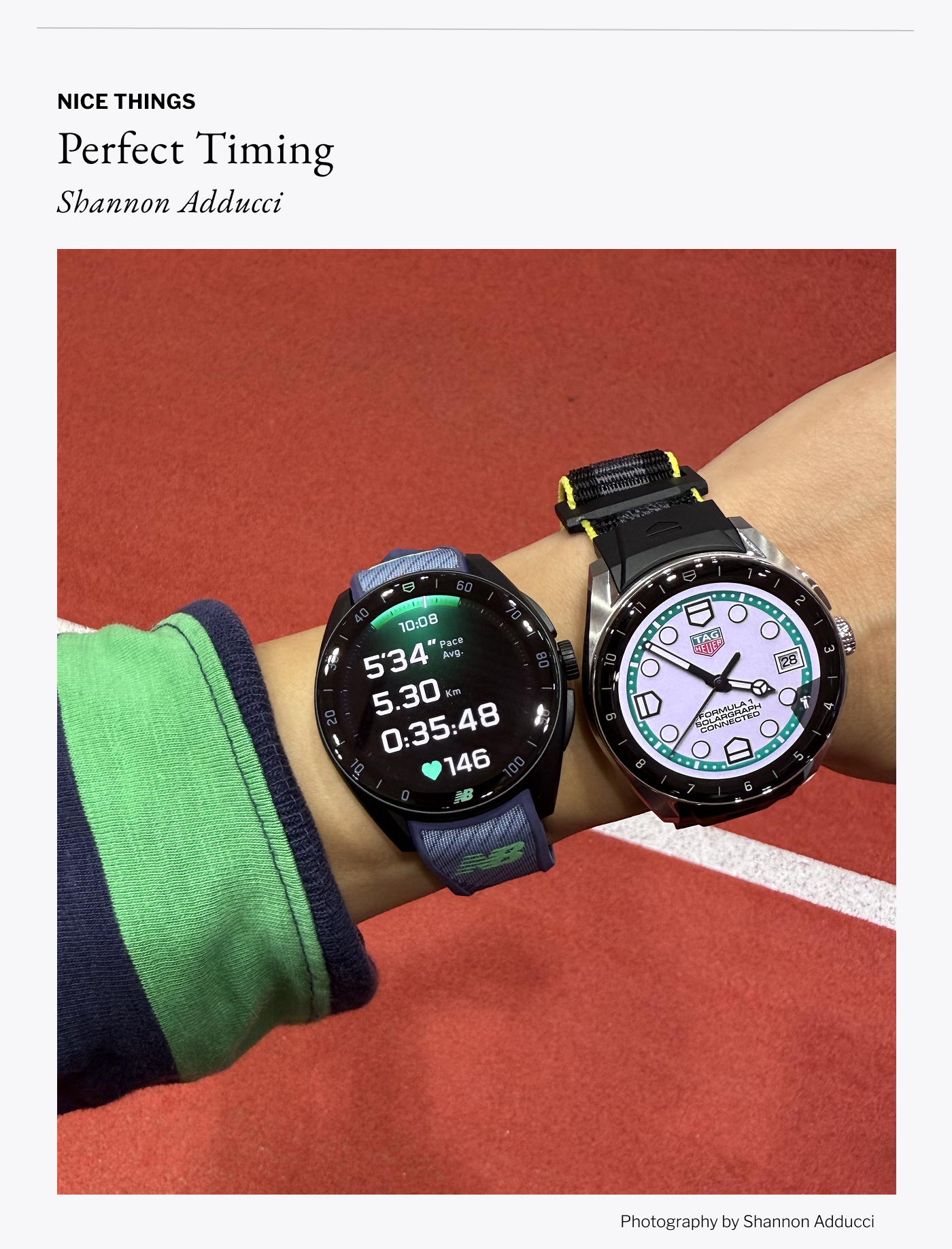
Crisp fall air, bagels, cowbells, homemade signs, foil blankets, celebratory dinners. These are all the hallmarks of Marathon Day in New York City, when racers course through all five boroughs, spectators cheer from mile markers, and road closures force residents to slow down and linger in their neighborhoods. The traditions have now spilled over into Marathon Monday, with sponsored day-after events in Central Park and at a host of shops, restaurants, and museums — all extending post-race specials to participants. This includes Tag Heuer, the marathon’s official timekeeper, which will offer medal engraving at its Fifth Avenue boutique to racers who complete the brand’s Designed to Win Mile Challenge. It will also host an intimate Q&A with Olympic gold medalist Sydney McLaughlin-Levrone on Monday evening ( call the boutique to reserve a spot). It’s all perfect timing for Tag’s recent debut of the Connected Calibre E5, the latest iteration of the smartwatch first launched in 2015. While it covers all the basics of a wearable (heart-rate monitoring, activity-level tracking, sleep-pattern analyzation), the design is at its core a running watch, paying tribute to the Swiss watchmaker’s heritage chronographs (a fancy term for a stopwatch) that date back to the 19th century. This time around, Tag installed an entirely new operating system and also sized a selection of the watches down to 40mm, improving their aerodynamics for athletes. To drive home the running component, the brand even partnered with the marathon’s official gear sponsor, New Balance, to create a complementary watch style and running shoe: the TAG Heuer Connected Calibre E5 x New Balance Edition and the TAG Heuer x New Balance SC Elite v5. Both are sure to be spotted along the course … today! |
|
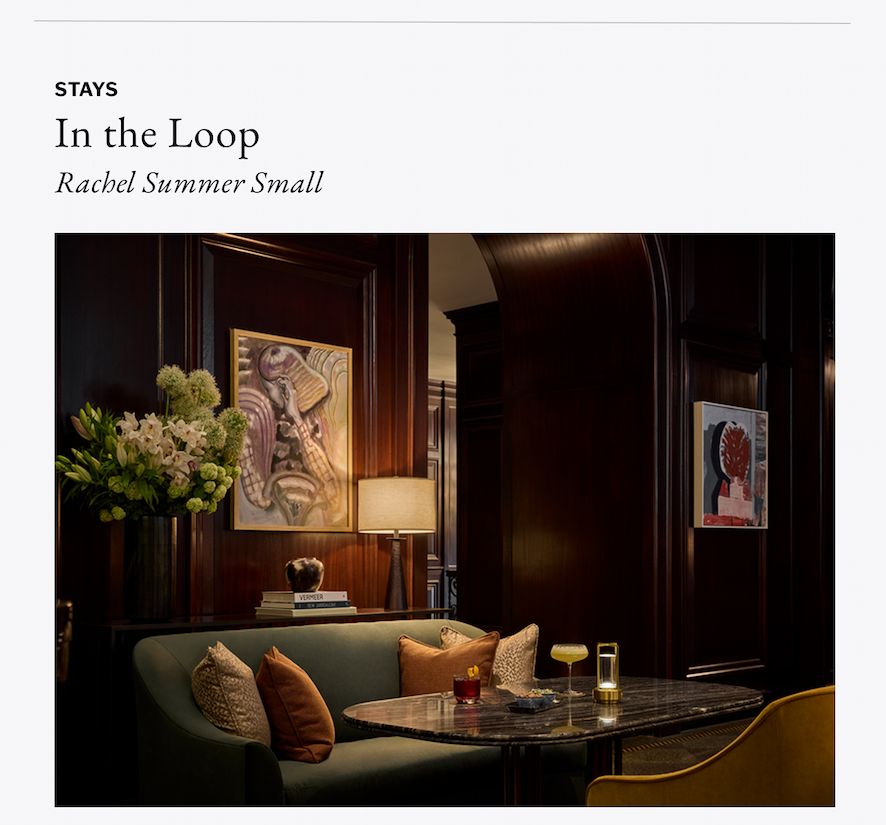
Vancouver, British Columbia, is a patchwork of lush greenery and lapping water, with petals of land extending into the Salish Sea. Its built environment — bridges, thoroughfares, light suburban sprawl — seems to politely exist on the peripheries of this stunning natural topography, not daring to interfere with the relatively uncultivated landscape that anchors the outdoors-centric lifestyle of the city’s typical resident. As with so many North American coastal cities, Vancouver’s burst of development followed a boom of Industrial-era prosperity, here driven by an advantageous position as a trading hub connected by railroads and boats. Hotel Georgia, which opened in 1927, arrived in the wake of this affluence. Overnight, it became a global hotspot, with Edward III, then Prince of Wales, and his brother George, the Duke of Kent, visiting that same year. (I’m told that a certain pop star more recently rented the top three floors when she was in town for the final stop of her sensational international tour.) After a renovation undertaken by Rosewood Hotel Group that culminated in the hotel’s grand reopening in 2011, Rosewood Hotel Georgia, as it’s now called, still displays its Jazz Age opulence. But these Old World origins pair with contemporary notes, including grounding accents from local and Indigenous artists and artisans. Walking into the property’s lobby, I’m enveloped by dark wood wall paneling topped with gold ornamental motifs. In contrast, my room is bright and airy, featuring striped grey carpeting, a similarly neutral palette across the curtains and furniture, and a sprawling dark marble bathroom with a soaking tub. The hotel’s saltwater pool and spa also firmly root the property in the 21st century, as do its dining venues. There’s the all-day 1927 Lounge (for breakfast, opt for the smoked salmon scramble), open-air Reflections The Garden Terrace (go for a late lunch or cocktails with small bites), and formal, Michelin-recommended Hawksworth Restaurant (where I clocked a Damien Hirst Butterflies painting). Hawksworth’s menu is refreshingly simple, with most dishes focused on a single ingredient, such as Fremantle albacore tuna with olive oil and yuzu kushu or miso-marinated sablefish sourced from the nearby Haida Gwaii archipelago. Finally, there’s the newly opened, speakeasy-style bar Prophecy for late-night drinks. In the heart of downtown, Rosewood Hotel Georgia is steps away from the city’s landmark sites. Out my window, I see the Vancouver Art Gallery, which dates to 1931 and has taken a similar path into present day: Its stark neoclassical interior serves as the backdrop for modern and contemporary art programming showcasing Canadian and international artists. (When I visit, I see both New York City-based Lucy Raven’s breathtaking Murderers Bar, a video that documents the destruction of a dam, as well as a selection of dreamy post-Impressionist paintings by the late Canadian artist Emily Carr). Stanley Park, the famous 1,000-acre greenspace, is likewise nearby. One morning, after a stop at Cycle City to secure a rental, I venture onto its meandering bike path. (Beware, once you journey down the one-way track that circles the park’s perimeter, you are essentially locked in until the loop is complete.) About halfway through, I conclude it may be the single best way to get a sense of what Vancouver’s all about: the weaving within and whooshing past buildings, forests, waterways, bridges, beaches, lawns, and cliffsides, with fresh air on your face and ever-changing views ahead. |
|
Explore The Dossier — a collection of thoughts, ideas, recommendations, and discoveries from all over the globe — and more close takes on a wide world in our print issues. Order now. |
|
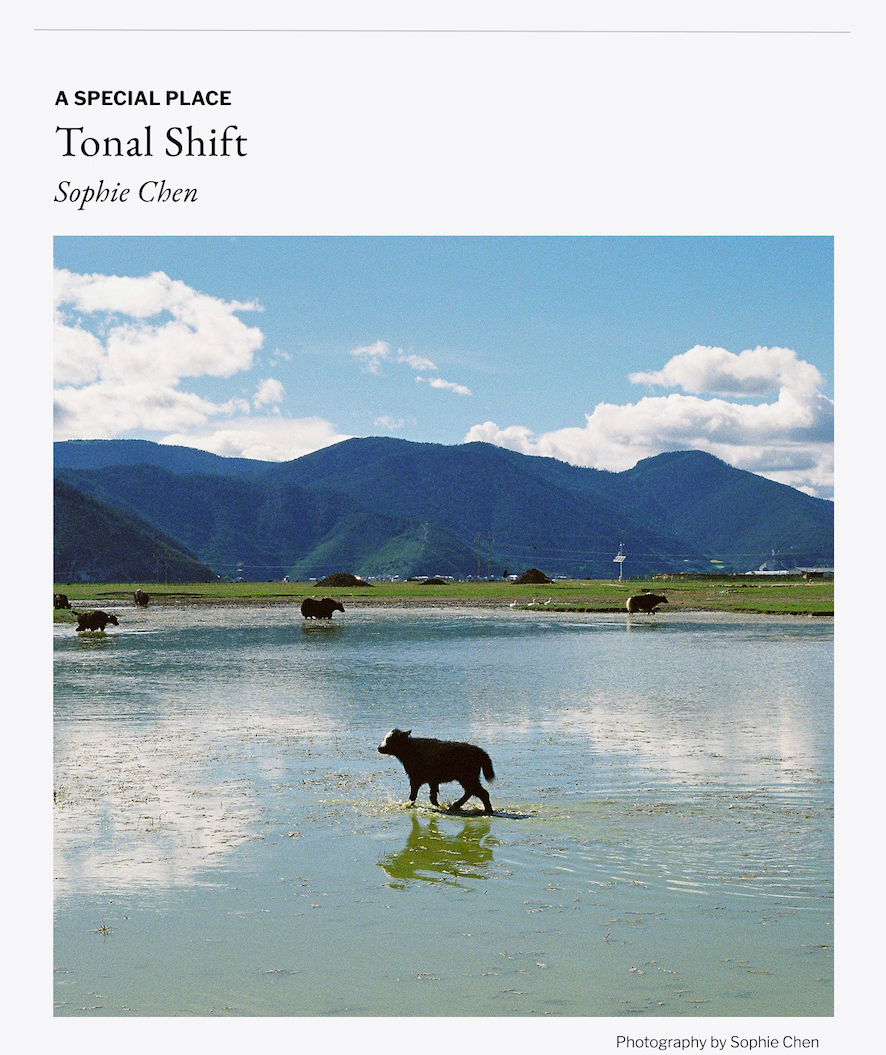
Two years ago, my family visited Napa Hai Lake in Shangri-La, a highland wetland in China’s Yunnan province, where the intense summer light seemed to saturate every color, painting the grasslands and water in vivid tones. Yet, the weather was never still; the sky constantly shifted between strong sun and heavy clouds. Everything felt quietly in motion and full of life.
Having lived abroad for many years, I was in awe of China’s incredible range of landscapes. Compared to the east coast of China, where I’m from, this view felt like a postcard or a painting. Witnessing such beauty in my motherland made me feel more connected to my roots. I find myself missing Yunnan often, not only for its views but also for its food and culture. Here, local produce, flavors, and traditions feel as alive as the scenery. |
|
Fresh Tunes. On a recent weeknight, The Current, Minnesota Public Radio’s nationally syndicated gem, gave listeners a preview of Dreams Go, the latest album from Minneapolis electronic indie-pop outfit Poliça. Airy, warm, and sexy, with a vaporous sheen, the album leaves space between notes for an intimate, audible vulnerability. Of its eight tracks, “Revival” gives welcome The xx vibes. I’ve had it on repeat all week. – John Chuldenko
Special Delivery. Los Angeles-based lifestyle brand Flamingo Estate’s subscriptions make it almost too easy to keep your home stocked with thoughtfully sourced delights. Take its seasonal subscription boxes: Each edition is themed around a destination, with this summer’s The Japan box stocked with limited-edition scents, snacks, and spices crafted in collaboration with local Japanese makers. The collection was so credible, it rivaled the goodies my mom brings me after visiting our family in Tokyo. The Onsen Soap, in particular, transported me right back to a Japanese mountain hot spring. Last week, a fall box launched, The Kingdom of Bhutan, featuring a similarly sensorial mix. –Alessandra Berge
Living Legend. It's not often that a Broadway deity performs in a 100-seat theater. But that's the magic of Andre de Shields. Famed for originating the title role of The Wiz and, more recently, his Tony-winning performance in Hadestown (you can also catch him in Cats: The Jellicle Ball on Broadway this spring), De Shields is now holding court in André de Shields is Tartuffe at the House of the Redeemer, a historic mansion once owned by the Vanderbilt family on New York City's Upper East Side. Staged in the mansion’s intimate library, the play is a delicious, immersive romp and De Shields is divine as the iconic con man. A few feet from my seat, he made his epic entrance, strutting in a cherry-red robe and singing Nina Simone’s “I Feel Good,” commanding both the pianist and the spotlight with the point of a finger. I belly laughed and, unexpectedly, held back tears. That's the power of being this close to the greats. Playing until November 23.
–Jackie Risser
|
|
54 Franklin St #2R NY, NY 10013. ©2025 Dossier Projects, LLC.
|
|
|
|
|