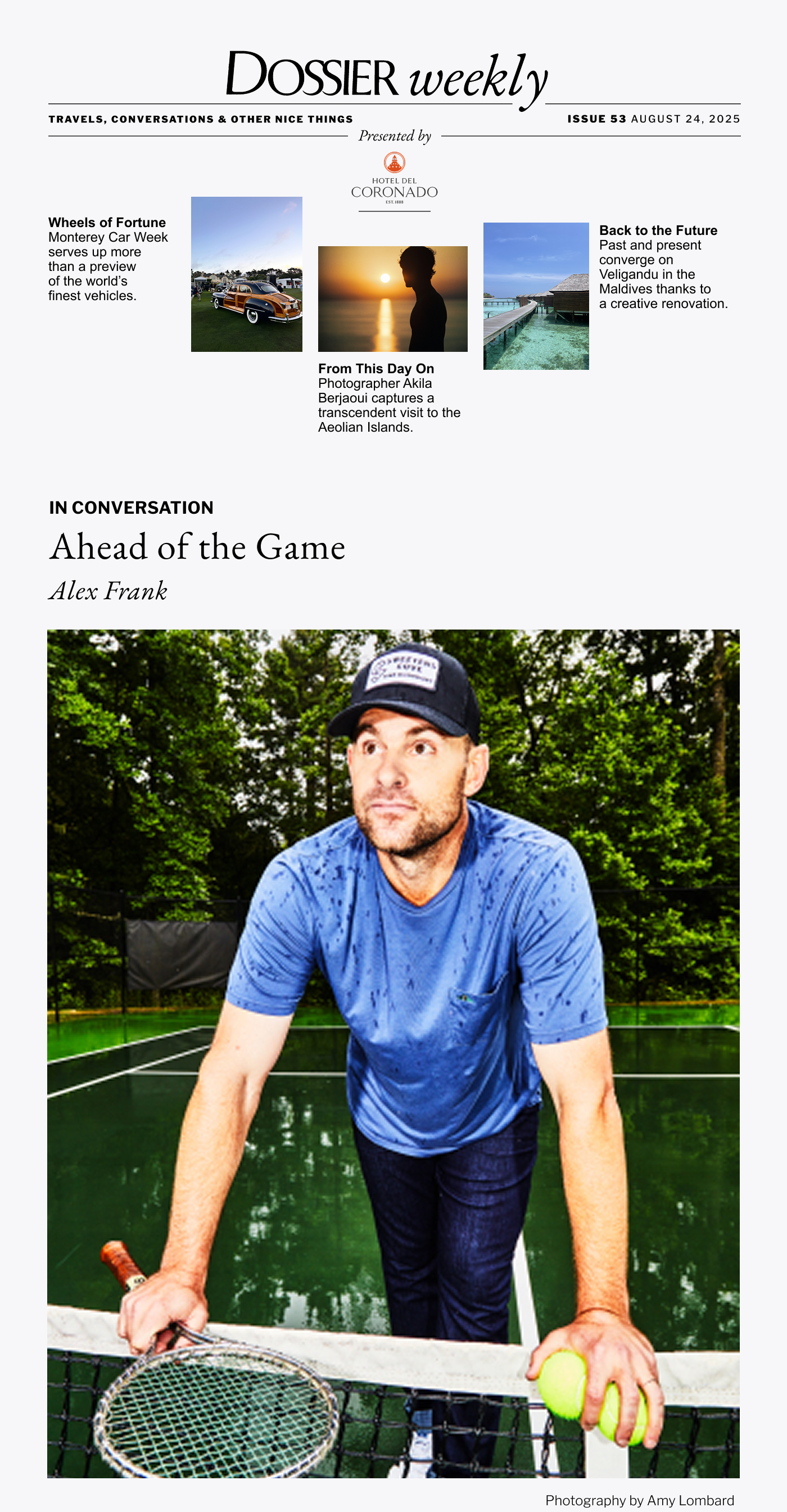
Once ranked No. 1 in the world in men’s tennis — with an infamously powerful serve — Andy Roddick has now perfected the art of the athlete’s second act. Following his retirement in 2012, he hit the ground running on post-career projects, including a great podcast exploring the ins and outs of tennis. Of late, he’s been focused on Sweetens Cove Golf Club in South Pittsburg, Tennessee, and an accompanying spirits brand, which will release two new expressions later this year: five-year and six-year aged Tennessee Bourbon.
Alex Frank: When did it dawn on you that there would be life after tennis?
Andy Roddick: I think if you get to that first Tuesday post-retirement and you have no idea what you’re doing, it's probably too late. The tentpole of my post-tennis life was a real estate company we started in 2008 — you have to have those building blocks in place, even when you’re playing, then have something that you can fully commit to post-career. It was never really an “Aha!” moment. It was kind of a gradual thing.
AF: What was that first moment after retirement like?
AR: It was weird, because I announced my retirement but then I played another week in the US Open and made a bit of a run. That week was one of my favorites ever, because you had all the benefits [but] no expectation — the innocence came back. The only thing that was going to affect any sort of legacy was if I won again, which wasn't likely with where my shoulder was and who was in the draw. I got to fully engage. If I wanted to stop practicing, I just did. It stripped back all the pressures. I remember driving out of New York after it was finished and just feeling relief.
AF: You started getting really into golf post tennis, which led you to a co-ownership role in Sweetens Cove, right?
AR: I started playing a couple years before I retired. It's been a gift in the postmortem of a tennis career, because it's like a social cheat code. I missed the [tennis] locker room, but not as much because I could play golf with people. You have four hours with someone — you know them better than if you’d gone to 10 dinners. It’s such a connector. It was a huge part in making retiring a lot easier. It doesn't matter if you’re good, bad, whatever as long as you get on with it, not holding groups up behind you.
AF: Do you have any bucket-list courses you’ve gotten to play?
AR: That whole West Coast, Carmel, California, region is just absurd. Outside of Hawaii, it's probably the prettiest earth that we have in the country. I'm a bit of a romantic about golf courses. The magic of Sweetens Cove is you have all the benefits of private golf, the architecture and beauty, but it's without a lot of the stereotypes that can sometimes be intimidating in the golf world.
AF: Are you good?
AR: I'm good enough. I’m a 1 to 2 handicap, which at the club level is good.
AF: Let's talk about the bourbon. How did you develop your palate?
AR: I listen a lot more than I talk when I'm around experts. I've learned a lot about the barreling process. There are a lot of parallels with wine — it’s storage, it’s heat, it’s air, if there’s an extreme season. Our initial offering was very spicy, very hot. It gave you that Kentucky hug, where you felt it in your chest a little bit. This new one is a little bit more approachable — you can throw it into a cocktail.
AF: Do you have a “19th hole” cocktail?
AR: My dream is one of those fancy, round ice cubes with about a finger [of bourbon] and kind of just cruising on it for 30 or 45 minutes.
AF: The US Open is around the corner — what makes it such a special tournament?
AR: It’s a scene. It’s the place to be. It's a pop-culture moment — it's more than just a tennis event. I think all of the Slams are awesomely microcosms of where they're played. Wimbledon brings the tradition of the British experience. Australia is, like, summer’s here; let’s go rip beers in the beer garden. France is all about the details. And New York’s a show. They’re having Grammy-nominated artists sing the anthem. There are fireworks. There are luxury suites where people are drinking until 2 a.m..
AF: You were the last American man to be ranked No. 1 in the world in men’s singles. Now, people are really hopeful about this young gun American Ben Shelton, who has reached the top 10. What do you see in him?
AR: I think Ben is so exciting. You can’t teach a 150-mile-an-hour serve, especially to a lefty. His journey has been interesting. The first time he made the quarters in Australia was the first time he ever left the country — he didn’t have a passport!
In real time, Ben is becoming a better tennis player. The raw parts have been his athleticism and serve, the power, how engaging he is, how charismatic he is — those are all natural. And now, he’s learning how to win points in a very unspectacular fashion, which is the highest compliment you can give an aspiring player. He’s starting to hit little chips to change patterns on the court. It’s almost on-the-job training at the highest level. It’d be like starting at Apple and being in the C-suite within the first year. That’s what Ben has been doing. It's exciting to watch.
AF: Some athletes never play after they retire — what about you?
AR: I didn’t play for fun for probably 10 years. I’d had a couple of injuries, I put on a little weight, and everything hurt all the time when I played. Now I play like three times a week. I drop my kids off and then I go play for two hours. And I'm completely obsessed with it all over again. It's been really fun. I couldn’t be happier.
|
|
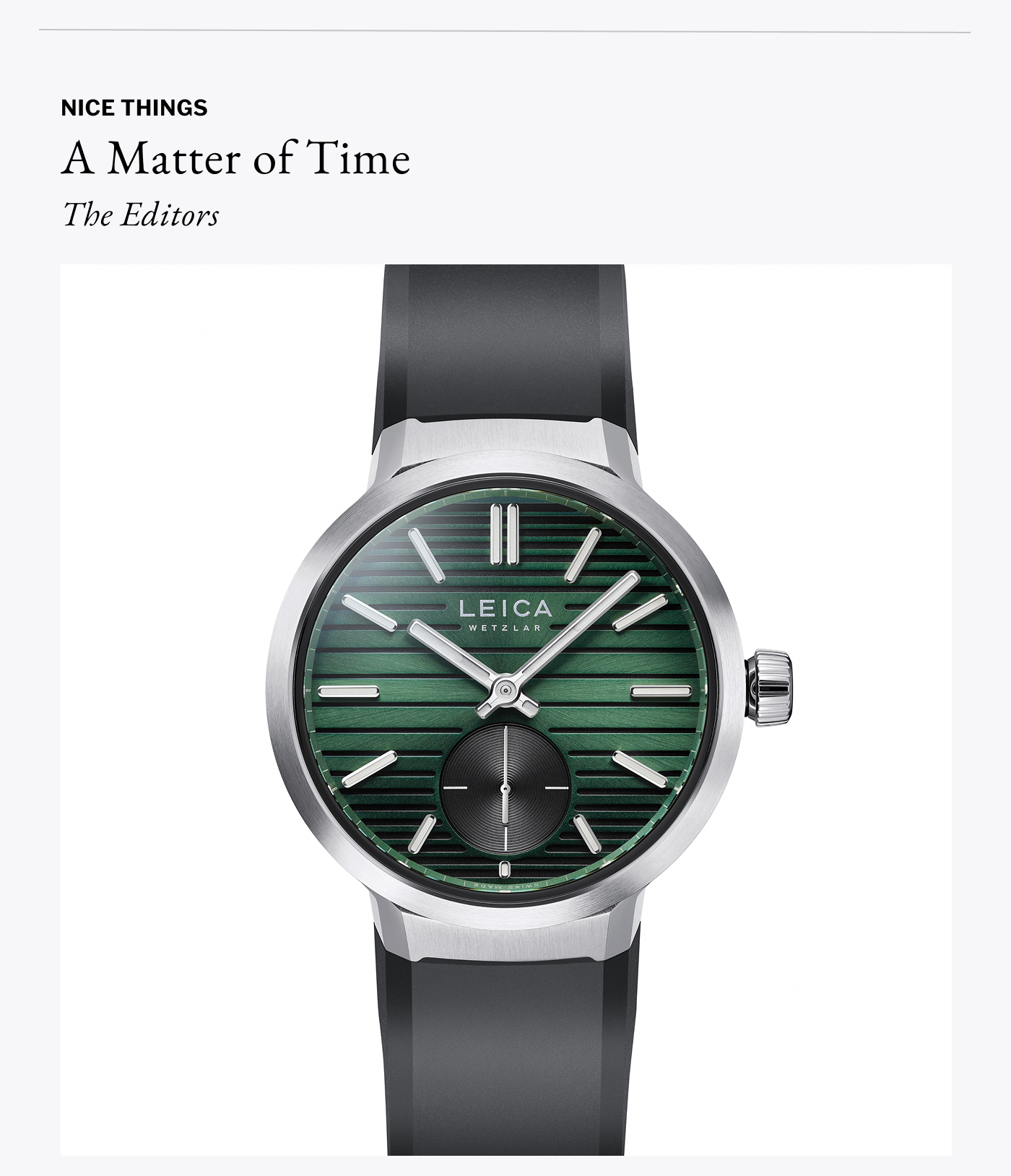
When Leica, the German maker behind the world’s best cameras, launched a watch collection in early 2022, it was initially met with skepticism. Few knew that watchmaking is in the brand’s DNA: Leica’s founder, Ernst Leitz, worked for a Swiss watchmaker in 1863, gaining valuable insight into precision and craftsmanship — two values he would weave into the company he created six years later. Today, the Leica ZM collection — ZM stands for zeitmesser (timepiece) — reflects this history and, as one might expect, incorporates many camera-inspired elements. The new Leica ZM12, for instance, has a dual-layered dial reminiscent of a steel sunset, and its dimensional grooves shift in value depending upon the ambient light — much like how a camera interacts with light. There’s a subtle retro-futurism to the piece, which is as clean and compelling as a Leica camera. Its satisfying heft and proportions recall what it feels like to have said camera hanging from your neck. An ideal 39mm size, it’s easy to wear daily yet clean enough to dress up. Off the wrist, the automatic movement, visible through a sapphire-crystal caseback, is as rewarding to examine as an analog photo. |
|
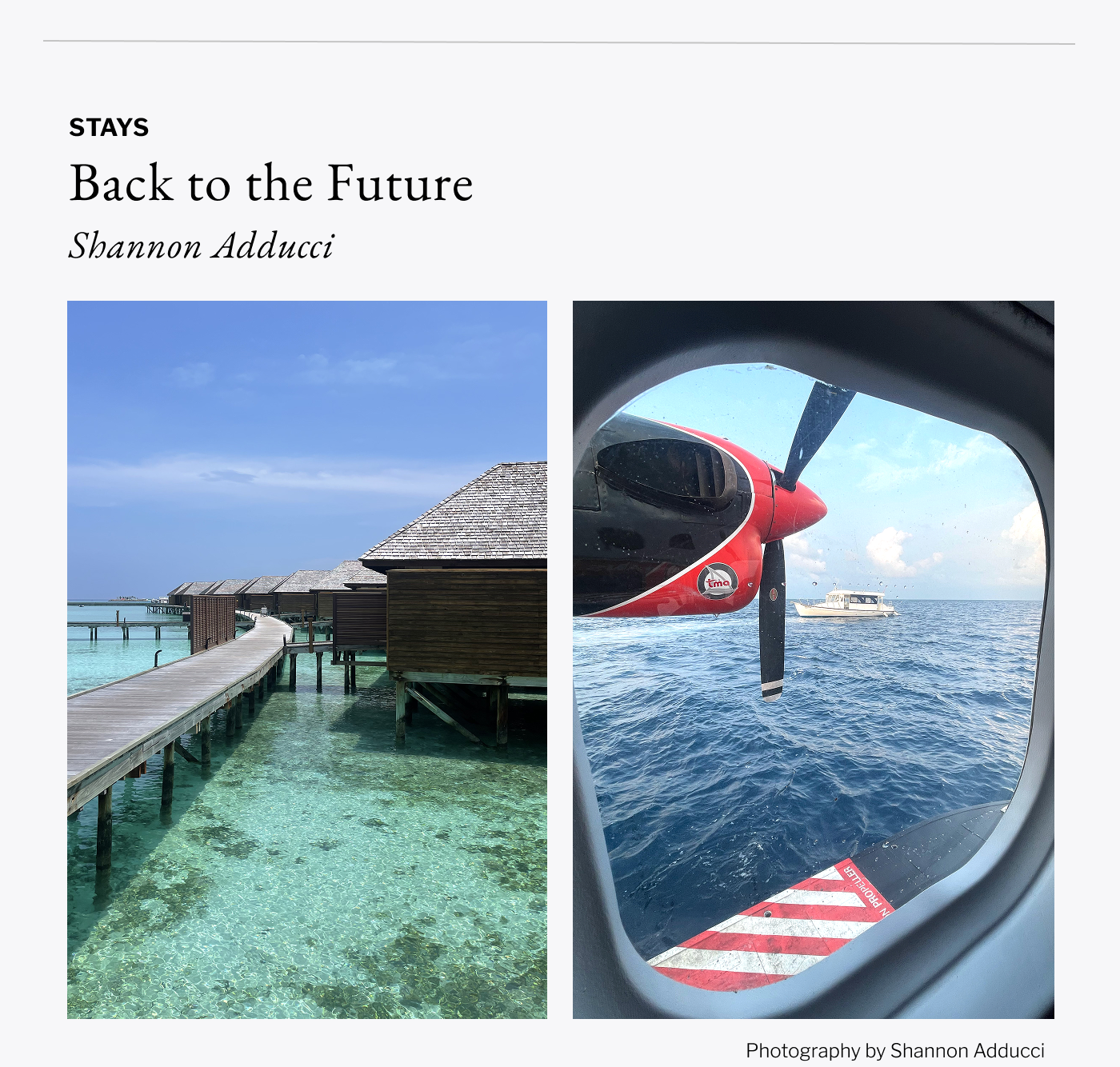
Of all the expectations I had for a trip to the Maldives, one I never would have considered is that it would bring me back to my childhood summers spent on a lake in Michigan. But on the turquoise waters surrounding Veligandu Island Resort & Spa, an island resort just outside of Northern Ari Atoll in the Maldives, that’s where I was transported. Riding one of the property’s jet skis alongside a guide, I chased and jumped wakes, maxing out my speed just as I did on the freshwater lake of my youth.
There are 190 resorts and hotels in the Maldives, and most of them offer a similar definition of paradise: over-water villas, infinity pools, soft sand beaches, endless snorkeling, sunsets as far as the eye can see. But what endeared me to Veligandu — aside from the nostalgic watersports — was how well the resort has managed to connect its past to a luxurious present and an ambitious future. One of the first island resorts in the Maldives, it opened in 1984, when there were only a handful of properties dotting the 1,192 coral islands that make up the country. Back then, Veligandu had just 17 rooms and two dhonis (the traditional boats Maldivians use to island hop). Several updates have been made to the resort over the years to keep up with the explosion of tourism in the country. In late 2024, it reopened after its most recent, an extensive 18-month renovation that brought it to five-star luxury status.
Those evolutions are every bit as luxe as the amenities offered by the outposts of nearby Western hospitality brands (most of which have opened over the past 15 years). Think pickleball and paddle tennis courts, a new fitness center, day-use villas, and the most comprehensive watersports menu I’ve ever seen (electric Jetsurf boards, Lift eFoils, wake foils, X-Jetblades, Seabobs and Wing-Surfers are all on my list). There are also 50 new, sleek, and contemporary over-water villas crafted with local materials, as well as immersive, open-air bathrooms; infinity pools perfectly positioned to catch one of those glorious sunsets; and hammocks built into the decks for stargazing.
But I was also happy to see that Veligandu’s character had been preserved through vintage moments. Prior to the renovation, the property took requests from their most loyal guests, many of whom stay annually in the same villa for weeks. (Earlier this spring, a guest returned for his 40th stay and was welcomed with a special celebration to commemorate the anniversary). As a result, several villas feature the original thatched roofs, while the main restaurant, Dhonveli, and the Thundi Bar, retain the sand-covered floors guests have danced on for decades.
Without question, the best preserved feature is the island itself, thanks to many environmentally conscious initiatives. Veligandu impressively boasts one of the largest solar energy systems in the country, including 3,003 solar panels that are projected to produce 2.054 million kWh of clean energy annually. Over 40 years since opening, Veligandu continues to be a pioneer — without sacrificing any of its charm. |
|
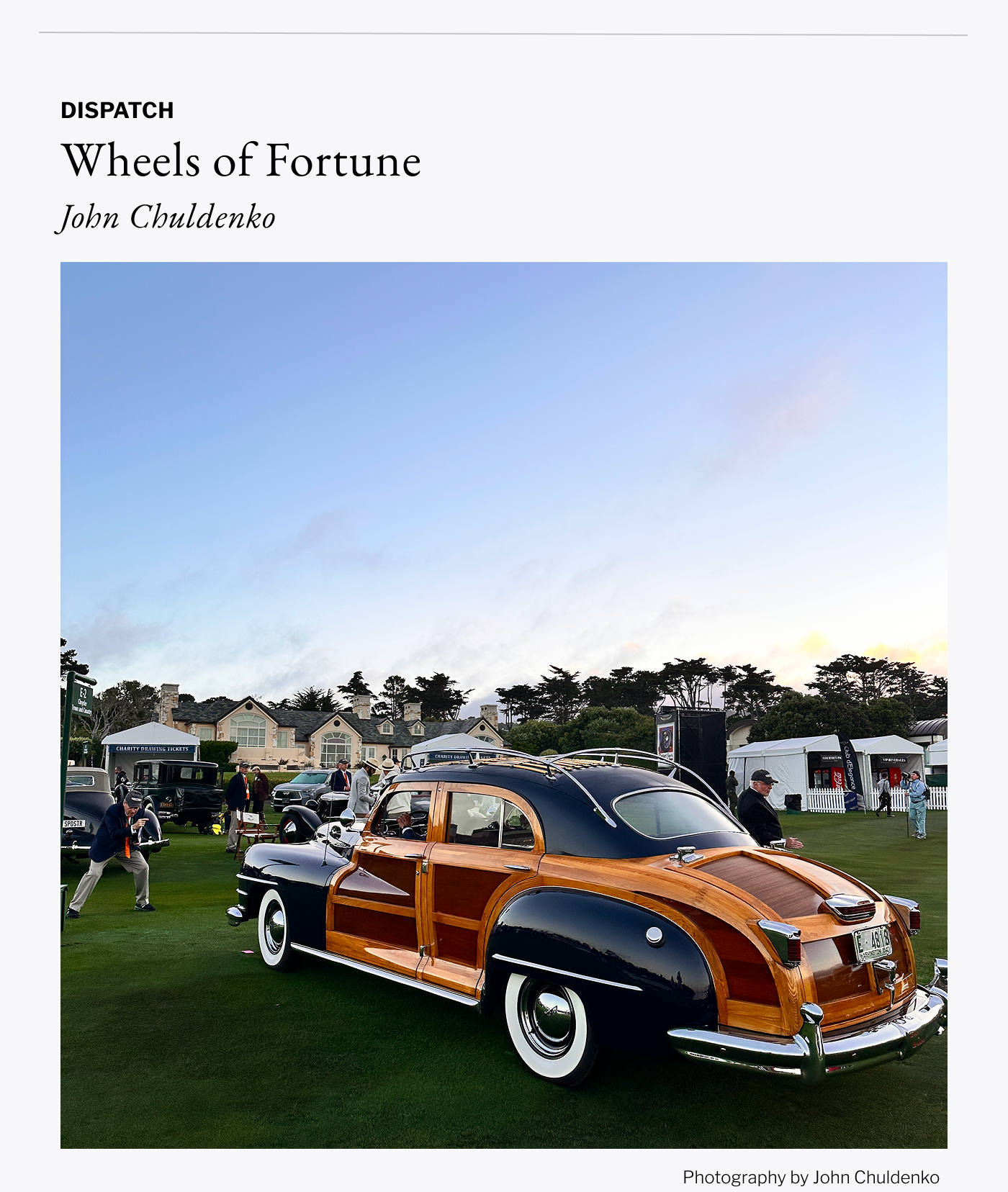
I don't usually set my alarm for 4 a.m. Yet, there I was, in the dark clutching a donut and taking part in a bizarre Monterey Car Week custom known as Dawn Patrol, where hundreds of sleep-deprived car enthusiasts gather before daylight to watch historic automobiles drive onto the Pebble Beach Concours d'Elegance fairway. Of course, these astonishing vehicles will still be parked at a more reasonable hour, but at that moment it became clear that this annual celebration of automotive excellence isn't just about the cars. Three days earlier, Corvette had handed me the keys to its formidable 1064-horsepower ZR-1 for a drive down California's legendary Highway 1. Winding along the coast, I heard a voice shouting over the roar of the engine before a young YouTuber sprinted toward me, waving his phone to capture a video and offer a thumbs up. Rarity was the throughline at The Quail, A Motorsports Gathering (also a Peninsula Signature Event hosted by The Peninsula Hotels and sponsored by Rolex Watches), as Cadillac unveiled its sleek, off-road Elevated Velocity concept car and Lamborghini revealed its Fenomeno, of which only 29 will be produced (they’re already sold). For those seeking even more exclusivity, Bugatti debuted its Programme Solitaire, allowing clients to design their own one-of-a-kind model. Bugatti President Christophe Piochon beamed with enthusiasm as he and I explored one of the brand’s cars, which featured an equestrian-inspired, plaid steering wheel and a horse etched into a crystal shift lever. I also had the pleasure of driving Cadillac's handcrafted Celestiq, ideal for a scenic seaside drive. Each car is individually commissioned, with doors that swing open at the touch of a button. The one I took along the 17-Mile Drive was finished in a gorgeous, head-turning Carolina Blue that compelled the man directing traffic to turn and remark "Beautiful." I thanked him as if the car were mine. As the sun rose on the final day, I joined fellow guests ambling onto the grass, dressed in our summer finery, as Concours judges scrutinized priceless vehicles to determine this year's winners. I marveled at the grouping of historic F1 cars gathered to celebrate the 75th anniversary of the sport, then fawned over a Mercedes SL (with a vintage ski rack) and a Hispano-Suiza clad in riveted mahogany (which would later win Best in Show). On the concept lawn, I found Maserati’s North America CEO and General Manager, Andrea Soriani, near his new MC Pura, reflecting on the occasion. "It's like a high school reunion," he concluded. Despite the champagne and caviar, the fashion and the parties, Car Week has a way of stripping away the superfluous. It's a place where a young YouTuber, a CEO, and a race champion can stand side by side as equals, as enthusiasts appreciating the finest cars on the planet. |
|
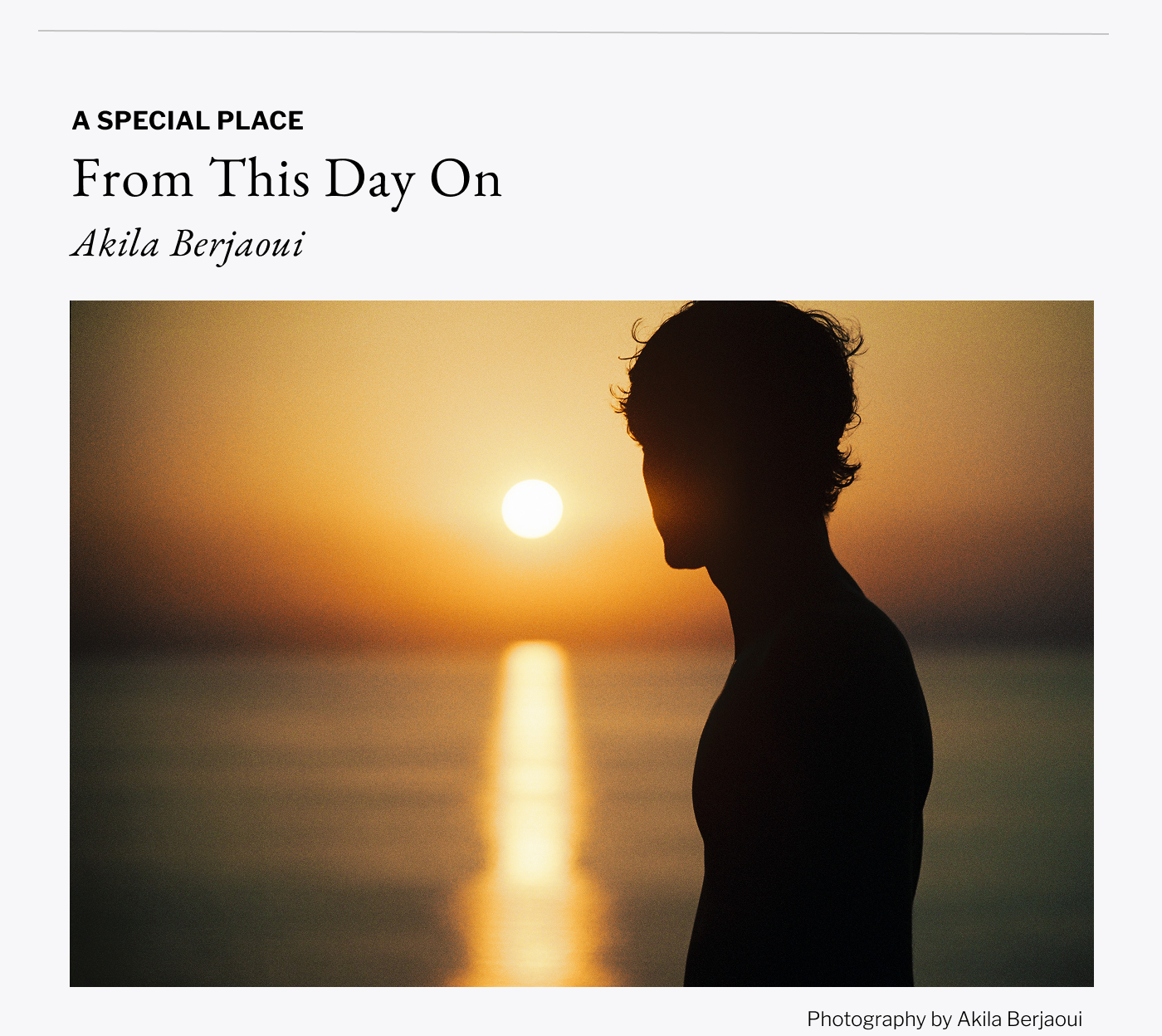
This is a photo of my former love, taken on our rooftop at sunset, on our perfect, little Aeolian Island. We bore witness to some of the most superb sunsets from this very spot — and from our little beach at the bottom of one of the most dramatic landscapes I've ever seen.
When we visited, it happened to be unbearably hot — I’m talking over 100° F. So most of our days were spent languishing inside our dreamy, traditional Aeolian home, our evenings dedicated to swimming, exploring, and overindulging. The heat almost felt like a message from the island gods: Loud and clear, angry at all of us for exploiting our beautiful planet and not taking good care of her. I have reassessed many of my habits since then.
Still, this holiday was one of the most romantic, dramatic, sweetest, and memorable. I shall never forget it. Ti amo Isole Eolie. |
|
Mellowing Out. Marrakech in June is not for everyone, but, personally, I love the intense heat. The heaviness of the air invites you to slow down, which is exactly what I did during a long lunch at Noujoum, the rooftop restaurant in Izza, a boutique hotel located in the twisty warren of the medina. Its tiled, garden-covered riad rooftop was a beautiful retreat from the sun, with food good enough to make languishing truly enjoyable. The fried calamari — lightly breaded and served with an aioli heaped with shallots and dill — made me question why I don’t eat the appetizer more frequently, while a whole sea bass — stuffed with spiced couscous and topped with garlic-harissa shrimp — was equally delicious, offering a dynamic twist on classic Moroccan flavors. –Skye Parrott
Like Buttah. After seven hours under the Sicilian sun, my lips should feel like dried figs. I’m happy to say that is not the case, thanks to Evolvetogether’s hydrating lip balm and its heavenly blend of coconut oil, shea butter, and jojoba seed oil — without parabens, sulfates, or preservatives. Founder Cynthia Sakai is dedicated to creating products for those who care about both ingredient integrity and the planet. Whenever possible, the brand uses fully biodegradable bamboo and sugarcane packaging. You won't regret throwing a tube into your beach bag. –Elysha Beckerman
Mindful Eating. The chefs behind Masala y Maíz, the beloved Michelin-starred Mexico City restaurant, are no strangers to progressive dining. Their creative menu of Mexican, East African, and Indian flavors embodies a concept called mestizaje, or food that makes sense in more than one cuisine due to the migration of people, ingredients, and culinary techniques. Now they’re performing an act of radical hospitality with Eat What You Want, Pay What You Can Day on Wednesday, August 27. The duo corralled nearly 20 more restaurants, including more Michelin-starred spots, to join this one-day effort to make delectable dining accessible to all. –Jackie Risser
|
|
54 Franklin St #2R NY, NY 10013. ©2024 Dossier Projects, LLC.
|
|
|
|
|