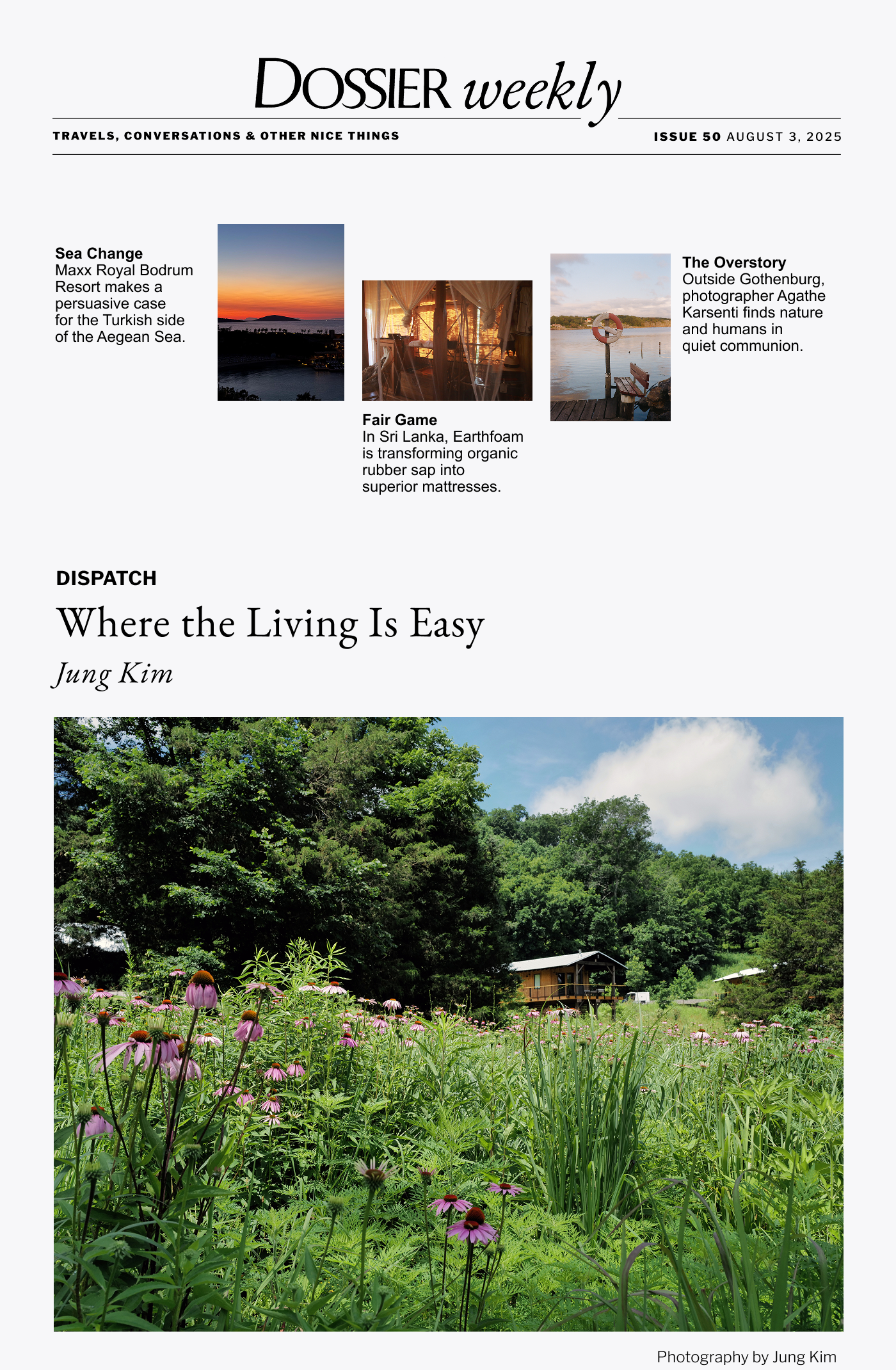
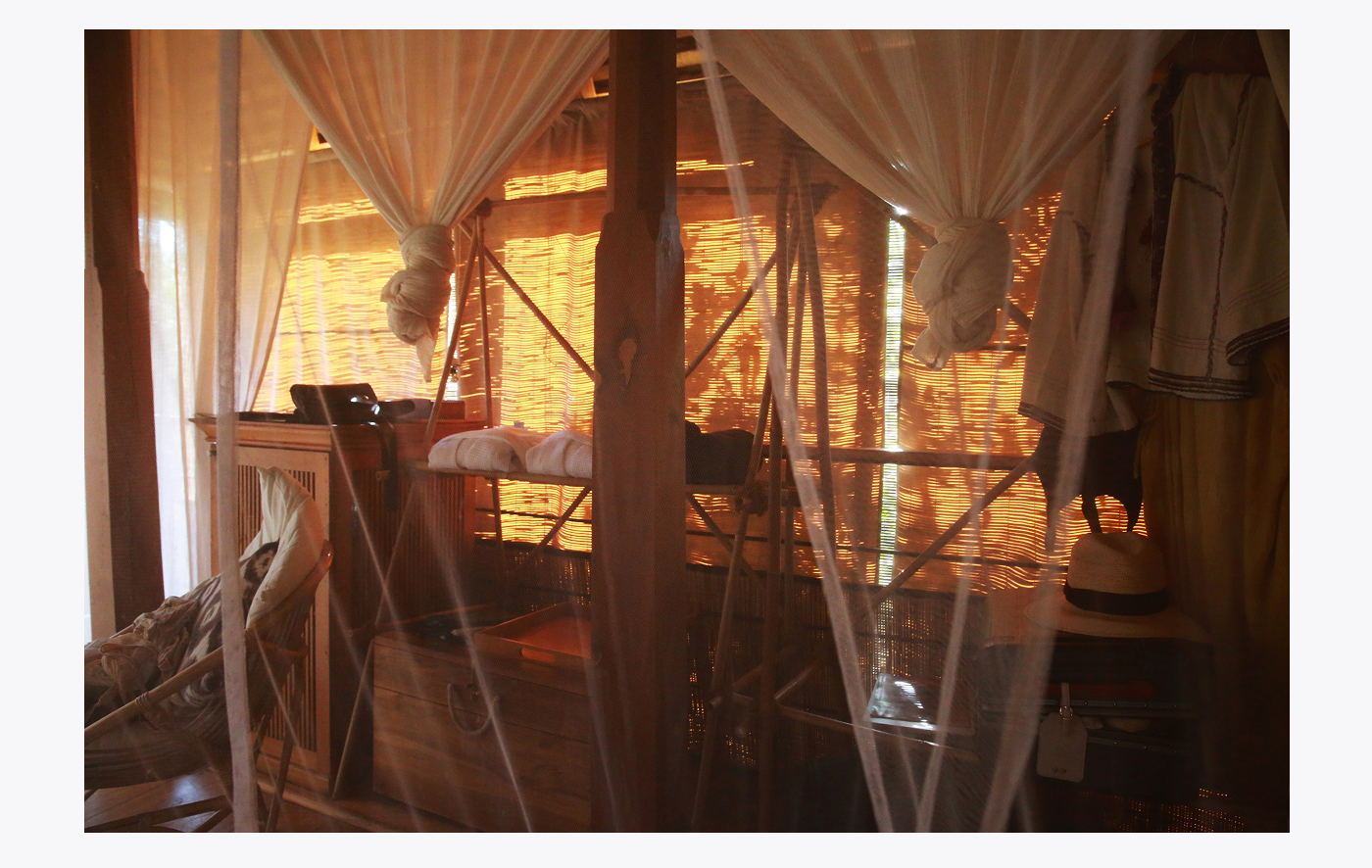
On my second day at Southall Farm & Inn in Franklin, Tennessee, I found myself surrounded by hundreds of thousands of bees. But I wasn’t anxious. I was calmed (literally buzzed) by the vibrating wings. The biological melody was part of a Guided Apiary Tour — a signature experience that introduces guests to the property’s unique beekeeping program, including its honey — but it’s reflective of Southall’s greater mission. The over-500-acre wellness retreat and working farm inspires guests to slow down and reconnect with themselves, fellow guests, and the surrounding natural world: rolling hills topped with wildflowers, hardwood trees, and winding forest trails. In summer, its humid Southern air hangs thick with life. Even the weather seems to sweat with purpose, like the invigorating and cleansing eucalyptus steam room I slipped into after a massage. Everything at Southall is built around a biodynamic, self-sustainability philosophy most easily digested at its restaurants, January and Sojourner, where chef Andrew Klamar and executive chef Nate Leonard transform farm-grown ingredients into simple yet sensational dishes. Breakfast featured soft scrambled eggs laid by resident hens and warm croissants made from scratch; lunch was an imaginative showcase of low-waste preservation and fermentation by chef Richard Jones. A bit like a mad scientist, Jones creates dazzling jams and pickles, as well as mouth-tingling beverages, such as strawberry-stem spritzers and bright ginger fizz steeped from the root’s peels. But dinner — specifically, dinner on the last night of my stay — was a feast for all senses.
A sunset sound bath at the Hilltop Pavilion, the property’s highest point, set the stage, with a warm breeze rustling through the trees and the landscape deepening from gray to indigo as the light dropped and a hundred songbirds broke into chorus. A meal grilled by chef Klamar over an outdoor wood fire followed, with aromatic smoke curling over freshly picked vegetables and locally sourced meats.
After a nightcap and live music at Dottie’s, the property’s lively speakeasy, I returned to my suite, surveying the dark, dramatic Tennessee hills through my windows. I felt light, buoyed by the wine and massage, certainly — but, moreover, by a supportive community of staff and fellow guests. Whereas many retreats approach wellness as a solitary escape, Southall offers a shared journey that demonstrates rather than screams ‘relax.’ |
|
When I was 13, my family took a holiday to Paros — a far cry from Brittany’s shores in northwestern France, which we frequently visited. The island’s warm, calm Aegean waves were a heavenly foil to the Atlantic’s icy surf, imprinting the Greeks isles in my mind as the paradigm of sun-drenched paradise. It took me over a decade to discover the Turkish side of the sea offers natural gifts in equal measure.
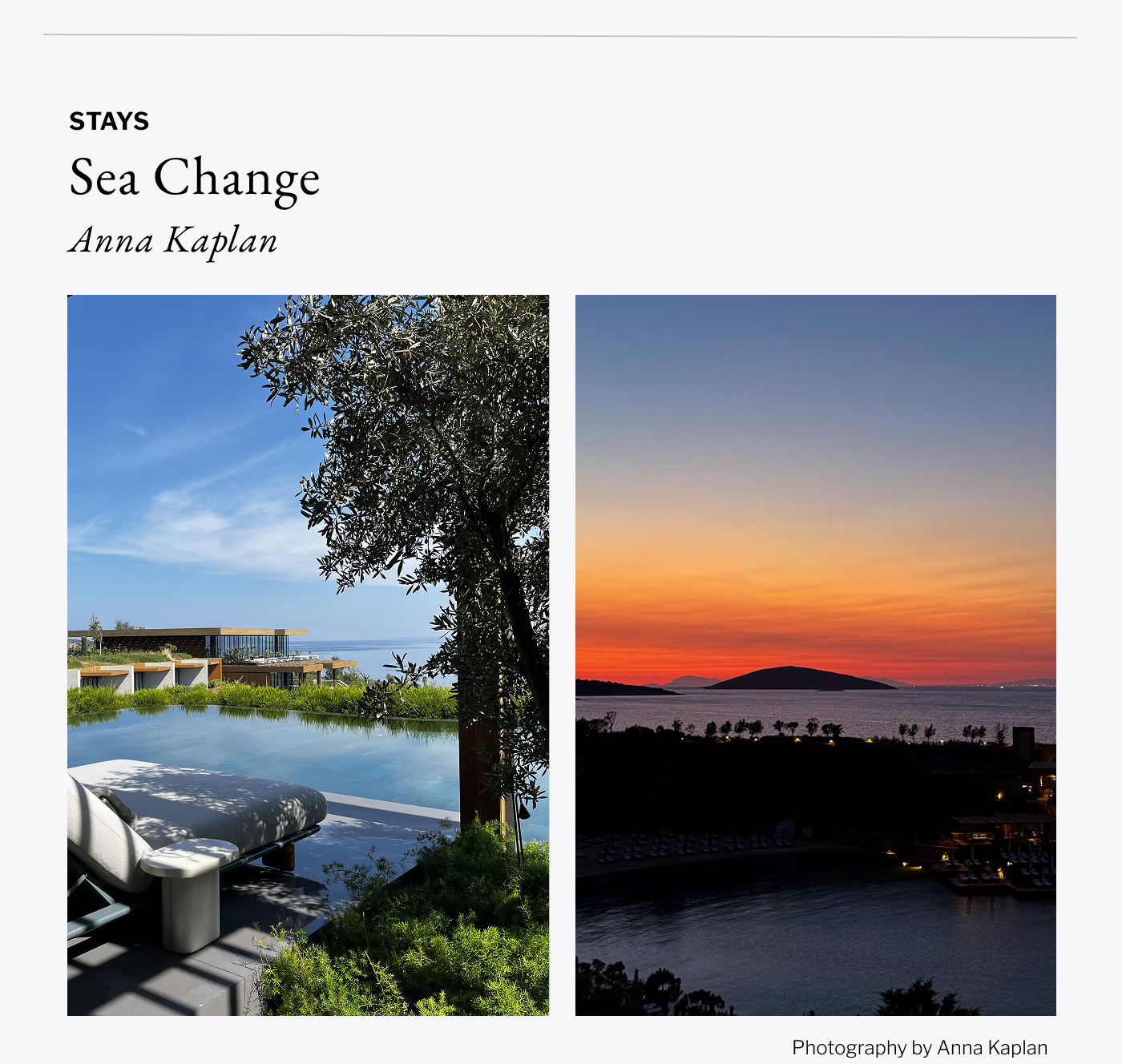
I arrived at Maxx Royal Bodrum Resort, located in southwestern Turkey on the Bodrum Peninsula, in the middle of the night, a soft salt- and pine-scented breeze stirring memories of that first Cycladic summer. Yet, the panorama I found the next morning was markedly different. Opening the blinds from the comfort of my bed with a push of a button, I discovered the Turkish Riviera’s lush emerald hills encircling the property, which hugs the coast of a private bay, its cobalt waters melting into the similarly hued sky. Beyond showcasing the view with floor-to-ceiling windows and positioning all of its suites and villas to face the sea, the resort honors its surroundings with its architecture. Tiered wooden structures with live rooftops appear to have sprouted from the ground, like organic outgrowths that have always been there — though Maxx Royal Bodrum only opened last summer.
The resort is among the best expressions of the peninsula’s growing global popularity, rooted in its ancient history and vibrant, all-hours culture. But, once again, it was the Aegean Sea that left the strongest impression — beckoning me from Maxx Royal Bodrum’s private pier, thrilling me via watersports, and enticing me at seven onsite restaurants.
The resort’s culinary offerings range from Latin, French, and sushi to Spago by Wolfgang Puck and an outpost by heritage Parisian restaurant Caviar Kaspia, with Oro by Alfredo Russo serving up the most profound meal of my stay. Over 1,000 miles from his hometown of Turin, the Michelin-starred chef employs local ingredients to craft audacious takes on Italian classics. Tomato and mozzarella, for example, was served with a bowl of “tomato water,” a spin on the juice that typically remains on your plate after the classic salad is gone, begging you to soak your (unforgettable) bread in its fresh flavor. Delicious. Then there was the “100-hour candied lemon,” citrus cooked until its skin becomes soft, its center filled with an exquisite limoncello cream. The delightful dish was much like Maxx Royal Bodrum itself: familiar, comforting, and unexpected all at once. |
|
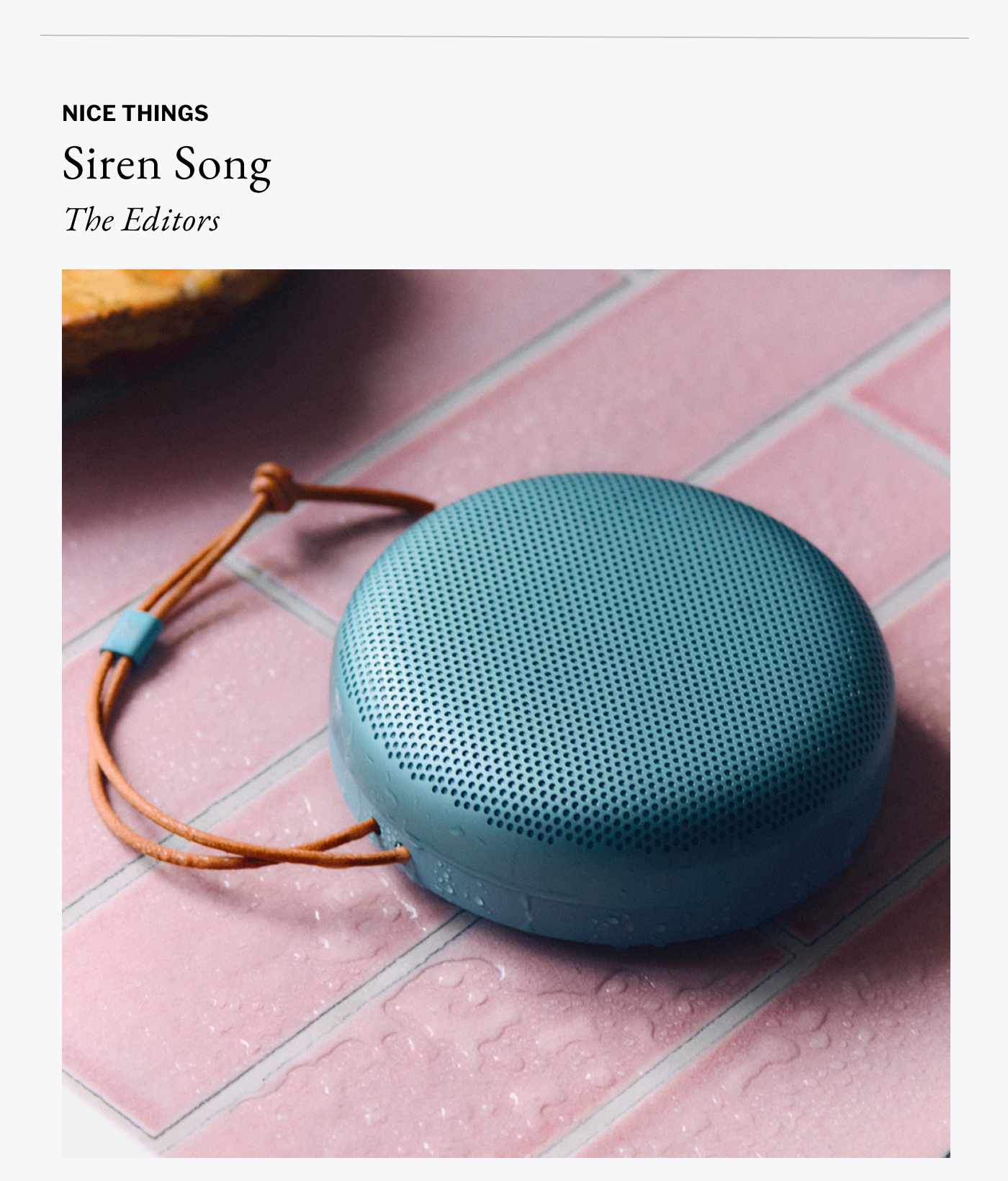
Many audiophiles we know, including a few of our editors, are devoted to Bang & Olufsen speakers, both for their sculptural design and superior acoustic quality. But even the more pedestrian listeners among us have become fans of Beosound A1, the Danish company’s newly upgraded Bluetooth speaker. Crafted from precision-milled aluminum, this tiny marvel is art-like in its appearance (offered in hues such as honey tone and eucalyptus green) and sounds impossibly huge, with massive bass and a clear room-filling reverberation. It’s also waterproof and sandproof, defining it as the ultimate beach, shower, and picnic speaker. Not least of all, it’s the world’s first Cradle to Cradle Certified® (Bronze) Bluetooth speaker, which means that, should it break, it’s meant to be serviced — not simply replaced. |
|
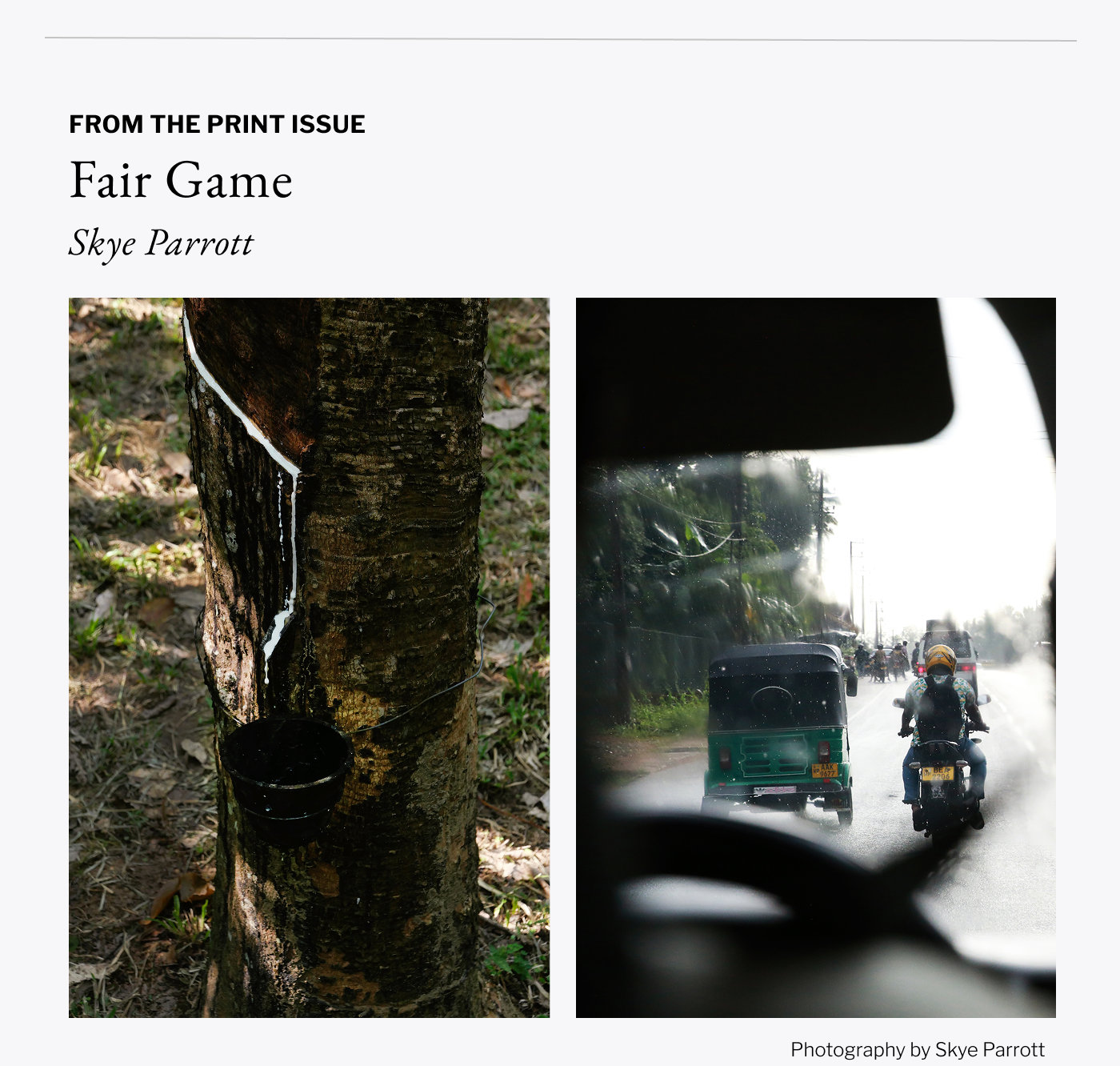
There are two kinds of rubber, which come from very different places. The natural kind comes from a sap called latex that sits underneath the bark of Hevea brasiliensis, more commonly known as the rubber tree. The sap is harvested through a process called tapping, in which a small cut is made in the bark to a precise depth, allowing the latex to flow without damaging the tree. It then drips down into a small cup, an activity that can be repeated daily for 20 years, until the tree trunk is laced with ropy scars. Natural rubber has been harvested this way for at least 3,000 years.
The other kind of rubber, like so many other things we touch in our daily lives, is made of — you guessed it — petroleum. When I looked up how it is made, I found a description of how a substance called naphtha (a flammable oil produced from a petrochemical base) is used to create monomers such as butadiene, styrene, and propylene. While I don’t know exactly what all those words mean, I can reasonably say they describe a much less natural process.
|
|
Rubber trees have long, thin trunks. They have been bred to grow straight, up to a modest puff of leaves at the crown, allowing them to be planted in tight rows. Indigenous to South America, they were exported to other tropical climates during colonial times, and most rubber is now produced in Asia. Sri Lanka is a small country, which in terms of volume, places it low on the list of the world’s top rubber producers. But rubber is an important crop, and the quality it produces is high. Sri Lanka is also, notably, a nation of independent suppliers, with 65% of rubber trees planted on small, family-owned farms. I didn’t know any of this before visiting Sri Lanka. I didn’t know much about the country, a small, tear-shaped island, at all, beyond where it is — hanging off the bottom of the Asian subcontinent into the Indian Ocean — and that it is known for growing tea (I love tea). And I certainly didn’t know about the distinction between natural and synthetic rubber until I embarked on a trip to follow the supply chain of Earthfoam, an organic latex mattress company.
Read this full story and more close takes on a wide world in our Spring/Summer 2025 print issue. Order now.
|
|
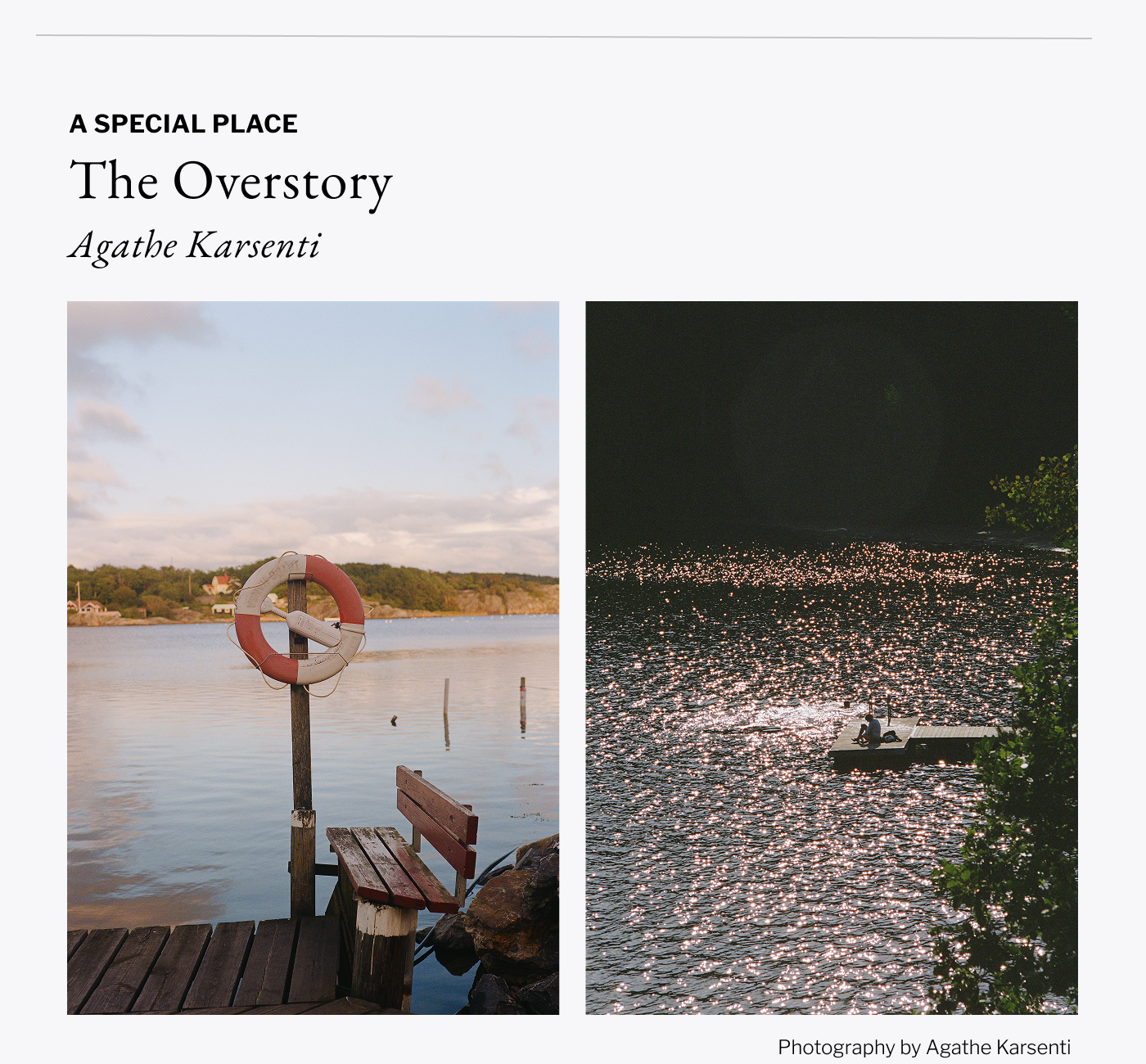
Arriving in Gothenburg, Sweden, by bus, after weaving through the countryside, felt like entering a fairytale, with the city’s signature red houses embellishing the story. Then, in a blink, a tramway transported me to the seaside, which was dotted with islands so small you can traverse them on foot. After reaching the islets by boat, I passed their colorful houses, framed by green grass and the Kattegat sea’s blue, encountering few others. Taking the tram in another direction dropped me in the middle of the woods, home to a sparkling lake, where families spend summer days cruising on pontoon boats, canoeing, or hiking as the glistening water laps against the rocks. It’s hard to imagine the city is so close when you’re enveloped in nature. |
|
Taking Off. There is something to be said for waking up within sprinting distance of your gate when you have a 6 a.m. flight. The new TWA Hotel — a retro-chic hotel in JFK’s beautifully restored, former TWA terminal — offers this vital amenity, as well as a uniquely transportive experience harkening back to the Mad Men era. Check out the heated pool on its roof, overlooking one of the New York airport’s busiest terminals, while sipping a themed cocktail. Then enjoy a refined meal at the Paris Café by Jean-Georges or various cocktail lounges located throughout Eero Saarinen’s mid-century modernist shrine to bygone air travel. Aesthetics aside, the hotel will make you long for the days when you could fly in comfort and style. –Joshua Sanchez
¡Salud! Teremana Tequila is a smooth spirit grown in the highlands of Jalisco, Mexico. Its agave is roasted for three days in a brick oven and distilled in copper pots, which brings out a slightly sweeter flavor ideal for a Mana Paloma — my preferred summer cocktail. –Lisa Lok
Mana Paloma
2 oz Teremana Blanco tequila
1 oz grapefruit juice
¾ oz lime juice
½ oz simple syrup
Pinch of salt
Combine ingredients in a highball glass over ice. Top with club soda. Gently stir, then garnish with a lime wheel or grapefruit peel.
About Time. I’ve been listening to the Acquired podcast lately, in which Ben Gilbert and David Rosenthal unpack the stories and strategies of today’s greatest companies. I specifically saved the Rolex episode for my recent transcontinental flight. The thoroughly researched, five-hour deep dive into the fabled brand did not disappoint. Its fascinating history, philosophy, craft, and stratospheric growth shed light on many of the practices I’d heard about, but now truly understand. Upon landing, I eagerly downloaded the LVMH and Hermès episodes in giddy anticipation of my journey home. –John Chuldenko |
|
54 Franklin St #2R NY, NY 10013. ©2024 Dossier Projects, LLC.
|
|
|
|
|