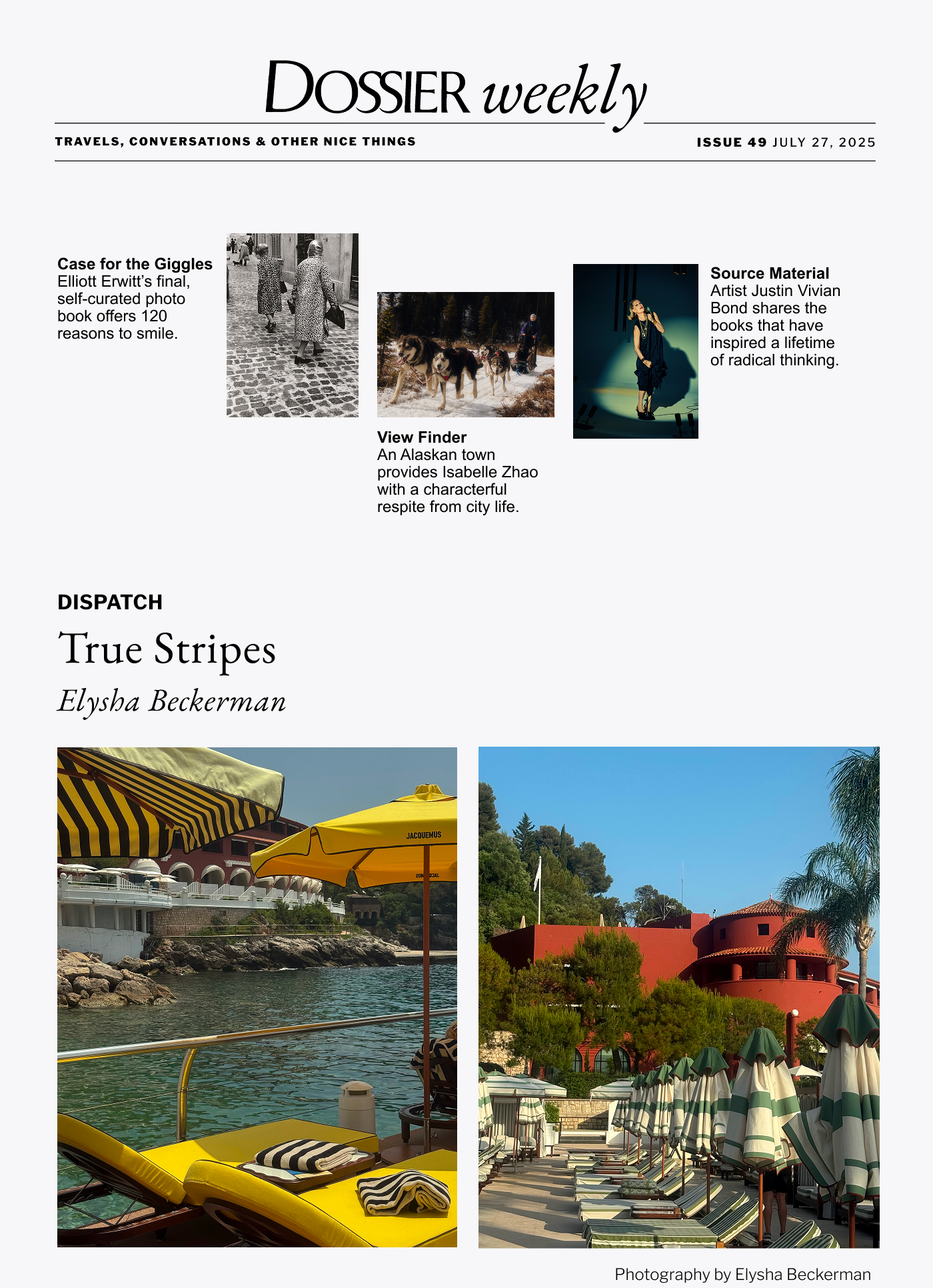
The Monte-Carlo Beach Club has defined a uniquely European brand of seaside escape since 1929, when its opening cemented Monaco — already a magnet for Continental royalty of both the crown and stage variety — as the region’s most refined summer destination. The following century saw Grace Kelly, Mick Jagger, Farrah Fawcett, Johnny Hallyday, and all genres of global headliners grace its sprawling pool deck and spring off of its iconic art deco-style diving board. This year, there’s a new protagonist in town. Umbrellas, chairs, and towels striped in banana yellow, coconut- milk white, and black lines, placed around the pool’s edge and on the club’s pier, signal Monte-Carlo Société Des Bains De Mer’s first riviera takeover in collaboration with Parisian fashion brand Jacquemus. The destination’s transformation into The Jacquemus Beach Club is an impressive sleight of hand, exemplifying the effortless interchange of legacy and modernity that the city plays so well. You could credit this dexterity to the landmark Casino de Monte-Carlo, but it turns out the city’s ability to stylishly balance glamour with heritage and national identity with global appeal is fundamental to its character. My comprehension of this complex charm dawned on a recent visit, through encounters with the city and its citizens. At lunch one afternoon, dining at a storied establishment (name withheld by request), I spotted Prince Albert II at a nearby table, enjoying his meal undisturbed. Instead of taking meetings at or dining in The Prince’s Palace, he regularly opts to spend time in the community and support local businesses — a choice that invariably feeds into Monte Carlo’s palpable embrace of the monarchy as a living part of Monaco’s identity and in the respect for tradition that permeates everyday life. On one hand, I felt as though I’d stepped into history; on the other, the city’s high-octane luxury and modernity routinely turned my head, manifesting a fascinating tension.
This dynamic duality is threaded throughout Monegasque culture, with examples ranging from a dedication to current hometown hero, Ferrari F1 driver Charles Leclerc — who cemented his name in the sport in 2024, when he claimed the Monaco Grand Prix trophy on the historic Circuit de Monaco, which debuted the same year as the Monte-Carlo Beach Club — to the glittering assortment of dining and shopping establishments that line the promenade.
At the 156-year-old Café de Paris Monte-Carlo, a raw bar and spritzes reign supreme. At Le Dressing, vintage Prada and Dolce&Gabbana wares hang alongside a wall of Hermès (Princess Grace) Kelly bags. And at Amazónico, vibrant global cultures and cuisines collide. (Order the Jigarette cocktail and be sure to take a peek at Selva downstairs while you’re there.) But it was at the Hôtel de Paris Monte‑Carlo, home to the Beach Club — and my home for my visit — that all influences came to rest under one roof. The hotel sits on the cobblestoned Place du Casino, which on the weekends is encircled by McLarens and vintage Alfa Romeos with custom interiors, their owners likely placing bets at the adjacent casinos. Conversely, inside the property, marble floors, mirrored elevators, and crystal-refracted lighting recall its prestigious pedigree. My favorite facet of the hotel served up a little bit of both: Sitting on the private balcony of my thoroughly renovated yet still classical suite, sipping an espresso, and looking out past those signature Jacquemas umbrellas and the elegant Hôtel Hermitage Monte-Carlo at Port Hercule, I observed hundreds of freshly inaugurated yachts bobbing, with the Circuit de Monaco’s notorious curves just beyond. |
|
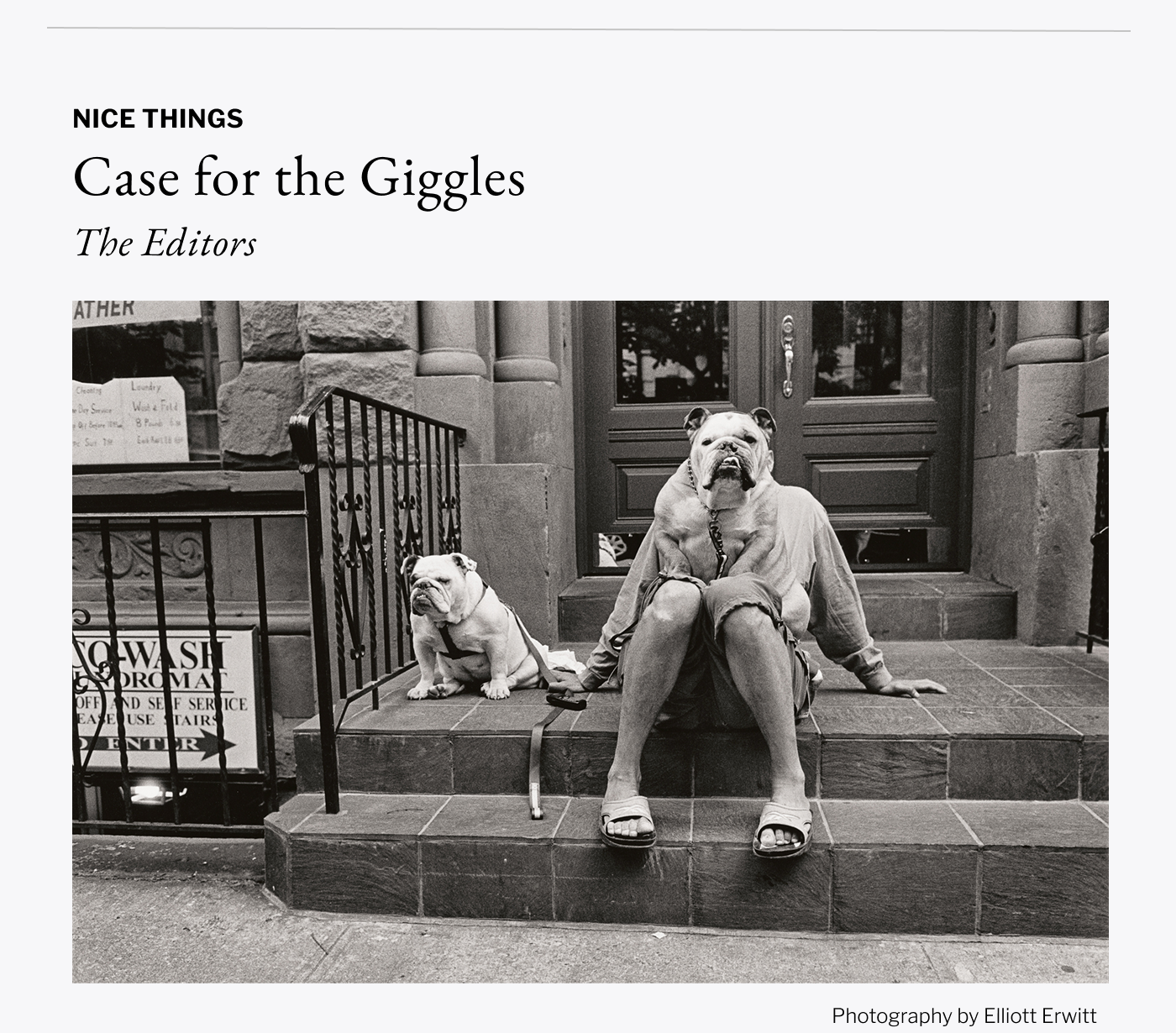
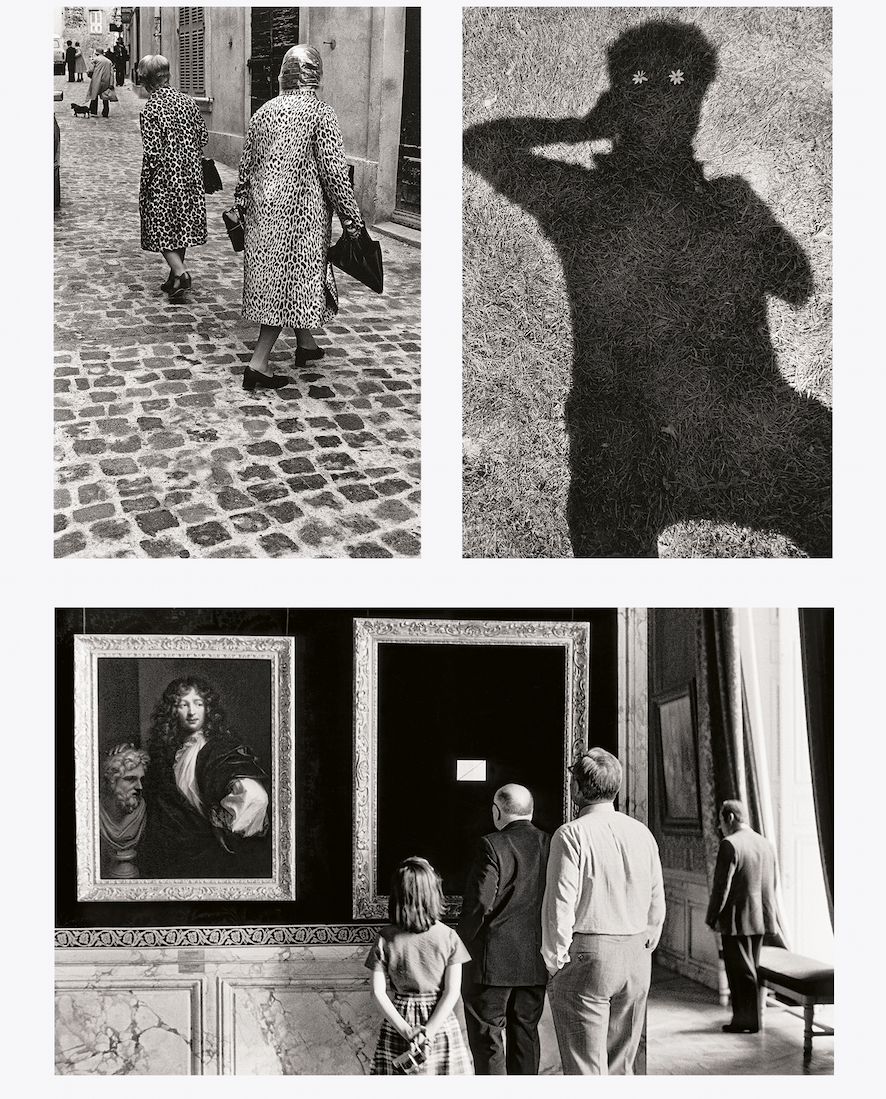
Whether he was snapping Marilyn Monroe, dogs with their owners, or delightfully odd street scenes, Elliott Erwitt captured humanity in an uncanny manner. These gifts were honed over a nearly 80-year career that began with portraiture, as well as military and documentary photography. Erwitt’s star began to rise in 1953, when he joined Magnum Photos and shot for the likes of Collier’s, Look, and Life magazines. Whether on New York sidewalks or in the French countryside, at the White House or a Russian court house, Erwitt became sought after for his ability to record life’s irony and emotions, as seen in both the public figures and everyday people he memorialized.
Shortly before his death in 2023, the photographer curated a selection of his most amusing work. This swan song is found in the recently published Last Laughs. It's a coffee-table book offering 120 opportunities to smile — and a reminder that life is filled with absurdities and downright silly moments. You just have to look for them. |
|
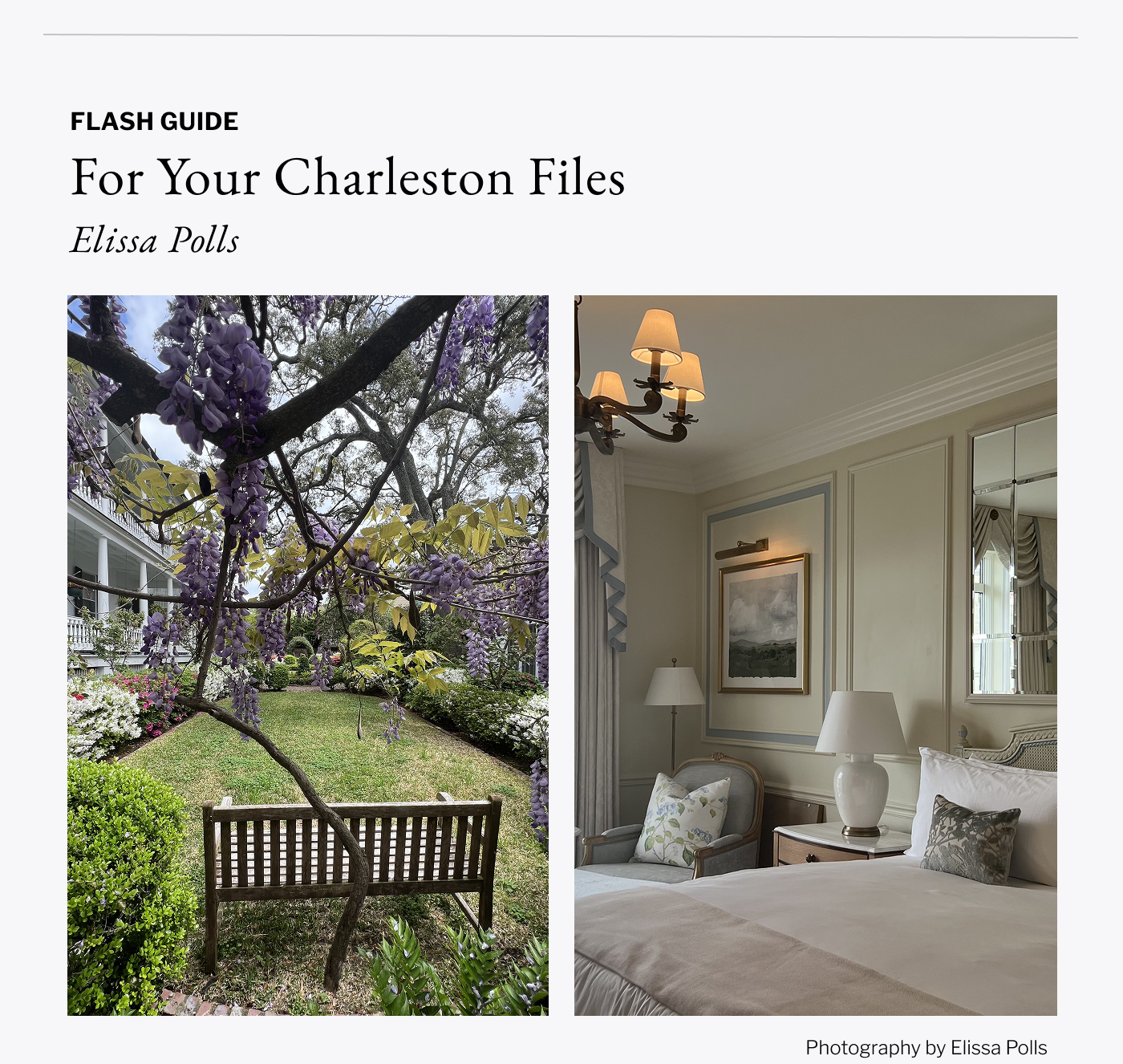
The driver who picked me up from the airport in Charleston, South Carolina, this past spring was a city native with lots of Southern charm. He took the scenic route to my hotel, pointing out famous sites at every opportunity: the American Theater, which dates back to 1942 (and, more recently, served as a backdrop for a scene in the romantic drama The Notebook); Kahal Kadosh Beth Elohim Synagogue, the country’s second oldest synagogue; and Fort Sumter, where the Civil War’s first shots were fired in 1861. Even if you aren’t historically inclined, there are ample sights, flavors, and activities within “The Holy City” (a nickname that nods to an abundance of historic, beautifully constructed churches). The Charleston Place, an incredible landmark property, is an ideal, centrally placed home base from which to explore them. It’s also in the midst of a multiphase renovation, but will remain open throughout it. From its lobby and restaurants to its 433 guest rooms and spa (which will stretch across two stories), every corner is set to be refreshed to ensure that the hotel’s unique character, a blend of Southern hospitality and European elegance, remains vital for generations to come. While crowds are thinner in the summer (humidity in the city is on average at 90%), my recommendation is to visit in early spring or fall, when cherry blossoms are at peak bloom or leaves are vibrant and the temperature is mild enough for an al fresco meal.
Here are a few other favorite finds.
Something to eat/drink … Make sure to visit Leon’s Fine Poultry & Oyster Shop for local oysters and peel ’n eat shrimp, while also leaving room for the shop’s famous fried chicken. Its frozen gin and tonic is also a treat, as is its casual, homey ambiance. The Charleston Grill at The Charleston Place has among the best crab cakes I’ve ever tasted and among the top people watching in the city. Finish off your meal with a tipple in the lobby’s living room-like bar, The Thoroughbred Club.
Something to see … Charleston is set along the Cooper River, which you can cruise to see the city from a new point of view; observe wildlife, including dolphins; or cross to nearby islands. If you’re in the city in late March, you can take a ferry from the dock of The Cooper (opening this fall) to Daniel Island, which hosts the Credit One Charleston Open, North America’s largest professional women’s tennis tournament played on clay courts.
Something to take home … Located on a quiet street in downtown Charleston, the Worthwhile boutique showcases two stories of womenswear and accessories from independent designers, such as Casey Casey, Sofie D’Hoore, Toogood, Perfumer H, and Guidi.
Only in Charleston … Beautifully preserved historic homes dating back to the 1700s are scattered throughout the city and many are official historic landmarks. Rainbow Row, a series of 13 houses in vibrant colors, is particularly charming. Carve out at least three hours to take in these stunning structures by bike (available for rent from many hotels).
A secret spot … Hidden off the buzzing Meeting Street, Harken Cafe is a lovely place to grab a caffeinated beverage and pastry, or lunch. I visited twice in three days for its exceptional takes on avocado toast (topped with sesame tamari and flake salt) and chocolate-chip cookies.
|
|
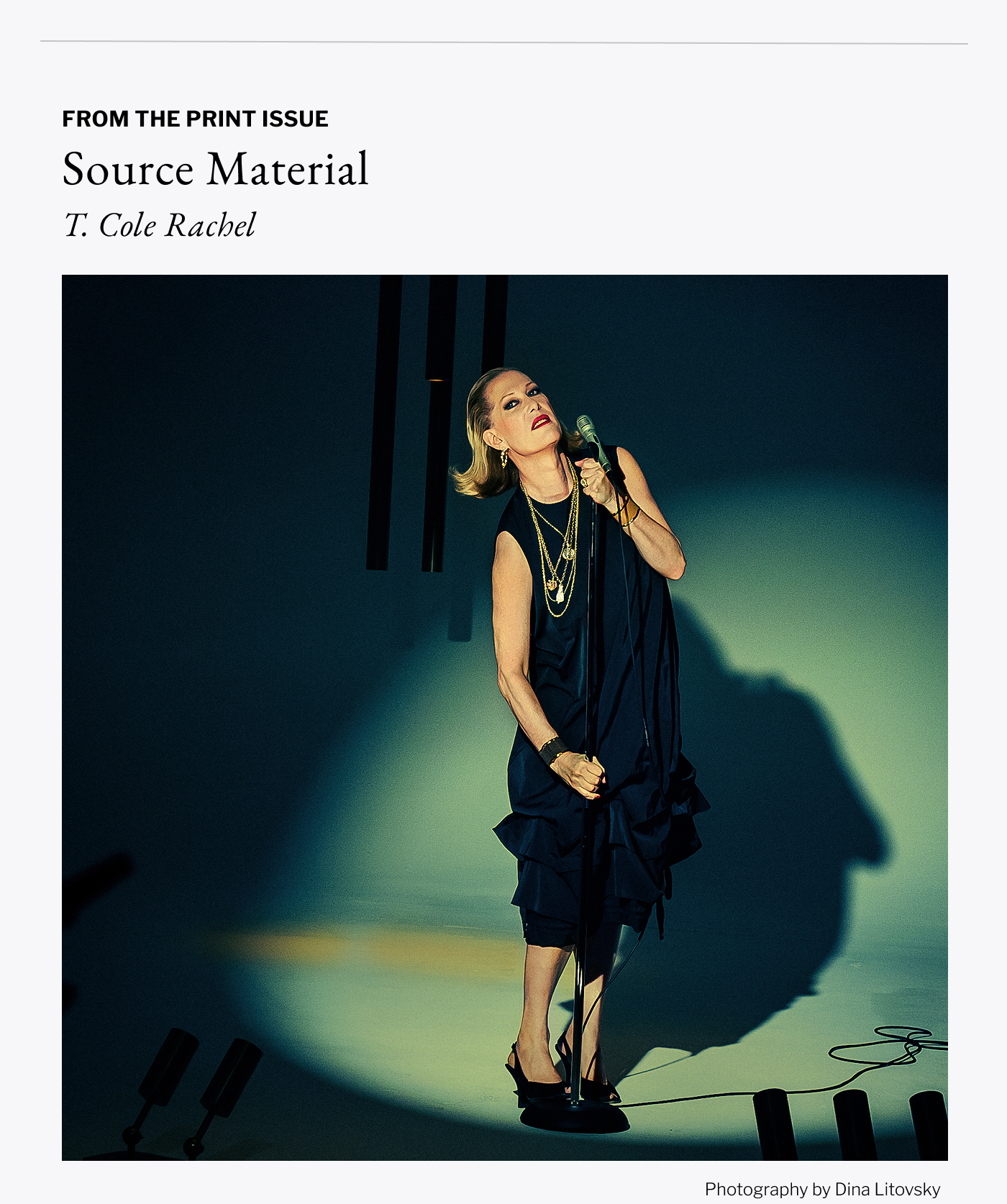
During a recent show at Joe’s Pub, an iconic downtown theater and performance space in New York City, Justin Vivian Bond followed up a tearful rendition of “Don’t Forget Me” by the late Marianne Faithfull with a Taylor Swift “Shake It Off” cover, the latter reimagined as an ode to queer resistance. This sort of tonal gear shift might seem nonsensical coming from another performer, but is totally logical within Bond’s repertoire: It’s this mix of whimsy and razor-sharp wit that has made them one of the city’s most reliably potent performers for the better part of three decades. Though Bond might be most well-known as one-half of Kiki and Herb — a performance-art cabaret act in which they channel the furious spirit of an aging yet ageless lounge singer — Bond is a true multi-hyphenate: a performer, writer, visual artist, and trans pioneer who has performed all over the world and dipped their toe into almost every creative medium. Fittingly, in 2024, Bond was awarded a prestigious MacArthur Fellowship for the absolute genius of their work. Here, the trailblazing artist discusses the books that have been the most formative in shaping their life, work, and aesthetic.
Another Country by James Baldwin. “I loved James Baldwin’s depiction of queer New York in the ’50s. It gave me such a feeling for what it must've been like at that time — after World War II, before sexual liberation, before the civil rights movement really amped up in the ’60s. It represented a very liberated period within the constraints of a very repressed society.”
Goddesses in Everywoman: Powerful Archetypes in Women’s Lives by Jean Shinoda Bolen, M.D. “There's so much to learn, even if you're not channeling the Goddess. [This book] changed the way I thought about vanity, for example, which I use as a superpower. To be perfectly honest: If I wasn't in show business, if I didn't have to stand in front of people all the time, I would probably be a lot less healthy than I am.”
Candy Darling: Dreamer, Icon, Superstar by Cynthia Carr. “This book is a great story about a pioneer who was not political. She wasn't an activist. She was just trying to live her life and find a way to be herself, before we really had a proper vocabulary to talk about things like this. No one knew what it meant to be non-binary, or anything like that yet … She was the personification of glamorous resistance.”
Still Here: Embracing Aging, Changing, and Dying by Ram Dass. “I started reading Still Here in the fall of 2022 and, shortly after, my mom was diagnosed with terminal cancer and given only a few months to live … Thank God I had that book, because it really kept me grounded and in the moment. It kept me connected to the spiritual side of what was happening so that I didn't focus on anything except for what needed to happen between the two of us — to not be in denial of it, but to be calm and present with her, and to just ease her journey.”
Play It As It Lays by Joan Didion. “I was drawn to Didion’s nihilism in a certain way, but also her passion and her conflict between the past and her present, who she was and how she had to present herself. All of this was something I could relate to: having really mixed feelings about your family and where you come from and not getting what you need from them.”
Intimate Nights: The Golden Age of New York Cabaret by James Gavin. “It was really a masterclass in how to make a cabaret show. And that is how I learned to structure my own cabaret shows, as well as how we put together Kiki and Herb shows. Then he did a new edition of it in the early 2000s and he included us. That was really very, very special to me: To take my place within that history was really extraordinary.”
Lipstick Traces: A Secret History of the 20th Century by Greil Marcus. “This book was so informative for those of us living through Queer Nation and Act Up, and what we were going through during the AIDS crisis in San Francisco, fighting for our lives and against the government. We had to beat down the walls and find ways to get through and have our voices be heard. To read this cultural history and to realize we were a part of that lineage of protest, that there were precedents for what we were doing and what was happening to us, it really informed me.”
Read this full conversation and more close takes on a wide world in our print issue. Order now.
|
|
After flying into Anchorage, the quickest way to reach Alaska’s Kenai Peninsula is by way of a 12-seat puddle jumper. The front seat of one of those planes is where I leaned over with my camera, rapt with awe. I think of every image I take as a portrait: There’s a personality to every mountain, a whole map of history and memory embedded in sharp and softened edges.
In March, this view bookended a month-long farm stay with a mushing family in Soldotna, a town of 5,000 inhabitants that dots the western edge of the peninsula. Looking for respite from city life, I found my days in Alaska gorgeously slow — mornings with the dogs, drives down to the pebbled beach, walks through iced-over swamps, and wood-fired pizza parties with neighbors amidst snow banks.
Word to the Wise. The most travel-friendly part of the Kenai Peninsula is the town of Homer, which is known for seafood, art galleries, mountain views, and beaches. Consider a day trip and stop by Mike's Alaskan Eatery for sandwiches before passing by Captain's Coffee Roasting Co. for baked goods and a cup of joe, then head down to Bishop's Beach for a stroll. If you visit during the summer, you can take a ferry to the glaciers across the bay.
|
|
At First Sight. Lake Como boasts a laundry list of singular attributes, defining it as one of Italy’s most celebrated destinations. A new Assouline tome pays homage to a particularly special one. Passalacqua: A Love Letter to Lake Como, created in collaboration with its namesake hotel, highlights the details that make the place — both its natural beauty and property itself, which was named the World’s Best Hotel in 2023, just one year after its debut. As the title promises, the book kicks off with an affectionate handwritten note to the estate from the De Santis family, the visionaries who restored and transformed the 18th century villa into a paragon of bygone yet vivacious beauty. Lovesick quotes from notable visitors follow, nestled between expressive photos that drop you into Passalacqua’s outsized grandeur, miniscule details, and effervescent atmosphere. –Erin Dixon
Evening Star. When Sean Hayes burst onto television as Jack McFarland in Will & Grace nearly 30 years ago, his rapidfire wit and physical comedy were so exuberant that you might've missed that he is also a brilliant actor, singer, dancer, and pianist. In 2023, he showed off all of his gifts on Broadway as Oscar Levant in Good Night, Oscar. He fully transformed into the actor-comic-pianist, even playing an engrossing (and flawless) "Rhapsody in Blue" live. Starting July 31, you can watch Hayes in his Tony Award-winning performance at London's Barbican Theatre. It's a chance to see him do what he was born to do. –Jackie Risser
Buon Appetito. Every year, summer’s technicolor produce inspires me to cook. The Italian Summer Kitchen: Timeless Recipes for La Dolce Vita, the first cookbook from chef Cathy Whims, ratched my excitement up another notch. A six-time James Beard nominee for Best Chef, Whims is known for her inventive takes on regional Italian cuisine across her three Portland, Oregon, restaurants: Nostrana, Enoteca Nostrana, and Oven & Shaker. Thankfully, I didn’t need award-winning skills to recreate its recipes, such as spaghettini with prawns or fresh tomato, peach, and basil salad. The dishes were a hit, as were Whims’ engaging notes on the origins of each. –Alessandra Berge
|
|
54 Franklin St #2R NY, NY 10013. ©2024 Dossier Projects, LLC.
|
|
|
|
|