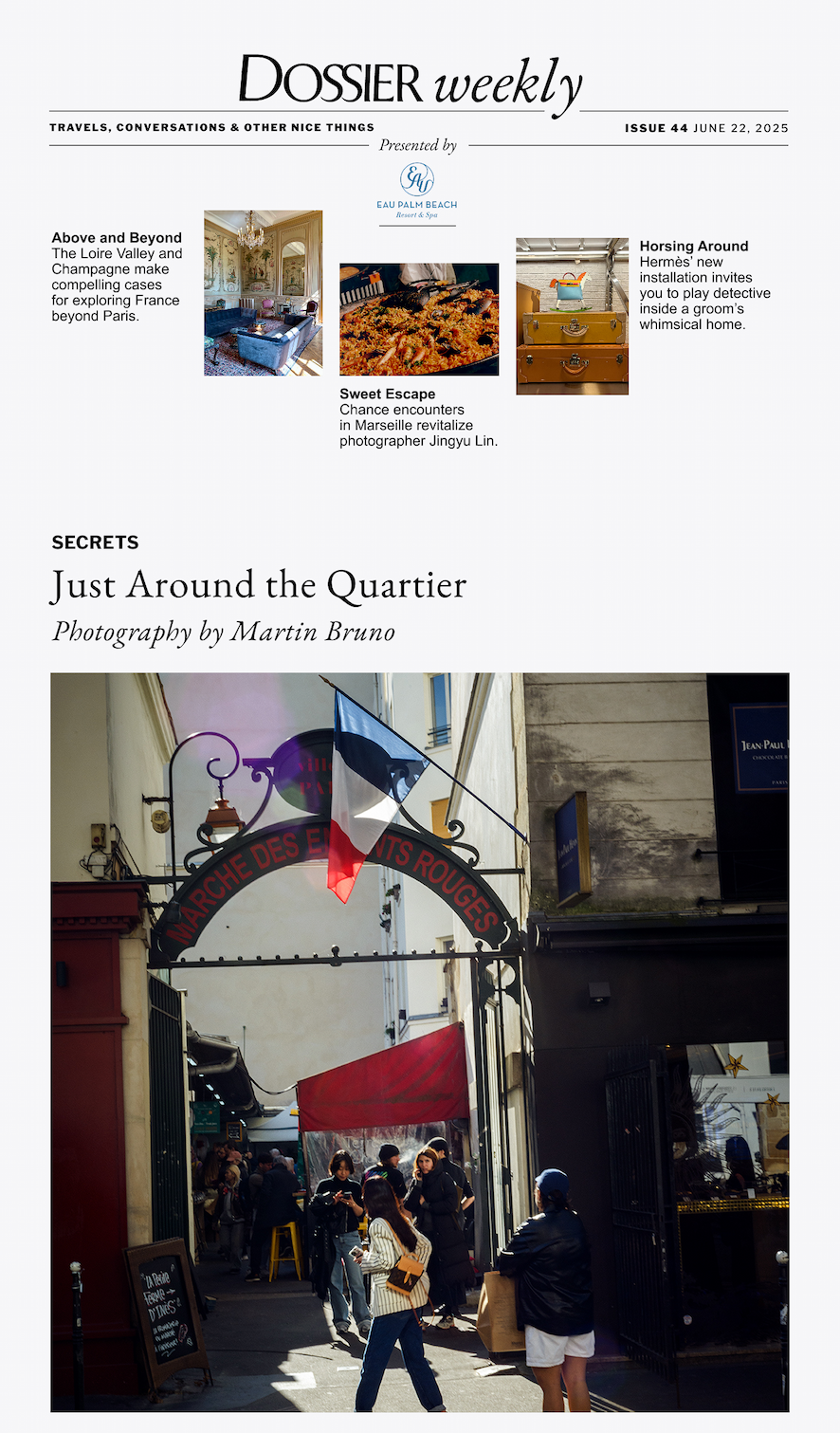
My Parisian life began the summer I stayed in a brick-walled dormitory a half-mile from metro Glacière — a section of the 13th arrondissement where tourists rarely venture.
My backyard was Parc Montsouris, known for its towering trees and an artificial lake built during the reign of Napoleon III. When I wasn’t cooling off there or daydreaming in class, I was exploring all corners of Paris, newly in love. The engineer I’d met days into my stay (and later married) introduced me to the 11th arrondissement, where he lived in a studio apartment less than 15 minutes from the Bastille. Here, where bars spilled onto sidewalks and multigenerational locals laid out canalside with cheap beer and charcuterie, our rhythm shifted. This eastern slice of Paris was less polished but far more alive, full of inexpensive commercial spaces that would eventually get snatched up by culinary upstarts who'd transform the city’s dining scene. |
|
Six months after darting across the river, I made that compact studio off Rue Oberkampf my permanent home. The twice-weekly Richard Lenoir market supplied my groceries for the week and also a social education. I learned to haggle over produce and dabble in local gossip with multilingual neighbors. I bought spices and slurped noodles in the hilltop neighborhood of Belleville, where immigrant cultures had laid down roots long before me, and played tourist everywhere from Saint-Germain-des-Prés to the northern fringes of Saint-Ouen.
The city’s numerical structure — 20 arrondissements spiraling outward like a snail — offers a false sense of order to what is, in reality, a collection of small villages. Each has its own identity and evolves, reshaping itself with each generation while holding onto an essence that residents can feel but rarely articulate — except perhaps to say, ‘This is my Paris.’ Nineteen years on, the 11th arrondissement may be home, but I still relish the freedom of being able to shed one identity and don another by simply crossing from one neighborhood to the next. –Lindsey Tramuta, author of three books about Paris, most recently The Eater Guide to Paris (Abrams, 2025) |
|
Here, four more Parisians share personal views of their neighborhoods and the places that make them great. |
|
14th Arrondissement
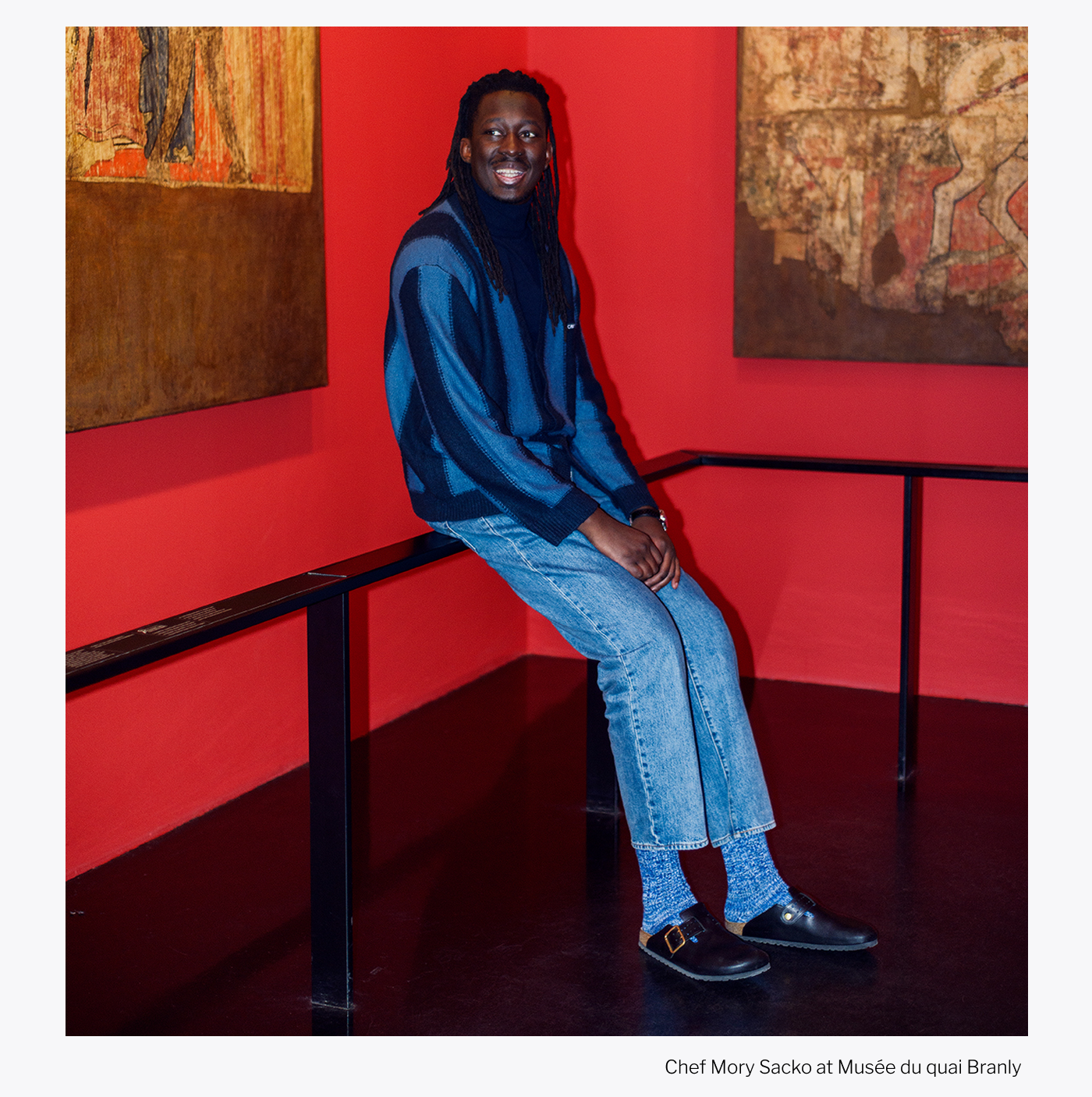
Mory Sacko, Chef
Mosuke. I opened my restaurant in Paris because, for me, Paris is the most beautiful city in the world and it’s a global capital of gastronomy.
Rue Daguerre. People come here for the atmosphere — there are quality shops: produce stands, butchers, and fishmongers.
Kigawa. This small restaurant is owned by a Japanese couple showcasing French cuisine as imagined by a Japanese chef. It’s a very beautiful place. |
|
7th Arrondissement
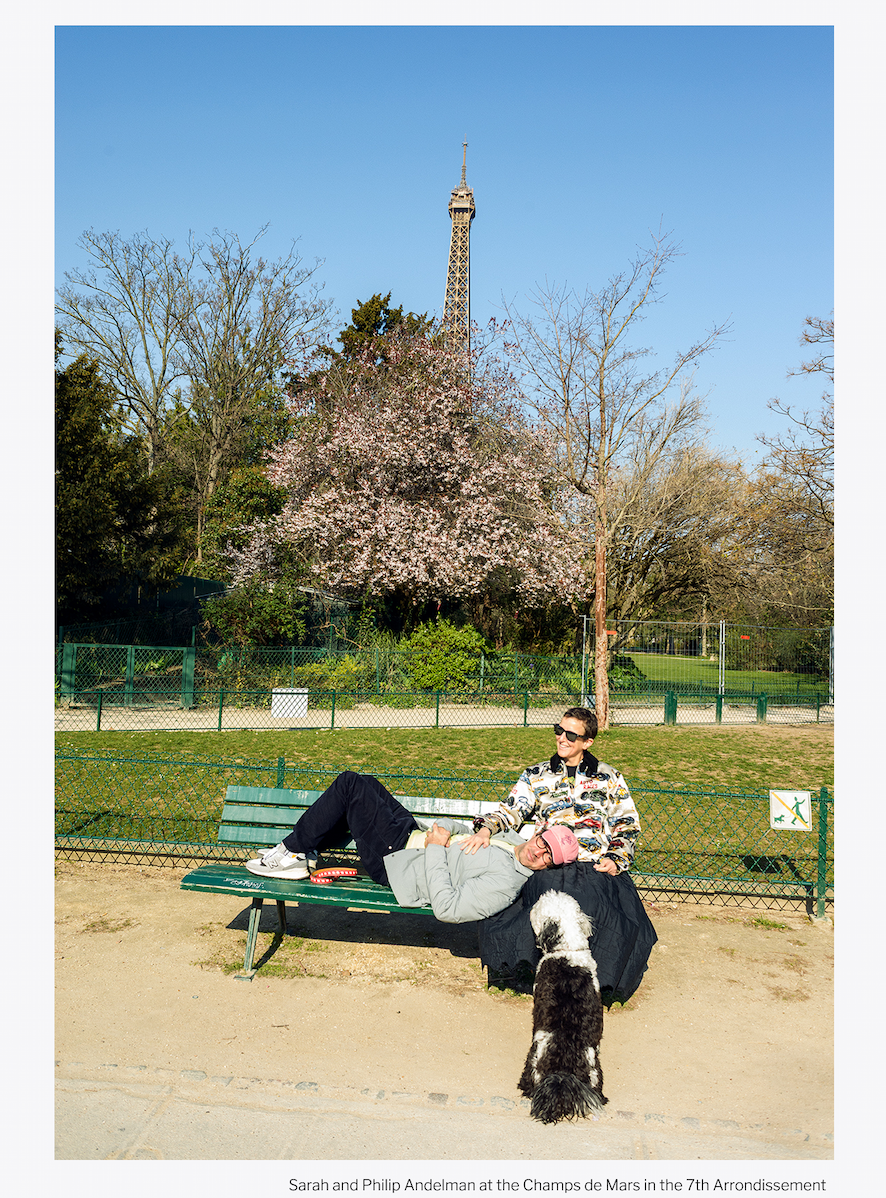
Sarah Andelman, founder of Just an Idea creative consultancy and book publishing, and Philip Andelman, writer, director, and photographer
Lastre Sans Apostrophe. The best prepared-foods shop in the city and the best-kept secret (until this sentence was written). Don’t let the window full of pâté-en-croute scare you off — it kept us at bay for a full year after we’d moved to the neighborhood. La Fontaine de Mars. While our son’s “usual” is the chicken and morel mushrooms with the rice pilaf swapped out for fries, we focus on the Île flottante dessert: It’s a simple, classic dessert of whipped egg whites set in creme anglaise. Theirs is simply the best we’ve ever tried. Constant. This coffee shop's exceptional madeleines are made every hour, ensuring you get one that is perfectly crispy on the outer edges and spongy soft on the inside each and every time you come. Order a latte to dunk them in, or make it a meal by ordering a slice of salmon koulbiak (a pescatarian interpretation of Beef Wellington).
|
|
4th Arrondissement
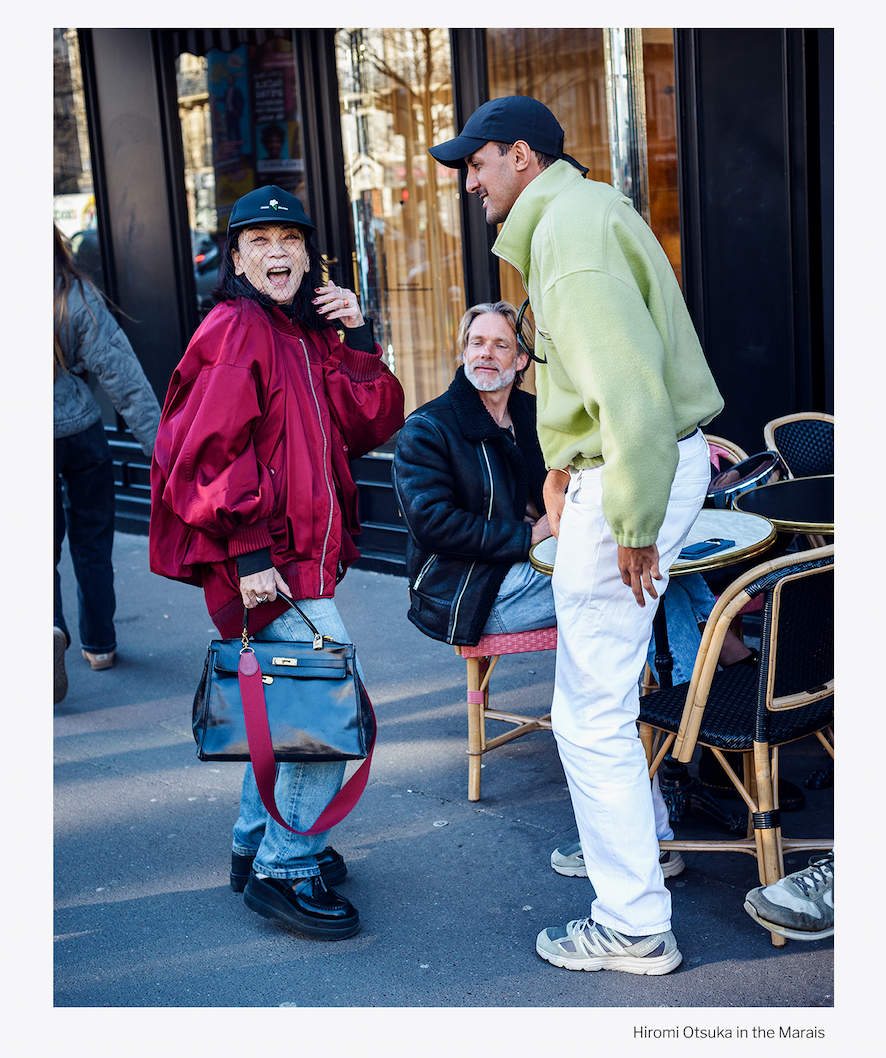
Hiromi Otsuka, editorial and fashion coordinator, casting director, venue scout, and producer
Delicatessen Cave. I came to this wine shop — owned by mother-and-son duo Mireille Langlois and Gabriel Bonet — with a friend. She’s a wine importer and said everything they had was good, so I know I can buy anything. They also have a bar next door. Librairie Yvon Lambert. This is where I discovered the works of Louise Bourgeois and David Shrigley for the first time. It publishes books on art and photography; it’s like a gallery but with so many more things. Fragrance. Everything here is beautiful. They sell the flowers with a vase, which is great if you want to give them to someone who doesn’t live here or who is staying at a hotel. If there isn’t a lot to choose from, I always go for the hydrangeas. Dreamin’ Man. I like this very relaxed ambiance. The owner is Japanese and I know him well, so I always take what they give me. Just trust them.
|
|
2nd Arrondissement
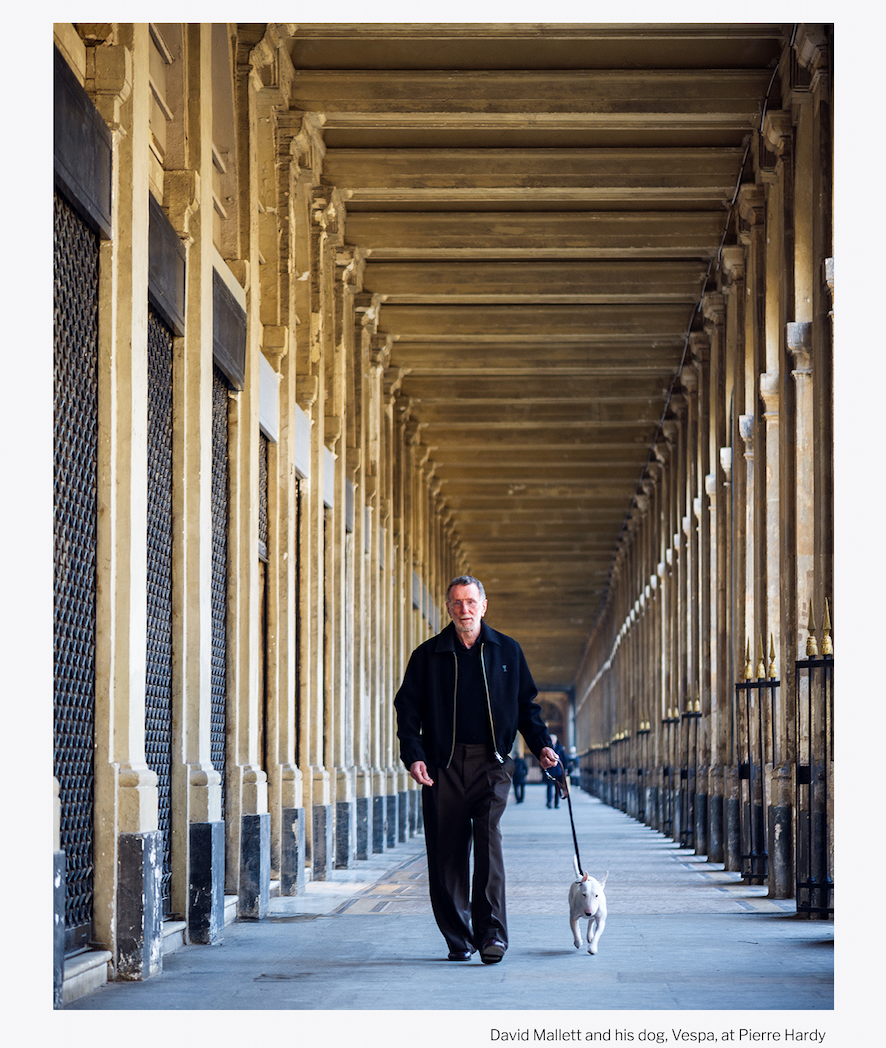
David Mallett, Hairstylist
David Mallett – Le Salon. When I first saw the space that now houses my salon on Rue Notre Dame des Victoires, I couldn’t afford it, but I knew I had to make it happen — it was the perfect spot in the perfect neighborhood. Design & Nature. A friend gave me a panther from here, which is how I met the shop’s owner, Anne, now a friend. All of the animals, insects, butterflies, and corals in my salon are from here. Caves Legrand. When I need to buy a nice bottle of wine as a gift, this is my place. Chez Georges. I eat here five out of seven days. I hate fashionable restaurants and it has a real sense of tradition — it’s like going to your mother’s kitchen. Get the millefeuille at lunch and the tarte-tatin at night.
Read the full portfolio and more close takes on a wide world in our Spring/Summer 2025 print issue. Order now. |
|
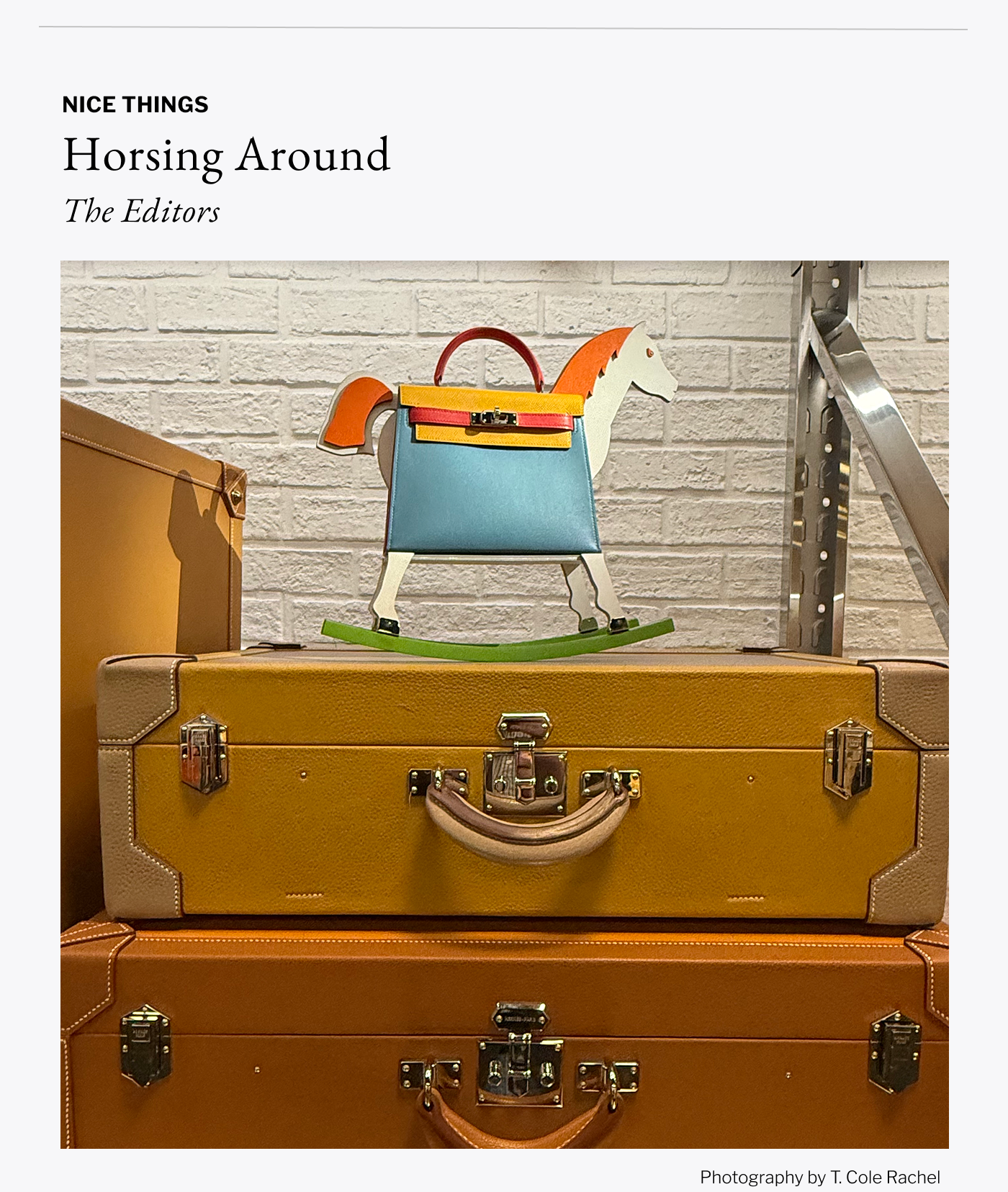
Pop-up museum? Luxury concept store? “ Mystery at the Grooms’” keeps you guessing. In reality, the enigma is an immersive interactive installation in New York from Hermès that invites you to track down some curiously missing horses by cracking clues with a companion app. Peepholes, hidden wall safes, and secret codes are scattered across six rooms of the Grooms’ House, which is named for the caretakers of horses, in homage to the brand’s equestrian heritage. Each is wildly staged with the French legacy brand’s signature whimsy and detail. There’s a bustling laundry room stocked with “Gallop” washing powder; a control room in which crates of top hats share space with luggage stacks and leather-wrapped speakers; and a dormitory where bedside tables are illuminated by carrots in candlesticks. Look closely enough and you’ll notice the covert affair is a remarkably transportive trot through Hermès history, with saddles, scarves, surfboards, home goods, and iconic handbags — and, at a time when many luxury brands feel stuffy and serious, it’s a jolt of pure joy.
“Mystery at the Grooms’” is open to the public from June 19 through 29 on Pier 36 in New York. The show will later visit Tokyo, Singapore, and Paris. While entry is free, reservations must be made in advance.
|
|
Americans tend to visit only a few places in France, a representative from the country’s tourism board recently told me. Her tone was lamenting. Paris tops that list, of course. But Americans who venture further afield generally gravitate to just a few areas, namely: the beaches of the Côte d’Azur and, for the history minded, the very different beaches of Normandy.
This is a shame, because France is incredibly diverse. Its distances are eminently, easily traversable by car, and its rest stops are the stuff of dreams, with live human beings preparing fresh salads and cooked-to-order pasta. But you also don’t need a car to get around France, thanks to its trains. Start from one of Paris’ six stations and, an hour or two later, you’ll step into another world … |
|
The Loire Valley
Southwest of Paris, 1 hour by train, 2 hours by car
The Loire Valley spans the central part of the country’s longest river, winding through cities, including Tours and Orléans. After dropping my daughter at school in Paris, I popped over to the Gare Montparnasse and an hour later got off the train in Le Mans, another of the valley’s destinations, best known for its annual endurance race. The car that picked us up quickly headed out into the countryside. It was the time of year when the rapeseeds were just beginning to bloom, their flowers covering the fields of Northern Europe. The blossoms’ hot, startling yellow is always a welcome shock of life against the soft greens and grey skies of early spring.
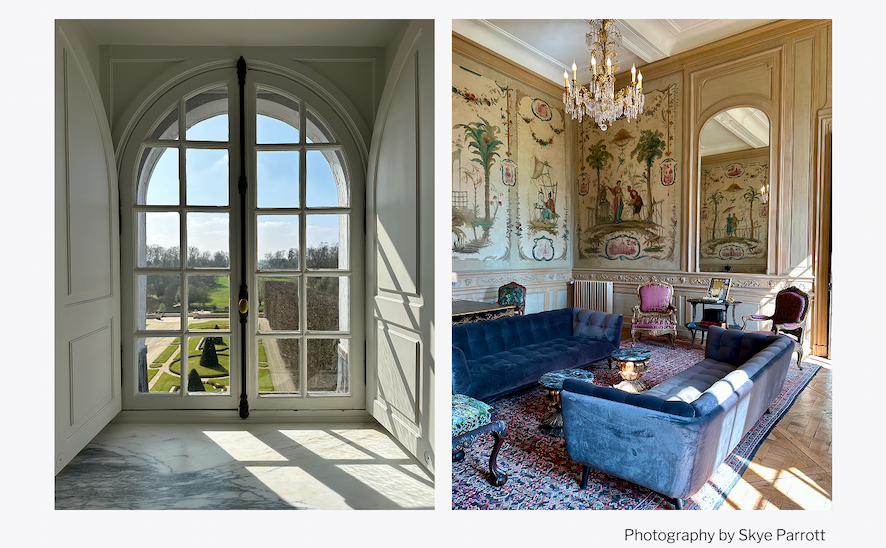
Hotel Château du Grand-Lucé, situated at the edge of the small town of Grand-Lucé, was originally built in the 1700s for a baron and is considered to be one of the best remaining examples of French neoclassical architecture. It was rescued from a state of disrepair by an American interior designer in 2003, who began restoring it as his private residence. Its current owners, an American couple who also own the Washington School House Hotel in Park City, Utah, purchased the property in 2017, undertaking a massive renovation that wrapped up just as the pandemic hit. Though the hotel remained closed for much of that year, they kept their entire staff employed until its doors could finally open.
The chateau sits behind the town’s tall, medieval walls, which hide what lies inside: grounds modelled after Versailles, with formal gardens closest to the building and wilder parts stretching out towards the woods, where there are also kitchen gardens and a swimming pool. The guest rooms are individually decorated in period-appropriate style, with textiles from Pierre Frey and deliciously modern bathrooms.
It took me several tries to find a time to visit the property because its weekends are often taken over by wedding buyouts, and it’s easy to see why. The chateau is spacious enough to offer everyone a sense of privacy, but also manages to feel cozy, evocative of a stay in a sprawling, private home. The entire ground floor comprises generous common spaces, with deep, pillowy couches, fireplaces, and a pool table. The restaurant is open to the public, and guests do seem to come from the surrounding area. But as refined as the food is, the vibe is decidedly not fussy. All the staff, clearly used to hosting Americans, began their greetings in English.
The hotel also has bikes for visiting the town, but the town is sleepy. We ventured out at 2 p.m. to get lunch and the only boulangerie was sold out of sandwiches. Luckily, it was a short walk back to the chateau and a garden-fresh meal. By then, it had started raining lightly so they lit a fire in the drawing room, where the view from the windows looks out across the gardens, as beautiful now as they have been since they were first planted so long ago.
|
|
Champagne
Northeast of Paris, 45 minutes by train, 2 hours by car
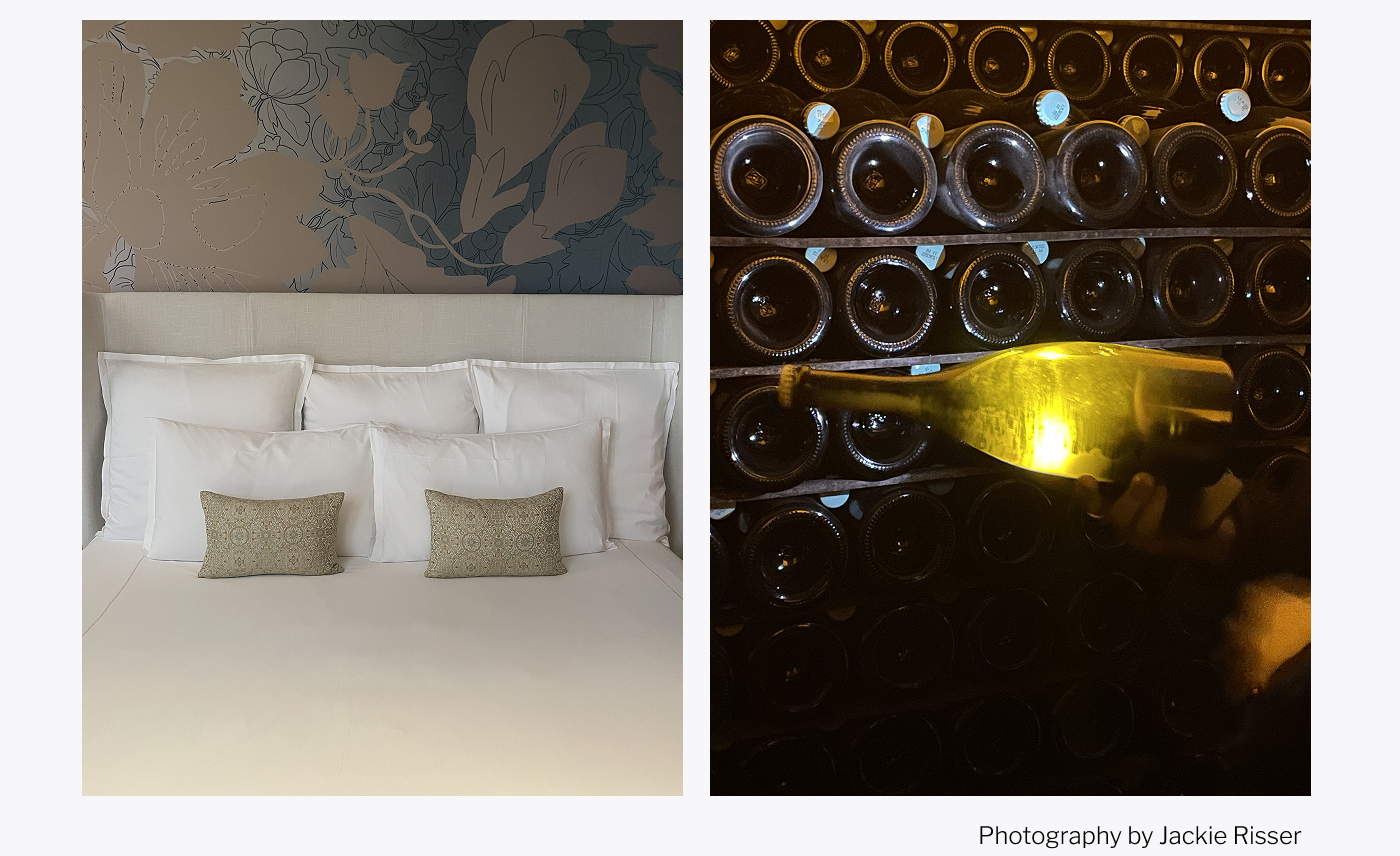
Would you like some mulled champagne? It was 11:30 a.m., I had just flown the redeye from New York to Paris, driven through the French countryside, and wound up the hills of Champillon before pulling up to Royal Champagne Hotel & Spa. The region’s first-ever luxury wellness destination, it’s tucked into a hillside, with breathtaking views of the vineyards surrounding Champillon and Hautvillers (where the Dom Perignon is buried). Yes, I would absolutely love some mulled champagne. Less syrupy than its red counterpart, but every bit as comforting, the steamy beverage was a delightful start to my stay in the famed region, which is remarkably small. Champagne hosts about 84,000 acres of vineyards — just a half-percent of the world’s total vineyard acreage. Yet over 300 million bottles are produced here per year.
Royal Champagne had all the ingredients for a wellness retreat, from the “sleep kit” on my bedside table to the 15,000-square-foot spa, where a facialist glided a cooling myBlend Cell Synergy device across my face as part of a personalized facial followed by a Flora scalp massage. Le Bellevue, one of two restaurants, served up traditionally healthy fare, too, created in collaboration with nutri-cosmetics expert Dr. Olivier Courtin-Clarins.
On the indulgent side of things, the hotel boasts the Michelin-starred Le Royal, led by executive chef Christophe Raoux with pastry chef Claire Santos Lopes. I savored an eight-course meal featuring delicate cauliflower, ravioli stuffed with blue lobster, succulent veal, and a deconstructed apple pie. I also tasted the unsung diversity in Champagne’s terroir — subtly bubbly to zippy, floral to fruity — thanks to thoughtful pairings poured by head sommelier Philippe Marques.
The journey was capped off by an extraordinary visit to the Rare Champagne house, nestled inside the headquarters of Piper-Heidsieck (famously Marilyn Monroe’s choice bottle). It started with a gourmet lunch paired with three velvety vintages, including the 2002, which felt like sipping history (and honey). During a tour of the winery, I was schooled in facts about production (it’s not all chardonnay) and the house’s meticulous operations (a 10-year aging process is just the beginning). The above-ground entrance to the cellar, camouflaged in mirrors, amusingly hid thousands of aging bottles in plain sight, and I was enchanted by a Marie Antoinette-inspired afternoon tea, complemented by a magnum of Rare Rosé Millésime 2014. Strolling through the medieval town of Reims, the unofficial capital of Champagne, felt like the ideal way to process such a rich experience. I stood at the foot of Reims Cathedral, recognized as the inspiration for the Notre-Dame de Paris and the setting of several French kings’ coronations. Marveling at its magnificent design, a puppy playing nearby, I felt full. There’s often so much emphasis on the physical and mental when it comes to our holistic wellbeing. I felt well taken care of in those areas in Champagne, but it’s my spirit that felt utterly nurtured and lifted.
Word to the Wise … The boutique airline La Compagnie offers seamless, direct, business-class-only flights from Newark to Paris Orly Airport (and seasonally to Nice Côte d’Azur). Its spacious, full-flat seats come with gourmet dining, organic wines and champagnes, Caudalie skincare, and even more comforts.
|
|
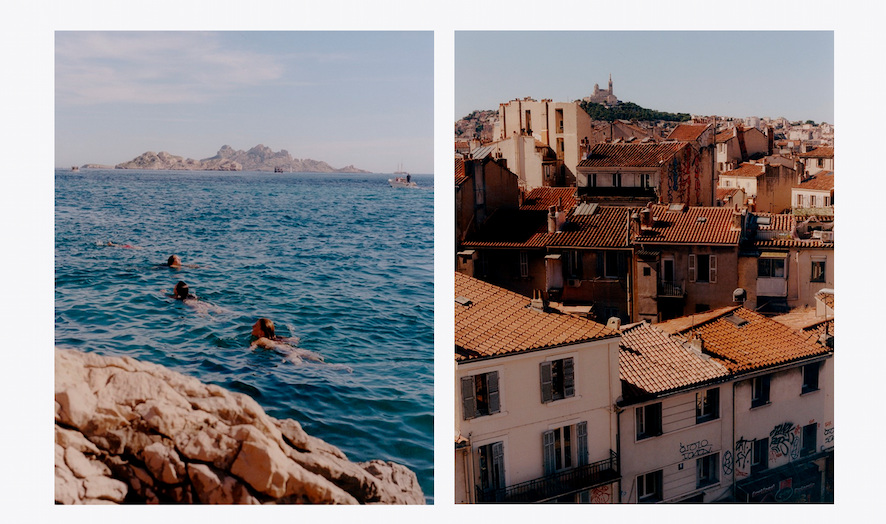
When I took a month-long trip to Paris last year, I hadn't planned to leave the city; my intention was to hunker down, take meetings, and work. But on the verge of burnout, I booked a spur-of-the-moment trip to Marseille. It ended up being the most memorable part of my entire trip.
The energy in Marseille was exactly what I needed — a relaxed pace, wonderfully sea-scented air, and incredibly friendly, open people. I spent hours wandering the city, weaving in and out of the small businesses and farmers' markets, learning the diverse backgrounds of the shop owners, and watching the fishmongers clean freshly caught wares. I accidentally booked a reservation at Atelier Renata for my first night (not realizing it was a supper club) and was still welcomed with open arms, despite not being able to speak a lick of French. I also befriended a group of girls while swimming off the rocks of Les Goudes.
The food, company, and spirit of the city truly recharged me. I look forward to coming back — solo and with friends — again and again. |
|
Need for Speed. When Aston Martin invited me to Palm Springs to drive their new Vantage Roadster, I imagined a glamorous cruise in large sunglasses, linen, and my favorite hat. But as it growled out of the driveway, I sensed my day would be far more exciting. Three years ago, the English automaker redoubled its focus on performance, and this model is their latest expression. It looked gorgeous in the desert sun, the metal stretched taut over the rear wheels bulging from the fenders; its enormous grill framed by sinuous creases winding to the headlights. On a 180-mile drive, the wind whirled together the roar of the exhaust, the punch of the V8, and the sharpness of the steering and blended it into a ferocious, assured experience. Accelerating on the freeway, my hat whipped from my head, skittering across the asphalt in my rearview mirror, a reminder to savor whatever fleeting time we have with special objects. –John Chuldenko
Sublime Slumber. As I get older, few things mean more to me than being comfortable, a mindset that continues to fuel my obsession with luxury beds and bedding. The latest player in the bed of my dreams sweepstakes is Flou, an Italian company that makes exquisite, handcrafted furniture and textiles that masterfully balance comfort and elegance. Its Leonardo mattresses are handmade; use all-natural, breathable materials (including hemp, horsehair, and cashmere); and essentially last forever. Customizable in a variety of ways (including a personalized embroidered label), this is the bed you’ve been dreaming about. –T. Cole Rachel
Golden Hour. After a full day of in-person meetings, I was feeling very Mad Men. All I wanted to do was head home, sink into my favorite chair, and sip a martini. Thankfully, a stunning bottle of Seventy One Gin was waiting for me, looking like chic perfume on my bar cart. Distilled for 71 nights in a trio of oak casks, it’s crafted with botanicals and infused with the rare Queen of the Night cactus flower, which explains its incredibly smooth and complex flavor profile. Channeling my inner Don Draper, I stirred up the company’s signature Golden Martini. Now you can, too. –Elysha Beckerman
Golden Martini
60 ml Seventy One Gin
15 ml Dolin Blanc
10 ml Dolin Dry
3 dashes grapefruit bitters
To serve: Stir all the ingredients over ice and pour into a chilled martini glass. Garnish with a grapefruit twist.
|
|
54 Franklin St #2R NY, NY 10013. ©2024 Dossier Projects, LLC.
|
|
|
|
|