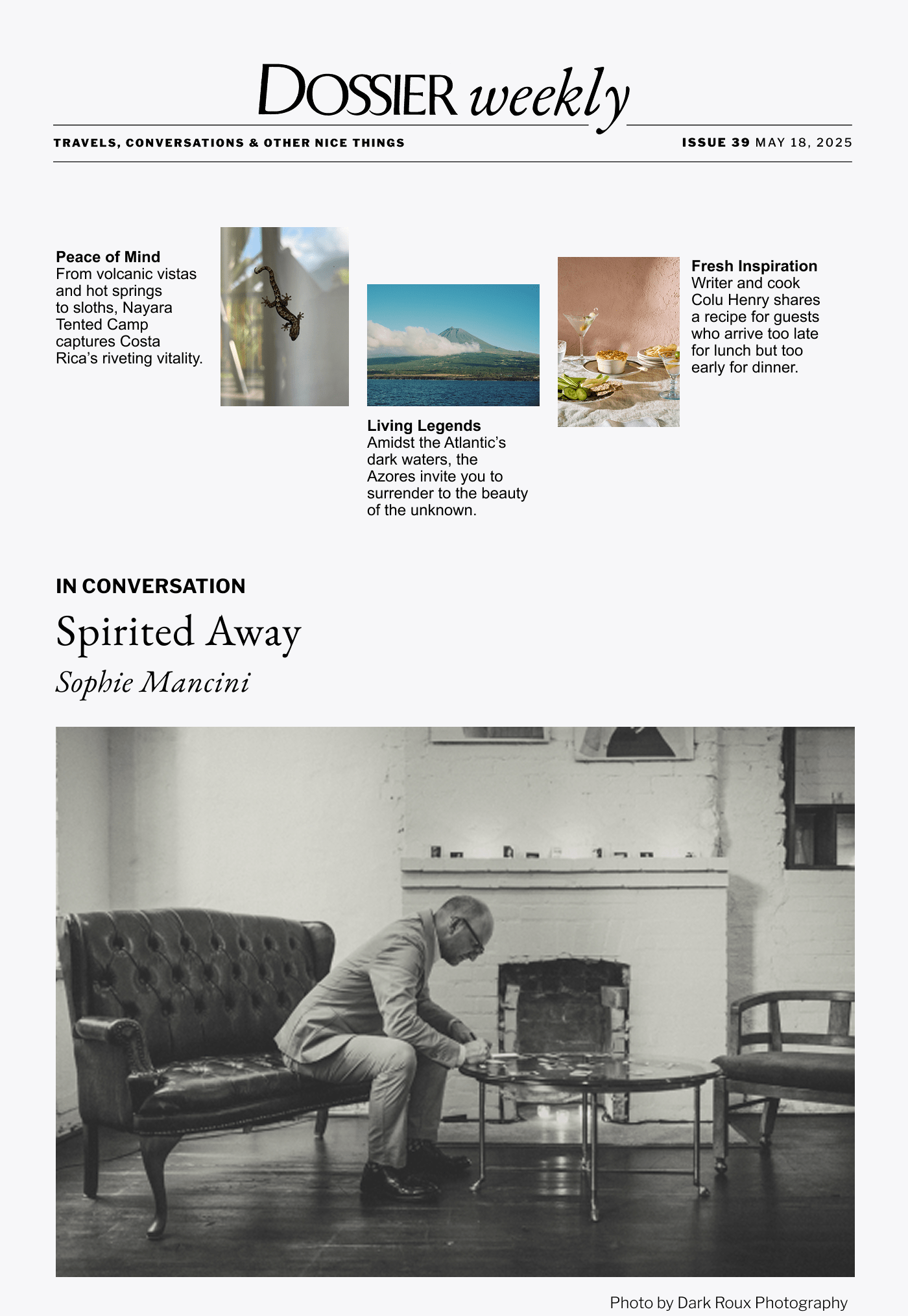
One of the great entertainment multihyphenates of our time, the Academy Award-winning director, writer, and producer Steven Soderbergh has earned his accolades shaping some of the most influential films of the 21st century: biographical drama Erin Brockovich, heist film Ocean’s Eleven, comedy-drama Magic Mike, prescient thriller Contagion, two-part biographical film Che (more on that to follow), black comedy The Informant, genre-bending horror film Presence … The list goes on.
Far fewer know about his second passion: singani, an elusive 500-year-old Bolivian spirit. Singani comes from muscat of Alexandria grapes, which originated in Egypt before traveling to Spain and, thanks to Spanish missionaries, landing on a tiny plot of land in the Bolivian Andes. Soderbergh was introduced to the national spirit in 2007 while working on Che in Bolivia’s jungles. One sip and he was hooked. An 18-year journey followed, which culminated in the launch of Singani 63, a brand developed in collaboration with Casa Real (the Bolivian distillery behind that first mesmerizing sip), which has boosted the spirit category’s recognition both within the US and internationally. Far from the maddening crowds of his movie existence, I had a conversation with Soderbergh about his second, spirited life.
Sophie Mancini: What sensations arise when you taste singani?
Steven Soderbergh: It's a real indication of how different everybody's taste buds are: people saying it's like a gin; others saying it's like a tequila. When I first tried it, I was picking up very floral flavors: like an elderflower thing, a peppery thing. Then I swallowed, and it just vanished. I was used to drinking 80-proof spirits and having to endure what I called “the second swallow,” which was just the price you had to pay to get into the end zone. This stuff just disappeared — there just wasn't anything like this.
SM: What was it like trying to bring the spirit to a global audience?
SS: I've been making notes for a show about somebody trying to bring a spirit to market. It's very cinematic. There's a lot of travel; there's a lot of night stuff. You're in hotels and bars and restaurants. You're dealing with the government, the states. The personalities are fascinating. The analogy that I use is: You're campaigning for an election that's never going to take place. It never stops. There is no “you won, you lost.” In my day job, you have peaks and valleys. You initiate a project, you develop it, you shoot it, you finish it. Then there's a lull, and then you start on the next project. This is not like that. This is like shooting every day. If you slow down, you just get run over by all the other brands trying to get their spot on the back bar. It's absolutely ruined bars and restaurants for me. Now I’m doing a deep dive on their cocktail program instead of having fun. Once you're in it, it's like a tattoo.
SM: Have you always been drawn to impossibilities?
SS: My whole career is a massive mathematical improbability. I grew up in a suburban subdivision in Baton Rouge, Louisiana. I knew nobody in the entertainment industry — had no contacts whatsoever, but I absolutely felt: Well, somebody's got to breakthrough. Why shouldn't it be me? So I started making short films, but I was also writing all the time — even though I didn't like writing, because nobody could stop you from writing and it cost nothing. I finally wrote something that was small enough and appealing enough to actors to get a little bit of money to make a movie. That was when Sex, Lies, and Videotape happened. For a lot of people, it seemed like I came out of nowhere, but the film was an eight-year overnight success. So I'm used to the slog, you know? You increase your chances of having life-altering experiences if you show up for shit … and I mean that in the literal sense.
SM: Were there any other aspects of Bolivian culture, tangible or intangible, that resonated with you?
SS: I was with the [Bolivian] vice president at a dinner once and said, “I'm of Swedish descent, and the Swedes are known for having a certain kind of reserve. They play things close to the vest. I feel that the Bolivians are the same way, in a way that's very familiar to me.” I asked him, “Am I out of my mind?” He goes, “No, absolutely not. Bolivians do not self-promote in the way that some other cultures do — could be because we're landlocked. We're the only landlocked country in South America.”
Bolivians have an incredibly wide variety of plants. So they have a very interesting food and beverage culture. They just don't get a lot of play on the world stage, which is why, when we got the category here, it was on the front page of the newspaper the next day. [Singani] is something they do that is world-class, that now people are starting to know about.
SM: What's the cultural lore around singani — is it connected to any Bolivian social rituals?
SS: Luis Pablo Grenier, the fourth-generation family member to run the [Casa Real distillery] says, “When I was a kid, if I had a cold or I was sick, my grandmother would rub some [singani] on my upper chest and my throat, like it was the Vicks VapoRub substitute.” So it’s very, very embedded. It's 500 years old. There has been singani for longer than there's been Bolivia. So people there really do have a primal connection to this spirit.
SM: Let’s talk about the rarity of this thing.
SS: You're talking about a single varietal of grape at or above 5,200 feet above sea level, in one 20,000-acre area of southern Bolivia. Talk about bespoke. That's tighter than champagne, tighter than cognac. I hope it becomes an interesting aspect of our world domination, which is: There is a limit to how much you can make. It is a bespoke spirit. It's not going to be Casamigos. George [Clooney] knows how I feel about that ...
SM: What flavors go well with singani?
SS: It's got a huge food relationship to draw upon because it's so versatile. I don't think you can find another spirit at this proof level that can make this many cocktails, that you can swap out for a brown spirit and have it work. Somebody described singani to me as egoless. When you put it in a cocktail, it just kind of finds its place. If it needs to sit back and play tambourine, then that's what it does.
SM: It’s fun to think about the personification of the spirit. This little fighter who punches above its weight, standing on its own as well as chameleoning into different flavors.
SS: The weird thing is the spirit mirrors my perception in the entertainment industry. I'm known as somebody who goes their own way, does their own thing, but also plays a lot of different positions — producing, directing, writing, shooting, editing. I'm perceived as sort of a Swiss Army Knife. This is that.
SM: What was it like drinking singani for six months straight while you were filming in Bolivia?
SS: I look back on it as one of the reasons we were able to survive that shoot. Those were not fun movies to make. Some people just turned into zombies or roadkill. It got too intense. Without the ability for the core group to decompress after a day of shooting by sitting around and having a singani on the rocks, it would have been a very different shoot. I also discovered I was not in any way affected the next morning. It's so well-distilled, there are so few impurities in it, that you were not punished the next day. It's not a drunk, it's a buzz. It's more like a high than a drunk.
SM: It sounds kind of mystical.
SS: I was trying to convince somebody at one of the medical universities, here over at Columbia [University], to do a series of experiments where we got people drunk on different spirits and then [doctors] did MRIs of their brains to figure out if there was a difference in the way singani was affecting their brain, rather than, say, tequila. I talked to this guy a couple of times. He was like, “I don't know if I'm allowed to do that,” but I’m convinced it does something to your brain that's different from gin.
SM: I find it so evocative — this idea of an ancient spirit holding secrets.
SS: You think about the ground that this grape grows in and what's happened to it. Supposedly, one of the reasons it's a terrible place to grow something is that 10,000 years ago it was all under water, and when the water left it took all the minerals with it. These grapes have really been hanging on.
|
|
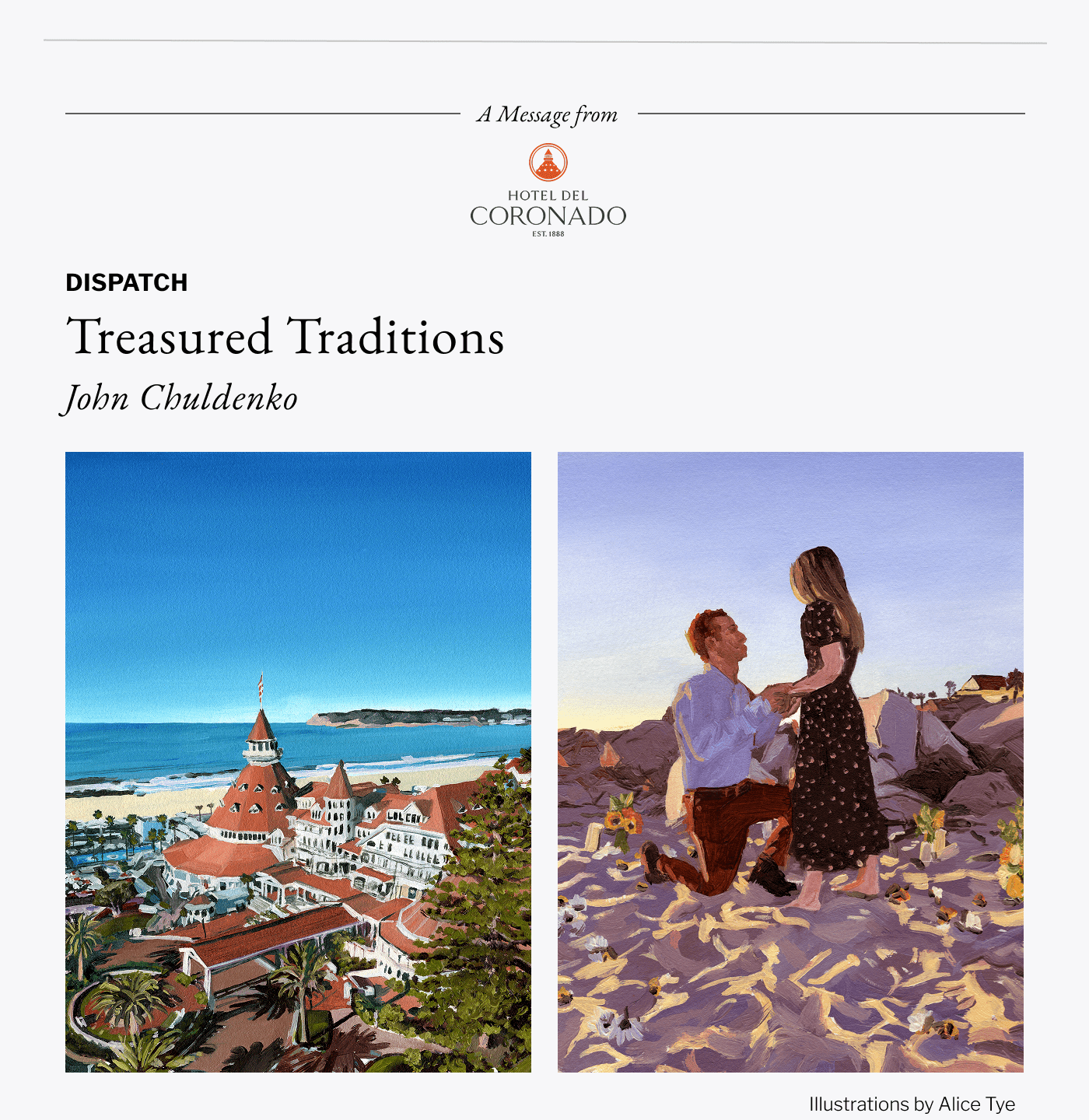
There’s a reason we return to a place year after year, reveling in anticipation and reconnection. Traditions are more than just dates on a calendar; they bring comfort and closeness like a cherished heirloom, but they hold memories more expansive than any object. Hotel del Coronado in San Diego, California, has provided a cinematic backdrop for these moments, rituals, and milestones since 1888. And now, after a six-year-long revitalization with a revival of historical spaces and the addition of thoroughly modern elements, it’s ready for the next 100 years. From The Del’s iconic red turret and crisp white facade to the inviting blue waters that border its golden shore, you’ll find families sharing new experiences: memories in the making. These are stories to recount with a drink in hand, sand between our toes, and s’mores at the ready. They are stories that become family lore, best told around The Del’s legendary beach bonfire, as the following guest can attest.
JOHN A.
Guest since 2012
I started my business 40 years ago and spent my whole career on the road. I missed a lot of ballgames and birthdays. But at The Del I'm not the owner of a corporation, I'm not in a suit, I'm just Dad. I raised my six kids on that beach; this is home for us. My son, Cooper, was 17 when he started bringing his girlfriend along with us to The Del. She's joined us every year, through high school, then college, and after. When he told us he wanted to propose to her at The Del, we were thrilled. Corey and The Del staff were in on the surprise; Corey’s been like a brother; he's seen all of my kids grow up. Cooper brought his girlfriend down to the beach, and we were all on pins and needles. When she said, “Yes,” all the guests on the balcony at the Shore House started cheering, and Cooper took a bow. It's still something we all talk about.
|
|
Unscripted encounters, guests escaping their day-to-day lives, eager-to-please staff, unnaturally pristine grounds, dramatic lighting … While we may be biased, we believe luxury hotels offer an infinite and tantalizing menu of ingredients for an intriguing story. It's no wonder our friend, Dossier contributor Christopher Bollen, chose one as the setting for his latest novel, Havoc. The thriller follows 81-year-old widow Maggie Burkhardt during a long-term stay at the Royal Karnak Palace Hotel in Luxor, Egypt — her umpteenth hotel in five years thanks to her compulsive need to meddle in other people's business. All appears (relatively) fine until a sly young boy, Otto, checks in, threatening to unravel the seemingly sweet old lady's world. It's the perfect page-turner to tuck into your carry-on, with a mesmerizing jacket to boot. |
|
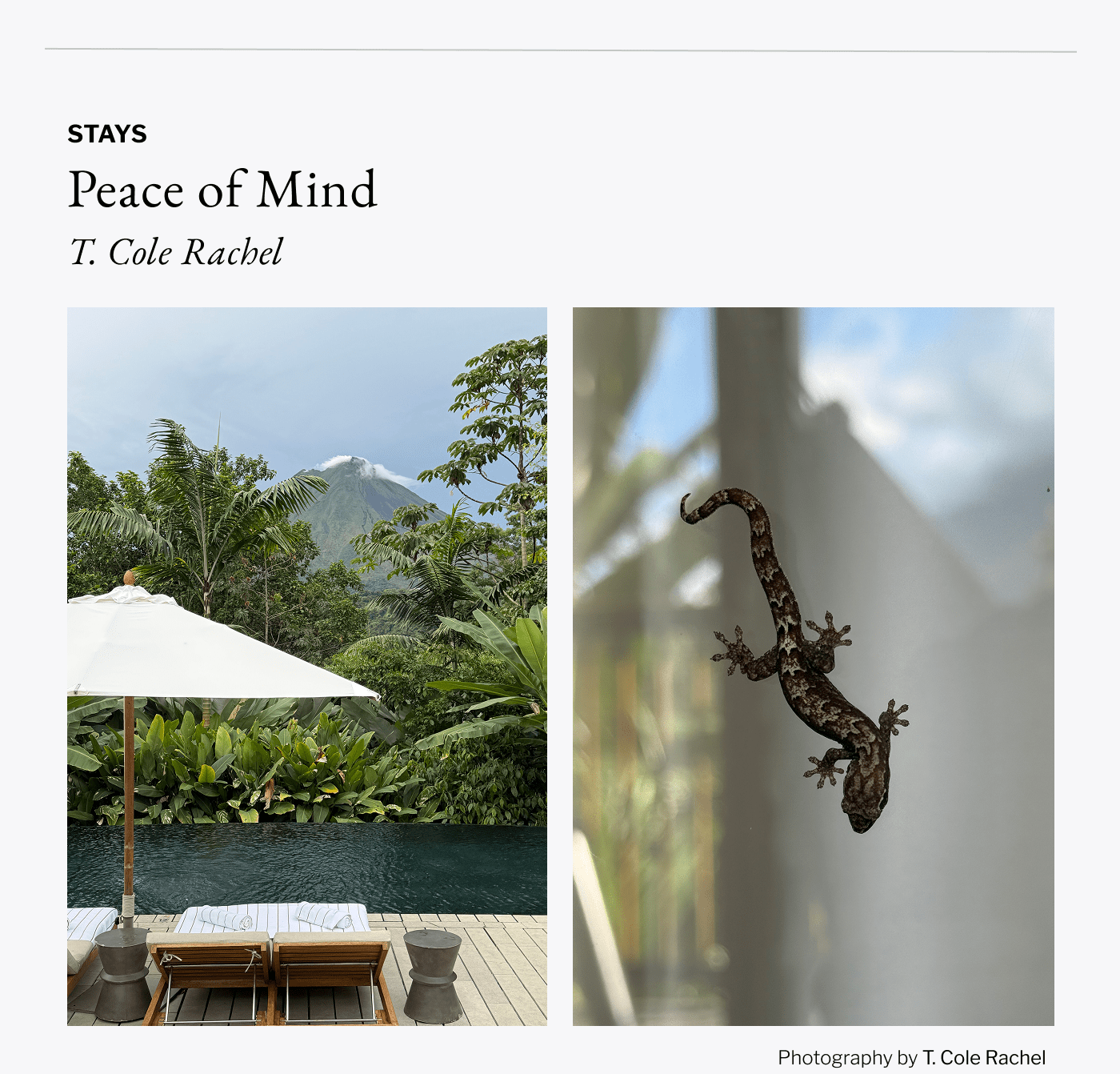
I’ve long been plotting a trip to Nayara Tented Camp in Costa Rica, having first heard about the property, with its volcanic vistas, sloth-filled trees, and exotic birds, nearly five years ago while writing a piece on the world’s finest sustainably-minded hotels. This spring, it felt as if the stars had finally aligned — those stars being my 50th birthday. Perched high in the rainforest with a parallel view of the Arenal Volcano, Nayara Tented Camp is actually part of a trio of properties (including Nayara Springs and Nayara Gardens). The locations are connected via winding, narrow paved roads and walking trails, which lead through botanical gardens and serve as one giant sloth habitat. Several of the cute creatures have made Nayara their long-term home and can be seen hanging around in the treetops. The camp is the company’s highest-end offering. Its tented suites are so incredible that one forgets they are, in fact, giant tents. Ours not only offered a massive bathroom, walk-in-closets, an outdoor shower, and a truly unbelievable view of the volcano, it also featured a plunge pool fed by one of the property’s many hot springs. Soaking in it for hours, we counted hummingbirds and watched a small wisp of steam emerge from the volcano’s peak.
Nayara was conceived as both a hotel and a very ambitious eco-project to help rebuild a part of the rainforest that had been lost to deforestation. As a result, it’s easy to wander through its lush grounds — which are part of Arenal Volcano National Park — and lose sight of just where the property ends and the rainforest begins. Everything is green on top of green surrounded by even more, deeper green.
There is no shortage of activities geared to show off this landscape: zip lines, volcano hiking, rafting, boat trips across Lake Arenal, treks to the cloud forest, excursions into the nearby village of La Fortuna. We also took an afternoon hike to the famous Arenal Hanging Bridges in nearby Mistico Park. The three-hour guided journey takes you up into the forest canopy and traverses massive suspended bridges, each offering unbelievable views of the forest below. As we walked, our guide pointed out the beautiful (exotic birds, spider monkey families swinging overhead, a hidden jungle waterfall) and the less beautiful (a sneaky tarantula peeking out of a hole and a tiny, yellow pit viper curled inside a leaf). One of the great things about spending your 50th birthday in an obscenely picturesque place is not that it distracts you from your age; it’s that it actually makes you feel much younger. I was pondering this as my husband and I sat soaking in a secluded spring, shrouded by dense forest, without another person in sight. Sitting in the steamy water, the sky abruptly gave way to a brief but torrential downpour (a pretty normal occurrence in the rainforest). For a few minutes, I felt as though I had been transported into an alternate universe: Cool rainwater flooded down through the green canopy as we floated in bubbly hot water and listened to the croaks of suddenly awakened tree frogs. I couldn’t help but think: If the next 50 years are even half as lovely as this moment, growing older can’t be all that bad. |
|
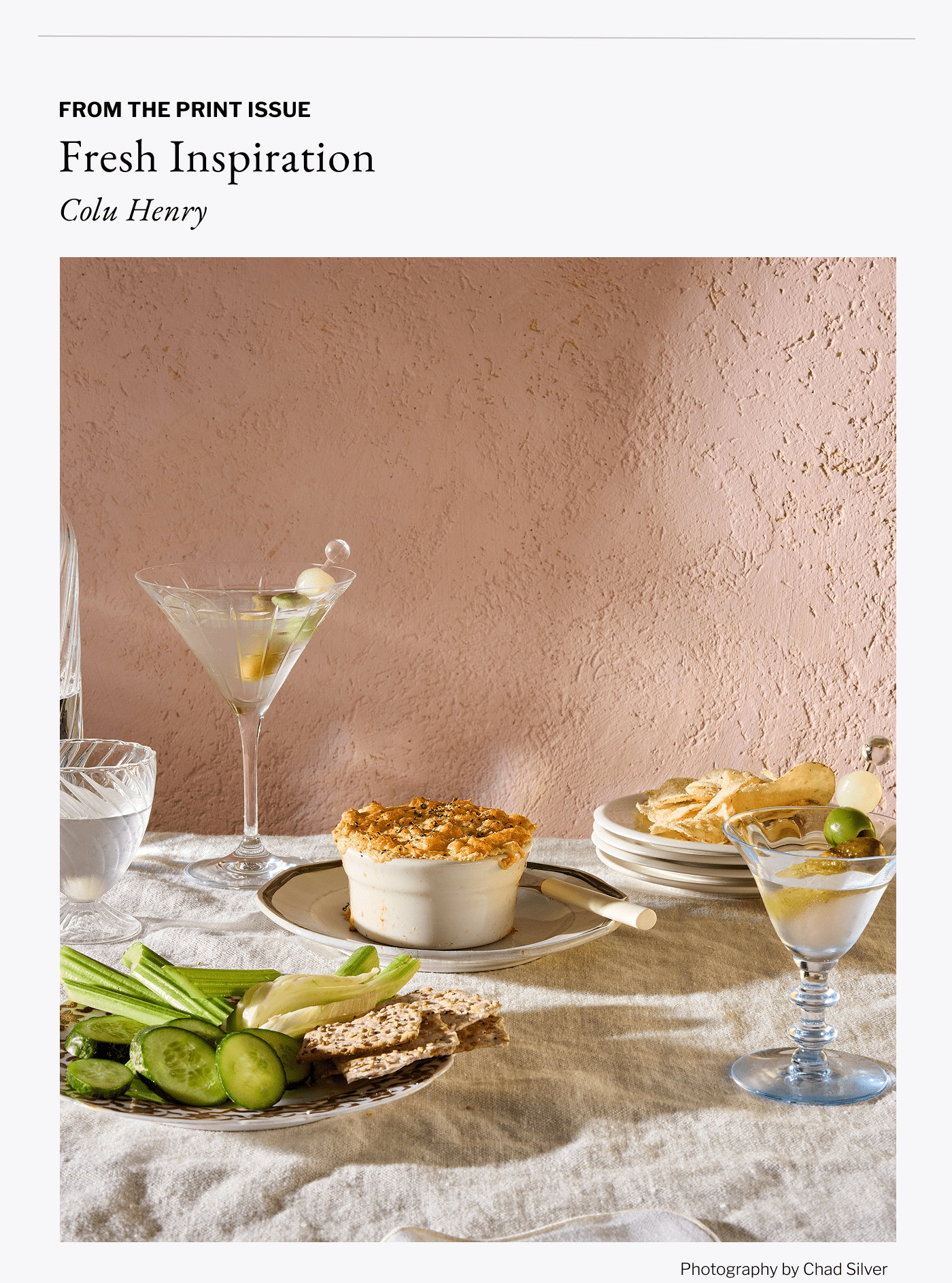
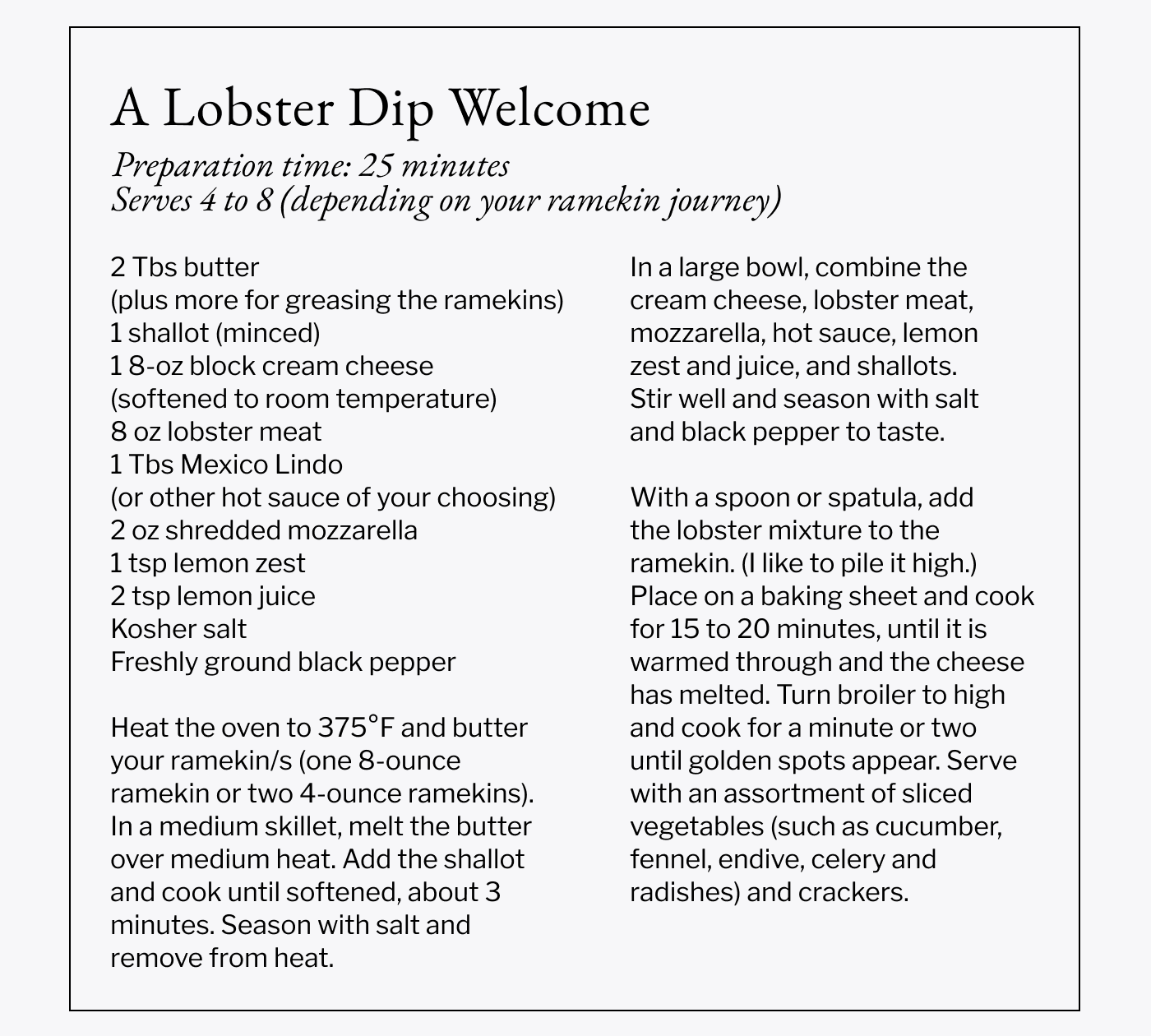
More often than not, when our friends arrive at our home, The Windy Poplars, for their Nova Scotia vacation, it's too late for lunch but too early for dinner. This means it’s a “snacks for dinner” affair. Everyone is excited to be reunited; there is always much chatter and catching up to do. I prep this dip ahead, so when they do arrive all I need to do is heat up the oven, slice some vegetables, pull out some cheese and cured meats, and open some wine. I prefer to divide the dip into two ramekins, because that means we’ll have one to warm up the next evening after a long beach day. But, should you want a larger serving to feed more people, you have that option as well. |
|
Read the full story and more close takes on a wide world in our Holiday issue, available alongside our just released Spring/Summer 2025 print issue. Order now. |
|
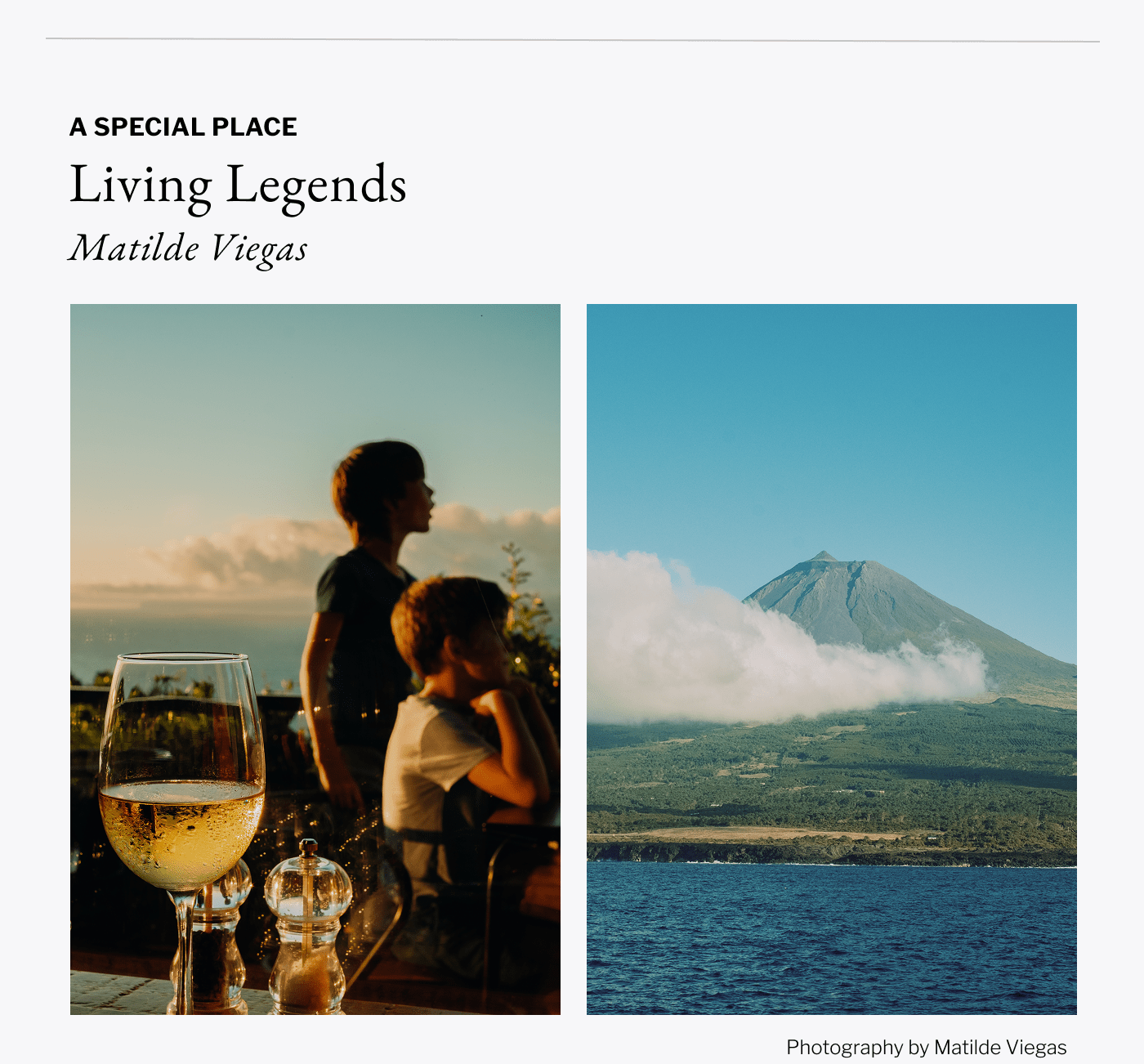
Portugal’s Azores hold secrets. An invisible force, bubbling just under their surface, is felt in the soil. The islands murmur. As food is prepared in holes dug deep in the ground, we're told in an unspoken language that nature's strength is ever present, ever threatening.
And yet, the pace of the islands is slow. There is a masterful contrast between the violence of ancient, millennia-old lava and the hydrangeas that line every road. The vineyards that once covered these lands — prior to the phylloxera plague that decimated all grapevines across Europe — still grow amid dark, volcanic rock fences.
The energy here is contained: One cannot leave the islands without facing the Atlantic Ocean. And still, amidst the terror of the unknown, the beauty is immense, engulfing us, forcing us to surrender to these dark waters, then emerge refreshed. |
|
Dishing It. If you’ve dined at iconic Bay Area spots such as Delfina, Frances, and Ramen Shop, chances are you’ve been served food on stoneware from Sarah Kersten Studio. Based in Oakland, California, the studio’s small team of artisans crafts beautiful, durable plates, bowls, and mugs in an array of glazes that invariably complement whatever they hold. My personal favorite is the quail egg glaze: a speckled black-and-white design that goes with just about any tablescape. If you find yourself in the Bay, make a studio appointment and browse the pieces in person. –Elissa Polls
Worth the Journey. During a recent escape to Miami, I made a beeline for Sunny’s, a restaurant from the team behind Jaguar Sun (which they closed to channel their efforts into this steakhouse). Sunny’s opened last fall after gaining a following as a temporary residence during the pandemic. Its outdoor space, anchored by a banyan tree, features hand-painted murals of The Everglades and dimmed French bistro-style lighting. The ham-and-corn agnolotti and dry-aged ribeye are a few must-orders — as is the 50/50 Martini, which comes with a side of homemade blue-cheese olives. If only I could’ve bottled those for a late-night snack. –Elysha Beckerman
Blank Slate. Slate is a revolutionarily simple, electric, two-seater pickup that features … almost nothing. The simple EV is designed to be modified by buyers with a wide range of colors, seats, and tops as their needs evolve (it can even become a five-person SUV). While the little truck is certainly modest, maybe its luxury lies in its near-limitless potential for self-expression. Artist collaborations, anyone? –John Chuldenko
|
|
54 Franklin St #2R NY, NY 10013. ©2024 Dossier Projects, LLC.
|
|
|
|
|