Years ago, I left New York in search of something slower. I packed up one fat cat and two energetic little girls and walked away from the glittering, pulsing beat of it all. I was desperate for a reset. My dad had died, I’d recently divorced, and my fashion career was unraveling. The house I found in the country faced a cemetery and a willow tree. Soon I was learning to garden.
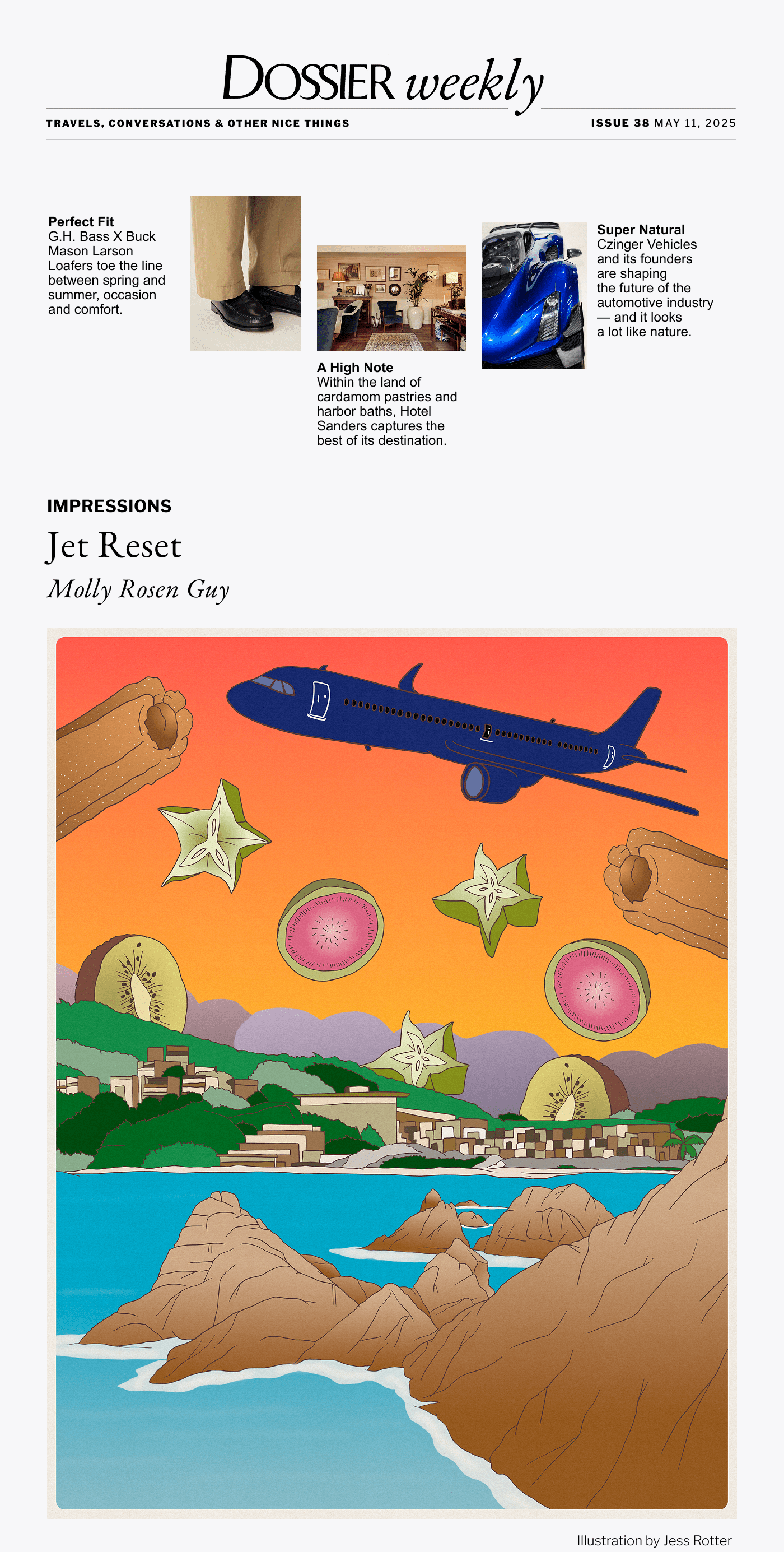
So when an old friend invited me to join a leg of the Four Seasons World of Wellness “The White Lotus Tour” aboard a private jet, my first thought was: No way. Traveling alone, unencumbered, through the clouds felt like something a younger, shinier version of me might have done. Also, I’m a terrible traveler. I once showed up at JFK Airport at 5 a.m. only to realize I was supposed to be in Newark. Another time, I flew into Punta Cana with both kids when I’d meant to go to Puerto Plata. Our next vacation comprised a compact Hertz rental car, a Howard Johnson hotel, and the largest indoor water park in Wisconsin.
Yet, there I was boarding a gleaming aubergine-colored, custom-outfitted Airbus jet — essentially a floating lounge complete with leather lie-flat seats, walnut paneling, cashmere pillows. Even the seatbelt was sleek. Before I’d buckled in, a bearded man in a houndstooth suit appeared bearing a platter of caviar.
But the Four Seasons Private Jet Experience isn’t just about champagne and caviar. It’s a full journey, often part of a multi-destination itinerary. Think “Ancient Wonders of the World,” “International Intrigue,” or “Cultural Capitals,” with stops in Kyoto, Marrakech, Budapest, the African savannah, and the Galápagos Islands. My destination, the Four Seasons Resort Tamarindo, México, sits on a private peninsula along the Pacific Coast — an architectural murmur carved into the jungle. Positioned within a 3,000-acre private nature reserve, its design emphasizes minimal environmental impact and the work of local artisans, including sisal hammocks from Santa Rosa, Mayan cream stone, and hand-dyed cotton textiles. “The White Lotus Tour,” a collaboration between HBO and Four Seasons Hotels & Resorts, takes inspiration from the hit show. But here, there are no snarky staffers. No unraveling couples.
Instead, tacos were cooked over an open fire and I was served a pink mocktail made of beetroot and hibiscus in a glass rimmed with smoked red salt. Figs and mangoes, harvested on-site, gleamed on massive platters. There was space, silence, attention. The resort didn’t dominate the land; it dissolved into it thanks to local stone laid by hand, cement custom mixed to match the sand, wood that smelled of sun and salt. My suite had a private plunge pool and a cliffside view of the Pacific. I fell asleep inhaling the ocean.
The next morning, I woke before dawn to walk the beach with the resort’s ethnobotanist. The air was thick with resin and gardenia. We moved mostly in silence until he pointed to a fat puma paw print in the sand, then baby turtle tracks. I felt amazed — and I missed my daughters. I wanted them to taste beetroot mixed with red salt. I wanted them to see the moon set and the sun rise at the same time. That’s the thing about beauty: It’s meant to be shared.
Later, we sat on a carved wooden bench and ate tamales in Tamarindo’s wild garden — a dreamscape of 8,500 blue agave plants and glowing guava trees mixed with pineapple plants and asparagus shoots. The thatched trees formed a canopy, shading us in soft, gold-dappled light. Goats and dogs ran freely. I stopped to pet one of the bleating creatures, marveling at its cuteness. The morning sun warmed my face, mingling with the taste of fresh coffee on my tongue. All of a sudden, I felt awake — alive and grateful, aware of how lucky I was to be here, at the edge of the world, far from the routines of my everyday life. It all left me a little bit softer, a little more open, and ready to return to the noise of the world carrying something sweeter inside. |
|
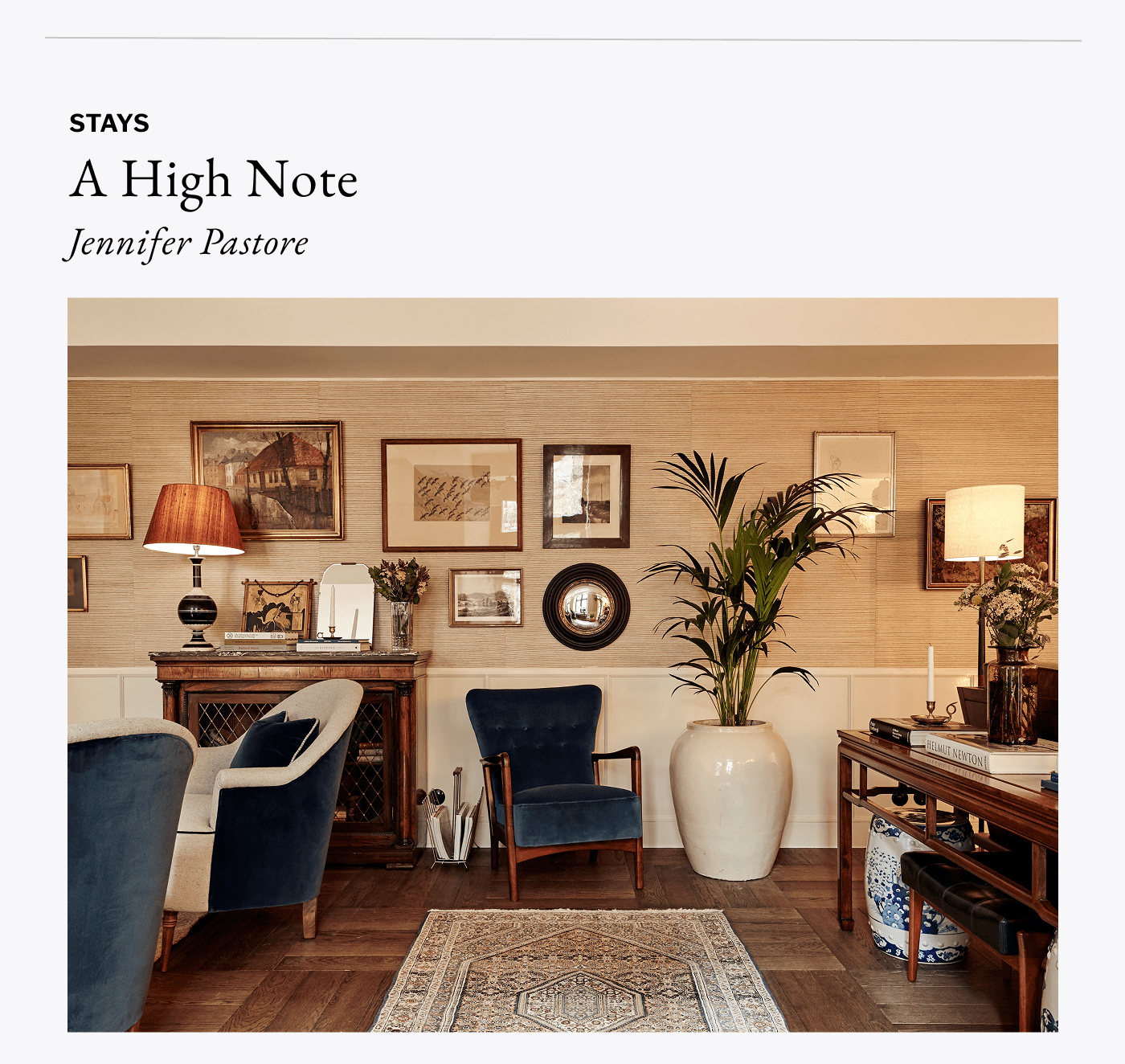
I knew we needed a grand finale to ease the blow of ending a three-month family adventure in Denmark, the home of cardamom pastries, harbor baths, and Legoland, so I polled friends for the best hotel in Copenhagen. All suggestions pointed to Hotel Sanders. Created in 2017 by former ballet dancer Alexander Kølpin, the property is a true boutique hotel with distinctly Danish yet clearly custom interiors by design team Lind + Almond. It feels like the home of a chic friend, with plenty of places to meet friends, colleagues, and lovers for breakfast or drinks — or to curl up with a book and people watch. After we checked in, my husband and I dropped our bags and headed downstairs for an outdoor dinner at Sanders Kitchen. Nestled under blankets, we tucked into the restaurant’s seasonal menu as we surveyed Copenhagen’s stylish locals, including a wildly elegant bride and groom who had cycled past us earlier at Nyhavn Harbor and were celebrating their wedding on the hotel’s intimate roof terrace. Meanwhile, our kids were snuggled up with room service and a movie.
Breakfast was a candlelit treat with something for all of us, including charming servers who indulged my son’s love of ginger shots and hot chocolate with pastries. Afterwards, we set out to spend one last day at Tivoli Gardens — the city’s beloved amusement park, rumored to have inspired Disney World — before returning to Hotel Sanders for another movie/date night. As we pulled away the next morning, the boys declared this to be their favorite hotel, noting the cozy beds and delicious hot chocolate as the basis for their rating. Given our impending return to “real life,” those sweet memories were all I had hoped for. |
|
The origin of the loafer is a somewhat hot-button topic. Some credit Norwegian farmers who wore similar slip-ons in the 1930s; others see the roots of the design in the Native American moccasin.
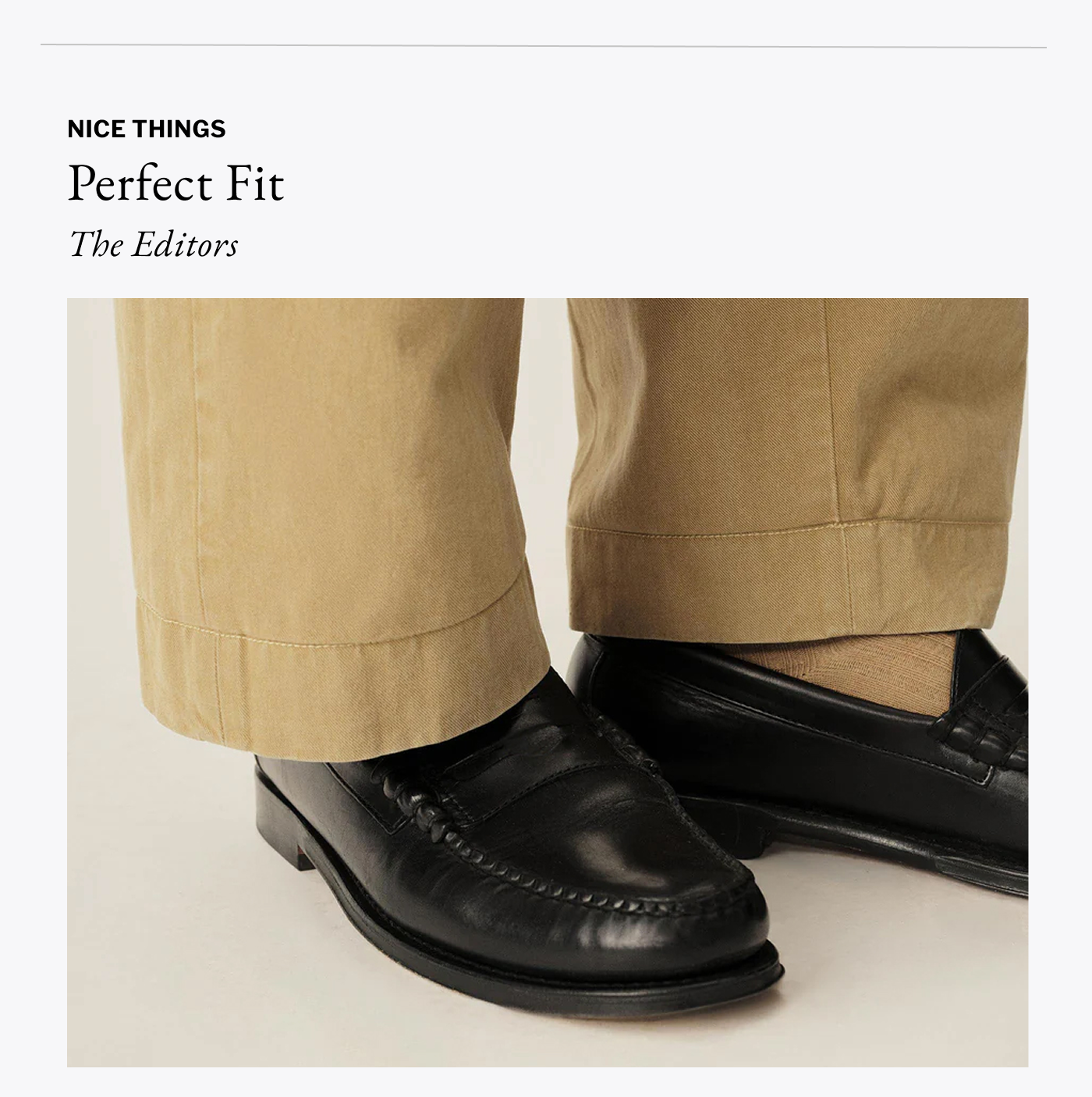
Both of these inspirations come to life in the G.H. Bass X Buck Mason Larson Loafer, a well-formed marriage of craftsmanship, comfort, and goes-with-everything style. The latest in a long line of savvy collaborations from Buck Mason, these Larson Weejuns (as in Norwegian) are crafted from vegetable-tanned leather and softly lined, which makes them feel more like soft moccasins than dress shoes. We’ve deemed them the perfect go-to as spring shifts into summer and the need to, literally, toe the line between occasion and comfort blossoms. |
|
One doesn’t expect to find auto parts in an art museum.
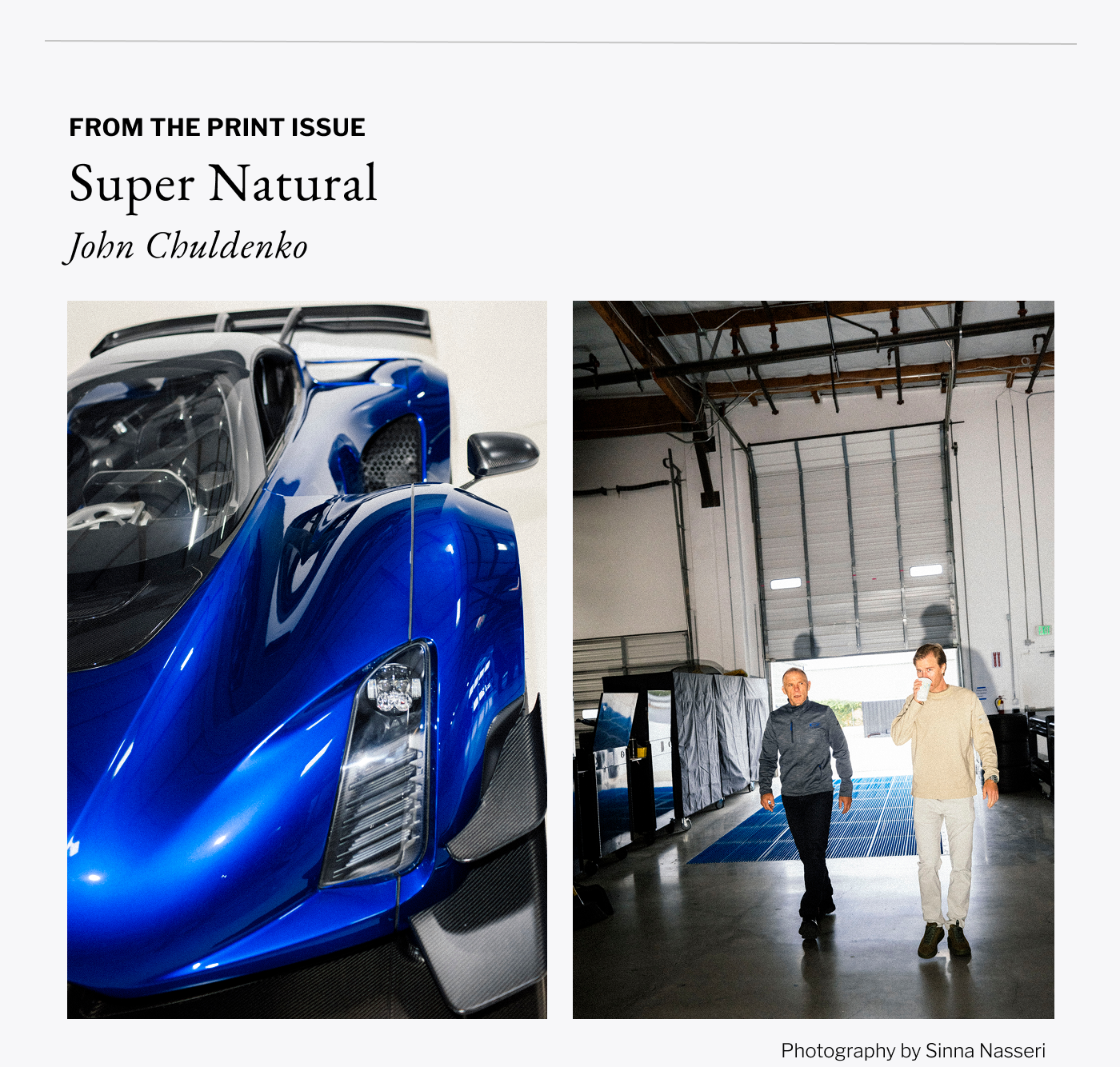
Yet at the Getty Center in Los Angeles, a rear frame perched on a pedestal is oddly organic. It looks like something culled from a jungle or snapped from a coral reef. The frame was designed and produced entirely by computers, without human intervention, at Divergent 3D in Torrance, California. Kevin and Lukas Czinger, the father and son founders of Divergent Technologies and Czinger Vehicles, strode through their factory’s large, roll-up door like two astronauts in The Right Stuff. Together, they helm two companies poised to revolutionize how we make — well, almost everything “We’re unusually close,” Lukas confided. “Up until I was seven, my dad was like superhero material for me.” Kevin threw his arm around his son for a photo. It was a warm, human connection in a building full of formidable, industrial technology. Lukas walked me to Czinger’s latest hypercar, the 21C. Stripped of its bodywork to expose its “BioLogic Skeleton,” the chassis looked like the remains of an imaginary deep-sea creature washed ashore: fibrous, freeform, cellular. It was designed by software that mirrors nature’s evolutionary process, wherein organisms compete for material and energy over millennia, continually refining their structures to arrive at an optimal design. In Divergent’s human-made evolution, software is fed such design parameters: the function it’ll need to perform, the forces it will need to endure, the space it will occupy. Then the software runs thousands of simulations, mapping, designing, and refining the object. “It’s been evolved to be perfect against a given set of requirements, just like the leaf on a tree has evolved to take in the most sun and be most water effective or compete in its niche — in this case, [the niche] is hypercar performance,” Lukas explained.
In the production area, I encountered a dozen or so assembly robots positioned in a circle, their heads bowed as if in a Kubrickian cyber ceremony. This is where the designs are realized. There are no scraps; there’s no welding, stamping, or machining. There are no trimmed pieces falling to the floor. There’s no waste. Divergent uses additive manufacturing (commonly known as 3D printing) to create whatever parts it needs, when it needs them. Designs are uploaded into printers that melt a proprietary aluminum alloy and layer it precisely where it belongs.
Read the full story and more close takes on a wide world in our Holiday issue, available alongside our just released Spring/Summer 2025 print issue. Order now.
|
|
When asked to send an image of a notable place, I thought about so many places that have seduced my heart — faces, landscapes, objects — and something that could represent them. And I found that a tray of roasted aubergine is an inner landscape of myself.
They represent the rare reason for living: When you are touching something that suddenly becomes all worldly, catching all your experiences, letting your hands move through it without thinking, and getting a new life that is a crystal of their wishes … That is the perfect place for me. Nothing is missing, nothing extra added. Perfection. Purity. |
|
Well Played. Recently, I spent a few hours at Mass Beverly in Los Angeles previewing the latest collection from Fendi Casa with Giacomo Rossi, Fendi Casa’s Vice President. The statement pieces on display brimmed with clever details, bold colors, and striking shapes rooted in the design language of the century-old Italian fashion house — there were rich yellows, signature sequin stripes, and a dramatic dining table milled from a single block of white marble. They exuded a retro-adjacent cool that makes one desperate for a sunken living room. “The idea is always to create something that is not only beautiful but also fun and surprising, with a ‘wow’ effect,” explained Rossi. I’m still smitten by the modular F-Affair sofa collection. Upholstered in white boucle, the spin on former Fendi creative director Karl Lagerfeld’s double-F (Fun Fur) motif is tempered by a formal firmness and sizing that suggests sophistication. It hugged my heart like the little letters embracing each other beneath me. –John Chuldenko
Chasing Amy. Recent road trips have let me catch up on podcasts. My new favorite: Good Hang with Amy Poehler. In it, the comic unpacks subjects spanning careers, parenting, and what's funny now with famous friends. The intimate setup has led to memorable off-script moments, including Kathryn Hahn burping mid-sentence and Quinta Brunson revealing her dark obsession with an A.I. cat, plus Martin Short remembering his relationship with Gilda Radner and Jack Black belting the theme song to a Saturday Night Live sketch that never aired. It's a joyful distraction that makes highway exits pass in a blur. –Jackie Risser
Blue Zone. Someone recently asked me why my skin was so vibrant. It’s a transformation I attribute to one change in my routine: the addition of May Lindstrom Skin. The Los Angeles-based skincare company’s incredible suite of products includes serums, body oils, cleansing masks, and The Blue Cocoon, my personal favorite. Unlike any other moisturizer I’ve tried, this waxless balm melts into oil when rubbed between your fingers. Its key ingredient, blue tansy, possesses brightening, anti-aging, and anti-inflammatory properties, and the overall formula is so moisturizing it has negated the need for additional oils. –Elissa Polls
|
|
54 Franklin St #2R NY, NY 10013. ©2024 Dossier Projects, LLC.
|
|
|
|
|