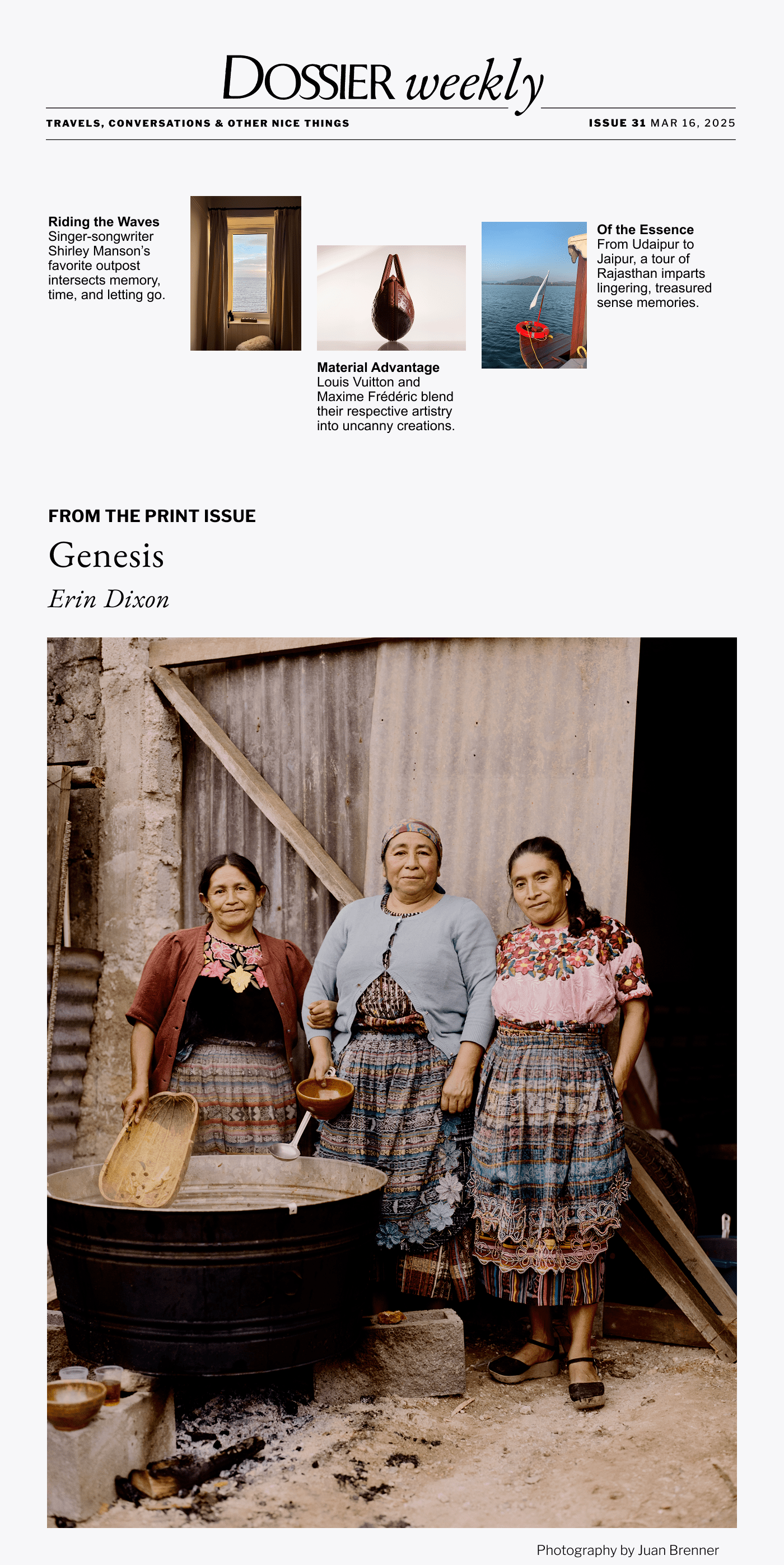
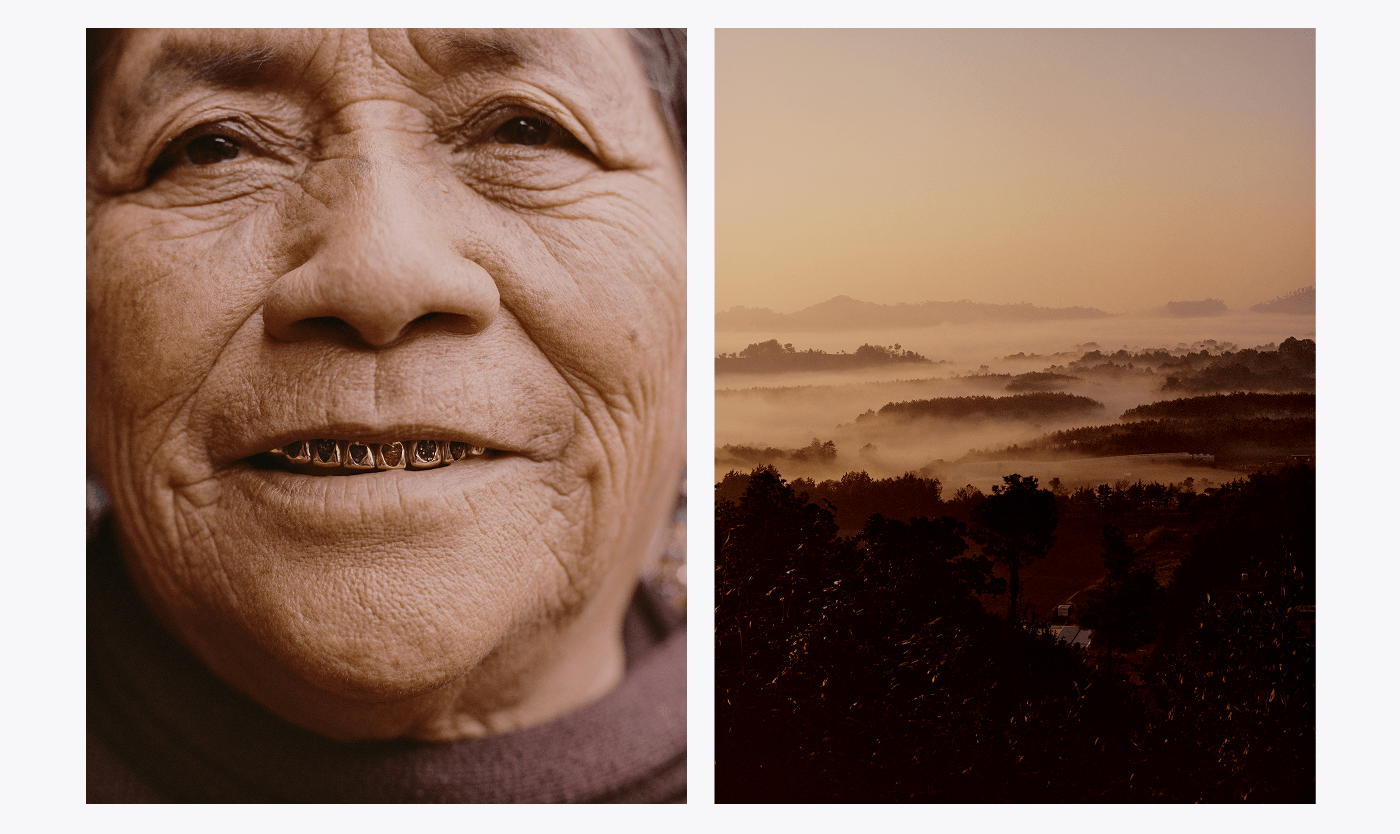
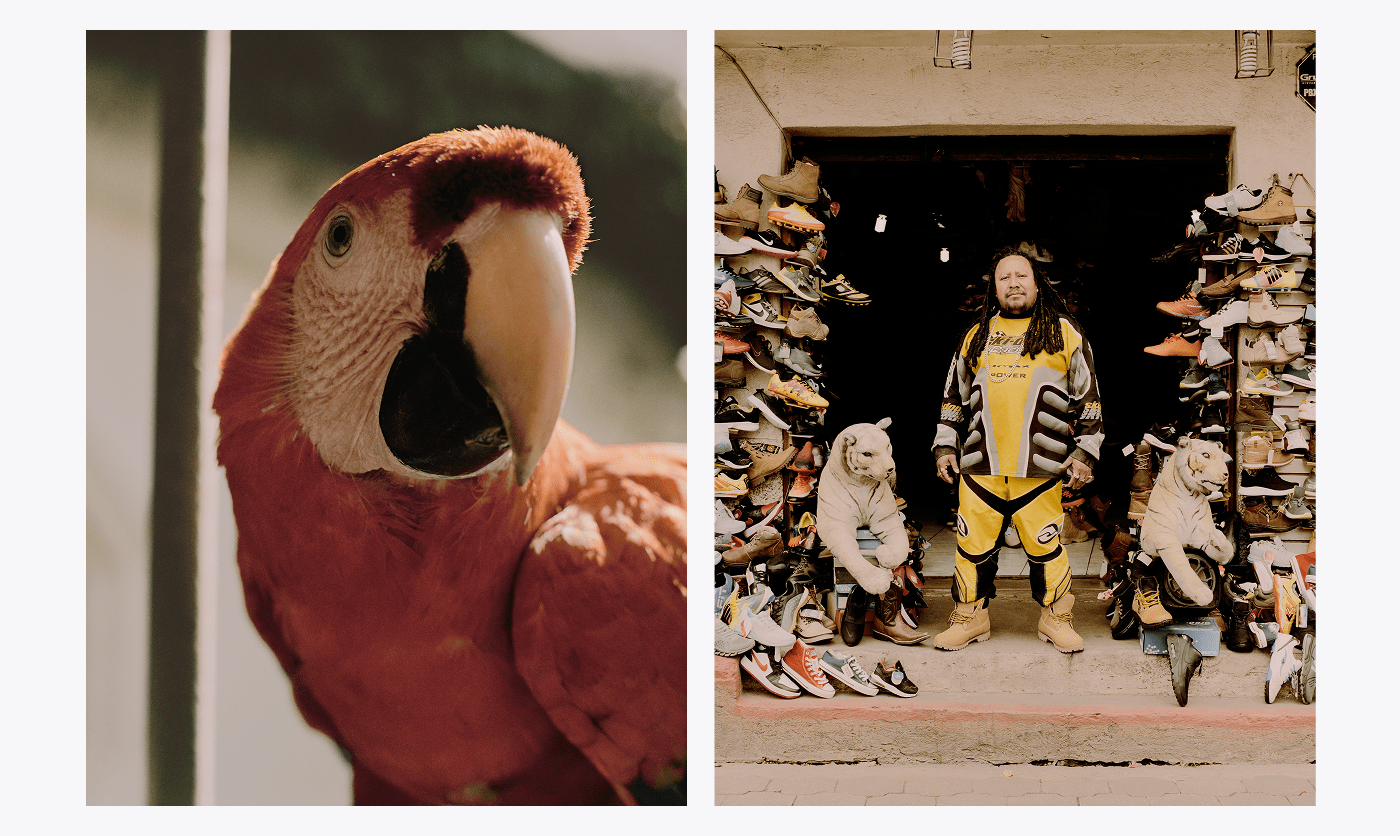
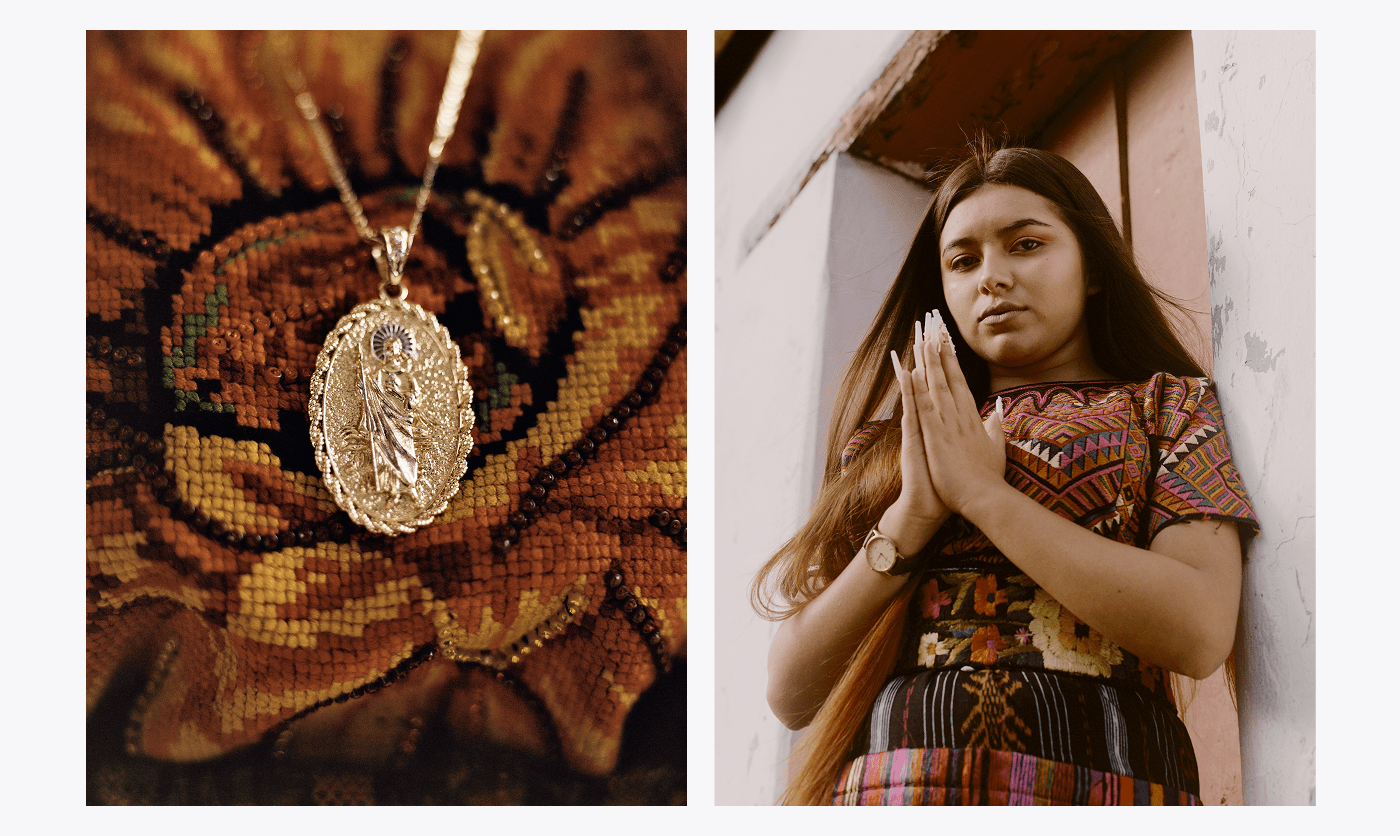
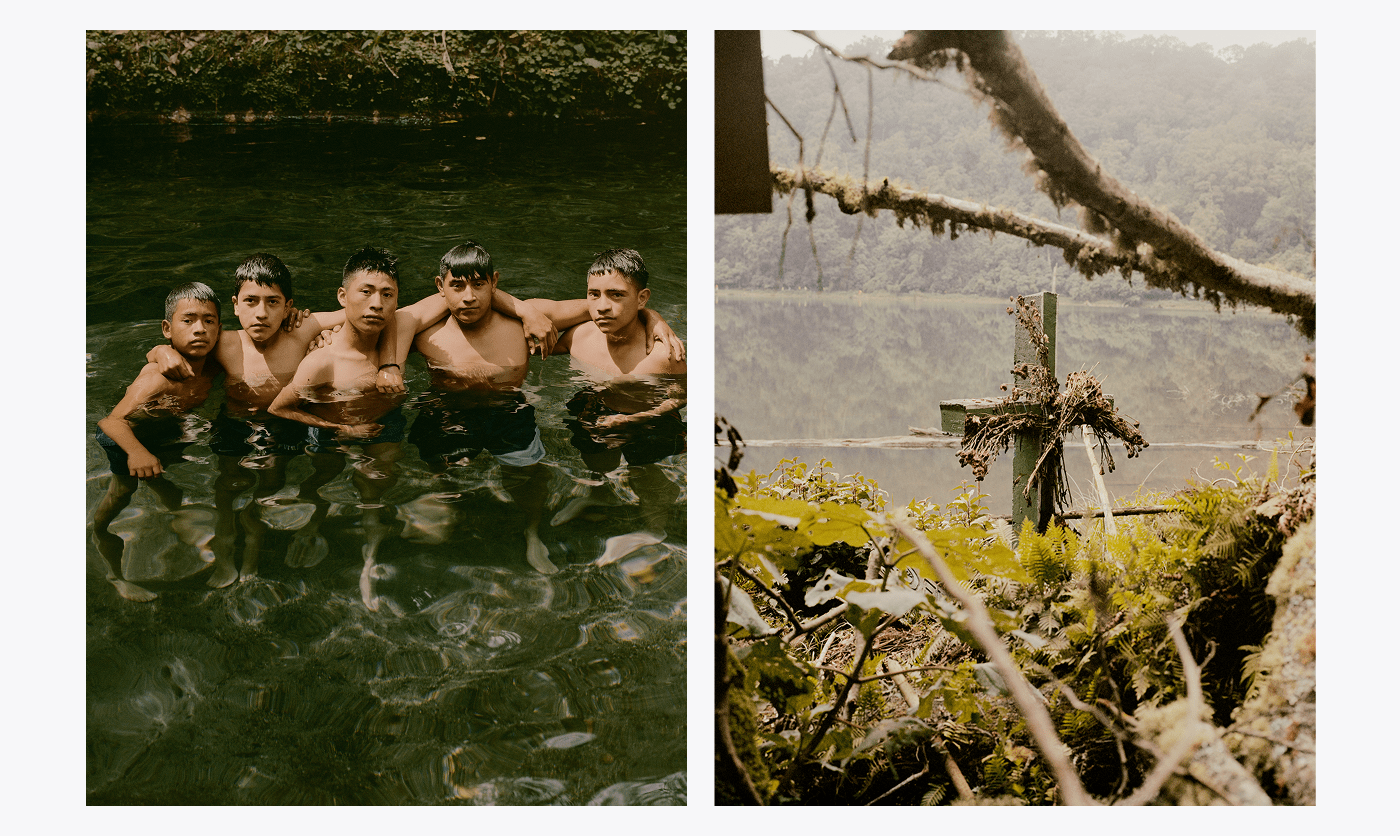
To codify, or categorize, is an evolutionary instinct developed to give the world order, and meaning — to help us navigate the unknown through past learnings, to determine the appropriate reaction for an unfamiliar moment. Yet to classify is to flatten, to transmute technicolor to black and white. It is to perpetuate past narratives as present-day truths, to blur the line between delusion and dream. Photographer Juan Brenner’s new monograph Genesis acutely documents these limitations. An open-ended yet unflinching portrait of the Western Highlands of Guatemala, it chronicles a concentric multiverse that, to much of the world and sometimes to itself, remains an enigmatic cypher of time, place, culture, and identity. It is too stratified, nuanced, and dynamic to be neatly ordered — just as Brenner’s own identity and trajectory as a self-taught artist who left a successful fashion photography career in New York to recover from its lifestyle demands and related drug addiction in his native Guatemala does not fit squarely into a conventional mold. Upon his return to his home country, Brenner abandoned his craft for five years before embarking on a new photographic chapter — one that examines himself, his territory, and his place in it through work that explores hierarchical structures and cultural hybridization, globalization and gentrification. Genesis, then, as reflected in Brenner’s personal journey towards and while making it, could be extrapolated to hypothesize: To move towards an evolved world, we must return to its origins. We must unlearn. We must quiet the impulse to classify and, instead, surrender to the cacophony, allowing it to reshape our foundational perceptions of progress, destruction, and potential. |
|
From left: Chichicastenango, Quiché, 2020; San José Chirijuyú, Chimaltenango. 2022. Lead image: San Andrés Semetabaj, Sololá, 2022. |
|
Almolonga, Quetzaltenango, 2019; Chimaltenango, 2022. |
|
Totonicapán, 2022; Chichicastenango, Quiché, 2021. |
|
Chimaltenango, 2022. Almolonga, Quetzaltenango, 2019.
Read the full article alongside more close takes on a wide world in our latest print issue. Order now. |
|
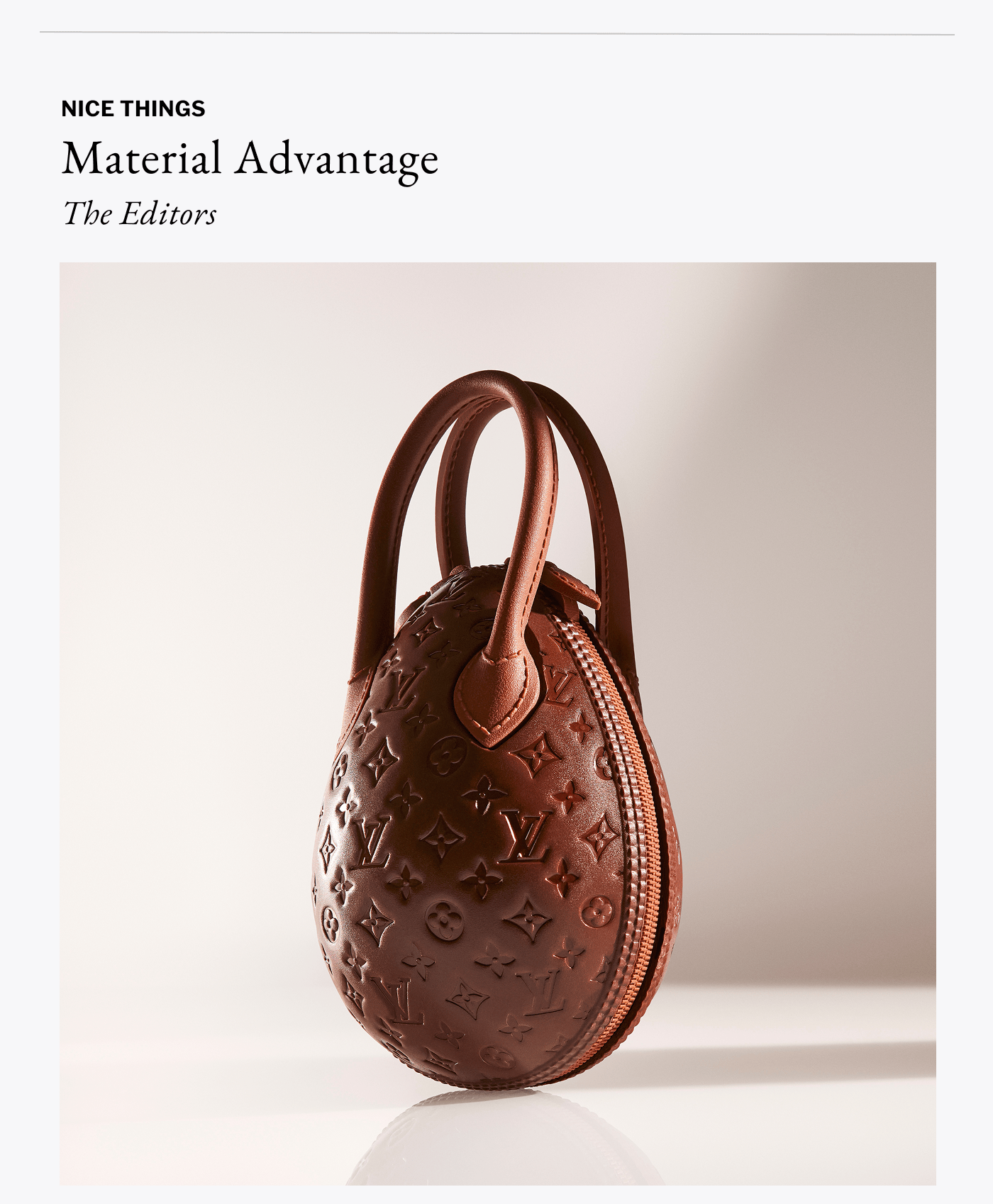
Fashion designer Nicolas Ghesquière’s signature way with contrasting shapes has met a complementary (and delicious) match in Maxime Frédéric. The Parisian pastry chef has collaborated with Louis Vuitton to transform Ghesquière’s iconic "Egg Bag” into chocolate, pairing a dark chocolate shell with milk chocolate details and a decadent centerpiece that combines more milk chocolate with a hazelnut gianduja core. Timed to align with the season, the edible sculpture debuts alongside traditional Easter eggs of three equally inventive flavors: dark chocolate filled with raspberry caramel and pistachio praline, dark chocolate filled with creamy caramel featuring blue vanilla from Réunion Island and crunchy buckwheat gianduja, and milk chocolate filled with creamy caramel laced with Tahitian vanilla and hazelnut praline.
The chocolates are available for click-and-collect orders starting March 24 and in store beginning March 30.
|
|
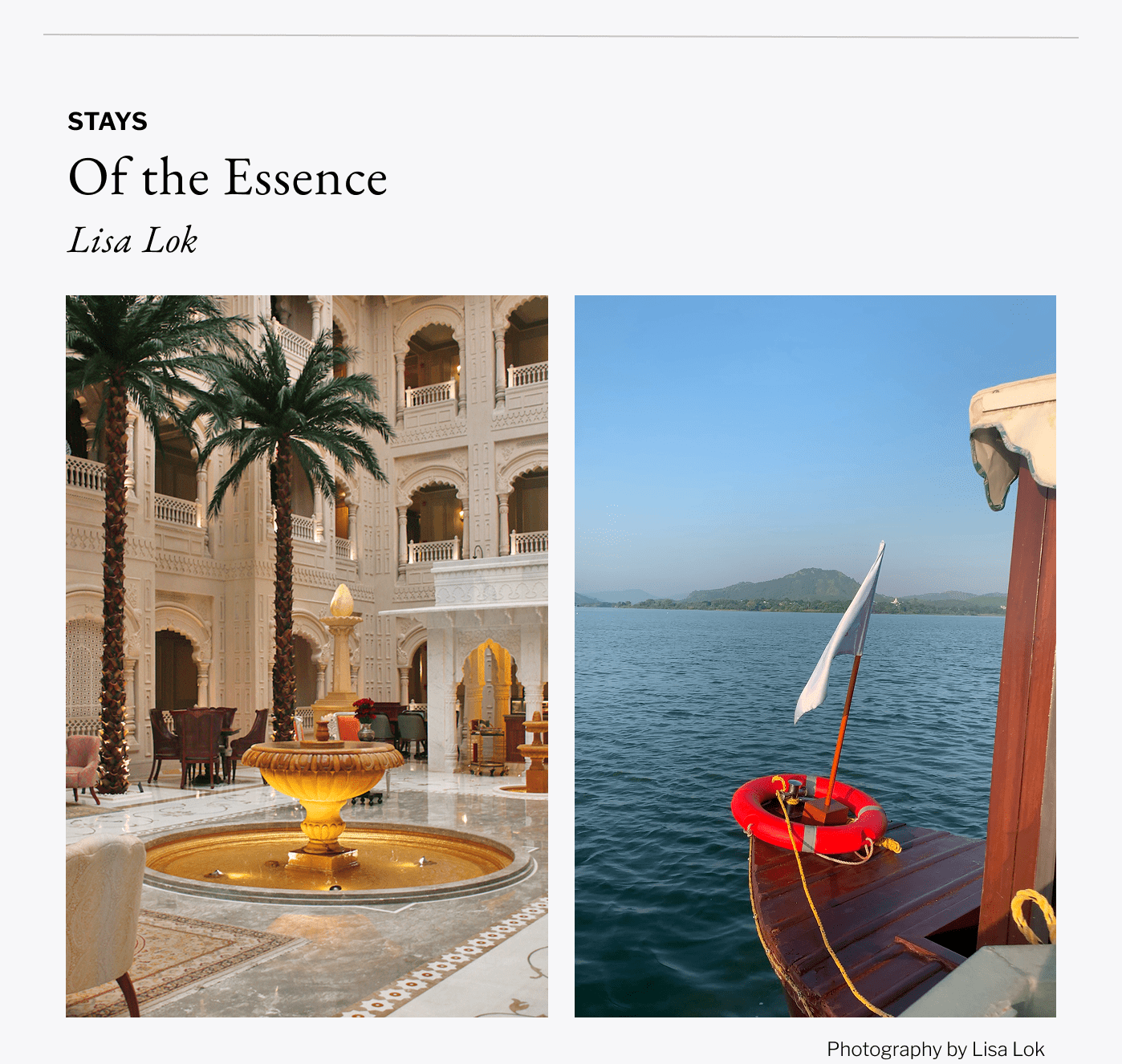
Fresh air. A field of roses. Sunshine. These were the thoughts that floated through my mind as I buried my face in a warm, scented towel — a gift my driver handed me as I exited the airport. One deep inhale washed away the exhaustion of my 14-hour flight to India. Now I was only a short boat ride away from my destination, Raffles Udaipur. Located on a private 21-acre island in Udai Sagar Lake, the hotel resides within a property that was built in 1559 by Maharana Udai Singh. As I approached its entrance, rose petals rained down from the roof as a ceremonial greeting. Inside, vistas of the distant Aravalli Hills were rivaled only by the hotel’s decor, which juxtaposes European-style architecture with a blend of Rajput-Mughal influences, such as Jali panels and Tikri artwork. Guest rooms and suites also featured hand-painted murals, furniture inlaid with mother-of-pearl and bone by local artisans, expansive lake views, and private plunge pools. An Ayurvedic-inspired massage at Raffles Spa erased any lingering travel wrinkles, preparing me for a 90-minute hike up to Mahadev Temple. At 400 years old, it is one of the last vestiges of Mewari temple architecture predating the Mughal era. As we descended, a couple of cows took a nap in our path, reminding us not to rush. A short trip to the City Palace Museum traded bucolic beauty for intriguing culture. We even met the Prince of Udaipur, Lakshyaraj Singh Mewar (not the last prince I would encounter during my trip), before returning to the property for one of many incredible meals. Prepared using ingredients sourced from the onsite organic farm, both of the hotel’s dining venues, Sawai Kitchen and Rasoi, offer traditional Rajasthani dishes — from gatte ki sabzi (gram-flour dumplings cooked in a spiced yogurt gravy) to a signature dosa of the day. Ghevar, a honeycomb cake with guava, was my favorite (and last) bite in Udaipur, but the true capper to my stay in the city was a soirée. Held on my last night, it paired extraordinary heirloom flavors with live music and a lac bangle workshop. Next came Raffles Jaipur, dropped right into the buzzing bazaars of the iconic Pink City, where lush colors and pungent spices crowd every corner. Modeled after Zenana Mahal (the palace of the queens), the hotel is all grandeur, from its towering white archways and tempting pool to its Safir Tea & Champagne Lounge, where an intricate mosaic tile floor surrounds a golden fountain flanked by massive palm trees. Hints of neroli, orange blossom, and saffron waft through the air, and each of the property’s accommodations is filled with local artisan touches. The Writers Bar, a signature of Raffles properties, showcases baby-blue walls intricately hand-painted with a white floral motif from floor to ceiling — the ideal backdrop for a Jaipur Sling, which itself was the perfect precursor to the royal milk-and-neem leaf bath that awaited me in my room the night we arrived. Immersion into my greater surroundings came the next day, starting with a visit to Amber Fort, a 20-minute drive from the hotel. A UNESCO World Heritage Site dating back to the 16th century, the fort is crafted from red sandstone and white marble, which frame sweeping courtyards overlooking Maota Lake. Back in the city at the Anokhi Museum of handpainting, I dove into the delicate artistry of woodblock printing, for which the region is renowned. At the Amrapali Museum, antique jewelry and silver artifacts examined how traditional craftsmanship techniques are carried forward today. This intersection of past and present was punctuated by a surprise ending to our evening: a tour of the City Palace by the Prince of Jaipur. If I close my eyes and inhale, I can almost smell Rajasthan. And if that doesn’t quell my longing, I open the bag of souvenirs I brought home for loved ones. Inside it remains an invisible gift just for me: the region’s fragrance, secreted away in fabric folds. |
|
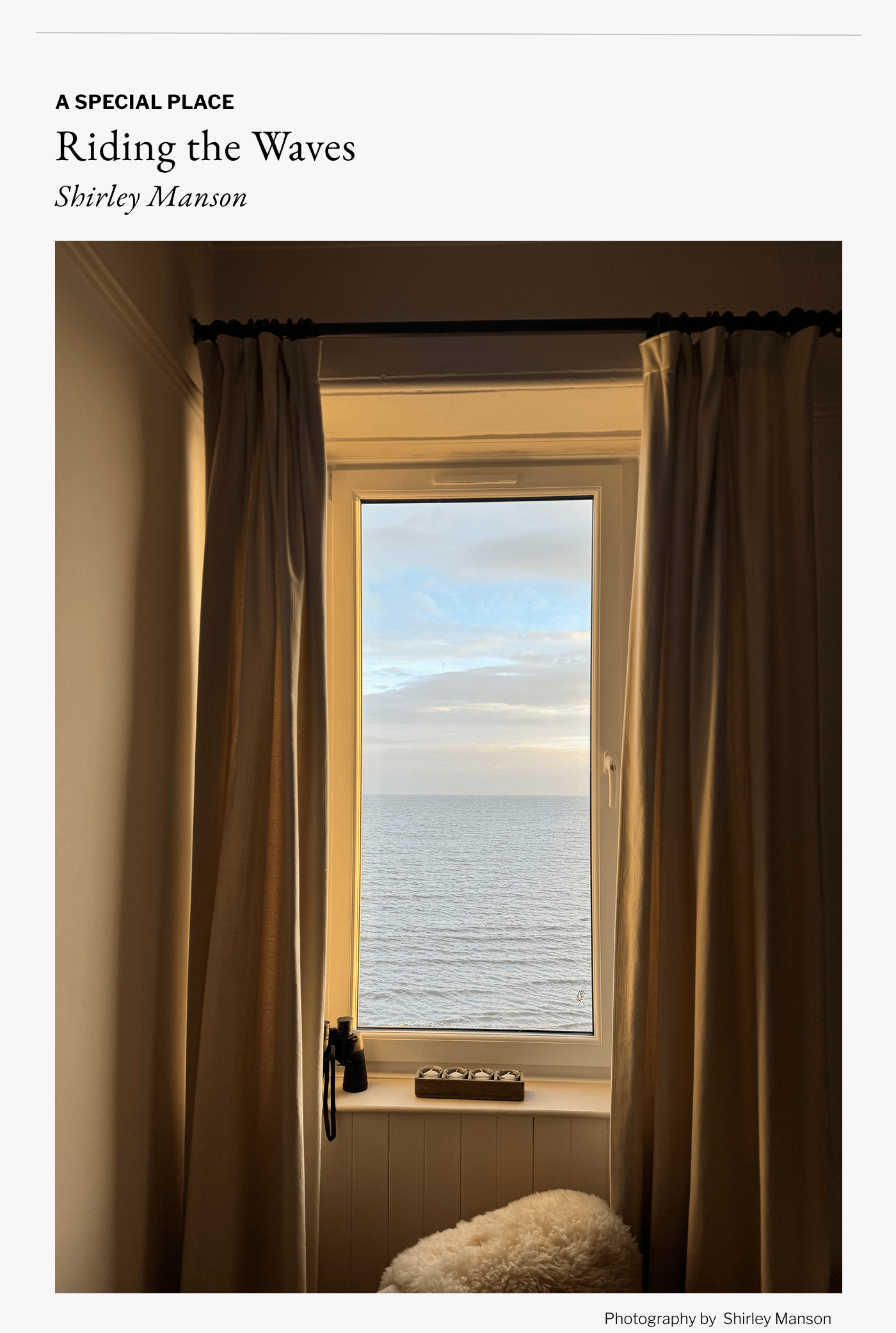
This is a bedroom window in Edinburgh. It is home to me on the island I hail from. Watching the sea, as I do from this window, has taught me so much about life and living. About rebirth and resurrection. About forgiveness and forgetting. About memory and time and letting go. The mystery of the tides will do that to you. So, yes — this is my most favorite outpost and outlook of anywhere in the world, at any time at all. |
|
Bitter Sweets. This year’s Frieze Los Angeles art fair brought the city’s creative community together when we needed it most. Roaming the galleries, I was drawn to Viktor “ Marka 27” Quiñonez’s vibrant work. Recipient of the Frieze Impact Prize, the artist displayed his I.C.E. Scream series, a collection of brilliant, resin ice pops with “Inhumane and Cruelty Enforcement” emblazoned on their wooden sticks — a commentary on the struggles of families caught in the U.S. immigration system. “My parents were both undocumented, and my father was deported when I was young. I saw how it affected communities,” Quiñonez confided. The handcuffs suspended in the ice pops serve as chilling evidence of his work’s urgency. – John Chuldenko
Dream Worthy. Whenever the seasons change, I’m drawn to new linens. The remarkably named Piglet in Bed — a UK company specializing in impeccably made, sustainably sourced linens, sleepwear, and home goods — is the maker of my most recent addition: a Fern Green Pembroke Striped duvet cover, which I paired with an extra set of matching pillowcases. Not only is the duvet’s linen incredibly soft, its color is a perfect match for my plant-filled apartment, and it pairs equally well with warm flannel sheets or cool percale — ideal for (almost) spring’s fickle weather. – T. Cole Rachel
Strong Foundations. The Art Institute of Chicago is always reason enough to visit the city. Its exhibitions are routinely surprising, both in their curation and diversity, with the just-opened Myth & Marble: Ancient Roman Sculpture from the Torlonia Collection providing a plumb example. The subtly striking show features rarely seen ancient Roman sculptures — restored by Fondazione Torlonia with support from Fondazione Bvlgari — so detailed and dynamic it seems impossible they were carved from stone, before the 5th century. If you can’t make it to Chicago before June 29, when the exhibition closes, order the catalogue, which places photography of the works alongside compelling curatorial essays. – Erin Dixon
|
|
54 Franklin St #2R NY, NY 10013. ©2024 Dossier Projects, LLC.
|
|
|
|
|