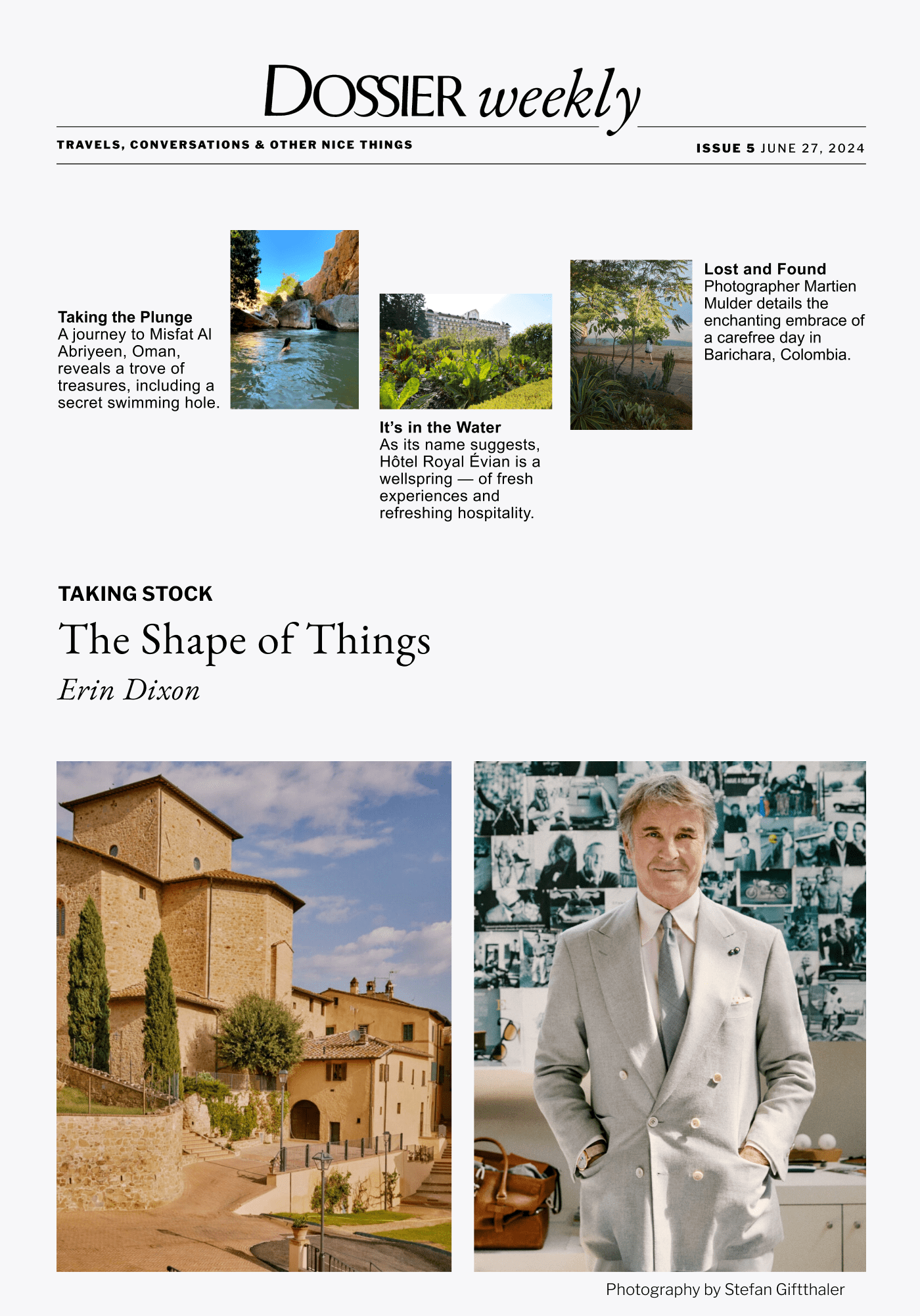
Two hours into our conversation, Brunello Cucinelli and I reach an impasse. The world-renowned luxury fashion designer, entrepreneur, and modern philosopher is expounding upon the soul and its intersection with the genius loci (the soul of a place), declaring his belief that, “There is always a place where your soul resides. I think that place for nearly every human being is where they have lived up until the age of 20. That’s really where your person has been formed.” He asks me if I agree. “It’s complicated,” I reply. He disagrees. “I was born in a hamlet and I need that hamlet. If you were born in a city you need that city. It’s just like that.” I move on. I am, after all, speaking with the man who has built a global empire by capturing and translating the genius loci of the place where he was born to the world, first through premium cashmere sweaters, then with locally handcrafted ready-to-wear collections, bespoke suits, accessories, and homewares. In the past few years, he’s expanded into wine, perfume, and (as of this spring) eyewear.
Beyond creating these heritage-quality products, Cucinelli has also conducted an over-45-year litmus test of his future-forward philosophies of humanistic capitalism and human sustainability. Its positive results include, as of 2022, over 900 million euros in annual profits and, more recently, a profit cap set to ensure sustainable growth for his company’s future. He is constantly investing in better conditions for his employees, for whom he ardently insists on a 5:30pm end to the work day because, “I don’t want to rob your soul.”
My silence in the face of our differing viewpoints comes from an incredible respect for Cucinelli, as a human being, as well as reverence for his legacy and the profound wisdom it reflects, certainly. It’s also because I can’t yet counter his conviction with any credibility, apart from stating my personal reality: It was actually at the age of 20 that I felt my soul had finally arrived where it truly resides.
I had come to Italy for the first time for a bartending job in Rimini (notably the birthplace of Federico Fellini, who was, quite like Cucinelli, a magician at capturing the unquestionably more macabre genius loci of his hometown for international consumption). Despite having an infant’s grasp of the language and knowing no one, I felt instantly at ease in Italy — my soul in sync with the languid heartbeat of the place in a way I had never felt before. Traveling the country, the resonance grew stronger. And a few years later, when I was living in its Veneto region, fully learning the language and, therefore, beginning to truly comprehend the culture, it grew deeper. |
|
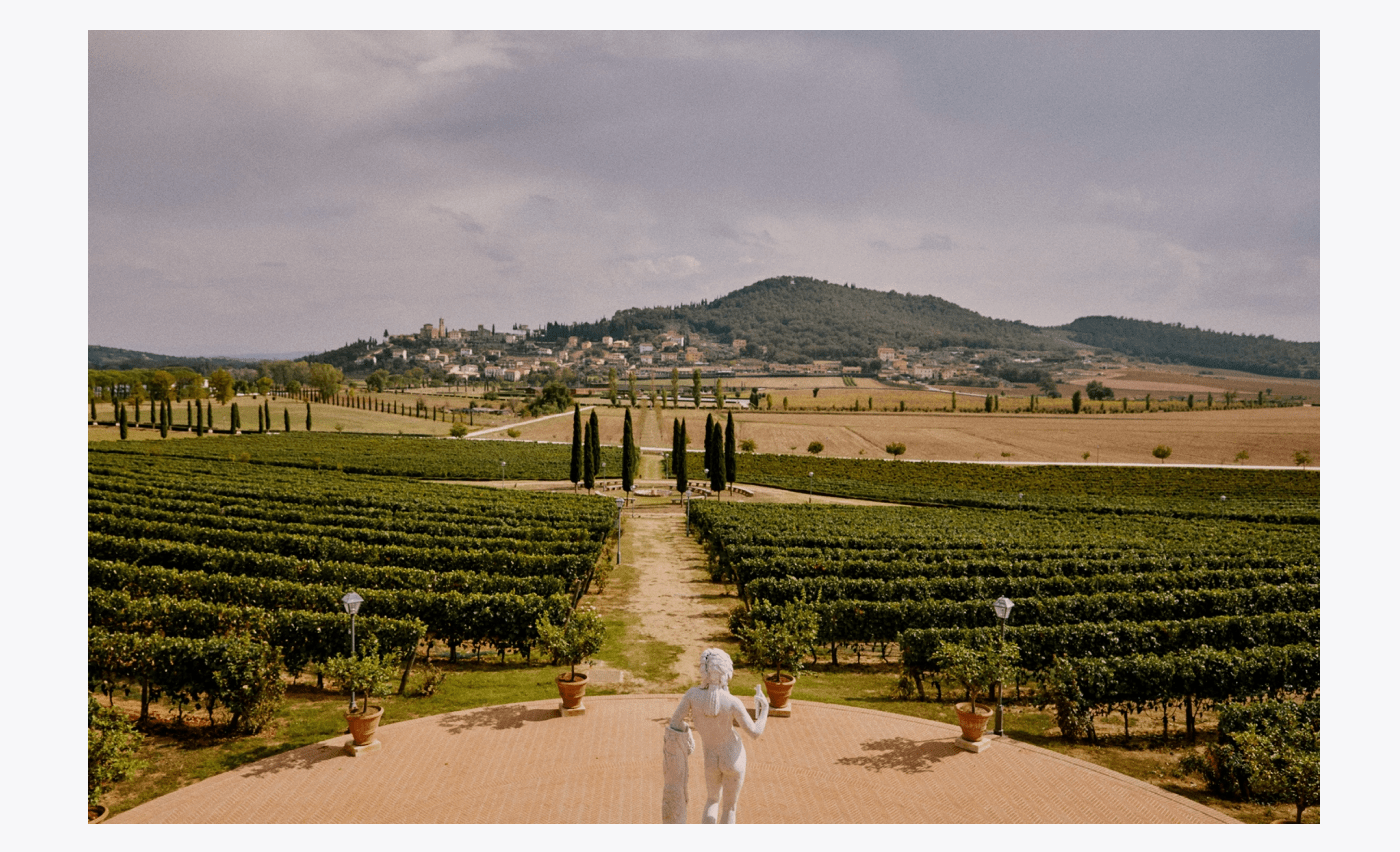
When I am away from Italy, my soul feels unsettled — or irrequieta, one of those Italian words that doesn’t have a perfect English counterpart — until I return, as I had done the previous day to meet Cucinelli for this conversation. Driving from Rome to Umbria, the lush, hill-topped region in which Cucinelli’s hamlet, Solomeo, is nestled, I experienced a pang of homecoming. Perhaps that’s why my disagreement with his statement is visceral, despite all evidence surrounding me attesting to its truth. In Solomeo, Cucinelli has come as close as possible to doing the as arguably impossible: He’s made the hamlet's soul visible by restoring its buildings using traditional methods, revitalizing the dignity and sustainability of its native agriculture, honoring its sages, and preserving its culture through the Brunello and Federica Cucinelli Foundation.
In the months following our meeting, I turn Cucinelli’s conviction over and over in my mind. I consider that perhaps ours is simply a difference in perception of the soul, which is itself a slippery, mutable notion — shaped only by our conception of it. But then I discuss the subject with a friend, sharing Cucinelli’s conclusion that his soul resides in Umbria. My friend retorts, “Well, that’s quite an easy stance to take when you’re Italian.” We laugh; we’re both American Italophiles. But reflecting upon it, I realize that this is the fundamental perspective shift between Cucinelli and me: He’s Italian, and I’m American.
Cucinelli lives approximately six miles from the farmhouse where he grew up with his extended family, without electricity. “I recently had the opportunity to purchase the home I was born in,” he’d told me. “Returning, I was very emotional. I picked up the soil and smelled it — I was with my cousin and I said: This is the soul of the place you lived. This smells like life. It’s not just earth.” |
|
Alternatively, Americans are indoctrinated to a version of history and culture that is rootless, born from melting pot demographics and an overt Manifest Destiny philosophy. Since my family immigrated from Europe — a motley mix of English and Norwegians, Greeks and Italians who piecemealed their way to the States in the late 19th and early 20th century — not a single generation or family branch has remained in place. Each member has left “home” by 18 to pursue their own prospects. Which isn’t to say we aren’t close or don’t have traditions. To the contrary: Here, where familial homes are often transient, our “person” is more often formed by enduring rituals, rather than a specific location.
At this point in my life, I have called many places home. There are some I still love with my head and heart, but there are only two I consider to be where my soul resides. The first, of course, is Italy, and specifically the Veneto, likely not coincidentally the motherland of my great-grandmother, the matriarch of the aforementioned traditions that have shaped the enduring “soul” of my family. The second is Twin Lakes, Idaho, which is home to a family lake house situated on a plot purchased by my grandparents when my mother was a child.
My grandmother cleared the land, my grandfather and his friend handbuilt our original log cabin. It’s where my parents celebrated their marriage, where I have spent every summer of my life, and where my son shrieks, just as I once did, at the barrage of 4th of July fireworks that reflect on the inky lake and reverberate off the hills. It is the physical space in which my family’s collective memories live.
Arriving there these first hot days of summer, I slip through a pocket of time, the smell of sun-baked pine and algae lighting up recollections, returning me to my most whole, liberated self — balancing my body and soul.
I find myself no longer questioning Cucinelli’s wisdom. Instead, I understand it as an appeal to make time to honor the space where your soul finds its place. With this awakened awareness, I promise myself to take another piece of his life advice to heart. It is a suggestion particularly apt for a season that sparks both a feeling of and craving for freedom: I will stare at the stars, dedicate time to my soul, and get drunk on beautiful thoughts. |
|
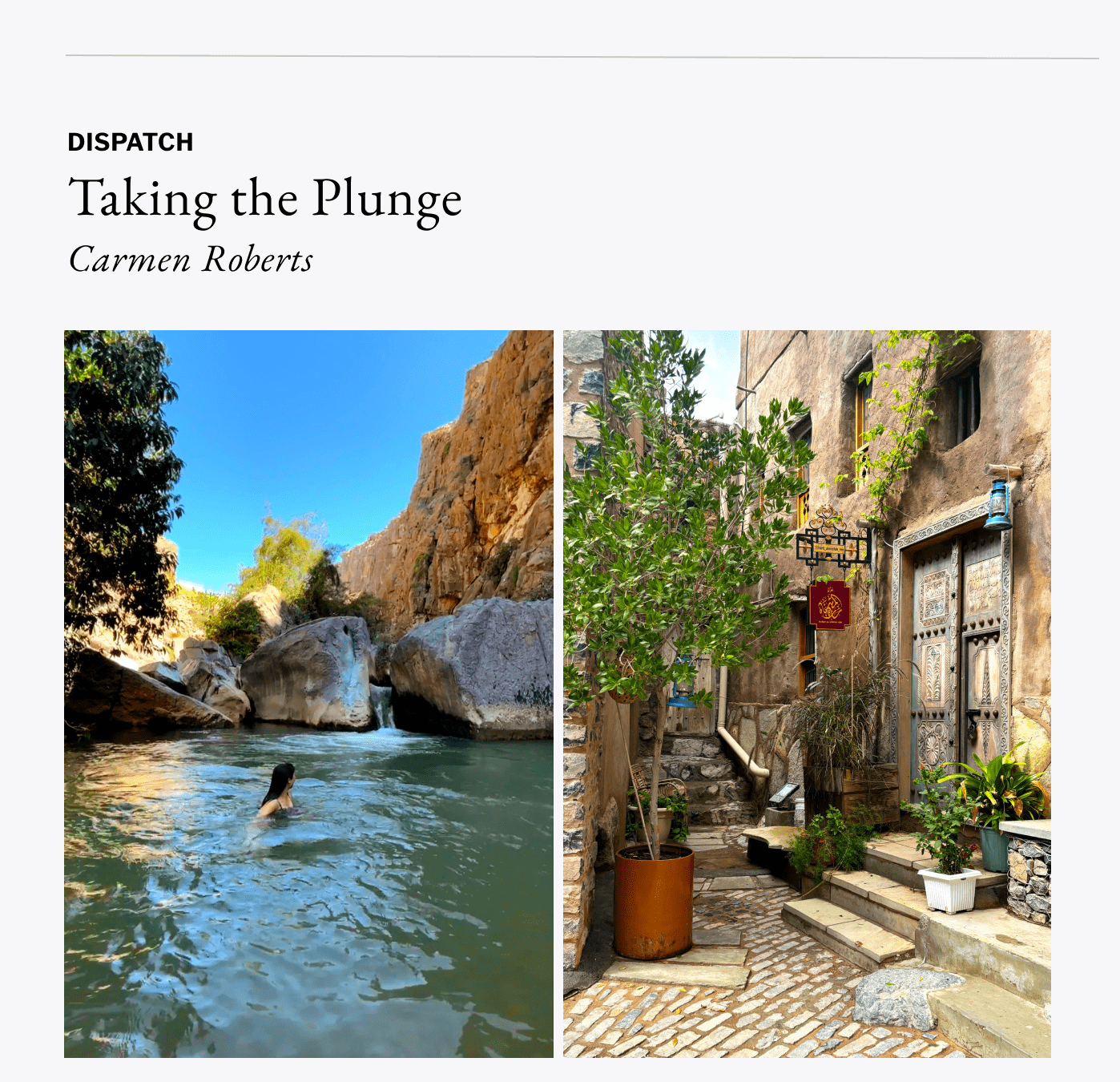
Unusually heavy rains thwarted our first attempt to reach Misfat Al Abriyeen. Our approximately 125-mile journey from Muscat along smooth, open highways was abruptly cut short as we neared the foothills of Jebel Shams, Oman’s highest peak. Surging flood waters rose to engulf a local bridge, just 20 minutes from our mountain destination. We were forced to overnight in nearby Nizwa and try again the following day. A morning approach, up the steep hairpin turns, past Al Hamra village, meant our first glimpse of Misfat was bathed in the day’s early sunlight. Its ancient mud-brick homes clung to the mountainside, flanked by lush date palms and fruit trees set against the arid red and gray rocks of Jebel Shams. Often touted as the most beautiful village in Oman, Misfat is a sort of secret hideaway, offering a peek into traditional Omani life and culture. It was declared one of the Best Tourism Villages by the United Nations World Tourism Organization in 2021 for its sustainable community- and heritage-led initiatives. Visitors can wander through alleyways built thousands of years ago and along the village’s winding pathways at their leisure. Or they can opt for a guided walk and learn about the traditional aflaj irrigation systems that are still used today. Homes dating back hundreds of years have been restored into charming guesthouses. We stayed at Hotel Bait Baityn. A 500-year-old traditional house built into the village’s stone foundations, the property has been passed down through the family of our guide Husni Alabri for generations. “We feel really proud that we are bringing back life to the old settlements,” Alabri revealed. There are hikes of varying degrees of difficulty in the hills surrounding Misfat, the trails clearly marked on the rocks. We got a tip from a friendly local to veer off the path at the large mango tree. Intrigued, we clambered down a muddy track to find ourselves at a secluded swimming hole, tucked away like a hidden treasure. Surrounded by towering cliffs and lush greenery, it felt like stumbling upon our own little oasis in the desert.
No matter where you’re headed in Oman, the best time to visit is between October and April, when temperatures are warm but not consistently hot (usually between 62°F and 95°F). To get to Misfat, fly into Muscat (an approximate two-hour, 15-minute drive) or drive from Nizwa (around 50 minutes).
|
|
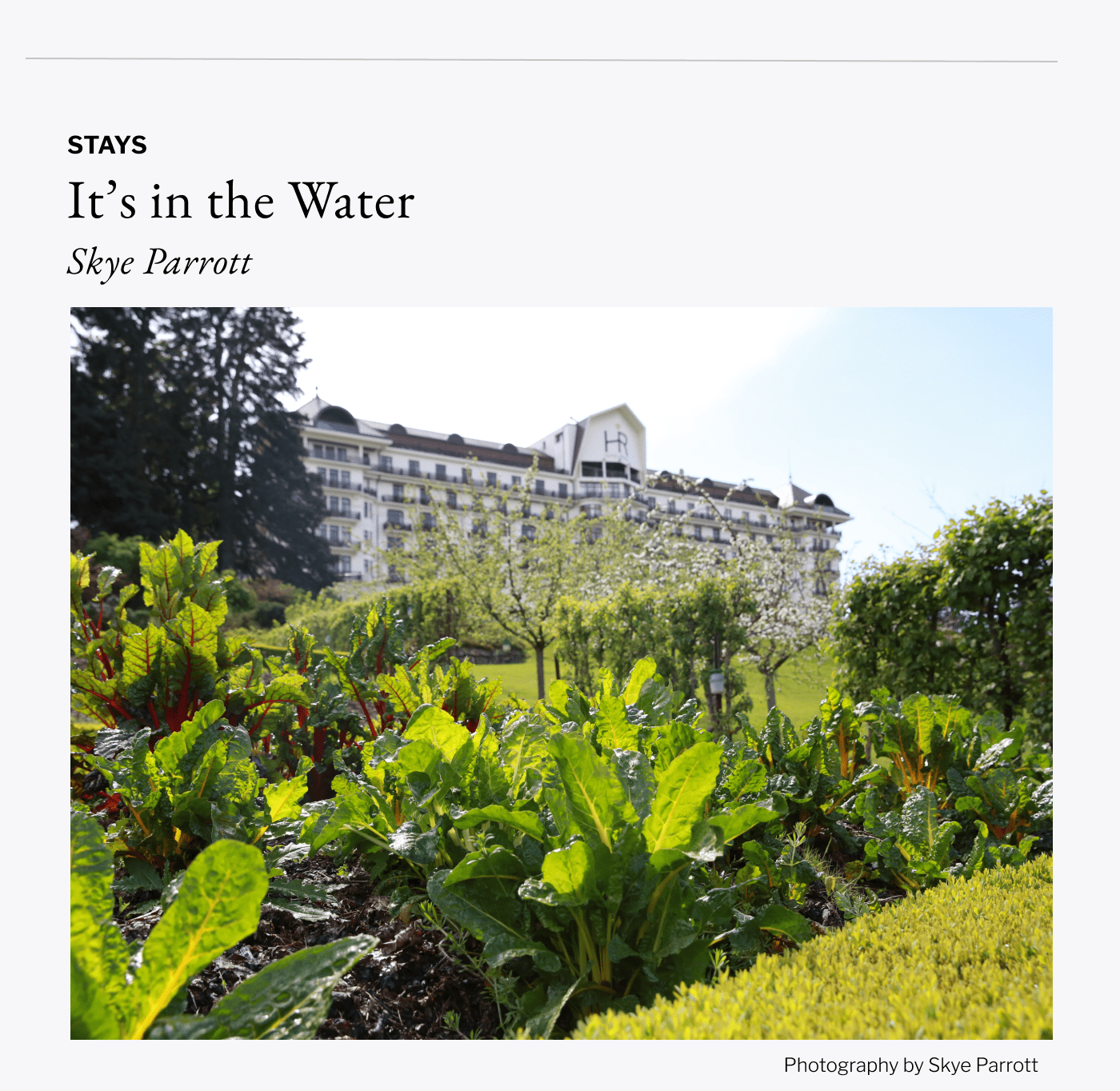
Évian water comes from the Alps, where it departs on a 15-year journey through layers of glacial rock before surfacing on the shore of Lake Geneva, in the thermal town from which it takes its name. Perched high on the hill above the (truly adorable) Évian-les-Bains is a hotel that also shares the nomenclature: the Hôtel Royal Évian. Originally commissioned by the mineral water company in the early 1900s, the property is as magnificent as its name suggests — it’s one of the few “Palaces” of France, a designation given to just 31 properties offering the best of the best of French hospitality. But it’s also wonderfully human, with a warm staff who make it feel like a home and who are also, it turns out, making notable moves to operate the stately hotel in a way that conserves its precious water, shepherding it into the future.
Water, as one might imagine, is a common theme in Évian. (A local I met, as a way of communicating he was born and bred in the area, proudly told me he’d had “Évian in his baby bottle.”) The hotel is surrounded by water, with astounding panoramic views of the lake and, across it, the city of Lausanne. In the distance, the peaks of the Alps were still snow-covered during my late-April visit. And the property boasts (of course) an extensive and incredible thermal spa, where one can literally bathe in Évian, heated and pumped to the swimming pool and bubbling into indoor and outdoor jacuzzis.
But I really started to think about water when the property’s landscaper, Romain Murano, gave me a tour of its grounds. I had noticed that the hotel’s lawns were not as manicured as one might expect, which he explained was an effort to revert them to native meadows. Along with increasing the wildlife habitat — the hotel offers a beautifully designed booklet which guests can use to take a self-guided wildlife tour of the grounds, visiting bird boxes, insect holes and hedgehog shelters — the reinstituted meadows have drastically reduced the property’s water usage. Lawns that used to be watered daily now only need irrigation once or twice a week; the resort is using a seventh of the water it did just a few years ago. He also pointed out dense ground cover that has been allowed to accumulate under the property’s 600 trees, protecting the giants, some hundreds of years old, from the heatwaves that now arrive regularly in the summertime. All around, I saw tiny saplings sheltered by what looked like woven baskets; these baby trees have self-seeded, he explained, and are being nurtured until they are big enough to be transplanted around the property to ultimately increase its shade cover. The hotel also operates extensive permaculture kitchen gardens, which produce two tons of fruit and vegetables a year for its restaurants, and has ten beehives for honey.
Hôtel Royal Évian is now part of Évian Resorts, as are two other hotels, Hôtel de La Verniaz and Hôtel Ermitage. Along with these three hotels and spa, the resort also includes seven restaurants (including the Michelin-starred Les Fresques and Umberto, an excellent lakeside Italian bistro), a world-class golf course, a casino, and a concert hall. The hotels share the spa and Kids Resort, which has one of the best children’s hospitality programs I have ever encountered. Its facilities look like a very nice school, with their own pool and programming for all ages, from babies to 18-year-olds. My children spent almost our entire visit at the Kids Resort, going off-site one night for a bowling event and playing laser tag on the property grounds another. There are also all kinds of experiences on offer — from skiing and dog sledding in the winter to sailing, water skiing, and horseback riding in the summertime. Hôtel Royal Évian is undoubtedly grand, with the regal architecture one would expect from a grande dâme of its stature. But there was a coziness to the property I noticed as soon as I arrived. Maybe it was the families walking through the lobby on their way back from the spa, the kids wearing their little bathrobes. Or maybe it was the warm conversations I had with the staff, many of whom have spent their entire careers at the property (a number I spoke to had worked at the hotel for 20, even 30, years). What was immediately clear was how personally invested the team is in creating a dynamic, extraordinary guest experience. Their collective effect was a fresh mix of old and new, creating a property that is embracing the past while keeping an eye on how it can continue to evolve and grow into the future. |
|
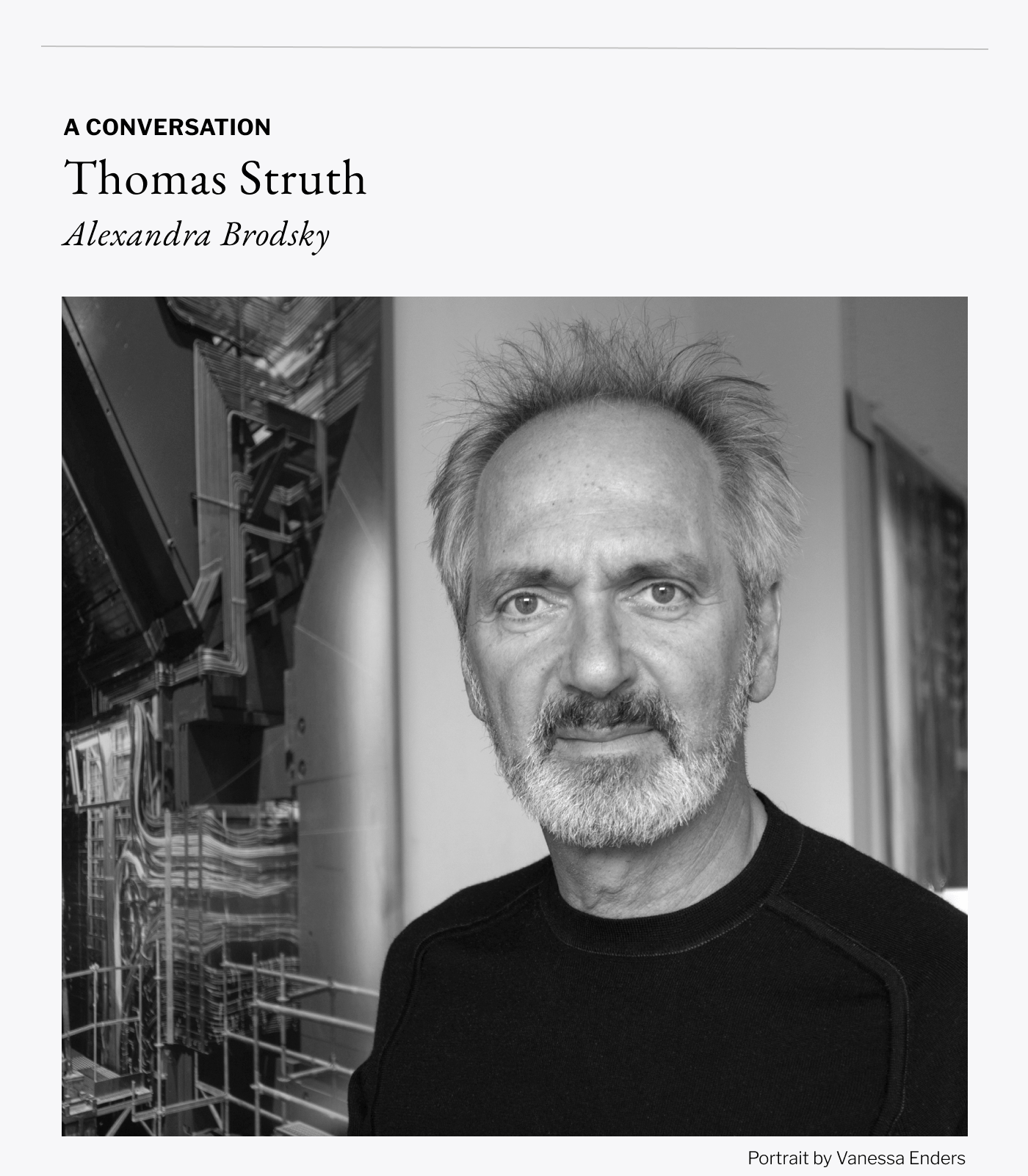
I became fixated with Thomas Struth’s black-and-white photographs of New York when I was an art student wandering the halls of MoMA. These artworks — made in the late ’70s of the city’s empty streets — seemed so devoted to the description of the physical world it was as if they were created by the perfect love child of Eugène Atget and Walker Evans. Born in Geldern, Germany, in 1954, Struth studied painting with Gerhard Richter and photography with Hilla and Bernd Becher at the illustrious Kunstakademie Düsseldorf, where his classmates included Andreas Gursky, Candida Höfer, and Thomas Ruff. Using a large format camera, Struth has since created an expansive body of work that literally traverses the world. His pictures are tableaus so full of detail and place they are like catalogs of civilization itself.
Struth’s latest body of work, “Nature & Politics,” is currently on view at the Marian Goodman Gallery in Paris through July 26.
Were you always drawn to the arts as a young person?
I was a stutterer; I stutter. So speaking was not really my domain. And that drew me to a fascination with independence. From early on, I always felt like I didn't want to do anything where somebody else tells me what to do. My mother had some affinity for the arts — music, pottery, theater — she had learned to be a potter. I didn't think about art as a profession. I just thought: Okay, artists are people who do what they like.
There's been so much that's been written about the Düsseldorf School of Photography, where you studied with Hilla and Berna Becher. There seems to be a shared aesthetic or photographic approach among those who were there at that time. Where do you think that comes from?
The backgrounds the students came from were extremely different. For example, Andreas Gursky’s father and grandfather were advertising photographers, so his work is very much formed by this effect. That's just his background — what he made of it is a different story. I came from painting and drawing. To say I'm a photographer still feels strange to me. I'm a picture maker, an artist. Thomas Ruff comes from the Black Forest. He's interested in science and computers. After finishing high school, he was not sure whether he should go into the arts or into astronomy, which informs his work. And Candida Höfer: Her father was a very famous post-war anchorman on TV, so she comes from a quite worldly background. So the backgrounds of these four that I just mentioned are very, very different, but what was shared was that we all were children of minimal and conceptual art. And since Bernd and Hilla always, always used large format [cameras], everybody wanted sharp photographs.
When I look at your photographs, I have an overwhelming sense of them as a record of our civilization: Who are we? Is that something you are conscious of?
When I made the street pictures and I was about to show them, first I thought: These are not about architecture. They are not about city planning. They are not about design. You look at the street as a group of actresses and actors in the public space, and you look at every building as if it were a person. There are buildings that are ignorant, arrogant, full of love, full of paying attention, bombastic, greedy — all these adjectives. When you first look at buildings like this, it's really hilarious, because there are moments where you think you're in a Marx Brothers movie or on a horror trip.
Can you talk a bit about the role that scale plays in the work?
Thomas Ruff was the first of the Düsseldorf group to make these large portraits, which were very exciting. When I started with the Museum Photographs in 1989, I had the first three that I liked and I made small prints [of them], maybe three feet wide. And I made larger ones of the same three images. Of course the large pictures worked much better.
What inspires you?
What inspires me is always to cut it short. If I don't know what to say artistically, I just keep my mouth shut and wait. What has inspired me are often places in the past. I'm very thankful for these life-changing experiences to travel elsewhere. I mean my time in New York as a student, then working with Marian Goodman Gallery, who was a huge supporter, and with the artists in the gallery — that was an amazing time. And I met my wife in New York.
And you went to a roller disco in New York?
In 1978 I was a 23-year-old German post-war stutterer, really shy, and somebody brought me to the Empire Roller Rink. I loved it. I can’t tell you how much I was inspired.
I fell and hurt my right wrist and my thumb, then I went back three days later to roller skate with them in a cast and the guy at the entrance said: You gotta be kidding — are you serious? I went back into the ring to skate. There was this degree of happiness. It was very sexy, the atmosphere. There were maybe 300 people dancing, and I was just completely in love with this. It was incredible being really very carefree and having so much fun and joy. It was super.
|
|
CURRENT SOUNDTRACK
Soulful Places
T. Cole Rachel
From the ends of the Earth to the moon and back, New York, LA, London, outer space, inner space, safe at home — here’s to soul-stirring moments and settings. Wherever you happen to be.
Deeper — The Soft Pink Truth
Earth — Joe Henderson
Soulful Strut — Young-Holt Unlimited
Is It Like Today? — World Party
Hey, That’s No Way To Say Goodbye — Roberta Flack
It’s My House — Diana Ross
City Music — Kevin Morby
Take Me Home, Country Roads — Lana Del Rey
Gulf Shores — Palace
Come Back From San Francisco — The Magnetic Fields
Drunk in LA — Beach House
Chinatown — Luna
Manhattan — Blossom Dearie
Home Again — Carole King
Blue Skied an' Clear — Slowdive
|
|
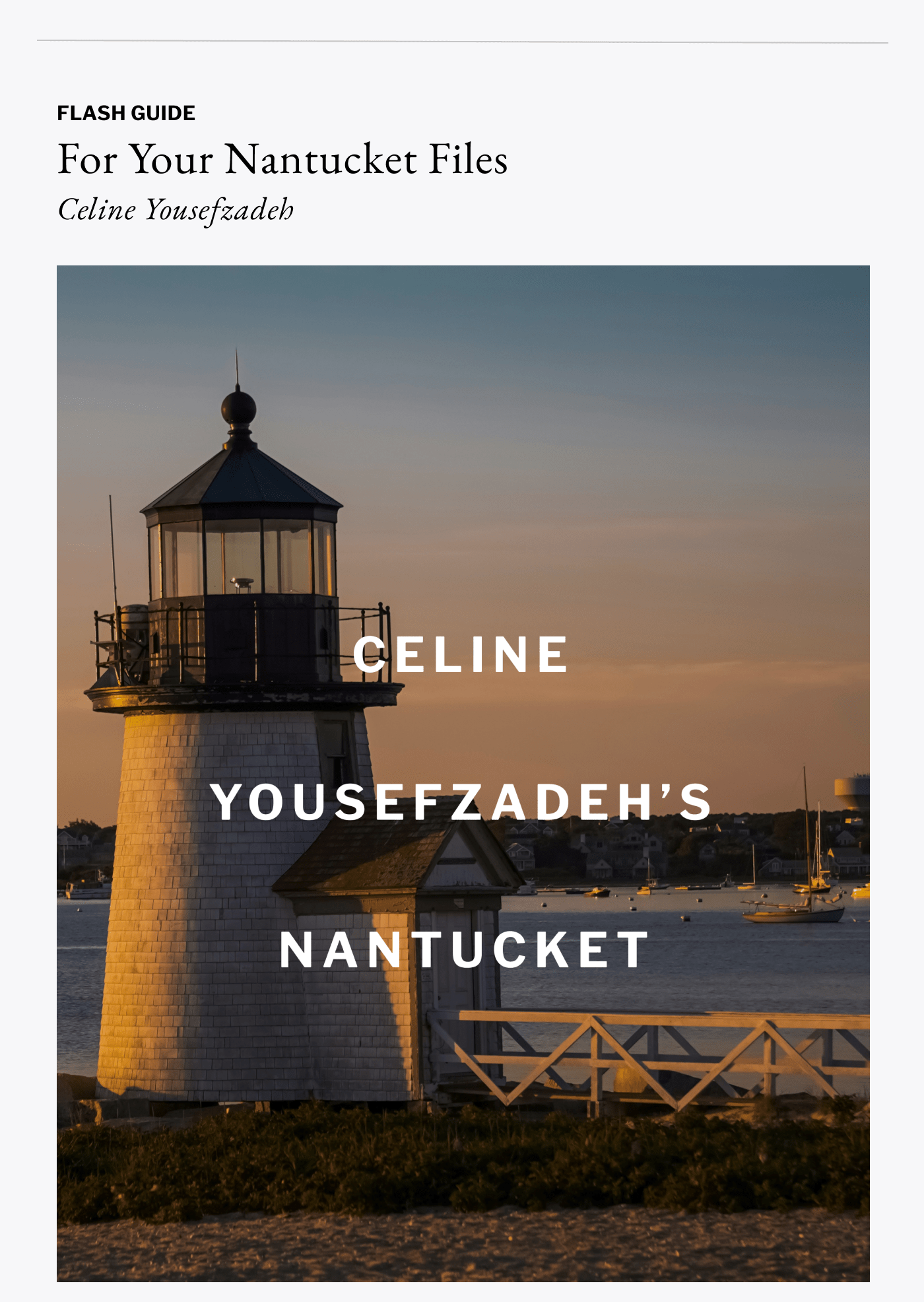
Celine Yousefzadeh, founder of C.Y. Kitchen, a culinary events and custom caviar company, shares why Nantucket, Massachusetts, has become one of her favorite summer destinations and the places that make it so.
“I first visited Nantucket in May 2021 while dating Jonah, my now husband. He had spent every summer on the island since childhood; I grew up in Los Angeles, where Nantucket wasn't even on my radar. Initially I felt out of my element and couldn't understand why people were drawn to this cold and foggy island. Everything changed when I returned in July and experienced a sunny weekend. I fell in love with Nantucket ... and Jonah! I took the time to explore every farm, market, restaurant, and shop, gradually discovering the island's unique charm.”
Something to eat … 167 Raw's lobster roll. It's served out of a food truck next to the company’s fish market so it’s consistently fresh and delicious. To complete the dinner, stop by Bartlett's Farm, a seventh-generation farm just up the road for fresh produce, herbs, and flowers.
Something to see … After enjoying charming downtown Nantucket, drive to the Great Point Lighthouse at the tip of the island, exploring the beaches and ponds along the way. There is something uniquely serene and special about driving from one side of the island to the other, which only takes about 30 minutes.
Something to take home …This summer I collaborated with Nantucket Crisps to create the island's ultimate package: Caviar & Crisps. It’s available at the local potato chip company’s seasonal shop at 1 Cambridge Street. If you need a hostess gift, nothing says "thank you" like Caviar & Crisps and a Nantucket hydrangea bouquet from Flowers on Chestnut.
Only in Nantucket … Boutique shops built for the island. Go to Atlantic Nantucket and Space to find home treasures ranging from those coveted Nantucket baskets and lobster-embroidered linens to mother-of-pearl platters and vintage drinkware sets. Or head to Gypsy and Serenella to find pieces from Khaite, The Row, and Marlo Laz.
A secret spot … Roastd General Store is my favorite spot for coffee and matcha. Their housemade milks and wide variety of supplements make each drink personal. My usual order is an iced matcha latte with almond milk, vanilla bean paste, ashwagandha, and a touch of Vermont maple syrup. Go early before the sourdough blueberry muffins sell out.
Another tip: There’s more to this island than beautiful hydrangeas in July, but it takes some effort to really appreciate and understand it. I highly recommend renting a car and exploring beyond the main town. Each corner of the island has its own story to tell. Explore Siasconset, have lunch at Millie’s, drive through Polpis and have a drink at The Wauwinet, then have dinner at The Chanticleer. |
|
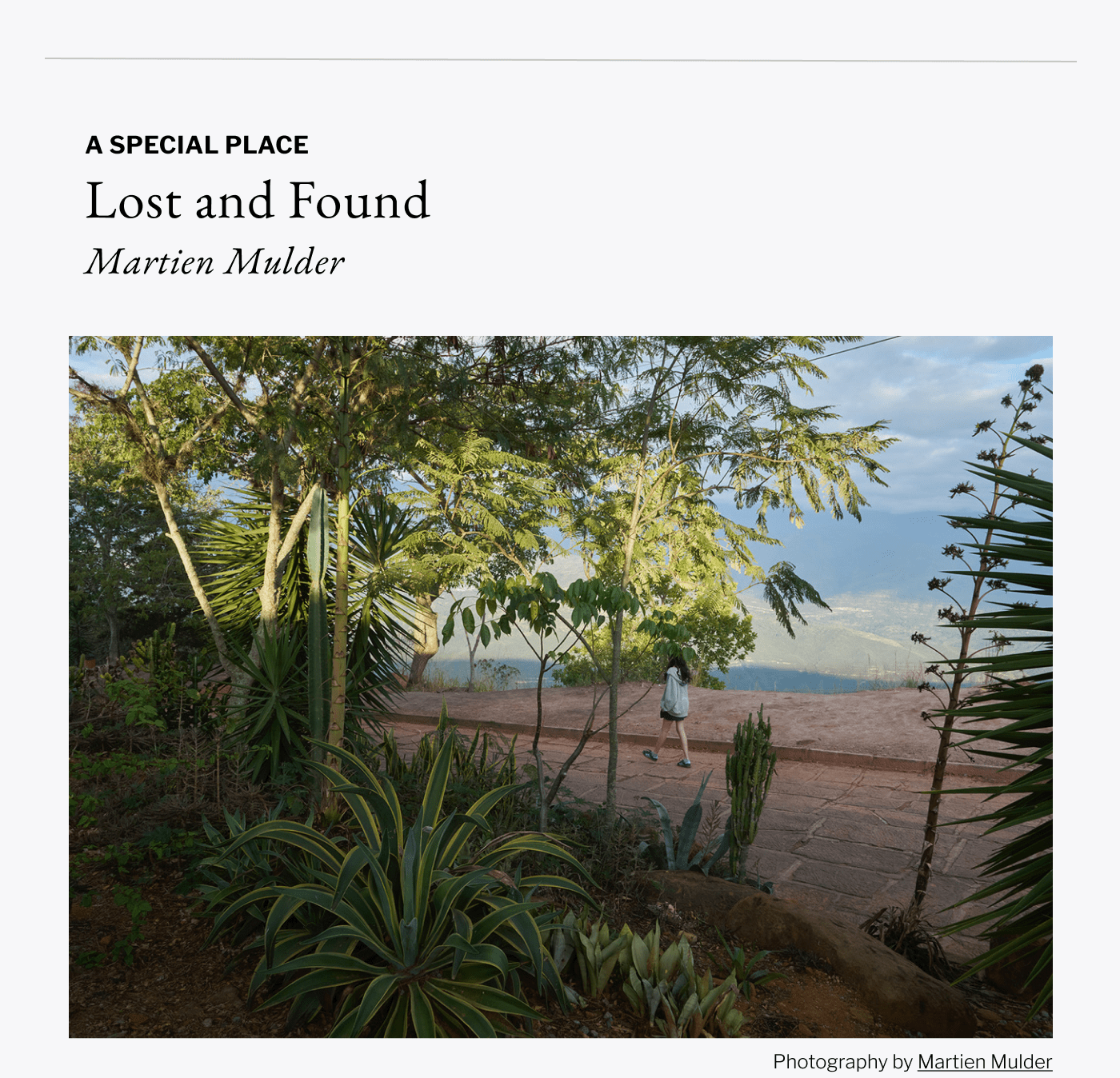
Barichara, Colombia, is (in its own delightful way) a picture-perfect town. The cobblestone streets are charmingly untouched, and the doors and windows are all painted a green-blue tone that matches the schoolkids’ uniforms. Everything that is essential is exactly where you'd expect it to be. At the heart of Barichara lies the church, with a small park as the main square. Stores and markets encircle this hub, while charming restaurants nestle along the side streets. The entire town exudes an intuitive coherence that invites you to wander.
One morning we embarked on a hike, departing our lovely guesthouse at dawn, just as the sun began to peek over the rooftops, casting its first rays on the tropical gardens at the town's edge. Descending a picturesque winding path to the (even smaller) village of Guane, we lost track of time. We forgot about the world, wrapped up in nature's embrace.
|
|
Dynamic Duo. It’s not like I need another excuse to give Trudon more of my money (the venerable French candlemakers and perfurmers have had me under their thumb for years now), but this summer they have given me a new reason to indulge. Isla de Oro is an inspired pairing comprising a perfume (Isla) and a scented candle (de Oro) designed to live together. Bergamot-forward, vetiver-infused, citrusy, and bright, the scent explorations can be purchased separately or as a pair, which I opted for. I might be stuck in my Brooklyn apartment for the bulk of the season, but I can at least inhabit the olfactory fantasy of swanning about somewhere in the Mediterranean. –T. Cole Rachel
A Fast Connection. While Porsche surprises some Delta passengers with VIP gate transfers in their Cayenne models, on rare occasions, they’ll roll something spectacular onto the tarmac. The GT3 RS that raced along the runways at LAX this spring, for example, is powerful, visceral, and far more exciting than a crowded jetway. –John Chuldenko
A Cut Above. After last week's entry about my favorite hairbrush, I’m back to talk about a haircut. On another recent (still rainy) morning, I showed up bright and early to David Mallett’s Right Bank salon for an appointment with the man himself. Mallett’s salon is beautiful, a converted apartment in a 17th-century hôtel particulier, filled with midcentury furniture and antique taxidermy, with giant windows that open onto a garden of greenery. (He also has a location at the Ritz Paris and another at The Webster in New York). When Mallett appeared, it was with a swirl of energy — and an impressive visual recall: He recognized me even though we last met 20 years ago, when I was a photo assistant working with the artist Nan Goldin. He approached my hair with the touch of an artist, snipping a little here and there, calling for someone who could fix the color, directing me on how to wash it properly as he tut-tutted my current efforts, sending me into a dark, private room for a Tokio treatment (a signature four-step keratin-and-rice protein treatment that repairs chemical and structural damage and leaves hair wildly soft). I even got a manicure during my haircut. As I sat drinking my tea, cozy and being taken care of in so many ways, watching the rain pour down outside, I really couldn’t think of a nicer way to spend a Friday morning. And my hair looked great, too. –Skye Parrott
Summer, Summer, Summertime. Since most of our team is based in the U.S., we won’t be publishing a newsletter on Thursday, July 4. We’ll be back to our regularly scheduled programming on Thursday, July 11. A good holiday to those who are celebrating, and to those in the U.K. (and France) – good luck. |
|
54 Franklin St #2R NY, NY 10013. ©2024 Dossier Projects, LLC.
|
|
|
|
|