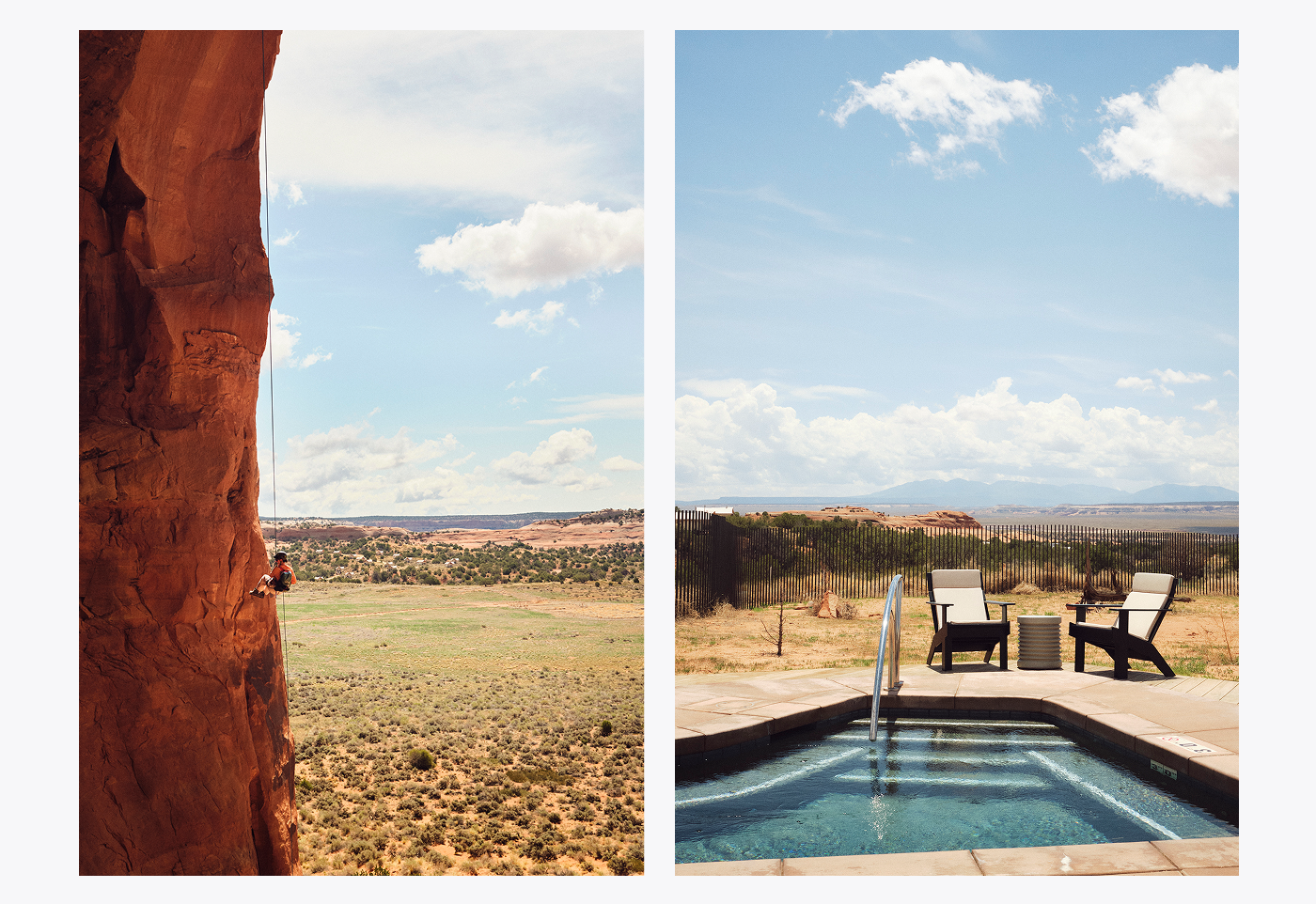
Flying over the orange, barren land near Moab, Utah, was like arriving on a different planet, with the Colorado River splicing sculptural buttes, mesas, and spires, as if guiding us to our ultimate destination: Canyonlands National Park. I had visited the state’s snowy northern peaks before but never its southeast, which required boarding a small plane from Phoenix. Over the span of three days, I went deep into the desert wilderness, sleeping under its boundless skies and touring its canyons and crevices, including hiking through Bears Ears National Monument with an Ancient Wayves guide, a native Diné (Navajo) man who shared his profound knowledge of the land. It was humbling and grounding to experience this beautiful landscape alongside him — to feel so connected to the natural world, yet to be such a transient and ephemeral part of it. |
|
Finding myself in a different part of the globe, far from its busy, populated cities was exhilarating. Southern Utah’s landscapes are of an inconceivable scale and the state boasts the world’s highest concentration of Dark Sky-certified places. |
|
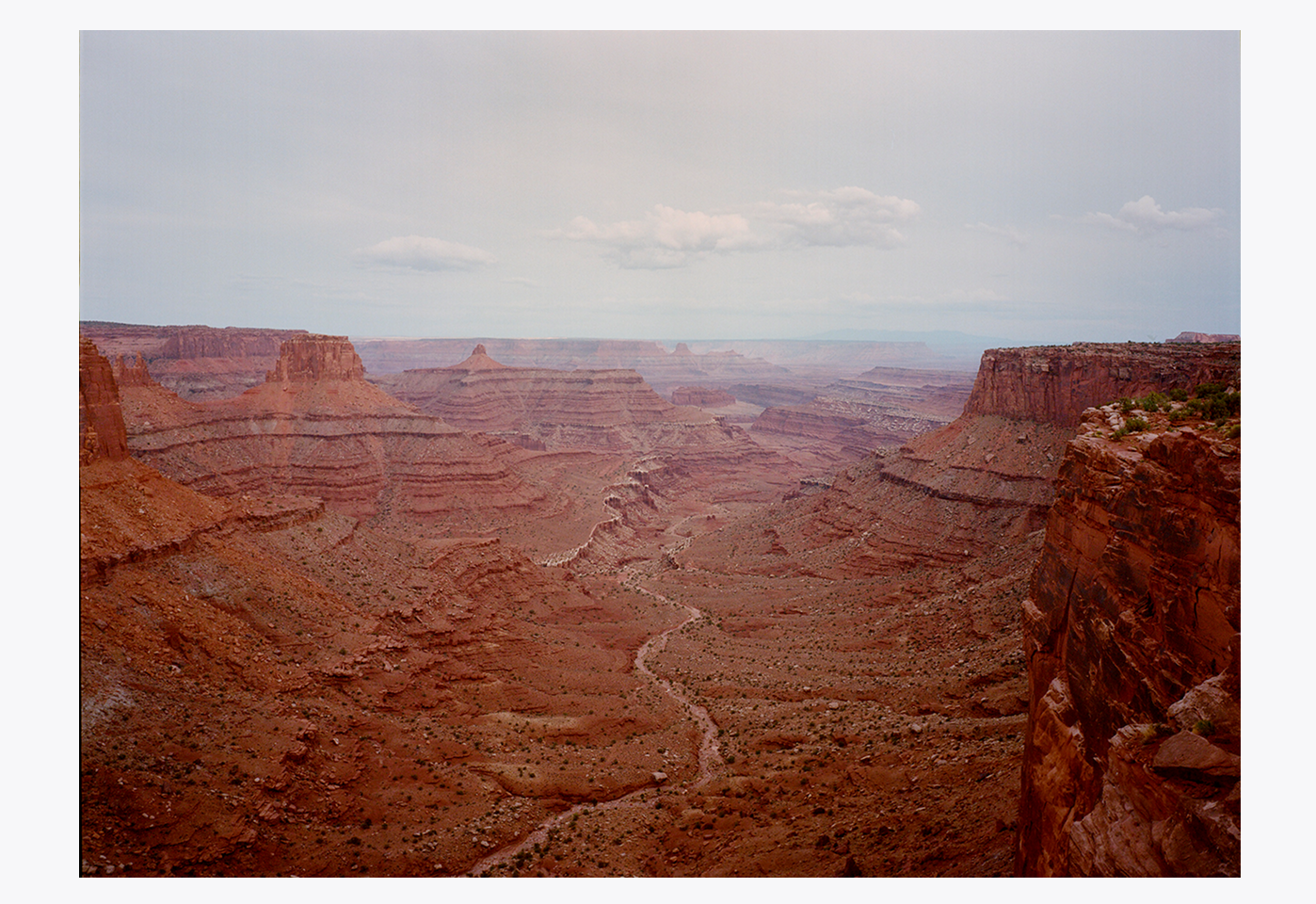
I took this photograph during a four-wheel drive tour of Canyonlands National Park at dusk, with Navtec Expeditions. The company’s local guides took us through the park, sharing the land’s narratives and histories — from petroglyphs carved by the Fremont people (300-1300 A.D.) to stories about the famous outlaw Butch Cassidy hiding out in Robbers Roost, a remote canyon with treacherous terrain. This image captures a bit of the magic I felt when standing at the edge of the mesa overlooking the canyonlands with Shafer Trail cutting through the scene’s center. |
|
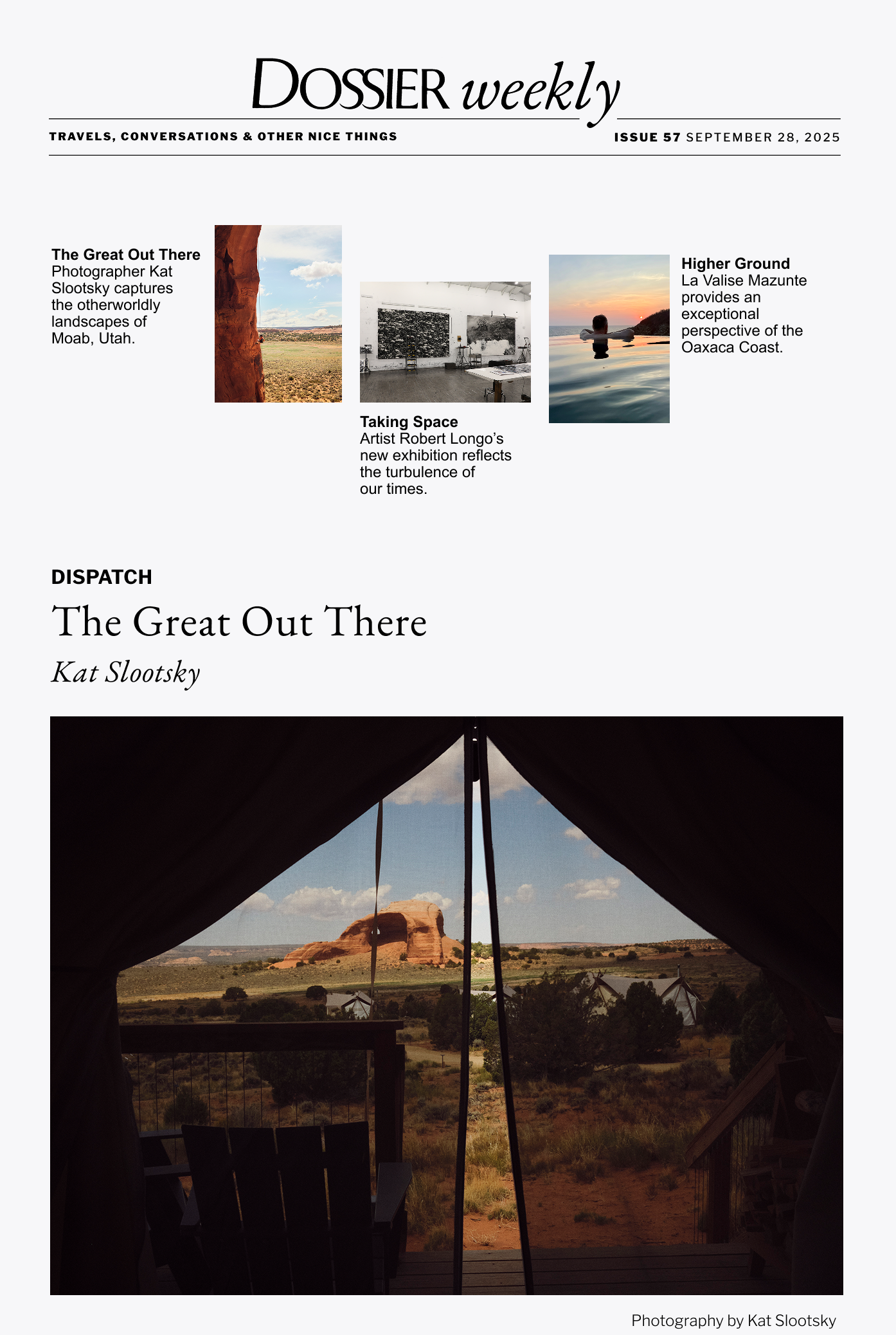
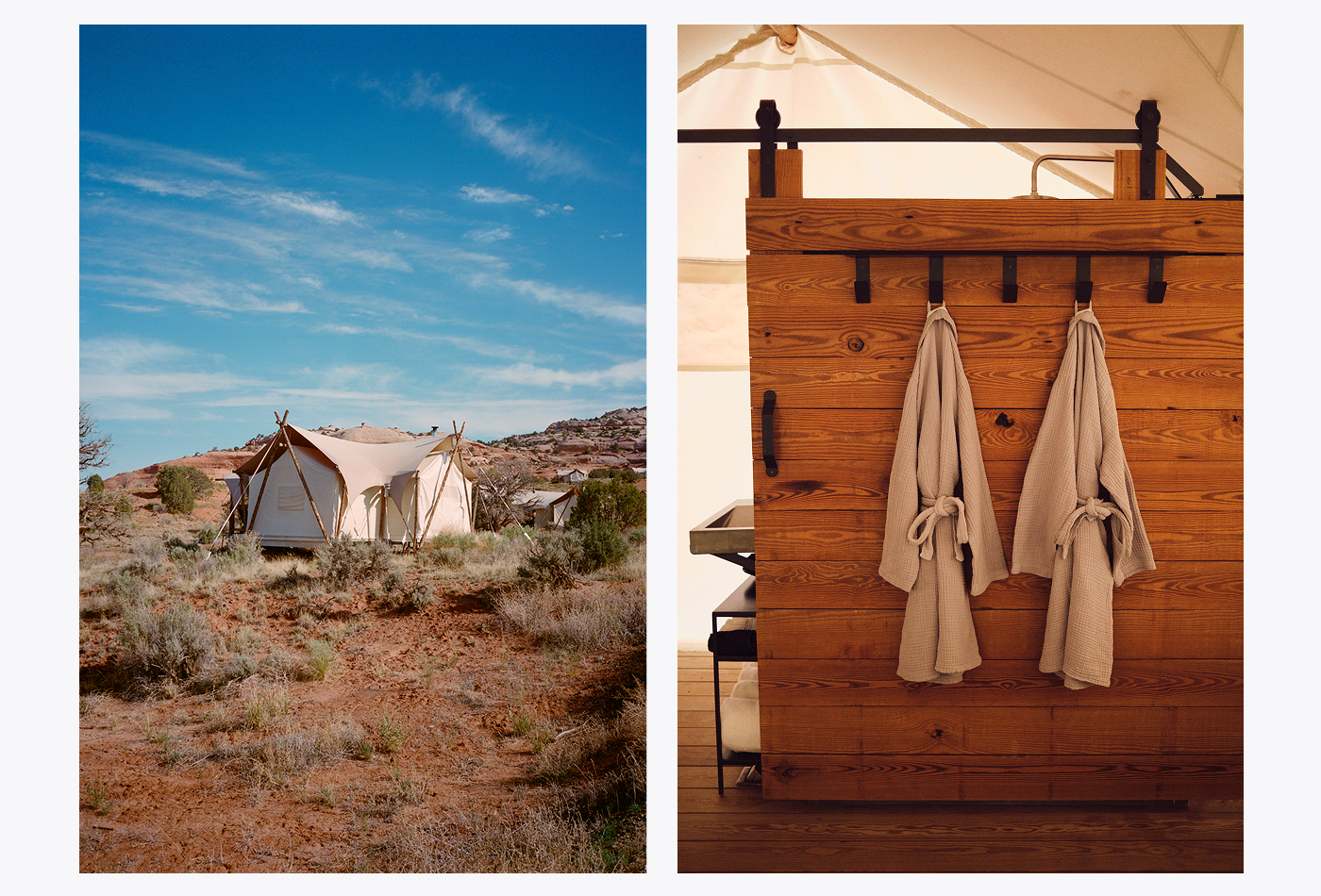
Nestled within the desert just south of Moab, the luxury outdoor resort Ulum Moab is ideal for camping novices like me. Waking up in a king-size bed topped with a heated mattress pad, I looked through the mesh window of my safari-inspired tent — complete with wood-burning stove, rain shower, and private deck — to see a vast desert landscape. Walking along the resort’s paths through cactuses to breakfast, then taking in cinematic views of the national park, with Looking Glass Arch in the distance and a coffee in hand, was a beautiful way to start the day. |
|
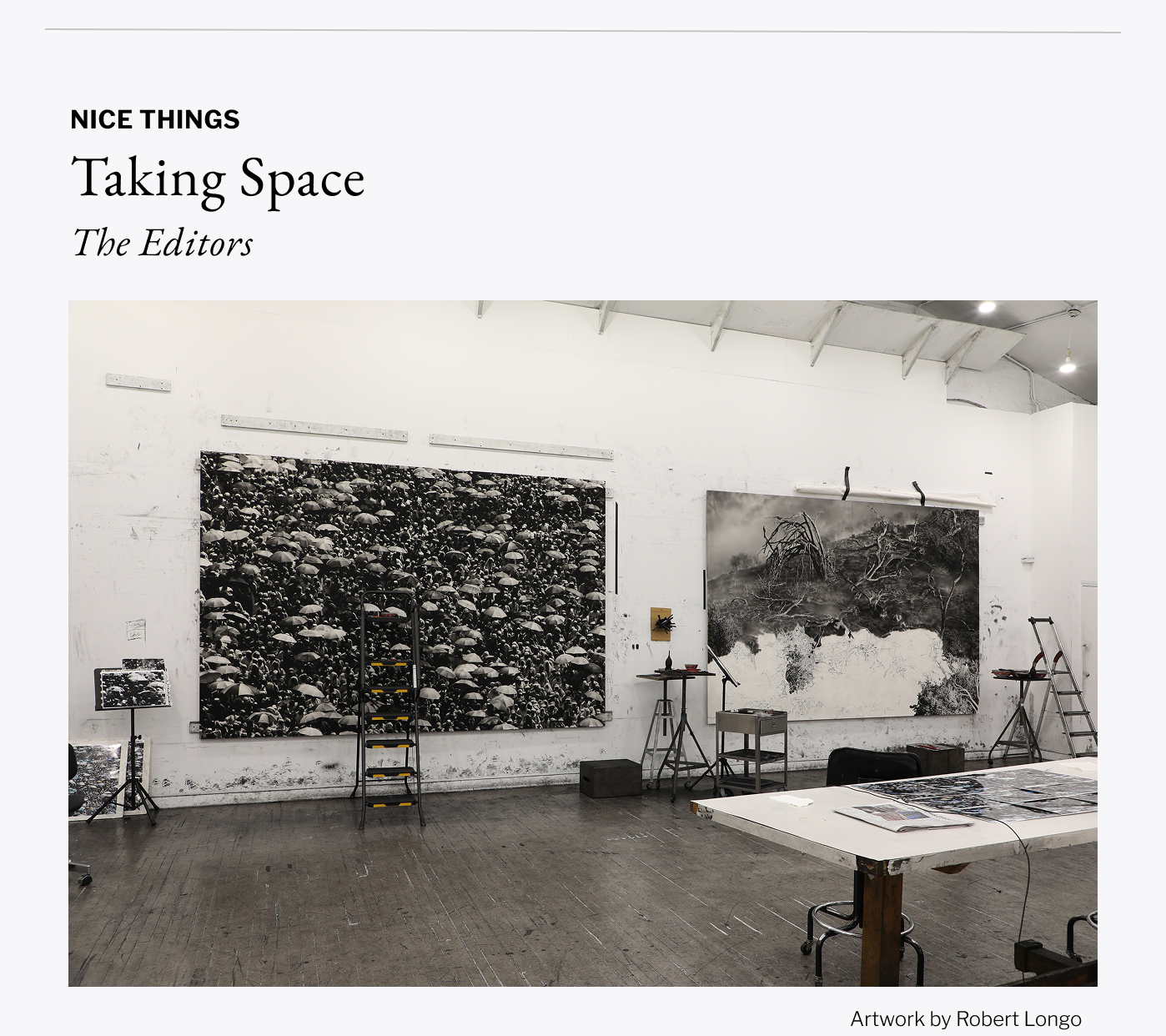
Robert Longo’s hyper-realistic graphite and charcoal drawings make an outsized impression — in scale and cultural impact. Certainly, his Men in the Cities series cemented his international renown starting in the 1980s, but the artist’s detailed works — from his Waves and Beasts series to his portraits — all carry the enigmatic resonance that characterizes important art. Longo’s new exhibition The Weight of Hope retains these distinctions but evolves the subject matter. In recent years, Longo has turned his attention to era-defining media images, creating highly detailed drawings, films, sculptures, and studies based on the photographs. Meditations on today’s pivotal social narratives, the works are meant to slow the onslaught of digital images. They invite their viewers to reflect upon the turbulence of our current time and consider Longo’s own contemplations of the upheaval, not least of all the endurance of hope in the face of it all.
|
|
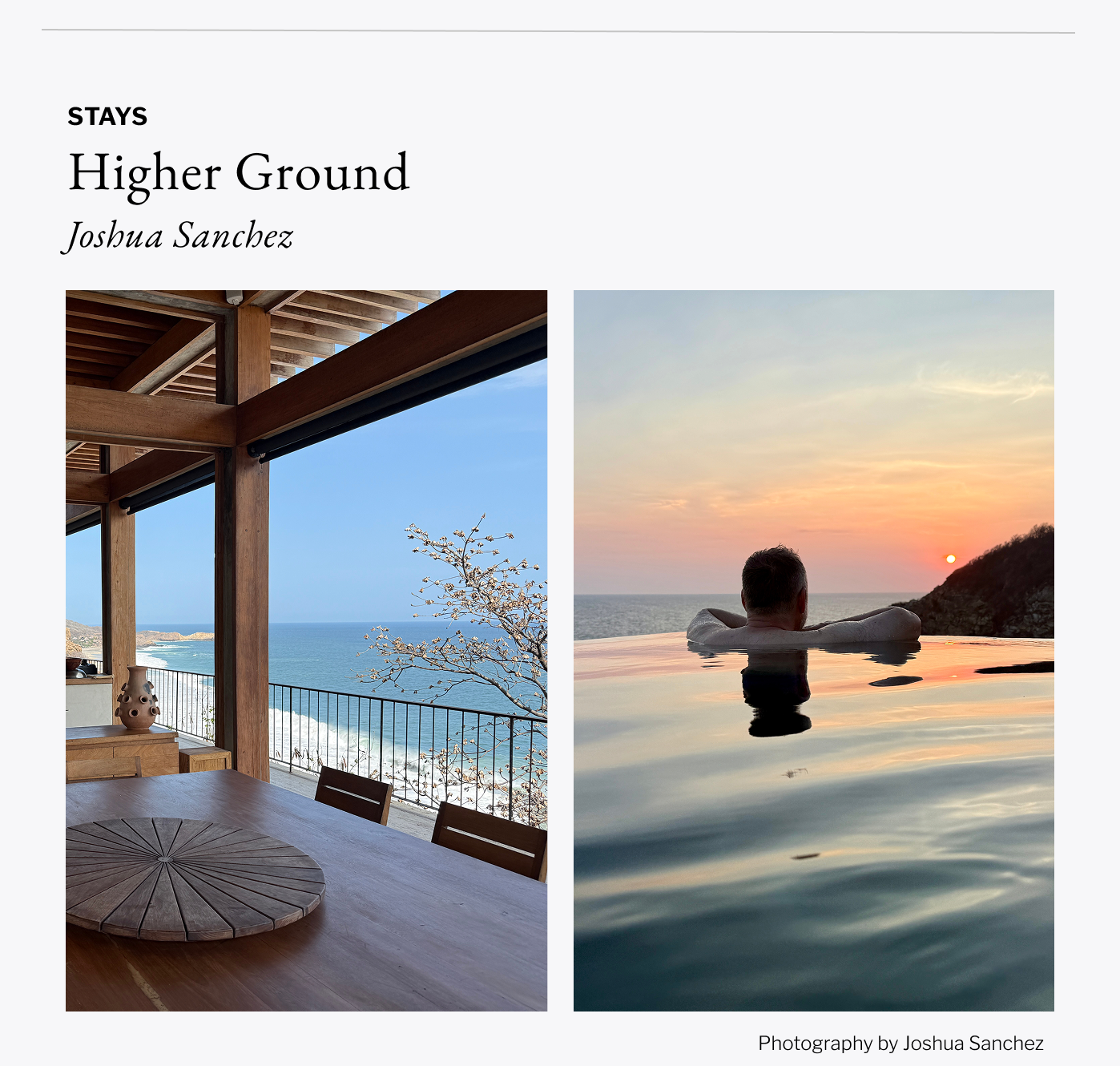
I first ventured to Mexico’s Oaxaca Coast in 2015 on a spur-of-the-moment trip to Playa Zipolite, the country’s only legally sanctioned nude beach. Yet, it was the area’s natural beauty and laidback culture that captivated me. I’ve been back several times since — most recently to La Valise Mazunte, a new hotel that was formerly a private residence designed by renowned Mexican architects Alberto Kalach and Ignacio Urquiza. Getting to the property was no simple task. From the nearest town, Mazunte, I took a car up a precipitous hill to a small parking lot, from which a hotel guide escorted me through even steeper terrain via a (somewhat harrowing) all-terrain vehicle ride. Finally arriving on a clifftop, we were met by stupefying views of the Pacific Ocean and the hotel, which organically sprouted from the rocky, coastal landscape, with the sound of crashing waves echoing below.
The feeling of being in sync with the surrounding environment defines La Valise Mazunte’s accommodations as well. Along with six suites, the property houses a villa with a private infinity pool that juts out into the horizon, imparting the feeling of being (quite literally) at one with the ocean. A more communal experience is offered on the hotel’s private beach — home to another infinity pool and a shaded deck — and throughout the property’s grounds. Along with native flowers and trees, a variety of majestic birds often greeted me when I ventured out onto the cliff or dipped into the pool. To top it all off, Oaxacan dishes prepared by the hotel’s in-house chef, using fresh, locally sourced ingredients fully immersed me in this paradisical, lesser-traveled place.
Word to the Wise … While La Valise Mazunte delivers everything you need for an exceptional escape, the Oaxaca Coast has much to offer outside the hotel’s doors. I advise spending a day in nearby Mazunte, enjoying the beach, eating authentic regional cuisine, and chatting with the friendly locals — who happily humored my rusty Spanish-language skills. I also recommend the less-developed but equally lively Zipolite, which I once heard described as a “gay hippy town.” There are, in fact, a number of LGBTQ+-friendly businesses there, along with a growing number of gay travelers and more and more gay ex-pats. The waves off the coast of Zipolite are notoriously dangerous, which can make the ocean too rough for swimming. But on the day I arrived, the riptide wasn’t too strong so I made my way to Playa de Amor to swim and watch the sunset.
|
|
On the Scent. I’m a longtime devotee of Le Labo, which creates the Santal 33 fragrance I’ve been wearing for well over a decade. That said, the brand’s latest release has me reconsidering my signature scent. Part of Le Labo’s City Exclusive Collection, Osmanthus 19 is an homage to Kyoto based on the native osmanthus flower and layered with notes of lavender, incense, and wood. While nothing is as good as traveling to the cultural capital, Osmanthus 19 sensorially transports me to the complex, nature-driven city whenever I put it on. –T. Cole Rachel
Shaken and Bitten. Located upstairs from New York City’s Eleven Madison Park, Clemente Bar is a delightful spot for pre-dinner drinks. Elegant yet intimate, the space is the brainchild of chef Daniel Humm and contemporary artist Francesco Clemente, whose works line the space, mixing with vintage furniture and original Brett Robinson and Carsten Höller designs. As for the drinks themselves: Sebastian Tollius’ inventive cocktail menu covers a range of flavor profiles. I opted for the namesake Clemente Martini, which came with a large, marinated olive so delicious I asked if I could buy a jar of them. Sadly, they’re not for sale, so I’ll be back. –Elysha Beckerman
Picture This. Leica, the 100-year-old camera brand behind so many of the world’s most memorable photos, has a lot to celebrate. The company captured much of it in the newly released 100 Leica Stories, a petite anthology that feels much like browsing through a stack of photo prints. Shuffling through the book’s pages, I learned the stories behind genre-defining reportage photographs, such as “The Flower and the Bayonet” by Marc Riboud and David Douglas Duncan’s shots of Pablo Picasso in his bathtub. –John Chuldenko
|
|
54 Franklin St #2R NY, NY 10013. ©2025 Dossier Projects, LLC.
|
|
|
|
|